Earl Grey MarTEAni
An Earl Grey MarTEAni is 50ml of gin infused with Earl Grey tea, 20ml of fresh lemon juice, 20ml of sugar syrup and, if you like, 15ml of egg white, dry shaken, shaken hard with ice and double strained into a chilled coupe under an expressed lemon twist. About 2.0 UK units. The egg white is raw. Difford’s Guide credits Audrey Saunders, at Bemelmans Bar in the Carlyle, New York, and dates it to 2000. The Oxford Companion has Dale DeGroff recalling her as lead bartender at the Beacon restaurant from 1999 and, after two years there, in a management post at Tonic, so the year is not settled. The Companion calls her the operating partner behind Pegu Club, which opened in the summer of 2005 and closed in 2020, and Punch prints the drink as hers from Pegu Club. Bergamot, the citrus oil that flavours Earl Grey, sits close to gin’s own citrus peel, and the tea’s tannin gives the sour a dry grip that the egg white softens.
Glassware: Coupe Glass
Garnish: Lemon twist expressed over the foam and rested on the rim
Ingredients
50ml
A citrus-led London Dry at 40% ABV, infused with one tablespoon of loose Earl Grey per 250ml for one to two hours, then strained.
1 tbsp
Per 250ml of gin, steeped at room temperature for one to two hours, then strained out before the gin is measured.
20ml
Squeezed the same day. Level with the syrup, it cuts the tea’s tannin without hiding the bergamot.
20ml
One to one, by weight. Tannin reads dry, and 20ml keeps the drink from tasting astringent.
15ml (optional)
About half a white, for a silky foam that holds the lemon oil. Raw egg: use British Lion eggs, which the Food Standards Agency advises are safe raw, pregnancy included, or pasteurised liquid egg white, and skip the egg for an allergy. Aquafaba at the same measure foams almost as well.
Instructions
Infuse the gin ahead: one tablespoon of loose Earl Grey per 250ml of gin, at room temperature for one to two hours, then strain through a fine sieve.
Add 50ml of the infused gin, the lemon juice, sugar syrup and egg white, if using, to a shaker.
If using egg white, dry shake without ice for 10 to 15 seconds.
Add cubed ice and shake hard for 10 to 12 seconds.
Double strain into a chilled coupe.
Express a lemon twist over the drink and rest it on the rim.
Our version
Audrey Saunders’ published recipe, as Punch prints it, is 45ml of Earl Grey gin, 22.5ml of lemon, 30ml of syrup and a whole egg white, in a half sugar-rimmed martini glass. Ours pours 50ml of gin, 20ml each of lemon and syrup and an optional 15ml of egg white, in a plain coupe, so the tea shows more.
Source: our own specification. Last checked 10 October 2026.
Expert Tip
Time the infusion. One to two hours at room temperature gives bergamot; overnight gives stewed tannin, and no syrup brings the drink back. Set a timer and strain through a fine sieve. Dry shake when using egg: 10 to 15 seconds with no ice lets the white foam; then shake hard with ice for 10 to 12 seconds to chill and tighten it. Keep to 15ml, about half a white: more mutes the tea you spent two hours drawing out. Chill the coupe properly. A warm glass flattens the foam within a minute.
Behind the Earl Grey MarTEAni
Flavour Profile
Audrey Saunders’ Tea Sour
The Oxford Companion calls Audrey Saunders a protégé of Dale DeGroff, with whom she worked on charity events for a couple of years before becoming lead bartender at the Beacon in 1999 and then taking a management position at Tonic; Difford’s Guide dates the Earl Grey MarTEAni at Bemelmans Bar to 2000. Saunders was the operating partner of Pegu Club, a bar whose list leaned on gin-based classics, which the Companion says opened in 2005 and closed in 2020.
DeGroff is quoted in Punch saying that with the opening of Pegu Club her singular mission was to get people used to drinking gin again. A gin sour that tasted of a familiar tea was one way in.
The Infusion
One tablespoon of loose Earl Grey to 250ml of gin, one to two hours at room temperature, then a fine sieve. Under an hour the bergamot is faint. Much past two the tannin turns harsh, as tea left too long in the pot does.
Infuse a bottle at a time if you make the drink often. Strained and sealed, in our experience it keeps for weeks, so the slow part happens days ahead and each drink is a quick sour.
Why Bergamot Suits Gin
Bergamot is a citrus fruit, and its oil is what flavours Earl Grey. Gin already carries citrus peel among its botanicals, so the tea reads as part of the gin. The tannin adds a dry grip on the finish that a plain gin sour lacks.
The egg white softens that grip and holds the expressed lemon oil on the surface, so the nose meets citrus before the acid arrives.
Saunders’ Recipe and Ours
Audrey Saunders’ published Earl Grey MarTEAni and ours
Infused gin
- Saunders
- 45ml
- Ours
- 50ml
Infusion
- Saunders
- Four tablespoons per 750ml, two hours
- Ours
- One tablespoon per 250ml, one to two hours
Lemon juice
- Saunders
- 22.5ml
- Ours
- 20ml
Sugar syrup
- Saunders
- 30ml
- Ours
- 20ml
Egg white
- Saunders
- One white
- Ours
- 15ml, optional
Glass
- Saunders
- Martini glass, half rimmed with sugar
- Ours
- Chilled coupe, no rim
Garnish
- Saunders
- Lemon twist
- Ours
- Lemon twist, expressed
UK units at 40% ABV
- Saunders
- About 1.8
- Ours
- About 2.0
| Element | Saunders | Ours |
|---|---|---|
| Infused gin | 45ml | 50ml |
| Infusion | Four tablespoons per 750ml, two hours | One tablespoon per 250ml, one to two hours |
| Lemon juice | 22.5ml | 20ml |
| Sugar syrup | 30ml | 20ml |
| Egg white | One white | 15ml, optional |
| Glass | Martini glass, half rimmed with sugar | Chilled coupe, no rim |
| Garnish | Lemon twist | Lemon twist, expressed |
| UK units at 40% ABV | About 1.8 | About 2.0 |
Ours pours a little more gin, less sugar and half the egg, for a drier drink in which the tea is easier to taste, and leaves the sugar rim off.
How to Serve It
A chilled coupe, double strained, with a lemon twist expressed over the top and rested on the rim. It suits the hours where tea itself sits, mid-afternoon into early evening, and the tannin makes it a good aperitif.
For gin, honey and lemon, try a Bee’s Knees; for gin, lemon and orange liqueur, a White Lady; for Saunders’ rum, mint and Champagne drink, an Old Cuban.
Make it at home
The Spirit
GinGin is a spirit flavoured with juniper berries. Under the retained Regulation (EC) 110/2008, juniper must lead the taste, the floor is 37.5% ABV, and the route the flavour takes sets the grade: plain gin, distilled gin or London gin. Our recipes count it at 40%, and it carries the Martini, the Negroni and the Gin and Tonic.
Master the Techniques
More to explore
Frequently Asked Questions
What is in an Earl Grey MarTEAni?
Who created the Earl Grey MarTEAni?
How do I make Earl Grey gin?
Which gin should I infuse?
Can I skip the egg white?
How long does Earl Grey gin keep?
How strong is an Earl Grey MarTEAni?
Sources.
Checked between 18 October and 19 October 2026.
- Punch, “Earl Grey MarTEAni” (secondary source: Audrey Saunders, Pegu Club; 1½ ounces Earl Grey gin, ¾ ounce lemon, 1 ounce simple syrup, 1 egg white, half sugar-rimmed; infusion 4 tablespoons loose Earl Grey to a 750ml bottle, preferably Tanqueray, two hours at room temperature; Dale DeGroff on Saunders’ mission at Pegu Club).
- Difford’s Guide, “Earl Grey MarTEAni” (secondary source: adapted from a recipe created in 2000 by Audrey Saunders at Bemelmans Bar at the Carlyle, New York City).
- The Oxford Companion to Spirits and Cocktails (Dale DeGroff and David Wondrich), “Saunders, Audrey” (secondary source: operating partner behind Pegu Club (opened summer 2005, closed 2020); trained under Dale DeGroff; lead bartender at the Beacon from 1999, then a management position at Tonic).
- The Oxford Companion to Spirits and Cocktails (Robert Simonson), “Pegu Club” (secondary source: opened 2005 on the border of SoHo and Greenwich Village; Saunders a protégé of DeGroff; gin-based classics on the list; closed 2020).
You Might Also Like
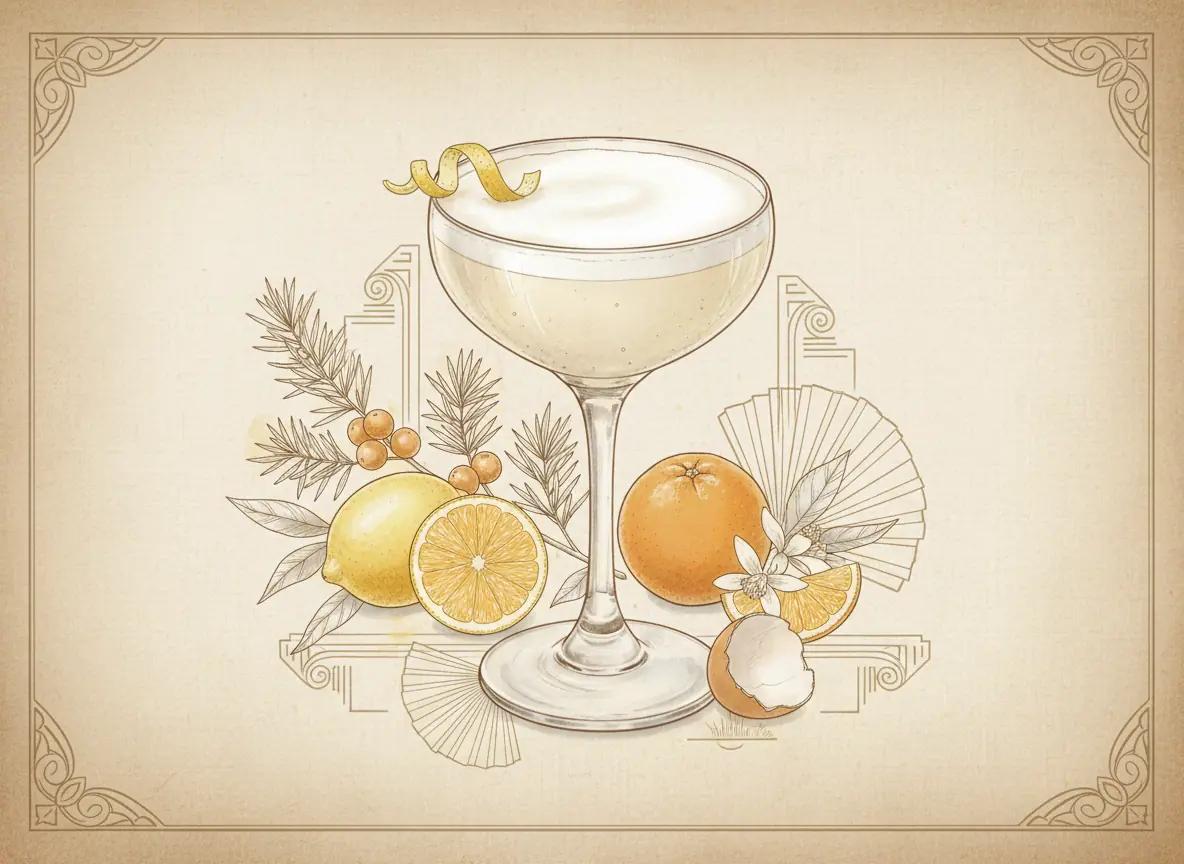
White Lady
A White Lady is 40ml of London Dry gin, 30ml of Cointreau and 20ml of fresh lemon juice, shaken hard with ice for 10 to 12 seconds and double strained into a chilled coupe, with lemon peel expressed over the top. About 2.8 UK units. Those are the IBA’s measures, and there is no egg white in them. The name is older than the recipe. Difford’s Guide, a secondary source, says Harry MacElhone gave it in 1919, at Ciro’s Club in London, to a drink of brandy, crème de menthe and Cointreau. The gin, Cointreau and lemon version is credited to his rebuild at Harry’s New York Bar in Paris in 1929, though Difford’s says most dispute that, and The Savoy Cocktail Book printed it in 1930, also without egg. Egg white came later: Difford’s Guide finds the earliest recipe with it in The Sacramento Bee of 1936. It makes a softer, foamed drink, given here as a variation. The plain version is sharp and dry, the gin in front and the orange behind it.
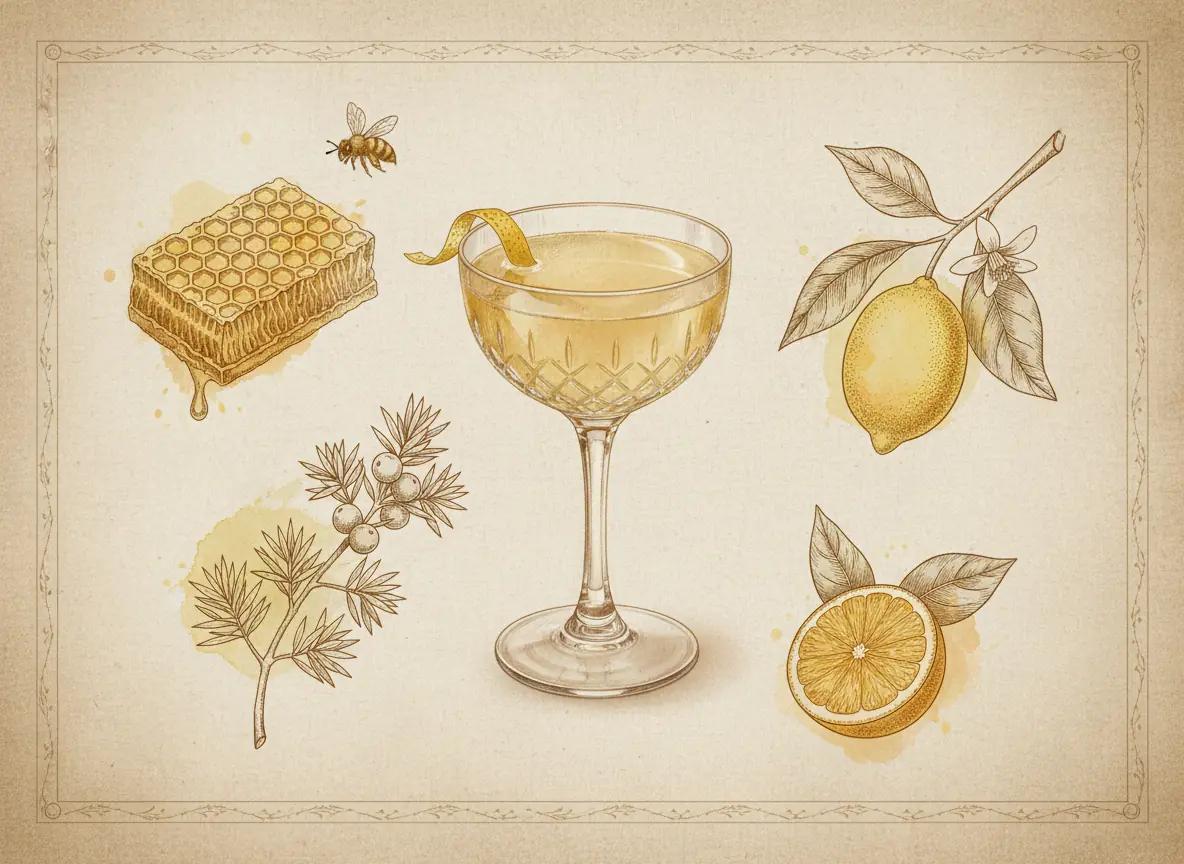
Bee’s Knees
A Bee’s Knees is 52.5ml of London Dry gin, 22.5ml each of fresh lemon and orange juice and two teaspoons (10ml) of honey syrup, made with two parts honey to one of warm water. Shake it hard for 10 to 12 seconds and double strain it into a chilled coupe, with a strip of lemon peel. About 2.1 UK units. The measures are the IBA’s. The orange is the part most recipes leave out. The oldest printings are gin, lemon and honey alone; David Embury suggested a little orange juice as a variation in 1948, and the IBA built it in. Orange softens the lemon, which is why two teaspoons of honey syrup are enough. The drink is often filed under American Prohibition, with honey and lemon covering for bathtub gin. Difford’s Guide, a secondary source, says the earliest printing tells a different story: Cocktails de Paris, published in 1929, credits it to Frank Meier of the Ritz in Paris, and Meier claimed it again in his own book in 1936.
Where this one sits
Recipe by Jerry Can Spirits · Updated 19 October 2026