
Sours

89 recipes, page 1 of 4

This Field Manual holds 89 recipes in the sour family, more than any other family here. A sour is a spirit, a citrus juice and a sweetener in balance. Change any one of the three and the drink takes a different name: a daiquiri, a margarita and a sidecar are all sours.

The ratio is where the disagreement is. Two parts spirit to one part citrus to one part sweetener is the usual starting point and it suits bourbon. Cut the sweetener and the citrus comes forward, which suits a lighter spirit. Add egg white and the texture changes rather than the flavour, which is why a whiskey sour and a Boston sour share a specification and taste different.

Base Spirit

Difficulty Level

20th Century

The 20th Century is named not for the era but for a train: the 20th Century Limited, the streamlined express that ran New York to Chicago in sixteen hours of art deco swagger, red carpet on the platform and a barber on board. The cocktail appeared in 1937, credited to a British bartender named C.A. Tuck, and it is the most art deco drink ever built: chrome lines, improbable engineering, and a finish like a first-class lounge. The engineering is the improbable part. Gin and lemon make familiar sense; white creme de cacao and Lillet Blanc should not belong anywhere near them. Yet the four lock together like patisserie: the cacao reads as white chocolate rather than sweetshop, the Lillet adds a bitter-edged aperitif polish, and the lemon keeps the whole thing moving at express speed. It vanished with the train and returned with the cocktail revival, and it remains the best answer to anyone who thinks chocolate has no place in a serious drink: it does, at fifteen millilitres, travelling first class.

21st Century

The 21st Century is a deliberate act of succession: Jim Meehan built it at New York’s PDT in 2007 as the next stop after the 20th Century, updating the art deco classic for a new hundred years. The logic is a straight swap along the timeline: tequila takes over from gin, lemon and white creme de cacao keep their seats, and an absinthe rinse replaces the Lillet as the aromatic frame. The result reads like the 20th Century’s worldlier heir. Blanco tequila’s pepper and agave push through where gin’s juniper used to sit, the cacao smooths the middle exactly as before, and the absinthe rinse hangs an anise perfume over the first sip that does the framing work the aperitif wine once did. Tasted beside its ancestor it makes a two-drink history lesson: the same silhouette redrawn in a different spirit, proof that the classic templates are engines rather than museum pieces.
Amaretto Sour

Amaretto Sour

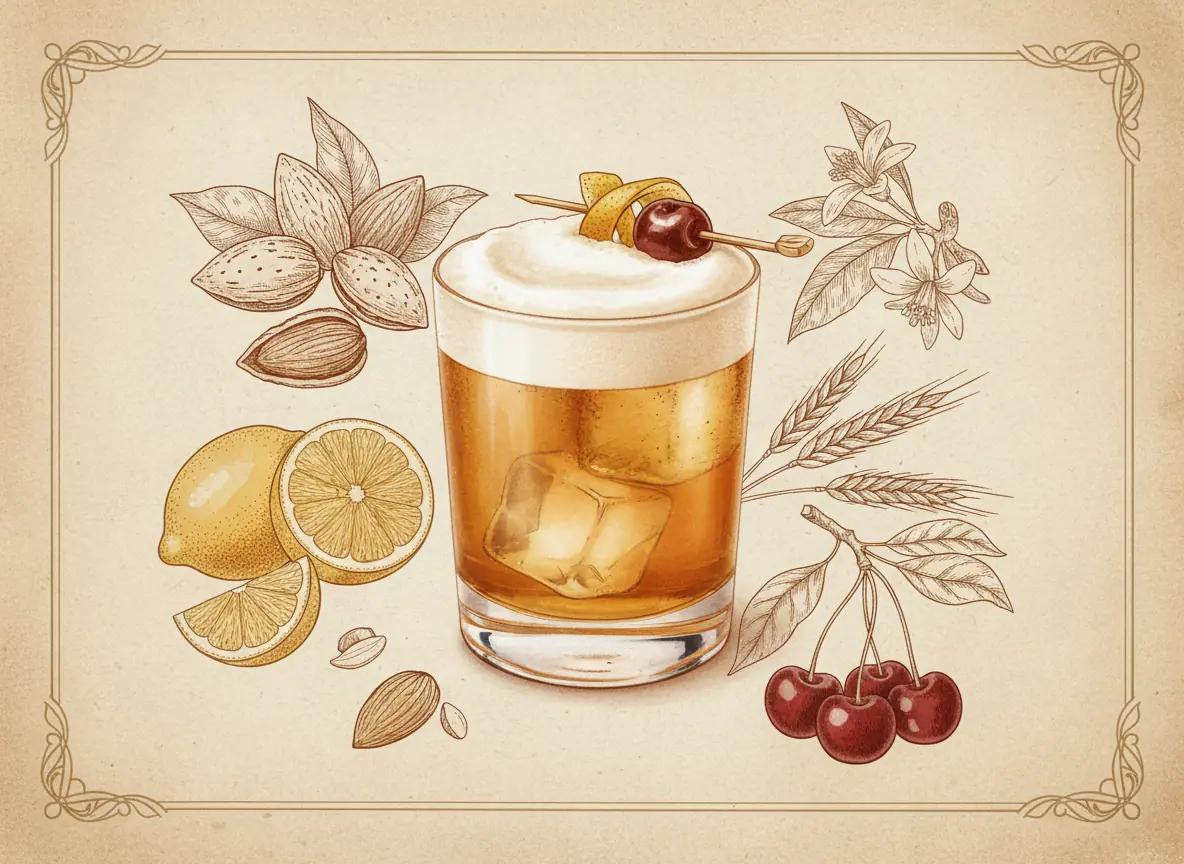
The Amaretto Sour has a reputation problem that is entirely the fault of the versions most people have encountered. The standard bar version, amaretto and sour mix from a gun or bottled lemon juice, is sweet, flat, and devoid of the complexity a properly built version achieves. That gap has led many serious drinkers to write the drink off entirely, which is a mistake worth correcting. The version documented here builds on the approach developed by American bartender Jeffrey Morgenthaler, who recognised that amaretto’s lower ABV and high residual sweetness require structural support from a higher-proof spirit. Cask-strength bourbon at 22.5ml provides that support without dominating the amaretto’s almond and stone fruit character: its proof adds structural weight, its vanilla and caramel complement the amaretto’s sweetness, and its spice provides a counterpoint that stops the drink becoming one-dimensional. Egg white is optional in deference to those who prefer to avoid it, but it is strongly recommended here. With it, the foam carries the amaretto’s almond aromatics at the nose before the lemon acid and bourbon spice arrive at the palate, and that sequence is what the drink is designed to deliver.
Aperol Sour

Aperol Sour

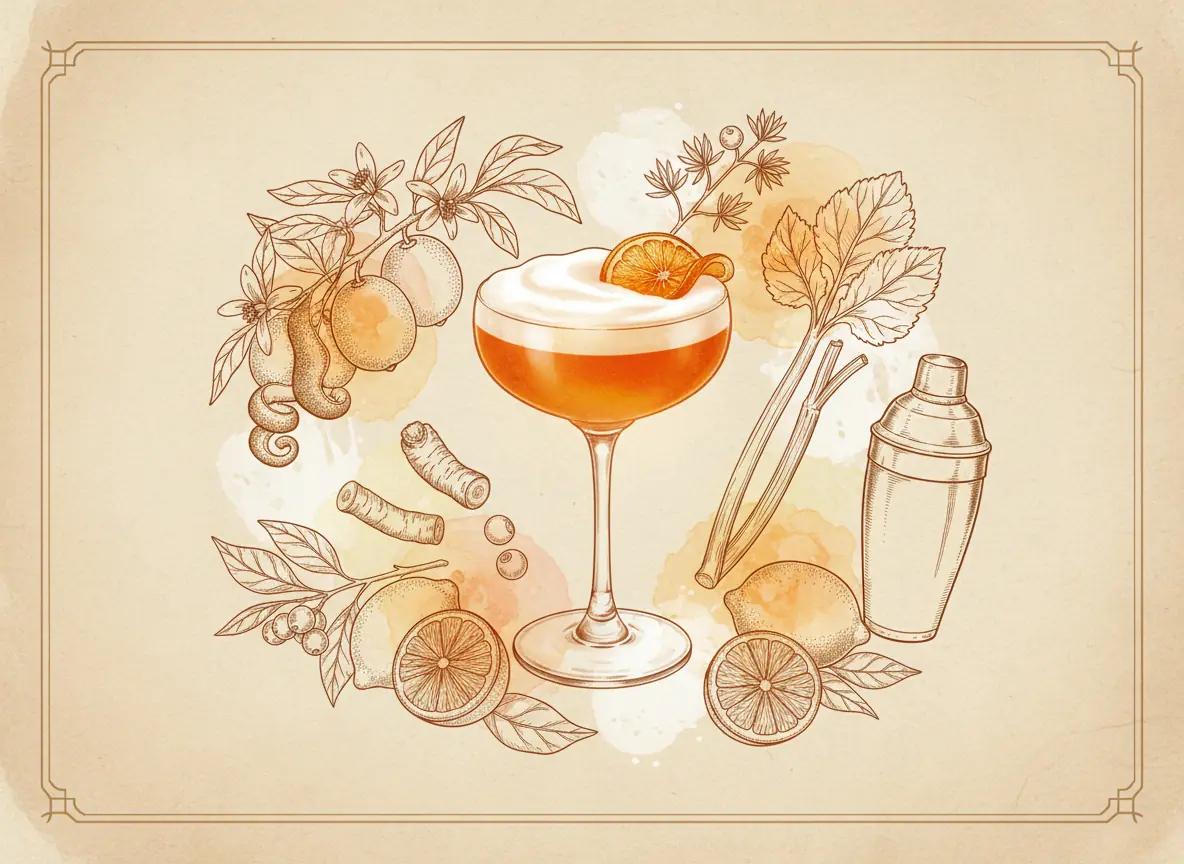
The Aperol Sour is a sour with no spirit in it. Sixty millilitres of Aperol takes the base position, and the drink works because Aperol has enough flavour and enough sweetness of its own to hold a format that normally assumes a distilled spirit underneath it. At 11 per cent against a spirit's 40, the finished drink is considerably lower in alcohol than most sours, which makes it genuinely sessionable without being thin. The bitter orange does the work gin or whiskey would otherwise do. The egg white is what separates a properly built one from a glass of Aperol with lemon in it. Dry shaken first, it builds a foam that holds for several minutes, changes the feel of every mouthful and gives the Angostura pattern something to sit on. It is not decoration: it softens the arrival of the bitterness, which is where an unfoamed version tends to lose people.

Army & Navy

The Army & Navy is a gin sour with orgeat in place of the sugar. That is the entire design, and it does what the same swap does in a Mai Tai: almond brings marzipan weight and a floral edge that plain syrup cannot supply, rounding the lemon and softening the juniper without blurring either. The spec turns up in bar books of the 1930s, and it owes its survival largely to David Embury, who included it in The Fine Art of Mixing Drinks in 1948 while complaining, as he did about most things, that everybody else had the proportions wrong. The name honours the Army-Navy game, the American service academies' football rivalry that has been played since 1890. The drink has a certain parade-ground neatness that suits it: three ingredients and a dash, up in a coupe, nothing surplus. It has outlived a great many drinks with better stories attached to them.

Autumn Gold

The Autumn Gold is a Field Manual serve written for October: bourbon and apple brandy splitting the base, fresh lemon and maple syrup running the sour arithmetic, and two dashes of aromatic bitters pulling everything towards baking spice. Shaken hard, strained into a coupe, finished with a thin apple fan. The split base is the design. Bourbon provides the structure and the vanilla; apple brandy provides the orchard top note; neither would carry the drink alone. Maple stands where plain sugar would in a whiskey sour, trading neutral sweetness for an earthy depth that reads as harvest rather than confectionery, and the lemon keeps all that richness drinkable. It is a sour by grammar and an autumn drink by argument. The template is one your hands already know; the accent belongs to October. Make it when the first properly cold evenings arrive and the apples are in season, and cut the fan thin: the garnish is the drink announcing its subject.
Aviation

Aviation

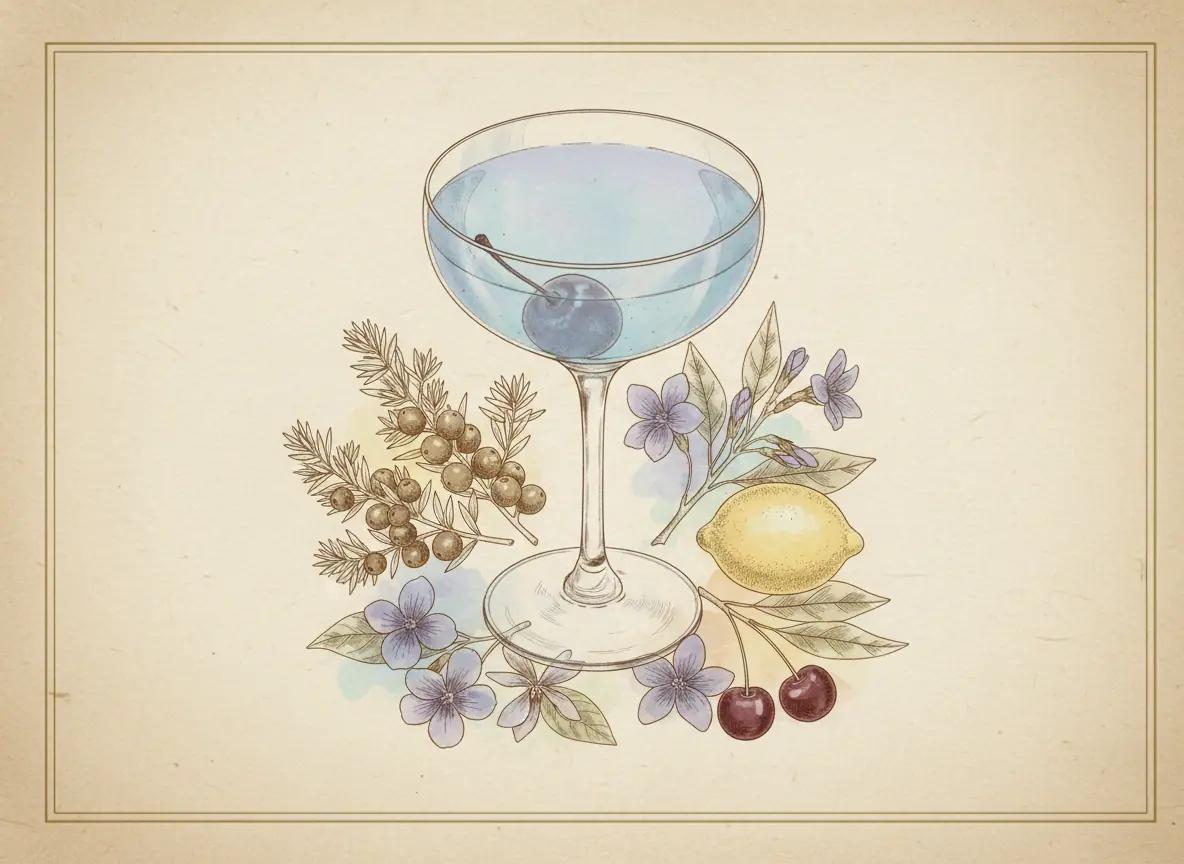
The Aviation is a gin sour with a sky in the glass. Hugo Ensslin published the original recipe in his 1916 Recipes for Mixed Drinks, the first known printed source: gin, maraschino liqueur, crème de violette, and fresh lemon juice. The crème de violette gives the drink its defining characteristic, a pale lavender colour between blue and grey, the colour of an early morning sky at altitude. For most of the twentieth century crème de violette was virtually impossible to source outside specialist suppliers, and the ingredient disappeared from most published versions. Bartenders made the drink without it for decades, a perfectly good gin sour with maraschino that lacked the colour and floral dimension the original was built around. When Rothman and Winter relaunched their crème de violette for the American market in 2007, the original recipe was restored and the drink found a new generation willing to seek out the correct ingredients. The Aviation with crème de violette is a different drink from the one without it. The violet brings a floral softness no other ingredient replicates, sitting between the maraschino’s cherry complexity and the lemon’s tartness. The colour alone is worth the effort of finding the bottle.

Bacardi Cocktail

The Bacardi Cocktail is a daiquiri with grenadine in it, and it is one of a very small number of drinks anywhere with legally enforceable contents. In 1936 the New York Supreme Court held that a drink sold under the name has to be made with Bacardi rum, which remains a peculiar thing for a court to have had to decide. The drink predates the lawsuit. It is a Prohibition-era Havana daiquiri blushed with grenadine, carried north by the considerable traffic between New York and Cuba, and poured openly the moment repeal allowed it. The grenadine replaces most of the sugar rather than joining it, which is what keeps it a daiquiri rather than a cordial. Made honestly, with real pomegranate grenadine and lime squeezed to order, it is simply a very good daiquiri in evening colours. The law cares which bottle. The drink mostly cares that it is a good one.

Banana Calling

The Banana Calling is Dandelyan’s tribute act. Cameron Attfield built it on London’s South Bank in August 2018, during the bar’s final season as the world’s number one, as a house riff on Chris Jepson’s London Calling: gin, fino sherry and lemon, with banana liqueur threaded through the seams. The name declares the lineage and the banana declares almost nothing, which is the trick. Ten millilitres against forty of gin is seasoning arithmetic rather than a flavour statement. The liqueur’s cooked fruit rounds the sour’s middle while the fino’s salinity keeps the sweetness honest, and the two low notes merge into something neither bottle predicts on its own. The banana is barely findable without the name to point at it, and that restraint is the whole design. It is the modern school in miniature: a great bar honouring a great drink by changing ten millilitres and putting the credit in the title.
Bee's Knees

Bee's Knees

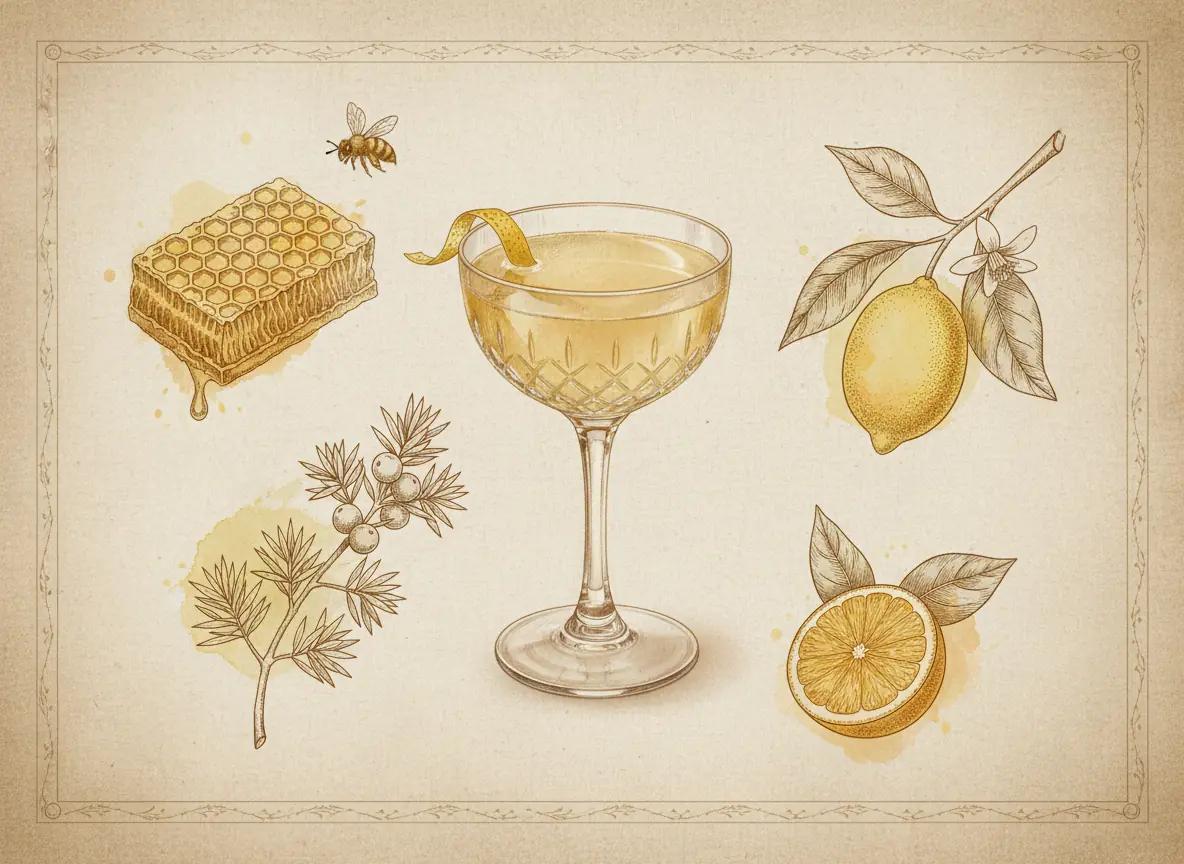
The Bee's Knees is a gin sour built on honey syrup instead of sugar, documented in the early 1920s and born of a practical problem. Prohibition gin was frequently terrible, and honey and lemon are both strongly flavoured enough to cover for a spirit that needed covering for. What makes it worth making now is the inversion. The combination chosen to hide a bad gin turns out to be exceptionally good at showing off a good one, because honey and gin occupy overlapping territory. Gin is defined by botanicals; honey is itself a botanical product, its character set by whatever the bees visited. The honey does not simply sweeten the gin, it extends it in a register the gin already occupies. Three ingredients, no egg, nothing complicated. Built with a proper London Dry and a properly made honey syrup it is brighter and more layered than the ingredient list has any right to suggest.
Berry Sour

Berry Sour

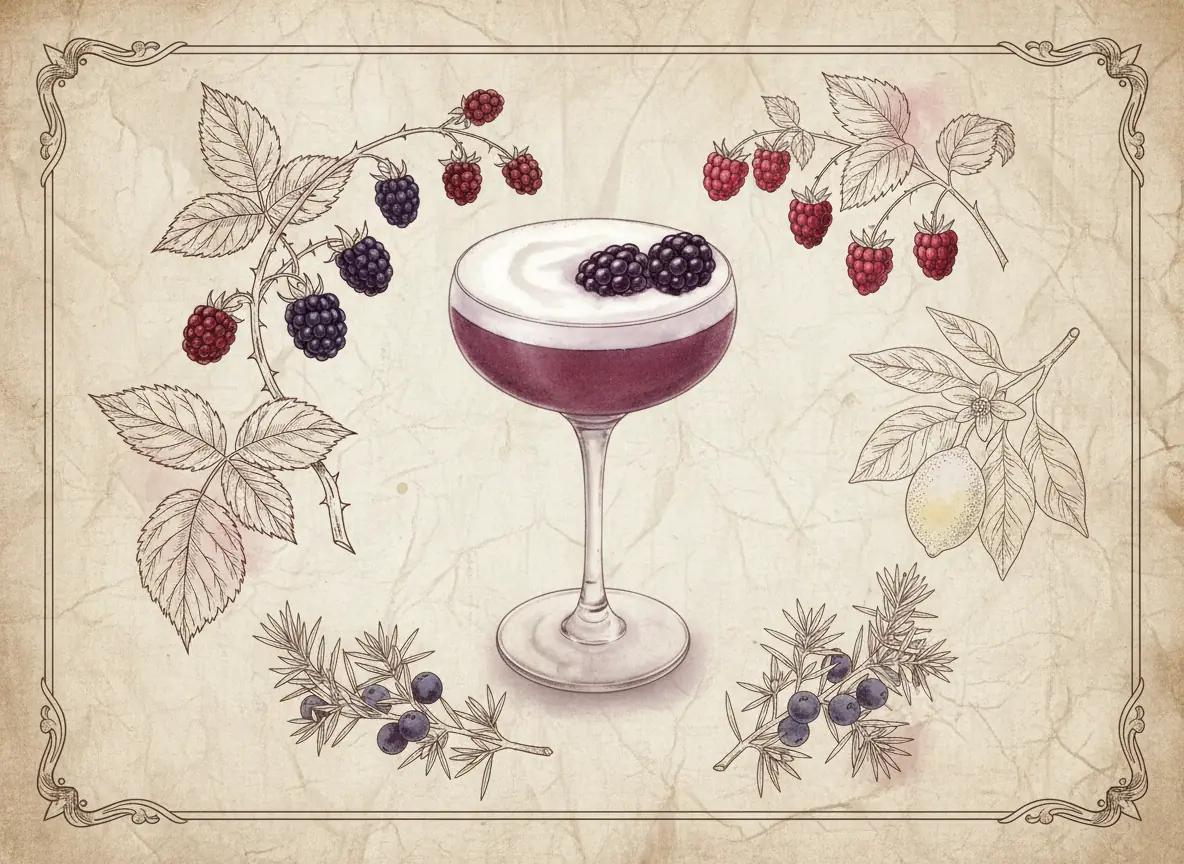
The Berry Sour takes the bones of Dick Bradsell's legendary Bramble and gives it the full sour treatment. Bradsell created the Bramble in 1984 at Fred's Club in London's Soho, inspired by childhood memories of picking blackberries on the Isle of Wight. His original is built over crushed ice with crème de mûre drizzled dramatically over the top, bleeding through the ice like a sunset. This version integrates the berry liqueur fully into the shake, producing a drink that is more unified in flavour and crowned with the pillowy foam that defines the sour family. The result is fruity without being sweet, tart without being sharp, and impossibly smooth on the palate. Use crème de mûre for the most authentic Bramble lineage, though Chambord or a mixed berry liqueur both work beautifully. The gin's juniper should still be present beneath the fruit. This is a gin drink, not a berry one.

Between the Sheets

Between the Sheets is the Sidecar after lights-out: the same cognac, orange liqueur and lemon, with a measure of white rum slipped in and the name doing the rest. It belongs to 1930s Paris, usually credited to Harry MacElhone of Harry’s New York Bar, whose house style was exactly this kind of respectable scandal, and it travelled the interwar circuit from Paris to the cruise liners with its eyebrow permanently raised. The structure is a Sidecar rebalanced: rum and cognac splitting the base evenly, the citrus and liqueur pulled back a notch so two spirits fit where one stood. The rum lightens the cognac’s oak and the cognac deepens the rum’s sugar, and the drink lands brighter than a Sidecar with more going on under the surface. It drinks stronger than it reads, which was presumably the intention of everyone involved, and it remains the best gateway between the brandy and rum shelves: one glass with a foot on each.

Black Widow

The Black Widow is a dark house serve built for Halloween: three blackberries muddled in the shaker, then vodka, blackberry liqueur, fresh lemon and a short measure of simple syrup, shaken hard and double strained into a coupe. It looks dangerous and drinks smoothly, which is the whole trick. The colour is honest. Blackberries and their liqueur produce a deep purple that reads as black in party light, with no dye involved anywhere, and a pinch of activated charcoal in the shaker takes it to true black for the committed. The double strain is not optional either: seeds and pulp cloud what ought to be a glossy, lightless surface. Underneath, it is a berry sour in good working order. Vodka keeps the canvas clean so the fruit does the talking, the liqueur supplies body and sweetness, and the lemon holds the edge. One blackberry on a pick is the only garnish it needs, and it is the rare party trick that survives the lights coming up.

Blinker

The Blinker is rye, grapefruit juice and grenadine, and it is one of very few classic sours where grapefruit does the whole job on its own. Lemon is the default for a reason: it is sharp and neutral. Grapefruit is sharp and opinionated, bitter as well as sour, and putting it against rye produces something considerably drier and stranger than a whiskey sour. It comes from Patrick Gavin Duffy's Official Mixer's Manual of 1934 and then disappeared for most of a century. Its return is generally credited to Ted Haigh, whose Vintage Spirits and Forgotten Cocktails put a good many repeal-era specs back into circulation in the 2000s. The grenadine decides whether it works. Made from pomegranate, it brings a tart, slightly astringent fruit that meets the grapefruit halfway. Made from corn syrup and red dye, which is what most of the twentieth century sold, it turns the drink into cordial. That is most likely why nobody made it for seventy years.
Bramble

Bramble

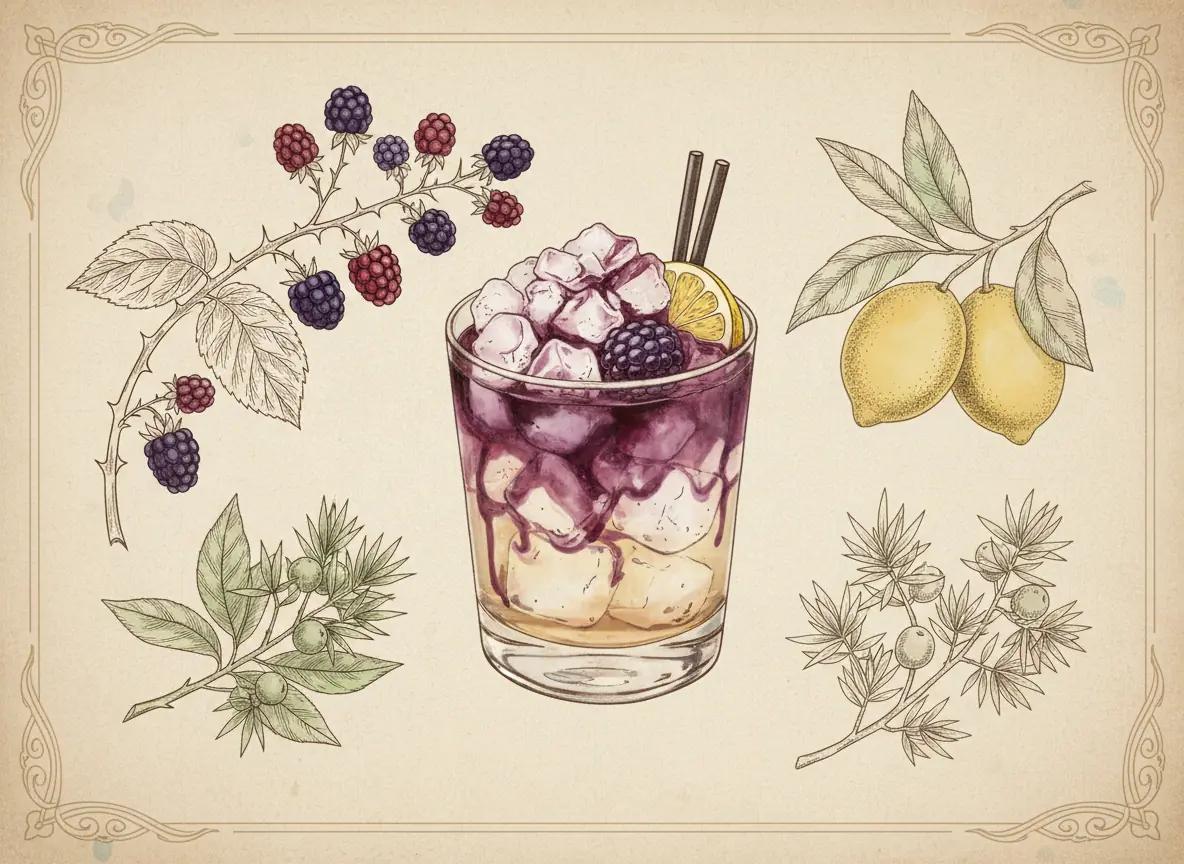
The Bramble was created by Dick Bradsell at Fred's Club in London in 1984, making it one of the few genuinely modern cocktails to hold a permanent place in the classical canon. Bradsell was the defining figure of the London cocktail revival, and the Bramble was his most enduring contribution to it. He described the inspiration as the blackberry bushes he picked from as a child on the Isle of Wight. The foundation is a simple gin sour: gin, fresh lemon juice and sugar syrup, shaken and served over crushed ice. The crème de mûre is not shaken in. It is drizzled slowly over the surface of the finished drink, bleeding down through the ice as it settles, and that is not theatre: the liqueur integrates gradually as the drink is consumed, shifting the balance from tart and juniper-forward at the first sip toward sweet and fruity by the last. The crème de mûre decides the quality. A cheap blackberry liqueur is artificially sweet and one-dimensional.
Brandy Crusta

Brandy Crusta

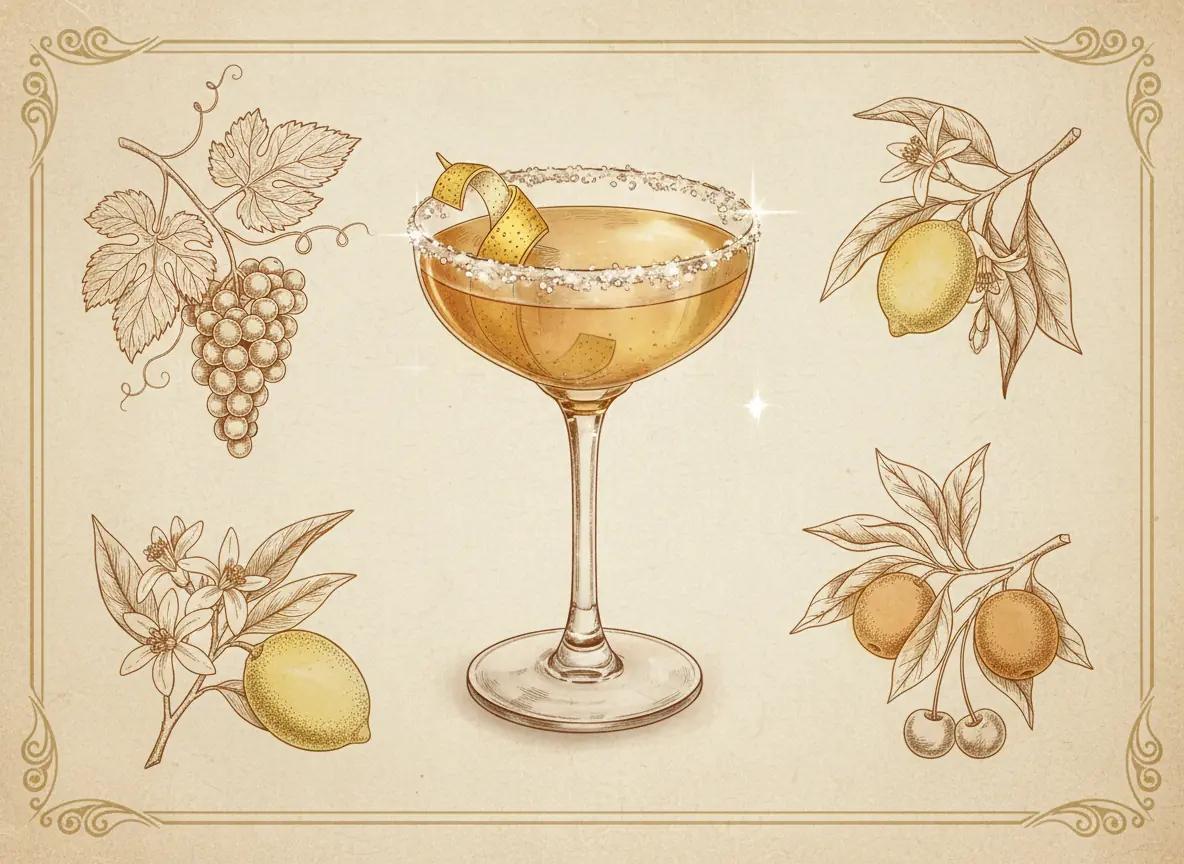
The Brandy Crusta was created by Joseph Santini at his New Orleans bar around 1850 and is widely regarded as one of the first genuinely refined cocktails in American history. It introduced two techniques that defined generations of bartending after it: the sugared rim and the long spiral lemon peel worn inside the glass like a lining. Both are functional, not decorative. The sugar tempers the citrus on the first sip. The peel releases oil into every measure of the drink as it sits. It is a direct ancestor of the Sidecar. The structure is almost identical: cognac, citrus, a sweetening liqueur modifier. The Crusta adds maraschino and bitters to the frame, which gives it considerably more complexity than the drink it inspired. Where the Sidecar is clean and direct, the Brandy Crusta is layered, aromatic, and slightly more demanding of attention. Santini's original called for a wine glass rather than a coupe, the standard modern substitution. The drink fits either. What it does not forgive is a loose spiral, a thin sugar rim, or lemon juice that was not squeezed to order.

Brown Derby

The Brown Derby is 1930s Hollywood in three ingredients. It was created at the Vendôme Club on Sunset Boulevard, the film colony’s lunch canteen, and named in neighbourly tribute to the Brown Derby restaurant across town, the one shaped like the hat. Bourbon, fresh grapefruit and honey: a drink engineered for a town that wanted its indulgences to photograph well. The structure is a sour that swapped both its standard parts for better ones. Grapefruit stands in for lemon, bringing bitterness along with its acid; honey stands in for sugar, bringing floral weight along with its sweetness. The two substitutions lean into each other, honey rounding exactly the bitter edge grapefruit brings, and the bourbon underneath gets to be entirely itself. It reads today as a period companion piece to the Hemingway Daiquiri, the same decade’s other great grapefruit drink, and as bourbon’s answer to it: drier than it looks, brighter than bourbon drinks are expected to be, and about ninety seconds of work from bottle to coupe.
Caipirinha

Caipirinha

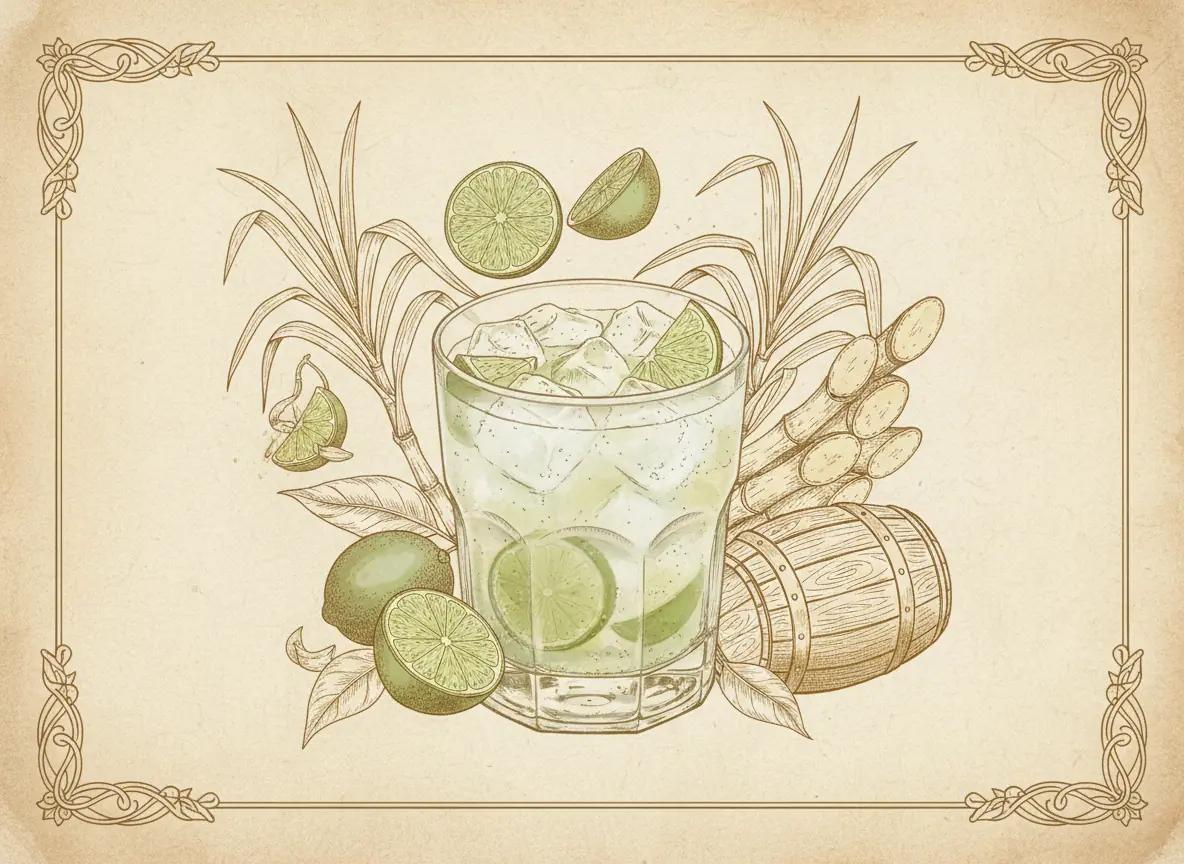
Brazil’s national cocktail and one of the most deceptively simple drinks in the world. Pronounced “kai-pee-REEN-ya”, the name is the diminutive of caipira, a term for the rural people of São Paulo state, and translates as “little country girl”. The drink emerged from the sugarcane-rich countryside in the 19th century, created by landowning farmers and refined over generations. One origin story traces it to the 1918 Spanish flu epidemic, when Brazilians took cachaça mixed with lime, honey, and garlic as a folk remedy; honey gave way to sugar, garlic mercifully disappeared, and a cocktail was born. The Caipirinha was declared Brazilian Cultural Heritage in 2003 and Intangible Heritage of Rio de Janeiro in 2019, and by 2024 TasteAtlas ranked it the third best cocktail in the world. What sets it apart is cachaça. Not rum, though both come from sugarcane: rum is distilled from molasses, a by-product of sugar refining, while cachaça is distilled from fresh sugarcane juice, giving it a grassy, vegetal, slightly funky character that defines the drink entirely. Three ingredients. No shortcuts. No margin for error.

Cameron’s Kick

Cameron's Kick is a sour that should not work twice over. The base is split between Scotch and Irish whiskey, a pairing neither island has ever requested, and the sweetener is orgeat, which puts marzipan against malt. Harry MacElhone printed it in Harry's ABC of Mixing Cocktails in 1922. The split is the interesting part. Scotch brings a dry cereal character and Irish brings a softer, orchardy one, and at equal measure they overlap into something that tastes like a third whisky neither bottle contains. Favour either island and the effect collapses, which is why the measures are equal rather than approximate. Nobody knows who Cameron was. MacElhone names the drink and keeps the secret, and a century of people looking has not produced an answer. What survives is a spec that reads considerably more modern than 1922 has any right to: a split base, an unexpected sweetener, and a result that is nutty, malty and improbably elegant.

Casino

The Casino belongs to the Aviation's family tree and arrives with a named author: Jacob A. Didier printed it in his 1909 The Reminder, Old Tom gin with maraschino, orange bitters and lemon, one of the era's great sweet-gin sours. It shares three ingredients with the Aviation and predates the violet fashion entirely: this is the branch without the sky. Old Tom is the load-bearing choice: the lightly sweetened gin style rounds the maraschino's dry cherry funk and lets the spec run without added sugar, the drink balancing on the spirit itself. Orange bitters, the period's house seasoning, bridge the lemon to the liqueur, and the whole reads brighter and drier than its sweet-gin base suggests. It survives as the connoisseur's Aviation, ordered by drinkers who want the maraschino conversation without the crème de violette's cameo, and it gives the Old Tom bottle its best showcase in the sour family.

Charlie Chaplin

The Charlie Chaplin is equal parts sloe gin, apricot brandy and lime juice, shaken. There is no full-strength spirit in it at all: the base is two liqueurs, and the lime is the only thing keeping them honest. It comes from the bar of the old Waldorf-Astoria in the 1910s, recorded in the hotel's pre-Prohibition bar book, at a point when Chaplin was arguably the most famous person alive and naming drinks after celebrities was what bars did instead of headlines. What makes it work is that the two liqueurs are natural neighbours. Sloe gin is plum with an almond edge from the stones; apricot brandy is stone fruit with a kernel note of its own. They lean into each other rather than competing, and a full third of lime stops the whole thing collapsing into cordial. It has the architecture of a Last Word at the strength of a garden party, and it goes down faster than it should.

Clover Club

The Clover Club was the house drink of a Philadelphia institution: a club of journalists, lawyers and industrialists who met at the Bellevue-Stratford Hotel from the 1880s to trade toasts and abuse. Their cocktail spread through pre-Prohibition America as a byword for sophistication, a rose-pink sour under a white crown, ordered by men who ran newspapers and railways and saw nothing unmanly in a drink the colour of a debutante's corsage. The twentieth century was less secure. The drink's colour saw it dismissed for decades as something unserious, until the cocktail revival called the sneer's bluff: Julie Reiner named her Brooklyn bar after it in 2008 and put the drink back where it started, at the centre of the conversation. The lesson stands: pink was never the opposite of serious. Made properly it justifies every year of the fuss. Dry gin, sharp lemon and real raspberry syrup, with an egg white shaken into a foam like a rose-tinted cloud: tart, silky and balanced on a knife-edge between orchard and bar.
Corpse Reviver No.2

Corpse Reviver No.2

The Corpse Reviver No. 2 appeared alongside its brandy sibling in Harry Craddock's Savoy Cocktail Book in 1930, accompanied by his now-famous warning that four consumed in quick succession were sufficient to unrevive the corpse entirely. Where the No. 1 retreated into obscurity, the No. 2 became one of the most ordered classic cocktails of the contemporary revival. The warning has done nothing to discourage that. Equal parts gin, Cointreau, Lillet Blanc and fresh lemon juice, with a rinse of absinthe coating the glass before the drink arrives. The absinthe is not an ingredient in the conventional sense: it never enters the shaker, it lines the glass, and it is discarded before the drink is poured. What it leaves is an aromatic signature on every sip that no measured addition could replicate. Lillet Blanc is the modern substitution for Kina Lillet, which contained considerably more quinine and produced a more bitter, complex result. Cocchi Americano is the closer match.

Cosmonaut

The Cosmonaut is a gin sour sweetened with a spoonful of raspberry jam. Sasha Petraske built it at Milk & Honey in New York, and the name is a joke: the Eastern Bloc answer to the Cosmopolitan, which was the drink ruling the city above ground at the time. Same colour, same decade, opposite philosophy. The Cosmopolitan was branding and citrus vodka; the Cosmonaut is a jar from the kitchen, an exact ratio and no garnish at all. The preserve is doing three jobs at once, which is the point of using it. It sweetens, it fruits, and it textures: the seeds and the pectin shake into a rustic, slightly silky body that raspberry syrup cannot produce. Milk & Honey's house style demanded fresh citrus, proper ice and no decoration, and this drink is that doctrine in miniature. It drinks brighter and drier than the colour suggests, which is usually the first surprise.