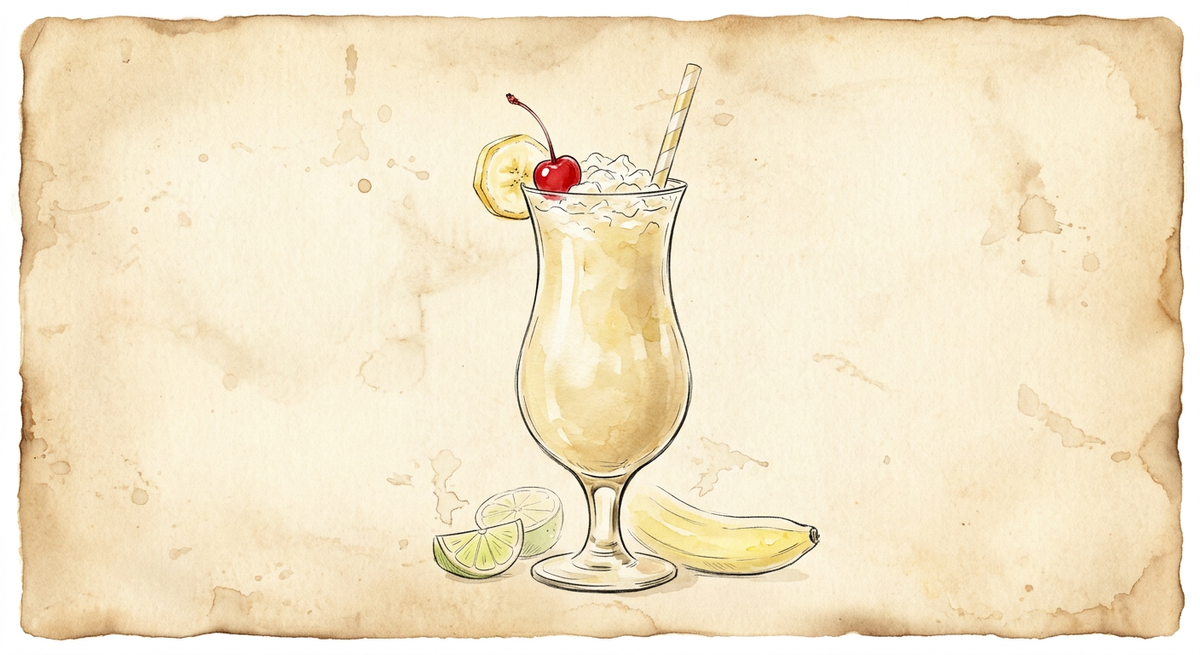
Banana Daiquiri
A Banana Daiquiri is 45ml of white rum, 15ml of banana liqueur, half a ripe banana, 20ml of fresh lime juice and 10ml of simple syrup, blended with crushed ice for 10 to 15 seconds and poured into a hurricane glass. A banana slice and a cherry finish it. About 2.1 UK units. The banana comes twice. The fresh fruit brings body and a honeyed sweetness; the liqueur brings a cooked, concentrated banana and some strength. Each covers what the other lacks, and the lime keeps it a daiquiri. Ripeness decides the drink. A freckled banana blends thick and sweet; a green one blends thin and tastes faintly of leaf. Peeled ripe halves from the freezer are better still, because they chill the drink without watering it. Mountain Top, a bar and shop on St Thomas in the US Virgin Islands, says on its own site that Captain George Soule created it there in 1953.
Glassware: Hurricane Glass
Garnish: Banana slice and Maraschino cherry
Ingredients
45ml
A light white rum at 40% ABV, in the Cuban style. It should sit under the banana rather than fight it.
15ml
Often sold as crème de banane; Giffard’s Banane du Brésil is 25% on its maker’s page, and we work to 20% in our unit count. Choose one that tastes of ripe fruit; the cheapest taste of sweets.
Half, ripe
Half a banana with freckled skin, fresh or frozen at that ripeness. It gives the drink its body. An underripe one blends thin and tastes green.
20ml
Squeezed the same day. The acid that keeps fruit, liqueur and rum tasting like a daiquiri.
10ml
Sugar and water, 1:1 by weight. Set it by the fruit: a ripe banana needs little, a firm one all 10ml.
Instructions
Add the rum, banana liqueur, banana, lime juice and syrup to a blender.
Add a scoop of crushed ice, about 150g, or less if the banana is frozen.
Blend for 10 to 15 seconds, until smooth but still thick.
Pour into a hurricane glass.
Garnish with a banana slice and a cherry, and serve with a straw.
Expert Tip
Freeze ripe bananas ahead. Peel them when the skins are freckled, halve them and bag them. Frozen fruit chills the blend without adding water, so you need less ice and the drink holds its texture longer. Blend for 10 to 15 seconds and stop when it turns smooth. Longer, and the ice whips into foam and the drink thins and separates in the glass. Set the syrup by the fruit. A well-spotted banana barely needs the 10ml; a firmer one takes all of it.
Behind the Banana Daiquiri
Flavour Profile
The Origin
The Banana Daiquiri is a blended daiquiri, and the Oxford Companion describes frozen drinks as made by grinding the ingredients and ice together in an electric blender. Mountain Top, a bar and shop on St Thomas in the US Virgin Islands, says on its own site that a British sea captain, George Soule, created the drink there in 1953.
Two Kinds of Banana
Fresh banana blends to a thick, creamy texture and tastes honeyed but a little hollow. Banana liqueur tastes concentrated and cooked, and has no body.
Together each covers the other. The liqueur also adds strength, which matters in a drink where ice and fruit make up most of the glass.
Ripeness
Brown freckles on the skin mean most of the starch has turned to sugar. That sugar gives both the sweetness and the creamy blend.
An underripe banana has neither, and making up for it with syrup gives a drink that is sweet without being rich. Buy bananas early, let them ripen, then peel, halve and freeze them.
How the banana changes the drink
Freckled, ripe
- Texture
- Thick and creamy
- Taste
- Sweet, honeyed
- Syrup
- Little or none
Yellow, firm
- Texture
- Thinner
- Taste
- Mild, starchy
- Syrup
- The full 10ml
Green
- Texture
- Thin
- Taste
- Leafy, astringent
- Syrup
- Use another banana
Frozen ripe halves
- Texture
- Thickest and coldest
- Taste
- Sweet, honeyed
- Syrup
- Little or none
| Banana | Texture | Taste | Syrup |
|---|---|---|---|
| Freckled, ripe | Thick and creamy | Sweet, honeyed | Little or none |
| Yellow, firm | Thinner | Mild, starchy | The full 10ml |
| Green | Thin | Leafy, astringent | Use another banana |
| Frozen ripe halves | Thickest and coldest | Sweet, honeyed | Little or none |
The Blend
Ten to fifteen seconds is enough. Stop when the sound of the blender evens out and the mixture looks smooth.
Past that, the ice whips into foam and the drink thins, then separates in the glass. Frozen banana gives some leeway: it thickens without adding water, so less ice and a shorter blend reach the same texture.
How to Serve It
In a hurricane glass, with a straw beside the banana slice and cherry on the rim. Pour it thick and serve it before it starts to melt.
Make it at home
The Spirit
White RumWhite rum is clear rum, usually bottled at 40% ABV, either unaged or rested in oak and then charcoal-filtered back to clear. It is the light, dry rum of the Daiquiri, the Mojito and the Cuba Libre, and the rum most of our recipes mean when they want rum that sits under lime rather than over it.
Master the Techniques
More to explore
Frequently Asked Questions
What is in a Banana Daiquiri?
What is banana liqueur?
Does banana liqueur go off?
Fresh banana or banana liqueur?
Should I freeze the bananas?
Why is my Banana Daiquiri thin?
How strong is a Banana Daiquiri?
Who invented the Banana Daiquiri?
Sources.
Correct as of 19 October 2026.
- Mountain Top, St Thomas, “The World Famous Banana Daiquiri” (the bar’s own site: in 1953 Capt. George Soule created the Banana Daiquiri at Mountain Top with Cruzan rum, ripe bananas, lime juice and a homemade banana liqueur; its signature drink).
- Giffard, “Banane du Brésil” (producer’s product page: liqueur from the slow maceration of bananas mostly from Brazil, natural banana flavourings and a hint of Cognac; 25%).
- The Oxford Companion to Spirits and Cocktails (Richard Boccato), “frozen drinks, blender drinks” (secondary source: frozen drinks are made by grinding the ingredients and ice together in an electric blender; a “frozen banana Daiquiri” at the Varadero Internacional hotel in Havana in 1954 (Boston Herald)).
You Might Also Like
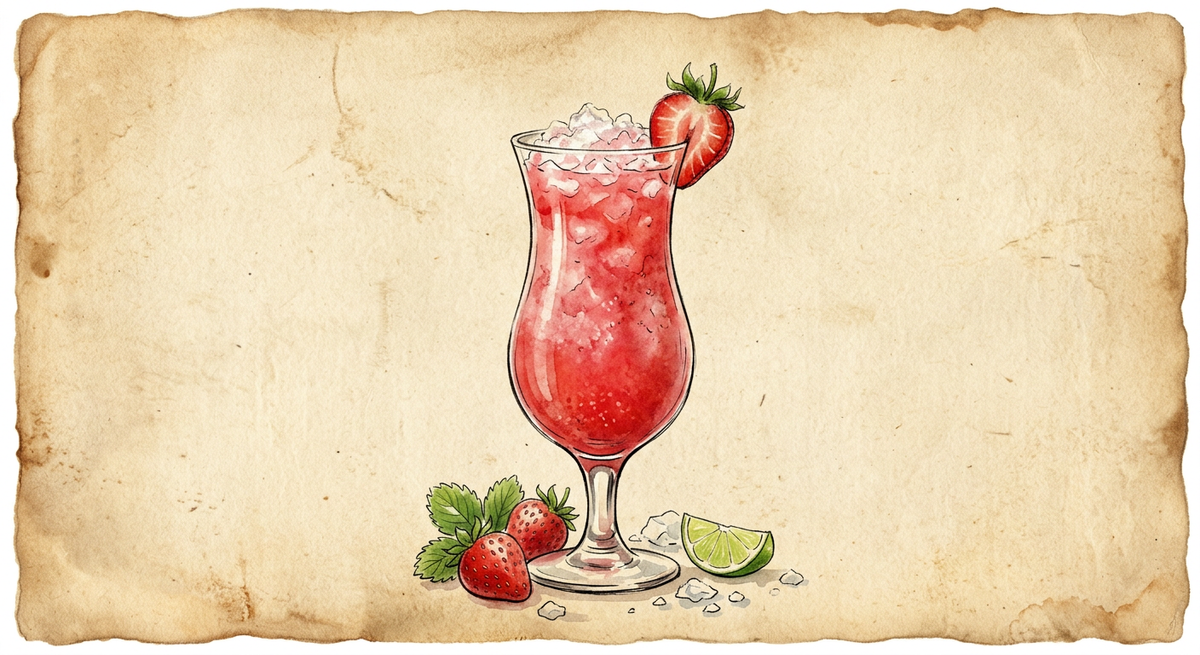
Strawberry Daiquiri
A Strawberry Daiquiri is 50ml of white rum, five hulled ripe strawberries, 20ml of fresh lime juice and 10ml of sugar syrup, blended with a cupful of crushed ice for 10 to 15 seconds and poured into a hurricane glass, with a strawberry seated on the rim. About 2.0 UK units, all of it from the rum. It is a frozen Daiquiri with fruit in it, and the lime is what keeps it one. The berries bring the colour, the body and the bulk of the sweetness; the syrup is there for fruit that turns out less ripe than it looked in the shop. Difford’s Guide’s frozen Strawberry Daiquiri blends strawberries, rum, lime juice and cane sugar syrup with crushed ice. Made from fruit, it tastes of strawberries and lime rather than sugar, and the whole method is one short blend.
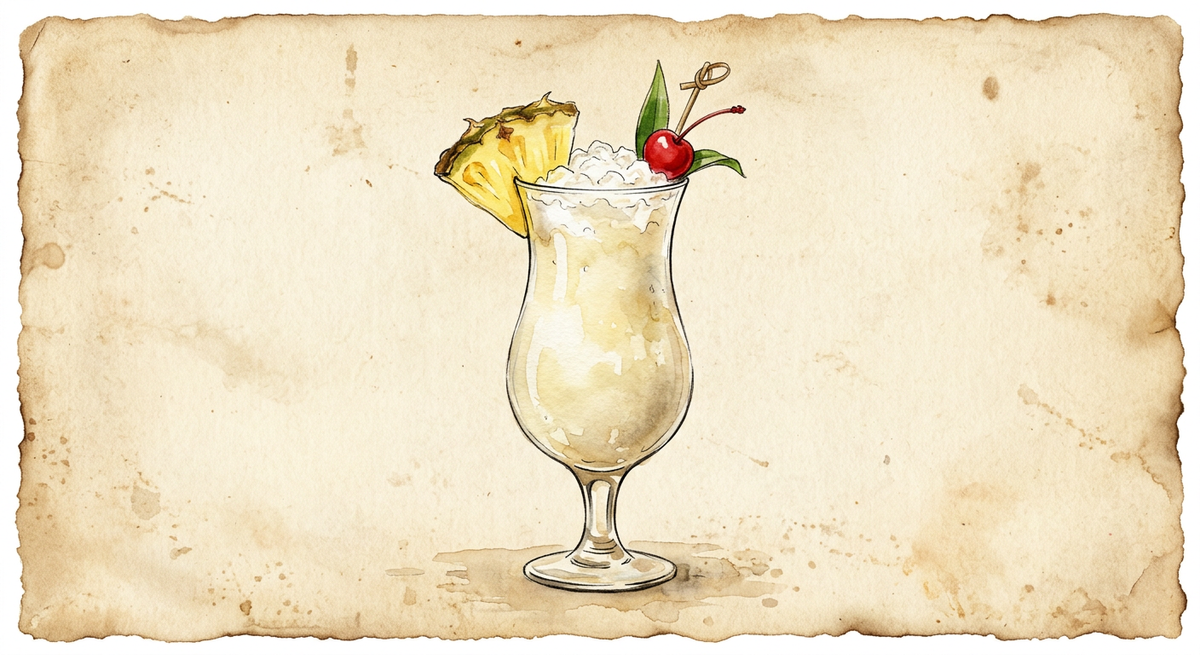
Piña Colada
A Piña Colada is white rum, pineapple and cream of coconut blended with ice: 50ml white rum, 50ml fresh pineapple juice and 30ml cream of coconut, blended for 10 to 15 seconds with a cup of crushed ice and poured into a hurricane glass, with a pineapple wedge and a cherry. The measures are the IBA’s own. A few drops of lime are optional, to correct a sweet batch. The Caribe Hilton in San Juan credits its bartender Ramón “Monchito” Marrero with the drink in 1954, as Difford’s Guide reports; Difford’s adds that Marrero himself claimed 15 August 1952. It depends on Coco López, the sweetened cream of coconut Ramón López Irizarry developed in 1949, by Imbibe’s account. There are rivals: Ricardo García, also at the Caribe Hilton, claims to have invented it, with 1954 the year Punch gives, and the Barrachina restaurant, by its own account, names Ramón Portas Mingot in 1963. Punch says the Piña Colada was declared Puerto Rico’s national drink in 1978. Cream of coconut is the ingredient that decides it: thick, sweet and rich in fat, never coconut milk. Each one carries about 2.0 UK units.
Banana Calling
A Banana Calling is 40ml of London Dry gin, 10ml of banana liqueur, 7.5ml of fino sherry, 20ml of fresh lemon juice and 7.5ml of rich sugar syrup, shaken hard for 10 to 12 seconds and double strained into a chilled Nick & Nora glass, with a dried banana chip pegged to the rim. About 1.9 UK units. Difford’s Guide, a secondary source, says Cameron Attfield created the recipe it adapts at Dandelyan in London in August 2018, as a riff on Chris Jepson’s London Calling of 2002. Our measures follow Difford’s Guide’s adaptation of Attfield’s recipe. The London Calling is gin, fino, lemon, syrup and orange bitters; the Banana Calling halves the fino, adds the banana, raises the lemon and drops the bitters. The banana is meant to be hard to find. At 10ml it rounds out the middle of the sour, and the fino’s dry, salty edge keeps it from turning sweet. Most people taste a fuller gin sour and only find the fruit once the name points to it.
Where this one sits
Recipe by Jerry Can Spirits · Updated 19 October 2026