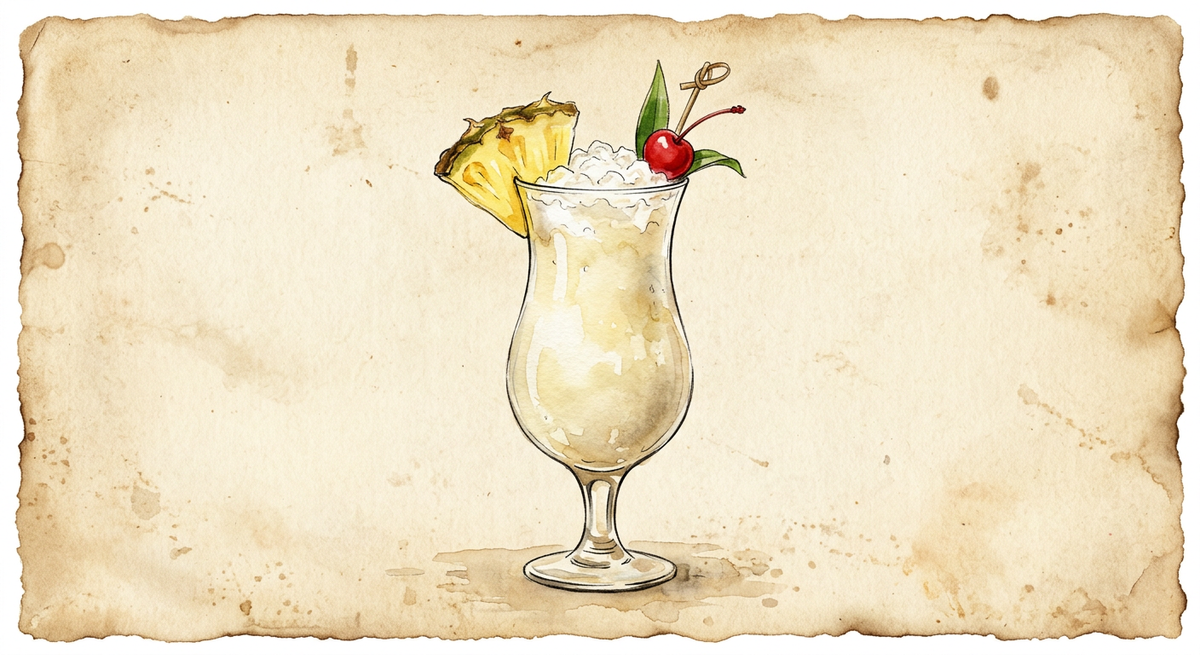
Piña Colada
A Piña Colada is white rum, pineapple and cream of coconut blended with ice: 50ml white rum, 50ml fresh pineapple juice and 30ml cream of coconut, blended for 10 to 15 seconds with a cup of crushed ice and poured into a hurricane glass, with a pineapple wedge and a cherry. The measures are the IBA’s own. A few drops of lime are optional, to correct a sweet batch. The Caribe Hilton in San Juan credits its bartender Ramón “Monchito” Marrero with the drink in 1954, as Difford’s Guide reports; Difford’s adds that Marrero himself claimed 15 August 1952. It depends on Coco López, the sweetened cream of coconut Ramón López Irizarry developed in 1949, by Imbibe’s account. There are rivals: Ricardo García, also at the Caribe Hilton, claims to have invented it, with 1954 the year Punch gives, and the Barrachina restaurant, by its own account, names Ramón Portas Mingot in 1963. Punch says the Piña Colada was declared Puerto Rico’s national drink in 1978. Cream of coconut is the ingredient that decides it: thick, sweet and rich in fat, never coconut milk. Each one carries about 2.0 UK units.
Glassware: Hurricane Glass
Garnish: Pineapple wedge and Maraschino cherry
Ingredients
50ml
A clean white rum at 40% ABV, as the IBA gives it. It lets the pineapple and coconut lead. Splitting it with an aged rum makes a deeper, darker drink.
50ml
Pressed the same day, or four slices of fresh pineapple blended in. At 50ml it matches the rum, so the drink tastes of rum as well as fruit. Juice from concentrate tastes cooked here.
30ml
Sweetened coconut cream, sold in tins; Coco López is the brand the drink was first made with, by Coco López’s own account. It is the drink’s sugar and its body at once. Coconut milk is unsweetened and thin, and coconut cream for cooking is unsweetened too, so neither works.
A few drops
Optional, a few drops. The IBA does not list it as an ingredient, noting only that lime was historically added to taste. Use it to correct a cream of coconut that is too sweet, and leave it out otherwise.
Instructions
Shake the tin of cream of coconut, then add the rum, pineapple juice and cream of coconut to a blender.
Add a cup of crushed ice.
Blend for 10 to 15 seconds, until smooth but still thick.
Taste, and add a few drops of lime juice only if it is too sweet.
Pour into a hurricane glass, garnish with a pineapple wedge and a cherry, and serve with a straw.
Source: the IBA (Official IBA specification; method ours). Last checked 9 October 2026.
Expert Tip
Shake the tin of cream of coconut before opening it. It separates in storage, and pouring from the top gives you the fat without the sugar and body underneath, which is why some Piña Coladas come out greasy. Blend for 10 to 15 seconds and stop while the drink is still thick. Longer, and the ice melts into it and the texture goes thin. Use pressed pineapple juice, or four slices of fresh pineapple blended in, as the IBA allows. Juice from a carton tastes cooked beside fresh fruit.
Behind the Piña Colada
Flavour Profile
Three Claims and One Tin
The Caribe Hilton in San Juan says its bartender Ramón “Monchito” Marrero created the Piña Colada in 1954, as Difford’s Guide reports, though Marrero himself claimed 15 August 1952. Punch gives the rival claim of Ricardo García, who also worked at the hotel, as 1954. The Barrachina restaurant in Old San Juan says Ramón Portas Mingot created it there in 1963, by its own account.
The tin matters more than the dispute. In 1949, by Imbibe’s account, Ramón López Irizarry, an agriculture professor at the University of Puerto Rico, developed a sweetened coconut cream and sold it as Coco López, in a small laboratory in Puerto Rico, the company’s own history says. Without a sweetened coconut cream on the shelf, the drink as it is made now could not exist. Punch says the Piña Colada was declared Puerto Rico’s national drink in 1978.
Cream of Coconut
Cream of coconut is coconut cream cooked with sugar until it is thick. At 30ml it gives the drink sugar and fat at once, and the fat is what makes a Piña Colada creamy instead of merely sweet.
The substitutes fail in different directions. Coconut milk is thin and unsweetened. Coconut syrup is sugar without the fat. Coconut cream sold for cooking has the fat but no sugar, and adding syrup to it rarely tastes right. An opened tin lasts only a few days, chilled.
The IBA Measures
The Piña Colada and its relations; the 1922 Travel magazine description is as Difford’s Guide reports it
Piña Colada (IBA, and ours)
- Rum
- 50ml white rum
- Pineapple
- 50ml juice
- Coconut
- 30ml cream of coconut
- Other
- Optional drops of lime
Painkiller (ours)
- Rum
- 60ml Pusser’s Rum
- Pineapple
- 120ml juice
- Coconut
- 30ml cream of coconut
- Other
- 30ml orange juice
Piña colada, as Travel magazine described it in 1922
- Rum
- Rum
- Pineapple
- Juice
- Coconut
- None
- Other
- Sugar, lime and ice
| Drink | Rum | Pineapple | Coconut | Other |
|---|---|---|---|---|
| Piña Colada (IBA, and ours) | 50ml white rum | 50ml juice | 30ml cream of coconut | Optional drops of lime |
| Painkiller (ours) | 60ml Pusser’s Rum | 120ml juice | 30ml cream of coconut | 30ml orange juice |
| Piña colada, as Travel magazine described it in 1922 | Rum | Juice | None | Sugar, lime and ice |
Equal measures of rum and pineapple make a drier, more spirited drink than most bar versions, which pour far more juice. The Painkiller shows what happens when the juice is more than doubled and orange goes in: a longer, softer drink on the same coconut base.
Blend Briefly
Ten to fifteen seconds in the blender, with about a cup of crushed ice, is enough. The drink should come out smooth and thick enough to hold a straw upright. Longer, and the ice melts into it and the coconut thins out.
Without a blender, shake hard for 10 to 12 seconds with cubed ice and strain over crushed ice. That version is lighter and silkier, and some prefer it.
Why It Got a Bad Name
Pre-mixes, slush machines and syrups made most people’s first Piña Colada thin and sugary. None of that is in the recipe. Three ingredients in IBA proportion, with fresh pineapple and a shaken tin, give a cold, creamy drink in which the rum still comes through.
How Strong It Is
With 50ml of white rum at 40% ABV, a Piña Colada holds about 2.0 UK units. It drinks like a pudding and goes fast, so count it as two pub measures.
Make it at home
The Spirit
White RumWhite rum is clear rum, usually bottled at 40% ABV, either unaged or rested in oak and then charcoal-filtered back to clear. It is the light, dry rum of the Daiquiri, the Mojito and the Cuba Libre, and the rum most of our recipes mean when they want rum that sits under lime rather than over it.
More to explore
Frequently Asked Questions
What is in a Piña Colada?
Cream of coconut or coconut milk?
Who invented the Piña Colada?
How strong is a Piña Colada?
Can I make a Piña Colada without a blender?
What does piña colada mean?
Can I use fresh pineapple instead of juice?
Sources.
Checked between 18 October and 19 October 2026.
- Difford’s Guide, “Piña Colada history” (secondary source: Marrero claims 15 August 1952 at the Caribe Hilton’s Beachcomber Bar (the hotel says 1954); Ricardo García also claims it; Portas Mingot says 1963 at Barrachina; the first written reference to a drink named Piña Colada is in Travel magazine, December 1922, without coconut).
- Barrachina, “Barrachina: Birthplace of the Piña Colada” (“crafted here in 1963 by Don Ramón Portas Mingot”).
- Imbibe, “Elements: Cream of Coconut” (Ramón López Irizarry invented Coco López in 1949).
- Coco López, “About Us” (the small laboratory; the Piña Colada made on Coco López).
- Punch, “Will the Real Piña Colada Please Stand Up?” (secondary source: the Piña Colada declared Puerto Rico’s national drink in 1978; the two most believable stories are the Caribe Hilton’s Beachcomber Bar (Marrero 1952 or García 1954) and Barrachina (Portas Mingot 1963); plaques at both bars).
You Might Also Like
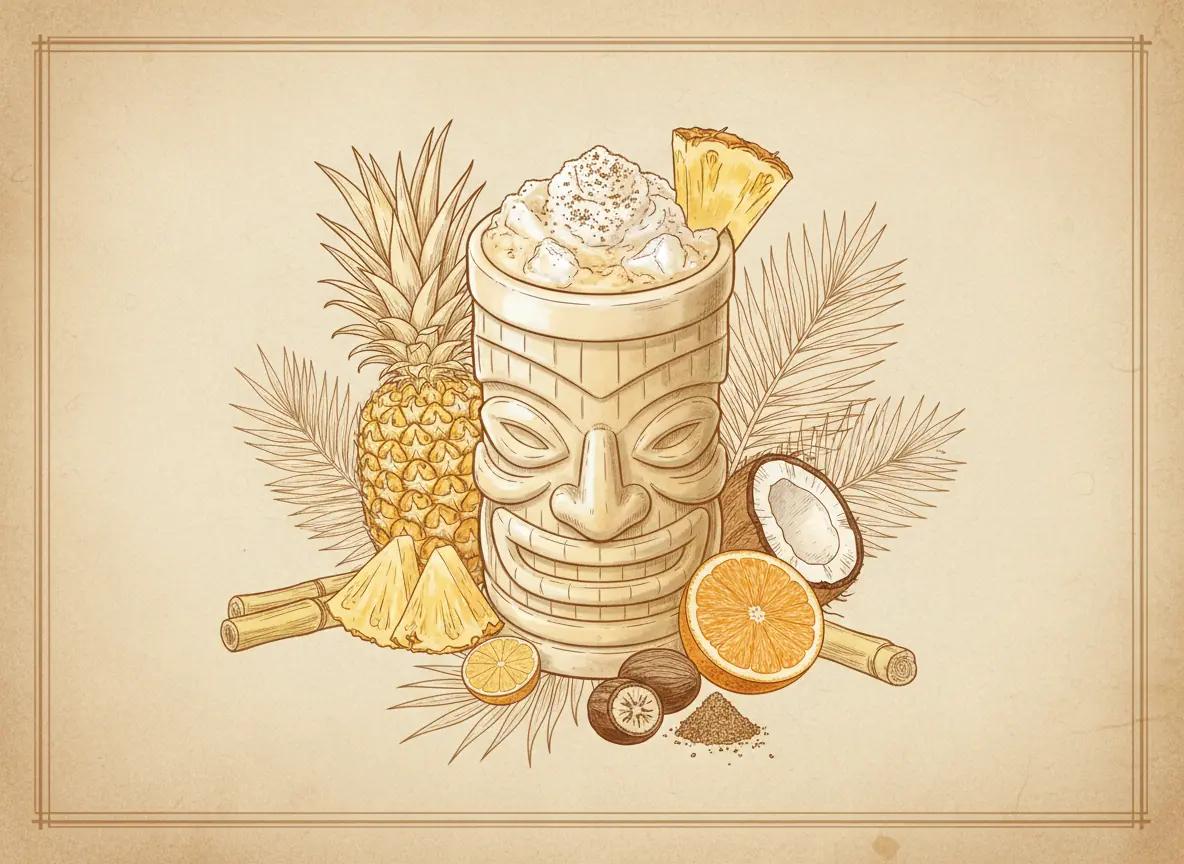
Painkiller
A Painkiller is 60ml of Pusser’s Rum, 120ml of pineapple juice, 30ml of fresh orange juice and 30ml of cream of coconut, given a hard 10 to 12 second shake and strained onto cubed ice in a tiki mug or a big glass, with fresh nutmeg grated on top. About 2.4 UK units. Cream of coconut is coconut and sugar, usually with no dairy, but check the label. The name belongs to Pusser’s. Pusser’s prints the name with the registered symbol on its own Painkiller page, and the Oxford Companion says the company owns the trademark for the Pusser’s Painkiller cocktail. The recipe here is its own: four parts pineapple, one of cream of coconut and one of orange, with Pusser’s to suit. Difford’s Guide says it trademarked the name in the United States and the UK in 2003 and in 2010 forced a New York bar called Painkiller to rename itself PKNY. Pusser’s traces the drink to Daphne Henderson’s Soggy Dollar Bar on Jost Van Dyke, in the British Virgin Islands.
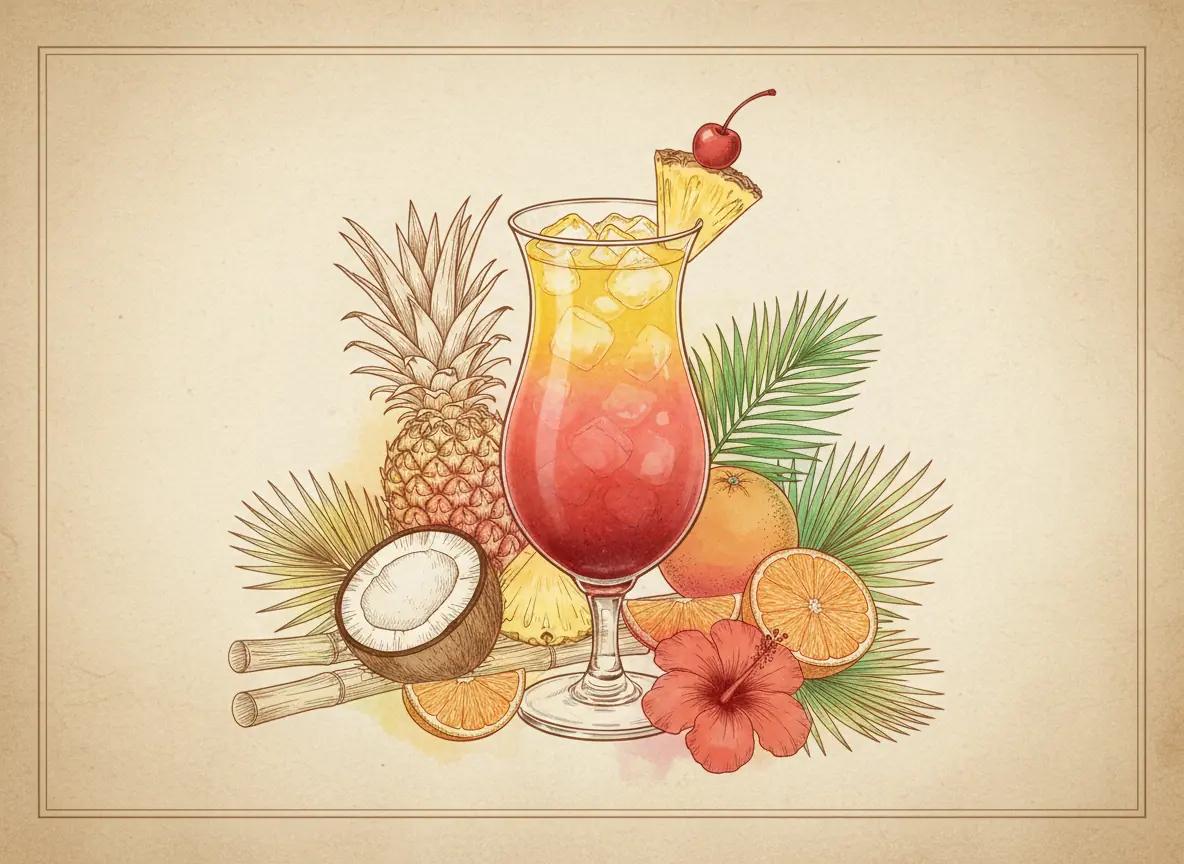
Bahama Mama
A Bahama Mama is a long rum punch: 30ml dark rum, 30ml coconut rum and 15ml overproof rum, with 60ml each of pineapple and orange juice, 15ml fresh lime juice and 15ml grenadine, shaken and strained over crushed ice in a hurricane glass. It tastes of coconut, pineapple and orange, and it is stronger than any of that suggests. Its history is loose. The Oxford Companion to Spirits and Cocktails places a Bahama Mama at Nassau’s British Colonial Hotel in 1960 and at Trader Vic’s in Beverly Hills in 1961, with neither formula recorded. The Nassau bartender Oswald Greenslade claims to have invented it, Travel Distilled reports, though he started work at the Nassau Beach Hotel in 1961. The fruit-and-coconut punch most bars now pour has no documented creator. A glass holds about 2.8 UK units. Squeeze the citrus the same day and use a grenadine made from pomegranate: in a drink that is mostly juice, the juice decides the result.
Rum Punch
Rum Punch follows the old rhyme, one of sour, two of sweet, three of strong, four of weak, and ours keeps it to the letter in 15ml parts: 15ml fresh lime juice; 15ml grenadine and 15ml demerara syrup; 30ml aged rum and 15ml dark rum; 30ml each of fresh orange and pineapple juice. Two dashes of Angostura go in as well. Shake it hard and pour it over fresh ice in a highball, then top it with an orange slice and grated nutmeg. Punch began as a drink the English made in India, and the word first appears in an East India Company letter of 1632, by the Oxford Companion’s account. The rhyme has more than one printed form. Read it as a ratio: islands, bars and families fill each part differently, and the weak part can be juice, tea or plain water. Multiply the parts by the number of guests and the same proportions fill a bowl. A glass holds about 1.9 UK units.
Where this one sits
Recipe by Jerry Can Spirits · Updated 19 October 2026