Rum Punch
Rum Punch follows the old rhyme, one of sour, two of sweet, three of strong, four of weak, and ours keeps it to the letter in 15ml parts: 15ml fresh lime juice; 15ml grenadine and 15ml demerara syrup; 30ml aged rum and 15ml dark rum; 30ml each of fresh orange and pineapple juice. Two dashes of Angostura go in as well. Shake it hard and pour it over fresh ice in a highball, then top it with an orange slice and grated nutmeg. Punch began as a drink the English made in India, and the word first appears in an East India Company letter of 1632, by the Oxford Companion’s account. The rhyme has more than one printed form. Read it as a ratio: islands, bars and families fill each part differently, and the weak part can be juice, tea or plain water. Multiply the parts by the number of guests and the same proportions fill a bowl. A glass holds about 1.9 UK units.
Glassware: Highball Glass
Garnish: Orange slice and Freshly grated nutmeg
Ingredients
30ml
Two of the three strong parts: 30ml of a medium-bodied aged rum (40% ABV) for oak, vanilla and body, so the rum still shows under 60ml of juice.
15ml
The third strong part. A dark Jamaican or Demerara rum brings burnt-sugar depth and colour; 15ml reaches the bottom of the drink without making it heavy.
15ml
The one part of sour, squeezed the same day. Set against 30ml of sweeteners, 15ml keeps the fruit from tasting of sugar.
15ml
Half of the sweet. Use a grenadine made from pomegranate: colour and a little red fruit, while cheap grenadine is sugar and dye.
15ml
The other half of the sweet: demerara sugar and water, two to one by weight. Its toffee note sits with the rums. Plain syrup works and tastes thinner.
30ml
Half of the four weak parts, squeezed the same day; it softens the lime and lengthens the drink without watering it.
30ml
The other half of the weak. Pressed juice gives body and some sweetness of its own. Cold tea or coconut water fill the same place in other recipes.
2 dashes
Two dashes, outside the rhyme. They add clove and bitterness that stop a drink of rum, sugar and juice tasting flat.
Instructions
Squeeze the lime and orange juice the same day.
Add both rums, the lime juice, grenadine, demerara syrup, orange and pineapple juice and the Angostura to a shaker.
Fill with cubed ice and shake hard for 10 to 12 seconds.
Strain into a highball glass over fresh ice.
Add an orange slice and grate fresh nutmeg over the top.
Our version
The rhyme fixes only the proportions. Ours fills its parts at 15ml each: lime; grenadine and demerara syrup; aged and dark rum; orange and pineapple juice, with two dashes of Angostura outside the rhyme.
Source: our own specification. Last checked 9 October 2026.
Expert Tip
Build to the rhyme, then taste. Limes vary, and so does the sugar in pineapple juice. Too sharp, and 5ml more demerara syrup fixes it; too sweet, a squeeze more lime. Change one thing at a time. Shake hard for 10 to 12 seconds with cubed ice and strain over fresh ice. A drink this long in juice needs the chill, and fresh ice keeps the glass from turning watery. Nutmeg goes on last, grated from a whole nut. Its aroma is most of what it adds, and a jar of ground nutmeg loses that within weeks.
Behind the Rum Punch
Flavour Profile
The Rhyme
One of sour, two of sweet, three of strong, four of weak. The rhyme appears in print in several forms, and nobody can say who first wrote it down. It survives because it is a ratio rather than a shopping list, and it still balances a punch when the ingredients change.
Ours keeps the parts exact at 15ml each: one of lime, two of sweetener, three of rum, four of juice.
Rum Punch by the rhyme, in 15ml parts
One of sour
- Measure
- 15ml
- Ours
- Fresh lime juice
Two of sweet
- Measure
- 30ml
- Ours
- 15ml grenadine, 15ml demerara syrup
Three of strong
- Measure
- 45ml
- Ours
- 30ml aged rum, 15ml dark rum
Four of weak
- Measure
- 60ml
- Ours
- 30ml orange juice, 30ml pineapple juice
Outside the rhyme
- Measure
- Two dashes
- Ours
- Angostura bitters
| Part | Measure | Ours |
|---|---|---|
| One of sour | 15ml | Fresh lime juice |
| Two of sweet | 30ml | 15ml grenadine, 15ml demerara syrup |
| Three of strong | 45ml | 30ml aged rum, 15ml dark rum |
| Four of weak | 60ml | 30ml orange juice, 30ml pineapple juice |
| Outside the rhyme | Two dashes | Angostura bitters |
Where Punch Came From
Punch came to Britain from India, carried home by East India Company men, and the word appears in English in 1632. Most accounts derive it from panch, Hindi for five, after the drink’s five parts. Some prefer the puncheon, a large cask.
The sugar islands rebuilt it around rum. What the rhyme keeps of the older drink is the shape: spirit, citrus and sugar, lengthened with something weaker.
Two Rums
A blend beats one bottle. Aged rum gives oak, vanilla and body; dark rum adds burnt sugar and colour underneath. With only one rum, use the aged one at 45ml. For the stricter Jamaican branch of the family, built on dark rum and lime, see Planter’s Punch.
Two Sweeteners
Grenadine colours the punch and brings a little red fruit. Demerara syrup adds toffee that suits the rums. Between them they make the two sweet parts taste of something besides sugar.
By the Glass or the Bowl
By the glass, shake hard for 10 to 12 seconds and strain over fresh ice. For a bowl, mix the punch ahead, keep it cold, and add one big block of ice when guests arrive. A block melts slowly; a bowl of cubes waters the punch within the hour.
How Strong It Is
With 45ml of rum at 40% ABV and two dashes of Angostura, a glass of Rum Punch holds about 1.9 UK units. Served from a bowl in small cups, it is easy to lose count, so put water out next to the bowl.
Make it at home
The Spirit
Aged RumAged rum is rum that has spent years in oak casks, usually ex-bourbon barrels, and taken on vanilla, caramel and dried fruit; our recipes count it at 40% ABV. In our recipes it is the rum for drinks where you should taste the spirit: the Old Cuban, the Mai Tai, the Rum Sour and the punch bowl.
Master the Techniques
More to explore
Frequently Asked Questions
What is in a Rum Punch?
How strong is a Rum Punch?
What does one of sour, two of sweet, three of strong, four of weak mean?
What glass should I use for rum punch?
What is the difference between Rum Punch and Planter’s Punch?
How do I make Rum Punch for a party?
Why put nutmeg on rum punch?
Sources.
Correct as of 19 October 2026.
- The Oxford Companion to Spirits and Cocktails (David Wondrich), “punch” (secondary source: first mention in a 1632 East India Company letter; the English made punch in India and brought it to the rest of the world; Fryer 1676, “Indostan for Five”).
You Might Also Like
Planter’s Punch
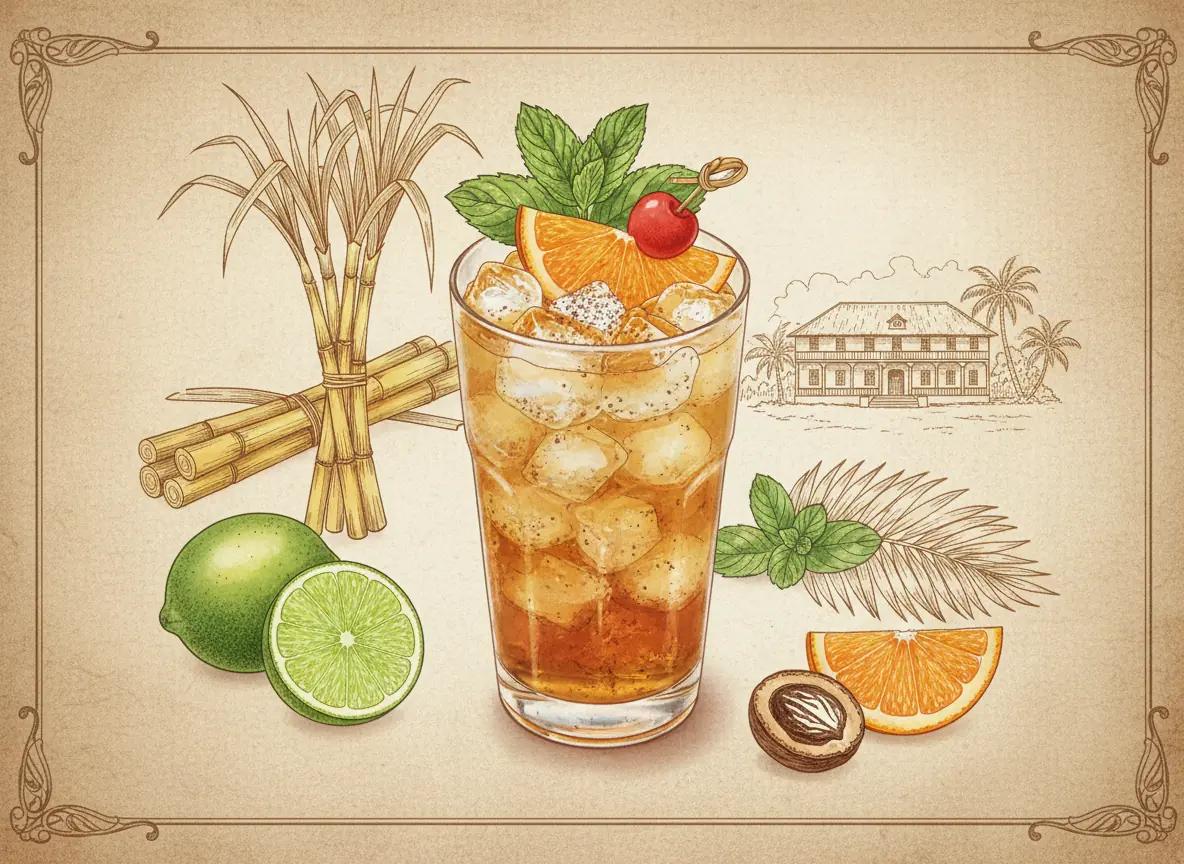
Planter’s Punch is 45ml of Jamaican rum, 15ml of fresh lime juice and 30ml of sugar cane juice, poured into a small tumbler, diluted to taste with water, ice or fresh juice, and finished with orange zest. The measures follow the IBA. About 1.8 UK units. It belongs to the punch family of the old rhyme, one of sour, two of sweet, three of strong, four of weak, and it is the Jamaican member: a dark, full-flavoured island rum, lime and sugar. The IBA writes it short and leaves the weak part to you; a longer build that follows the rhyme to the letter is our variation. The Oxford Companion calls it the unofficial drink of Jamaica since the late nineteenth century, and the Charleston City Paper prints a verse from the London magazine Fun of September 1878 that gives the same proportions. Cane juice is the IBA’s sweetener: sweeter than water, far less sweet than syrup, with a green, grassy taste.
The Expedition Punch
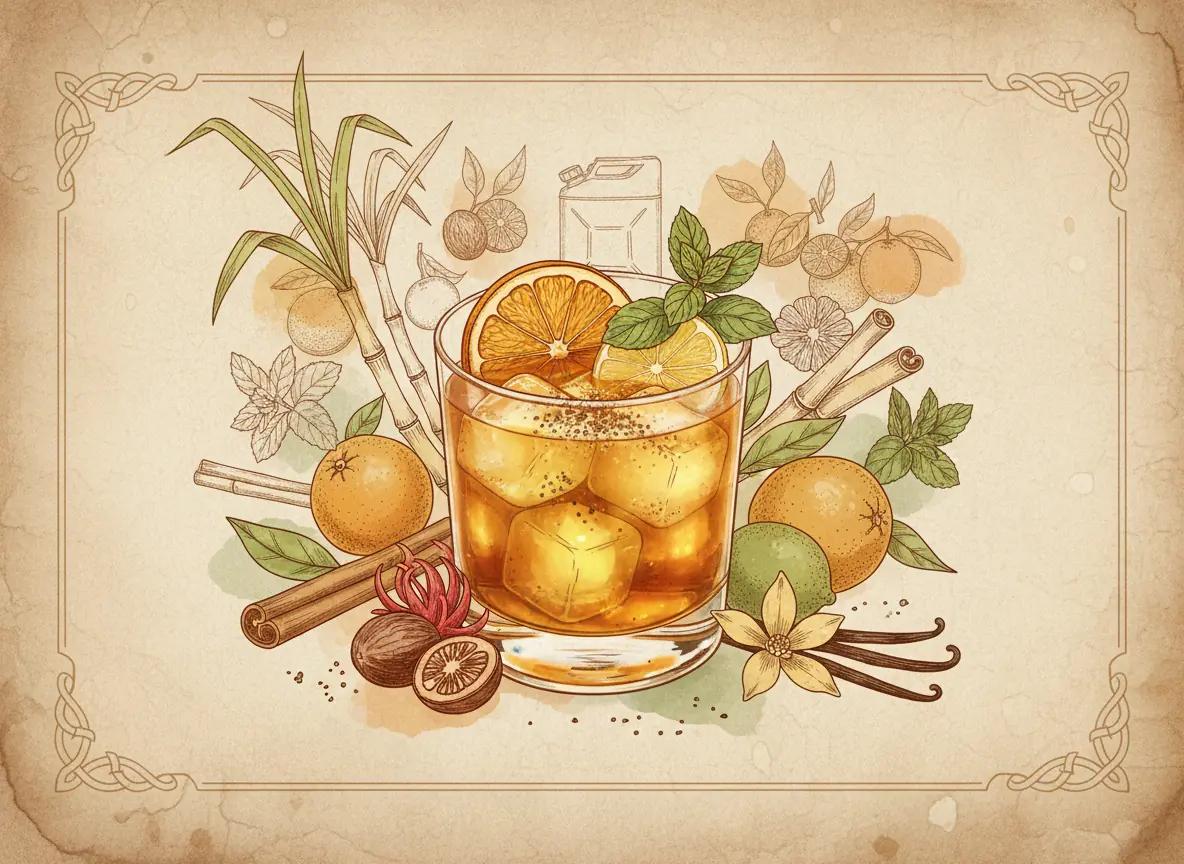
The Expedition Punch is 60ml of Expedition Spiced Rum, 20ml of fresh lemon juice, 40ml of sugar syrup and 80ml of water or cooled weak black tea, stirred gently over large cubed ice in a double rocks glass and finished with orange and lemon wheels, a mint sprig and freshly grated nutmeg. About 2.4 UK units in 200ml of drink. It follows the old punch formula of five parts: spirit, citrus, sugar, water and spice. Punch is older than the cocktail; the Oxford Companion dates the first mention of punch by name to a 1632 letter in the papers of the English East India Company. Here the rum carries much of the spice already, and the nutmeg on top completes the fifth part. The choice that changes the drink is water or tea. Water keeps it clean and lets the rum lead. Weak black tea, brewed at half strength and cooled, adds tannin and a drier edge beneath the sugar. Either way it scales from one cup to a bowl for ten without adjustment.
Rum Swizzle
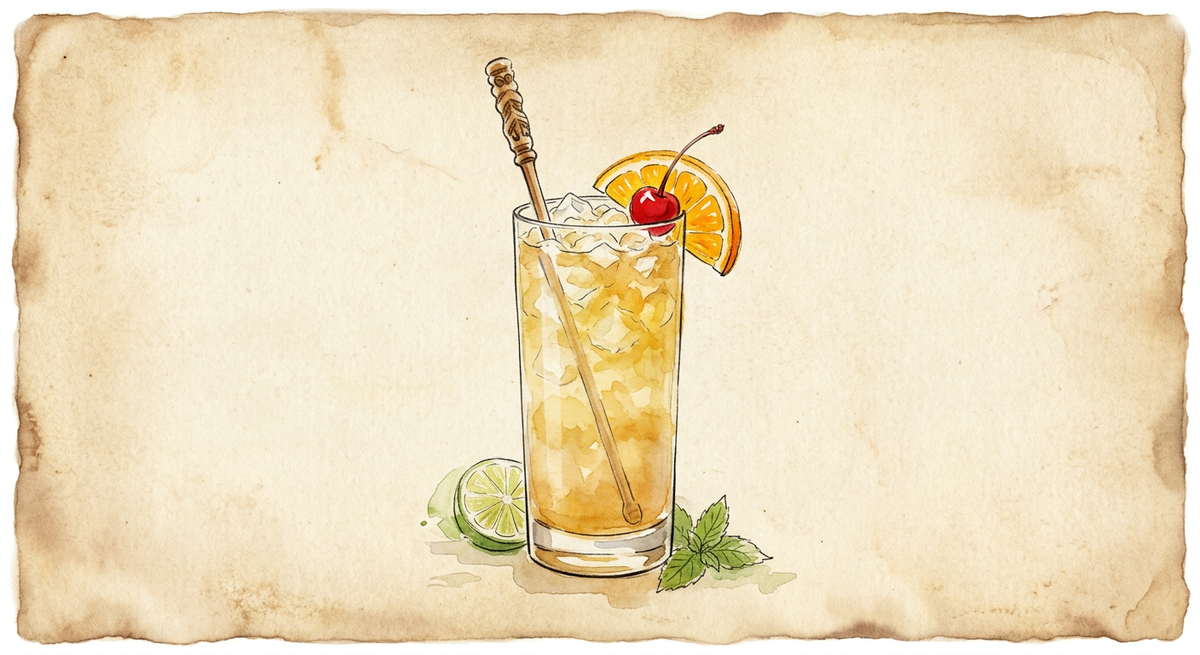
A Rum Swizzle is 60ml of black rum, 15ml of falernum, 45ml each of fresh pineapple and orange juice, 22.5ml of fresh lime juice and two dashes of Angostura, swizzled over crushed ice in a highball until the glass frosts, then topped with more crushed ice and finished with an orange slice and a cherry. About 2.6 UK units. It is Bermuda’s swizzle, often called the island’s national drink. The Swizzle Inn, which dates the drink to 1932 by its own account, is the bar most tied to it, and on the island it is usually mixed by the jug. Ours is a single glass on Gosling’s Black Seal, the Bermudian black rum. Where Trinidad’s Queen’s Park Swizzle is mint, bitters and rum, Bermuda’s is fruit: pineapple and orange folded through dark rum, with the falernum’s clove and lime holding the juices together.
Where this one sits
Recipe by Jerry Can Spirits · Updated 19 October 2026