The Expedition Punch
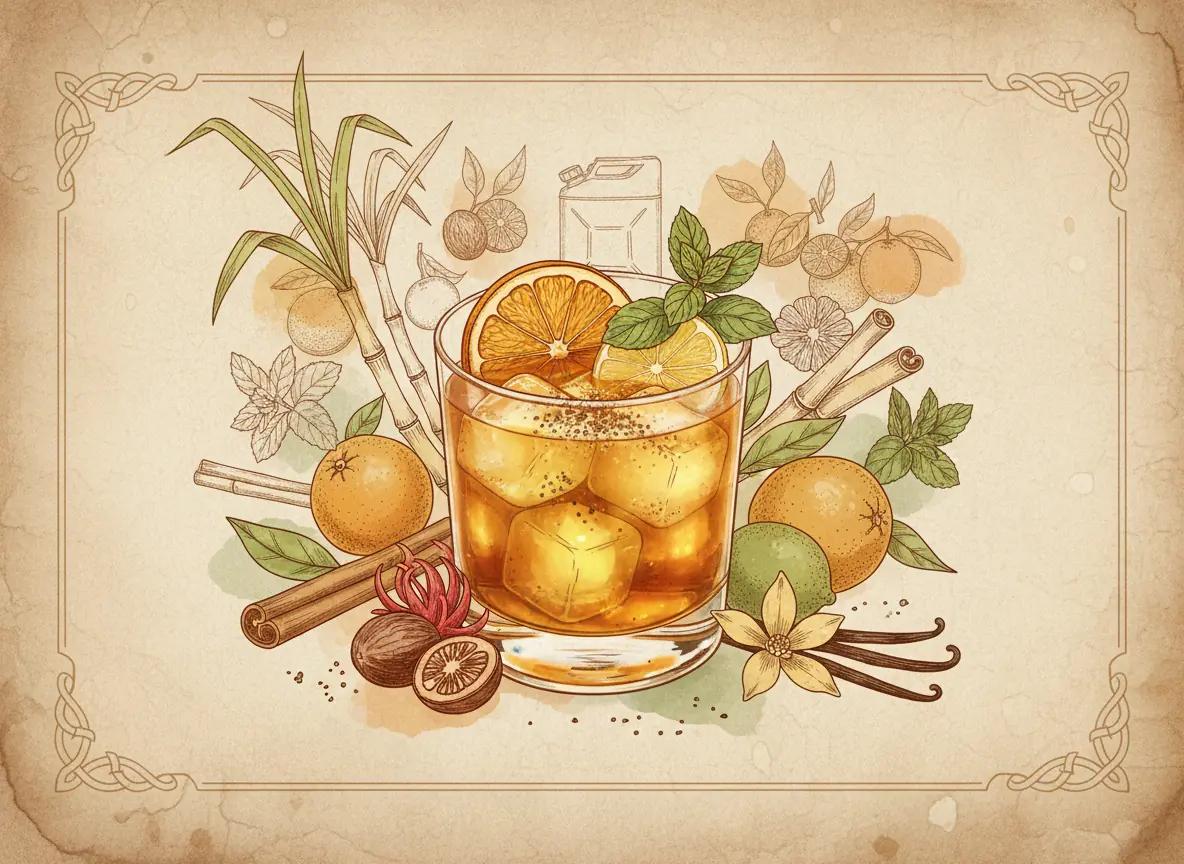
The Expedition Punch is 60ml of Expedition Spiced Rum, 20ml of fresh lemon juice, 40ml of sugar syrup and 80ml of water or cooled weak black tea, stirred gently over large cubed ice in a double rocks glass and finished with orange and lemon wheels, a mint sprig and freshly grated nutmeg. About 2.4 UK units in 200ml of drink. It follows the old punch formula of five parts: spirit, citrus, sugar, water and spice. Punch is older than the cocktail; the Oxford Companion dates the first mention of punch by name to a 1632 letter in the papers of the English East India Company. Here the rum carries much of the spice already, and the nutmeg on top completes the fifth part. The choice that changes the drink is water or tea. Water keeps it clean and lets the rum lead. Weak black tea, brewed at half strength and cooled, adds tannin and a drier edge beneath the sugar. Either way it scales from one cup to a bowl for ten without adjustment.
Variations
Glassware: Rocks Glass
Garnish: Orange wheel, Lemon wheel, Mint sprig and Freshly grated nutmeg
Ingredients
60ml
Expedition Spiced Rum at 40% ABV: seven real spices, two natural sweeteners, and bourbon oak. It is the spirit part of the formula, and its vanilla, cinnamon, clove and orange peel do much of the spicing older punches did with whole spices in the bowl.
20ml
Squeezed on the day. Lemon, not lime: its gentler acid suits the vanilla and spice in the rum, and 20ml against 40ml of syrup keeps the cup on the soft side of sour.
40ml
One part white sugar dissolved in one part warm water, by weight: the sweet part of the formula. The 40ml looks generous until the 80ml of water or tea goes in.
80ml
The weak part of the formula. Water gives the cleaner cup with the rum in front. Weak black tea, brewed at half strength and cooled completely, adds tannin and a drier last mouthful, and suits a winter cup.
Instructions
Squeeze lemon juice immediately before building the drink.
If using black tea, brew a weak cup and allow to cool completely before building.
Fill a double rocks glass fully with large cubed ice.
Add Expedition Spiced Rum, fresh lemon juice, and sugar syrup directly over the ice.
Add the water or cooled weak black tea.
Stir gently to combine all ingredients.
Place the orange wheel and lemon wheel on the rim or float them on the surface.
Place the mint sprig upright alongside the citrus garnish.
Grate fresh nutmeg over the surface just before serving: three or four passes over each cup, or a light, even dusting over the bowl.
Serve immediately.
Our version
It follows the five-part punch formula. Ours sets it for one cup at 60ml rum, 20ml lemon, 40ml syrup and 80ml water or weak tea, lets Expedition Spiced Rum carry most of the spice, and finishes with fresh nutmeg.
Source: our own specification. Last checked 9 October 2026.
Expert Tip
Brew the tea at half strength and let it cool completely, ideally the night before in the fridge. Warm tea poured over ice melts it unevenly and the cup ends up weaker than the recipe, and strong tea turns the tannin harsh. Taste a cup before the bowl goes out. If it seems flat, reach for the lemon before the sugar: tea brings its own dryness, so a dull punch usually wants more acid, not more sweetness. Grate the nutmeg fresh, straight over each cup. Pre-ground nutmeg is flat by comparison, and in this drink the nutmeg is the spice part of the formula, not decoration.
Behind the The Expedition Punch
Flavour Profile
The Punch Tradition
The Oxford Companion dates the first mention of punch by name to a 1632 letter in the papers of the English East India Company, and says the only thing that can be said with certainty is that punch was a drink the English made in India with local ingredients. John Fryer wrote in 1676 that the name was “Indostan for Five, from Five Ingredients”, though nothing found in Indian literature corroborates it and “punch” was also an English word for something squat and round.
The Oxford Companion gives the fifth ingredient as spices, and says Peter Mundy recorded the English in Surat between 1628 and 1630 drinking “a Composition of Racke [i.e., arrack], water, sugar, and Juice of Lymes”. The Expedition Punch keeps the five parts and builds them by the cup.
Why Expedition Spiced Rum
A plain rum leaves the spice to the bowl: cinnamon sticks, cloves, nutmeg. Expedition Spiced Rum arrives with some of that work done. Vanilla, cinnamon, allspice, clove and cassia are already in the spirit, the notes punch makers once added by hand.
That shapes the rest. Lemon, not lime, because its rounder acid suits vanilla and oak. Nutmeg on top, because it is the one spice the rum does not carry, and grated fresh it reaches the nose before the first sip.
The Tea Decision
Jerry Thomas printed a Tea Punch in his 1862 guide: an infusion of green tea poured into a hot bowl of brandy, rum, lump sugar and lemon juice, set alight. The tannin gives the sugar something to work against that plain water does not.
Use water when the rum should lead, or for an afternoon. Use tea for a winter evening, or when the bowl will stand for a while: the dry edge keeps a long, diluted drink from tasting thin.
Batching
The recipe scales by ten without adjustment. The rum, syrup and tea can be mixed the night before and kept cold; squeeze and add the lemon on the day.
The Expedition Punch by the cup and by the bowl
Expedition Spiced Rum
- One cup
- 60ml
- Bowl for ten
- 600ml
Fresh lemon juice
- One cup
- 20ml
- Bowl for ten
- 200ml
Sugar syrup
- One cup
- 40ml
- Bowl for ten
- 400ml
Water or cooled weak black tea
- One cup
- 80ml
- Bowl for ten
- 800ml
Total
- One cup
- 200ml
- Bowl for ten
- 2 litres
Nutmeg
- One cup
- Grated over the cup
- Bowl for ten
- Grated over each cup as served
UK units
- One cup
- About 2.4
- Bowl for ten
- About 24
| Part | One cup | Bowl for ten |
|---|---|---|
| Expedition Spiced Rum | 60ml | 600ml |
| Fresh lemon juice | 20ml | 200ml |
| Sugar syrup | 40ml | 400ml |
| Water or cooled weak black tea | 80ml | 800ml |
| Total | 200ml | 2 litres |
| Nutmeg | Grated over the cup | Grated over each cup as served |
| UK units | About 2.4 | About 24 |
Ladle it into glasses of fresh ice rather than over one big block in the bowl. The water is already in the recipe, and a melting block keeps adding more as the evening goes on.
Other drinks scaled the same way are in the guide to batching cocktails.
How to Serve It
Over large cubed ice in a double rocks glass, stirred gently, with an orange wheel and a lemon wheel on the rim or floating, a mint sprig standing upright beside them, and nutmeg grated over the surface just before it is handed over.
Make it at home
The Spirit
Jerry Can Spirits Expedition Spiced RumA spiced rum built for balance. Madagascan vanilla leads, with Ceylon cinnamon, ginger and cassia through the middle and bourbon oak on the finish. 40% ABV, designed to work neat, over ice, and across classic and modern cocktails.
Need the Rum?
Pick up a bottle of Expedition Spiced Rum to make this cocktail.
More to explore
Frequently Asked Questions
What is the Expedition Punch?
Why a spiced rum?
Water or weak black tea?
How do I make it for ten?
How strong is the Expedition Punch?
Can I make it ahead?
Why is it called punch?
Can I serve it hot?
Sources.
Correct as of 19 October 2026.
- The Oxford Companion to Spirits and Cocktails (David Wondrich), “punch” (secondary source: the first mention of punch by name in a 1632 East India Company letter; Fryer 1676, “Indostan for Five, from Five Ingredients”; Mundy’s composition of arrack, water, sugar and lime juice, 1628 to 1630; the staple of the Caribbean and North America by the 1660s).
- Jerry Thomas, 1862 (Internet Archive scan), “How to Mix Drinks, or The Bon-Vivant’s Companion” (primary source: 68. Tea Punch: an infusion of the best green tea poured into a hot metal bowl of brandy, rum, lump sugar and lemon juice, set alight).
You Might Also Like
The Old Standard
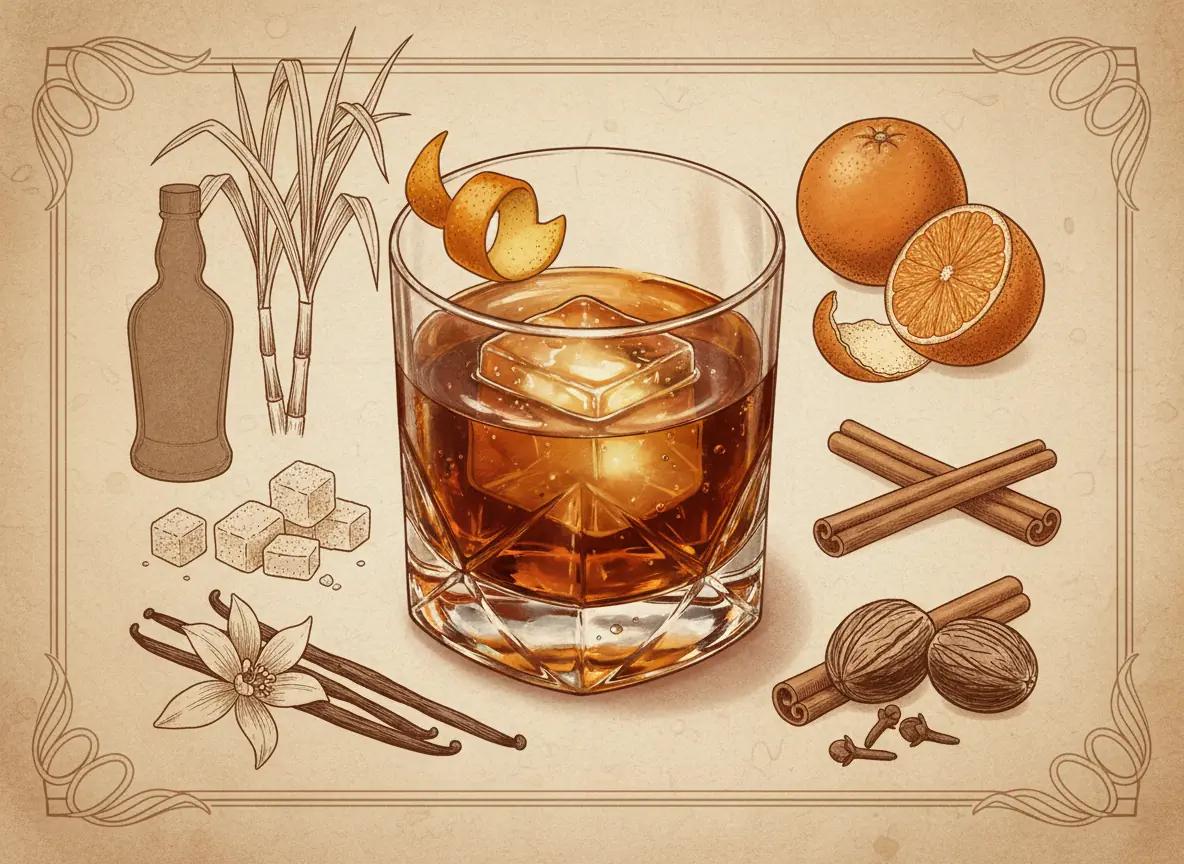
The Old Standard is 50ml of Expedition Spiced Rum, 10ml of demerara syrup, two dashes of Angostura and one of orange bitters, stirred in a mixing glass for 20 to 30 seconds and strained over a single large cube or fresh cubed ice in a rocks glass, with a wide strip of orange peel expressed over the top. About 2.1 UK units: 2.0 from the rum and about 0.1 from the bitters. It is our rum Old Fashioned. The format is spirit, sugar, water and bitters, the parts in the first definition of a cocktail known to be an alcoholic drink, which the Oxford Companion dates to a Hudson, New York, newspaper of 1806, and with nothing else in the glass it shows the spirit plainly. Two changes follow from the rum. Demerara syrup replaces white sugar, because its caramel meets the vanilla and oak. Orange bitters join the Angostura, to lift the orange peel already in the rum at the nose. Everything else is the Old Fashioned, measured.
Jerry Can Julep
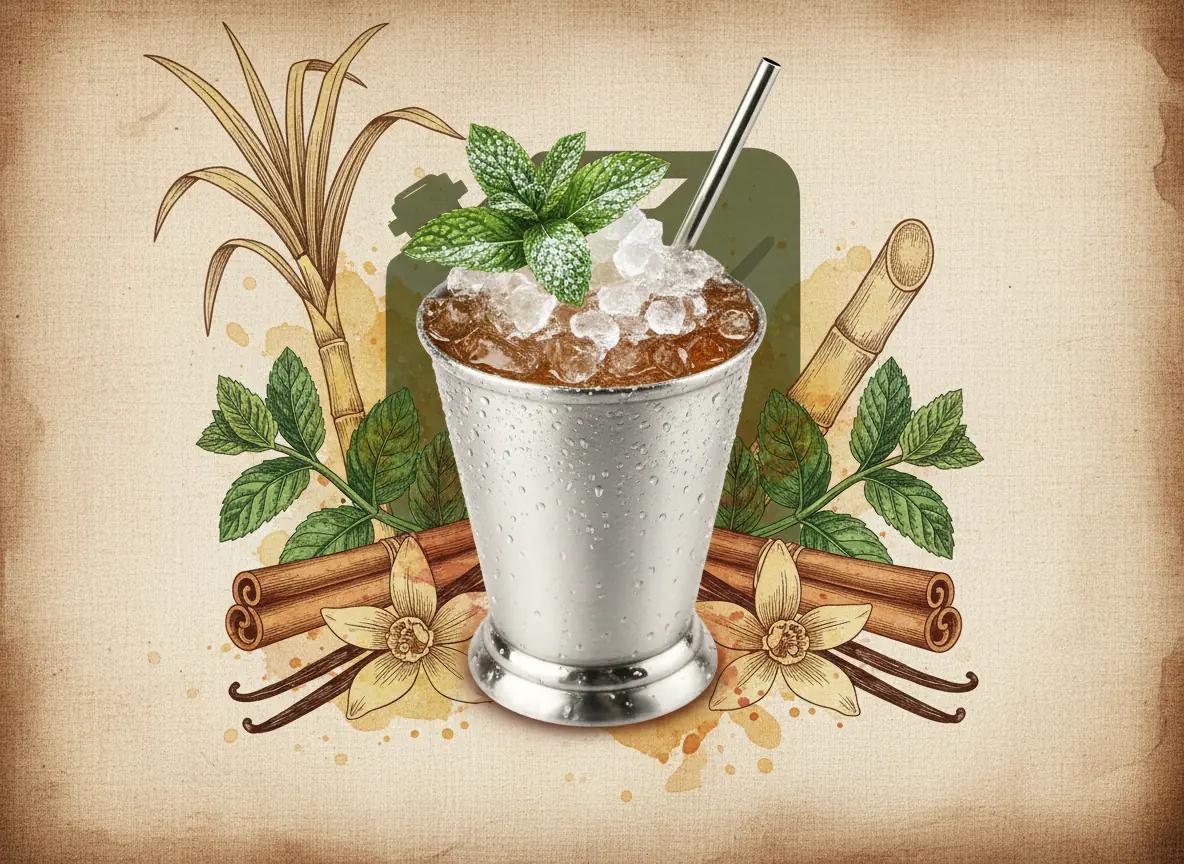
The Jerry Can Julep is 60ml of Expedition Spiced Rum, eight to ten fresh mint leaves pressed lightly with 10ml of simple syrup, and a dash of Angostura over a glass packed with crushed ice, finished with a mint bouquet and, if you like, an expressed orange peel. About 2.4 UK units. It is our julep. The Mint Julep is usually bourbon, but the format is older and looser than that, and the Oxford Companion describes nineteenth-century juleps made with French brandy, peach brandy, wines and Dutch gin as well as whisky. Spirit, sugar, mint and a great deal of crushed ice is all it asks. Expedition Spiced Rum suits it because its vanilla and cinnamon are warm where mint is cool. The syrup stays at 10ml because the rum brings sweetness of its own, and the Angostura goes on top of the ice, where it meets the mint at the nose.
Planter’s Punch
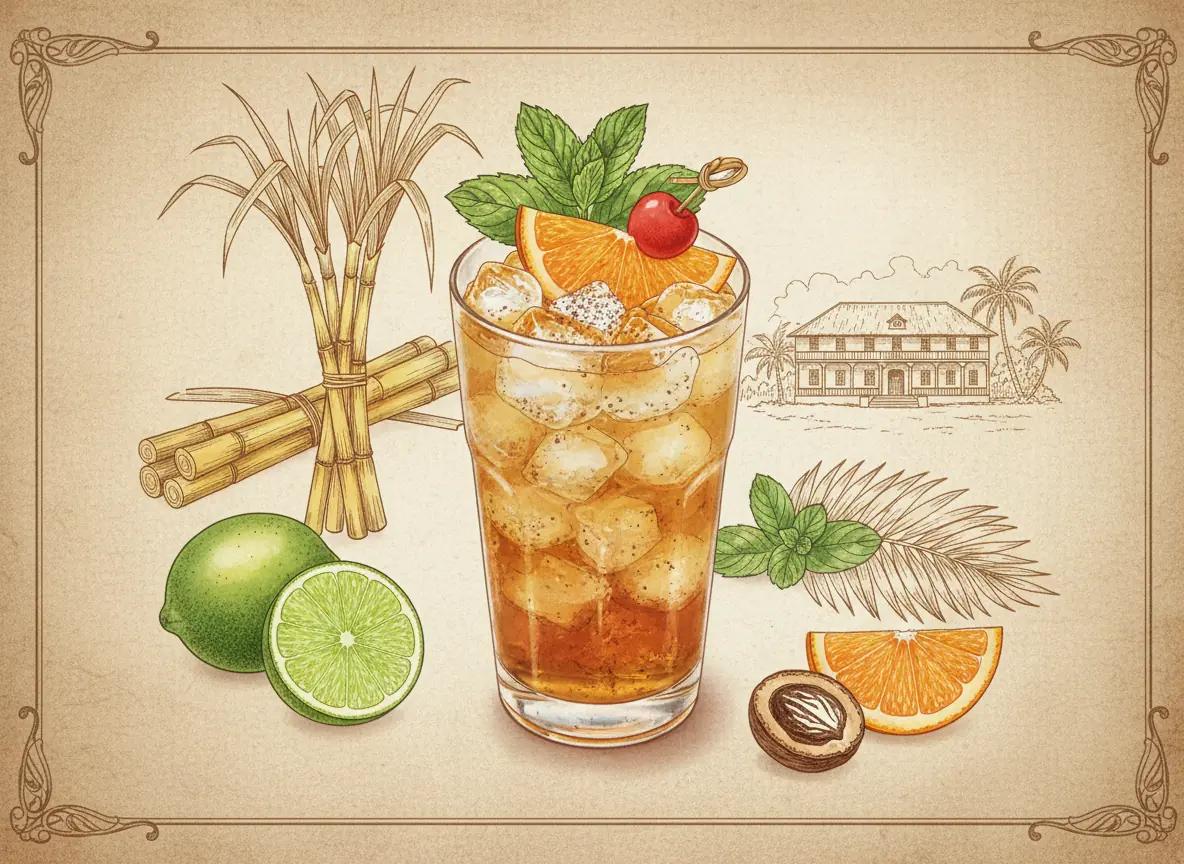
Planter’s Punch is 45ml of Jamaican rum, 15ml of fresh lime juice and 30ml of sugar cane juice, poured into a small tumbler, diluted to taste with water, ice or fresh juice, and finished with orange zest. The measures follow the IBA. About 1.8 UK units. It belongs to the punch family of the old rhyme, one of sour, two of sweet, three of strong, four of weak, and it is the Jamaican member: a dark, full-flavoured island rum, lime and sugar. The IBA writes it short and leaves the weak part to you; a longer build that follows the rhyme to the letter is our variation. The Oxford Companion calls it the unofficial drink of Jamaica since the late nineteenth century, and the Charleston City Paper prints a verse from the London magazine Fun of September 1878 that gives the same proportions. Cane juice is the IBA’s sweetener: sweeter than water, far less sweet than syrup, with a green, grassy taste.
Where this one sits
Recipe by Dan Freeman · Updated 19 October 2026