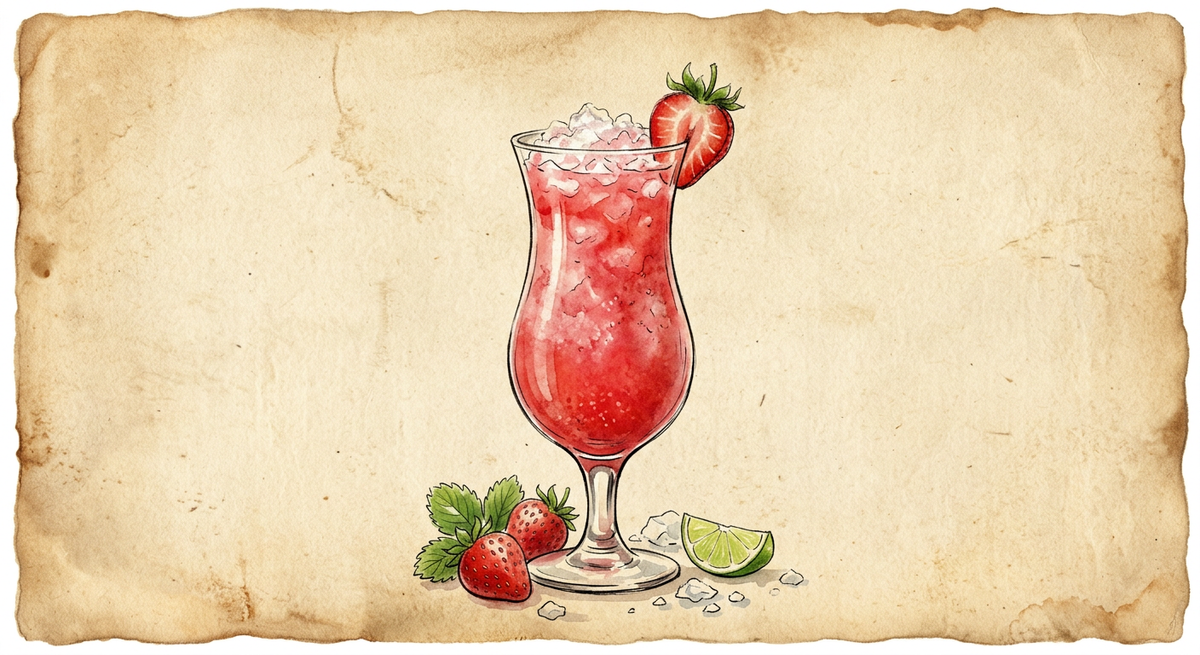
Strawberry Daiquiri
A Strawberry Daiquiri is 50ml of white rum, five hulled ripe strawberries, 20ml of fresh lime juice and 10ml of sugar syrup, blended with a cupful of crushed ice for 10 to 15 seconds and poured into a hurricane glass, with a strawberry seated on the rim. About 2.0 UK units, all of it from the rum. It is a frozen Daiquiri with fruit in it, and the lime is what keeps it one. The berries bring the colour, the body and the bulk of the sweetness; the syrup is there for fruit that turns out less ripe than it looked in the shop. Difford’s Guide’s frozen Strawberry Daiquiri blends strawberries, rum, lime juice and cane sugar syrup with crushed ice. Made from fruit, it tastes of strawberries and lime rather than sugar, and the whole method is one short blend.
Glassware: Hurricane Glass
Garnish: Strawberry seated on the rim
Ingredients
50ml
A clean white rum at about 40% ABV, lightly aged if you have one. It carries the lime and sits under the fruit; a heavily flavoured rum competes with the berries.
5, hulled
Five ripe berries for one drink, six if they are small. Cut out the pale core under the leaves, which is bland and slightly astringent. Fruit frozen in season works well and blends colder.
20ml
Squeezed the same day. It is what keeps the drink a Daiquiri, and the berries’ sugar needs all of it.
10ml
Sugar and water, 1:1 by weight. Ripe June berries may need less, hard winter fruit a little more; taste and adjust rather than doubling it.
Instructions
Hull the strawberries and squeeze the lime.
Add the rum, strawberries, lime juice and sugar syrup to a blender.
Add a cupful of crushed ice.
Blend for 10 to 15 seconds, until smooth but still thick.
Pour into a hurricane glass and seat a strawberry on the rim.
Our version
Our Strawberry Daiquiri keeps the Daiquiri’s white rum and lime, lets five ripe strawberries supply most of the sugar with 10ml of syrup to top up, and blends it with crushed ice.
Source: our own specification. Last checked 9 October 2026.
Expert Tip
Taste a strawberry before you start. A ripe one is sweet and fragrant and needs little help from the syrup. A hard, pale one has neither sugar nor aroma, and more syrup only replaces the first. Out of season, berries frozen at their peak are the better buy. Squeeze the lime the same day, ideally within about three hours. At 20ml it is the only acid holding five berries in check, and juice that has sat in the fridge overnight tastes flat against them. Stop the blender at 10 to 15 seconds, when the noise evens out. Run it longer and the ice beats into a foam that separates in the glass within minutes.
Behind the Strawberry Daiquiri
Flavour Profile
Fruit, Lime and Rum
A classic Daiquiri is rum, lime and sugar, shaken and strained into a coupe. The strawberry version keeps the rum and the lime, lets the fruit supply the bulk of the sugar, and trades the shaker for a blender.
Each part has one job. The rum gives strength and a clean cane note under the fruit. The strawberries give colour, body and sweetness. The lime gives the acid that stops five berries tasting like jam, and the syrup tops up the sugar when the fruit falls short.
Where It Comes From
Difford’s Guide blends its frozen Strawberry Daiquiri from strawberries, rum, lime juice and cane sugar syrup with crushed ice, and says the earliest published recipe is said to be in Mabel Stegner’s 1952 book Electric Blender Recipes. The Oxford Companion says frozen drinks are made by grinding the ingredients and ice together in an electric blender.
The Companion adds that the frozen drink became an anything-goes crowd pleaser after Mariano Martinez introduced the frozen Margarita machine in 1973. Made from fruit, as here, the drink tastes of strawberry and lime rather than syrup.
Ripe Fruit Decides It
The berries matter more than the rum. A ripe strawberry is fragrant and sweet with some acid of its own; a hard, pale one brings little of either, and no measure of syrup puts the aroma back.
Hull them properly. The pale core under the leaves is bland and a little astringent, and five of them flatten the blend. Five berries is the measure for one drink; add a sixth if they are small.
Out of season, use frozen fruit that was picked ripe. It blends colder and thicker than fresh, so use a little less ice; the slush also stays thick for longer in the glass.
Blended or Shaken
The Strawberry Daiquiri, shaken and blended, beside the classic Daiquiri
Strawberry Daiquiri (ours)
- Rum
- 50ml white rum
- Lime
- 20ml
- Sugar
- 10ml syrup
- Fruit
- Five strawberries
- Method
- Blended with crushed ice, hurricane glass
- UK units
- About 2.0
Shaken strawberry version
- Rum
- 50ml white rum
- Lime
- 20ml
- Sugar
- 10ml syrup
- Fruit
- Five strawberries, muddled
- Method
- Shaken, double strained, coupe
- UK units
- About 2.0
Daiquiri
- Rum
- 60ml white rum
- Lime
- 20ml
- Sugar
- Two bar spoons of caster sugar
- Fruit
- None
- Method
- Shaken, double strained, coupe
- UK units
- About 2.4
| Drink | Rum | Lime | Sugar | Fruit | Method | UK units |
|---|---|---|---|---|---|---|
| Strawberry Daiquiri (ours) | 50ml white rum | 20ml | 10ml syrup | Five strawberries | Blended with crushed ice, hurricane glass | About 2.0 |
| Shaken strawberry version | 50ml white rum | 20ml | 10ml syrup | Five strawberries, muddled | Shaken, double strained, coupe | About 2.0 |
| Daiquiri | 60ml white rum | 20ml | Two bar spoons of caster sugar | None | Shaken, double strained, coupe | About 2.4 |
Shaken and served up, the same measures make a sharper, thinner drink in which the lime shows more. Blended, the ice softens the acid and the fruit takes the lead.
How to Serve It
Thick and cold in a hurricane glass, with a strawberry seated on the rim and a straw. Blend each round just before it is poured, because a frozen drink starts to separate within minutes.
For the plain version, make a Daiquiri; for another blended rum drink, a Banana Daiquiri or a Piña Colada.
Make it at home
The Spirit
White RumWhite rum is clear rum, usually bottled at 40% ABV, either unaged or rested in oak and then charcoal-filtered back to clear. It is the light, dry rum of the Daiquiri, the Mojito and the Cuba Libre, and the rum most of our recipes mean when they want rum that sits under lime rather than over it.
Master the Techniques
More to explore
Frequently Asked Questions
What is in a Strawberry Daiquiri?
Fresh or frozen strawberries?
Which rum should I use?
Why does mine taste of syrup?
Why does mine separate in the glass?
Can I make it without a blender?
Can I make a jug of it?
How strong is a Strawberry Daiquiri?
Sources.
Correct as of 19 October 2026.
- Difford’s Guide, “Strawberry Daiquiri (frozen) Cocktail Recipe” (secondary source: strawberries, rum, lime juice and syrup blended with crushed ice; the earliest published recipe is said to be in Mabel Stegner’s 1952 Electric Blender Recipes).
- The Oxford Companion to Spirits and Cocktails (Richard Boccato), “frozen drinks, blender drinks” (secondary source: made by grinding the ingredients and ice together in an electric blender; Ribalaigua of the Floridita among the first to adopt the blender; Mariano Martinez introduced the frozen Margarita machine in 1973).
You Might Also Like
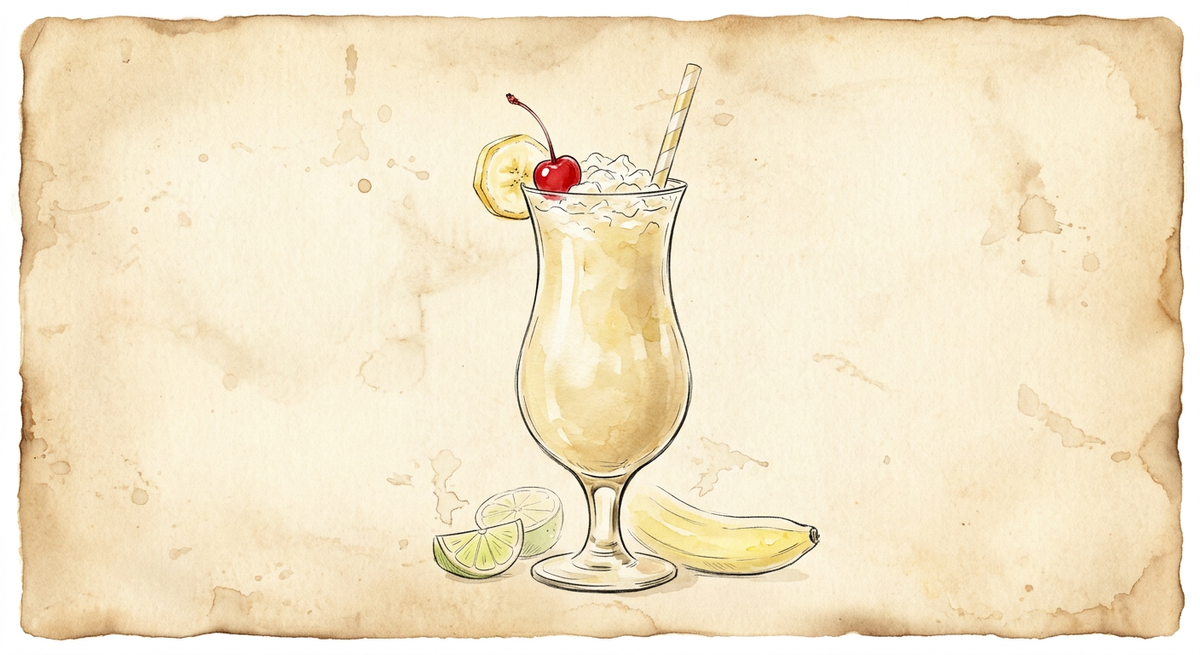
Banana Daiquiri
A Banana Daiquiri is 45ml of white rum, 15ml of banana liqueur, half a ripe banana, 20ml of fresh lime juice and 10ml of simple syrup, blended with crushed ice for 10 to 15 seconds and poured into a hurricane glass. A banana slice and a cherry finish it. About 2.1 UK units. The banana comes twice. The fresh fruit brings body and a honeyed sweetness; the liqueur brings a cooked, concentrated banana and some strength. Each covers what the other lacks, and the lime keeps it a daiquiri. Ripeness decides the drink. A freckled banana blends thick and sweet; a green one blends thin and tastes faintly of leaf. Peeled ripe halves from the freezer are better still, because they chill the drink without watering it. Mountain Top, a bar and shop on St Thomas in the US Virgin Islands, says on its own site that Captain George Soule created it there in 1953.
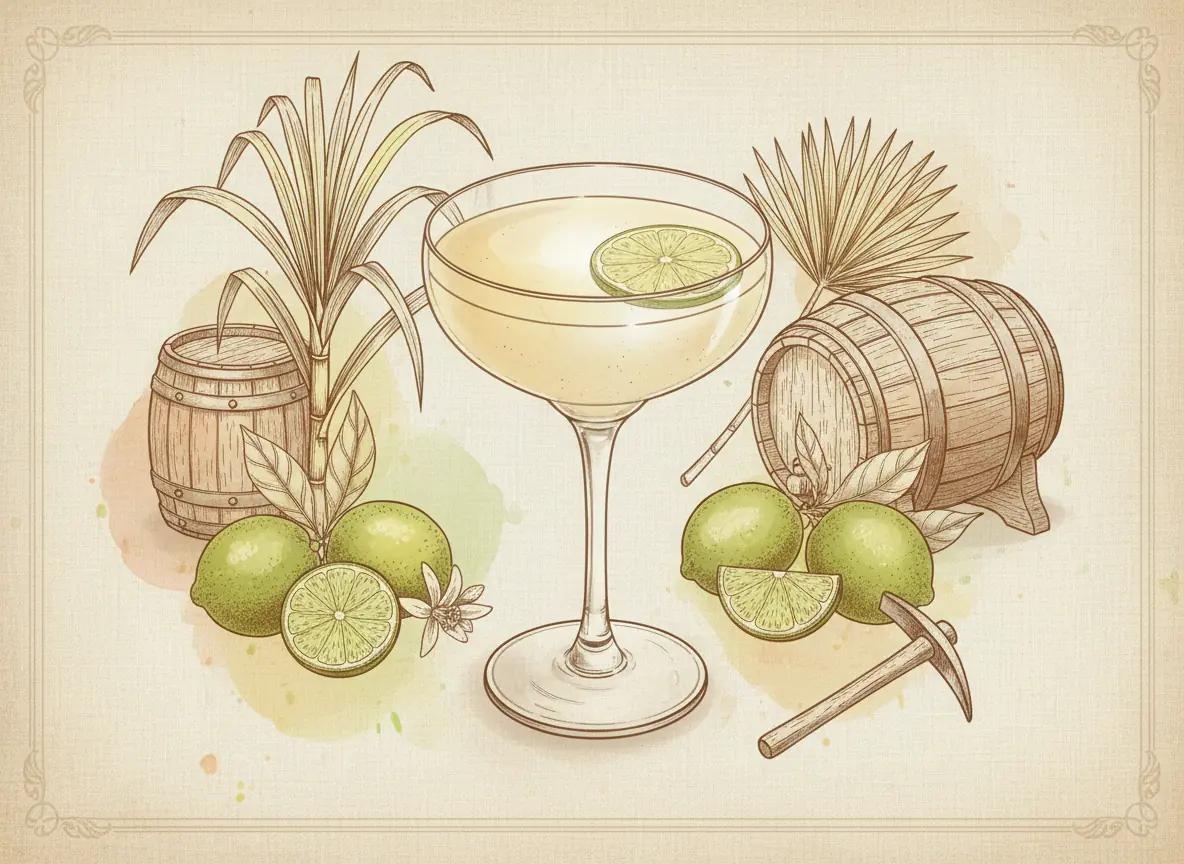
Daiquiri
A Daiquiri is 60ml white rum, 20ml fresh lime juice and two bar spoons of caster sugar. Stir the sugar into the rum and lime in the shaker until it dissolves, then add ice, shake hard for 10 to 12 seconds and double strain into a chilled coupe. About 2.4 UK units. Those are the IBA’s measures, and its method dissolves the sugar first too. The name belongs to Daiquirí, an iron-mining district and beach near Santiago de Cuba. Difford’s Guide credits Jennings Stockton Cox, an American engineer who led one of the first mining parties into Cuba’s iron-ore country after the Spanish-American War of 1898; the Oxford Companion has him making or supervising the first Daiquiri in 1896, and a Santiago bartender naming it in 1908. Difford’s says Constantino Ribalaigua Vert of Havana’s El Floridita made the frozen version famous. With three ingredients and no liqueur or bitters, the Daiquiri hides nothing. A flat rum, tired lime or undissolved sugar shows in the first sip.
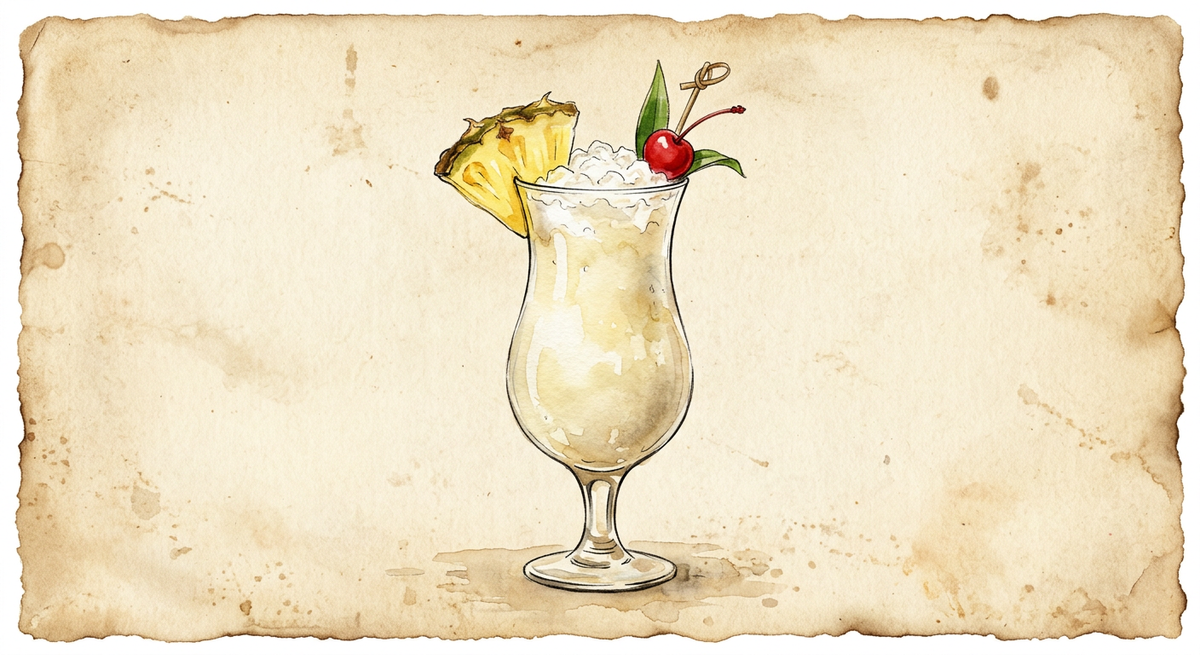
Piña Colada
A Piña Colada is white rum, pineapple and cream of coconut blended with ice: 50ml white rum, 50ml fresh pineapple juice and 30ml cream of coconut, blended for 10 to 15 seconds with a cup of crushed ice and poured into a hurricane glass, with a pineapple wedge and a cherry. The measures are the IBA’s own. A few drops of lime are optional, to correct a sweet batch. The Caribe Hilton in San Juan credits its bartender Ramón “Monchito” Marrero with the drink in 1954, as Difford’s Guide reports; Difford’s adds that Marrero himself claimed 15 August 1952. It depends on Coco López, the sweetened cream of coconut Ramón López Irizarry developed in 1949, by Imbibe’s account. There are rivals: Ricardo García, also at the Caribe Hilton, claims to have invented it, with 1954 the year Punch gives, and the Barrachina restaurant, by its own account, names Ramón Portas Mingot in 1963. Punch says the Piña Colada was declared Puerto Rico’s national drink in 1978. Cream of coconut is the ingredient that decides it: thick, sweet and rich in fat, never coconut milk. Each one carries about 2.0 UK units.
Where this one sits
Recipe by Jerry Can Spirits · Updated 19 October 2026