Brown Derby
A Brown Derby is 60ml of bourbon, 30ml of fresh grapefruit juice and 22.5ml of honey syrup made with two parts honey to one of warm water, shaken hard for 10 to 12 seconds and double strained into a chilled coupe, with a grapefruit twist. About 2.4 UK units. It is a bourbon sour with both standard parts swapped. Grapefruit replaces lemon and brings bitterness along with its acid. Honey replaces sugar and brings a floral, waxy weight. Each softens what the other adds, and the bourbon’s vanilla sits underneath both. The Oxford Companion, in an entry by Robert F. Moss, says the Hollywood link comes from a single source, George Buzza Jr.’s Hollywood Cocktails of 1933, which copied the De Rigueur from the Savoy Cocktail Book and renamed it the Brown Derby, and that there is no evidence it was ever served at the Brown Derby restaurant, whose original building was shaped like a derby hat. The Savoy Cocktail Book of 1930, in the Internet Archive’s scan, prints the De Rigueur of whisky, grapefruit juice and honey.
Glassware: Coupe Glass
Garnish: Grapefruit twist
Ingredients
60ml
Bourbon at 40% ABV or a little stronger, with enough vanilla and caramel to show through the fruit. A very oaky bottle makes the honey taste heavy.
30ml
Squeezed the same day, white or pink. Its bitterness is what separates this drink from the Gold Rush, and bottled juice loses most of it.
22.5ml
Two measures of honey to one of warm water, cooled before use. Thicker than a one to one syrup, so 22.5ml sweetens the grapefruit without thinning the drink.
Instructions
Squeeze the grapefruit juice the same day and chill a coupe.
Add the bourbon, grapefruit juice and honey syrup to a shaker.
Fill with cubed ice and shake hard for 10 to 12 seconds.
Double strain into the chilled coupe.
Express a grapefruit twist over the surface and drop it in.
Our version
Bourbon, grapefruit and honey as the Vendôme Club is said to have served them, measured at 60ml, 30ml and 22.5ml, with honey syrup at two parts honey to one of water to match our Gold Rush and Honey Sour. The club’s own measures are not recorded in the sources checked.
Source: our own specification. Last checked 10 October 2026.
Expert Tip
Make the honey syrup thick: two measures of honey to one of warm water, stirred until it runs and left to cool. Neat honey sets hard in a cold shaker, and a syrup made one to one is too thin to stand up to the grapefruit. Squeeze the grapefruit the same day and taste it. Pink fruit is softer and sweeter, white is sharper and more bitter. Half a large grapefruit gives about 30ml. Double strain. Grapefruit throws fine pulp that clouds the coupe and leaves a gritty edge on the tongue.
Behind the Brown Derby
Flavour Profile
Hollywood’s Name for an Older Drink
The Oxford Companion says the bourbon Brown Derby was reputedly invented in Hollywood in the 1930s and named for the Brown Derby restaurant, whose original building was shaped like a derby hat, but that the Hollywood connection seems to come from a single source, Buzza’s Hollywood Cocktails of 1933.
The Companion says Buzza copied dozens of recipes from the Savoy Cocktail Book, including the De Rigueur, which he renamed the Brown Derby. The Savoy Cocktail Book of 1930 prints a De Rigueur of whisky, grapefruit juice and honey, and Brown Derby is the name the drink goes by now. The Companion adds that Dale DeGroff revived it in The Craft of the Cocktail in 2002.
Grapefruit Changes the Sour
A Whiskey Sour uses lemon for acid and sugar to put back what the acid takes away. Grapefruit is less acidic than lemon and noticeably bitter, so it cuts bourbon’s sweetness two ways at once. The drink needs less correcting, and the honey can add flavour rather than only balance.
Honey suits that bitterness. Its floral, waxy notes round the edge in a way plain sugar does not, and the bourbon’s vanilla links the two.
The Bourbon
Look for a bourbon at 40 to 45% ABV with clear vanilla and caramel. A high-rye bourbon adds pepper that suits the grapefruit; a heavily oaked one makes the honey taste heavy and the drink flat.
Three Bourbon and Honey Sours
Our Gold Rush, Honey Sour and Brown Derby
Bourbon
- Gold Rush
- 60ml
- Honey Sour
- 60ml
- Brown Derby
- 60ml
Citrus
- Gold Rush
- 22.5ml lemon
- Honey Sour
- 25ml lemon
- Brown Derby
- 30ml grapefruit
Honey syrup, two to one
- Gold Rush
- 22.5ml
- Honey Sour
- 15ml
- Brown Derby
- 22.5ml
Egg white
- Gold Rush
- None
- Honey Sour
- 15ml, optional
- Brown Derby
- None
Serve
- Gold Rush
- Rocks glass, one big cube
- Honey Sour
- Rocks glass, large cube
- Brown Derby
- Up, chilled coupe
UK units
- Gold Rush
- About 2.4
- Honey Sour
- About 2.4
- Brown Derby
- About 2.4
| Element | Gold Rush | Honey Sour | Brown Derby |
|---|---|---|---|
| Bourbon | 60ml | 60ml | 60ml |
| Citrus | 22.5ml lemon | 25ml lemon | 30ml grapefruit |
| Honey syrup, two to one | 22.5ml | 15ml | 22.5ml |
| Egg white | None | 15ml, optional | None |
| Serve | Rocks glass, one big cube | Rocks glass, large cube | Up, chilled coupe |
| UK units | About 2.4 | About 2.4 | About 2.4 |
How to Serve It
Up, cold, before food. The bitterness makes it an aperitif rather than a nightcap, and the coupe keeps the oil from the twist close to your nose.
For the lemon version, make a Gold Rush; for rye and grapefruit with raspberry, a Blinker.
Make it at home
The Spirit
Whiskey (Bourbon)Under the US standard 27 CFR 5.143, bourbon is an American whiskey whose mash is at least 51% corn, matured in fresh charred oak barrels and bottled at 40% ABV or higher, the figure our recipes use. The fresh charred wood gives it its vanilla, caramel and colour, and the corn gives a rounder, sweeter spirit than rye. It is the base of 26 of our recipes, more than any other whiskey.
More to explore
Frequently Asked Questions
What is in a Brown Derby?
Where does the Brown Derby come from?
How is a Brown Derby different from a Gold Rush?
Which grapefruit should I use?
Can I sweeten it with plain honey?
Is the Brown Derby sweet?
How strong is a Brown Derby?
Sources.
Correct as of 19 October 2026.
- The Oxford Companion to Spirits and Cocktails (Robert F. Moss), “Brown Derby” (secondary source: the bourbon Brown Derby traces to Buzza’s Hollywood Cocktails (1933), which renamed the Savoy Cocktail Book’s De Rigueur; no evidence it was served at the restaurant; revived by DeGroff in 2002; a dark rum Brown Derby existed in 1930s New York).
- Harry Craddock, 1930 (Internet Archive scan), “The Savoy Cocktail Book” (primary source: De Rigueur Cocktail: whisky, grapefruit juice, honey, cracked ice, shaken and strained).
You Might Also Like
Gold Rush
A Gold Rush is 60ml bourbon, 22.5ml fresh lemon juice and 22.5ml honey syrup, made with twice as much honey as warm water. Shake it hard for 10 to 12 seconds, strain it onto a single big cube in a rocks glass and finish with a lemon twist. About 2.4 UK units. Punch credits T.J. Siegal, at Milk & Honey in New York, with the idea sometime in 2000, and VinePair dates the drink to 2001. T.J. Siegal, a friend of the owner, Sasha Petraske, ordered his usual Whiskey Sour and asked for it without the egg white and with honey syrup in place of sugar. The change stuck, and the drink became a modern standard. Honey does more than sweeten. It tastes faintly of flowers and wax, gives the drink weight that sugar syrup cannot, and sits comfortably with the vanilla and caramel in bourbon. With no egg and no bitters, the Gold Rush is plainer and heavier than a Whiskey Sour, and quicker to make.
Hemingway Daiquiri
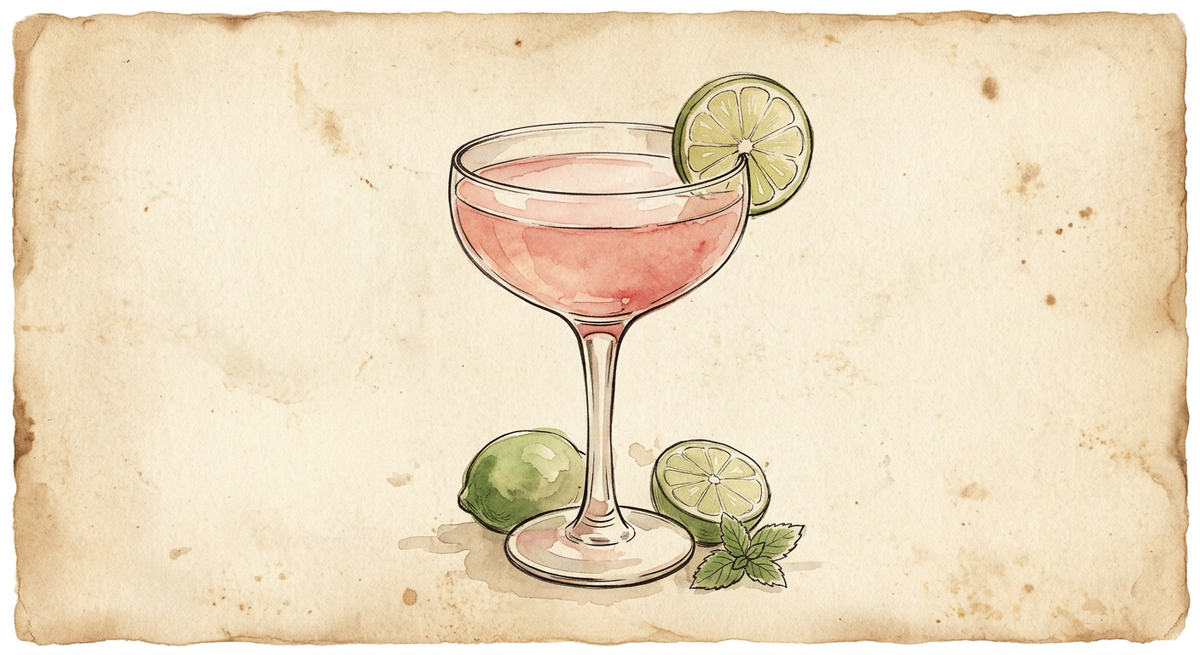
A Hemingway Daiquiri is 60ml white rum, 40ml fresh grapefruit juice, 15ml fresh lime juice and 15ml maraschino liqueur, shaken hard and double strained into a chilled coupe, with a lime wheel. The measures follow the IBA, which lists it as the Hemingway Special. There is no sugar syrup: the maraschino is the only sweetness. About 2.9 UK units. The Oxford Companion to Spirits and Cocktails says it is a version of the Daiquiri No. 3 from Havana’s Floridita bar, named for the writer who downed them there in volume. Difford’s Guide has Hemingway trying the Floridita’s standard frozen Daiquiri and saying he preferred it without sugar and with double rum, which became the Papa Doble, and says the head bartender Antonio Meilan later added maraschino and grapefruit juice to make the Hemingway Special. It is drier and more bitter than a classic Daiquiri, and the grapefruit decides how it tastes.
Bee’s Knees
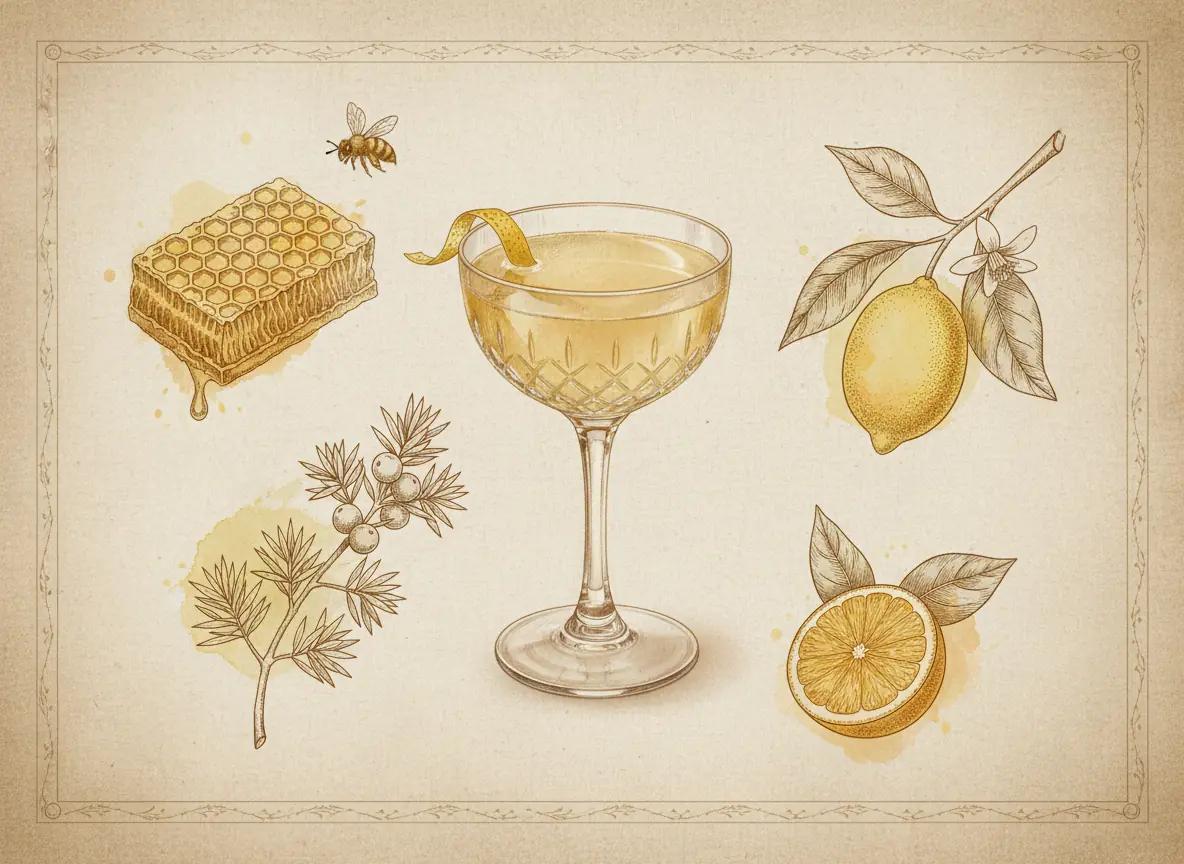
A Bee’s Knees is 52.5ml of London Dry gin, 22.5ml each of fresh lemon and orange juice and two teaspoons (10ml) of honey syrup, made with two parts honey to one of warm water. Shake it hard for 10 to 12 seconds and double strain it into a chilled coupe, with a strip of lemon peel. About 2.1 UK units. The measures are the IBA’s. The orange is the part most recipes leave out. The oldest printings are gin, lemon and honey alone; David Embury suggested a little orange juice as a variation in 1948, and the IBA built it in. Orange softens the lemon, which is why two teaspoons of honey syrup are enough. The drink is often filed under American Prohibition, with honey and lemon covering for bathtub gin. Difford’s Guide, a secondary source, says the earliest printing tells a different story: Cocktails de Paris, published in 1929, credits it to Frank Meier of the Ritz in Paris, and Meier claimed it again in his own book in 1936.
Where this one sits
Recipe by Jerry Can Spirits · Updated 19 October 2026