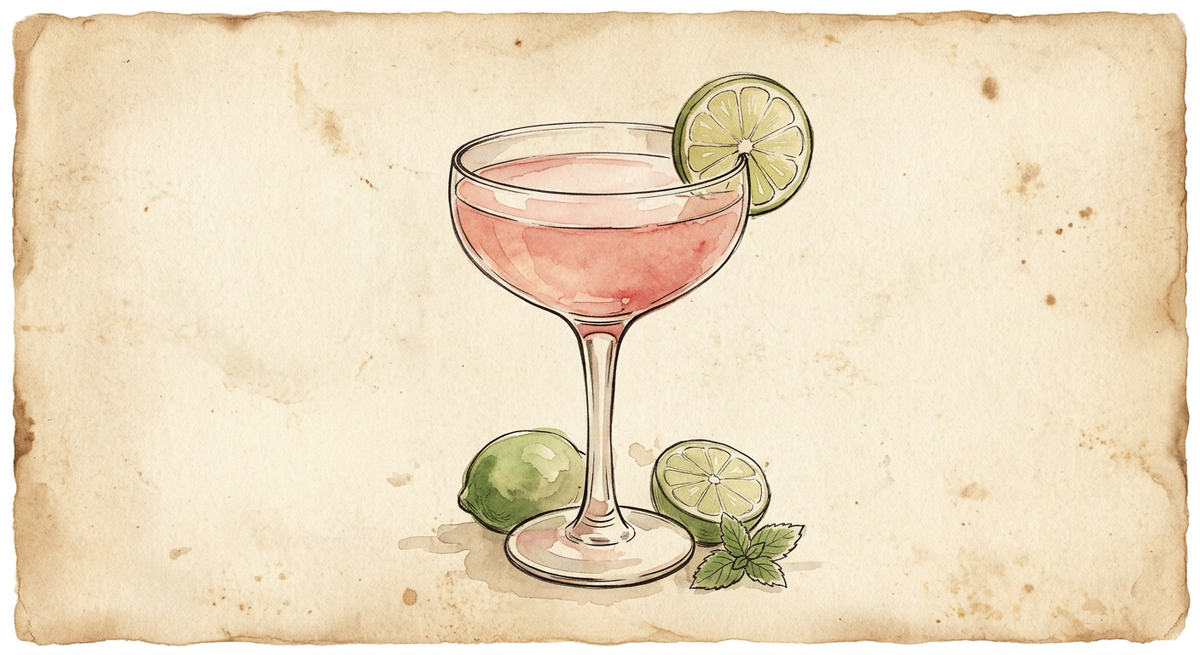
Hemingway Daiquiri
A Hemingway Daiquiri is 60ml white rum, 40ml fresh grapefruit juice, 15ml fresh lime juice and 15ml maraschino liqueur, shaken hard and double strained into a chilled coupe, with a lime wheel. The measures follow the IBA, which lists it as the Hemingway Special. There is no sugar syrup: the maraschino is the only sweetness. About 2.9 UK units. The Oxford Companion to Spirits and Cocktails says it is a version of the Daiquiri No. 3 from Havana’s Floridita bar, named for the writer who downed them there in volume. Difford’s Guide has Hemingway trying the Floridita’s standard frozen Daiquiri and saying he preferred it without sugar and with double rum, which became the Papa Doble, and says the head bartender Antonio Meilan later added maraschino and grapefruit juice to make the Hemingway Special. It is drier and more bitter than a classic Daiquiri, and the grapefruit decides how it tastes.
Glassware: Coupe Glass
Garnish: Lime wheel
Ingredients
60ml
White rum at 40% ABV, Cuban in style if you can find one. At 60ml it is a full Daiquiri measure and carries the drink.
15ml
Squeezed within about three hours. At 15ml it is the smaller of the two citrus measures: the sharp edge against the grapefruit’s bitter one.
40ml
White or pink grapefruit, squeezed fresh. It brings length and bitterness; carton juice flattens both.
15ml
Luxardo, as the IBA names, or another maraschino at around 32% ABV. As the sole sweetener, it sets the balance, and its cherry and almond perfume sits against the grapefruit.
Instructions
Squeeze the grapefruit and lime juice within three hours of serving, ideally just before you build.
Chill a coupe in the freezer or with ice water.
Add the rum, grapefruit juice, lime juice and maraschino to a shaker.
Fill the shaker with cubed ice and shake hard for 10 to 12 seconds.
Double strain into the chilled coupe.
Garnish with a lime wheel and serve.
Source: the IBA (Official IBA specification, listed as Hemingway Special, served in a coupe with a lime wheel where the IBA has no garnish; method ours). Last checked 9 October 2026.
Expert Tip
Measure the maraschino. It is the only sweetness in the glass: 15ml reads dry and bright, 10ml austere, and much more starts to taste of dessert. Adjust it to your grapefruit, since pink fruit is sweeter than white. Squeeze the citrus close to serving. Lime more than about three hours old tastes flat, and grapefruit from a carton has lost the bitter, aromatic edge the drink is built on. Double strain. Grapefruit throws fine pulp that clouds the drink and coarsens it.
Behind the Hemingway Daiquiri
Flavour Profile
The Origin
The bar’s own 1939 booklet traces the Piña de Plata on the site, now the café La Florida, to 1819, and calls the bar “the cradle of the Daiquirí cocktail”. The Oxford Companion says Constante Ribalaigua began working there in 1912 or 1914, staying on after the Sala Pareda family bought the bar in 1918, and bought it himself in 1935.
The Oxford Companion calls Hemingway a fixture at the bar. Difford’s Guide has him trying the Floridita’s standard frozen Daiquiri and saying “That’s good but I prefer it without sugar and with double rum”, which became the Papa Doble.
Grapefruit juice was added later, with maraschino to balance it, and the drink became the Hemingway Special. That is the version the IBA lists.
Daiquiri, Papa Doble and Hemingway Special compared
Daiquiri (IBA)
- Spec
- 60ml white rum, 20ml lime, two bar spoons caster sugar
- Sweetness
- Sugar
Papa Doble
- Spec
- The house daiquiri with double the rum and no sugar
- Sweetness
- None
Hemingway Special (IBA)
- Spec
- 60ml white rum, 40ml grapefruit, 15ml lime, 15ml maraschino
- Sweetness
- Maraschino only
| Drink | Spec | Sweetness |
|---|---|---|
| Daiquiri (IBA) | 60ml white rum, 20ml lime, two bar spoons caster sugar | Sugar |
| Papa Doble | The house daiquiri with double the rum and no sugar | None |
| Hemingway Special (IBA) | 60ml white rum, 40ml grapefruit, 15ml lime, 15ml maraschino | Maraschino only |
Balancing Without Sugar
With no syrup, the maraschino carries all the sweetness, so its measure sets the drink. Fix the citrus first, then adjust the maraschino to the grapefruit in hand: white and pink bring different acid and bitterness.
Grapefruit and Maraschino
Grapefruit brings bitterness, which a classic Daiquiri does not have. Lime is sour but not bitter, and that bitter edge gives the drink its bracing finish and keeps it on the palate longer.
Maraschino answers it. Its dry cherry and almond perfume sits against the grapefruit rather than under it, and as the only sweetener it does the balancing that sugar does in a classic Daiquiri. That double job is why the measure is so sensitive.
The Double Strain
Grapefruit throws fine pulp that clouds the drink and coarsens its texture. Shake hard for 10 to 12 seconds, then pour through both strainers into a coupe cold enough to fog.
The Frozen Version
The Oxford Companion says Ribalaigua was among the first barmen to adopt the blender, and Difford’s Guide says blending rather than shaking daiquiris is the default at El Floridita. Blending these measures with crushed ice is a fair reading of the bar’s own style.
Blended, it is colder, softer and longer. Shaken, it is sharper and more precise; make that one first.
How to Serve It
Straight up in a chilled coupe with a lime wheel, the moment it leaves the shaker. At about 2.9 UK units it is stronger than a classic Daiquiri, however light the grapefruit makes it taste.
For the version with sugar and no grapefruit, the Daiquiri is 60ml white rum, 20ml lime and two bar spoons of sugar.
Make it at home
The Spirit
White RumWhite rum is clear rum, usually bottled at 40% ABV, either unaged or rested in oak and then charcoal-filtered back to clear. It is the light, dry rum of the Daiquiri, the Mojito and the Cuba Libre, and the rum most of our recipes mean when they want rum that sits under lime rather than over it.
More to explore
Frequently Asked Questions
What is a Hemingway Daiquiri?
How does it relate to the Papa Doble?
How dry should it be?
How strong is a Hemingway Daiquiri?
Hemingway Daiquiri or classic Daiquiri: what changes?
Can I make it frozen?
Sources.
Correct as of 19 October 2026.
- The Oxford Companion to Spirits and Cocktails (David Wondrich), “Ribalaigua y Vert, Constante” (secondary source: at the Piña de Plata café, remodelled and renamed La Florida between 1898 and 1907, from 1912 or 1914; the Sala Pareda family bought the bar in 1918; Ribalaigua bought it in 1935; Hemingway a fixture at the bar; the Daiquiri no. 3, alias “Hemingway Special”).
- Difford’s Guide, “Hemingway Special Daiquiri (Papa Doble)” (secondary source: created by Constantino Ribalaigua at El Floridita; Hemingway: “That’s good but I prefer it without sugar and with double rum”; Antonio Meilan later added maraschino and grapefruit juice; blending rather than shaking is the default at El Floridita).
- Internet Archive scan, “Floridita Cocktails (Constante Ribalaigua Vert, 1939)” (primary source: the bar’s own booklet; its history traces La Piña de Plata, now the café La Florida, to 1819; “The Cradle of the Daiquirí Cocktail”).
- The Oxford Companion to Spirits and Cocktails, “frozen drinks, blender drinks” (secondary source: Ribalaigua of the Floridita among the first barmen to adopt the blender as a standard tool).
You Might Also Like
Daiquiri
A Daiquiri is 60ml white rum, 20ml fresh lime juice and two bar spoons of caster sugar. Stir the sugar into the rum and lime in the shaker until it dissolves, then add ice, shake hard for 10 to 12 seconds and double strain into a chilled coupe. About 2.4 UK units. Those are the IBA’s measures, and its method dissolves the sugar first too. The name belongs to Daiquirí, an iron-mining district and beach near Santiago de Cuba. Difford’s Guide credits Jennings Stockton Cox, an American engineer who led one of the first mining parties into Cuba’s iron-ore country after the Spanish-American War of 1898; the Oxford Companion has him making or supervising the first Daiquiri in 1896, and a Santiago bartender naming it in 1908. Difford’s says Constantino Ribalaigua Vert of Havana’s El Floridita made the frozen version famous. With three ingredients and no liqueur or bitters, the Daiquiri hides nothing. A flat rum, tired lime or undissolved sugar shows in the first sip.
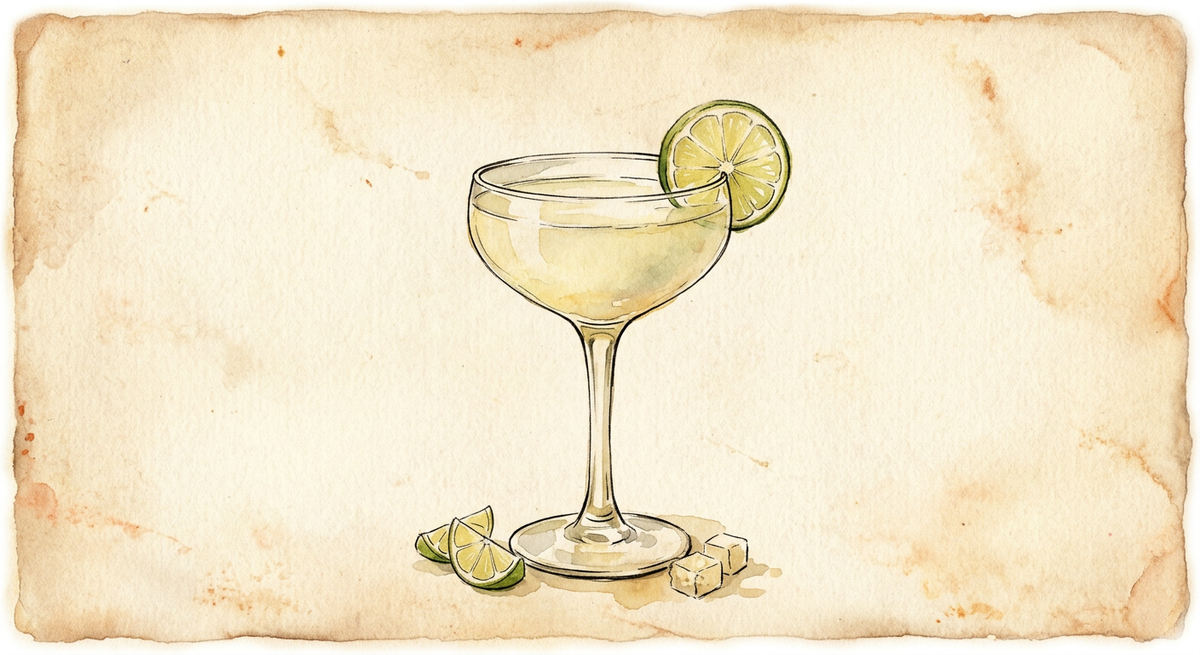
El Floridita Daiquiri
An El Floridita Daiquiri is 60ml of white rum, 15ml of fresh lime juice, 5ml of maraschino and 10ml of sugar syrup, flash blended with fine crushed ice for five to ten seconds and heaped into a chilled coupe as soft snow, with a short straw. About 2.6 UK units. The Oxford Companion says the Floridita began as the Piña de Plata café in the centre of Havana, renamed the Café Restaurant la Florida some time between 1898 and 1907, that Constantino Ribalaigua Vert began working there in 1912 or 1914 (accounts differ) and bought the bar in 1935, and that shortly after Repeal he used the electric blender to make the first frozen Daiquiris. Kevin Kos’s history of the daiquiri lists this one as Daiquiri No. 4 in the 1937 edition of the bar’s cocktail book. The maraschino lifts the lime without tasting of cherry, and the shaved ice makes it a frappé rather than a slush.
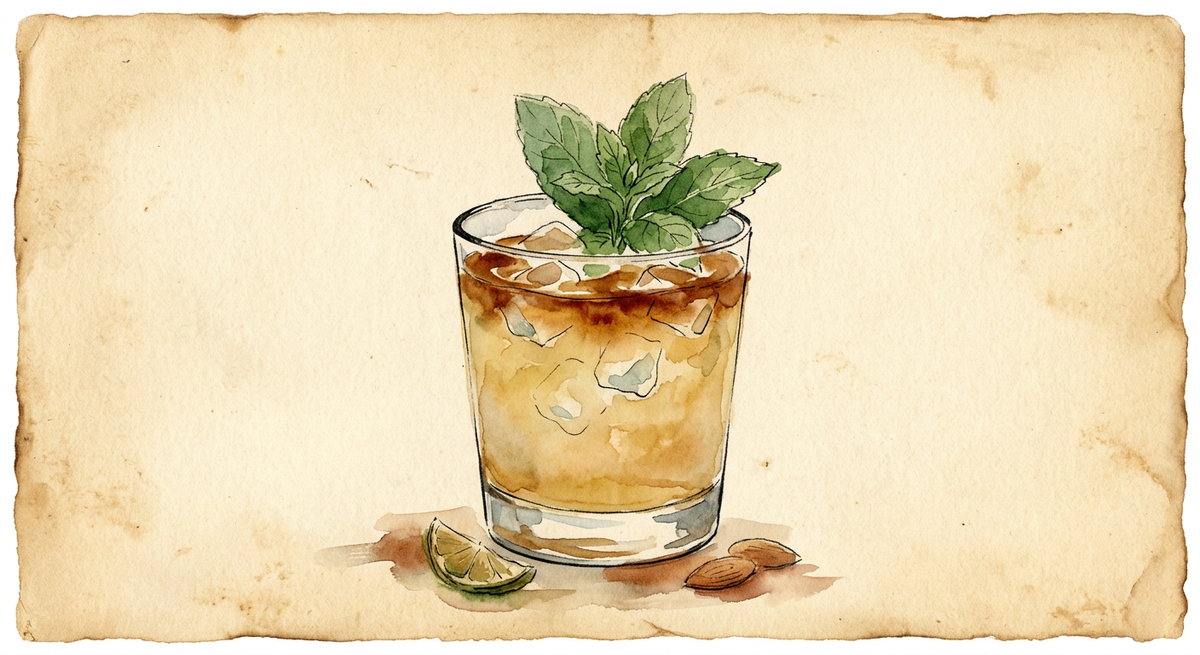
Mai Tai
A Mai Tai is aged rum, lime, orange curaçao and orgeat: 30ml amber Jamaican rum, 30ml Martinique molasses rum, 30ml fresh lime juice, 15ml orange curaçao, 15ml orgeat and 7.5ml sugar syrup, shaken hard and strained over crushed ice in a double rocks glass, with a spent lime shell and a sprig of mint. This is the IBA specification. There is no pineapple or orange juice in it. Victor “Trader Vic” Bergeron said he created it in 1944 and gave the first two to friends from Tahiti, one of whom said “Mai tai roa ae”, which gave it the name, as Famous Hotels quotes him. The Oxford Companion places his restaurant in Oakland and adds that Donn Beach’s widow, Phoebe, wrote in 2002 that he made a Mai Tai in 1933, though the Companion finds good reason to doubt that Vic copied it. Orgeat is almond syrup, so the drink contains nuts. A glass holds about 3.0 UK units.
Where this one sits
Recipe by Jerry Can Spirits · Updated 19 October 2026