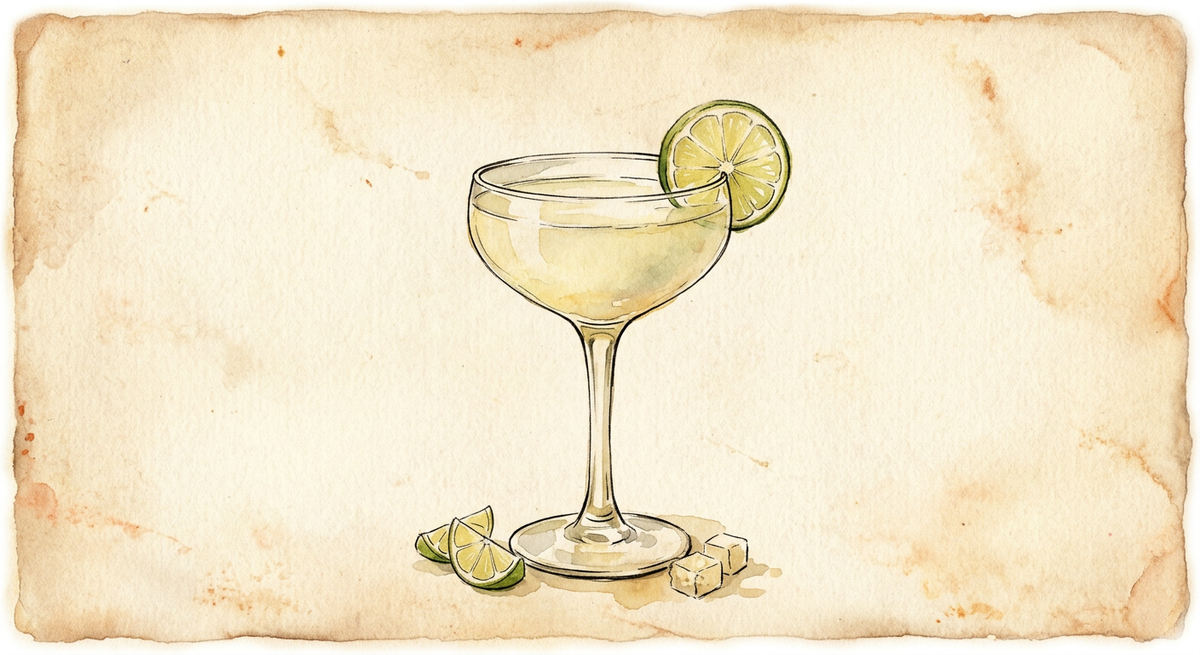
El Floridita Daiquiri
An El Floridita Daiquiri is 60ml of white rum, 15ml of fresh lime juice, 5ml of maraschino and 10ml of sugar syrup, flash blended with fine crushed ice for five to ten seconds and heaped into a chilled coupe as soft snow, with a short straw. About 2.6 UK units. The Oxford Companion says the Floridita began as the Piña de Plata café in the centre of Havana, renamed the Café Restaurant la Florida some time between 1898 and 1907, that Constantino Ribalaigua Vert began working there in 1912 or 1914 (accounts differ) and bought the bar in 1935, and that shortly after Repeal he used the electric blender to make the first frozen Daiquiris. Kevin Kos’s history of the daiquiri lists this one as Daiquiri No. 4 in the 1937 edition of the bar’s cocktail book. The maraschino lifts the lime without tasting of cherry, and the shaved ice makes it a frappé rather than a slush.
Glassware: Coupe Glass
Garnish: Lime wheel on the rim or nothing
Ingredients
60ml
A Cuban-style white rum with some flavour of its own, at 40% ABV. Cold mutes everything, and a bland rum disappears into the ice.
15ml
Squeezed gently on the day, within a few hours. Fifteen millilitres is less than a shaken Daiquiri takes, because the ice adds water and the maraschino brings some sweetness of its own.
5ml
Maraschino liqueur at about 32% ABV, not the syrup cocktail cherries sit in. It lifts the lime and rounds the rum without tasting of cherry.
10ml
With the maraschino it balances 15ml of lime. Cold dulls sweetness, so taste the first one and add up to a bar spoon more if your limes are sharp.
Instructions
Chill a coupe.
Add the rum, lime juice, maraschino and sugar syrup to a blender.
Add a cup of fine, dry crushed ice on top.
Blend in short bursts for 5 to 10 seconds, until the ice is fine snow rather than slush.
Spoon or pour it unstrained into the chilled coupe, heaped rather than levelled.
Serve at once with a short straw.
Our version
Based on the Daiquiri No. 4 in the 1937 edition of the bar’s cocktail book, as Kevin Kos prints it: two ounces of rum, a spoonful of sugar, a teaspoon of maraschino, the juice of half a lime and cracked ice, served frappé. We measure it as 60ml of rum, 15ml of lime, 10ml of syrup and 5ml of maraschino, with syrup in place of granulated sugar.
Source: our own specification. Last checked 10 October 2026.
Expert Tip
The ice sets the texture. Fine, dry crushed ice straight from the freezer blends to snow; wet ice that has been standing blends to slush. Put the liquids in the blender first and the ice on top, and stop as soon as it looks even, usually after five to ten seconds. Squeeze the limes gently and on the day. Pressing hard forces bitter oil from the peel into the juice, and with so little sugar in the drink, it shows. Serve it at once. A frappé starts to collapse within a couple of minutes, and the last of it turns to liquid.
Behind the El Floridita Daiquiri
Flavour Profile
Where It Comes From
The Oxford Companion says the Floridita’s bar began as the Piña de Plata café at the corner of Obispo and Monserrate in the centre of Havana, remodelled and renamed the Café Restaurant la Florida some time between 1898 and 1907. The Companion says Constante Ribalaigua, born in Lloret de Mar near Barcelona, began working there in either 1912 or 1914 (accounts differ), staying on after the Sala Pareda family bought the bar in 1918, and bought it himself in 1935; the Companion adds that his cocktails focused on rum and fresh fruit juices.
The bar kept a numbered list of daiquiris. Kevin Kos reads four daiquiris in the 1937 edition of the cocktail book, with the grapefruit No. 3 later becoming the Hemingway Special, and gives No. 4 as two ounces of rum, a spoonful of sugar, a teaspoon of maraschino, the juice of half a lime and cracked ice, served frappé. Our measures are a close reading of that.
Snow, Not Slush
Ribalaigua used the blender to shave ice fine enough that the finished drink held its shape in the glass, rather than to liquidise it. That makes it a frappé.
A modern frozen daiquiri is blended long, to a slush drunk like a milkshake. This one is blended for seconds, sits heaped in the coupe and is drawn through a short straw as it gives way, so the last mouthful is wetter than the first.
The Maraschino
Maraschino is a clear cherry liqueur, made with the Marasca cherry’s stones as well as its fruit, hence the almond note. It is drier than most liqueurs.
At 5ml it lifts the drink: the lime reads brighter, the rum rounder, with a floral top note a plain Daiquiri lacks. Cherry-jar syrup adds only sugar.
Getting the Ice Right
The blender is rarely the problem. The ice is.
Dry crushed ice straight from the freezer shaves to snow. Ice that has stood and started to melt blends to slush, because it is already part water. Ice from a freezer with strong-smelling food in it carries that smell into a drink with nothing to hide it.
Liquids first, ice on top, short bursts, stop. Blending longer warms and wets the drink, and it cannot be brought back.
Three Floridita Daiquiris
The El Floridita Daiquiri beside the classic and the Hemingway
El Floridita Daiquiri
- Rum
- 60ml white rum
- Lime
- 15ml
- Sweetener
- 10ml syrup, 5ml maraschino
- Other
- None
- Method
- Flash blended with crushed ice
- UK units
- About 2.6
Daiquiri (IBA)
- Rum
- 60ml white rum
- Lime
- 20ml
- Sweetener
- Two bar spoons caster sugar
- Other
- None
- Method
- Shaken, strained
- UK units
- About 2.4
Hemingway Daiquiri (IBA)
- Rum
- 60ml white rum
- Lime
- 15ml
- Sweetener
- 15ml maraschino
- Other
- 40ml grapefruit
- Method
- Shaken, strained
- UK units
- About 2.9
| Drink | Rum | Lime | Sweetener | Other | Method | UK units |
|---|---|---|---|---|---|---|
| El Floridita Daiquiri | 60ml white rum | 15ml | 10ml syrup, 5ml maraschino | None | Flash blended with crushed ice | About 2.6 |
| Daiquiri (IBA) | 60ml white rum | 20ml | Two bar spoons caster sugar | None | Shaken, strained | About 2.4 |
| Hemingway Daiquiri (IBA) | 60ml white rum | 15ml | 15ml maraschino | 40ml grapefruit | Shaken, strained | About 2.9 |
How to Serve It
Unstrained into a chilled coupe, heaped rather than levelled, with a short straw and a lime wheel on the rim if you want one.
At once. A frappé holds its shape for a couple of minutes, then begins to collapse.
For the shaken original, make a Daiquiri; for grapefruit and maraschino with no sugar, a Hemingway Daiquiri.
Make it at home
The Spirit
White RumWhite rum is clear rum, usually bottled at 40% ABV, either unaged or rested in oak and then charcoal-filtered back to clear. It is the light, dry rum of the Daiquiri, the Mojito and the Cuba Libre, and the rum most of our recipes mean when they want rum that sits under lime rather than over it.
Master the Techniques
More to explore
Frequently Asked Questions
How is this different from a regular Daiquiri?
Is this the Daiquiri No. 3 or No. 4?
What does the maraschino actually do?
Is it the same as a frozen daiquiri?
Do I need a blender?
What did Hemingway drink at El Floridita?
How strong is an El Floridita Daiquiri?
Sources.
Correct as of 19 October 2026.
- The Oxford Companion to Spirits and Cocktails (David Wondrich), “Ribalaigua y Vert, Constante” (secondary source: born in Lloret de Mar; began at the Piña de Plata / Café Restaurant la Florida in 1912 or 1914; the Sala Pareda family bought the bar in 1918, Ribalaigua in 1935; the electric blender; rum and fresh fruit juices).
- Kevin Kos, “DAIQUIRI Cocktail Recipes Through History” (secondary source (a bartender’s blog): the 1937 edition of the Floridita (El Florida) cocktail book lists four daiquiris, No. 3 with grapefruit later the Hemingway Special; No. 4: 2 ounces rum, 1 spoonful sugar, 1 teaspoonful maraschino, juice of ½ lime, cracked ice, serve frappé).
- The Oxford Companion to Spirits and Cocktails (Jeff Berry), “The Daiquiri” (secondary source: shortly after Repeal Ribalaigua used the electric blender to create the first frozen Daiquiris; the Daiquiri no. 3 and the Hemingway Special).
You Might Also Like
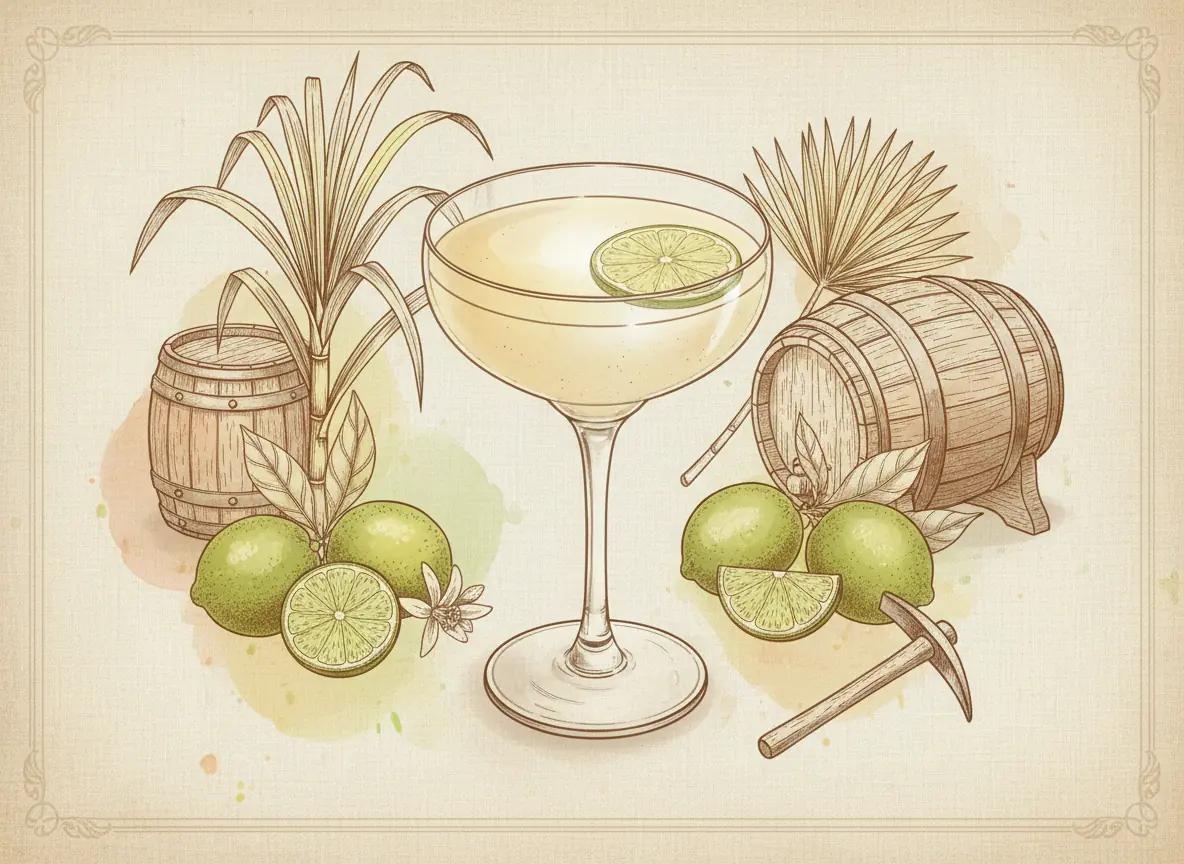
Daiquiri
A Daiquiri is 60ml white rum, 20ml fresh lime juice and two bar spoons of caster sugar. Stir the sugar into the rum and lime in the shaker until it dissolves, then add ice, shake hard for 10 to 12 seconds and double strain into a chilled coupe. About 2.4 UK units. Those are the IBA’s measures, and its method dissolves the sugar first too. The name belongs to Daiquirí, an iron-mining district and beach near Santiago de Cuba. Difford’s Guide credits Jennings Stockton Cox, an American engineer who led one of the first mining parties into Cuba’s iron-ore country after the Spanish-American War of 1898; the Oxford Companion has him making or supervising the first Daiquiri in 1896, and a Santiago bartender naming it in 1908. Difford’s says Constantino Ribalaigua Vert of Havana’s El Floridita made the frozen version famous. With three ingredients and no liqueur or bitters, the Daiquiri hides nothing. A flat rum, tired lime or undissolved sugar shows in the first sip.
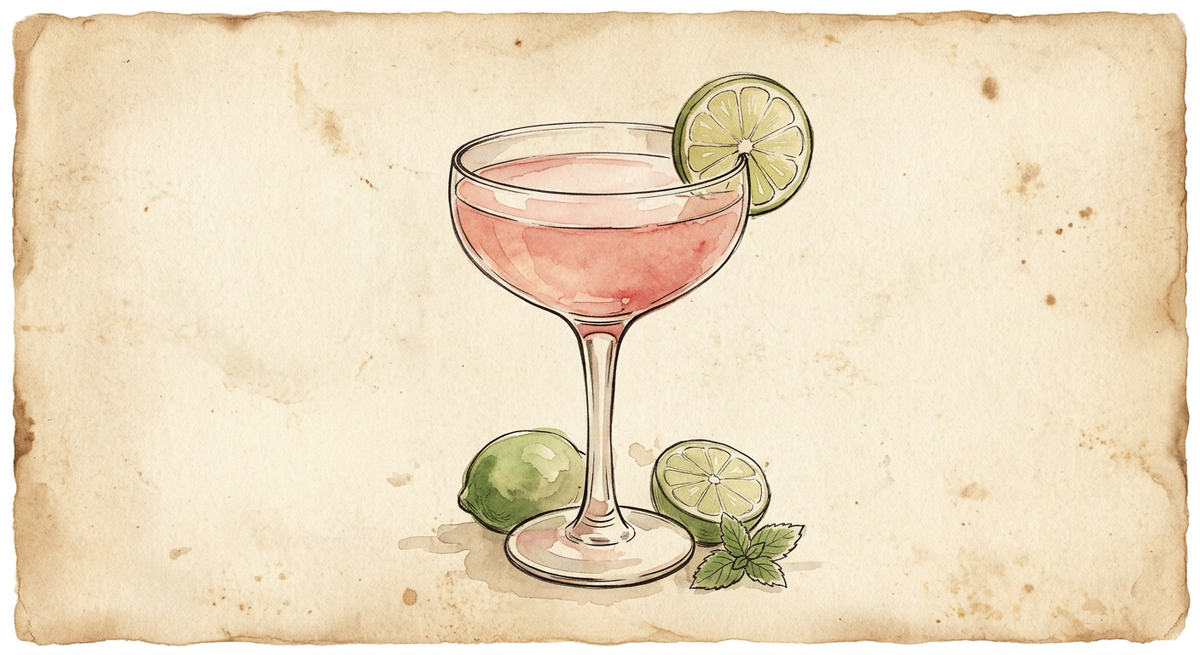
Hemingway Daiquiri
A Hemingway Daiquiri is 60ml white rum, 40ml fresh grapefruit juice, 15ml fresh lime juice and 15ml maraschino liqueur, shaken hard and double strained into a chilled coupe, with a lime wheel. The measures follow the IBA, which lists it as the Hemingway Special. There is no sugar syrup: the maraschino is the only sweetness. About 2.9 UK units. The Oxford Companion to Spirits and Cocktails says it is a version of the Daiquiri No. 3 from Havana’s Floridita bar, named for the writer who downed them there in volume. Difford’s Guide has Hemingway trying the Floridita’s standard frozen Daiquiri and saying he preferred it without sugar and with double rum, which became the Papa Doble, and says the head bartender Antonio Meilan later added maraschino and grapefruit juice to make the Hemingway Special. It is drier and more bitter than a classic Daiquiri, and the grapefruit decides how it tastes.
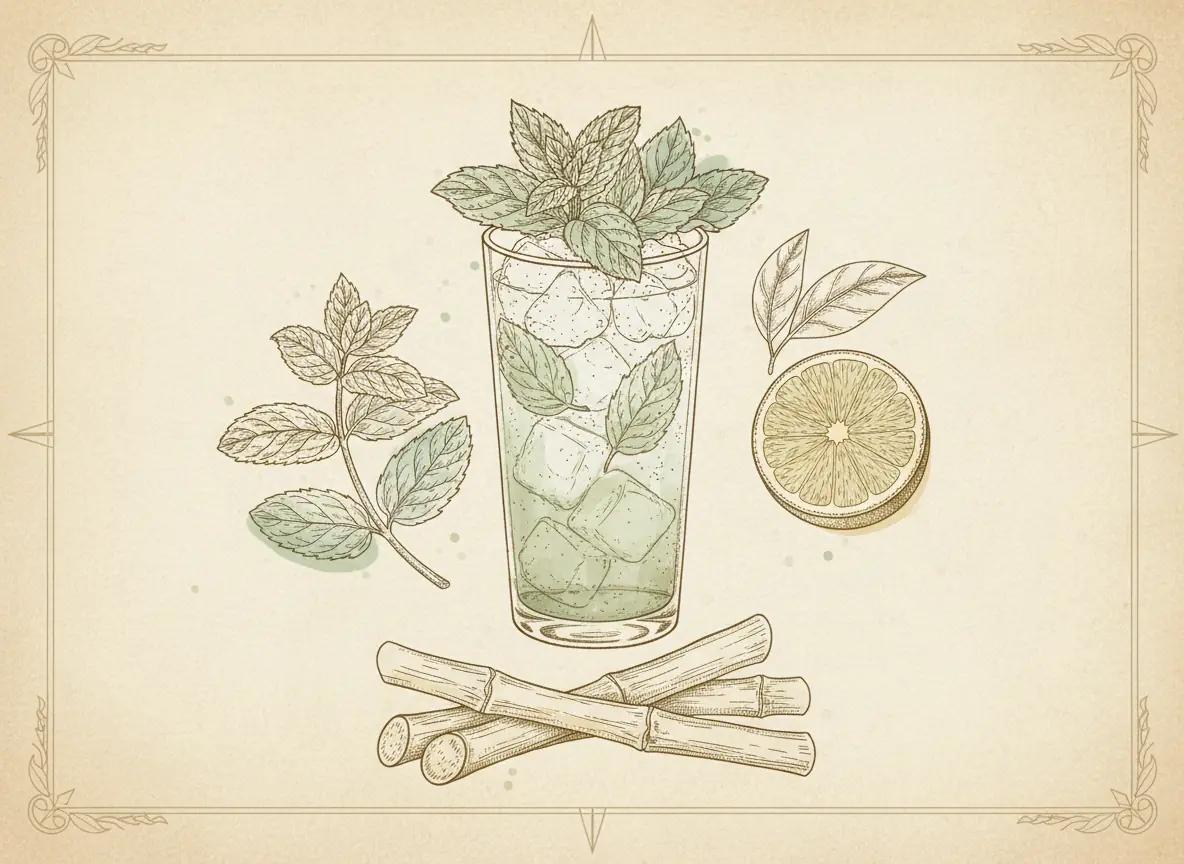
Mojito
A Mojito is 45ml of white rum, 20ml of fresh lime juice, two teaspoons of white cane sugar and six sprigs of mint, built in a highball. The mint is pressed gently with the sugar, the glass is filled with cubed ice, the rum and lime go in, and 75 to 100ml of chilled soda water tops it. About 1.8 UK units. Those are the IBA’s measures. The IBA only says to top up with soda, so the 75 to 100ml is ours. Press the mint once or twice and stop. Torn leaves make the drink bitter and grassy, and that, more often than the rum, is why a Mojito disappoints. The sugar grains help: they bruise the surface of the leaf as you press, and the lime then carries the oil through the glass.
Where this one sits
Recipe by Jerry Can Spirits · Updated 19 October 2026