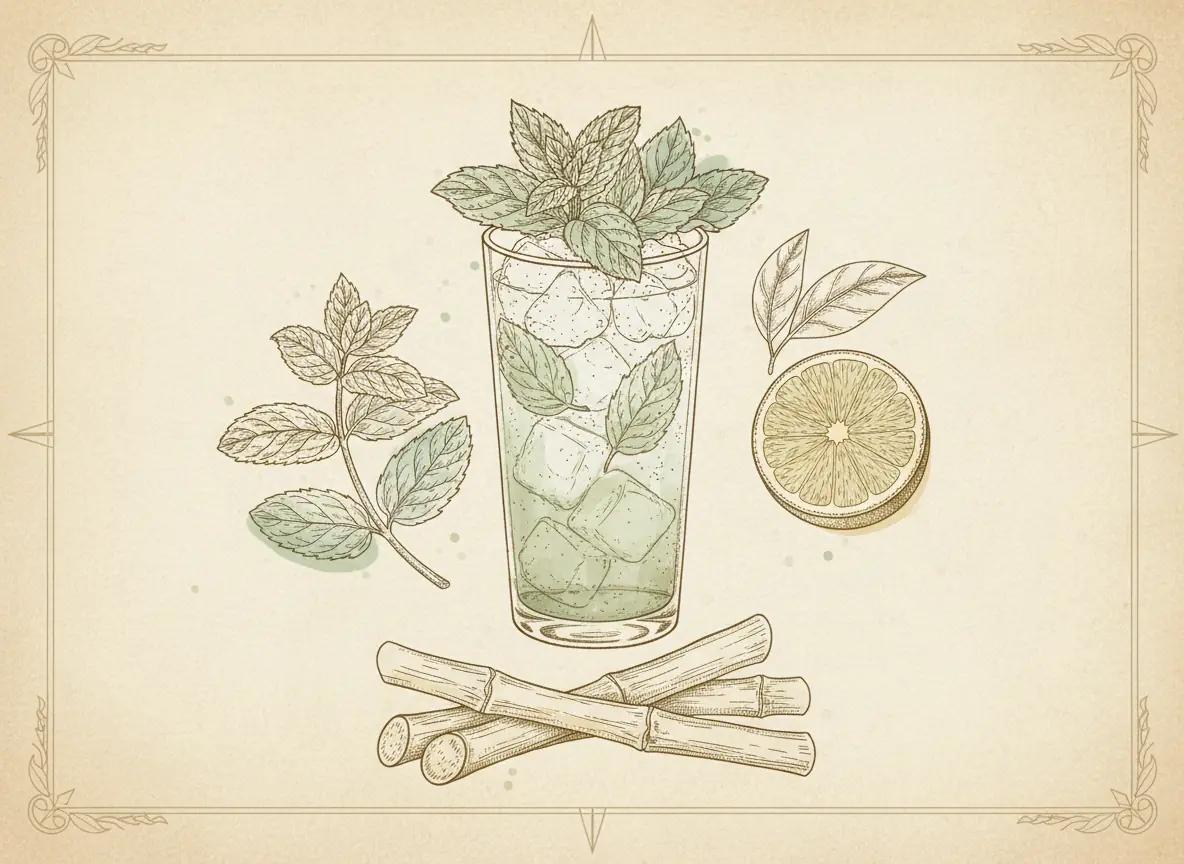
Mojito
A Mojito is 45ml of white rum, 20ml of fresh lime juice, two teaspoons of white cane sugar and six sprigs of mint, built in a highball. The mint is pressed gently with the sugar, the glass is filled with cubed ice, the rum and lime go in, and 75 to 100ml of chilled soda water tops it. About 1.8 UK units. Those are the IBA’s measures. The IBA only says to top up with soda, so the 75 to 100ml is ours. Press the mint once or twice and stop. Torn leaves make the drink bitter and grassy, and that, more often than the rum, is why a Mojito disappoints. The sugar grains help: they bruise the surface of the leaf as you press, and the lime then carries the oil through the glass.
Glassware: Highball Glass
Garnish: Mint sprig and Lime wheel
Ingredients
45ml
White rum in the Cuban manner, the style the IBA names, at our working 37.5 to 40% ABV. Light and dry with some cane sweetness: it should taste of something under the mint, not disappear.
20ml
Squeezed the same day. At 20ml against two teaspoons of sugar, it keeps the drink sharp under the soda.
2 teaspoons
White cane sugar, as the IBA specifies. The grains help press the mint, then dissolve once the lime and rum go in. Caster sugar dissolves fastest.
6 sprigs
Spearmint, six sprigs with the leaves on, pressed gently with the sugar. Peppermint tastes medicinal here.
75 to 100ml
Chilled and freshly opened. 75ml keeps the drink stronger and sharper; 100ml makes it longer. The IBA tops up without a measure.
Instructions
Squeeze the lime juice the same day.
Put the mint and caster sugar in a highball glass.
Press the mint gently once or twice to release its oils, without twisting or tearing it.
Fill the glass with large cubed ice.
Add the rum and lime juice, and stir briefly to dissolve the sugar.
Top with the chilled soda water, poured gently down the inside of the glass.
Lift once from the bottom with a bar spoon.
Garnish with a mint sprig and a lime wheel, and serve with a straw.
Source: the IBA (Official IBA specification; soda measured at 75 to 100ml, lime added after the mint is pressed, cubed ice; method ours). Last checked 9 October 2026.
Expert Tip
Press the mint with the sugar, straight down, once or twice. The grains break the surface of the leaf without tearing it, and the oil comes out with them. Twisting or grinding releases the bitter taste of torn leaf, which no amount of sugar covers. Use cubed ice, not crushed. Crushed ice melts fast under 100ml of soda and thins the drink before it is half gone; cubes keep it cold and sharp to the bottom. Pour the soda last, gently down the inside of the glass, then give one slow lift from the bottom with a bar spoon. Stirring hard knocks the bubbles out.
Behind the Mojito
Flavour Profile
The Origin
The Oxford Companion calls the Mojito an early-twentieth-century Cuban invention, with its first published recipe, the Mojo de Ron, in Juan A. Lasa’s Libro de Cocktail of 1929 and the name Mojito in print two years later, in a Sloppy Joe’s booklet from Havana. Difford’s Guide relays the theory that it descends from the Draque, a mix of aguardiente de caña, sugar, lime and mint said to be named after Sir Francis Drake, who anchored off Cuba in 1586. Difford’s Guide quotes Ramón de Paula’s 1833 mention of drinking a little Drake as the earliest document, and says the recipe changed when rum replaced aguardiente after Bacardi was established in the mid-1800s. The Companion says nothing in the historical record supports the Drake story, but that a similar compound, the Draquecito, was prescribed against cholera in mid-nineteenth-century Cuba.
Difford’s Guide says urban myth credits La Bodeguita del Medio, a Havana bar, with the first Mojito, and a framed note signed Hemingway hangs there; it adds that none of his books or letters mention the Mojito or the bar.
Pressing the Mint
Mint carries its scent in tiny pockets of oil just under the skin of each leaf. A light press against sugar breaks them open; grinding tears the leaf itself, and torn leaf tastes bitter and grassy.
So the press is short: straight down, once or twice, then lift. The leaves should look darker and bruised, not shredded.
Ours Against the IBA
Mojito: the IBA specification and ours
White rum
- IBA
- 45ml white Cuban rum
- Ours
- 45ml white rum
Lime juice
- IBA
- 20ml
- Ours
- 20ml, squeezed the same day
Sugar
- IBA
- Two teaspoons white cane sugar
- Ours
- Two teaspoons white cane sugar
Mint
- IBA
- Six sprigs, mixed with the sugar and lime
- Ours
- Six sprigs, pressed with the sugar
Soda water
- IBA
- A splash, then top up
- Ours
- 75 to 100ml, poured last
Ice
- IBA
- Ice
- Ours
- Large cubes
Garnish
- IBA
- Mint sprigs and a slice of lime
- Ours
- Mint sprig and a lime wheel
| Element | IBA | Ours |
|---|---|---|
| White rum | 45ml white Cuban rum | 45ml white rum |
| Lime juice | 20ml | 20ml, squeezed the same day |
| Sugar | Two teaspoons white cane sugar | Two teaspoons white cane sugar |
| Mint | Six sprigs, mixed with the sugar and lime | Six sprigs, pressed with the sugar |
| Soda water | A splash, then top up | 75 to 100ml, poured last |
| Ice | Ice | Large cubes |
| Garnish | Mint sprigs and a slice of lime | Mint sprig and a lime wheel |
The IBA presses the mint with the sugar and lime together and adds a splash of soda before the ice. We add the lime after the press, so the sugar stays on the leaves while they are bruised.
The Soda
Soda is the largest part of the glass, so its condition matters. Open it fresh, keep it cold and pour it down the inside of the glass, then lift once from the bottom with a bar spoon to bring the rum and lime up through it.
A warm or half-flat bottle gives a sweet, dull drink, whatever the rum and mint.
The Rum
The IBA names white Cuban rum: light, dry and clean, with a little cane sweetness. A white rum of that style lets the mint and lime lead without leaving the drink empty.
Aged and dark rums add caramel and oak that cover the mint.
Without the rum, the same build becomes the Virgin Mojito, with syrup in place of the sugar and a little more lime.
How to Serve It
In a highball, with a mint sprig standing at the rim, a lime wheel, and a straw set beside the mint so you smell it as you drink. Serve it at once, before the bubbles fade.
Make it at home
The Spirit
White RumWhite rum is clear rum, usually bottled at 40% ABV, either unaged or rested in oak and then charcoal-filtered back to clear. It is the light, dry rum of the Daiquiri, the Mojito and the Cuba Libre, and the rum most of our recipes mean when they want rum that sits under lime rather than over it.
More to explore
Frequently Asked Questions
What is in a Mojito?
Should you muddle mint for a Mojito?
Do you muddle the lime in a Mojito?
How strong is a Mojito?
Crushed or cubed ice?
Why does mine go flat?
Is the Mojito really from the sixteenth century?
Sources.
Correct as of 19 October 2026.
- IBA, “Mojito” (official specification: 45 ml white Cuban ron, 20 ml fresh lime juice, 6 mint sprigs, 2 tsp white cane sugar, soda water; mix mint with sugar and lime, add a splash of soda and ice, pour the rum, top with soda, light stir; garnish mint sprigs and a slice of lime).
- The Oxford Companion to Spirits and Cocktails (Jeff Berry), “The Mojito” (secondary source: an early-twentieth-century Cuban invention; the Mojo de Ron in Lasa’s 1929 Libro de Cocktail; the name Mojito in a Sloppy Joe’s booklet two years later; nothing supports the Drake story).
- Difford’s Guide, “Mojito cocktail history” (secondary source: the Draque theory and Drake in 1586; Ramón de Paula in 1833 on drinking a little Drake; recipe changed when rum replaced aguardiente after Bacardi; La Bodeguita myth and the Hemingway note, none of his books mention the Mojito or the bar).
You Might Also Like
Daiquiri
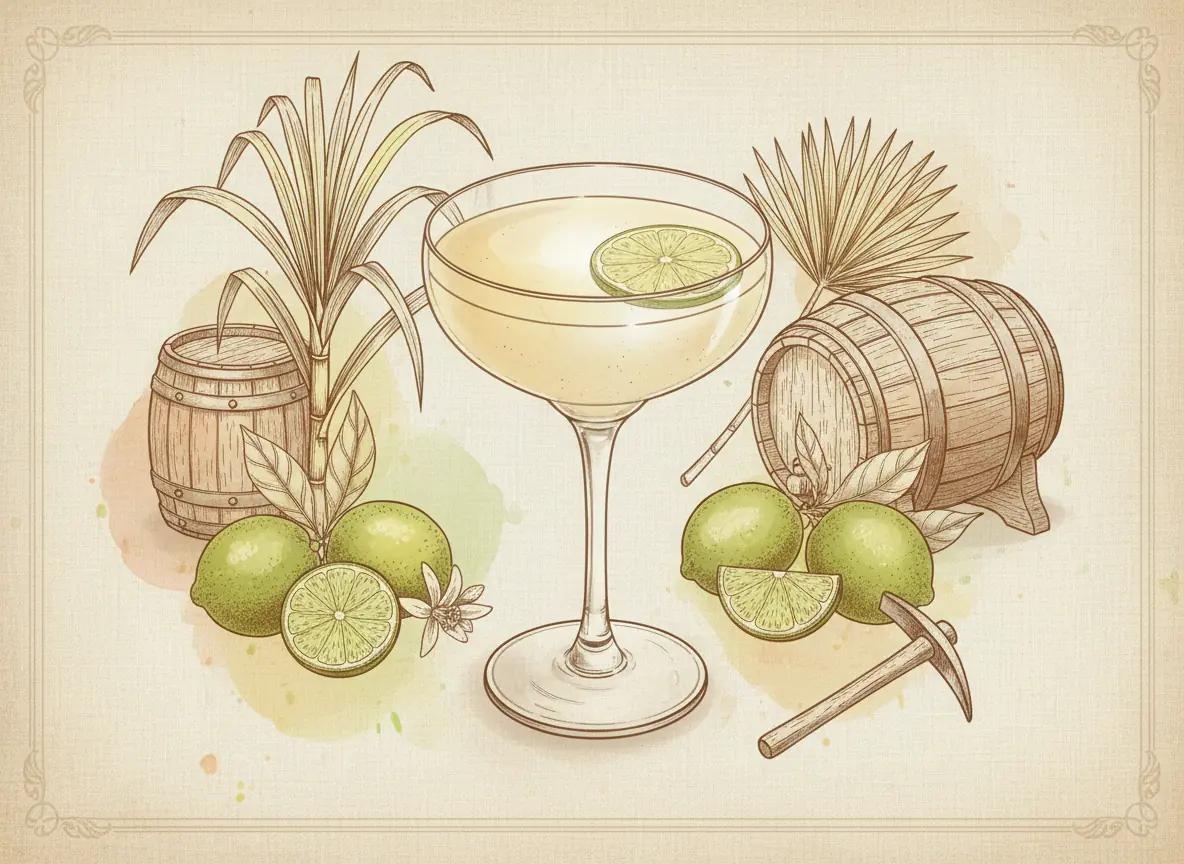
A Daiquiri is 60ml white rum, 20ml fresh lime juice and two bar spoons of caster sugar. Stir the sugar into the rum and lime in the shaker until it dissolves, then add ice, shake hard for 10 to 12 seconds and double strain into a chilled coupe. About 2.4 UK units. Those are the IBA’s measures, and its method dissolves the sugar first too. The name belongs to Daiquirí, an iron-mining district and beach near Santiago de Cuba. Difford’s Guide credits Jennings Stockton Cox, an American engineer who led one of the first mining parties into Cuba’s iron-ore country after the Spanish-American War of 1898; the Oxford Companion has him making or supervising the first Daiquiri in 1896, and a Santiago bartender naming it in 1908. Difford’s says Constantino Ribalaigua Vert of Havana’s El Floridita made the frozen version famous. With three ingredients and no liqueur or bitters, the Daiquiri hides nothing. A flat rum, tired lime or undissolved sugar shows in the first sip.
Gin Rickey
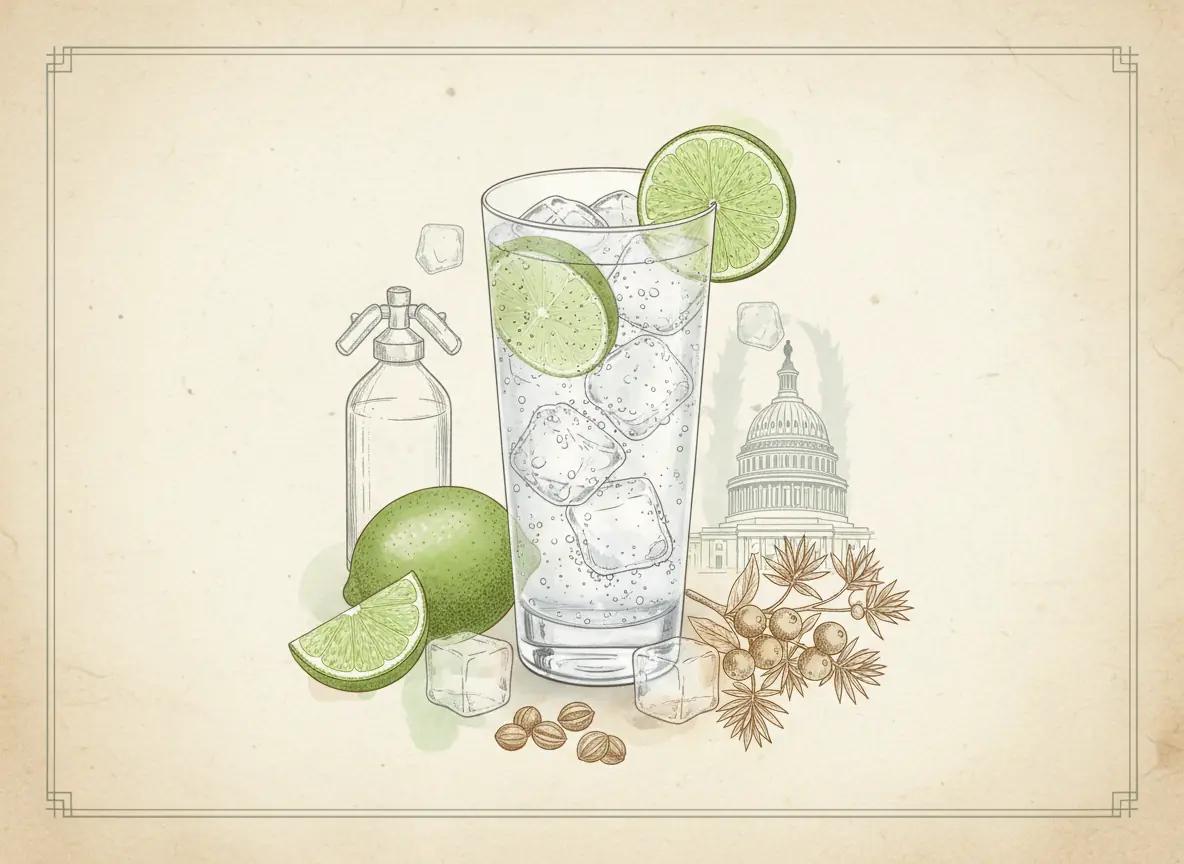
A Gin Rickey is 60ml of London Dry gin and 25ml of fresh lime juice over ice in a highball, topped with 100 to 125ml of cold soda water and finished with a lime wheel. There is no sugar in it. About 2.4 UK units. The Oxford Companion says the Rickey was popularised in the late 1880s at Shoomaker’s bar in Washington, D.C., by Colonel Joseph Kerr “Joe” Rickey, a lobbyist from Missouri, and the bartender George Williamson, that it began with bourbon, and that the Gin Rickey, first found in print in 1893, was the version most widely known by the mid-1890s. With no sugar to round anything off, the gin and the lime carry it. Squeeze the lime on the day and close to the drink: in our experience lime turns flat and bitter within hours, and a Rickey has nothing to hide that behind.
Mint Julep
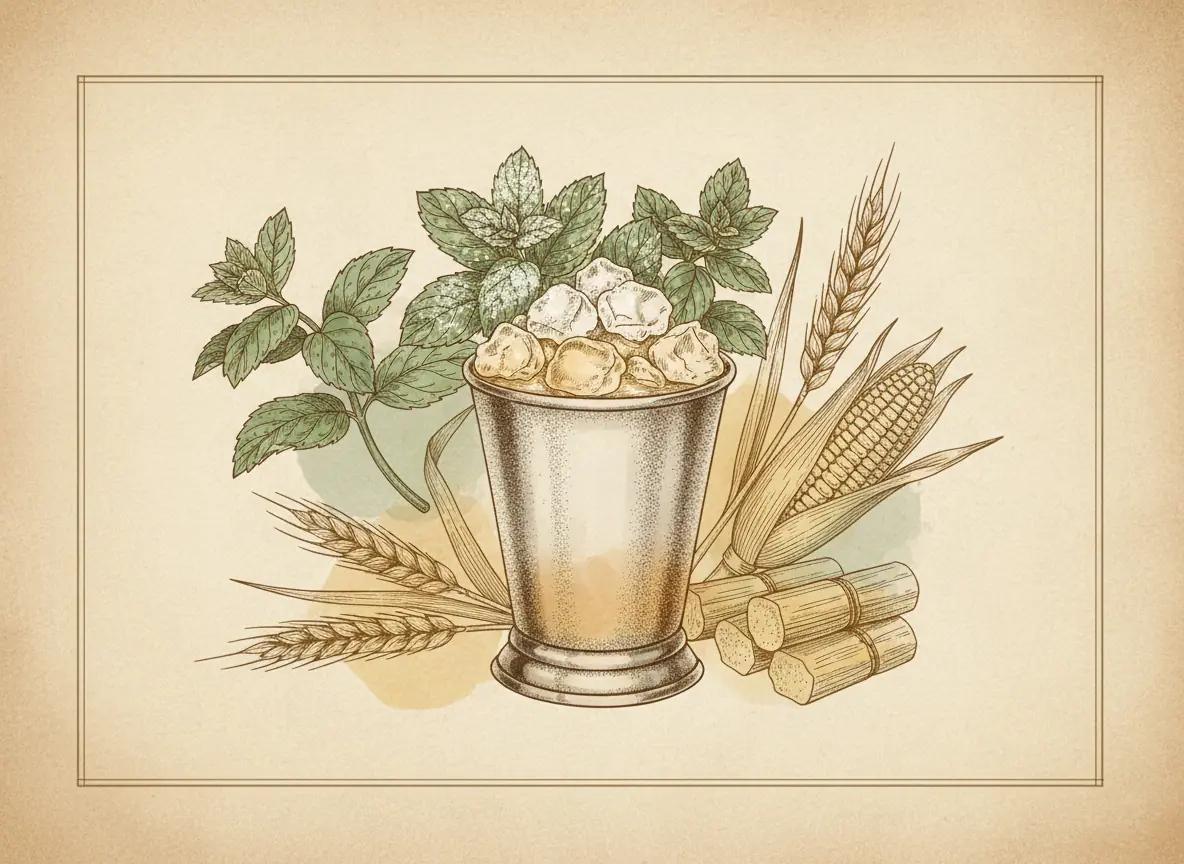
A Mint Julep is 60ml of bourbon, the leaves of four mint sprigs, one teaspoon of powdered sugar and two teaspoons of water. Stir the sugar into the water, press the mint gently into it, pack the cup with crushed ice, pour in the bourbon and churn until the outside frosts, then crown it with a mint bouquet. About 2.4 UK units. The measures are the IBA’s. It is an old drink in print. The Oxford Companion, in an entry by David Wondrich, calls it the oldest of the canonical American mixed drinks, and finds a Williamsburg, Virginia, newspaper poem of 1770 that is clearly about a julep drunk for pleasure. It says Jerry Thomas’s 1862 guide gave the title Mint Julep to the brandy version, that from the 1870s the name meant a whisky drink, and that Churchill Downs named the bourbon Mint Julep its official drink in 1938. There is no citrus and no liqueur in the cup, so the work is in the cold. Crushed ice packed hard frosts the metal, melts slowly into the bourbon and holds the mint upright where the nose meets it.
Where this one sits
Recipe by Jerry Can Spirits · Updated 19 October 2026