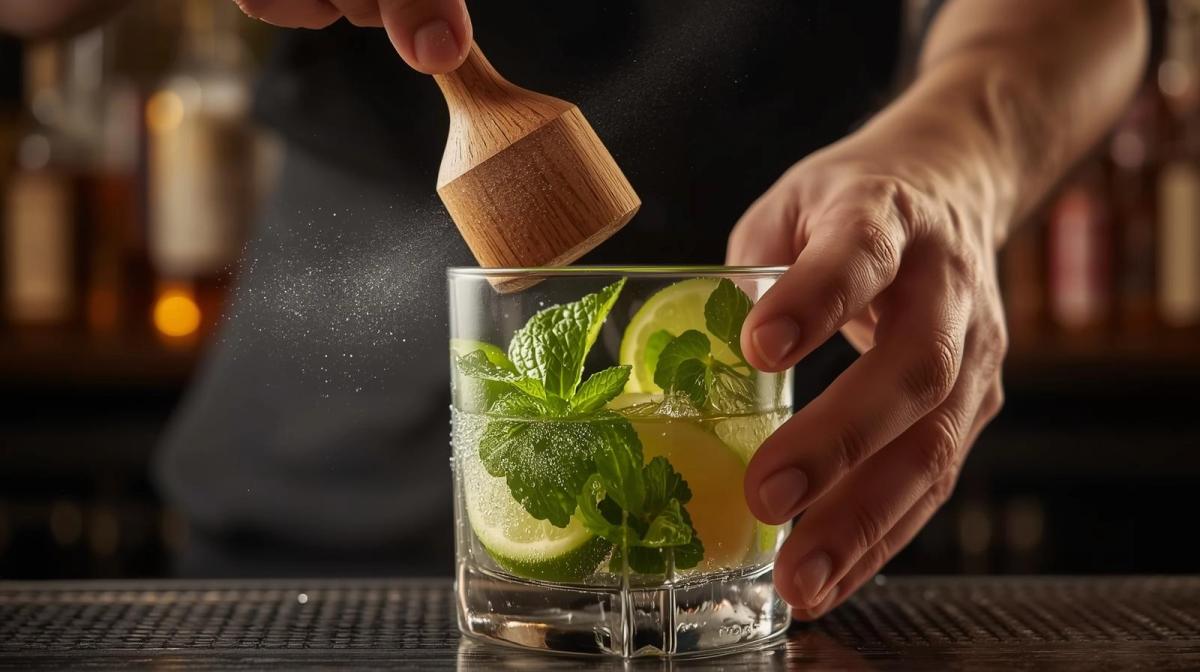
Understanding What Muddling Does
Muddling is controlled extraction—using pressure to release desirable compounds from ingredients into your drink. The technique appears simple, but understanding the underlying science transforms results. Different ingredients require different approaches because their desirable compounds exist in different locations and require different forces to release. Mint oils sit in surface cells of leaves; lime juice hides within flesh; sugar crystals dissolve when crushed with liquid. Treating all ingredients identically guarantees poor results with some. The goal is extraction without over-extraction. Every ingredient contains both desirable compounds (essential oils, juice, sweetness) and undesirable ones (bitter chlorophyll, astringent tannins, harsh pith oils). Proper muddling releases the former while leaving the latter intact. Aggressive muddling extracts everything, contaminating your drink with bitterness you can't remove. This balance makes muddling the technique most often performed incorrectly by home bartenders. Enthusiasm leads to over-muddling; timidity produces under-muddling. Learning the right pressure for each ingredient is the key skill this guide develops.
The Science of Extraction
When you muddle mint, you're rupturing cell walls in the leaf surface to release volatile oils—the aromatic compounds that make mint smell and taste like mint. These oils sit in specialised glands near the leaf surface, accessible with gentle pressure. Deeper within the leaf tissue lies chlorophyll—the green pigment that tastes bitter and vegetal. Aggressive muddling ruptures these deeper cells, contaminating your Mojito with unpleasant bitterness. Citrus muddling works differently. You're after the juice contained in the fruit's flesh and potentially the oils from the zest. The bitter pith between zest and flesh contains limonin and other bitter compounds. Heavy muddling expresses pith oils that make drinks unpleasantly bitter. Fruit muddling releases juice while avoiding bitter seeds and fibrous material. Berries benefit from modest crushing; stone fruits require enough pressure to release juice without pulverising pits into gritty fragments. Sugar muddling—crushing cubes with citrus or other ingredients—serves to dissolve sugar while extracting flavour. The sugar acts as an abrasive, helping express oils from citrus zest through friction. Each ingredient has optimal pressure that maximises desirable extraction while minimising undesirable. Learning these thresholds transforms your muddled drinks.
Signs of Proper vs Over-Muddling
Properly muddled drinks show clear signs. Mint should release strong aroma—you should smell it immediately—while leaves remain largely intact, perhaps lightly bruised but not shredded into green confetti. Citrus should yield juice while wedges maintain their form. Berries should be crushed enough to release colour and juice while remaining identifiable as fruit. Over-muddled drinks tell a different story. Mint becomes green paste, leaves torn into fragments that float throughout the drink and stick to teeth. The colour shifts from vibrant green to dull khaki. The aroma, initially strong, is overwhelmed by vegetal bitterness. Over-muddled citrus releases cloudy, bitter liquid alongside the desired juice. The drink takes on harsh, pithy character that lingers unpleasantly. Rind fragments float rather than staying neatly in the muddling vessel. The visual distinction is clear: properly muddled ingredients look gently pressed; over-muddled ingredients look pulverised. If your muddling results resemble food processor output, you've gone too far. Tasting confirms what appearance suggests. Properly muddled drinks taste bright, aromatic, and balanced. Over-muddled drinks taste bitter, harsh, and muddy—the bad flavours overwhelming the good ones you were trying to extract.
Muddling Herbs
Herbs are the most common muddling ingredient and the most frequently over-muddled. Mint, basil, and similar soft herbs contain aromatic oils that make them essential to certain cocktails—but these same herbs become bitter when treated roughly. The key insight is that herb oils reside near the surface. You don't need to destroy leaves to access them; gentle bruising suffices. Think of muddling herbs as pressing rather than grinding, releasing rather than pulverising. Every herb muddling mistake stems from the same error: too much force applied for too long. Learning appropriate pressure for herbs transforms Mojitos from occasionally successful to consistently excellent.
Muddling Mint
Mint appears in more muddled drinks than any other herb. Mojitos, Mint Juleps, and countless variations depend on properly extracted mint character—bright, aromatic, and refreshing rather than bitter and vegetal. Begin with fresh mint sprigs, stems removed. Place leaves in the bottom of your shaker tin or mixing glass—typically 8-10 leaves for a single drink. If using sugar (as in a Mojito), add it now; sugar crystals act as gentle abrasive, helping express oils. Add a splash of liquid—simple syrup, lime juice, or a combination depending on the recipe. This liquid serves two purposes: it prevents leaves from tearing against dry glass surfaces, and it captures the released oils immediately. Hold your muddler vertically, pressing straight down with the flat bottom against the leaves. Press firmly enough to compress leaves against the glass, then release. Repeat this pressing motion—press, release, press, release—rather than grinding or twisting. Three to five presses typically suffice. You should smell mint strongly after muddling. The leaves should be bruised—showing visible darkening where cell walls have ruptured—but not shredded. Any leaf that's been torn into fragments represents over-muddling. Stop earlier than feels natural. The instinct is to keep muddling until satisfied that enough has been extracted. Resist this instinct. Mint is more forgiving of under-muddling than over-muddling; you can always add a garnish to boost aroma, but you can't remove extracted bitterness.
Muddling Basil and Soft Herbs
Basil, coriander , and similar soft herbs require even gentler treatment than mint. Their leaves are thinner and more delicate; the margin between proper extraction and over-muddling is narrower. Basil leaves should be pressed only once or twice, enough to release their distinctive sweet-savoury aroma, not enough to break them into fragments. Because basil oxidises and browns quickly once damaged, work fast and build your drink immediately after muddling. For basil-forward drinks like the Gin Basil Smash, place 4-5 large basil leaves in your shaker. Add the liquid ingredients (gin, lemon juice, simple syrup). The liquid protects the leaves during shaking, which provides additional extraction beyond the initial muddling. Some bartenders skip muddling basil entirely, instead "slapping" leaves between palms to release aromatics before adding them to the shaker. This gentler approach works well for drinks where basil is a subtle accent rather than primary flavour. Coriander polarises drinkers but works beautifully in certain drinks when properly handled. Muddle the leaves only, not stems, with very light pressure. The herb's distinctive flavour releases easily; heavy-handed treatment produces soapy bitterness that repels even coriander lovers.
Woody Herbs: A Different Approach
Rosemary, thyme, and similar woody herbs don't muddle well—their tough stems resist crushing, and their oils are best released through infusion rather than physical extraction. If a recipe calls for "muddled rosemary," consider alternatives. Slap a rosemary sprig between your palms to release aromatics, then add it to the drink as a garnish. Or briefly torch the sprig to release oils before adding. Or infuse rosemary into simple syrup in advance and use that syrup in the drink. When you must muddle woody herbs, focus on the leaves (needles) rather than stems. Strip leaves from stems, add them to the shaker with other ingredients, and press very gently. The goal is bruising, not crushing—woody herb leaves are more forgiving than soft herbs, but they can still turn bitter with aggressive treatment. Thyme is the exception among woody herbs—its tiny leaves muddle reasonably well when bundled together. Add a few sprigs, press gently to bruise leaves and release oils, then proceed with the recipe. The stems won't break down but can be removed or left in for rustic presentation.
Muddling Citrus
Citrus muddling releases juice and zest oils, adding both liquid and aromatic complexity to drinks. The Caipirinha depends entirely on properly muddled lime; Old Fashioned variations incorporate orange muddled with sugar and bitters. The challenge is extracting juice and zest oils while avoiding the bitter pith between them. This requires understanding citrus anatomy and adjusting technique accordingly.
Muddling Lime for Caipirinhas
The Caipirinha is Brazil's national cocktail and the purest expression of citrus muddling. Cut lime, sugar, muddler, cachaça—nothing else. The technique determines whether the result is transcendent or undrinkably bitter. Cut a lime in half, then each half into four wedges—eight pieces from one lime. Remove the central white pith from each wedge; this pith contains the most concentrated bitterness. The extra thirty seconds spent on this step dramatically improves final results. Place the lime wedges in a rocks glass (traditionally) or shaker tin. Add two teaspoons of white sugar or one tablespoon of simple syrup. The sugar will act as an abrasive while sweetening the drink. Muddle with moderate pressure, pressing each wedge to release juice without crushing the rind entirely. You want juice extracted and zest oils expressed; you don't want the pithy inner rind pulverised into bitter particles. Rotate the muddler around the glass, addressing each wedge, but avoid grinding motions. Press, lift, reposition, press—methodical rather than aggressive. The sugar should dissolve into the lime juice, creating a cloudy but not murky base. When the wedges have collapsed but remain identifiable—not reduced to green mush—stop muddling. Add cachaça and ice, stir to combine, and serve. The drink should taste bright, citrusy, and balanced rather than bitter and harsh.
Muddling Citrus for Old Fashioneds
Traditional Old Fashioneds incorporate muddled orange and cherry, a practice some purists reject but many drinkers enjoy. When done properly, the muddled fruit adds complexity; done poorly, it becomes a bitter, chunky mess. Use a half orange wheel or two orange wedges, plus a cocktail cherry. Add a sugar cube and a few dashes of Angostura bitters. The sugar cube provides abrasion that helps express orange oils. Muddle gently, focusing on dissolving the sugar and expressing orange oils rather than crushing the orange into pulp. The orange flesh should release some juice, but the rind should remain largely intact. If you're producing significant amounts of orange pulp, you're muddling too aggressively. The cherry serves mostly as flavour accent—one or two presses to release some juice is sufficient. Don't reduce it to red mush. After muddling, add whiskey and ice, stir, and strain into a fresh glass (leaving the muddled fruit behind) or serve unstrained in the original glass. Straining produces a cleaner drink; serving unstrained is more traditional but risks continued extraction and fruit fragments in the mouth. Some bartenders skip the muddling entirely, instead using orange bitters and an expressed orange twist. This approach produces a more refined drink while acknowledging that Old Fashioned muddling easily goes wrong.
Avoiding Pith Bitterness
Citrus pith—the white layer between coloured zest and juicy flesh—contains bitter compounds that ruin drinks when over-extracted. Avoiding pith bitterness is the primary challenge in citrus muddling. The first defence is preparation. When cutting citrus for muddling, remove as much central pith as practical. For Caipirinhas, cut out the white core from each wedge. For Old Fashioned garnishes, use fruit slices thin enough that pith is minimal. The second defence is technique. Press rather than grind; extract juice by compression rather than abrasion. The juice releases with moderate pressure; the pith oils require aggressive force. By stopping before that aggressive force is applied, you get juice without significant pith extraction. The third defence is awareness. Taste your drinks. If a Caipirinha comes out bitter despite using quality ingredients and appropriate sugar, you've over-muddled. Adjust next time: fewer presses, lighter pressure, better pith removal. Some bitterness isn't bad, citrus naturally contains some bitter compounds that add complexity. The problem is excessive bitterness that overwhelms the drink's balance. Learn where that threshold lies through practice and tasting.
Muddling Fruit
Beyond citrus, various fruits benefit from muddling—berries, stone fruits, and tropical fruits all appear in muddled cocktails. Each has specific requirements based on structure, seed location, and juice concentration. The general principle applies: extract juice and flavour without pulverising unwanted elements. Berries should yield juice without seed fragments; stone fruits should release flesh without pit particles; tropical fruits should provide pulp without excessive fibre.
Muddling Berries
Berries muddle beautifully—their soft flesh releases juice readily, and their vibrant colours produce visually striking drinks. Strawberries, blackberries, raspberries, and blueberries all feature in muddled cocktails. Strawberries require modest pressure. Hull them first (remove the green top and white core), then quarter or slice larger berries. Place in shaker with other muddling ingredients—typically lime and sugar—and press until the flesh breaks down and juice releases. Stop before the strawberry becomes pink paste; some texture adds visual and flavour interest. Raspberries and blackberries need gentler treatment. Their delicate structure collapses easily, releasing juice with minimal pressure. A few presses suffice; continued muddling produces seed fragments that get stuck in teeth. For cleaner drinks, consider muddling berries then fine-straining the liquid before proceeding. Blueberries require the most pressure of common berries. Their tough skins resist crushing; you need genuine force to burst them. Press firmly until skins rupture and juice flows, but be aware that released juice includes some skin fragments. Fine straining is advisable. For all berries, fresh beats frozen. Frozen berries release more water and less concentrated flavour as they thaw during muddling. If using frozen, let them thaw mostly before muddling, and account for additional dilution.
Muddling Stone Fruits
Peaches, plums, and similar stone fruits add seasonal character to summer cocktails. Their flesh mudddles well; their pits, obviously, must be avoided. Prepare stone fruit by cutting away the flesh from the pit, then dicing into small chunks. Smaller pieces muddle more evenly and thoroughly. Skin can be left on for colour and flavour or peeled for smoother texture—personal preference and recipe requirements guide this choice. Muddle stone fruit with moderate pressure. The flesh breaks down readily; you're not fighting structure as with some other fruits. Include sugar or simple syrup if the recipe calls for it—the sugar helps extract juice. Ripe fruit matters enormously. Under-ripe stone fruit is tough and flavourless; over-ripe fruit becomes mushy and fermented-tasting. Perfect ripeness—slightly soft but not squishy—yields the best muddling results. Stone fruit oxidises after muddling, turning brown relatively quickly. Build drinks immediately after muddling; pre-muddled stone fruit base won't hold for service later. If preparing for a party, prepare fruit in advance but muddle fresh for each drink or batch.
Muddling Tropical Fruits
Pineapple, mango, and other tropical fruits bring exotic character to tiki-style and modern cocktails. Their dense flesh and fibrous structure require adjusted technique. Pineapple muddling produces excellent results when done correctly. Cut pineapple into small chunks, removing the tough core. Muddle with firm pressure—pineapple flesh is denser than berries—until juice releases. The fruit won't completely break down; some texture is normal and desirable. Mango presents challenges. Its slippery flesh evades muddlers, sliding rather than compressing. Very ripe mango works better; firmer fruit resists muddling. Consider pureeing mango in a blender rather than muddling—the result is more consistent and less frustrating. Passion fruit doesn't really need muddling. Cut in half and scoop the pulp directly into drinks. The seeds provide desirable texture; the pulp provides flavour. "Muddling" passion fruit accomplishes little beyond making a mess. Tropical fruit cocktails often benefit from partial blending rather than pure muddling. Blend fruit with some liquid to create a smooth base, then shake or stir with remaining ingredients. This approach suits drinks served strained, where chunks would be problematic.
Tools and Technique Refinement
The right muddler and proper technique make extraction easier and results more consistent. While muddling is possible with improvised tools, purpose-designed equipment rewards investment. Beyond tool selection, refinement of personal technique through practice produces the most significant improvements. Understanding the feel of proper muddling; how much pressure, how many presses, when to stop, comes only through repetition.
Choosing a Muddler
Muddlers come in wood, plastic, and metal, with flat or textured crushing surfaces. Each has merits; none is definitively superior. **Wooden muddlers** are traditional and feel comfortable in hand. They absorb some liquid over time, developing character but potentially retaining flavours between uses. Lacquered or sealed wood addresses this but may flake with heavy use. Choose hardwoods; soft woods dent and splinter. **Plastic and metal muddlers** offer durability and dishwasher compatibility. They don't absorb flavours, making them more hygienic for frequent use across different drinks. Some feel less natural in hand than wood, though this is personal preference. **Surface texture** affects technique. Flat surfaces suit most ingredients—they press evenly without catching or tearing. Textured or toothed surfaces help crush sugar cubes but can shred herbs if used carelessly. If buying one muddler, choose flat; if buying two, add a textured one for sugar work. **Length matters** for compatibility with your glassware and shaker tins. The muddler must reach the bottom of whatever vessel you're working in. Standard bar muddlers (20-25cm) fit most applications; shorter muddlers struggle with tall shaker tins. Budget isn't critical, even inexpensive muddlers perform adequately. Prioritise comfort and appropriate length over materials or brand names.
Grip and Motion
How you hold and move the muddler determines your control and the consistency of results. Grip the muddler near its top, like a pestle in a mortar. Your palm should cap the top, fingers wrapping around the shaft. This grip provides maximum downward force with minimum wrist strain. Keep the muddler vertical when pressing. Angled muddlers apply uneven pressure, crushing some ingredients while missing others. The flat bottom should meet ingredients parallel to the vessel bottom. Press straight down, apply pressure, then lift straight up. This pressing motion differs from grinding or twisting—which tear and shred rather than bruise and express. Think of a stamp pressing down and releasing rather than a drill rotating. Work around the vessel systematically. Don't press the same spot repeatedly while ignoring others. Rotate your muddler or reposition between presses to ensure all ingredients receive similar treatment. The motion should feel controlled rather than violent. If you're applying maximum force, something's wrong—proper muddling requires moderate pressure, not aggressive pounding. Let the technique work rather than trying to force results through effort.
Practice Exercises
Muddling proficiency comes through practice. These exercises develop feel and consistency without wasting expensive ingredients. **Mint pressure calibration**: Place 8-10 mint leaves in a glass with water. Muddle with very light pressure—just enough to smell mint. Add more pressure until leaves show bruising but no tearing. Note how this pressure feels; this is your target for Mojitos. **Citrus extraction test**: Cut a lime into wedges and muddle in a glass without sugar. Press until juice releases but wedges remain intact. Taste the juice for bitterness. Muddle again more aggressively; taste again. You'll feel the threshold where bitterness emerges. **Berry consistency drill**: Muddle strawberries to different degrees—light press, moderate, heavy. Note how texture and colour change. Make identical drinks with each muddling level; taste them side by side. Identify which extraction level you prefer. **Blind technique comparison**: Have someone else muddle ingredients for a drink while you're not watching. Taste the result and try to identify whether it was under-muddled, properly muddled, or over-muddled. This develops your palate's sensitivity to extraction levels. Regular practice—even one or two Mojitos weekly—maintains and improves muddling skills. Infrequent muddling leads to inconsistent technique and forgotten lessons.
Common Mistakes and Fixes
Even experienced bartenders occasionally over-muddle or under-extract. Knowing how to identify and address common problems prevents repeated mistakes and salvages drinks when errors occur. The most valuable skill is recognition—quickly identifying when muddling has gone wrong and adjusting either the drink or future technique accordingly.
Fixing Over-Muddled Drinks
Over-muddled drinks are difficult to fix because extracted bitterness doesn't go away. However, some remediation is possible. **Add more sweetness**: Sugar or simple syrup can mask bitterness to some degree. If a Mojito came out bitter from over-muddled mint, adding extra syrup might make it drinkable. This isn't fixing the problem—the bitterness remains—but it balances the flavour profile toward acceptability. **Increase dilution**: More ice, more soda, more time stirring—dilution reduces the concentration of bitter compounds. An over-muddled Caipirinha might improve with extra ice and stirring. Again, this masks rather than fixes, but sometimes acceptable is good enough. **Add citrus**: Acid distracts from bitterness. A squeeze of extra lime might help an over-muddled drink taste more balanced. The bitterness doesn't disappear, but the palate perceives it less prominently. **Start over**: Sometimes there's no saving a badly over-muddled drink. Recognise this quickly and remake rather than serving something undrinkable. The cost of wasted ingredients is small compared to serving a bad drink. The best fix is prevention. Stop muddling earlier than feels necessary; err toward under-extraction rather than over-extraction. You can always add more muddled ingredients; you can't remove extracted bitterness.
Addressing Under-Muddled Drinks
Under-muddled drinks are far easier to fix than over-muddled ones. The flavours are available; they just haven't been released yet. **Muddle more**: If your Mojito tastes weak, you can often add mint, muddle again, and improve it. This is why under-muddling is preferable to over-muddling—the remedy is simple. **Add muddled garnish**: Fresh mint slapped between palms and added as garnish provides aroma that compensates for under-muddled base. The drink won't taste identical to a properly muddled version, but it will be satisfying. **Shake longer**: For shaken drinks, additional shaking time provides some extraction. The ice and agitation continue working on muddled ingredients. This won't fully compensate for inadequate muddling, but it helps. **Accept it**: A slightly under-muddled Caipirinha is still a good drink—just subtler than ideal. Unless it's dramatically under-extracted, the result is often acceptable. The key insight: under-muddling is usually fixable; over-muddling rarely is. When uncertain about how much to muddle, stop early. You can always do more; you can't undo what's been done.
Technique Adjustments for Different Situations
Standard muddling technique sometimes requires adjustment for specific situations. **Service speed**: When making multiple muddled drinks quickly, technique often suffers—bartenders rush, applying more pressure for less time. If speed is essential, consider batching muddled elements or pre-muddling bases rather than rushing individual drinks. **Ingredient variation**: Mint in January differs from mint in July; limes vary by origin and season. Adjust muddling intensity based on how ingredients respond. Tender young mint needs less pressure than tough mature leaves; juicy limes need less crushing than dry ones. **Glass limitations**: Muddling in narrow highball glasses is harder than in wide rocks glasses. The muddler can't move freely; ingredients jam at the bottom. When possible, muddle in wide vessels (shaker tins, mixing glasses) then transfer to serving glasses. **Altitude and temperature**: At high altitude or in heat, volatile compounds release more readily. You might need less muddling than at sea level or in cold environments. This is subtle but noticeable to experienced bartenders. **Guest preferences**: Some guests prefer more intense herb flavour; others find standard muddling too aggressive. When making drinks for others, consider asking about preferences—or serve with additional garnish that can boost flavour if desired.
Muddling Guidelines by Ingredient Type
Mint
Basil
Lime wedges
Strawberries
Sugar cubes
Blackberries
Orange slices
| Ingredient | Pressure Level | Number of Presses | Signs of Completion | Common Mistakes |
|---|---|---|---|---|
| Mint | Moderate | 3-5 | Strong aroma, bruised leaves | Shredding into green paste |
| Basil | Light | 1-2 | Aromatic release, minimal damage | Browning, over extraction |
| Lime wedges | Moderate-firm | 4-6 | Juice released, wedges intact | Pulverising pith, cloudy bitterness |
| Strawberries | Moderate | 3-5 | Juice released, texture remains | Complete liquefaction |
| Sugar cubes | Firm | Until dissolved | Sugar integrated, no grains | Stopping before dissolution |
| Blackberries | Light | 2-3 | Colour released, some whole | Seed fragments released |
| Orange slices | Light-moderate | 2-4 | Oil expressed, flesh intact | Pith extraction, bitter result |
Frequently Asked Questions
How hard should I muddle mint for a Mojito?
Apply moderate pressure—firm enough to see leaves bruise and smell strong mint aroma, but not so hard that leaves shred into fragments. Three to five deliberate presses typically suffice. The leaves should look pressed and darkened but still recognisable as leaves, not reduced to green paste. When in doubt, stop earlier; you can always add a slapped mint garnish for extra aroma.
Why does my muddled drink taste bitter?
Bitterness usually indicates over-muddling. With herbs, you've crushed beyond surface oils into bitter chlorophyll. With citrus, you've extracted bitter pith oils. The fix is technique adjustment: use less pressure, fewer repetitions, and stop earlier. For citrus specifically, removing the central pith before muddling also reduces bitterness dramatically.
Can I use a regular spoon instead of a muddler?
A wooden spoon's handle works in a pinch but isn't ideal—it's typically too narrow and lacks the flat surface that distributes pressure evenly. For occasional use, improvised tools suffice. For regular muddling, proper muddlers cost under £10 and make technique easier. The investment is minimal for noticeably better results.
Should I muddle herbs with or without liquid?
Adding a splash of liquid—simple syrup, lime juice, or the recipe's sweetener—before muddling generally produces better results. The liquid protects leaves from tearing against dry glass surfaces and captures released oils immediately. Muddling herbs completely dry risks shredding them; a bit of liquid makes gentle extraction easier.
How do I muddle for multiple drinks at once?
Scale ingredients proportionally and muddle in a larger vessel—a mixing glass or shaker tin rather than individual glasses. The technique remains the same: press, don't grind; stop when aromatics release and ingredients are bruised but not pulverised. Working in batches may require slightly more muddling time, but the per-drink effort decreases significantly. For parties, pre-muddled bases can be prepared and refrigerated short-term.
