Autumn Gold
An Autumn Gold is 45ml of bourbon, 20ml of apple brandy, 20ml of fresh lemon juice, 15ml of maple syrup and two dashes of aromatic bitters, shaken hard for 10 to 12 seconds and double strained into a chilled coupe, with a thin apple fan. About 2.6 UK units, or 2.8 with a bonded apple brandy at 50% ABV. It is our own October sour, with no older history. The frame is the Whiskey Sour. Apple brandy shares the base with the bourbon, and maple takes the place of sugar syrup. Bourbon supplies the vanilla and the weight, the apple brandy the orchard, and the lemon keeps the maple from turning the drink into a dessert. It is drier than a standard sour on purpose. Make it when the first English apples are in the shops, and cut the fan just before serving.
Glassware: Coupe Glass
Garnish: Apple fan cut thin and stood on the rim
Ingredients
45ml
At 40% ABV, the larger part of the base. A bourbon with some rye in the mash keeps the finish from going soft against the maple.
20ml
Laird’s own site lists its Straight Apple Brandy Bottled in Bond at 100 proof (50% ABV), which matches the bourbon; calvados, at our working figure of 40%, gives a drier, more restrained drink. Avoid apple liqueurs, which are sweet and much lower in strength.
20ml
Squeezed the same day. At 20ml it sits a little short of a standard sour, because the apple brandy brings its own impression of sweetness.
15ml
Pure maple syrup, which brings caramel and woody notes as well as sweetness. Fifteen millilitres rounds the lemon without making the drink taste of breakfast.
2 dashes
Two dashes of Angostura, at 44.7% ABV on a DrinkSupermarket listing, or any aromatic bitters. They join the whiskey’s oak to the fruit and dry the finish.
Instructions
Chill a coupe and squeeze the lemon the same day.
Add the bourbon, apple brandy, lemon juice, maple syrup and bitters to a shaker.
Fill with cubed ice and shake hard for 10 to 12 seconds.
Double strain into the chilled coupe.
Cut a thin apple fan and rest it on the rim.
Our version
Our own October sour on the Whiskey Sour frame: 45ml of bourbon and 20ml of apple brandy split the base, with 20ml of lemon, 15ml of maple syrup in place of sugar syrup and two dashes of aromatic bitters.
Source: our own specification.
Expert Tip
Taste the lemon before you settle the maple. Twenty millilitres of lemon to fifteen of maple sits drier than a Whiskey Sour, and apple brandy reads sweeter than it is, so a mild lemon can tip it. Adjust by a few millilitres. Match the apple brandy to the bourbon. Laird’s Straight Apple Brandy Bottled in Bond, at 100 proof (50% ABV), holds its own; a soft one at 40% fades behind the whiskey. Calvados gives a drier, more restrained glass. Use pure maple syrup. Taste of Home says pancake syrup is usually made from corn syrup or high-fructose corn syrup, with colouring and flavouring added to imitate maple, and in our experience it makes the drink flat and sweet.
Behind the Autumn Gold
Flavour Profile
A House Sour for the Apple Season
The Autumn Gold is one of our own recipes. It takes the Whiskey Sour’s structure of spirit, lemon and sugar and changes two things: apple brandy joins the bourbon in the base, and maple syrup replaces the sugar syrup.
Why Split the Base
Bourbon alone makes a good sour that tastes of whiskey. Apple brandy alone makes a fragrant drink with less weight. At 45ml to 20ml the bourbon gives the body and the vanilla, and the brandy puts apple on the nose and in the first sip.
Strength matters as much as the ratio. In our experience a bonded apple brandy at 50% stands beside the bourbon; at 40% it slips behind it, and the apple becomes a hint.
Maple in Place of Sugar
Maple syrup sweetens with a flavour of its own: caramel, wood and a slight earthiness that sits well with apple and oak. It is also a little thicker than simple syrup, which gives the drink more body.
Fifteen millilitres against twenty of lemon is a deliberate step towards dry. The bitters close the gap between the whiskey and the fruit and leave some spice on the finish.
Three Sours From the Same Shelf
The Autumn Gold beside our Whiskey Sour and Jack Rose
Spirit
- Autumn Gold
- 45ml bourbon, 20ml apple brandy
- Whiskey Sour
- 45ml bourbon
- Jack Rose
- 60ml applejack
Citrus
- Autumn Gold
- 20ml lemon
- Whiskey Sour
- 25ml lemon
- Jack Rose
- 22.5ml lemon
Sweetener
- Autumn Gold
- 15ml maple syrup
- Whiskey Sour
- 20ml sugar syrup
- Jack Rose
- 22.5ml grenadine
Bitters
- Autumn Gold
- Two dashes aromatic
- Whiskey Sour
- None
- Jack Rose
- None
Glass
- Autumn Gold
- Coupe
- Whiskey Sour
- Rocks, over ice
- Jack Rose
- Coupe
UK units
- Autumn Gold
- About 2.6
- Whiskey Sour
- About 1.8
- Jack Rose
- About 2.4
| Element | Autumn Gold | Whiskey Sour | Jack Rose |
|---|---|---|---|
| Spirit | 45ml bourbon, 20ml apple brandy | 45ml bourbon | 60ml applejack |
| Citrus | 20ml lemon | 25ml lemon | 22.5ml lemon |
| Sweetener | 15ml maple syrup | 20ml sugar syrup | 22.5ml grenadine |
| Bitters | Two dashes aromatic | None | None |
| Glass | Coupe | Rocks, over ice | Coupe |
| UK units | About 2.6 | About 1.8 | About 2.4 |
How to Serve It
Shaken hard, double strained into a chilled coupe, with a thin apple fan cut just before serving so it does not brown. It suits an early autumn evening, before a roast or after one.
Without the apple, a Whiskey Sour; for apple brandy with grenadine, a Jack Rose; with whiskey and cider over ice, a Stone Fence.
Make it at home
The Spirit
Whiskey (Bourbon)Under the US standard 27 CFR 5.143, bourbon is an American whiskey whose mash is at least 51% corn, matured in fresh charred oak barrels and bottled at 40% ABV or higher, the figure our recipes use. The fresh charred wood gives it its vanilla, caramel and colour, and the corn gives a rounder, sweeter spirit than rye. It is the base of 26 of our recipes, more than any other whiskey.
More to explore
Frequently Asked Questions
What is in an Autumn Gold?
Is the Autumn Gold a classic cocktail?
Can I use calvados as the apple brandy?
What if I do not have apple brandy?
Why is it drier than a normal sour?
Which bitters count as aromatic?
How strong is an Autumn Gold?
Sources.
Correct as of 19 October 2026.
- House of Angostura, “Aromatic bitters” (maker’s own page: aromatic taste with a bouquet of fruits, spices and herbs; nose, aromatic bouquet of herbs, fruits and spices).
- DrinkSupermarket, “Angostura Aromatic Bitters 20cl” (UK retailer listing: 44.7% ABV).
- The Oxford Companion to Spirits and Cocktails (Charles Neal), “calvados” (secondary source: a cider-based brandy from Normandy; apple and pear trees; Calvados Domfrontais requires at least 30 percent pears).
- Laird’s, “Laird & Company” (maker’s site: Straight Apple Brandy Bottled in Bond is 100% apple brandy, 100 proof).
- The Oxford Companion to Spirits and Cocktails (David Wondrich), “The Jack Rose” (secondary source: applejack, lime juice and grenadine; by 1913 straight lemon juice or lime juice and grenadine replaced raspberry syrup and mixed citrus).
- Taste of Home (Melissa Gaman), “Pancake Syrup vs. Maple Syrup: What’s the Difference?” (named-author food magazine: pancake syrup is usually made from corn syrup and/or high-fructose corn syrup with colouring and flavouring added to resemble maple; pure maple syrup lists one ingredient).
You Might Also Like
Maple Old Fashioned
A Maple Old Fashioned is 60ml of bourbon, 10ml of dark maple syrup and two dashes of Angostura bitters, stirred with ice for 20 to 30 seconds and strained over one large cube in a rocks glass, with an expressed orange twist. About 2.5 UK units. It is the Old Fashioned with maple syrup in place of the sugar cube, and the bitters and orange kept as they are. We found no creator named for it, and no source we read dates its first appearance. Maple is sweeter by volume than one-to-one sugar syrup, so 10ml is enough against 60ml of bourbon. The darker grades carry a toasted, caramel side that meets the vanilla and oak in the whiskey; pancake syrup, mostly flavoured sugar syrup, does not.
Stone Fence
A Stone Fence is 60ml of bourbon or rye and two dashes of Angostura over ice in a highball, topped with 120ml of cold dry cider at about 5% ABV and stirred once, with a thin apple slice on the rim. About 3.1 UK units. The cider is the fermented kind, as it was in the colonial drink. Michigan Public says rum, the most common spirit imported to the colonies, was mixed with hard cider, and tells of Ethan Allen’s Green Mountain Boys drinking Stone Fences before taking Fort Ticonderoga; the Drunkard’s Almanac introduces the same story with “as the story goes” and dates the raid to 10 May 1775. Jerry Thomas printed a whiskey version in 1862, with sweet cider, as the Internet Archive’s scan shows. Whiskey gives the drink its backbone, dry cider its acid and fizz, and the bitters a line of clove between the two.
Whiskey Sour
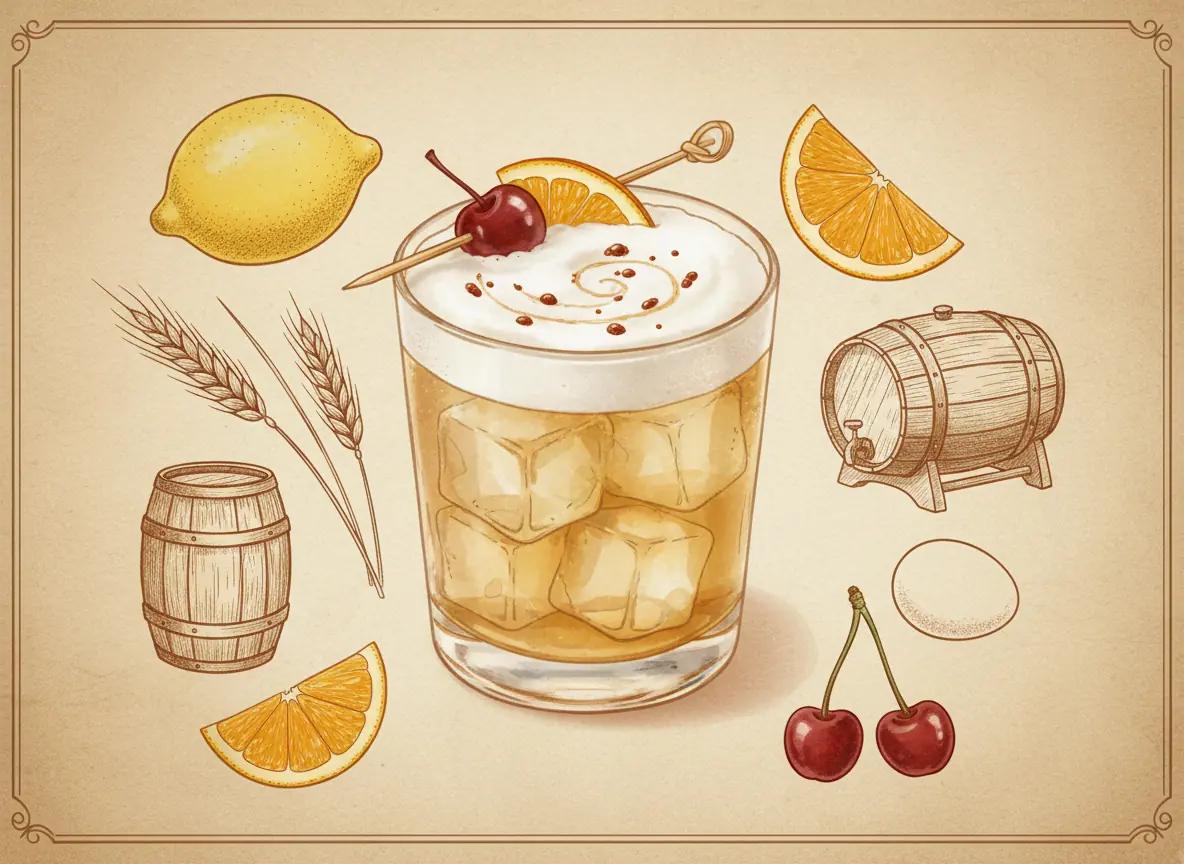
A Whiskey Sour is 45ml of bourbon, 25ml of fresh lemon juice and 20ml of sugar syrup, shaken hard with ice, then poured through a strainer onto fresh cubes in a rocks glass, with half an orange slice and a cherry. Add 15ml of egg white, dry shaken first, and dot the foam with Angostura. About 1.8 UK units. The measures are the IBA’s. The IBA’s egg white is optional and only a few drops; we use 15ml, about half a white, because that is what a full foam takes. The bitters are not in the IBA recipe, and they only go on when there is foam to hold them. The name is in print by 1870, in a Wisconsin newspaper, and the sour is older still: Jerry Thomas printed brandy, gin and rum sours in 1862. Difford’s Guide lists a Boston Sour as bourbon soured with lemon juice and smoothed by egg white.
Where this one sits
Recipe by Dan Freeman · Updated 19 October 2026