Between the Sheets
Between the Sheets is 30ml each of cognac, white rum and triple sec with 20ml of fresh lemon juice, shaken hard for 10 to 12 seconds and double strained into a chilled coupe, with a lemon twist. About 3.6 UK units. The IBA gives the same measures and no garnish. It is a Sidecar with the base split between cognac and rum and the orange liqueur raised. The Oxford Companion says its origin is unclear: the bartender Johnny Brooks claimed it in the 1950s, and it first appears in print in America in 1929, in Frank Shay’s Drawn from the Wood, with gin where the Savoy later has cognac. Three spirits against 20ml of lemon make a sweeter, stronger drink than its parent. The rum brightens the cognac, and the lemon is just enough to keep the Cointreau in line.
Glassware: Coupe Glass
Garnish: Lemon twist
Ingredients
30ml
A VS cognac, 40% ABV, with some fruit to it. It gives the drink weight and dried-fruit depth; a VSOP is wasted under the Cointreau and lemon.
30ml
At 40% ABV, with some flavour of its own. It lifts the cognac and adds cane sweetness, where a neutral, heavily filtered rum adds only alcohol.
30ml
Cointreau, at 40% ABV on its own product page, or a dry triple sec at about the same strength. At 30ml it matches each spirit, which is why this drink is sweeter than a Sidecar.
20ml
Squeezed the same day. Twenty millilitres is the IBA measure and enough to dry the finish without turning the drink into a sour.
Instructions
Chill a coupe and squeeze the lemon the same day.
Add the cognac, white rum, triple sec and lemon juice to a shaker.
Fill with cubed ice and shake hard for 10 to 12 seconds.
Double strain into the chilled coupe.
Express a lemon twist over the surface and drop it in.
Source: the IBA (Official IBA specification; lemon twist ours, where the IBA gives no garnish). Last checked 10 October 2026.
Expert Tip
Taste before you add more lemon. Three 30ml measures against 20ml of juice is sweeter than a Sidecar, and that is the drink. Go to 25ml only if your triple sec is a sweet one. Choose a white rum with some flavour. A clean, heavily filtered rum adds strength and nothing else; a lightly aged Cuban-style or Puerto Rican rum meets the cognac halfway. Use lemon squeezed that day, and put your back into the shake. The drink is nearly all spirit and liqueur, and the shake supplies the water and the cold that make it drinkable.
Behind the Between the Sheets
Flavour Profile
A Contested Credit
The Oxford Companion, in an entry by Fernando Castellon, calls the origin unclear. The Companion says the bartender Johnny Brooks claimed it in the 1950s at a speakeasy in New Rochelle, New York, but admitted that others had claimed it too, and it first appears in print in America in 1929, in Frank Shay’s Drawn from the Wood, with gin, Bacardi rum and Cointreau. Difford’s Guide says it probably began as a gin and rum drink in Prohibition America and then travelled to Europe, where brandy replaced the gin, though others cite a Mr Polly of London’s Berkeley Hotel in 1921.
The Companion says that once the recipe travelled to Europe it became very similar to the Sidecar, with cognac in place of the gin and lemon juice added, and that Harry Craddock was the first to publish that version, in his Savoy Cocktail Book.
Splitting the Base
Cognac brings oak, dried fruit and a long finish. White rum brings cane sweetness and a lighter, brighter body. At equal measures neither leads, and the drink tastes of something between the two.
That balance depends on both having flavour. A neutral rum leaves the cognac alone; a flat cognac lets the rum and Cointreau turn it into a sweet orange drink.
Stronger Than It Tastes
Ninety millilitres of spirit and liqueur, all at 40% ABV, meet 20ml of lemon. That is 36ml of pure alcohol before dilution, about 3.6 UK units, and the orange and lemon cover it well. It is a stronger glass than the Sidecar.
Between the Sheets and the Sidecar Family
Between the Sheets beside our Sidecar and White Lady
Base
- Between the Sheets
- 30ml cognac, 30ml white rum
- Sidecar
- 50ml cognac
- White Lady
- 40ml London Dry gin
Triple sec
- Between the Sheets
- 30ml
- Sidecar
- 20ml
- White Lady
- 30ml
Lemon
- Between the Sheets
- 20ml
- Sidecar
- 20ml
- White Lady
- 20ml
UK units
- Between the Sheets
- About 3.6
- Sidecar
- About 2.8
- White Lady
- About 2.8
| Element | Between the Sheets | Sidecar | White Lady |
|---|---|---|---|
| Base | 30ml cognac, 30ml white rum | 50ml cognac | 40ml London Dry gin |
| Triple sec | 30ml | 20ml | 30ml |
| Lemon | 20ml | 20ml | 20ml |
| UK units | About 3.6 | About 2.8 | About 2.8 |
How to Serve It
Shaken hard, double strained into a chilled coupe, with a lemon twist expressed over the surface and dropped in. It is a drink for late in the evening, and one is usually enough.
For cognac alone, a Sidecar; for gin with Cointreau and lemon, a White Lady.
Make it at home
The Spirit
CognacCognac is a grape spirit distilled twice from white wine in copper pot stills in the Cognac area of western France and, under INAO’s specification, aged at least two years in oak and sold at no less than 40% ABV. The letters on the label are minimum ages, by the BNIC’s account: VS at least two years, VSOP four, XO ten. A VS or VSOP is what our cocktails assume.
More to explore
Frequently Asked Questions
What is in Between the Sheets?
How is it different from a Sidecar?
Who created Between the Sheets?
Where does the name come from?
Which rum should I use?
What is a Maiden’s Prayer?
How strong is Between the Sheets?
Sources.
Correct as of 19 October 2026.
- The Oxford Companion to Spirits and Cocktails (Fernando Castellon), “The Between the Sheets” (secondary source: origin unclear; Johnny Brooks’s claim of the 1950s; first in print in Frank Shay’s Drawn from the Wood (1929) with gin, Bacardi and Cointreau; Craddock first published the European cognac and lemon version in the Savoy Cocktail Book; Duffy 1934 marked it with an asterisk).
- IBA, “Between the Sheets” (official specification: 30ml white rum, 30ml cognac, 30ml triple sec, 20ml lemon juice).
- Cointreau, “Cointreau” (maker’s product page: Cointreau liqueur, 40% alc./vol.).
- Difford’s Guide, “Between The Sheets” (secondary source: probably a gin and rum drink in Prohibition America, with brandy replacing gin in Europe; Mr Polly at London’s Berkeley Hotel cited for 1921; first in print in Frank Shay’s Drawn From The Wood (1929); Baker 1939 version).
- Difford’s Guide, “Maiden’s Prayer” (secondary source: adapted from Harry Craddock’s 1930 Savoy Cocktail Book; No. 1 gin, Cointreau, orange and lemon juice; No. 2 Kina Lillet, gin, calvados and Pricota).
You Might Also Like
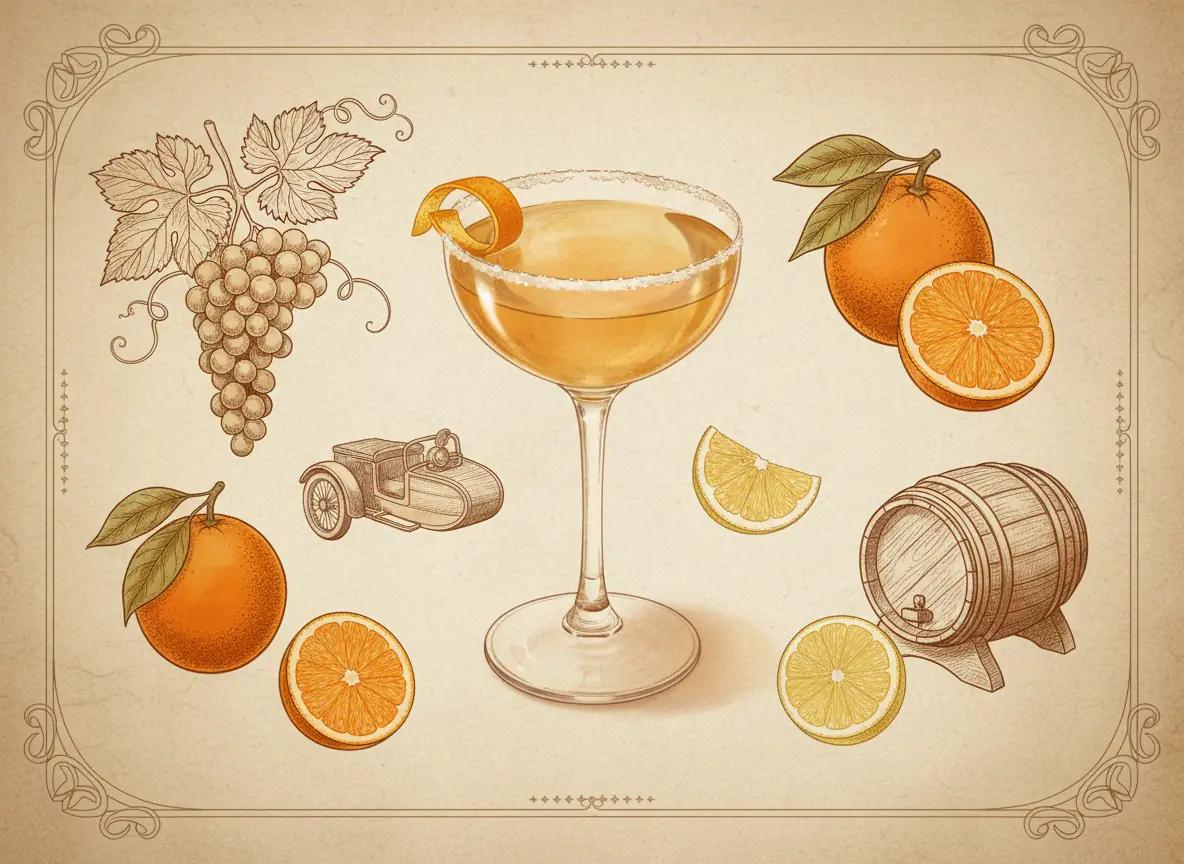
Sidecar
A Sidecar is a cognac sour: 50ml cognac, 20ml Cointreau or another triple sec and 20ml fresh lemon juice, shaken hard and double strained into a chilled coupe under an expressed strip of lemon peel. The IBA gives these measures, which put the cognac at two and a half parts to one each of orange and lemon. The Oxford Companion dates the first printed recipes to 1922, in Robert Vermeire’s Cocktails: How to Mix Them in May and Harry MacElhone’s Harry’s ABC of Mixing Cocktails at the end of the year, both at equal parts by Difford’s Guide. Both named Pat MacGarry of Buck’s Club in London; Difford’s says later editions of MacElhone’s book appear to take the credit for himself. The sugared rim came later: the earliest mention we have read is a 1932 American book, and the Oxford Companion says the drink has often been served with one since the 1930s. Ours has no rim. Each Sidecar carries about 2.8 UK units.
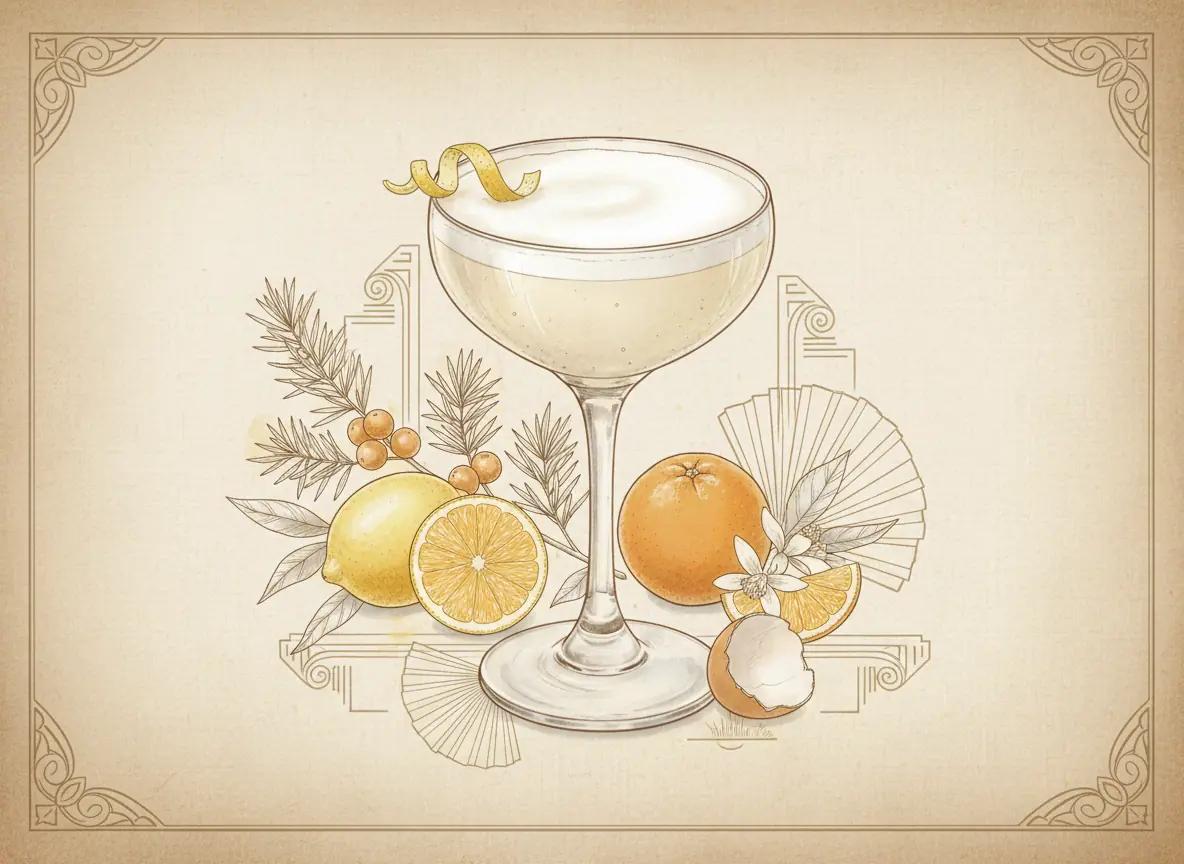
White Lady
A White Lady is 40ml of London Dry gin, 30ml of Cointreau and 20ml of fresh lemon juice, shaken hard with ice for 10 to 12 seconds and double strained into a chilled coupe, with lemon peel expressed over the top. About 2.8 UK units. Those are the IBA’s measures, and there is no egg white in them. The name is older than the recipe. Difford’s Guide, a secondary source, says Harry MacElhone gave it in 1919, at Ciro’s Club in London, to a drink of brandy, crème de menthe and Cointreau. The gin, Cointreau and lemon version is credited to his rebuild at Harry’s New York Bar in Paris in 1929, though Difford’s says most dispute that, and The Savoy Cocktail Book printed it in 1930, also without egg. Egg white came later: Difford’s Guide finds the earliest recipe with it in The Sacramento Bee of 1936. It makes a softer, foamed drink, given here as a variation. The plain version is sharp and dry, the gin in front and the orange behind it.
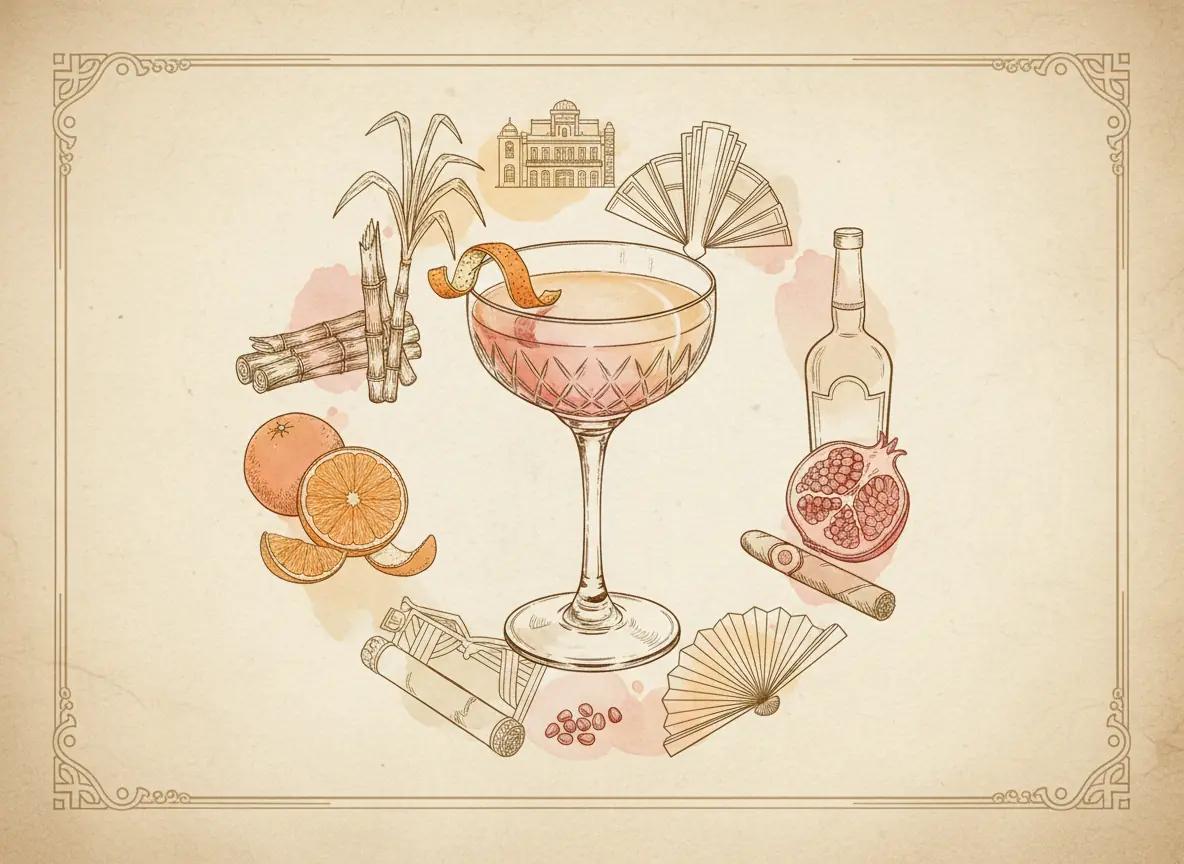
El Presidente
El Presidente is a stirred Cuban rum drink: 45ml white rum, 22.5ml dry vermouth, 10ml orange curaçao and 7.5ml grenadine, stirred for 20 to 30 seconds over ice and strained into a chilled coupe, finished with an expressed orange peel. It drinks like a light rum Manhattan, dry and aromatic, with a pale pink colour from the grenadine. Basil Woon’s 1928 book on Cuba calls it one of the two cocktails most in demand in Havana. Who created it and which president it honours are both disputed: the Floridita’s own 1939 book prints a 1937 report crediting Constante Ribalaigua, and Bar Vademecum reports David Wondrich naming Mario García Menocal, president from 1913 to 1921; Bar Vademecum adds that the story of a drink named for Gerardo Machado cannot be right for the earliest recipes, since Machado was not elected until 1925. Older recipes use Chambéry, a blanc vermouth sweeter than dry: two parts to one of rum in Escalante’s 1915 manual, half and half in Basil Woon’s 1928 account. Ours uses dry at two to one with a little more curaçao. Each one comes to about 2.6 UK units.
Where this one sits
Recipe by Jerry Can Spirits · Updated 19 October 2026