Sidecar
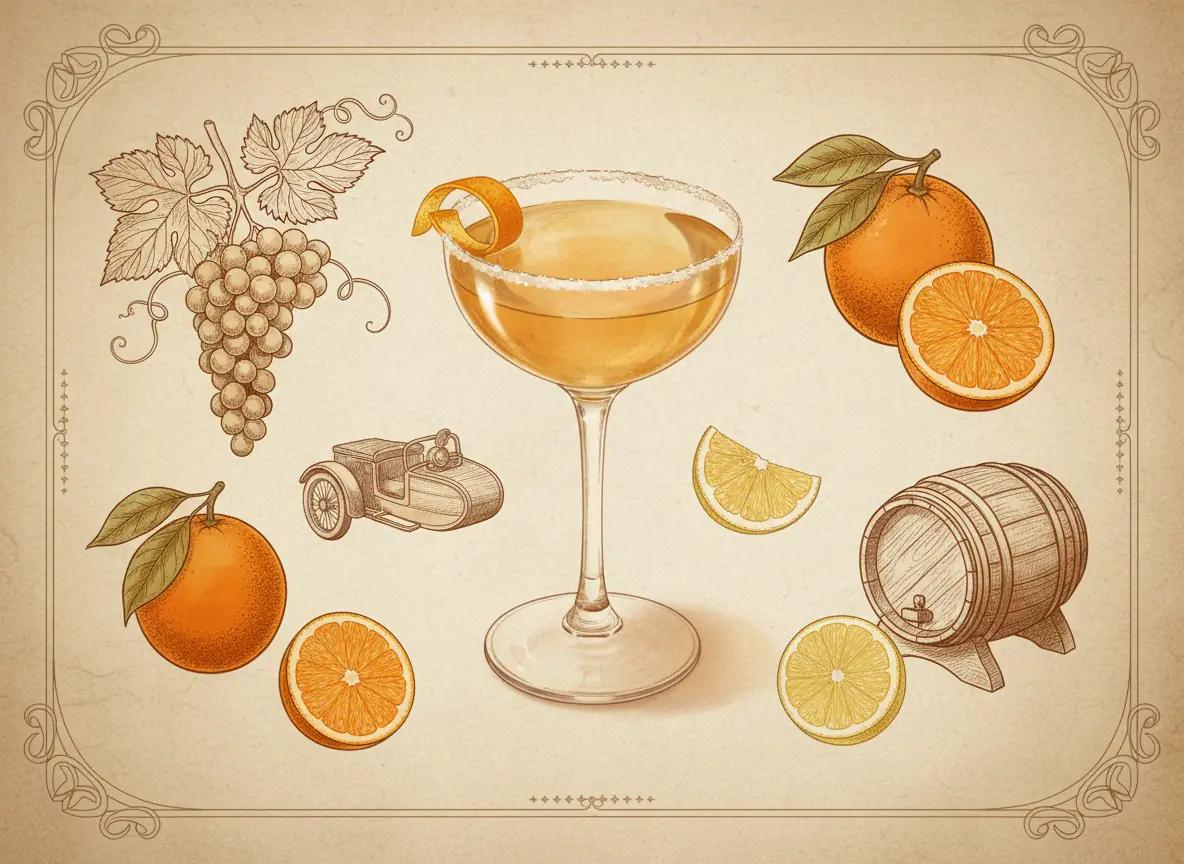
A Sidecar is a cognac sour: 50ml cognac, 20ml Cointreau or another triple sec and 20ml fresh lemon juice, shaken hard and double strained into a chilled coupe under an expressed strip of lemon peel. The IBA gives these measures, which put the cognac at two and a half parts to one each of orange and lemon. The Oxford Companion dates the first printed recipes to 1922, in Robert Vermeire’s Cocktails: How to Mix Them in May and Harry MacElhone’s Harry’s ABC of Mixing Cocktails at the end of the year, both at equal parts by Difford’s Guide. Both named Pat MacGarry of Buck’s Club in London; Difford’s says later editions of MacElhone’s book appear to take the credit for himself. The sugared rim came later: the earliest mention we have read is a 1932 American book, and the Oxford Companion says the drink has often been served with one since the 1930s. Ours has no rim. Each Sidecar carries about 2.8 UK units.
Glassware: Coupe Glass
Garnish: Lemon peel
Ingredients
50ml
VS or VSOP, at 40% ABV. It leads with dried fruit and some oak. Older cognac brings more tannin than the citrus can carry; another grape brandy works, and makes a plainer drink.
20ml
Cointreau (40% ABV on Cointreau’s own nutrition page) is the common pick and the bottle we balance the drink around. A cheaper triple sec is often sweeter and less orange; a dry curaçao makes it richer and heavier.
20ml
Squeezed the same day. The 20ml is all the acid there is to set against the Cointreau’s sugar, and lemons vary more than anything else in the glass.
Instructions
Squeeze the lemon juice the same day.
Chill a coupe.
Add the cognac, triple sec and lemon juice to a shaker.
Fill with cubed ice and shake hard for 10 to 12 seconds.
Double strain into the chilled coupe.
Express a wide strip of lemon peel over the drink and rest it on the rim.
Source: the IBA (Official IBA specification; method ours). Last checked 9 October 2026.
Expert Tip
Taste before you pour. Cointreau is consistent and lemons are not, so the same measures can come out sharp in one season and soft in another. If it is sharp, add 5ml of Cointreau; if sweet, 5ml more lemon. Change one at a time. Use a VS or VSOP cognac. Younger cognac keeps its fruit forward against the citrus; older bottles bring oak tannin that dries the finish and fights the lemon. Shake hard for 10 to 12 seconds and double strain into a frozen coupe. Served up, the drink starts warming as soon as it is poured.
Behind the Sidecar
Flavour Profile
Two Books, One Barman
The Sidecar first appears in print in 1922, in two books: Harry MacElhone’s Harry’s ABC of Mixing Cocktails and Robert Vermeire’s Cocktails: How to Mix Them, as the Oxford Companion records. Both give it as equal parts cognac, Cointreau and lemon, and both name Pat MacGarry of Buck’s Club in London.
MacElhone’s early editions credit the recipe to MacGarry, as the 1923 impression of his book prints it; Vermeire says the drink was very popular in France and that MacGarry introduced it in London. Difford’s Guide says MacElhone’s later editions appear to credit himself, and quotes David Embury, in 1948, saying a friend of his invented it at a bar in Paris during the First World War. Buck’s Club also gives its name to the Buck’s Fizz.
French School, English School
The Sidecar’s proportions over time, from Difford’s Guide’s account and the IBA
MacElhone and Vermeire, 1922
- Cognac
- One part
- Cointreau
- One part
- Lemon
- One part
- Rim
- None
Savoy Cocktail Book, 1930
- Cognac
- Two parts
- Cointreau
- One part
- Lemon
- One part
- Rim
- None
IBA, and ours
- Cognac
- 50ml
- Cointreau
- 20ml
- Lemon
- 20ml
- Rim
- None
| Version | Cognac | Cointreau | Lemon | Rim |
|---|---|---|---|---|
| MacElhone and Vermeire, 1922 | One part | One part | One part | None |
| Savoy Cocktail Book, 1930 | Two parts | One part | One part | None |
| IBA, and ours | 50ml | 20ml | 20ml | None |
The equal-parts drink is sharp and led by orange. The Savoy’s two to one to one puts the cognac in front, and that shape has lasted. The IBA’s measures lean a little further towards the cognac.
The Sugar Rim
MacElhone’s recipe, as the 1923 impression of his book prints it, has no rim. The earliest mention of sugaring a Sidecar glass that we have read is Wet Drinks for Dry People, an American book of 1932, which has the glass’s edge moistened with lemon juice and dipped in powdered sugar. The older Brandy Crusta has a sugared rim too: Jerry Thomas’s guide of 1862 has the glass rubbed with lemon and dipped in pulverized sugar, which may be where the habit came from.
A rim sweetens one side of the glass and not the other, so the drink changes from sip to sip. Ours has none. For a drink built around one, see the Brandy Crusta.
What Each Part Does
Cognac supplies dried fruit, some oak and the body. Cointreau brings orange and the sugar that answers the lemon. The lemon stops the drink turning heavy, and because lemons vary, it is the part to taste for.
In Difford’s Guide’s quotation of The Fine Art of Mixing Drinks, David Embury described the Sidecar as a Daiquiri made with brandy, with Cointreau in place of sugar syrup. As a summary of the structure, it holds.
How Strong It Is
Counting cognac at our working figure of 40% ABV and Cointreau at the 40% on its own nutrition page, a Sidecar comes to about 2.8 UK units, against 2.4 for our Daiquiri, and it is served short with no ice. Make it just before drinking; it softens as it warms.
Make it at home
The Spirit
CognacCognac is a grape spirit distilled twice from white wine in copper pot stills in the Cognac area of western France and, under INAO’s specification, aged at least two years in oak and sold at no less than 40% ABV. The letters on the label are minimum ages, by the BNIC’s account: VS at least two years, VSOP four, XO ten. A VS or VSOP is what our cocktails assume.
Master the Techniques
More to explore
Frequently Asked Questions
What is in a Sidecar?
Should a Sidecar have a sugar rim?
Who invented the Sidecar?
How strong is a Sidecar?
What ratio should a Sidecar be?
How does a Sidecar differ from a White Lady?
Which cognac should I use in a Sidecar?
Sources.
Checked between 18 October and 19 October 2026.
- The Oxford Companion to Spirits and Cocktails (David Wondrich), “The Sidecar” (secondary source: first in print in 1922, Vermeire in May and McElhone at the end of the year; the south of France in Vermeire’s 1938 edition; Frank Meier’s 1923 list; two schools of mixing; the sugar rim since the 1930s).
- Internet Archive, “The Bar-Tender’s Guide (Jerry Thomas, 1862)” (scanned reproduction of the 1862 book, no. 116 Brandy Crusta: the rim rubbed with lemon and dipped in pulverized white sugar).
- IBA, “Sidecar” (official specification: 50ml cognac, 20ml triple sec, 20ml fresh lemon juice; garnish N/A).
- Cointreau, “Nutritional information” (maker’s page: Cointreau 40% alcohol per volume).
- Difford’s Guide, “Sidecar Cocktail Recipe” (secondary source: Embury 1948; MacElhone’s 1922 ABC credits MacGarry; Vermeire’s May 1922 recipe; equal parts against the Savoy’s 2:1:1; the French and English schools).
- Internet Archive, “Harry of Ciro’s ABC of Mixing Cocktails (second impression, 1923)” (scanned reproduction: no. 229 Side-Car Cocktail, “Recipe by MacGarry, the popular bar-tender at Buck’s Club, London”).
- Internet Archive, “Wet Drinks for Dry People (William C. Feery, 1932)” (scanned reproduction: the Side Car with the glass edge moistened with lemon juice and dipped in powdered sugar).
You Might Also Like
White Lady
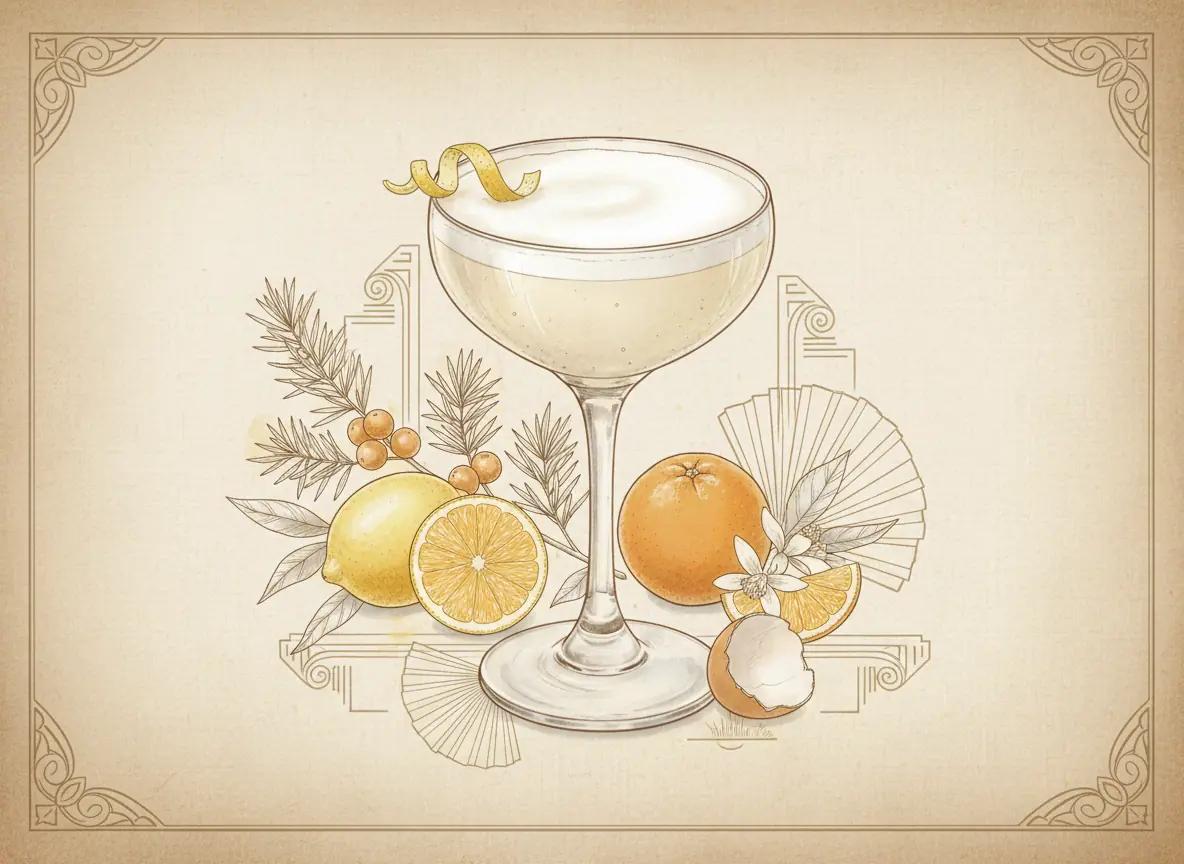
A White Lady is 40ml of London Dry gin, 30ml of Cointreau and 20ml of fresh lemon juice, shaken hard with ice for 10 to 12 seconds and double strained into a chilled coupe, with lemon peel expressed over the top. About 2.8 UK units. Those are the IBA’s measures, and there is no egg white in them. The name is older than the recipe. Difford’s Guide, a secondary source, says Harry MacElhone gave it in 1919, at Ciro’s Club in London, to a drink of brandy, crème de menthe and Cointreau. The gin, Cointreau and lemon version is credited to his rebuild at Harry’s New York Bar in Paris in 1929, though Difford’s says most dispute that, and The Savoy Cocktail Book printed it in 1930, also without egg. Egg white came later: Difford’s Guide finds the earliest recipe with it in The Sacramento Bee of 1936. It makes a softer, foamed drink, given here as a variation. The plain version is sharp and dry, the gin in front and the orange behind it.
Brandy Crusta
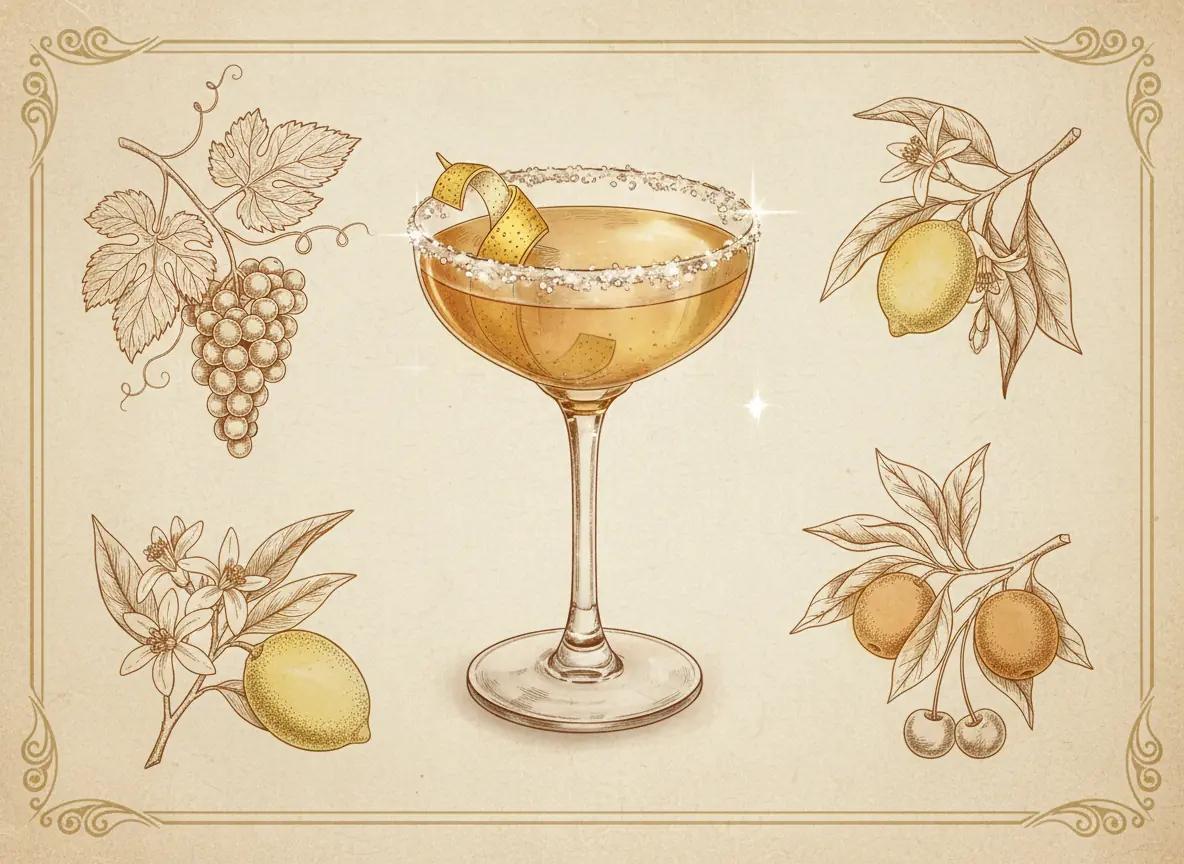
A Brandy Crusta is 52.5ml of cognac, 7.5ml of maraschino, a bar spoon each of orange curaçao and sugar syrup, 15ml of fresh lemon juice and two dashes of Angostura, shaken hard and strained into a chilled coupe with a sugared rim and a long spiral of lemon peel curled inside. About 2.6 UK units. The measures are the IBA’s. Jerry Thomas printed it in his bar guide of 1862 and wrote that the crusta was said to have been invented by “Santina, a celebrated Spanish caterer”. Difford’s Guide identifies him as Joseph Santini, an Italian from Trieste in New Orleans, and dates the drink to the 1850s, made either at the City Exchange or at his own bar, the Jewel of the South, which he opened in 1855. The crust of sugar on the rim gives the drink its name. With the peel lining the glass, the first sip meets sugar and lemon oil before the cognac.
Margarita
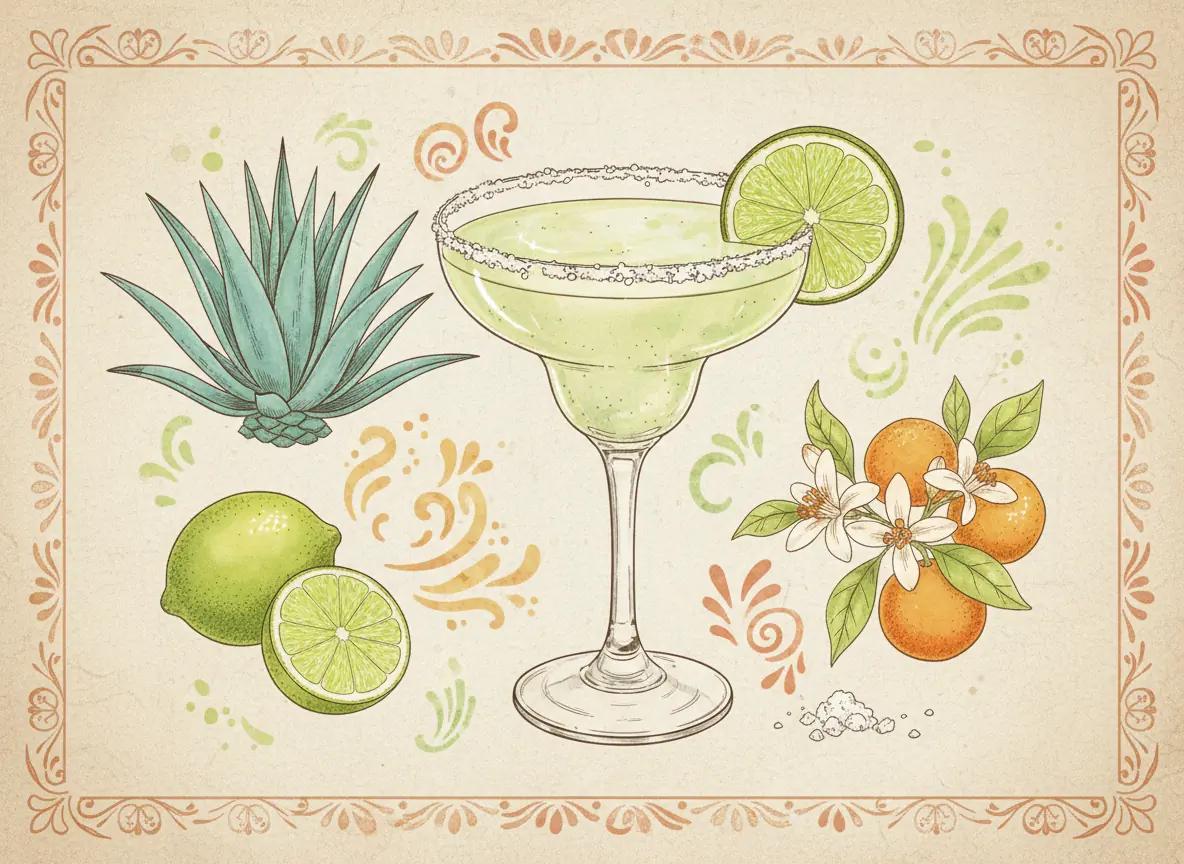
A Margarita is 50ml of 100% agave blanco tequila, 20ml of triple sec and 15ml of fresh lime juice, shaken hard for 10 to 12 seconds and double strained into a chilled coupe with half the rim salted, with a lime wheel. About 2.8 UK units. Strained over fresh ice in a rocks glass, it is the same drink, longer and cooler. These are the IBA’s measures. The lime is the smallest pour, so the agave leads and the orange liqueur rounds it: the drink tastes of tequila first and sour second. The Oxford Companion to Spirits and Cocktails, in an entry by David Wondrich, calls the origins of the Margarita one of cocktail history’s most notorious swamps, with at least half a dozen plausible claimants, among them Carlos Herrera at Rancho La Gloria in 1947, Margarita Sames in Acapulco in 1948 and the bartender Santos Cruz in Galveston in the same year. It finds the drink under the name Margarita in print in September 1953, in a California newspaper column, followed soon after by Esquire.
Where this one sits
Recipe by Jerry Can Spirits · Updated 19 October 2026