
Sours, page 3

89 recipes, page 3 of 4

Base Spirit

Difficulty Level
Margarita

Margarita

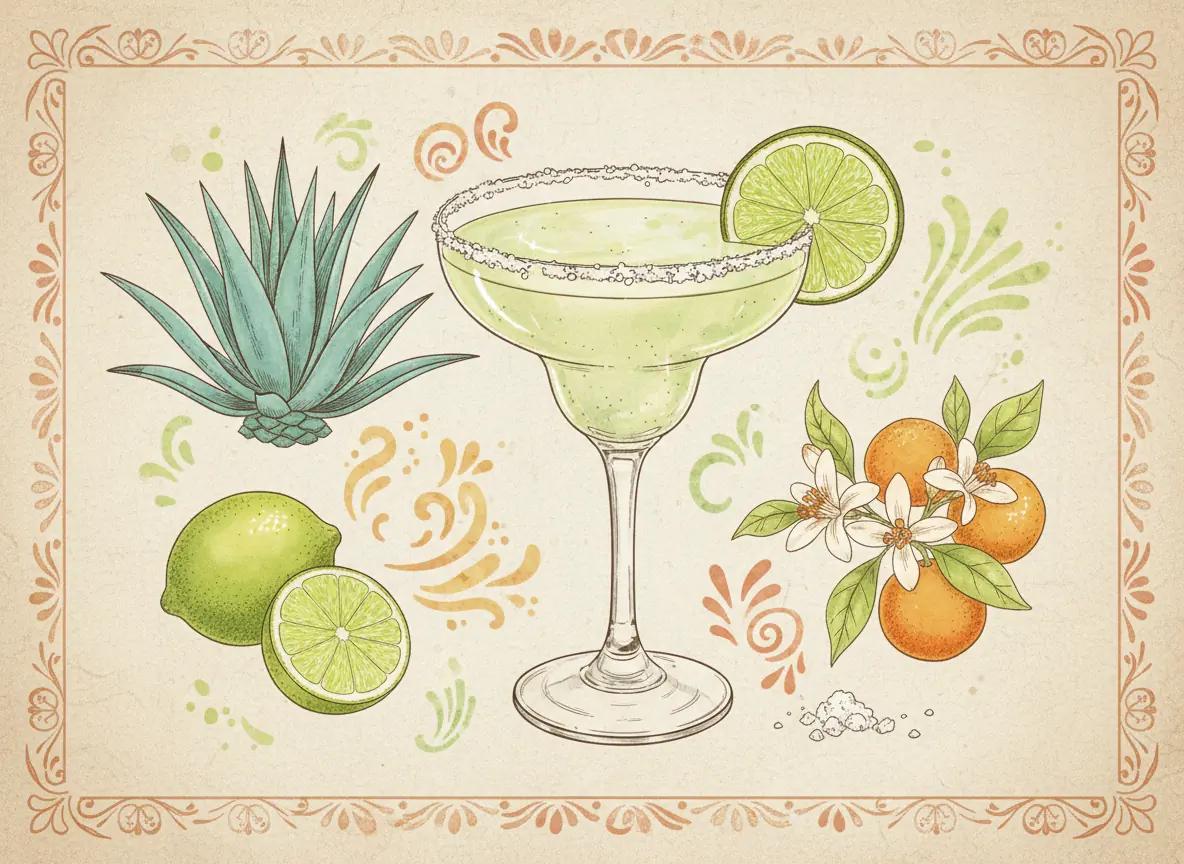
The Margarita is the most ordered cocktail in the United States, and that status has done to it what it did to the Mojito: margarita mix, bottled lime and the frozen resort serve have created a whole category of drink that carries the name without the substance. Made properly it is three ingredients: blanco tequila, fresh lime juice and orange liqueur, shaken cold with a salt rim. That is a sour at its most direct, and in a build this bare the quality of everything is immediately apparent. There is nowhere to hide a neutral tequila, a bottled lime or a cheap triple sec. The choice that matters most is not up versus rocks, which is a matter of preference. It is blanco versus reposado. Blanco is cleaner and more agave-forward and the lime meets the tequila directly; reposado is rounder, its oak putting vanilla and caramel against the lime in a different register. Both are correct, and blanco is the more coherent with fresh lime.

Mary Pickford

The Mary Pickford is Prohibition Havana's love letter to the movies: white rum, fresh pineapple, a blush of grenadine and a whisper of maraschino, mixed in the early 1920s for the actress it is named after. Pickford was the first great star of the silent era and a co-founder of United Artists, and she was in Havana with Douglas Fairbanks while their own country was dry. The attribution usually lands on Fred Kaufman at the Sevilla-Biltmore, though record-keeping in that city in that decade was not what it might have been. The build is fruit-first with two precision seasonings. Real grenadine tints the pineapple rose-gold without candying it, and maraschino's dry cherry-and-almond funk supplies the structure that keeps prettiness honest. Both pour at 7.5ml and both matter more than that measure suggests. It reads sweet on sight and finishes considerably drier than its colour promises, which is the whole trick.

Mexican Firing Squad

The Mexican Firing Squad is tequila, lime, grenadine and Angostura, which is a margarita's shape with two of its four parts swapped out. Charles H. Baker found it at La Cucaracha Bar in Mexico City in the 1930s and filed it in The Gentleman's Companion with his customary gunpowder prose. What makes it worth knowing is that it argues an alternative history. In the 1930s the tequila sour was still an open question, and this is one of the drafts that lost: pomegranate where orange liqueur would eventually rule, Angostura seasoning where salt would settle. The result runs darker, spicier and less bright than the citrus line that won, and a good deal more interesting than the vote suggests. Real grenadine is constitutional. Fifteen millilitres of it is the drink's entire sweet register, and the neon bottle turns it from a dispatch into an execution, which is a joke Baker would have enjoyed.

Mezcal Margarita

The Mezcal Margarita is a Tommy's Margarita with mezcal in place of the tequila: spirit, lime and agave syrup, no orange liqueur. That last absence is the whole reason it works. A classic Margarita uses triple sec, and orange against smoke is a genuinely difficult combination: the two occupy similar space and neither wins, so the drink ends up muddled. Take the orange liqueur out, replace it with agave syrup, and the smoke has nothing to fight. The sweetener speaks the same language as the spirit, and the lime does what lime always does. Nobody owns it. It appeared everywhere at once as mezcal reached back bars in quantity through the 2010s, and it is now on essentially every agave list. For most people it is the second mezcal drink they meet, and it is the one that makes the case for the bottle in daylight rather than after dinner.

Monkey Gland

The Monkey Gland has the strangest name origin in the classic canon and wears it proudly. Harry MacElhone mixed it at his Paris bar in the early 1920s and named it for Dr Serge Voronoff’s celebrity surgery of the day, which grafted monkey gland tissue into ageing men on a promise of restored vigour. The science was quackery. The cocktail was sound. It is the Bronx’s Parisian cousin with the vermouths sent home: fresh orange against gin, grenadine supplying colour and a pomegranate seam, and absinthe doing measured shadow work that keeps the fruit from simple sweetness. The drink reads sunlit at the front and mysterious at the finish, which was presumably the marketing. It survives as the era’s best conversation piece that also happens to drink well. The story is the garnish, the spec needs only honest juice and a counted absinthe measure, and the name has been raising eyebrows profitably for a century.

Naked and Famous

The Naked and Famous is a modern classic with a full pedigree on file. Joaquín Simó created it at Death & Co in 2011 and described it himself as the bastard love child of the Last Word and the Paper Plane, conceived in the mountains of Oaxaca. Equal parts mezcal, yellow Chartreuse, Aperol and lime: four loud ingredients at 22ml each, agreeing perfectly. It is the equal-parts formula’s smoky graduation. The Last Word proved four equal parts could balance, the Paper Plane translated the trick to whiskey and amaro, and this walks it into the mezcal age: smoke against honeyed Chartreuse, Aperol’s gentle bitterness bridging between them, lime holding the whole thing upright. No single ingredient leads, which with these four is the entire achievement. It has become the standard second mezcal drink, after an Oaxaca Old Fashioned has made the introduction: brighter, stranger and more talkative, and the fastest proof that smoke belongs in the sour family.

New York Sour

The New York Sour is a whiskey sour wearing a cape of claret, and like several things named for New York it comes from Chicago. Bartenders there were floating red wine on whiskey sours by the 1880s under names like the Continental Sour and the Southern Whiskey Sour; the drink drifted east, and New York, as is its custom, kept the credit. Whatever the byline, the idea has survived a hundred and forty years because it is a genuinely brilliant one. The float is architecture, not decoration. Fifteen millilitres of dry red wine poured over a spoon sits on the sour in a distinct crimson stratum, and the drink is deliberately served unmixed: the first sips arrive through wine, tannic and dark-fruited, the middle blends the two, and the finish is pure sour. One glass, three acts, no extra effort beyond a slow pour. Underneath, the spec is a classic rye sour with the optional egg white turning the wine float into a still life: crimson over silk over amber. It is among the most photographed drinks of the revival for exactly that reason, and among the most satisfying for better ones.

Nuclear Daiquiri

The Nuclear Daiquiri is a daiquiri with the base split between overproof Jamaican rum and green Chartreuse, and there is no sugar syrup in it at all. Ten millilitres of falernum is the entire sweet register, which is not much against forty-five millilitres of two of the loudest liquids on any back bar. Gregor de Gruyther built it at LAB in London around 2005. The name was accurate rather than clever: Wray & Nephew at 63 per cent and Chartreuse at 55 make a drink that is genuinely strong, and the colour that comes out of the shaker is a green-gold that looks like a warning. What makes it a modern classic rather than a dare is that it is properly balanced. The rum's ester funk and the Chartreuse's herbs are so loud that they cancel rather than compete, the falernum's clove translates between them, and a full measure of lime holds the whole thing inside a sour's structure. The result is improbably harmonious. It is also one per evening.

Old Friend

The Old Friend is gin and Campari with the bitterness turned down and the fruit turned up: fresh grapefruit juice does what a Negroni asks the drinker to accept, and an elderflower whisper rounds off what is left. It is generally attributed to Jim Meehan, the bartender behind PDT, who built it around 2012. The proportions are his style: precise, small, and unwilling to round anything to a convenient number. Twenty-two millilitres of grapefruit is not an accident, and neither is the seven and a half of elderflower. What it does well is introduce people to Campari. A Negroni asks for a taste already acquired; this one arrives blush pink, floral at the edges and bitter only underneath, and converts more drinkers than any amount of arguing. Shaken and served up, it is bitter enough to count as an aperitif and gentle enough to hand to someone who says they do not like bitter drinks.

Orange Daiquiri

The Orange Daiquiri is the fruit family's subtlest member: fresh orange folded into the Cuban frame, with lime kept on at half strength to do the structural work orange cannot. The rum houses promoted daiquiris in every citrus the island grew through the mid-century, and this is the gentlest of that set. The craft is in managing the succession. Orange has roughly a third of lime's acidity and considerably more sugar, so it cannot simply take lime's seat: left alone it dissolves the daiquiri into juice. The spec gives orange the volume and the perfume, keeps ten millilitres of lime as the constitutional acid, and trims the syrup because the orange arrives sweet already. What comes out is rounder and softer than the parent, a daiquiri in afternoon light. It is the least ordered of the fruit daiquiris and among the most quietly pleasant, and it is the right pour for anyone who finds the classic austere.
Paper Plane

Paper Plane

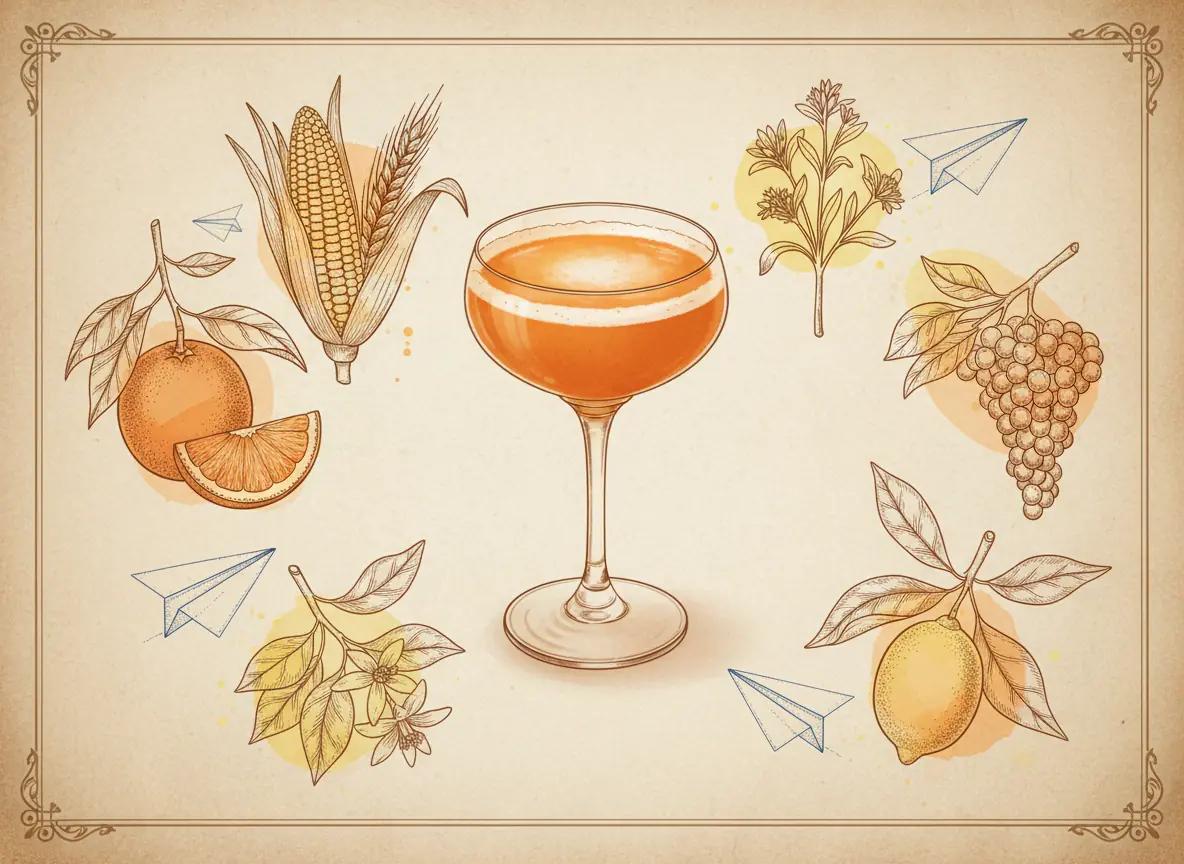
The Paper Plane was created by Sam Ross at Milk & Honey in New York around 2007 and named after the M.I.A. song that was playing while he developed it. It is an equal-parts build of bourbon, Aperol, Amaro Nonino and fresh lemon juice, shaken and served cold, and it stands as one of the most precisely constructed modern classics in the canon. Equal parts is an unforgiving format. Every ingredient is fully exposed at the same volume, and a weak choice in any one of them changes the character of the finished drink in a way no adjustment elsewhere can correct. The bourbon provides warmth and vanilla. The Aperol provides bitter orange and a lightness that stops the drink turning heavy. The Nonino provides herbal complexity and a mid-palate depth neither of the others could contribute. The lemon holds all three together. Substituting a cheaper amaro for Nonino is the most common mistake made with this recipe, and the one that most visibly changes the result.

Paradise

The Paradise is gin, apricot brandy and orange juice, and it is one of the few pre-war cocktails that has survived without anyone feeling the need to rescue it. It appears in Harry Craddock's Savoy Cocktail Book in 1930 and in most of the bar books that followed, and the proportions have barely moved since. Thirty millilitres of gin to twenty of apricot brandy and fifteen of orange juice is a shorter, spirit-led build than the fruit in it suggests. The apricot is the pivot: it brings stone-fruit sweetness and a faint kernel bitterness that meets the gin's juniper rather than smothering it, and the orange juice is there to lengthen and brighten rather than to make a fruit drink. It is the sort of cocktail that reads badly on paper and works in the glass, which is roughly the story of the entire 1930s canon.

Passion Fruit Daiquiri

The Passion Fruit Daiquiri is the shaken branch of the fruit daiquiri family and the connoisseur’s pick of it. Passion fruit’s perfumed sharpness is the rare tropical flavour that needs no blender softening, its natural acidity slotting into the daiquiri frame as though the fruit had studied the recipe in advance. The spec doubles the fruit. Fresh pulp, seeds and all, supplies perfume and texture, while a measure of passion fruit syrup carries the sweet side, which is the pairing the Pornstar Martini already proved works. The lime stays but shortens, because the fruit brings a good deal of sharpness of its own. Shaken hard and double strained, or coarse strained for the seeds its partisans defend, it is the tropical daiquiri that drinks like a classic sour rather than like a dessert, and it remains the fastest and best possible use of a ripe, wrinkled passion fruit. Ripeness is the one thing it will not forgive: a smooth, glossy fruit is underripe and will be thin and sour inside.

Passion Fruit Margarita

The Passion Fruit Margarita is the family's perfumed wing: the fruit that built the Pornstar Martini's empire, meeting tequila's pepper in a frame that turns out to suit it. The double-fruit approach transfers whole, fresh pulp for perfume and sharpness, syrup for the sugar the fruit refuses to supply. The build keeps the classic's triple sec at half strength, where orange bridges agave and passion fruit the way it bridges most things, and shortens the lime because the pulp brings its own considerable acidity. What lands is golden, sharp-sweet and louder than any margarita short of the spicy one. The floated shell is theatre borrowed from the Pornstar, and it does a job as well: seeds, perfume and visible proof that real fruit went in. The half salt rim keeps the family chemistry intact, with perfume above, seasoning at the edge and pepper underneath. It is the margarita to pour for a table that wants something to happen without committing to chilli.

Pegu Club

The Pegu Club was the officers’ club of colonial Rangoon, a white building above the Pegu river where the gin was cold and the empire was warm, and its house cocktail travelled home in steamer trunks. By the 1920s the recipe was appearing in the great London bar books, with Harry Craddock’s Savoy Cocktail Book noting it as a drink that had gone round the world and was asked for everywhere it landed. It is a gin sour wearing dress uniform: a big measure of gin, orange curacao carrying all the sweetness, fresh lime cutting through, and two different bitters bracing the finish. Nothing about it is soft. The drink runs dry, aromatic and slightly stern, which is presumably how the club liked its members. Its second act mattered as much as its first. When Audrey Saunders opened Pegu Club in New York in 2005 and named it for this drink, the bar became a proving ground for the modern gin revival, and the cocktail that had outlived its empire found itself, once again, asked for everywhere.
Penicillin

Penicillin

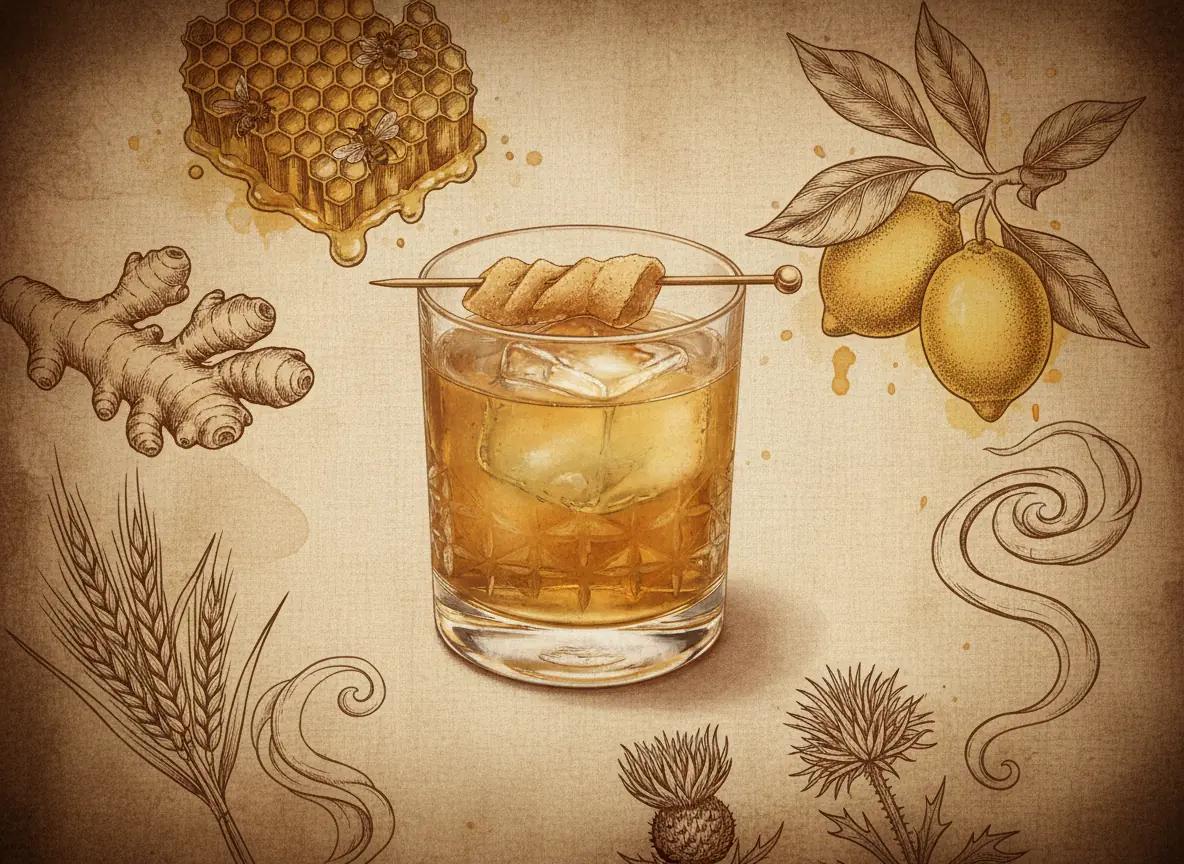
The Penicillin was created by Sam Ross at Milk & Honey in New York in 2005 and is one of the most significant original cocktails of the contemporary revival. Ross also created the Paper Plane; the Penicillin is the more complex and more demanding of the two. The structure is a whisky sour built on blended Scotch, sweetened with honey syrup and given its heat by fresh ginger shaken in alongside it, with a float of Lagavulin 16 over the surface. Honey and ginger together define the drink's character, combining floral sweetness with a sharp, spiced bite. The blended Scotch supplies the base, and the float supplies the peated smoke that the blend alone could not deliver at the volume a balanced sour requires. The float is the technique most commonly misapplied. Poured correctly it sits as a distinct aromatic layer, met at the nose and on the first sip before integrating gradually into the drink below.

Picante de la Casa

The Picante de la Casa is Soho House's chilli Margarita, and it is built on the Tommy's rather than the classic: tequila, lime and agave syrup, no orange liqueur. Chilli goes into the shaker with a pinch of coriander, and a clapped coriander sprig finishes the glass. The coriander is what makes it worth the trip. A spicy Margarita is chilli and agave, which is a good combination that stops there. Adding coriander turns the drink into salsa: chilli, lime, coriander and agave are the same four things a decent pico de gallo is built on, and the glass tastes like it knows that. It is attributed to Chris Ojeda at the West Hollywood house and it is now poured across the group to the same specification. Reposado rather than blanco is the other house decision, and it matters: a few months in oak rounds the tequila enough to carry heat without the pepper and the chilli fighting each other.

Pink Lady

The Pink Lady is the Clover Club’s Broadway cousin: gin and apple brandy under grenadine and an egg-white silk, named for a 1911 stage hit and adopted between the wars as the sophisticated woman’s order, a branding that history first sneered at and then, as with its Philadelphia relative, quietly apologised for. The drink was always better than the condescension. The build splits its base. Gin carries the botanicals, a measure of apple brandy adds orchard depth beneath, lemon holds the line and real grenadine does the blushing. The egg white performs its Clover Club office, dry shake first, and the finished drink stands rose-pink under a white crown, tart before it is sweet. It reads today as the missing link between the Clover Club and the Jack Rose, borrowing from both of them at once: raspberry’s drink, apple’s drink, and this one drawing from each. The colour is comfortably the least interesting true thing about it.

Pisco Sour

The Pisco Sour is a national institution with an American accent. Victor Vaughen Morris, a bartender from Utah who followed the railway money south, opened Morris' Bar in Lima and built the drink there around 1916: the Peruvian grape spirit given the full egg-white sour treatment. Peru now marks it with a national day on the first Saturday of February, and means it. The build is the silk sour at its most elegant. Pisco's muscat blossom carries lime through the dry shake, and three drops of Angostura go onto the finished foam as a signature that no variation touches. The bitters are aromatic garnish placed on the surface, dragged into patterns or left as a constellation, and they are never stirred through. Chile pours its own version on its own spirit and presses its own claim, usually eggless and sharper. The dispute is genuine, old and unresolvable, and the drink is comfortably bigger than the border.

Rattlesnake

The Rattlesnake arrives with the best joke in the Savoy Cocktail Book attached to it. Harry Craddock printed the spec in 1930 with a note that it is “so called because it will either cure Rattlesnake bite, or prevent Rattlesnake bite, or make you see Rattlesnakes”, and the line has travelled with the drink ever since. Underneath the joke is a whiskey sour with the Sazerac’s trick played on it. Rye, lemon and sugar in standard proportions, an egg white for the crown, and three dashes of absinthe that are not rinsed around the glass, as a Sazerac would have it, but shaken through with everything else. That single decision is what makes the drink. A rinse puts the anise on the nose, met once and then gone. Shaken into the foam it diffuses through the texture instead, so every sip carries the same herbal shadow underneath the lemon. It is the sour for people who order Sazeracs, and it is far better than a novelty name deserves.

Rum Sour

The Rum Sour is the sour template with one of its oldest partners in it: aged rum, lemon and sugar in the proportions the whiskey branch of the family made famous. The template was never proprietary to any one spirit. Jerry Thomas’s 1862 guide already prints sours across several of them, and rum has been taking its turn for as long as anyone has been writing the recipes down. The lemon is the point of difference. A daiquiri runs lime, which is bright and maritime and belongs to white rum. Lemon reads rounder and more orchard, and it flatters oak and dried fruit the way it flatters bourbon’s vanilla. Same architecture, warmer key, one citrus apart. The egg white is optional and traditional both, borrowed from the Boston Sour for the reason it is borrowed there: it lays a texture over the acid without moving the balance underneath it. Served plain over rocks the drink is brighter and more direct. Both readings are correct.

Shamrock Sour

The Shamrock Sour is a house serve built for the one night a year that expects the glass to be green: Irish whiskey shaken with fresh lime, honey syrup, blue curaçao and a splash of orange juice, strained into a coupe. The colour is achieved honestly. Blue curaçao lands on the citrus yellows and the glass comes up green, with no artificial colouring anywhere near it. Underneath the colour it is a proper sour. The whiskey’s smoothness leads, honey syrup rounds the lime where plain sugar would leave it sharp, and the curaçao contributes real orange depth alongside the optics. The splash of orange juice warms the green by a shade and softens the acid. That is the brief in full: a drink that photographs like a party and holds together in the mouth like a whiskey sour. Make it properly, because the guests who arrive sceptical are the ones it was written for.
Sidecar

Sidecar

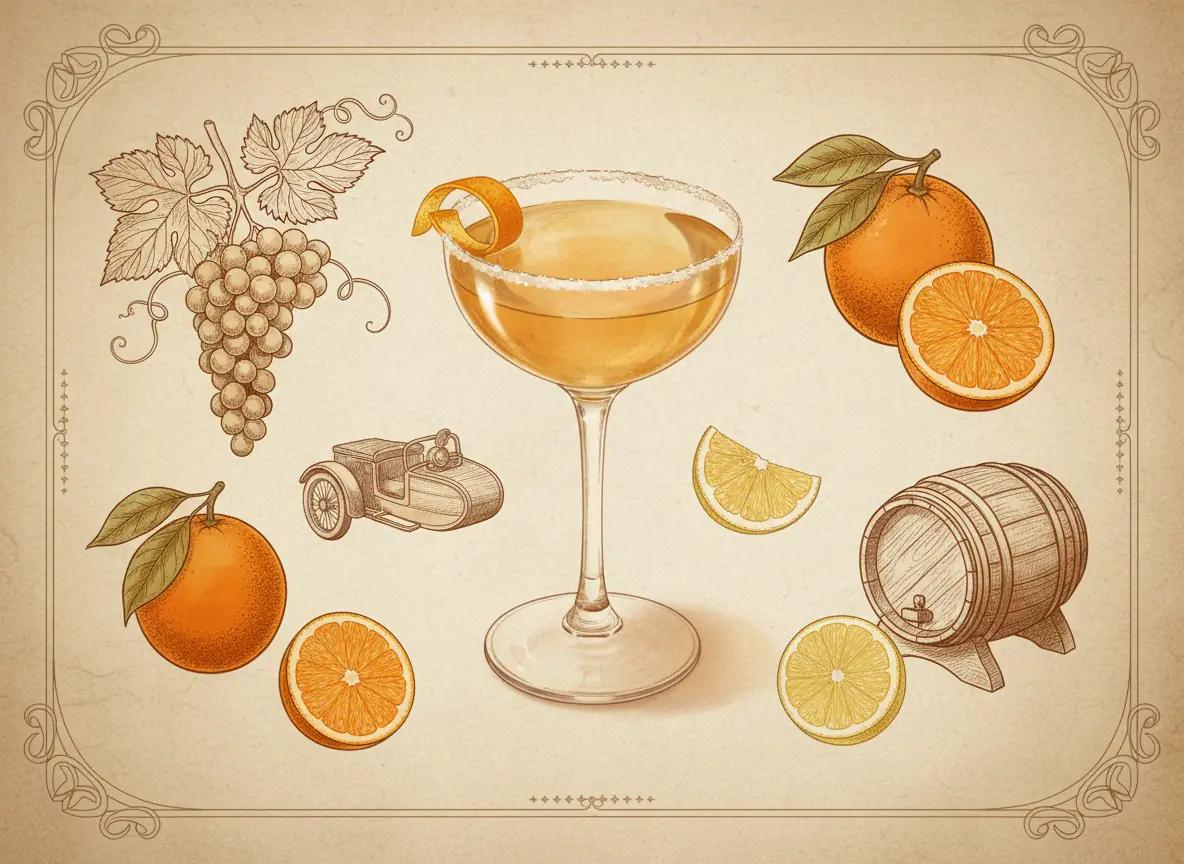
The Sidecar is one of the great drinks of the years after the First World War, and its paternity has never been settled. It appears in 1922 in both Harry MacElhone’s ABC of Mixing Cocktails and Robert Vermeire’s Cocktails: How to Mix Them, with each author crediting someone else: MacElhone named Pat MacGarry at Buck’s Club in London, while Vermeire named MacElhone himself at Harry’s New York Bar in Paris. The dispute is unlikely ever to be resolved. The structure is a sour built on cognac, with Cointreau as the sweetening modifier and fresh lemon as the acid. The cognac brings dried fruit and oak warmth, the Cointreau brings clean orange and the sweetness that answers the lemon, and the lemon keeps the whole thing from turning heavy. It is also among the most ratio-sensitive drinks in the classical canon, which is the argument against the sugar rim some versions carry: the balance here is calibrated without one.

Silk Stocking

The Silk Stocking is tequila’s dessert secret, and almost nobody knows it exists. Blanco folded into cream and white crème de cacao with a grenadine blush, dusted with cinnamon and served up. It comes out of the mid-century guides, from a period when the range of what tequila could do was still being mapped, and somebody thought to try it in the Alexander’s frame. The answer, improbably, was yes. Spirit, cacao and cream is the Alexander family’s constitution, and blanco’s pepper does what gin’s juniper does in the original: it cuts the richness and stops the whole thing sliding into a milkshake. Cognac in a Brandy Alexander joins the cream. Tequila argues with it. The grenadine is this version’s own signature, tinting the silk pink and laying a pomegranate seam underneath the cocoa. No author has ever been attached to it, which is a shame, because it is the best after-dinner argument tequila has.