Nuclear Daiquiri
A Nuclear Daiquiri is a daiquiri built on two strong spirits: 25ml Jamaican overproof rum, 20ml green Chartreuse, 10ml falernum and 25ml fresh lime juice, shaken hard and double strained into a chilled coupe with no garnish. There is no sugar syrup: falernum alone sweetens it, bringing clove and ginger with its sugar. Difford’s Guide, a secondary source, says Gregor de Gruyther created it at LAB bar in London in 2005. The name is a fair description: Wray & Nephew’s own page gives its White Overproof at 63% ABV and Chartreuse’s own page gives Green at 55%, and what pours from the shaker is a pale, warning-sign green. Taking those strengths, one glass holds about 2.8 UK units, more than our 60ml Daiquiri at 2.4. The lime and falernum keep it bright enough to hide that, so one is usually plenty.
Glassware: Coupe Glass
Garnish: None
Ingredients
25ml
Jamaican overproof, with Wray & Nephew, at 63% ABV on its own page, a bottle that suits it. Its pungent, fruity Jamaican character is what stands up to the Chartreuse; a clean, neutral overproof leaves the herbs in charge. Do not swap in a spiced rum.
20ml
Half the base, not a modifier. On Chartreuse’s own page Green Chartreuse is 55% ABV and made from 130 plants, bark, roots, spices and flowers. Yellow is 43%, sweeter and softer, and turns this into a different drink.
10ml
The only sweetener. Velvet Falernum, at 11% ABV on LWC’s listing, brings lime, cane syrup, almonds and cloves, as LWC describes it, along with its sugar. Difford’s Guide lists almonds among falernum’s usual flavourings, so check the bottle if you are avoiding nuts.
25ml
A full 25ml, squeezed within three hours. It holds two loud spirits inside a sour’s balance, and tired lime lets the alcohol through.
Instructions
Squeeze the lime juice no more than three hours ahead.
Chill a coupe.
Add the overproof rum, green Chartreuse, falernum and lime juice to a shaker.
Fill with cubed ice and shake hard for 10 to 12 seconds.
Double strain into the chilled coupe and serve without a garnish.
Our version
Published versions differ mainly in the lime. Difford’s Guide gives 30ml overproof rum, 20ml green Chartreuse, 10ml falernum, 15ml lime and 10ml water; ours trims the rum to 25ml and uses a full 25ml of lime.
Source: our own specification. Last checked 9 October 2026.
Expert Tip
Squeeze the lime within three hours of shaking. Those 25ml are the only fresh ingredient against 45ml of high-strength spirit, and lime that has stood longer tastes flat, which lets the alcohol show through. Shake hard for 10 to 12 seconds. Spirits at 55% and 63% need the water a hard shake adds; an under-shaken Nuclear Daiquiri burns rather than sparkles. Leave out sugar syrup. If the drink tastes too sharp, check the falernum and lime measures before reaching for anything else.
Behind the Nuclear Daiquiri
Flavour Profile
Where It Comes From
Difford’s Guide says Gregor de Gruyther created the Nuclear Daiquiri at LAB bar in London in 2005. Its name does not exaggerate: two spirits at 55% ABV (Chartreuse’s own page) and 63% ABV (Wray & Nephew’s own page) share the base, and the colour in the coupe is a pale green that looks like a hazard sign.
Two Loud Spirits
Wray & Nephew’s own page gives its White Overproof a nose of pineapple, overripe banana and a hint of brown sugar. Chartreuse’s own page gives Green Chartreuse a powerful herbaceous, peppery nose. Either one takes over a drink made with quieter ingredients.
At 25ml and 20ml they meet on level terms. The rum’s fruit softens the herbs and the herbs give the rum a savoury edge, so the two read as one flavour rather than a contest.
The Falernum Is the Sweetener
The Oxford Companion to Spirits and Cocktails describes falernum as a traditional liqueur from Barbados, historically rum-, sugar- and lime-based, with Caribbean spices such as cloves, ginger and nutmeg and sometimes almonds; Velvet Falernum, from Barbados, is 11% ABV on LWC’s listing. Ten millilitres is the only sugar in the glass, and it carries spice with it.
That spice is the bridge. Clove and ginger sit between the rum’s fruit and the Chartreuse’s herbs, which plain syrup cannot do. Use syrup instead and the drink gets sweeter and loses its middle.
Our Measures and Others
The Nuclear Daiquiri against a published version and a classic Daiquiri
Nuclear Daiquiri (ours)
- Rum
- 25ml overproof
- Chartreuse
- 20ml green
- Sweetener
- 10ml falernum
- Lime
- 25ml
- UK units
- 2.8
Nuclear Daiquiri (Difford’s Guide)
- Rum
- 30ml overproof
- Chartreuse
- 20ml green
- Sweetener
- 10ml falernum, plus 10ml water
- Lime
- 15ml
- UK units
- 3.1
Daiquiri (ours)
- Rum
- 60ml white rum
- Chartreuse
- None
- Sweetener
- Two bar spoons of caster sugar
- Lime
- 20ml
- UK units
- 2.4
| Drink | Rum | Chartreuse | Sweetener | Lime | UK units |
|---|---|---|---|---|---|
| Nuclear Daiquiri (ours) | 25ml overproof | 20ml green | 10ml falernum | 25ml | 2.8 |
| Nuclear Daiquiri (Difford’s Guide) | 30ml overproof | 20ml green | 10ml falernum, plus 10ml water | 15ml | 3.1 |
| Daiquiri (ours) | 60ml white rum | None | Two bar spoons of caster sugar | 20ml | 2.4 |
Ours keeps the Chartreuse and falernum as Difford’s Guide gives them, trims the rum to 25ml and raises the lime to 25ml. The extra lime makes the drink sharper and keeps it close to a Daiquiri in balance as well as in name.
Lime and the Shake
Squeeze the lime within three hours of serving. Past that it flattens, and in a drink this strong flat lime lets the alcohol through. A hard shake of 10 to 12 seconds adds the water two high-strength spirits need, and double straining keeps ice shards out of a drink served without ice.
How Strong It Is
Taking the overproof at 63% ABV on Wray & Nephew’s own page, the Chartreuse at 55% on Chartreuse’s own page and the falernum at 11% on LWC’s listing, a Nuclear Daiquiri holds about 2.8 UK units in a coupe. It tastes bright and goes down quickly, so tell anyone new to it what is in the glass before they start.
Make it at home
The Spirit
Overproof RumOverproof rum is rum bottled far stronger than the usual 40%, from about 57% up to 75.5%. The name means stronger than proof, the old British strength line of 57.14% ABV. Our recipes take Jamaican white overproof at 63% in measures of 15 to 45ml, and it is the strongest and most flammable bottle on a home bar.
Master the Techniques
More to explore
Frequently Asked Questions
What is in a Nuclear Daiquiri?
How strong is a Nuclear Daiquiri?
What is overproof rum?
Can I use yellow Chartreuse?
Why is there no sugar syrup?
Can I make it with spiced rum or a standard white rum?
Who created the Nuclear Daiquiri?
Sources.
Checked between 18 October and 19 October 2026.
- Difford’s Guide, “Nuclear Daiquiri” (secondary source: created in 2005 by Gregor de Gruyther at LAB bar, London; 30ml overproof, 20ml green Chartreuse, 15ml lime, 10ml falernum, 10ml water).
- Wray & Nephew, “White Overproof Rum” (producer’s page: 63% ABV; pineapple, overripe banana and a hint of brown sugar).
- Wray & Nephew, “Frequently Asked Questions” (producer’s FAQ: standard rums 35 to 40% ABV; overproofs often 50% or higher).
- Chartreuse, “Green Chartreuse” (maker’s page: 55% vol.; 130 plants, bark, roots, spices and flowers; powerful herbaceous, peppery nose).
- Chartreuse, “Yellow Chartreuse” (maker’s page: 43% vol.; sweetness, spicy scents, a soft structure).
- The Oxford Companion to Spirits and Cocktails (Martin Cate), “falernum” (secondary source: a traditional liqueur from Barbados; historically rum-, sugar- and lime-based, with Caribbean spices such as cloves, ginger and nutmeg; almonds sometimes added).
- LWC, “Taylors Velvet Falernum 70cl” (UK wholesaler listing: 11% ABV; lime, cane syrup, almonds and cloves).
- Difford’s Guide, “Falernum” (secondary source: always made with lime, sugar and lightly fortified with rum, usually with cloves, nutmeg, cinnamon, ginger and almonds; 11 to 15% alc./vol. at the lower end).
You Might Also Like
Daiquiri
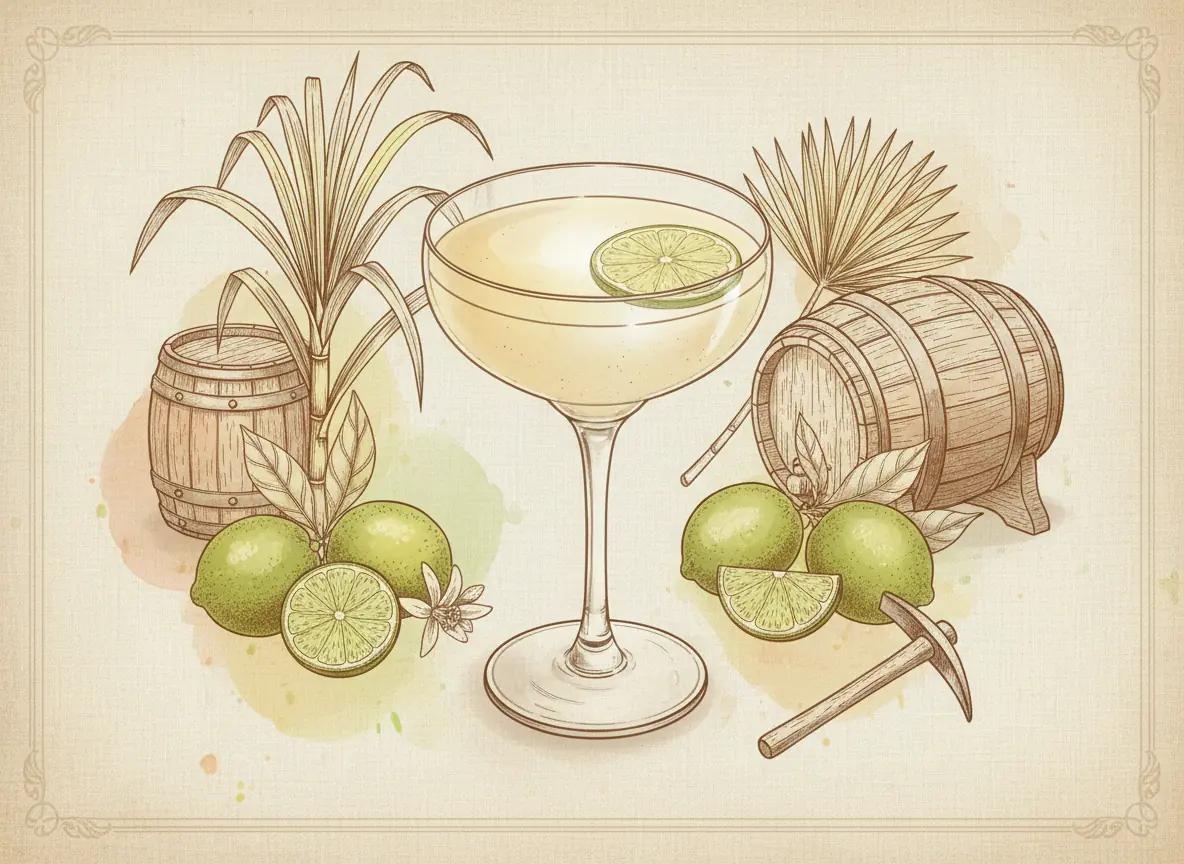
A Daiquiri is 60ml white rum, 20ml fresh lime juice and two bar spoons of caster sugar. Stir the sugar into the rum and lime in the shaker until it dissolves, then add ice, shake hard for 10 to 12 seconds and double strain into a chilled coupe. About 2.4 UK units. Those are the IBA’s measures, and its method dissolves the sugar first too. The name belongs to Daiquirí, an iron-mining district and beach near Santiago de Cuba. Difford’s Guide credits Jennings Stockton Cox, an American engineer who led one of the first mining parties into Cuba’s iron-ore country after the Spanish-American War of 1898; the Oxford Companion has him making or supervising the first Daiquiri in 1896, and a Santiago bartender naming it in 1908. Difford’s says Constantino Ribalaigua Vert of Havana’s El Floridita made the frozen version famous. With three ingredients and no liqueur or bitters, the Daiquiri hides nothing. A flat rum, tired lime or undissolved sugar shows in the first sip.
Zombie
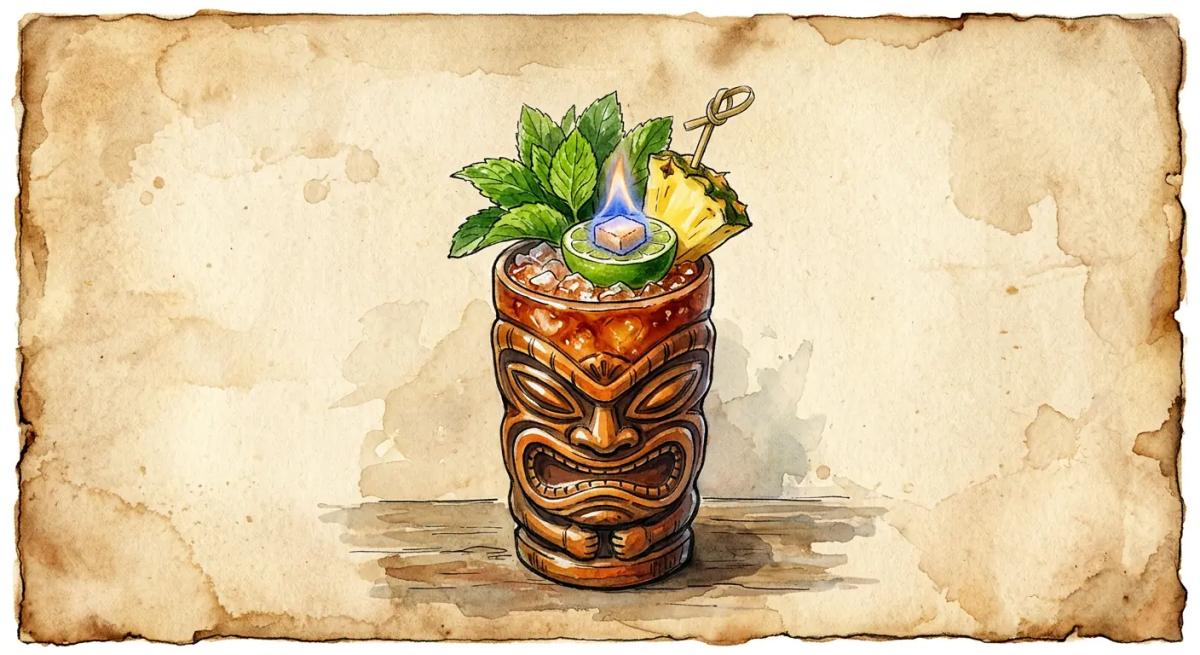
A Zombie is 45ml Jamaican dark rum, 45ml gold Puerto Rican rum and 30ml Demerara rum with 20ml fresh lime juice, 15ml falernum, 15ml Donn’s Mix, a teaspoon of grenadine, a dash of Angostura and six drops of Pernod, flash blended with cracked ice and poured into a zombie glass with mint. Those are the IBA’s measures. About 5.0 UK units in one glass. The Oxford Companion says Donn Beach created it in 1934 at Don the Beachcomber’s in Hollywood, and refused to serve more than two to a customer. Difford’s Guide says his recipes were notated in a secret code of numbered bottles and elusive mixes, and the Companion says Jeff Berry found the original formula in 2006 in the notebook of a former Beachcomber’s headwaiter, Richard Santiago. Donn’s Mix, two parts grapefruit juice to one of cinnamon syrup, is what separates it from a strong rum punch.
Last Word
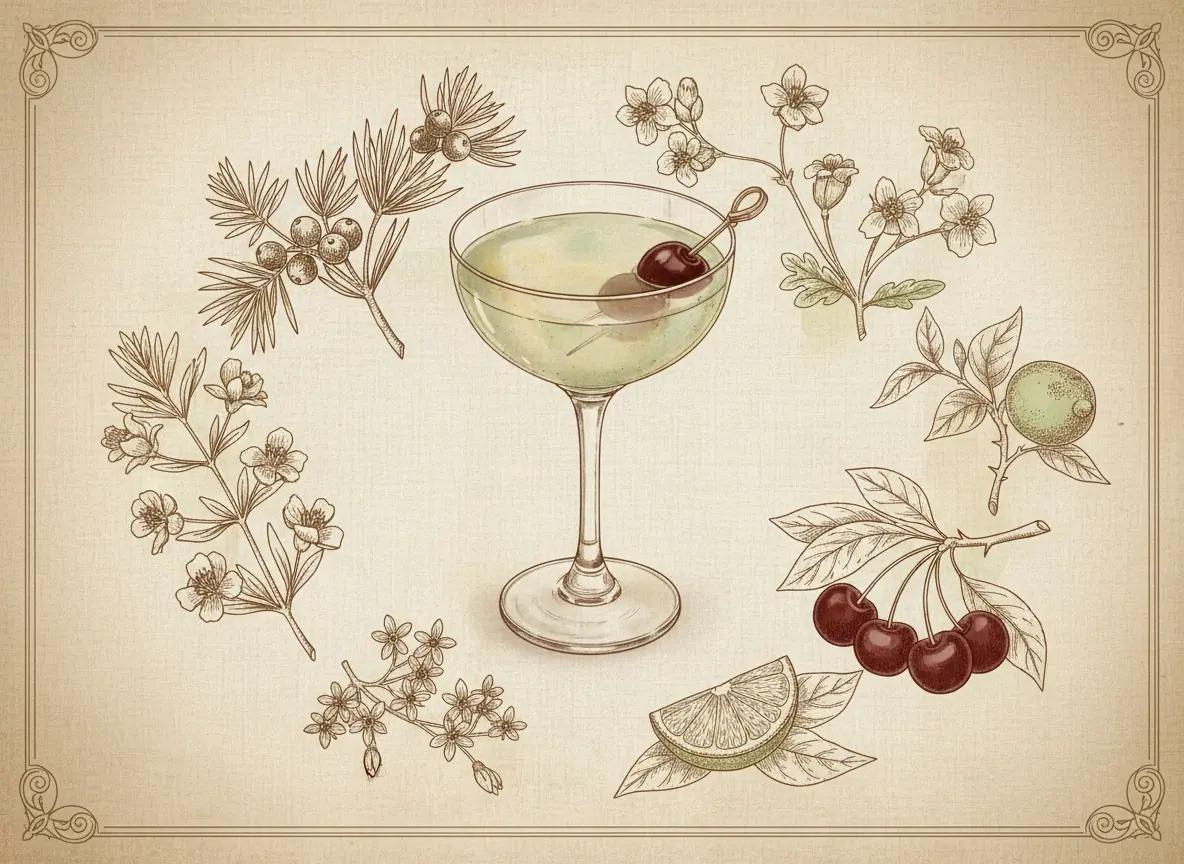
A Last Word is 22.5ml each of gin, green Chartreuse, maraschino liqueur and fresh lime juice, shaken hard for 10 to 12 seconds and double strained into a chilled Nick & Nora or coupe. About 2.9 UK units. The measures are the IBA’s; the cherry or lime twist is ours. The Oxford Companion says the drink first appears in print in the Detroit Athletic Club News in 1916, on a menu at 35 cents, a high price then. Ted Saucier’s Bottoms Up of 1951 prints the recipe, quoting a club source who says Frank Fogarty, a vaudeville monologist, introduced it there about thirty years earlier. In 2003 Murray Stenson put it on the menu at the Zig Zag Café in Seattle, from where it spread, the Companion says. Four strong flavours at equal volume, and none takes over. Chartreuse brings herbs and heat, maraschino cherry and a bitter almond edge, lime the acid, and gin holds them together.
Where this one sits
Recipe by Jerry Can Spirits · Updated 19 October 2026