Passion Fruit Margarita
A Passion Fruit Margarita is 50ml of blanco tequila, the pulp of one ripe passion fruit, 15ml of passion fruit syrup, 10ml of triple sec and 15ml of fresh lime juice, shaken hard for 10 to 12 seconds and double strained over fresh ice into a margarita glass with half the rim salted. Half the empty shell floats on top. About 2.4 UK units. Tequila and lime match our Margarita. What changes is the sweet side. The fruit brings scent and sharpness but almost no sugar, so the syrup supplies the sugar, and the triple sec drops from 20ml to 10ml so the orange does not talk over the fruit. It is a modern variation, and the shell on top is a habit borrowed from the Pornstar Martini.
Glassware: Margarita Glass
Garnish: Half a passion fruit floated and Half salt rim
Ingredients
50ml
100% agave blanco at 40% ABV. Its green, peppery edge holds up against the fruit; a reposado’s oak flattens it.
1, ripe
Wrinkled and heavy for its size. Pulp and seeds go into the shaker; one empty half shell is the garnish.
15ml
Supplies the sugar the fruit lacks, with a cooked note of the same flavour. Without it the drink is thin and sour.
10ml
Half the 20ml in our Margarita, at 40% ABV. At the full measure the orange competes with the passion fruit.
15ml
Squeezed the same day. The same 15ml as our Margarita; the pulp adds acid of its own, so it needs no more.
Instructions
Squeeze the lime juice the same day.
Run a spent lime half round the outside of half the rim of a margarita glass and roll that half in flaky salt. Fill the glass with ice.
Halve the passion fruit and scoop the pulp and seeds from both halves into a shaker. Keep the emptier half shell.
Add the tequila, passion fruit syrup, triple sec and lime juice.
Fill with cubed ice and shake hard for 10 to 12 seconds.
Double strain over the fresh ice in the glass.
Float the half shell, cut side up, on the drink.
Our version
Our Margarita’s 50ml of tequila and 15ml of lime, with the triple sec halved to 10ml and the pulp of one passion fruit and 15ml of passion fruit syrup added.
Source: our own specification. Last checked 10 October 2026.
Expert Tip
Buy the fruit wrinkled. A smooth, glossy passion fruit is underripe and thin inside; a dimpled, slightly leathery skin means the pulp is sweet and full. Hard fruit ripens in a few days on a windowsill. Shake the seeds in, then double strain through a fine sieve. The seeds help break up the pulp in the shaker, and the sieve keeps them out of the glass. If it tastes sour, look at the fruit before you add syrup. A ripe passion fruit is sharper than a lime in some batches and gentler in others, so taste the pulp first and adjust the syrup by a barspoon either way.
Behind the Passion Fruit Margarita
Flavour Profile
A Margarita With Fruit in It
In our view passion fruit became a bar staple with the Pornstar Martini, and the Margarita, being only spirit, orange liqueur and lime, takes a fruit without much change to its frame. This version keeps our Margarita’s tequila and lime and changes only the sweet side.
Pulp for Scent, Syrup for Sugar
Passion fruit is very aromatic, quite acidic and low in sugar. One source of it cannot do both jobs. The fresh pulp gives the smell and the bite. The syrup gives sweetness and a deeper, cooked note of the same fruit.
Because the pulp brings acid of its own, the lime needs no more than the 15ml in our Margarita. The fruit and the lime share the sour work.
Why the Triple Sec Is Halved
In our Margarita, 20ml of triple sec rounds the lime and links it to the agave. Here a third strong flavour is in the glass, and at 20ml the orange starts to compete with the passion fruit for the same aromatic space. At 10ml it still joins agave to fruit, and the syrup covers the sugar it no longer brings.
Our Margarita and This One
Our Margarita beside our Passion Fruit Margarita
Blanco tequila
- Margarita
- 50ml
- Passion Fruit Margarita
- 50ml
Triple sec
- Margarita
- 20ml
- Passion Fruit Margarita
- 10ml
Fresh lime juice
- Margarita
- 15ml
- Passion Fruit Margarita
- 15ml
Passion fruit
- Margarita
- None
- Passion Fruit Margarita
- Pulp of one fruit, plus 15ml syrup
Serve
- Margarita
- Up in a coupe, or over ice
- Passion Fruit Margarita
- Over fresh ice in a margarita glass
Rim
- Margarita
- Half salted
- Passion Fruit Margarita
- Half salted
UK units
- Margarita
- About 2.8
- Passion Fruit Margarita
- About 2.4
| Element | Margarita | Passion Fruit Margarita |
|---|---|---|
| Blanco tequila | 50ml | 50ml |
| Triple sec | 20ml | 10ml |
| Fresh lime juice | 15ml | 15ml |
| Passion fruit | None | Pulp of one fruit, plus 15ml syrup |
| Serve | Up in a coupe, or over ice | Over fresh ice in a margarita glass |
| Rim | Half salted | Half salted |
| UK units | About 2.8 | About 2.4 |
How to Serve It
Over fresh ice, never the ice from the shaker, which is already part melted. The floated shell carries a little leftover pulp and puts the fruit’s scent at your nose as you lift the glass.
For the drink without fruit, make a Margarita; for the same fruit on rum, a Passion Fruit Daiquiri.
Make it at home
The Spirit
TequilaTequila is a Mexican spirit distilled from the blue agave plant, made, the Oxford Companion says, only in Jalisco and municipalities of four other states; our recipes use 40% ABV. A label reading 100% agave means every sugar came from the plant, where plain tequila needs only 51%. Most of our 26 tequila recipes ask for 100% agave blanco.
Master the Techniques
More to explore
Frequently Asked Questions
What is in a Passion Fruit Margarita?
Why use both pulp and syrup?
How does it compare with a classic Margarita?
Does it take a salt rim?
How do I know a passion fruit is ripe?
Can I make them for a group?
How strong is a Passion Fruit Margarita?
You Might Also Like
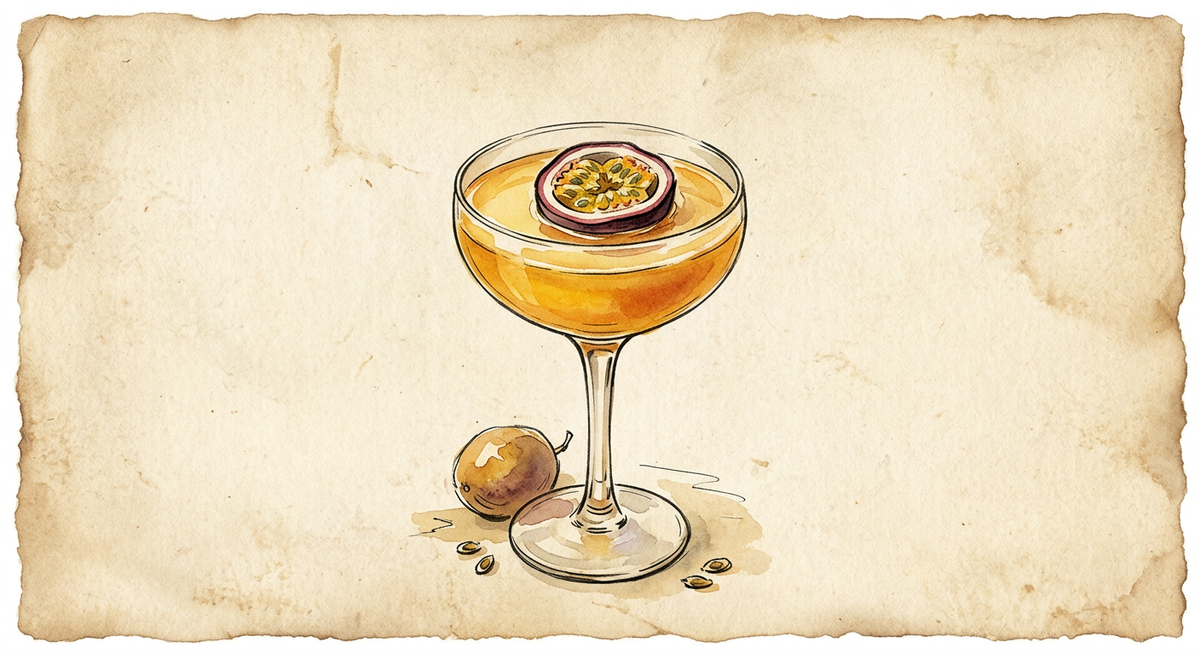
Passion Fruit Daiquiri
A Passion Fruit Daiquiri is 50ml of white rum, the pulp of one ripe passion fruit, 15ml of passion fruit syrup and 15ml of fresh lime juice, shaken hard for 10 to 12 seconds and double strained into a chilled coupe, with half the empty shell floated on top. About 2.0 UK units. It is one of the fruit versions of the Daiquiri, and unlike most of them it is shaken rather than blended, because passion fruit has enough acid of its own to hold a sour together. The fruit comes in twice. The fresh pulp brings scent and sharpness; the syrup brings sweetness with the same flavour, so the lime can stay at 15ml. Ripeness decides the drink: a wrinkled fruit is ready, a smooth one is not.
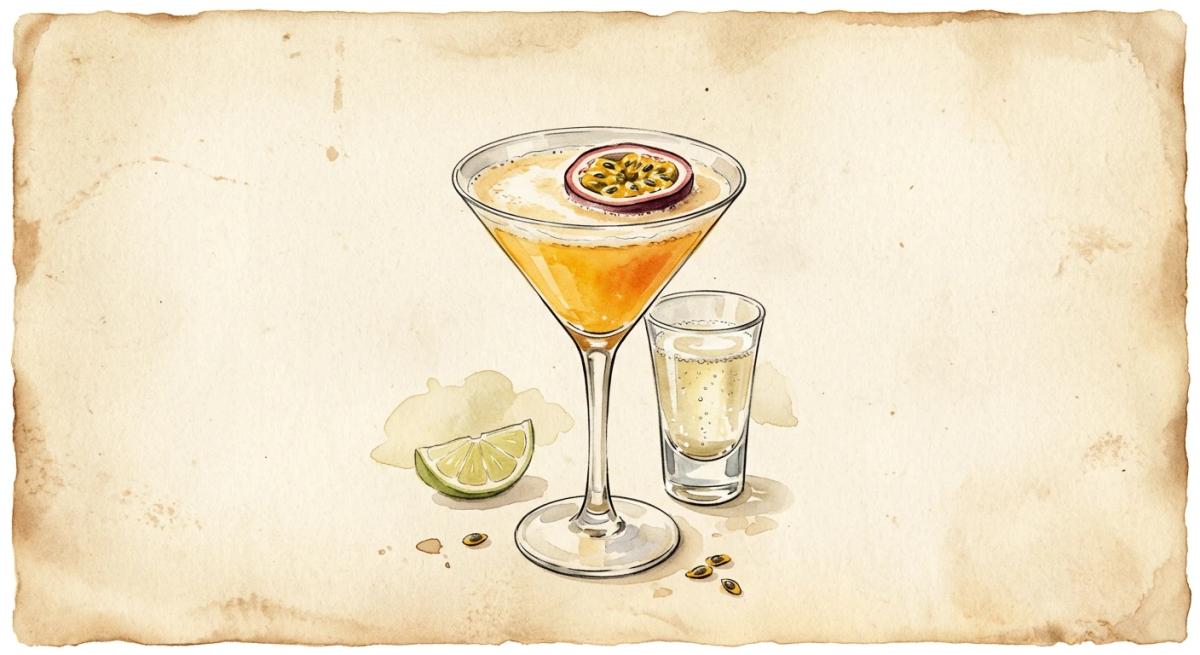
Pornstar Martini
A Pornstar Martini is 50ml vanilla vodka, 20ml passion fruit liqueur, 50ml passion fruit purée and 10ml vanilla syrup, shaken, double strained and served in a chilled martini glass with half a passion fruit floating on top. A 50ml shot of chilled Champagne is served alongside. About 2.2 UK units in the glass and 2.8 with the Champagne. Douglas Ankrah created it in 2002 at Townhouse, his bar in Knightsbridge, by Difford’s Guide’s account, which says he first called it the Maverick Martini after a Cape Town nightclub; his 2004 book, as Difford’s quotes it, headed the recipe Maverick Martini or Porn Star Martini. In November 2018 the Morning Advertiser reported CGA figures that put it first among UK cocktails by share of serves in managed outlets. Passion fruit does the work. The purée gives sharpness and body, the liqueur sweetness and perfume, and the vanilla rounds both. The Champagne is a separate drink, sipped alongside or after.
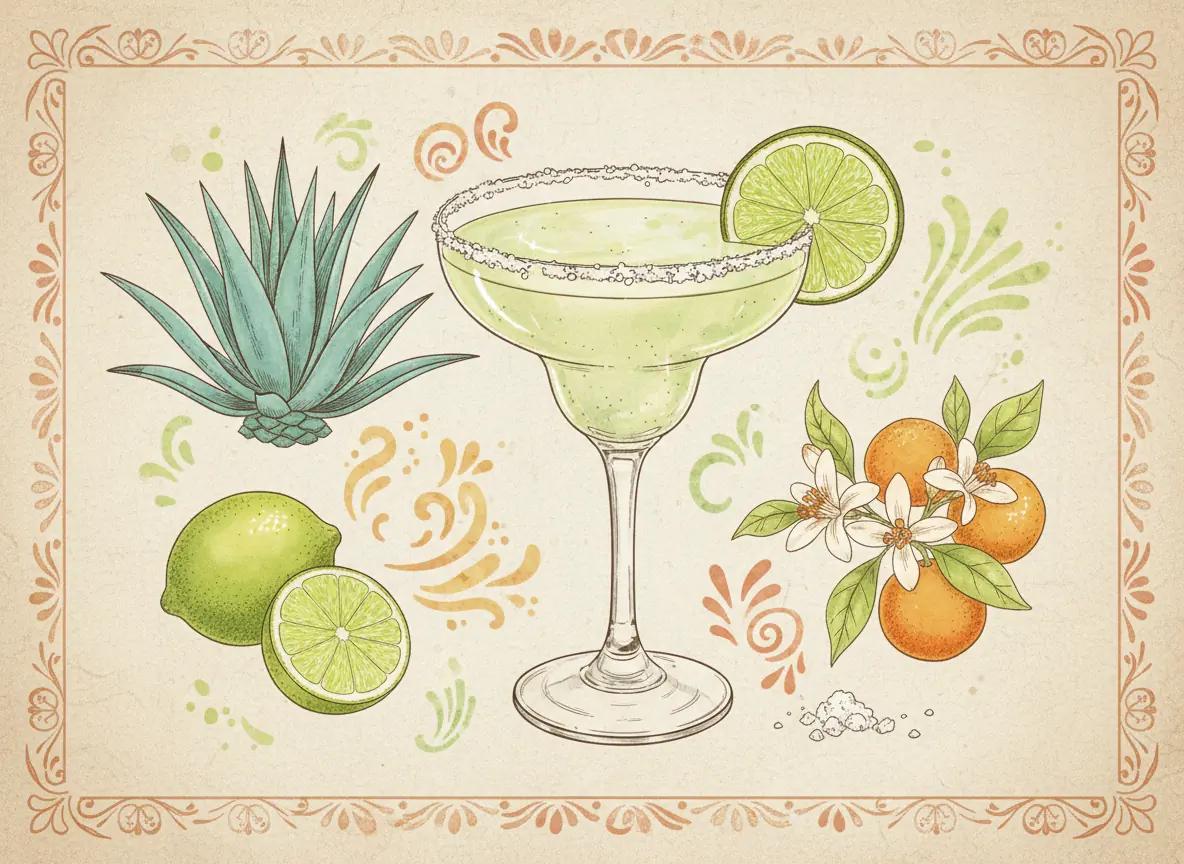
Margarita
A Margarita is 50ml of 100% agave blanco tequila, 20ml of triple sec and 15ml of fresh lime juice, shaken hard for 10 to 12 seconds and double strained into a chilled coupe with half the rim salted, with a lime wheel. About 2.8 UK units. Strained over fresh ice in a rocks glass, it is the same drink, longer and cooler. These are the IBA’s measures. The lime is the smallest pour, so the agave leads and the orange liqueur rounds it: the drink tastes of tequila first and sour second. The Oxford Companion to Spirits and Cocktails, in an entry by David Wondrich, calls the origins of the Margarita one of cocktail history’s most notorious swamps, with at least half a dozen plausible claimants, among them Carlos Herrera at Rancho La Gloria in 1947, Margarita Sames in Acapulco in 1948 and the bartender Santos Cruz in Galveston in the same year. It finds the drink under the name Margarita in print in September 1953, in a California newspaper column, followed soon after by Esquire.
Where this one sits
Recipe by Jerry Can Spirits · Updated 19 October 2026