
Tequila Cocktails

26 recipes, page 1 of 2

This Field Manual holds 26 recipes built on agave: 19 tequila and 7 mezcal. Both are made from agave and the law separates them by region and species, but in a glass the difference is smoke.

Tequila is steamed, which keeps the agave clean and vegetal, and it is what a margarita and a paloma are built around. Mezcal is roasted in a pit, and the smoke that comes with it will take over a drink built for tequila unless the recipe expects it. Swapping one for the other is not a substitution, it is a different drink. A blanco keeps the agave forward where a reposado puts oak in front of it.

What counts as tequila here

Base Spirit

Difficulty Level

21st Century

The 21st Century is a deliberate act of succession: Jim Meehan built it at New York’s PDT in 2007 as the next stop after the 20th Century, updating the art deco classic for a new hundred years. The logic is a straight swap along the timeline: tequila takes over from gin, lemon and white creme de cacao keep their seats, and an absinthe rinse replaces the Lillet as the aromatic frame. The result reads like the 20th Century’s worldlier heir. Blanco tequila’s pepper and agave push through where gin’s juniper used to sit, the cacao smooths the middle exactly as before, and the absinthe rinse hangs an anise perfume over the first sip that does the framing work the aperitif wine once did. Tasted beside its ancestor it makes a two-drink history lesson: the same silhouette redrawn in a different spirit, proof that the classic templates are engines rather than museum pieces.

Añejo Old Fashioned

The Añejo Old Fashioned is an Old Fashioned with aged tequila in place of whiskey, and it works for one specific reason: añejo has spent at least a year in oak, so it arrives carrying the vanilla and barrel weight the frame assumes. Blanco would not do this. Its pepper and raw agave read sharp against sugar rather than settling into it. A year in barrel rounds that pepper down toward bourbon's register without burying the agave underneath, which is the balance the whole drink depends on. Two details separate it from a whiskey Old Fashioned. The sweetener is agave syrup, so the sweetness comes from the same plant as the spirit. And the bitters are mole rather than Angostura, bringing cacao and dried chilli where Angostura brings clove and cinnamon. Angostura works here. Mole belongs. It is a slow drink over one large cube, and the most persuasive argument there is for putting aged tequila where whiskey usually sits.

Batanga

The Batanga is the drink Don Javier stirred with the knife. Don Javier Delgado Corona created it in 1961 at La Capilla in the town of Tequila itself, naming it for a portly regular: tequila and cola over a salted rim, mixed with the blade he had just cut the limes with. He poured it for six decades and stirred every one the same way. The build is the Cuba Libre’s agave cousin with two signatures. The salt rim does real work against the cola, softening the sweetness and the bitterness at once so the drink runs considerably drier than its ingredients suggest. The knife stir folds the lime’s oil back into the glass, and is as much liturgy as it is method. Don Javier poured his last Batanga in 2020, at ninety-six, and the town still orders the drink as its own. It is the humblest classic in the agave canon and among the most loved anywhere.

Cantaritos

Cantaritos is tequila with three citrus juices and grapefruit soda, salted and served in a small clay cup. The cup is not decoration: it is called a cantarito, it gives the drink its name, and soaked in water beforehand it chills the contents by evaporation. The citrus is the whole idea. Orange for sweetness, lime for sharpness, grapefruit for a bitter edge, and then grapefruit soda on top doubling the last of them. That is the huerta, the orchard, in one glass, and it is a good deal more interesting than the Paloma's single fruit. It comes from the roadside stands around Tequila and Amatitán in Jalisco, where they are sold by the thousand with the cup included. The drink is folk repertoire and older than any attribution, and the giant communal cantaritos at the best-known stands hold litres. It is a group serve by nature, which is worth knowing before you make one.

Division Bell

The Division Bell is Phil Ward's mezcal answer to the Last Word, built at Mayahuel in 2009 and named for the Pink Floyd album: mezcal, Aperol, maraschino and lime, with the mezcal pushed slightly forward of true equal parts. It arrived two years before the Naked and Famous finished the same thought, and to its partisans it is the better drink. The maraschino is what separates them. Where the Naked and Famous runs honeyed through yellow Chartreuse, the Division Bell runs dry: the cherry liqueur's funk and almond sit against the smoke while Aperol keeps the middle gentle and orange. It lands leaner and stranger, a Last Word that traded the monastery for the mezcaleria. Taken side by side the two make the cleanest comparison in modern agave drinking. Same skeleton, one substitution, entirely different weather, and a room that will reliably split down the middle about which one it prefers.

El Diablo

El Diablo is the devil in a highball, and a Trader Vic creation from 1946: tequila and crème de cassis under a ginger beer top, lime squeezed and dropped, one of the first cocktails anywhere to treat tequila as worth building around. Vic printed it as the Mexican El Diablo when tequila was still exotic; the drink outlived the qualifier. The blackcurrant is the sly part. Cassis colours the drink a plausible devilish crimson and sweetens the seam between agave and ginger, the tequila’s pepper answers the ginger beer’s bite, and the lime keeps all three honest: a mule’s architecture wearing a darker suit. It drinks easier than its name and colour promise, which was presumably the joke. Among tequila highballs it sits between the Paloma’s sunshine and the serious stirred drinks: fruitier than the former, more playful than the latter, and the best possible answer to a ginger beer bottle already open from Storm & Spice duty.

Grand Margarita

The Grand Margarita is a Margarita with Grand Marnier in place of triple sec, and the substitution changes more than the label suggests. Grand Marnier is built on cognac rather than on neutral spirit, so it brings oak, dried fruit and weight alongside the orange, and the drink that results is rounder, deeper and noticeably less sharp than the original. Forty-five millilitres of tequila to thirty of Grand Marnier and fifteen of lime is also a sweeter ratio than the standard Margarita, where the liqueur usually sits below the citrus rather than twice above it. That is deliberate: Grand Marnier is less aggressively sweet than most triple secs and needs the volume to register. It is the version to pour for somebody who finds a classic Margarita too tart, and the wrong one for anybody who finds it too sweet.

Illegal

The Illegal is a mezcal sour with a rum backbone, and it is one of the drinks that made mezcal make sense to people who thought they disliked it. Thirty millilitres of espadín against fifteen of Jamaican overproof white rum, with falernum, maraschino, lime and a little syrup, and the effect is smoke framed by fruit rather than smoke on its own. The split base is doing the work. Mezcal alone in a sour is austere and can read as ashy; the overproof rum adds ester-heavy fruit and raw power that pushes back against the smoke and gives the drink a middle. Falernum and maraschino then supply spice and a dry cherry note that meet both. It takes its name from a mezcal brand and carries the suggestion of something clandestine, which suits a drink built on a spirit that spent decades as an unregulated village product.
Margarita

Margarita

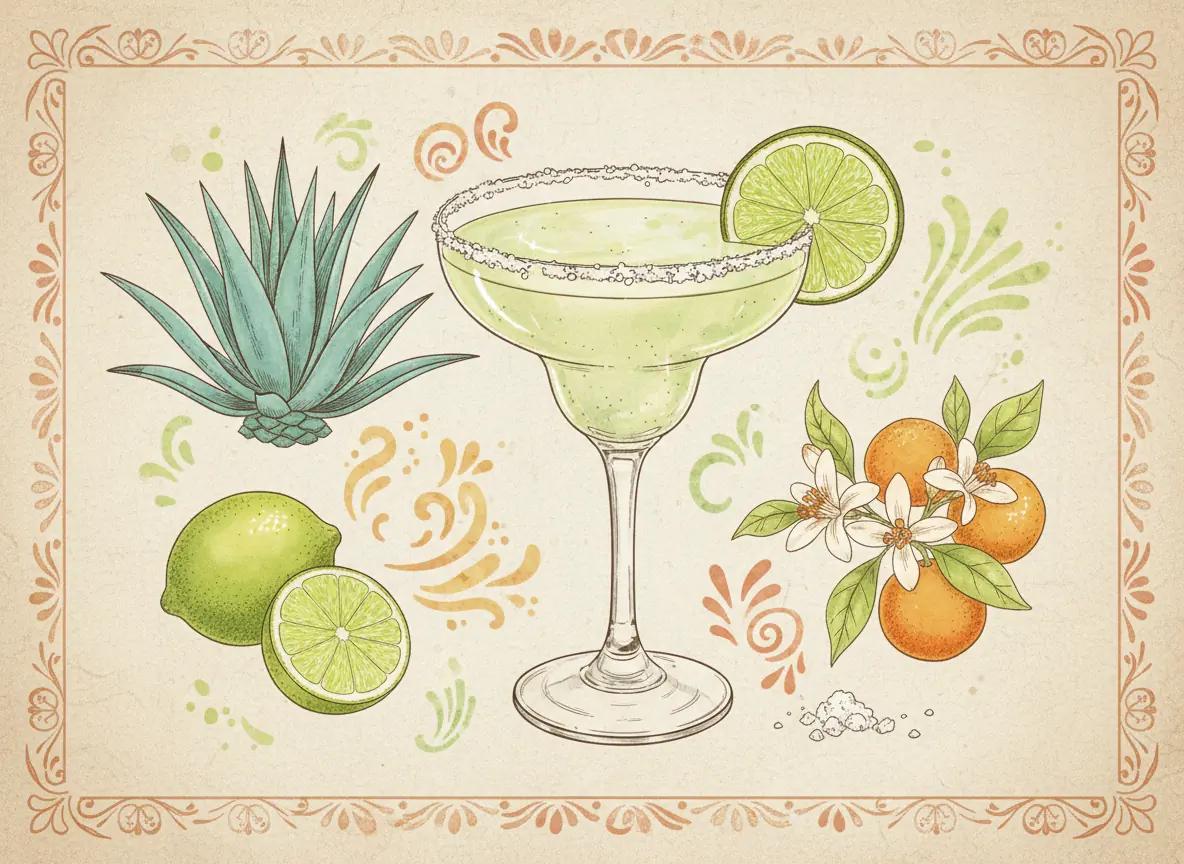
The Margarita is the most ordered cocktail in the United States, and that status has done to it what it did to the Mojito: margarita mix, bottled lime and the frozen resort serve have created a whole category of drink that carries the name without the substance. Made properly it is three ingredients: blanco tequila, fresh lime juice and orange liqueur, shaken cold with a salt rim. That is a sour at its most direct, and in a build this bare the quality of everything is immediately apparent. There is nowhere to hide a neutral tequila, a bottled lime or a cheap triple sec. The choice that matters most is not up versus rocks, which is a matter of preference. It is blanco versus reposado. Blanco is cleaner and more agave-forward and the lime meets the tequila directly; reposado is rounder, its oak putting vanilla and caramel against the lime in a different register. Both are correct, and blanco is the more coherent with fresh lime.

Mexican Firing Squad

The Mexican Firing Squad is tequila, lime, grenadine and Angostura, which is a margarita's shape with two of its four parts swapped out. Charles H. Baker found it at La Cucaracha Bar in Mexico City in the 1930s and filed it in The Gentleman's Companion with his customary gunpowder prose. What makes it worth knowing is that it argues an alternative history. In the 1930s the tequila sour was still an open question, and this is one of the drafts that lost: pomegranate where orange liqueur would eventually rule, Angostura seasoning where salt would settle. The result runs darker, spicier and less bright than the citrus line that won, and a good deal more interesting than the vote suggests. Real grenadine is constitutional. Fifteen millilitres of it is the drink's entire sweet register, and the neon bottle turns it from a dispatch into an execution, which is a joke Baker would have enjoyed.

Mexican Mule

The Mexican Mule is tequila, lime and ginger beer over ice in a copper mug: the Moscow Mule's formula with the vodka swapped out. It is a modern drink with no author, born out of the mule boom of the 2000s when every spirit in the bar got a turn in the copper. Most of those variations are unremarkable. This one is not, because tequila and ginger share a register the vodka original never had. Blanco's pepper and ginger's heat are the same kind of warmth, so they braid into one sensation rather than sitting in layers, and the lime holds tension across both. That is a better argument than most mule variations can make. In a Moscow Mule the vodka is a passenger; here the spirit is doing something the ginger cannot do alone, which is the difference between a variation on a theme and a drink in its own right.

Mezcal Margarita

The Mezcal Margarita is a Tommy's Margarita with mezcal in place of the tequila: spirit, lime and agave syrup, no orange liqueur. That last absence is the whole reason it works. A classic Margarita uses triple sec, and orange against smoke is a genuinely difficult combination: the two occupy similar space and neither wins, so the drink ends up muddled. Take the orange liqueur out, replace it with agave syrup, and the smoke has nothing to fight. The sweetener speaks the same language as the spirit, and the lime does what lime always does. Nobody owns it. It appeared everywhere at once as mezcal reached back bars in quantity through the 2010s, and it is now on essentially every agave list. For most people it is the second mezcal drink they meet, and it is the one that makes the case for the bottle in daylight rather than after dinner.

Mezcal Negroni

The Mezcal Negroni is what happens when Italy’s bitterest institution meets Oaxaca’s smokiest: the equal-parts Negroni template with mezcal standing where the gin stood, smoke curling through the Campari’s bitterness and the vermouth’s plush. It emerged from the agave-obsessed New York bars of the late 2000s and became the most durable of all the Negroni variations. It works because mezcal is one of the few spirits with the personality to argue with Campari on equal terms. Gin seasons the classic Negroni; mezcal debates it, the smoke and vegetal wildness pushing back against the bitter orange until the drink lands somewhere new: darker, stranger and more insistent than its parent, while keeping the equal-parts serenity intact. For mezcal drinkers it is the category’s finest stirred showcase after the Oaxacan Old Fashioned; for Negroni drinkers it is the variation that finally justifies the word. Either road arrives at the same rocks glass.

Naked and Famous

The Naked and Famous is a modern classic with a full pedigree on file. Joaquín Simó created it at Death & Co in 2011 and described it himself as the bastard love child of the Last Word and the Paper Plane, conceived in the mountains of Oaxaca. Equal parts mezcal, yellow Chartreuse, Aperol and lime: four loud ingredients at 22ml each, agreeing perfectly. It is the equal-parts formula’s smoky graduation. The Last Word proved four equal parts could balance, the Paper Plane translated the trick to whiskey and amaro, and this walks it into the mezcal age: smoke against honeyed Chartreuse, Aperol’s gentle bitterness bridging between them, lime holding the whole thing upright. No single ingredient leads, which with these four is the entire achievement. It has become the standard second mezcal drink, after an Oaxaca Old Fashioned has made the introduction: brighter, stranger and more talkative, and the fastest proof that smoke belongs in the sour family.

Oaxacan Old Fashioned

The Oaxacan Old Fashioned is the drink that put mezcal on the cocktail map: Phil Ward built it at New York’s Death & Co in 2007, splitting the Old Fashioned’s base between reposado tequila and smoky mezcal, sweetening with agave and finishing with the flamed orange twist. It became the template drink of the agave revolution and the most influential Old Fashioned variation of its generation. The split base is the design: tequila carries the body and oak, mezcal arrives as smoke and wildness over the top, and neither alone makes the drink. Agave syrup keeps the sweetening in the family, the bitters bridge to the Old Fashioned’s bones, and the flamed twist’s caramelised orange oils meet the mezcal’s smoke like two campfires agreeing. For drinkers, it remains the perfect introduction to mezcal: enough smoke to understand the category, enough structure to feel at home, and the Old Fashioned’s familiar silhouette holding the door open.
Paloma

Paloma

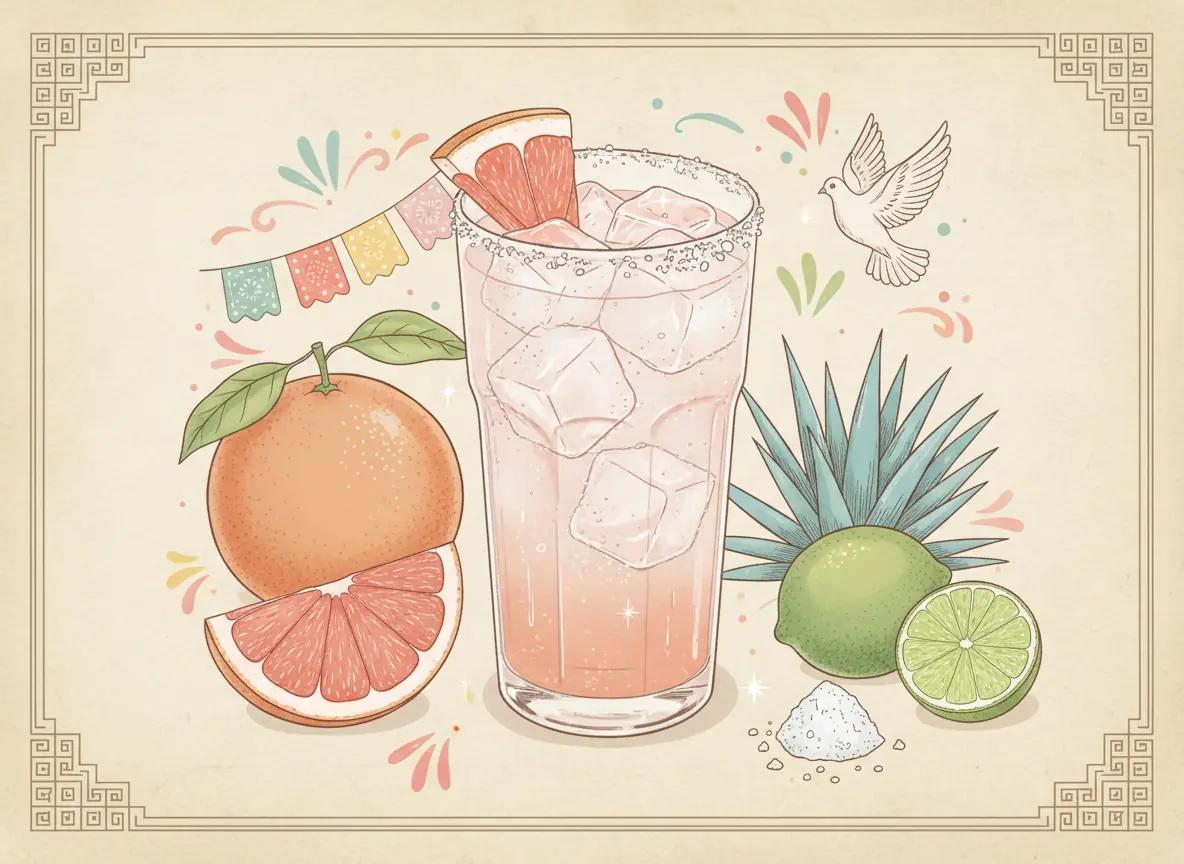
The Paloma is Mexico’s most popular cocktail by volume, considerably outselling the Margarita in the country that produces the tequila both are built on. Outside Mexico its profile is lower, partly because the defining grapefruit soda is less universally available than lime and triple sec. The name means dove, and the origin is most often attributed to Don Javier Delgado Corona of La Capilla in the town of Tequila, Jalisco, though the precise date and the accuracy of that attribution are not clearly established anywhere. What is established is that tequila and grapefruit have been a fixture of Mexican drinking long enough to become the country’s default tequila serve, which is a more meaningful endorsement than any bar guide. The salt rim is the element most often omitted by versions that miss what the drink is doing. Salt suppresses bitterness, which makes it a structural decision rather than a flavouring one.

Passion Fruit Margarita

The Passion Fruit Margarita is the family's perfumed wing: the fruit that built the Pornstar Martini's empire, meeting tequila's pepper in a frame that turns out to suit it. The double-fruit approach transfers whole, fresh pulp for perfume and sharpness, syrup for the sugar the fruit refuses to supply. The build keeps the classic's triple sec at half strength, where orange bridges agave and passion fruit the way it bridges most things, and shortens the lime because the pulp brings its own considerable acidity. What lands is golden, sharp-sweet and louder than any margarita short of the spicy one. The floated shell is theatre borrowed from the Pornstar, and it does a job as well: seeds, perfume and visible proof that real fruit went in. The half salt rim keeps the family chemistry intact, with perfume above, seasoning at the edge and pepper underneath. It is the margarita to pour for a table that wants something to happen without committing to chilli.

Picante de la Casa

The Picante de la Casa is Soho House's chilli Margarita, and it is built on the Tommy's rather than the classic: tequila, lime and agave syrup, no orange liqueur. Chilli goes into the shaker with a pinch of coriander, and a clapped coriander sprig finishes the glass. The coriander is what makes it worth the trip. A spicy Margarita is chilli and agave, which is a good combination that stops there. Adding coriander turns the drink into salsa: chilli, lime, coriander and agave are the same four things a decent pico de gallo is built on, and the glass tastes like it knows that. It is attributed to Chris Ojeda at the West Hollywood house and it is now poured across the group to the same specification. Reposado rather than blanco is the other house decision, and it matters: a few months in oak rounds the tequila enough to carry heat without the pepper and the chilli fighting each other.

Rosita

The Rosita is the tequila Negroni the revival nearly walked past. The spec surfaces in the American bar guides of the 1970s and owes its modern life to Gary Regan, who put it back into print just as reposado was reaching wells outside Mexico. The drink had been waiting, fully formed, for an era that could use it. Its refinement is the vermouth. Where a Mezcal Negroni runs the classic equal thirds, the Rosita splits sweet and dry in balance beneath a doubled measure of spirit, which is the perfect Manhattan’s architecture wearing Campari’s red. A dash of Angostura signs it off, a detail no Negroni carries. The result is drier than its colour promises. Reposado’s rested oak rounds the seam where Campari meets the base, doing a job gin has never needed done for it, and the little rose of the name turns out considerably more austere than it looks in the glass.

Silk Stocking

The Silk Stocking is tequila’s dessert secret, and almost nobody knows it exists. Blanco folded into cream and white crème de cacao with a grenadine blush, dusted with cinnamon and served up. It comes out of the mid-century guides, from a period when the range of what tequila could do was still being mapped, and somebody thought to try it in the Alexander’s frame. The answer, improbably, was yes. Spirit, cacao and cream is the Alexander family’s constitution, and blanco’s pepper does what gin’s juniper does in the original: it cuts the richness and stops the whole thing sliding into a milkshake. Cognac in a Brandy Alexander joins the cream. Tequila argues with it. The grenadine is this version’s own signature, tinting the silk pink and laying a pomegranate seam underneath the cocoa. No author has ever been attached to it, which is a shame, because it is the best after-dinner argument tequila has.

Spicy Margarita

The Spicy Margarita is the twenty-first century’s favourite margarita and a rare modern standard with no inventor to credit. Chilli-spiked tequila drinks are as old as Mexico, and the muddled-jalapeño margarita simply condensed out of the 2000s agave boom until every bar had a version. By the 2020s it was among the most ordered cocktails on earth. The build is a Tommy’s Margarita with the heat folded in: fresh jalapeño muddled into the shake, agave syrup smoothing the burn, lime holding the frame. Capsaicin and agave are natural partners, the pepper’s green vegetal side speaking the tequila’s own language, and the drink reads bright first and warm second. The dial is yours: seeds out for warmth, seeds in for fire, or the bottle-infusion route for a party’s worth of consistency. However it arrives, the chilli margarita is that rarest thing, a fashion that genuinely improved the classic it borrowed from.

Strawberry Margarita

The Strawberry Margarita is the frozen daiquiri's agave twin, and the machine age's other great casualty: a blended berry classic that resort slush turned into a punchline. The rescue is the same one the daiquiri needs — ripe fruit, real lime, a short blend — and the drink was always good underneath. The honest spec blends five berries with the classic trio. Triple sec is kept at half strength for the orange bridge, lime stays at full measure because it is what keeps a blended berry drink a margarita at all, and the fruit supplies the colour, the body and most of the sweetness. Ten millilitres of syrup is insurance against a poor punnet rather than a fixed ingredient. The rim question splits the family honestly: salt for the margarita's chemistry, sugar for the berry's dessert lean, and half a rim of either keeps the choice open sip by sip.

Tequila Ceremony

The Tequila Ceremony, salt then shot then lime, is the most performed drinks ritual on earth and the most misunderstood. The lick-sip-suck routine is a border-cantina invention for softening rough mixto tequila, and it is largely unknown in the Mexico that makes the good stuff, where fine tequila is sipped like the aged spirit it is. Performed properly it is honest chemistry in three acts: salt on the hand primes the palate and blunts the coming burn, the shot lands, and the lime’s acid extinguishes what remains. With a harsh tequila the ritual is genuinely protective equipment, and the sequence exists because the spirit it grew up around needed it. With a good 100 per cent agave blanco the ceremony becomes optional theatre, and sipping neat is the graduation it points toward. Learn the ritual for the nights that call for it, and learn to skip it for the bottles that deserve better.

Tequila Sunrise

The Tequila Sunrise in its famous form was born at the Trident in Sausalito around 1971, where Bobby Lozoff and Billy Rice mixed tequila, orange juice and a sinking grenadine gradient for a Rolling Stones launch party. Mick Jagger approved so thoroughly that the band’s 1972 tour became, by their own account, the cocaine and tequila sunrise tour, and the drink went around the world with them. It is the most photographed cocktail of its decade for the same reason it is the most underestimated: the grenadine does not mix, it sinks, building the red-to-gold gradient that named the drink. The eye drinks first, and by the time the palate arrives, tequila and fresh orange have already made their simple, sunlit case. The rescue job is the ingredients. Fresh orange juice and real pomegranate grenadine make an honest drink of it; the bottled-juice and neon-syrup version earned every sneer it received. It is the same argument in its brightest colours: the recipe was never the problem.