Rosita
A Rosita is 45ml of reposado tequila, 22.5ml of Campari, 15ml each of sweet and dry vermouth and a dash of Angostura, stirred for 20 to 30 seconds and strained over one large cube in a rocks glass, with an orange twist expressed and dropped in. About 2.9 UK units. Imbibe and VinePair place its first appearance in print in the 1974 edition of the Mr. Boston Official Bartender’s Guide, creator unknown. Gary Regan reworked it for The Bartender’s Bible in 1991, raising the tequila and adding the bitters, and VinePair says bartenders took that version up. It is a tequila Negroni with the vermouth split between sweet and dry, which makes it leaner than the colour suggests. Ours pours half as much Campari again as Regan’s 15ml, so the bitter orange holds its line against the reposado.
Glassware: Rocks Glass
Garnish: Orange twist
Ingredients
45ml
Rested in oak for between two months and a year, by the Oxford Companion’s account of reposado, at our working figure of 40% ABV. The wood rounds the join with the red bitter; blanco makes a sharper drink, añejo a heavier one.
22.5ml
At 25% ABV, and half as much again as Regan’s 15ml. The extra bitterness stops the drink tasting of oak and vermouth alone.
15ml
Half the measure a Negroni pours, at about 16% ABV. It brings fruit and body; the dry vermouth beside it takes the sweetness back down.
15ml
The other half of the split, at about 18% ABV, and the reason the drink finishes dry. Leave it out and it becomes a sweeter, simpler tequila Negroni.
1 dash
One dash, and Regan’s addition. It ties the agave to the Campari the way it ties rye to vermouth in a Manhattan.
Instructions
Add the tequila, Campari, both vermouths and the Angostura to a mixing glass.
Fill with cubed ice and stir for 20 to 30 seconds.
Strain into a rocks glass over one large ice cube.
Express an orange twist over the surface and drop it in.
Our version
Imbibe prints Gary Regan’s version with 15ml of Campari. Ours pours 22.5ml, so the bitterness holds against the reposado; the 45ml of tequila, the split vermouths and the dash of Angostura are his.
Source: our own specification. Last checked 9 October 2026.
Expert Tip
Use both vermouths. Sweet alone makes a rounder, sweeter drink that is no longer a Rosita; the dry half keeps the finish lean and lets the agave through. We keep both bottles in the fridge and replace them within a month or so of opening. Choose a reposado with clear agave under the oak. A few months in wood rounds the join with the Campari; a heavily oaked bottle pushes the drink towards a Boulevardier. Stir for 20 to 30 seconds before straining. With one large cube in the glass, the dilution has to happen in the mixing glass first.
Behind the Rosita
Flavour Profile
Where It Comes From
The Rosita first appears in print in the 1974 edition of the Mr. Boston Official Bartender’s Guide, Imbibe reports, with no creator named. The name is Spanish for little rose.
Imbibe reports that Gary Regan reworked it in The Bartender’s Bible in 1991, pouring more tequila and adding a dash of Angostura. VinePair says the drink went largely unnoticed by bartenders until his version, and Imbibe says it is more or less still the recipe used today.
Sweet and Dry
Sweet and dry vermouth in equal measure under a larger pour of spirit is how a Perfect Manhattan is built. The Rosita applies that to the Negroni.
Against the Negroni’s equal thirds, the split pours less sugar, gives the tequila more room and puts a herbal dryness under the red bitter. The Angostura then joins the halves, as it does in a Manhattan.
Why Reposado
Reposado sits in oak for between two months and a year, the Oxford Companion says. The wood softens the agave’s pepper and rounds the edge where it meets the Campari, much as bourbon does in a Boulevardier.
Blanco makes a brighter, sharper drink. Añejo pushes it towards after dinner. Reposado keeps the agave in front with the oak behind it.
The Rosita Beside Its Relations
The Rosita against Regan’s version and the Negroni; Regan’s row follows Imbibe’s print of his recipe, and the units are our calculation at our working figures of 40% for tequila and gin, 16% and 18% for the vermouths, with Campari at 25% on LWC’s listing
Rosita (ours)
- Spirit
- 45ml reposado
- Campari
- 22.5ml
- Vermouth
- 15ml sweet, 15ml dry
- Bitters
- A dash of Angostura
- UK units
- About 2.9
Rosita (Regan, 1991)
- Spirit
- 45ml tequila
- Campari
- 15ml
- Vermouth
- 15ml sweet, 15ml dry
- Bitters
- A dash of Angostura
- UK units
- About 2.7
Negroni
- Spirit
- 30ml gin
- Campari
- 30ml
- Vermouth
- 30ml sweet
- Bitters
- None
- UK units
- About 2.4
| Drink | Spirit | Campari | Vermouth | Bitters | UK units |
|---|---|---|---|---|---|
| Rosita (ours) | 45ml reposado | 22.5ml | 15ml sweet, 15ml dry | A dash of Angostura | About 2.9 |
| Rosita (Regan, 1991) | 45ml tequila | 15ml | 15ml sweet, 15ml dry | A dash of Angostura | About 2.7 |
| Negroni | 30ml gin | 30ml | 30ml sweet | None | About 2.4 |
Against the Mezcal Negroni
A Mezcal Negroni keeps the equal thirds and changes the spirit, so the surprise is the smoke. The Rosita keeps an unsmoked agave and rebuilds the frame instead.
Smoke against oak, one frame kept and one rebuilt. The Rosita is the drier and quieter of the two.
How to Serve It
Over one large cube in a rocks glass, with an orange twist expressed over the surface and dropped in. A large cube melts slowly, so the drink holds its strength to the last sip.
Serve it before dinner, as you would a Boulevardier.
For the gin original, make a Negroni; for the smoky agave version, a Mezcal Negroni.
Make it at home
The Spirit
TequilaTequila is a Mexican spirit distilled from the blue agave plant, made, the Oxford Companion says, only in Jalisco and municipalities of four other states; our recipes use 40% ABV. A label reading 100% agave means every sugar came from the plant, where plain tequila needs only 51%. Most of our 26 tequila recipes ask for 100% agave blanco.
Master the Techniques
More to explore
Frequently Asked Questions
What is a Rosita?
How does it differ from a Mezcal Negroni?
Do I need both vermouths?
Which tequila should I use?
Who created the Rosita?
How strong is a Rosita?
Sources.
Checked between 18 October and 19 October 2026.
- Imbibe, “The Rosita Cocktail” (secondary source: first in print in the 1974 Mr. Boston guide, creator unknown; Regan’s 1991 Bartender’s Bible version (1½ oz reposado, ½ oz each of Campari, sweet and dry vermouth, one dash Angostura)).
- VinePair, “The Story Behind the Rosita” (secondary source: 1974 Mr. Boston guide; largely unnoticed until Regan’s 1991 version; Regan took it from the 1988 edition).
- The Oxford Companion to Spirits and Cocktails (Kara Newman), “reposado” (secondary source: reposado is tequila aged in oak from two months to one year; blanco under two months, añejo over one year).
- LWC, “Campari 70cl” (UK wholesaler listing: Alcohol By Volume 25%).
You Might Also Like
Mezcal Negroni
A Mezcal Negroni is 30ml each of mezcal, Campari and sweet vermouth, stirred with ice for 20 to 30 seconds and strained over fresh ice in a rocks glass, with an orange peel expressed over the top. About 2.4 UK units. The measures and the method are the Negroni’s; only the spirit changes. It is a substitution rather than an invention: Punch asked bartenders who might have made it first, and none claimed it. The Negroni’s equal-parts frame has always taken swaps, and mezcal is one of the more successful. Gin sits inside Campari’s bitterness. Mezcal pushes back, with roasted agave and smoke in a register Campari does not occupy, so the two hold each other in check and the vermouth binds them. The result is darker and drier on the finish than the gin original. A joven espadín with moderate smoke is the bottle to pour.
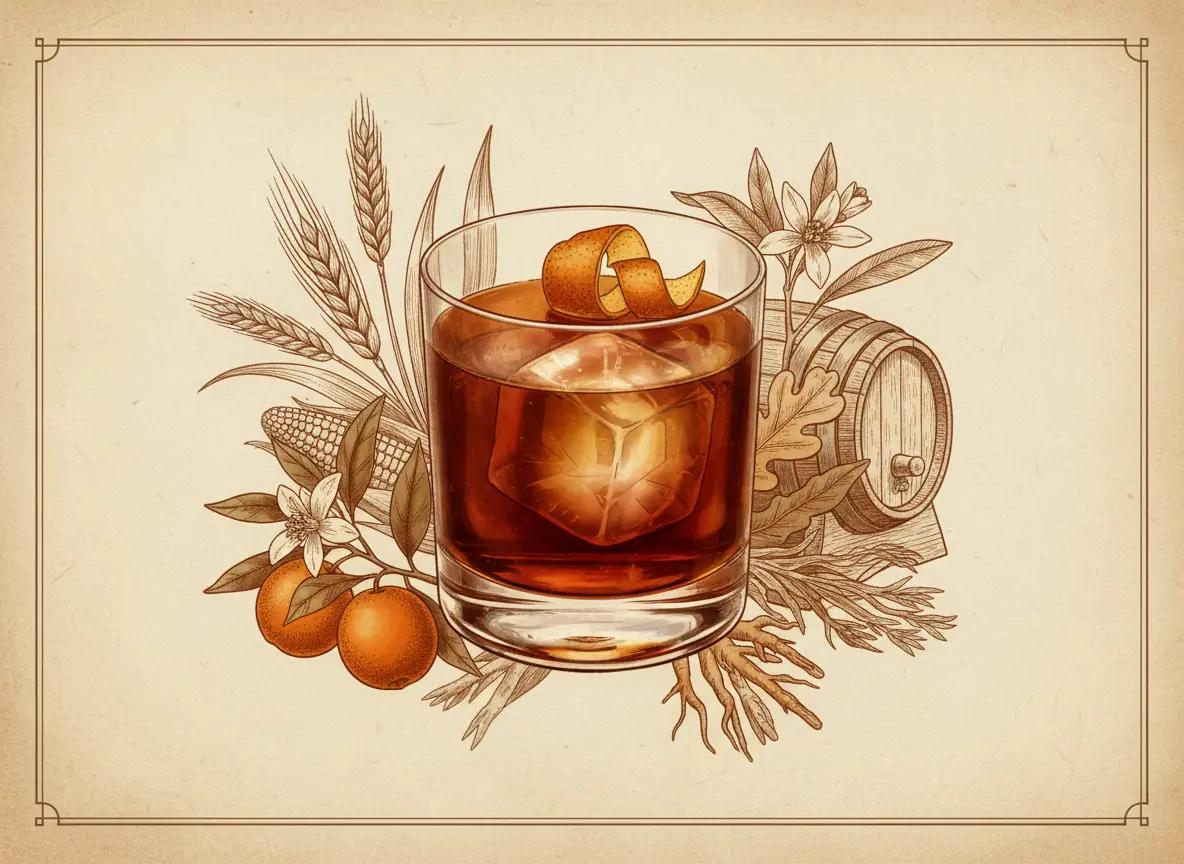
Boulevardier
A Boulevardier is 45ml bourbon, 30ml Campari and 30ml sweet vermouth, stirred over ice for 20 to 30 seconds and strained over fresh ice in a rocks glass, with orange peel. It is the bourbon Negroni: the same Campari and vermouth with bourbon in place of gin, and that one change makes it warmer and rounder. About 3.0 UK units. It first appeared in print in Barflies and Cocktails, Harry MacElhone’s book, published in Paris in 1927, in a chapter by the columnist Arthur Moss, as the cocktail of Erskine Gwynne, an American in Paris who, Difford’s Guide says, helped found a monthly magazine called Boulevardier. Barflies and Cocktails gives the 1927 recipe as equal parts Campari, Italian vermouth and bourbon. The measures here are the IBA’s, with the bourbon ahead of the other two. Equal parts works well with a lighter vermouth. Against a rich one such as Carpano Antica Formula, the extra 15ml of bourbon keeps the drink from turning heavy.
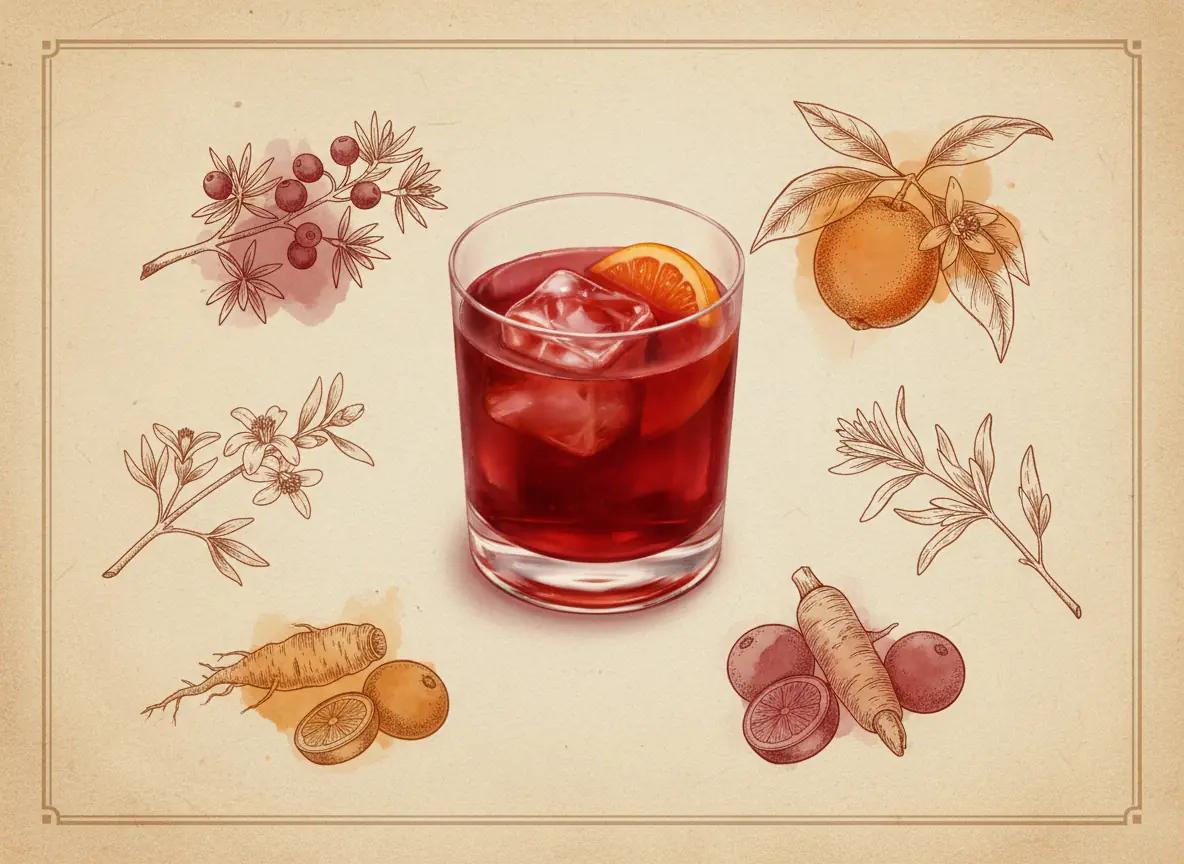
Negroni
A Negroni is 30ml each of gin, Campari and sweet vermouth, stirred with ice for 20 to 30 seconds and strained over fresh ice in a rocks glass, with an orange peel expressed over the top. About 2.4 UK units. The measures are the IBA’s; the IBA builds the drink in the glass and garnishes it with half an orange slice. Difford’s Guide gives the most widely reported account: Florence in 1919, at the Casoni Bar, where the bartender Fosco Scarselli is said to have replaced the soda in Count Camillo Negroni’s Americano with gin. The Oxford Companion has the drink named in a surviving letter of October 1920 and then absent under that name until 1947. A French book of 1929 by Alimbau and Milhorat, in the Internet Archive’s scan, gives equal parts of the three as the Campari Mixte. Each third has a job. Gin gives strength and juniper, the red bitter gives bitterness and orange, and the vermouth gives body and sugar. With no juice or soda in the glass, a tired vermouth shows at once.
Where this one sits
Recipe by Jerry Can Spirits · Updated 19 October 2026