Negronis
12 recipes
This Field Manual holds 12 recipes in the negroni family. The build is equal parts: a spirit, a bitter liqueur and a sweet vermouth, stirred over ice with an orange peel. Every drink on this page is that ratio with one part swapped.
Swap the gin for whiskey and it is a boulevardier, for prosecco and it is a sbagliato. The Campari is the part people argue about: swap it for a gentler bitter and the drink stops fighting back, which is usually what someone means when they say they do not like negronis. Go the other way, towards a more bitter amaro, and the vermouth has to come up with it or the drink turns austere.
Base Spirit
Boulevardier
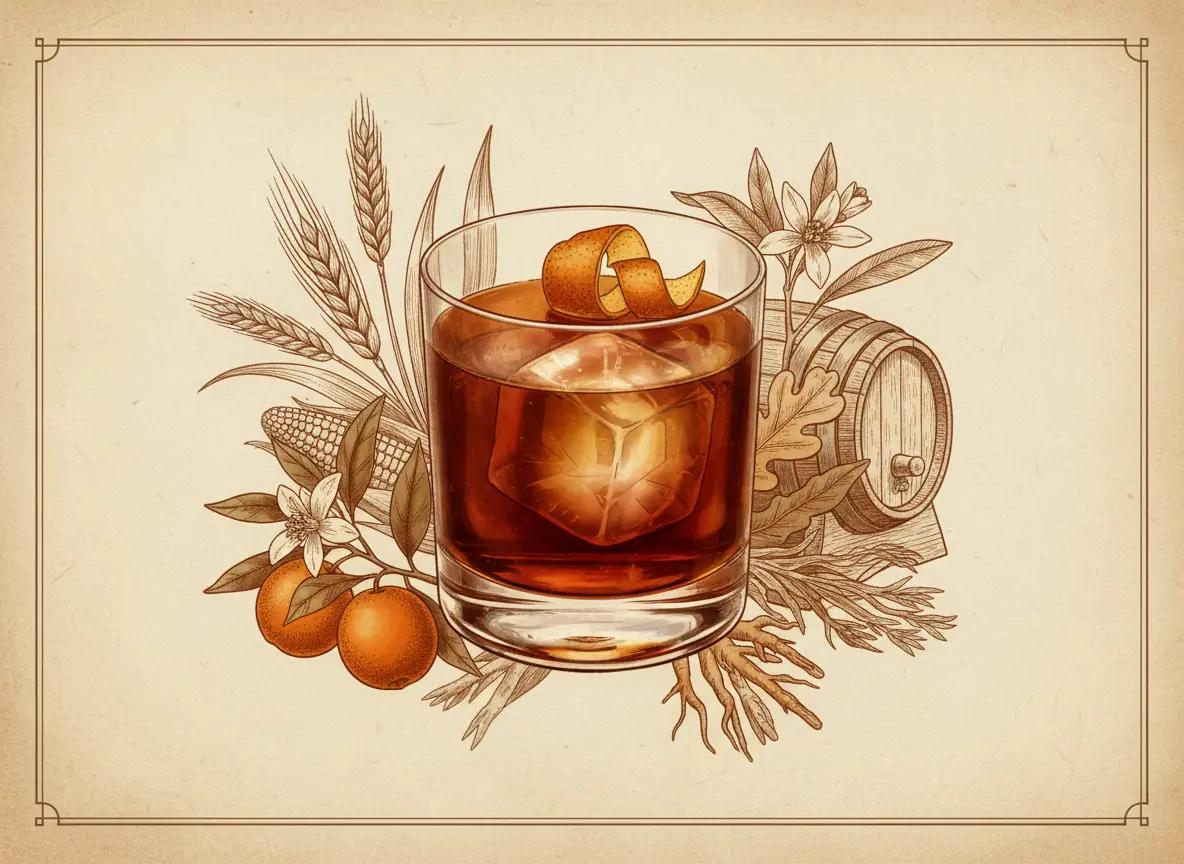
The Boulevardier was created by Erskine Gwynne, an American expatriate writer in 1920s Paris who published a monthly magazine of the same name for the city’s American community. Harry McElhone documented the drink in his 1927 book Barflies and Cocktails, attributing it to Gwynne. It is a Negroni with bourbon in place of gin, and that single substitution changes the drink more thoroughly than the swap suggests. Where the Negroni is botanical, precise and juniper-forward, the Boulevardier is warmer, rounder and more fruit-driven. Bourbon brings vanilla, caramel and a grain sweetness that gin does not carry, producing a richer balance that sits more naturally after a meal than before one. The ratio here runs slightly bourbon-forward at three to two to two rather than equal parts, because bourbon is heavier and sweeter than gin and equal measures can tip the drink toward cloying against a rich vermouth. It handles equal parts perfectly well too; adjust to the bottles in front of you.
Cardinale
The Cardinale is a Negroni with the sweet vermouth taken out and the Campari cut back, which makes it drier, paler and considerably more austere than the drink it descends from. It is not a variation anyone stumbles into: at forty millilitres of gin to twenty of dry vermouth and ten of Campari, the bitter is a seasoning rather than an equal partner. The name points at the colour a cardinal wears, though the drink is nothing like that red — the small Campari measure leaves it closer to pale rose. The Italians have a habit of naming drinks for clergy and the connection is decorative rather than historical. What it demonstrates is how much of a Negroni's character comes from the sweet vermouth rather than the Campari. Remove it and the drink loses its weight and its fruit at once, and what is left is a dry martini with a bitter edge — recognisably related and a genuinely different proposition.
Comte de Sureau
The Comte de Sureau is a Negroni that has been rebalanced rather than merely re-flavoured. Elderflower liqueur takes sweet vermouth's place, and the Campari drops to a quarter measure, which is the change that actually matters. Equal parts would not work. Campari at a full 22ml simply erases elderflower, which is a delicate floral note with no capacity to fight back. At 7.5ml it becomes a frame instead of a flood: enough bitter orange to give the drink structure and a dry finish, not enough to bury what the drink is for. The gin leads at 45ml for the same reason. This is a blossom drink that wants a spine, not a bitter drink with a floral accent. It was adapted from a 2007 or 2008 creation by Gonçalo de Sousa Monteiro at Le Lion in Hamburg, the bar that also produced the Gin Basil Smash. Most bars that pour it call it an Elderflower Negroni. The proper name means the Count of Elderflower, which ennobles a hedgerow with an admirably straight face.
Left Hand
The Left Hand is a Boulevardier with three dashes of chocolate bitters in it, which sounds like a footnote until you taste one. Cacao is dry rather than sweet, and it sits exactly between bourbon's barrel vanilla and Campari's bitter orange, joining two things that in a plain Boulevardier stay politely separate. It is attributed to Sam Ross, working out of Milk & Honey in New York in the late 2000s, and it comes as half of a pair. The Right Hand is the same drink with aged rum in place of the bourbon, built by his colleague Michael McIlroy. Two hands, two base spirits, one idea. The proportions are modern: forty-five, twenty-two, twenty-two rather than the equal measures a Boulevardier often takes. That trim is as much a part of the drink as the bitters are, because it is what keeps the Campari framing the whiskey instead of covering it.
Mezcal Negroni
The Mezcal Negroni is what happens when Italy’s bitterest institution meets Oaxaca’s smokiest: the equal-parts Negroni template with mezcal standing where the gin stood, smoke curling through the Campari’s bitterness and the vermouth’s plush. It emerged from the agave-obsessed New York bars of the late 2000s and became the most durable of all the Negroni variations. It works because mezcal is one of the few spirits with the personality to argue with Campari on equal terms. Gin seasons the classic Negroni; mezcal debates it, the smoke and vegetal wildness pushing back against the bitter orange until the drink lands somewhere new: darker, stranger and more insistent than its parent, while keeping the equal-parts serenity intact. For mezcal drinkers it is the category’s finest stirred showcase after the Oaxacan Old Fashioned; for Negroni drinkers it is the variation that finally justifies the word. Either road arrives at the same rocks glass.
Milano-Torino
The Milano-Torino is the aperitivo’s book of genesis: Campari of Milan and sweet vermouth of Turin, equal parts over ice, poured at Campari’s own Caffè Camparino from the 1860s and named for the two cities standing in the glass. The lineage reads like scripture. Add soda and the Mi-To becomes an Americano; swap the soda for gin and the Negroni arrives; mistake the gin for prosecco and the Sbagliato is born. The ancestor outlived all of them unchanged: two bottles, one orange slice, and nothing anybody has managed to improve. It drinks as the family’s softest bitter statement, with the vermouth’s plush meeting Campari head-on and no lengthener refereeing between them, and it remains the correct first glass for anyone setting out to map the red dynasty from its root rather than picking it up somewhere in the middle. Two ingredients and no lengthener leaves both fully exposed, so the vermouth has to be as good as the Campari is consistent.
Negroni
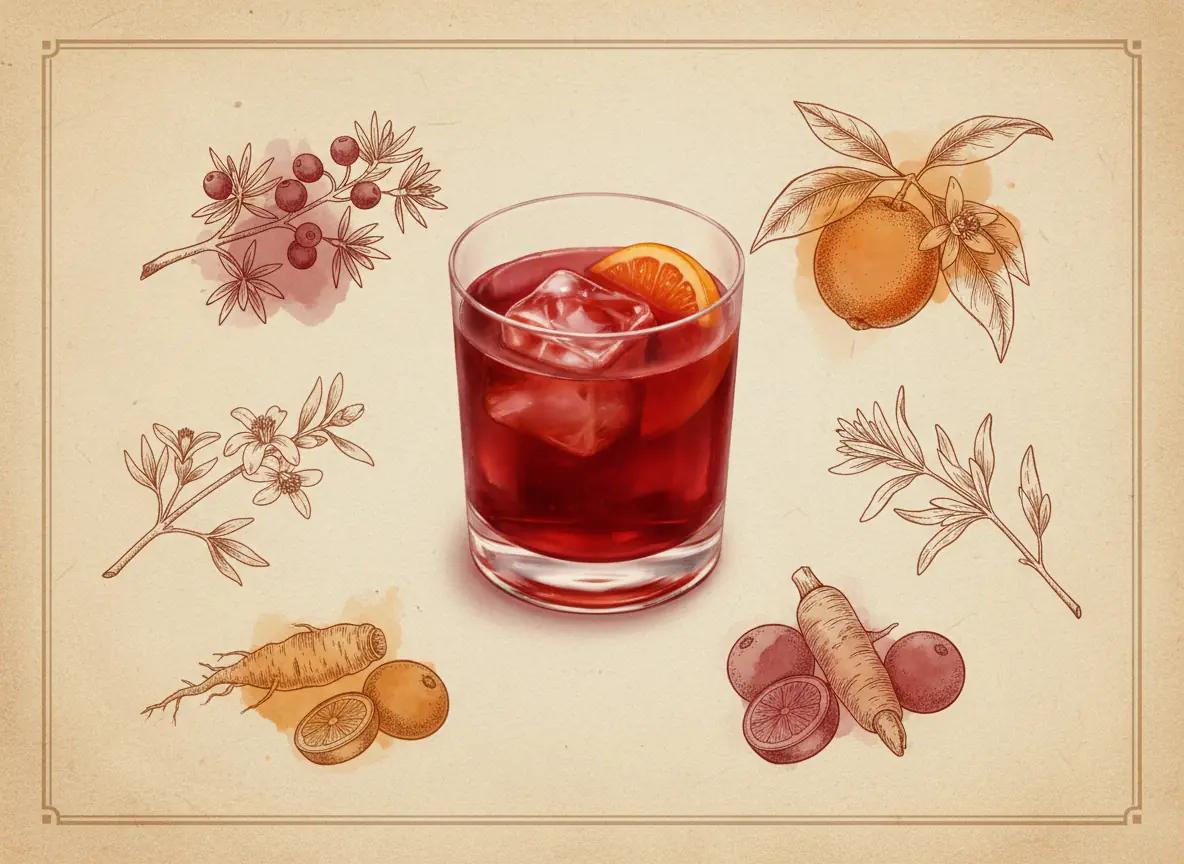
The Negroni is the most ordered classic cocktail in the world and the drink that defined the contemporary revival. It is also one of the simplest: equal parts gin, Campari and sweet vermouth, stirred and served over ice with an orange peel. That simplicity is a function of how precisely the three are calibrated against one another. The story most commonly told places Count Camillo Negroni at the Caffè Casoni in Florence in 1919, asking Fosco Scarselli to strengthen his Americano by replacing the soda with gin. The account is debated; the structure is not. Both drinks share the same base of Campari and sweet vermouth, and that one substitution turns a sessionable aperitif into one of the most spirit-forward short drinks there is. The sweet vermouth is the most commonly neglected variable. At equal volume it is a third of the drink rather than a background ingredient, and a bottle left open at room temperature for months will define a Negroni more completely than the gin does, with no amount of good Campari correcting it.
Negroni Sbagliato
In 1972, mid-rush at Bar Basso in Milan, Mirko Stocchetto reached for the gin to build a Negroni and came up holding prosecco. Sbagliato means mistaken, and the mistake was good enough to keep: Campari and sweet vermouth as always, with the sparkle where the juniper used to be. Bar Basso still serves it in comically vast hand-blown goblets, and the drink has never needed a better origin story because the true one is perfect. What the error produced is the missing rung between the Americano and the Negroni: bitter and vermouth-rich like its siblings, but celebratory where the Negroni is contemplative and livelier than the Americano’s soda could ever manage. At a third of the Negroni’s strength it is the rare aperitivo you can order twice and still make dinner. Fifty years on, a viral clip made it briefly the most requested drink on earth, and a generation discovered what Milan had known all along: some of the best drinks in the canon were never designed, only caught on the way down.
Old Pal
The Old Pal is rye, Campari and dry vermouth in a Boulevardier's shape with the sweet vermouth swapped out. That single change does considerably more than it sounds like it should. Sweet vermouth in a Boulevardier is a cushion: it pads the Campari's bitterness and rounds the whiskey. Take it away and put dry vermouth in its place, and the Campari argues unpadded while the rye's pepper sharpens. The drink runs leaner, drier and more bracing than its amber sibling, and it belongs before dinner where the Boulevardier belongs after, which is a real distinction rather than a stylistic one. Both come out of Harry MacElhone's Paris in the 1920s and both appear in his books. This one is dedicated to William Robertson, a sports journalist on the Paris Herald and the old pal of the title, which is a more affectionate origin than most drinks manage to claim, and a rarer one than it ought to be.
Right Hand
The Right Hand is the rum half of a matched pair. Michael McIlroy built it on the frame Sam Ross had used for the Left Hand, bourbon with Campari, sweet vermouth and chocolate bitters, and swapped the base for aged rum while leaving every other measure exactly where it stood. That single substitution is the whole drink, and it is the cleanest lesson in base spirits the modern canon has to offer. Bourbon brings corn sweetness and vanilla. Aged rum brings molasses, dried fruit and a darker kind of oak. Everything else is held constant, so whatever changes in the glass is attributable to the bottle and to nothing else. Rum against Campari is not an obvious pairing until you have had a Jungle Bird. Dark sugar can stand up to bitter orange where lighter spirits are simply overrun, and here that standoff happens stirred and formal, with the vermouth refereeing and the chocolate bitters sealing the seam between them.
Rosita
The Rosita is the tequila Negroni the revival nearly walked past. The spec surfaces in the American bar guides of the 1970s and owes its modern life to Gary Regan, who put it back into print just as reposado was reaching wells outside Mexico. The drink had been waiting, fully formed, for an era that could use it. Its refinement is the vermouth. Where a Mezcal Negroni runs the classic equal thirds, the Rosita splits sweet and dry in balance beneath a doubled measure of spirit, which is the perfect Manhattan’s architecture wearing Campari’s red. A dash of Angostura signs it off, a detail no Negroni carries. The result is drier than its colour promises. Reposado’s rested oak rounds the seam where Campari meets the base, doing a job gin has never needed done for it, and the little rose of the name turns out considerably more austere than it looks in the glass.
White Negroni
The White Negroni came out of an improvisation. Wayne Collins, a British bartender demonstrating at VinExpo in Bordeaux in 2001, was asked to work with French products and did not have Campari or sweet vermouth to hand. He rebuilt the Negroni from what was available: Suze in place of the Campari, Lillet Blanc in place of the vermouth, gin unchanged. It is a translation rather than a substitution. Suze is bitter from gentian root, which is earthy and vegetal where Campari is bitter orange, and Lillet answers with honeyed citrus and a touch of quinine where sweet vermouth brought weight and spice. The structure survives intact and every flavour in it changes. What you get is paler, drier and stranger than the original, and it has done more than anything else to put Suze on back bars outside France. Plenty of people prefer it to a Negroni. The argument is worth having with one of each in front of you.