Negroni Sbagliato
A Negroni Sbagliato is 30ml of Campari and 30ml of sweet vermouth stirred briefly over ice in a rocks glass, topped with 30ml of cold brut prosecco poured down the side, with an orange slice. About 1.6 UK units, two thirds of a Negroni’s. Sbagliato means mistaken. Campari’s own page dates it to 1972, at Bar Basso in Milan, when Mirko Stocchetto, asked for a Negroni, poured prosecco instead of gin; Difford’s Guide puts it in the late 1980s and says it is still served at Bar Basso today with spumante. Bar Basso’s own page writes the name as Negroni Sbagliato® and calls it the bar’s “real trademark drink”. It sits on the rung between an Americano and a Negroni: bitter and vermouth-rich like both, with wine’s body and a fine sparkle where the soda or the gin would be. The bubbles are the fragile part, so the prosecco goes in last and is barely stirred.
Glassware: Rocks Glass
Garnish: Orange slice
Ingredients
30ml
Around 25% ABV, and the bottle every drink in this family shares. Its bitter orange is what the vermouth and the wine are built around.
30ml
A rich Italian style at our working figure of 16% ABV. We keep it in the fridge once open, because it is a third of the glass.
30ml
Brut and cold, at our working figure of 11% ABV. Difford’s Guide says the Sbagliato was made with spumante and that Bar Basso still serves it with spumante, not prosecco; Campari’s own page names prosecco. Poured last and gently, because the bubbles are what make it a Sbagliato.
Instructions
Fill a rocks glass with cubed ice.
Add the Campari and sweet vermouth and stir briefly to chill.
Top with the chilled prosecco, poured gently down the inside of the glass.
Lift once with a bar spoon and add an orange slice.
Our version
Not an IBA cocktail. Campari’s own recipe is one part each of Campari, red vermouth and sparkling wine, built in a rocks glass with ice; ours is 30ml of each, with brut prosecco.
Source: our own specification. Last checked 9 October 2026.
Expert Tip
Stir the Campari and vermouth over the ice first, then pour the prosecco down the inside of the glass and give it one slow lift with the spoon at most. Stir it like a Negroni and the bubbles are gone. Use brut prosecco, cold from the fridge. A sweeter extra dry against sweet vermouth turns the glass syrupy, and warm wine goes flat at once. We store the vermouth cold and use it up within a month. It makes up a third of the drink, and a tired bottle flattens everything else.
Behind the Negroni Sbagliato
Flavour Profile
The Origin
Valextra quotes the owner, Maurizio Stocchetto: the bar was established in 1933 on the other side of town by Giuseppe Basso, moved to its current location in 1946 after the war, and his father, a Venetian, took it over in 1967. Monocle says the Venetian bartenders Mirko Stocchetto and Renato Hausammann took it from Basso that year. Campari dates the Sbagliato to 1972, Maurizio Stocchetto to the early seventies, Monocle to the late 1970s and Difford’s Guide to the late 1980s.
Campari’s page has Stocchetto, asked for a Negroni, pouring prosecco instead of gin; Difford’s Guide says spumante, and Valextra calls it one of Bar Basso’s most famous inventions. Sbagliato means mistaken. Difford’s Guide says it is still served at Bar Basso today. Bar Basso’s own page writes the name as Negroni Sbagliato® and calls it the bar’s “real trademark drink”.
Campari’s own recipe is one part each, three centilitres, of Campari, red vermouth and sparkling wine, built in a rocks glass with ice and an orange slice; Difford’s Guide prints 30ml each of vermouth and red bitter with 60ml of prosecco. Ours keeps Campari’s equal measures and uses brut prosecco.
The Missing Rung
In our view Campari and sweet vermouth sit under three drinks, and what changes between them is only what lengthens the base.
Add soda and you have the Americano: long, light and low in alcohol. Add gin for the Negroni: short, strong and slow. Prosecco makes the Sbagliato, with the Americano’s sparkle and wine’s body, at about two thirds of a Negroni’s alcohol.
The Campari and Vermouth Family
One base, four drinks
Milano-Torino
- Campari
- 45ml
- Sweet vermouth
- 45ml
- Lengthened with
- Nothing; ice only
- UK units
- About 1.8
Americano
- Campari
- 30ml
- Sweet vermouth
- 30ml
- Lengthened with
- 75ml soda water
- UK units
- About 1.2
Negroni Sbagliato
- Campari
- 30ml
- Sweet vermouth
- 30ml
- Lengthened with
- 30ml prosecco
- UK units
- About 1.6
Negroni
- Campari
- 30ml
- Sweet vermouth
- 30ml
- Lengthened with
- 30ml gin
- UK units
- About 2.4
| Drink | Campari | Sweet vermouth | Lengthened with | UK units |
|---|---|---|---|---|
| Milano-Torino | 45ml | 45ml | Nothing; ice only | About 1.8 |
| Americano | 30ml | 30ml | 75ml soda water | About 1.2 |
| Negroni Sbagliato | 30ml | 30ml | 30ml prosecco | About 1.6 |
| Negroni | 30ml | 30ml | 30ml gin | About 2.4 |
Start at the Milano-Torino to taste the base on its own; the Americano and the Negroni are the other two branches.
The Prosecco
Brut, and cold. Warmth and sweetness are the two ways the drink goes wrong. Pour it down the inside of the glass after the base is stirred, and lift once at most; the bubbles do not survive a second stir.
Glass and Ice
A rocks glass filled with cubed ice keeps the drink short and cold, and the cold slows the wine going flat. A wine glass gives the aroma more room if you want it a little longer.
For a Party
Mix equal parts Campari and sweet vermouth in a bottle and keep it in the fridge; in our kitchen it lasts about four weeks, as an open vermouth does.
For each glass, pour 60ml over ice, stir briefly and top with 30ml of cold prosecco. The only perishable part comes from a cold bottle at the last moment, so a late guest gets the same drink as the first.
How to Serve It
Built in a rocks glass over ice, with an orange slice seated against the ice. Serve it before food: bitter, light and quick to make.
Make it at home
The Spirit
CampariCampari is a red Italian bitter liqueur, 25% ABV in the UK on a wholesaler’s listing, made in the style Difford’s Guide describes: an infusion of herbs and fruit in alcohol and water. Campari dates it to 1860 and Gaspare Campari; the Oxford Companion has Gaspare setting up in Novara in 1856 and moving to Milan in 1862. Its bitterness anchors the Negroni and the Americano, and lengthened with soda over ice it needs nothing else.
More to explore
Frequently Asked Questions
What does sbagliato mean?
Who invented the Negroni Sbagliato?
Can I use champagne instead of prosecco?
Is a Negroni Sbagliato stirred or shaken?
What glass does a Sbagliato take?
Can I batch a Negroni Sbagliato?
How strong is a Negroni Sbagliato?
Sources.
Correct as of 19 October 2026.
- Valextra Journal (interview with the owner, Maurizio Stocchetto), “Valextra Meets Mr. Bar Basso: Maurizio Stocchetto” (the owner’s own account: Bar Basso established in 1933 by Giuseppe Basso, moved to its current location in 1946, taken over by his Venetian father in 1967; the Sbagliato made by his father in the early Seventies with prosecco instead of gin).
- Campari, “Other Campari cocktails (Negroni Sbagliato)” (maker’s own page: invented in 1972 by Mirko Stocchetto at Bar Basso in Milano, who poured prosecco instead of gin; 1 part Campari, 1 part red vermouth, 1 part sparkling wine, built in a rocks glass with ice, orange slice).
- Difford’s Guide, “Negroni Sbagliato” (secondary source: created in the late 1980s by Mirko Stocchetti at Bar Basso, reaching for spumante instead of gin; still served at Bar Basso with spumante, not prosecco; 30ml vermouth, 30ml red bitter, 60ml prosecco).
- LWC, “Campari 70cl” (UK wholesaler listing: Alcohol By Volume 25%).
- Bar Basso, “Bar” (owner’s own page: writes the name as Negroni Sbagliato® and calls it the bar’s “real trademark drink”; no register entry read. Cocktails served there since 1947; it does not give the Sbagliato’s date or the owners’ history).
- Monocle (Stella Roos, April 2025), “Behind the scenes at Salone del Mobile’s unofficial watering hole: Bar Basso” (named-author travel magazine: opened in 1933; 1967 passed from Giuseppe Basso to the bartenders Mirko Stocchetto and Renato Hausammann; the Sbagliato placed in the late 1970s).
You Might Also Like
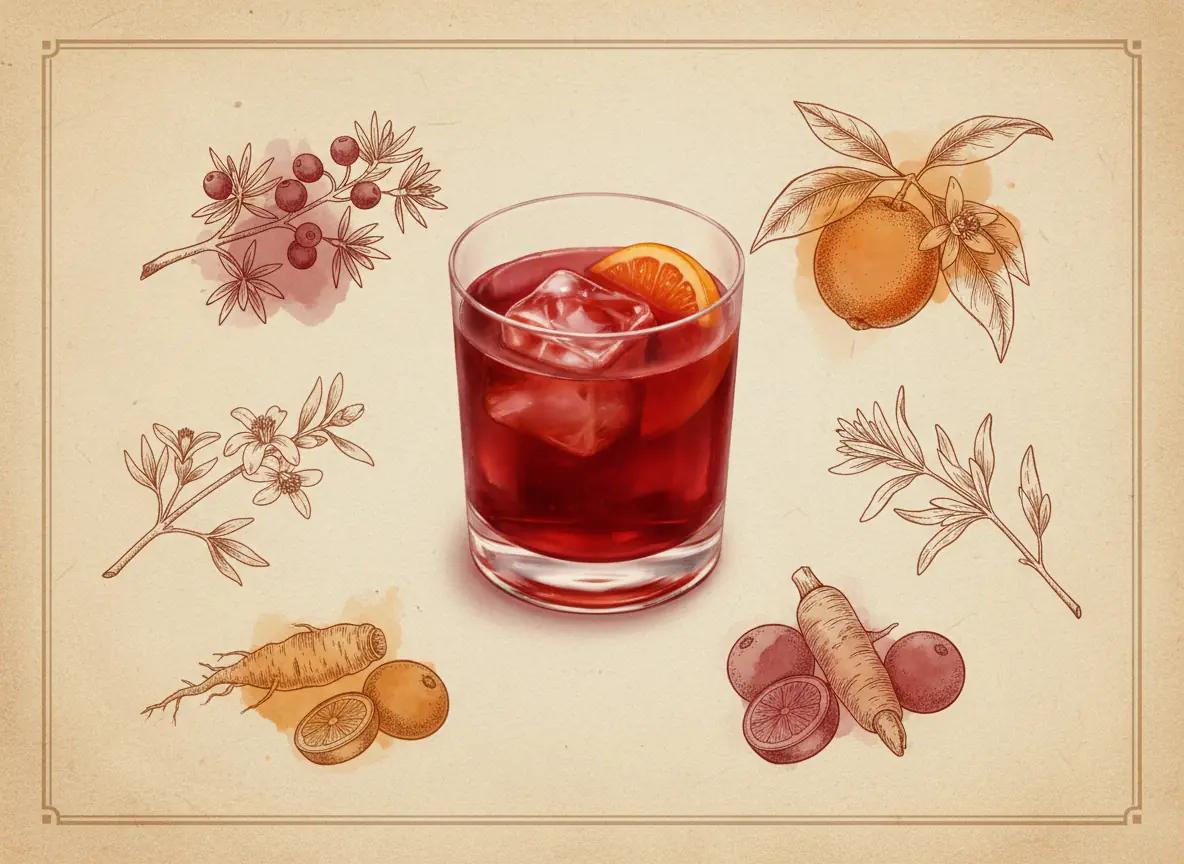
Negroni
A Negroni is 30ml each of gin, Campari and sweet vermouth, stirred with ice for 20 to 30 seconds and strained over fresh ice in a rocks glass, with an orange peel expressed over the top. About 2.4 UK units. The measures are the IBA’s; the IBA builds the drink in the glass and garnishes it with half an orange slice. Difford’s Guide gives the most widely reported account: Florence in 1919, at the Casoni Bar, where the bartender Fosco Scarselli is said to have replaced the soda in Count Camillo Negroni’s Americano with gin. The Oxford Companion has the drink named in a surviving letter of October 1920 and then absent under that name until 1947. A French book of 1929 by Alimbau and Milhorat, in the Internet Archive’s scan, gives equal parts of the three as the Campari Mixte. Each third has a job. Gin gives strength and juniper, the red bitter gives bitterness and orange, and the vermouth gives body and sugar. With no juice or soda in the glass, a tired vermouth shows at once.
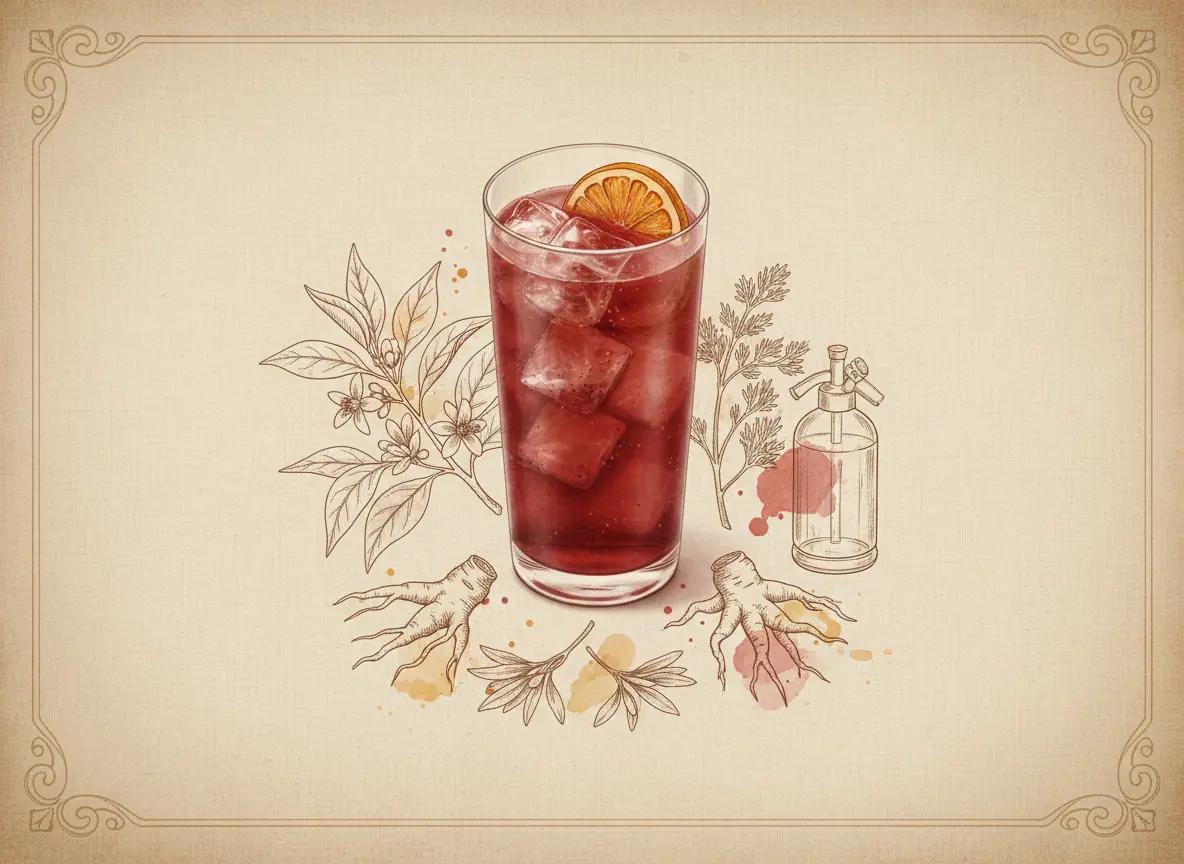
Americano
An Americano is 30ml Campari and 30ml sweet vermouth built over ice in a highball, topped with 75ml of cold soda and stirred once, with an orange slice. Bitter and sweet in equal measure, lengthened with soda: a Negroni with soda in place of the gin, at about half the alcohol. It grew out of the Milano-Torino, Campari from Milan with vermouth from Turin, which Difford’s Guide says Gaspare Campari created in the 1860s at his Caffè Campari in Milan. Difford’s adds that soda was said to have been added later, to make the Americano. The vermouth decides the result. At equal volume with the Campari it has nowhere to hide, and in our experience an opened bottle that has stood at room temperature for months will flatten the drink. Keep it in the fridge.
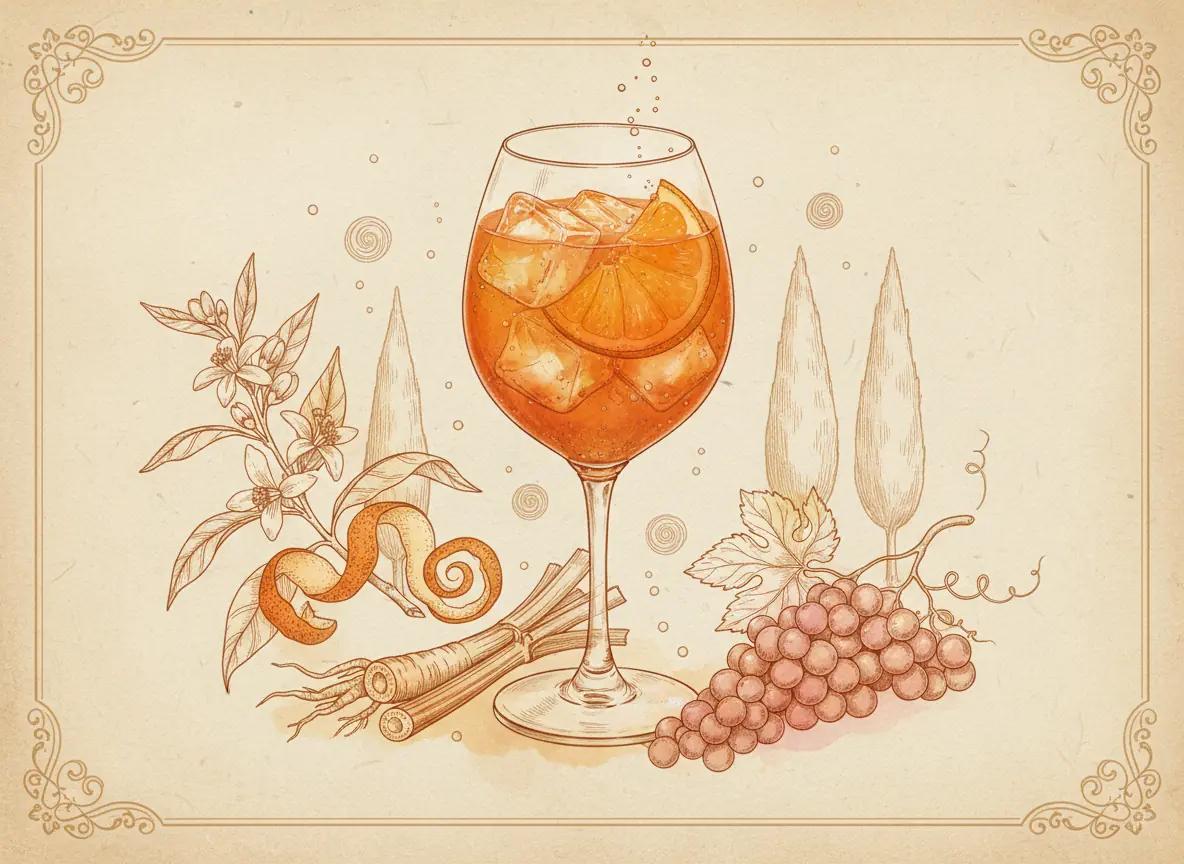
Aperol Spritz
An Aperol Spritz is three parts prosecco, two parts Aperol and one part soda: 90ml prosecco, 60ml Aperol and 30ml soda water, poured in that order into a large wine glass packed with ice, with an orange slice to finish. That is the International Bartenders Association’s Spritz, with its splash of soda measured. Aperol is an Italian aperitivo at 11% ABV by its maker’s FAQ, with zesty orange and herbal notes on its product page; Difford’s Guide, a secondary source, names bitter orange, gentian, cinchona bark and Chinese rhubarb among its ingredients. Aperol says Luigi and Silvio Barbieri created it in 1919, and Difford’s Guide places the company in Padua. The spritz habit in the Veneto is older; VinePair traces it to the Veneto under Austrian rule, when the Austrians added a splash of water, a spritz, to the local wine. Pour the prosecco first and the Aperol mixes as it goes in. A glass holds about 1.7 UK units.
Where this one sits
Recipe by Jerry Can Spirits · Updated 19 October 2026