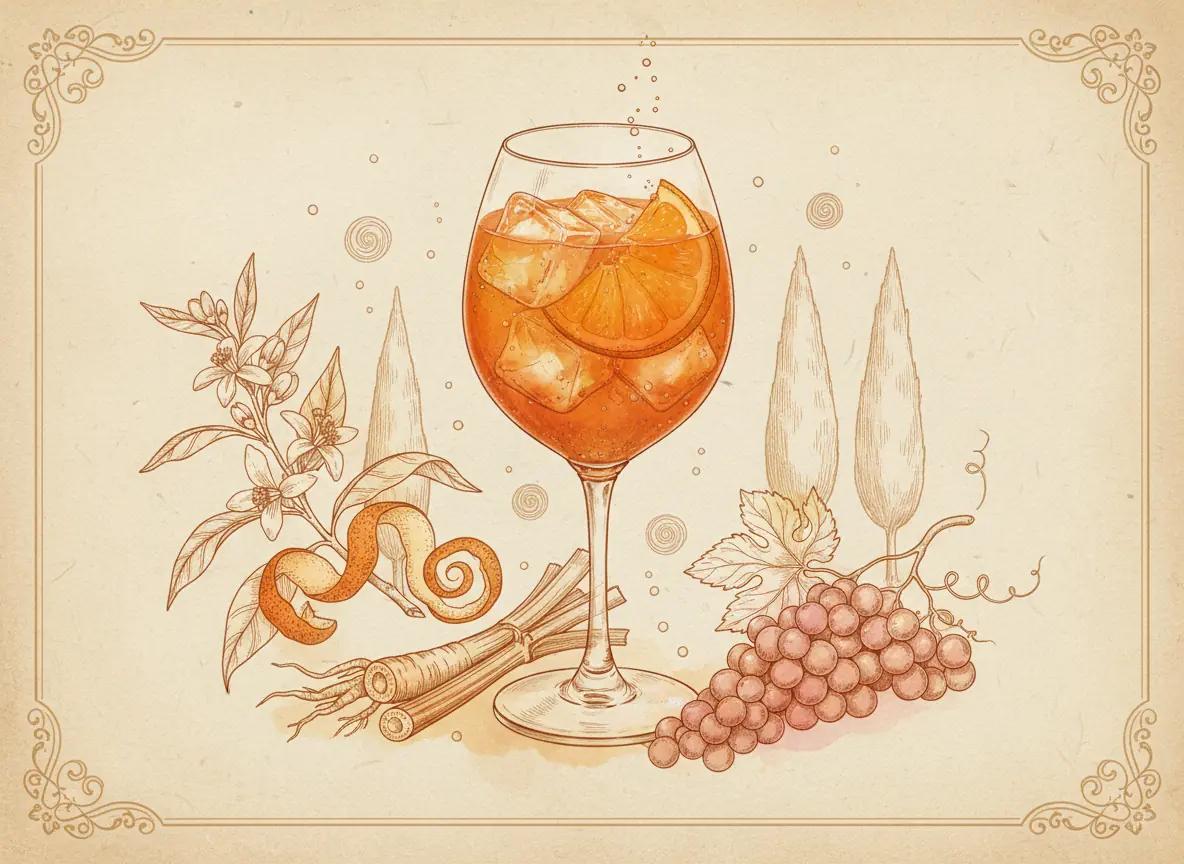
Aperol Spritz
An Aperol Spritz is three parts prosecco, two parts Aperol and one part soda: 90ml prosecco, 60ml Aperol and 30ml soda water, poured in that order into a large wine glass packed with ice, with an orange slice to finish. That is the International Bartenders Association’s Spritz, with its splash of soda measured. Aperol is an Italian aperitivo at 11% ABV by its maker’s FAQ, with zesty orange and herbal notes on its product page; Difford’s Guide, a secondary source, names bitter orange, gentian, cinchona bark and Chinese rhubarb among its ingredients. Aperol says Luigi and Silvio Barbieri created it in 1919, and Difford’s Guide places the company in Padua. The spritz habit in the Veneto is older; VinePair traces it to the Veneto under Austrian rule, when the Austrians added a splash of water, a spritz, to the local wine. Pour the prosecco first and the Aperol mixes as it goes in. A glass holds about 1.7 UK units.
Glassware: Wine Glass
Garnish: Orange slice
Ingredients
90ml
Extra Dry or Brut, well chilled, usually 11 to 11.5% ABV. At 90ml it is half the drink, so its sweetness and bubbles set the result.
60ml
An Italian bitter-orange aperitivo at 11% ABV, about the strength of wine. Campari in its place is more bitter and stronger, at 25% ABV on LWC’s UK listing, and makes a different spritz.
30ml
Chilled, from a bottle opened that day. The IBA asks for a splash; 30ml lengthens the drink without washing out the bitterness.
Instructions
Fill a large wine glass with cubed ice.
Pour in the prosecco.
Add the Aperol.
Top with the chilled soda water, poured gently down the inside of the glass.
Lift once with a bar spoon and add a slice of orange.
Source: the IBA (Official IBA specification, listed as Spritz; soda measured at 30ml; method ours). Last checked 9 October 2026.
Expert Tip
Prosecco first, then Aperol, then soda. Aperol is the heavier liquid; poured onto prosecco it sinks and mixes on the way down, so the bar spoon only has to lift it once. Poured first, it sits under the ice and needs stirring that knocks out the bubbles. Pack the glass with ice and keep every bottle cold. A spritz over a few cubes warms quickly, and as the ice melts the drink turns flat and watery. Choose Extra Dry or Brut prosecco. Extra Dry is the sweeter of the two despite its name; anything sweeter again makes the drink cloying.
Behind the Aperol Spritz
Flavour Profile
Three, Two, One
The Aperol Spritz is three measures of prosecco, two of Aperol and one of soda. The International Bartenders Association lists it as the Spritz, at 90ml prosecco and 60ml Aperol with a splash of soda, built over ice in a wine glass and garnished with orange. Ours measures the soda at 30ml.
The ratio keeps the prosecco in front. More Aperol makes the drink heavier and more bitter; more soda thins it until the orange fades.
The Spritz as the IBA lists it, and ours
Spritz (IBA)
- Prosecco
- 90ml
- Aperol
- 60ml
- Soda
- A splash
- UK units
- 1.7
Aperol Spritz (ours)
- Prosecco
- 90ml
- Aperol
- 60ml
- Soda
- 30ml
- UK units
- 1.7
| Version | Prosecco | Aperol | Soda | UK units |
|---|---|---|---|---|
| Spritz (IBA) | 90ml | 60ml | A splash | 1.7 |
| Aperol Spritz (ours) | 90ml | 60ml | 30ml | 1.7 |
Soda adds no alcohol, so the two come out the same. Swap the Aperol for elderflower liqueur and you have the Hugo Spritz, floral where this is bitter.
Aperol and the Spritz
Aperol’s own history says Luigi and Silvio Barbieri created Aperol in 1919, and Australian Bartender places its first showing at the International Trade Fair of Padua. Difford’s Guide names bitter orange, gentian, cinchona bark and Chinese rhubarb among its ingredients, at 11% ABV against 25% for Campari on LWC’s UK listing.
The spritz itself is older. VinePair traces it to the Veneto under Austrian rule, when the Austrians added a splash of water, a spritz, to the local wine. Bitter liqueurs and sparkling wine came later, and Aperol with prosecco is the pairing that travelled.
Pour the Prosecco First
Aperol is denser than prosecco. Poured second, it falls through the wine and mixes on the way, which leaves the bubbles intact. Poured first, it pools under the ice and needs a real stir, and stirring a sparkling drink flattens it.
Chill the prosecco, the Aperol and the soda, and fill the glass with ice. Warm bottles melt the ice fast, and the drink waters down within minutes.
Choosing the Prosecco
Prosecco is half the glass and varies more than the Aperol does. Extra Dry, the traditional choice, is sweeter than Brut despite the name; Brut gives a drier, sharper spritz. Anything sweeter than Extra Dry adds sugar to a drink that already has plenty.
How Strong It Is
With the Aperol at 11% ABV, as its maker’s FAQ gives it, and the prosecco at our working figure of 11%, an Aperol Spritz holds about 1.7 UK units. That is light for a cocktail, and the drink is built to last through an aperitivo hour rather than be finished fast.
Make it at home
The Spirit
AperolAperol is an Italian bitter aperitivo, 11% ABV on its maker’s site, orange-led and gently bitter. Aperol says the recipe is secret; The Oxford Companion, a secondary source, names chiefly cinchona, rhubarb and gentian among its bitter barks and roots. Aperol says the brothers Luigi and Silvio Barbieri created it in 1919. At 11% it misses the 15% a liqueur needs under Regulation (EC) No 110/2008, which is why it suits a long spritz rather than a short stirred drink.
More to explore
Frequently Asked Questions
What is the official Aperol Spritz recipe?
How strong is an Aperol Spritz?
Is Aperol a spirit?
Why pour the prosecco before the Aperol?
What does Aperol taste like?
Which prosecco should I use for an Aperol Spritz?
What is the difference between an Aperol Spritz and a Hugo Spritz?
Sources.
Checked between 18 October and 19 October 2026.
- Aperol, “Frequently Asked Questions” (producer’s FAQ: Aperol has an alcohol content of 11%).
- Aperol, “Aperol History: Together since 1919” (producer’s history: created in 1919 by the Barbieri brothers, Luigi and Silvio).
- Aperol, “Aperol” (producer’s product page: zesty orange and complex herbal notes, a touch of vanilla).
- Difford’s Guide, “Aperol Aperitivo by Fratelli Barbieri” (secondary source: 11% alc./vol.; the Barbieri company founded in Padua in 1891; Aperol created in 1919 by Luigi and Silvio Barbieri for the Padua International Fair; a secret infusion of 16 ingredients including bitter orange essence, gentian, cinchona bark and Chinese rhubarb).
- Australian Bartender, “Aperol: Bartender Magazine Italian Aperitivo Tour” (secondary source: first introduced at the International Trade Fair of Padova, 1919).
- VinePair (Emily Saladino), “The Aperol Spritz Recipe” (secondary source: the spritz traced to the Veneto under Austrian rule, a splash, or spritz, of water added to the local wine).
- LWC, “Campari 70cl” (UK wholesaler listing: Alcohol By Volume 25%).
- legislation.gov.uk, “Regulation (EC) No 110/2008, Annex II (as retained in UK law)” (gin, rum and vodka: minimum alcoholic strength by volume 37,5 %).
You Might Also Like
Aperol Sour
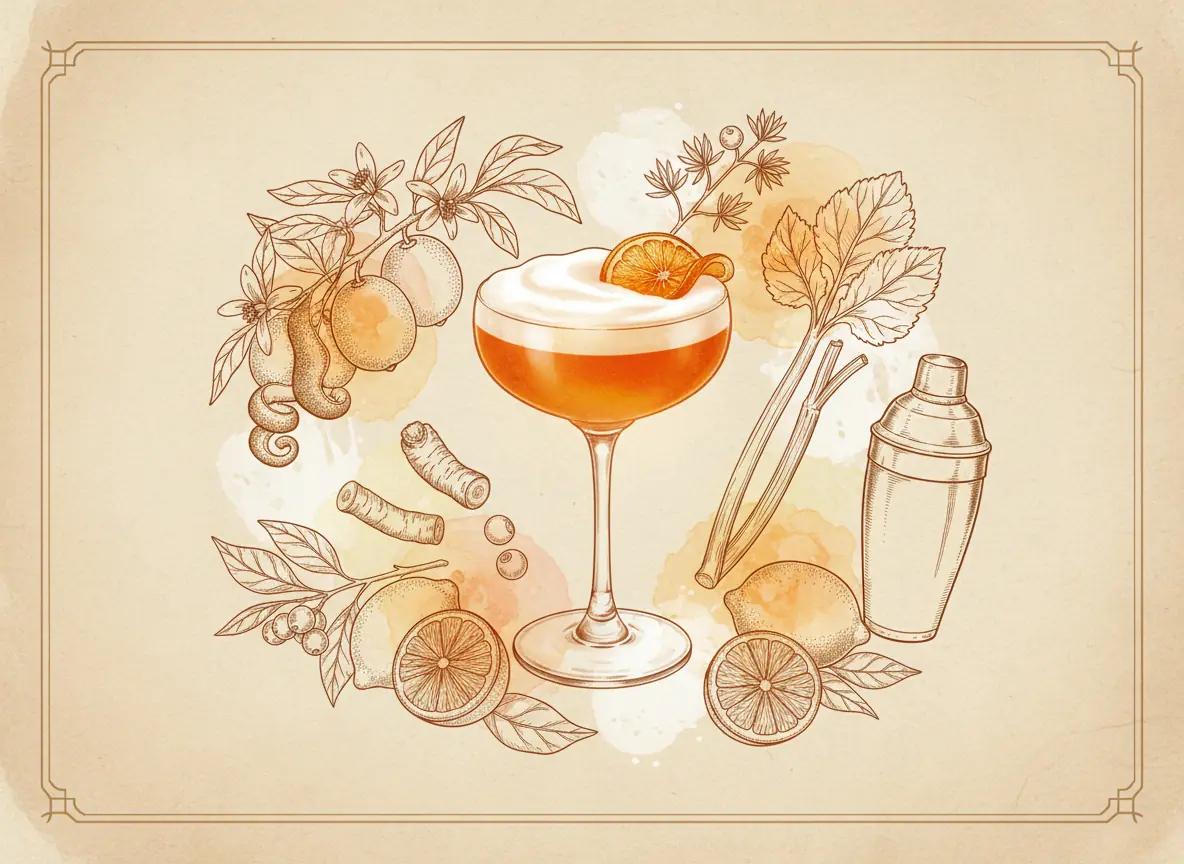
An Aperol Sour is 60ml Aperol, 25ml fresh lemon juice, 15ml simple syrup and 15ml egg white, dry shaken, shaken again with ice and double strained into a chilled coupe, with three dots of Angostura on top and a dried orange wheel. Aperol takes the place of the spirit, so the whole drink holds about 0.7 UK units, taking Aperol at the 11% ABV on its own FAQ. Aperol’s own FAQ gives 11% ABV, close to a glass of wine. It brings its own sugar and bitterness, so the syrup is kept lower than the lemon and the bitter orange stands where gin or whisky would. The foam is what makes it. It softens the bitterness on the way in. The white goes in raw, and aquafaba gives an egg-free version.
Americano
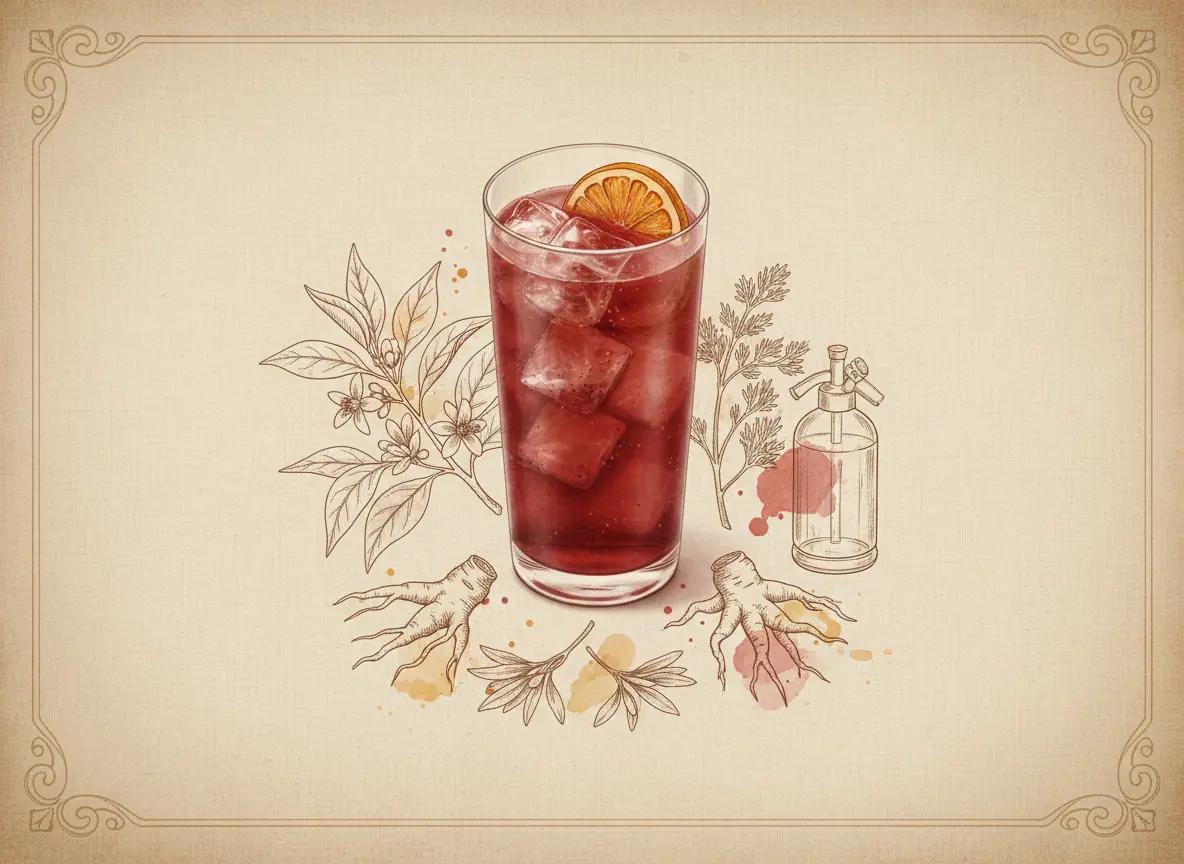
An Americano is 30ml Campari and 30ml sweet vermouth built over ice in a highball, topped with 75ml of cold soda and stirred once, with an orange slice. Bitter and sweet in equal measure, lengthened with soda: a Negroni with soda in place of the gin, at about half the alcohol. It grew out of the Milano-Torino, Campari from Milan with vermouth from Turin, which Difford’s Guide says Gaspare Campari created in the 1860s at his Caffè Campari in Milan. Difford’s adds that soda was said to have been added later, to make the Americano. The vermouth decides the result. At equal volume with the Campari it has nowhere to hide, and in our experience an opened bottle that has stood at room temperature for months will flatten the drink. Keep it in the fridge.
Campari & Soda
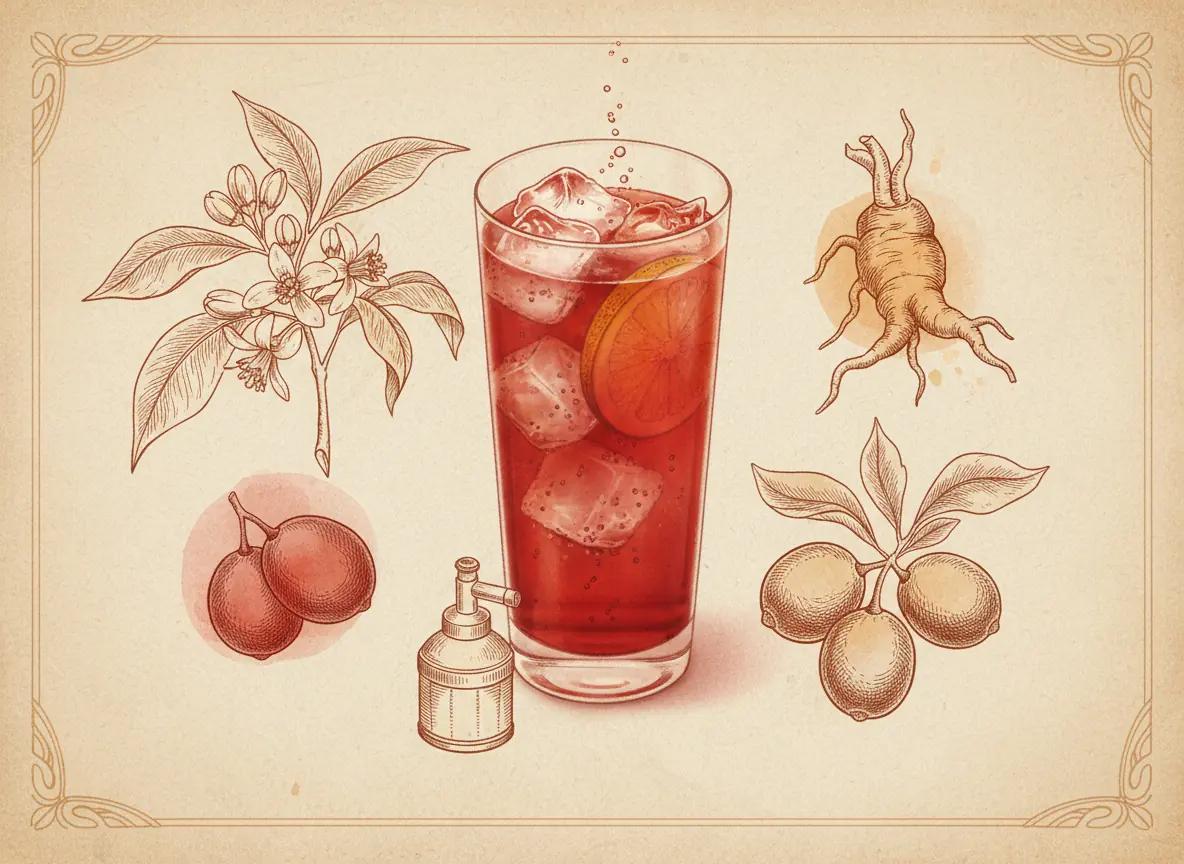
A Campari and soda is 45ml of Campari and 90ml of cold soda water, built over a highball full of ice, stirred once and finished with an orange slice. One part Campari to two of soda: bitter, orange-edged and long, and at about 1.1 UK units a light drink to have before a meal. Gaspare Campari created his bitter in 1860, by Campari’s own account. In 1932, by Campari’s own account, the company put it and soda together in a single-serve bottle designed by the Futurist artist Fortunato Depero, and Difford’s Guide, a secondary source, lists Campari Soda, as that bottle is called, at 10% ABV. The ratio is the only real decision. More soda and the bitterness thins out; less and the drink turns heavy. Start at one to two and adjust by 15ml either way.
Where this one sits
Recipe by Jerry Can Spirits · Updated 19 October 2026