Wine Glass
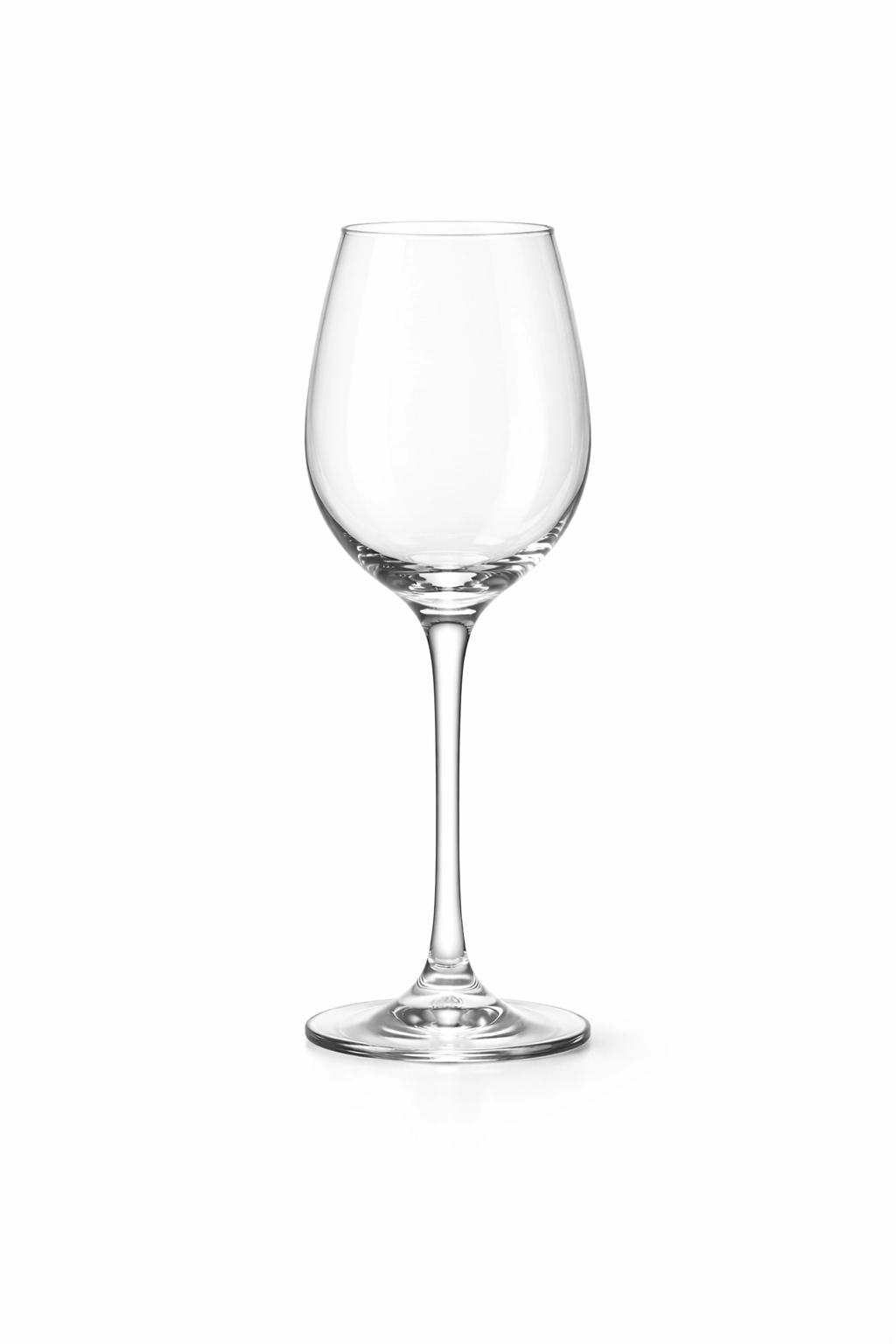
A wine glass is a stemmed glass with a tulip-shaped bowl, 43 to 56cl in Urban Bar’s listings, with larger ones holding 600ml or more. Behind a bar it takes wine and the drinks built on it: spritzes over ice, the Kir, Sangria, the Sherry Cobbler and the Pisco Punch. For spritzes, which take a full load of ice, choose a large one of 500ml or more.
Essential Equipment
Recommended for every home bar
About the Wine Glass
A Bowl That Holds Ice and Aroma
A wine glass has a rounded bowl that narrows a little at the rim, on a stem. For wine, the bowl gives room to swirl and gathers the aroma where your nose meets the glass.
For a spritz the same bowl is packed with ice and the drink poured over it, and the narrowing rim keeps the smell of orange and wine close.
Wine glass, copa and champagne flute compared (capacities from Urban Bar’s listings)
Wine glass
- Typical size
- 43 to 56cl (Urban Bar); our guidance for a spritz is 500 to 600ml
- Shape
- Tulip bowl on a stem
- Our drinks in it
- Aperol Spritz, Kir, Sangria, Sherry Cobbler, Pisco Punch
Copa
- Typical size
- 60 to 65cl (Urban Bar)
- Shape
- Round balloon bowl on a long stem
- Our drinks in it
- Spritzes and gin and tonics over ice
Champagne flute
- Typical size
- 19 to 21cl (Urban Bar)
- Shape
- Tall, narrow bowl on a thin stem
- Our drinks in it
- Sparkling wine and drinks topped with it
| Glass | Typical size | Shape | Our drinks in it |
|---|---|---|---|
| Wine glass | 43 to 56cl (Urban Bar); our guidance for a spritz is 500 to 600ml | Tulip bowl on a stem | Aperol Spritz, Kir, Sangria, Sherry Cobbler, Pisco Punch |
| Copa | 60 to 65cl (Urban Bar) | Round balloon bowl on a long stem | Spritzes and gin and tonics over ice |
| Champagne flute | 19 to 21cl (Urban Bar) | Tall, narrow bowl on a thin stem | Sparkling wine and drinks topped with it |
Size It to the Ice
Our Aperol Spritz is 180ml over a glass full of ice, and the Vodka and Blood Orange Spritz is 250ml. With their ice, both need a large glass. A 350ml wine glass suits a Kir, 100ml served chilled with no ice.
Fill your glass from a measuring jug once to learn its size. A glass of about 500ml holds 180ml and its ice; 250ml with ice wants nearer 600ml.
Most Wine-Glass Drinks Are Built in the Glass
Spritzes are built straight into the glass: ice first, then the wine or soda and the spirit or liqueur, then a single gentle stir or lift. The order varies by recipe; the Aperol Spritz goes prosecco, Aperol, then soda.
Two of them take no ice in the glass at all. The Kir is poured into a chilled glass, and the Pisco Punch is shaken, double strained into the glass and finished with white wine stirred in.
Rinse Well to Keep the Fizz
Wash in hot water with a little detergent and rinse well in clean hot water. Detergent left on the glass can knock the bubbles out of a spritz.
Dry and polish while the glass is warm, holding the bowl rather than the foot, so the stem is not twisted.
Using the Wine Glass
Usage
Wine, and drinks built on wine or long sparkling mixers: the Aperol Spritz and other spritzes over ice, the Kir with no ice, Sangria over ice, a Sherry Cobbler on crushed ice and a Pisco Punch with no ice. For wine, fill it to about a third; for a spritz, fill it with ice first.
Pro Tip
For an Aperol Spritz, fill the glass with ice, pour the prosecco before the Aperol and finish with soda poured gently down the side. Keep every bottle cold, so the ice lasts.
Professional Tips
- For a spritz, fill the glass with ice before anything else goes in.
- Chill the glass for a Kir, which is served with no ice.
- Hold it by the stem when the drink is meant to stay cold.
- For wine, pour to about a third of the bowl, so there is room to swirl.
Alternatives
Budget Alternative
A plain, sturdy stemmed glass of about 500ml from a catering or homeware shop. It serves wine and most of our wine-glass drinks.
Premium Option
Thin, lead-free crystal with a fine rim. It is lighter in the hand and pleasant to drink from; the drink inside is the same.
Specifications
Material
Glass or lead-free crystal
Capacity
43 to 56cl in Urban Bar’s listings; our guidance for a spritz is 500 to 600ml or more
Details
Tulip-shaped bowl that narrows at the rim, on a long stem and a flat foot
More to explore
Common Questions
What size wine glass do you need for a spritz?
Which cocktails are served in a wine glass?
How full should a wine glass be?
Can I use a wine glass instead of a copa glass?
Why serve a spritz in a wine glass rather than a highball?
Should wine glasses go in the dishwasher?
Stemmed or stemless wine glasses for cocktails?
Sources.
Correct as of 18 October 2026.
- Urban Bar, “1910 Wine Glass 43cl”.
- Urban Bar, “Bacci Crystal Wine Glass 56cl”.
- Urban Bar, “1910 Gin Balloon Glass 65cl”.
- Urban Bar, “Umbo Flute 20cl”.
Master the Technique
Made with the Wine Glass
Used In These Cocktails
Show all 8 cocktailsShow fewer
Related Equipment
Updated 18 October 2026