Raspberry & Orange Blossom Spritz
A recent invention rather than a drink with a past, and an unusually well-judged one because the two halves of its name pull in opposite directions. Raspberry is sharp, bright and slightly tart. Orange blossom is heady, perfumed and can very easily tip into soap if there is too much of it — it is one of the least forgiving flavours in a bar. Held in balance the pairing is genuinely good: the fruit keeps the floral note honest and the floral note gives the fruit a depth it does not have alone. Vodka is the safer spirit and pink gin the more interesting one, provided the pink gin is not a sweetened liqueur, because there is quite enough sweetness here already. Fresh raspberries in the glass are not decoration. They add tartness and a slight astringency from the seeds, both of which push back against the perfume. Serve it cold, in a wine glass, and do not be tempted to add anything sweet.
Glassware: Wine Glass
Garnish: Raspberries
Ingredients
150ml
The orange blossom is the difficult half — perfumed and quick to become soapy — and the raspberry is what keeps it in check. The balance is already struck in the bottle, which is why adding anything sweet upsets it.
50ml
Vodka is the safe choice and lets the soda lead. Pink gin is more interesting but only if it is unsweetened — a pink gin liqueur adds sugar to a drink that has no capacity for it.
A handful
Working ingredients rather than garnish. Press two against the glass for tartness and leave the rest whole. The seeds add a slight astringency that pushes back against the perfume.
Fill the glass
Cubed and plenty. Floral aromatics intensify as a drink warms, and this is not a drink that benefits from more orange blossom.
Instructions
Drop a handful of raspberries into a wine glass, pressing two of them lightly against the side.
Fill the glass with cubed ice.
Pour in the vodka or pink gin.
Top with the raspberry and orange blossom soda.
Stir once, gently, from the bottom.
Source: the producer's own published serve (Fever-Tree). Last checked 22 August 2026.
Expert Tip
Press two of the raspberries lightly against the side of the glass and leave the rest whole. You want the tartness released without turning the drink pink and pulpy — orange blossom needs something acidic working against it and whole fruit floating on top contributes almost nothing. If it tastes soapy, the answer is acid rather than dilution. A squeeze of lemon fixes an over-perfumed drink far more reliably than more soda, which just makes a larger soapy drink. Be careful with pink gin. If it is a sweetened liqueur it will push this over the edge — the soda is already floral and fruit-forward and the drink has no room for added sugar. An unsweetened gin is the safer choice by some distance.
Behind the Raspberry & Orange Blossom Spritz
Flavour Profile
Orange Blossom Is Difficult
Orange flower water has been used in drinks for well over a century — it is the aromatic in a Ramos Gin Fizz and in a good deal of North African and Levantine cooking — and it has a reputation among bartenders for being unforgiving. The margin between fragrant and soapy is very narrow.
The compounds responsible sit in the same family as those used in soap perfumery, which is not a coincidence and is exactly why the association is so easy to trigger. A few drops too many and most people will name it immediately.
That is the useful thing to know before adjusting this drink: almost every correction should reduce the floral impression rather than increase anything else.
Why the Raspberry Is Essential
Acidity is what keeps a floral note reading as fragrance rather than as perfume. It is the same reason a Ramos has lemon and lime in it, and the same reason orange blossom in cooking almost always arrives alongside citrus or yoghurt.
Raspberry brings both acid and a slight tannic astringency from the seeds. The astringency is the less obvious half and possibly the more important one — it gives the drink a dry edge that plain fruit sweetness would not.
Keep It Cold
Volatile aromatics come forward as a drink warms, which is why a floral drink that was well balanced at the first mouthful can be overwhelming by the last.
The practical answer is a full glass of ice and a smaller pour rather than a large drink taken slowly. This is not one to nurse for an hour.
More to explore
Frequently Asked Questions
What if it tastes soapy?
Can I use a pink gin?
Are the raspberries just for looks?
You Might Also Like
Ramos Gin Fizz
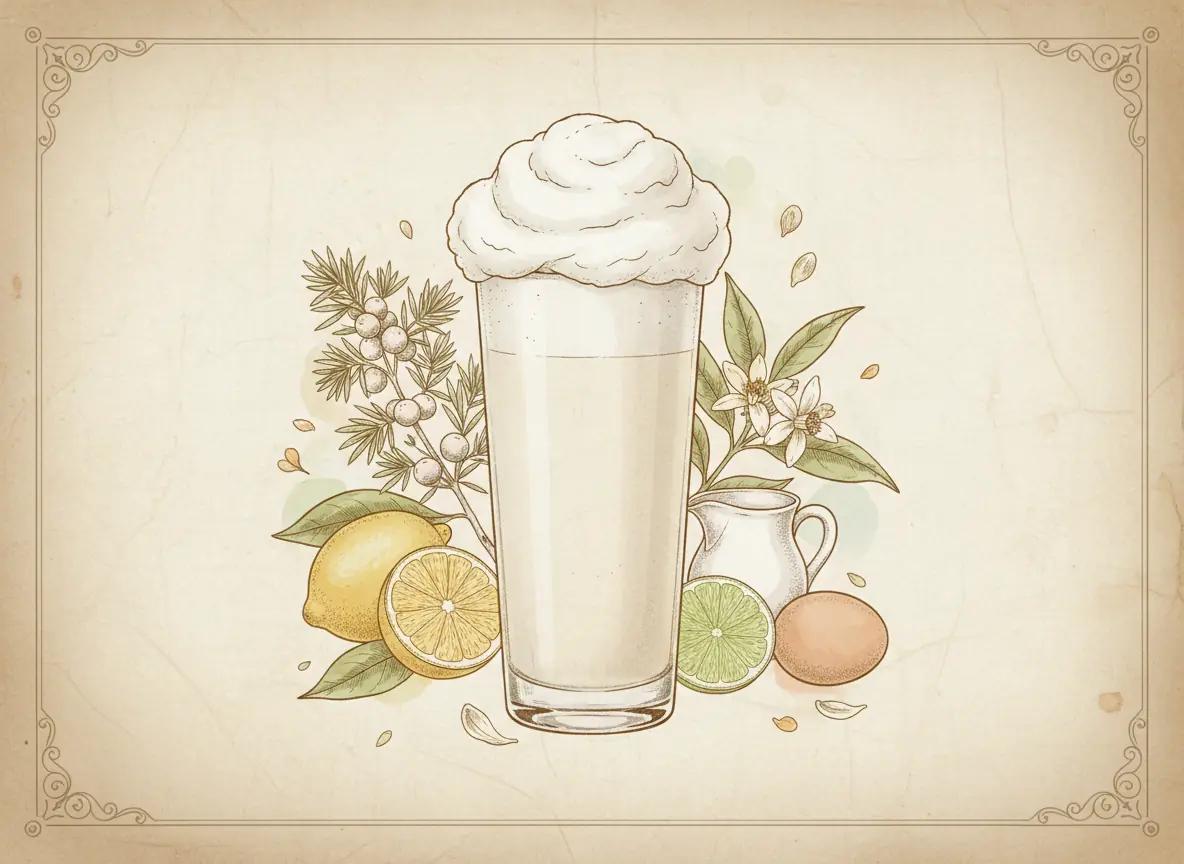
Henry C. Ramos created this at the Imperial Cabinet Saloon in New Orleans in 1888, and by the Mardi Gras of 1915 his bar needed thirty-five shaker boys working in relay to keep up with it. That is the drink’s reputation in one statistic: it is built on a shake so long that no single pair of arms could finish one. Seven ingredients go in before the soda: gin, lemon, lime, sugar, egg white, cream and orange flower water. The egg white and the cream emulsify over the shake into a foam denser and more stable than any sour’s, and the soda, poured in after straining, lifts that foam into a white column standing above the rim. Orange flower water is where most versions fail. It is a distilled floral water, not orange bitters and not zest, and it is the only thing that reaches between the gin’s botanicals and the cream’s weight. Two or three drops make the drink. Leave it out and you have a cream fizz with gin in it.
Hugo Spritz
The Hugo Spritz is the Alps answering Venice: created in 2005 by Roland Gruber, a bartender in Naturns in South Tyrol, as a lighter alternative to the bitter spritzes ruling the south. Elderflower, prosecco, mint and soda, and the aperitivo hour gone alpine meadow. Gruber's original poured lemon balm syrup, and by his own account he named it Hugo more or less at random after rejecting Otto. The elderflower version conquered within the decade, carried along by the liqueur boom that started in 2007, and it took the name with it. It crossed into Germany and Austria first, then went everywhere prosecco pours. The build is meadow arithmetic. Twenty-five millilitres of elderflower is the spritz-length calibration, floral and present without tipping into pot-pourri; the mint is slapped rather than muddled; prosecco carries and soda lifts. It is the spritz for guests the Aperol bottle intimidates, and the politest aperitif of the summer.
Elderflower & Raspberry
Elderflower and raspberry is one of those pairings that sounds like a summer dessert and turns out to be considerably drier than expected, mostly because the tonic underneath is doing the opposite of what the fruit suggests. Quinine is bitter and drying, and it holds the Chambord in check — without it this would be a very sweet drink indeed. The elderflower is the connecting element rather than a flavour in its own right: it is floral and honeyed and sits between the sharp raspberry and the bitter tonic, joining two things that would otherwise sit at opposite ends of the glass. Gin or vodka both work and they give genuinely different drinks. Gin adds juniper structure and makes it more of an aperitif; vodka steps back and lets the fruit run the whole thing. The measure of spirit is short at 35ml, which is deliberate — this is a drink built around the mixer, not around the alcohol.
Where this one sits
Recipe by Dan Freeman