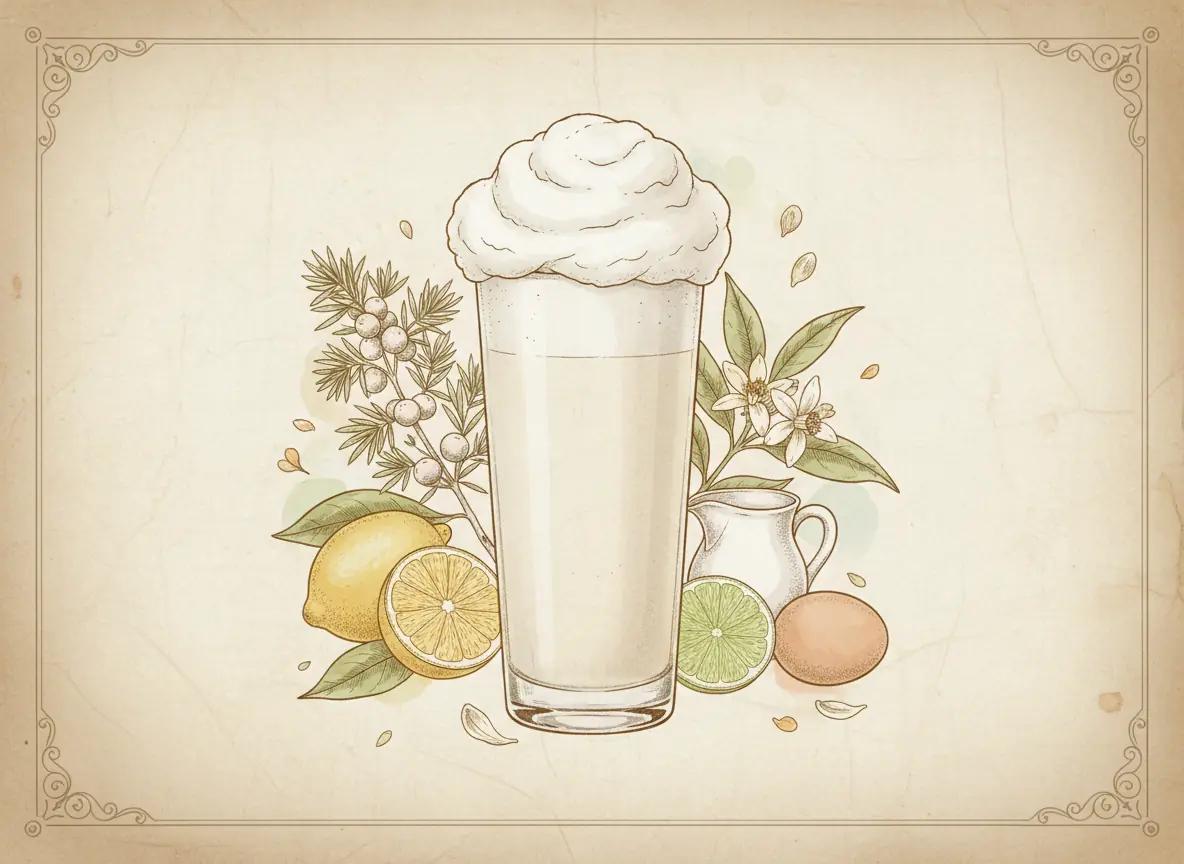
Ramos Gin Fizz
A Ramos Gin Fizz is 45ml of London Dry gin, 15ml each of fresh lemon and lime juice, 30ml of sugar syrup, 30ml of egg white, 60ml of double cream, three dashes of orange flower water and two drops of vanilla extract, shaken long and hard, strained into a chilled highball with no ice and lifted with 60ml of soda water. About 1.8 UK units. It contains raw egg and dairy. Difford’s Guide, a secondary source, says Henry C. Ramos created it in 1888 at the Imperial Cabinet Saloon in New Orleans; the IBA gives the same year but a different bar. The Oxford Companion says the drink’s precise origins are unknown, that the earliest definite notice in print is from 1895, and that the likeliest period is 1892 to 1894. Difford’s quotes Stanley Clisby Arthur on 35 shaker boys at Ramos’s later bar, the Stag, during the 1915 Mardi Gras. The measures are the IBA’s. The shake is the work: cream and egg white need time to whip into a foam dense enough for the soda to push up out of the glass.
Glassware: Highball Glass
Garnish: None
Ingredients
45ml
A London Dry with clear juniper. Cream and egg white soften everything, and a gentle gin disappears under them.
15ml
Squeezed the same day. Half of the acid that keeps 60ml of cream from tasting heavy.
15ml
Squeezed the same day, and the other half. Lemon and lime together give a rounder sourness than either alone, and the IBA keeps both.
30ml
One to one, by weight. Three times a Gin Fizz’s 10ml, because cream and egg white dull sweetness.
30ml
About one white, and it holds the foam up. It is raw: use British Lion eggs, which the NHS says can be eaten raw in pregnancy, or pasteurised liquid egg white. Leave the drink out for anyone allergic to egg.
60ml
Full-fat double cream. The fat whips with the egg white into a foam that holds; single cream gives a thin froth. It is dairy, so not for anyone with a milk allergy.
3 dashes
Made from bitter orange blossom and long used in baking. Three dashes; more tastes of soap.
2 drops
In the IBA recipe. Two drops round off the orange flower water; the alcohol they add is too small to count.
60ml
Well chilled and poured into the glass, never the shaker. It lifts the foam and lengthens the drink.
Instructions
Chill a highball glass in the freezer and squeeze the lemon and lime the same day.
Add the gin, lemon juice, lime juice, sugar syrup, egg white, cream, orange flower water and vanilla extract to a shaker.
Dry shake without ice for 10 to 15 seconds.
Add large cubed ice and shake hard for two minutes.
Double strain into the chilled highball, with no ice, and let the foam settle for 30 seconds.
Pour 60ml of chilled soda water slowly down the inside wall until the foam rises clear of the rim.
Serve at once, without garnish.
Source: the IBA (Official IBA specification, listed as Ramos Fizz; method ours (dry shake, then two minutes on ice)). Last checked 10 October 2026.
Expert Tip
Shake dry first, then long. Ten to fifteen seconds without ice starts the foam; two minutes hard with ice finishes it. Most of the texture comes in that second shake, so do not cut it short, and use large cubes, which chill without drowning the drink. Let it settle before the soda. Strain into the chilled glass, wait half a minute while the foam firms, then pour the soda slowly down the inside wall. It runs under the foam and lifts it clear of the rim. Measure the orange flower water. Three dashes scent the cream; a heavy hand makes the drink taste of soap. Orange bitters and zest taste of peel, and neither stands in for it.
Behind the Ramos Gin Fizz
Flavour Profile
Henry Ramos and the Shaker Line
Difford’s Guide, a secondary source, says Henry C. Ramos created the drink in 1888 at the Imperial Cabinet Saloon in New Orleans. The IBA, which lists it as the Ramos Fizz, gives the same year and names a different bar, Meyer’s Table d’Hôtel Internationale. The Oxford Companion says the drink’s precise origins are unknown: the earliest definite notice of it in print is from 1895, in a New Orleans Times-Democrat article about Ramos and in Kappeler’s Modern American Drinks, and the most likely period is between 1892 and 1894.
The long shake made its name. Difford’s quotes Stanley Clisby Arthur’s Famous New Orleans Drinks and How to Mix ’Em on the Stag, the larger bar Ramos took over in 1907: in the 1915 Mardi Gras, 35 shaker boys “nearly shook their arms off, but were still unable to keep up with the demand”. Difford’s adds that devotees say the drink takes 12 minutes to shake, in relay, and the IBA says a crew of 30 bartenders passed the shaker along.
Why the Foam Stands
An egg white sour carries a thin cap of foam. Here cream and egg white whip together into something denser that runs through the drink, and the soda, poured in afterwards, lifts the top of it out of the glass.
The dry shake starts it: without ice, the egg proteins unfold and trap air. The iced shake then chills, dilutes and tightens the foam. Two minutes is long for a shaken drink, and the extra time is what gives the column its body.
Cream, Citrus and Sugar
Sixty millilitres of double cream is a large pour for a drink of this size. Two acids answer it, 15ml each of lemon and lime: together they keep the cream bright, and the lime adds a sharper edge than lemon alone.
The 30ml of syrup looks heavy until you taste the drink without it. Fat and egg white dull sweetness, so the Ramos needs three times the sugar of a plain Gin Fizz to taste balanced.
Orange Flower Water and Vanilla
Orange flower water is made from the blossom of the bitter orange and was a baking ingredient long before it was a bar one. It smells of flowers rather than peel, and three dashes sit between the gin’s juniper and the cream.
The IBA adds two drops of vanilla extract, which rounds the flower water and keeps the cream from tasting plain.
The IBA’s Method and Ours
The IBA Ramos Fizz and ours
Measures
- IBA
- 45ml gin, 15ml lime, 15ml lemon, 30ml syrup, 60ml cream, 30ml egg white
- Ours
- The same
Aromatics
- IBA
- Three dashes of orange flower water, two drops of vanilla
- Ours
- The same
First shake
- IBA
- With ice, two minutes
- Ours
- Dry, 10 to 15 seconds
Second shake
- IBA
- Without ice, one minute
- Ours
- With ice, two minutes
Soda
- IBA
- Topped up
- Ours
- 60ml
Garnish
- IBA
- None
- Ours
- None
UK units
- IBA
- About 1.8
- Ours
- About 1.8
| Element | IBA | Ours |
|---|---|---|
| Measures | 45ml gin, 15ml lime, 15ml lemon, 30ml syrup, 60ml cream, 30ml egg white | The same |
| Aromatics | Three dashes of orange flower water, two drops of vanilla | The same |
| First shake | With ice, two minutes | Dry, 10 to 15 seconds |
| Second shake | Without ice, one minute | With ice, two minutes |
| Soda | Topped up | 60ml |
| Garnish | None | None |
| UK units | About 1.8 | About 1.8 |
How to Serve It
Into a chilled highball with no ice, the foam left half a minute to settle, then the soda poured slowly down the inside wall until the white column rises clear of the rim. No garnish. Serve it straight away: the foam is at its finest in the first few minutes.
For the plain version, make a Gin Fizz; for egg white on bourbon, a Whiskey Sour; for gin, lemon and soda over ice, a Tom Collins.
Make it at home
The Spirit
GinGin is a spirit flavoured with juniper berries. Under the retained Regulation (EC) 110/2008, juniper must lead the taste, the floor is 37.5% ABV, and the route the flavour takes sets the grade: plain gin, distilled gin or London gin. Our recipes count it at 40%, and it carries the Martini, the Negroni and the Gin and Tonic.
More to explore
Frequently Asked Questions
What is a Ramos Gin Fizz?
Who created the Ramos Gin Fizz?
How long should I shake a Ramos Gin Fizz?
Why orange flower water?
Can I use single cream?
What allergens are in a Ramos Gin Fizz?
What does a Ramos add to a Gin Fizz?
How strong is a Ramos Gin Fizz?
Sources.
Correct as of 19 October 2026.
- Difford’s Guide, “Ramos Gin Fizz” (secondary source: created 1888 by Henry Charles Ramos at the Imperial Cabinet Saloon, Gravier and Carondelet Streets, New Orleans; took over the Stag Saloon in 1907; Arthur’s Famous New Orleans Drinks: 35 shaker boys in the 1915 Mardi Gras; devotees say 12 minutes to shake).
- IBA, “Ramos Fizz” (official specification and note: invented by Henry Ramos in 1888 at Meyer’s Table d’Hôtel Internationale in New Orleans; originally shaken for 12 minutes by a crew of 30 bartenders).
- NHS, “Foods to avoid in pregnancy” (official page: hen eggs with the British Lion stamp can be eaten raw, partially cooked or well-cooked in pregnancy).
- The Oxford Companion to Spirits and Cocktails (David Wondrich), “The Ramos Gin Fizz” (secondary source: precise origins unknown; earliest definite notice in print 1895 (New Orleans Times-Democrat; Kappeler’s Modern American Drinks); most likely period 1892 to 1894; Ramos’s Imperial Cabinet saloon the “Gin Fizz place” by 1895).
You Might Also Like
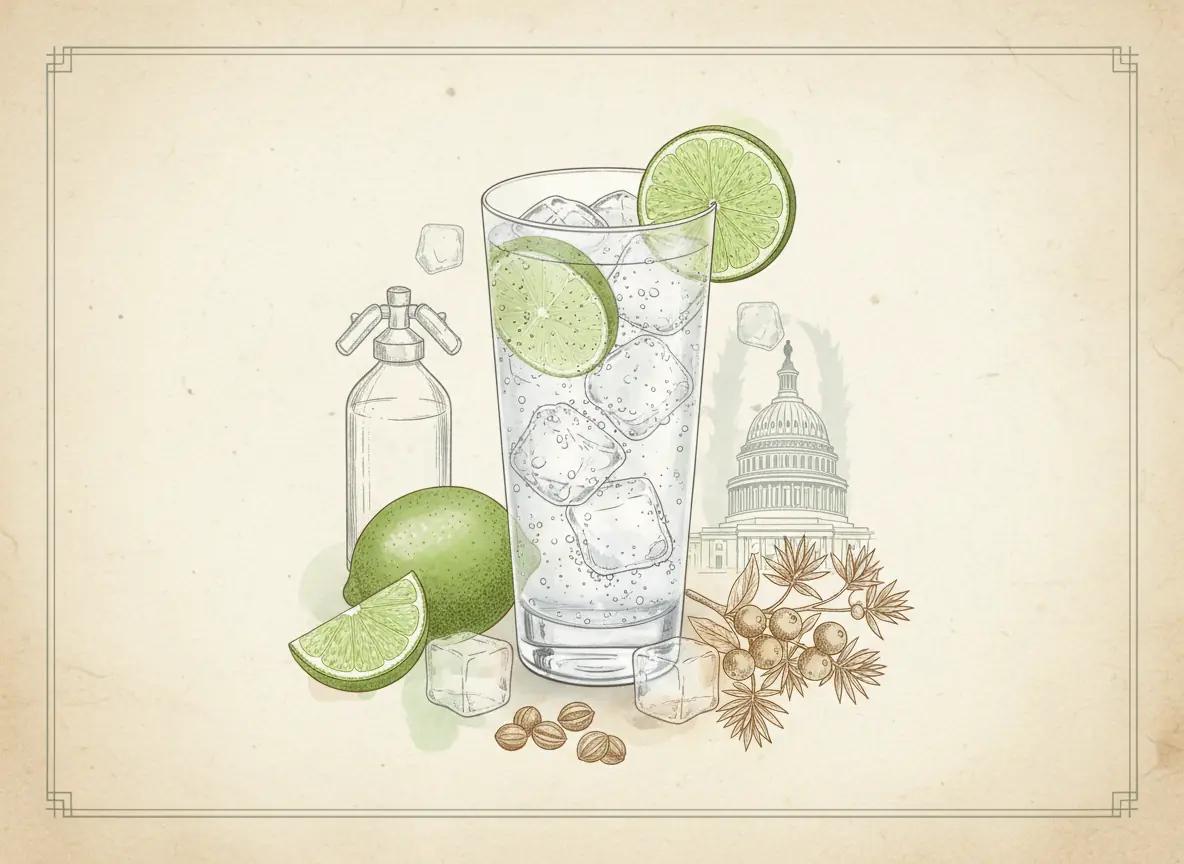
Gin Rickey
A Gin Rickey is 60ml of London Dry gin and 25ml of fresh lime juice over ice in a highball, topped with 100 to 125ml of cold soda water and finished with a lime wheel. There is no sugar in it. About 2.4 UK units. The Oxford Companion says the Rickey was popularised in the late 1880s at Shoomaker’s bar in Washington, D.C., by Colonel Joseph Kerr “Joe” Rickey, a lobbyist from Missouri, and the bartender George Williamson, that it began with bourbon, and that the Gin Rickey, first found in print in 1893, was the version most widely known by the mid-1890s. With no sugar to round anything off, the gin and the lime carry it. Squeeze the lime on the day and close to the drink: in our experience lime turns flat and bitter within hours, and a Rickey has nothing to hide that behind.
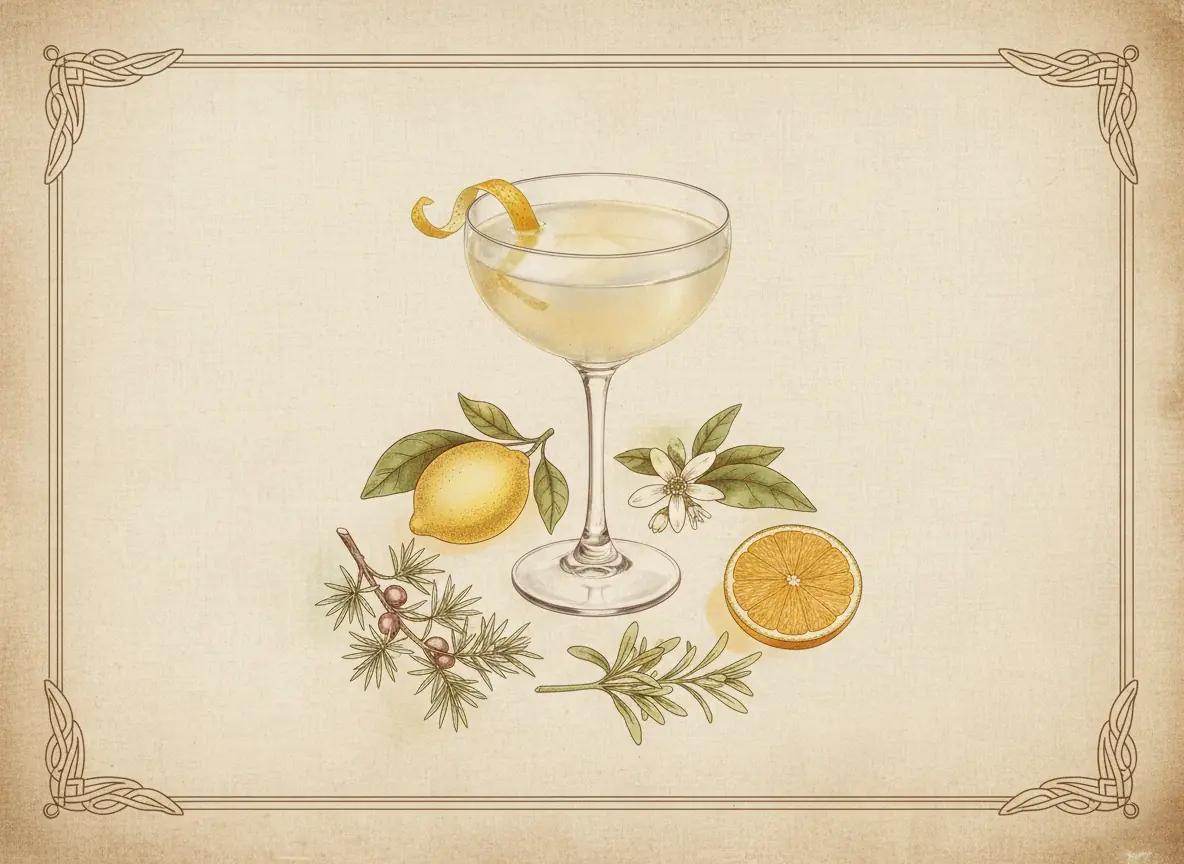
Corpse Reviver No. 2
A Corpse Reviver No. 2 is 30ml each of London Dry gin, Cointreau, Lillet Blanc and fresh lemon juice, shaken hard for 10 to 12 seconds and double strained into a chilled coupe rinsed with absinthe, with lemon peel expressed over the top. About 2.9 UK units. The four measures are the IBA’s. The IBA puts a dash of absinthe in the shaker; we rinse the glass with it, which leaves the scent with less of the anise. Lillet Blanc stands in for the Kina Lillet of older recipes; accounts differ on whether that was a more bitter wine. Harry Craddock printed it in the Savoy Cocktail Book in 1930, beside a No. 1. Under the No. 2 he added a warning: four taken in swift succession would unrevive the corpse again.
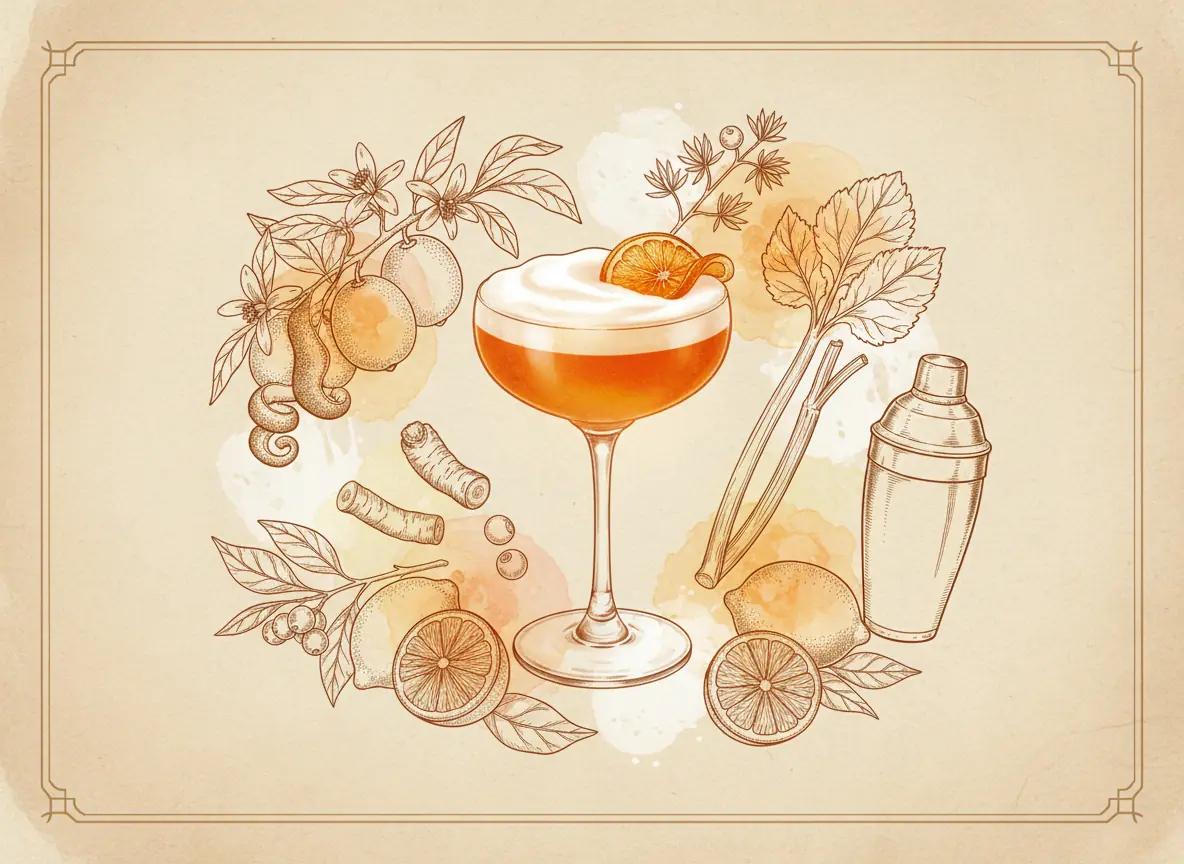
Aperol Sour
An Aperol Sour is 60ml Aperol, 25ml fresh lemon juice, 15ml simple syrup and 15ml egg white, dry shaken, shaken again with ice and double strained into a chilled coupe, with three dots of Angostura on top and a dried orange wheel. Aperol takes the place of the spirit, so the whole drink holds about 0.7 UK units, taking Aperol at the 11% ABV on its own FAQ. Aperol’s own FAQ gives 11% ABV, close to a glass of wine. It brings its own sugar and bitterness, so the syrup is kept lower than the lemon and the bitter orange stands where gin or whisky would. The foam is what makes it. It softens the bitterness on the way in. The white goes in raw, and aquafaba gives an egg-free version.
Where this one sits
Recipe by Jerry Can Spirits · Updated 19 October 2026