Pisco Punch
A Pisco Punch is 60ml of pisco, 22.5ml of fresh pineapple juice, 15ml of fresh lemon juice and 15ml of simple syrup, shaken hard over three cloves mashed into the syrup, double strained into a large wine glass and finished with 30ml of dry white wine stirred in gently. About 2.8 UK units. The measures are the IBA’s; the pineapple chunk on the rim is ours. The drink belongs to the Bank Exchange, the saloon in San Francisco’s Montgomery Block that opened in 1853 and closed in 1919 under Prohibition, the Oxford Companion says. Duncan Nicol, its sole proprietor by 1896, took his recipe to the grave, so every Pisco Punch poured now is a reconstruction. This one is scented rather than sharp. The grape perfume of the pisco meets the pineapple, the clove sits underneath, and the wine draws it out into a punch.
Glassware: Wine Glass
Garnish: Pineapple chunk
Ingredients
60ml
An unaged grape brandy from Peru or Chile, at about 40% ABV. Its floral scent, strongest in the aromatic grape varieties, is what the pineapple was chosen to meet; an oaked brandy covers it.
22.5ml
Fresh, pressed or from a chilled carton. Tinned juice is heat-treated and loses the acidity and the smell that make the pairing with pisco work.
15ml
Squeezed the same day. A light measure for a sour, because the wine on top brings acidity of its own.
15ml
Sugar and water, one to one by weight, or gomme if you have it. Gomme is thickened with gum arabic and gives the drink more weight, closer to the old Bank Exchange recipes.
3
Three whole cloves, mashed gently into the syrup before the rest goes in. Their warmth runs under the fruit; add more and the drink starts to taste of Christmas cake.
30ml
A dry, unoaked white at about 12% ABV, such as a Sauvignon Blanc. Poured on top after the shake and stirred in gently, it lengthens the drink and adds acidity.
Instructions
Squeeze the lemon juice the same day.
Gently mash three cloves into the simple syrup in the base of a shaker.
Add the pisco, pineapple juice and lemon juice.
Fill with cubed ice and shake hard for 10 to 12 seconds.
Double strain into a large wine glass, without ice.
Pour the white wine on top and stir gently.
Garnish with a chunk of fresh pineapple on the rim.
Source: the IBA (Official IBA specification; a large wine glass for the IBA’s goblet and a pineapple chunk where it gives no garnish; method ours). Last checked 9 October 2026.
Expert Tip
Mash the cloves into the syrup gently, in the base of the shaker, before anything else goes in. You want their oil in the sugar, not splinters of clove in the glass, and the double strain catches whatever breaks off. Add the wine last and stir it in with two or three turns of the spoon. Shaken, it goes thin and flat; stirred in, it stays bright and leaves a faint tannic edge across the pineapple. Make gomme if you have gum arabic. The recipe most often printed as the Bank Exchange’s used gum, and it gives the drink a weight on the tongue that plain syrup cannot.
Behind the Pisco Punch
Flavour Profile
Where It Comes From
The Bank Exchange opened at the end of 1853 in the Montgomery Block, at the corner of Montgomery and Washington streets in San Francisco, and its Pisco Punch was much storied. Pisco from Peru had been imported to the San Francisco Bay area by 1822.
Duncan Nicol, a Glaswegian who joined the business in 1886, was its sole proprietor by 1896. Prohibition closed the bar in 1919, and Nicol died in 1926 with his formula for the Pisco Punch, the Oxford Companion says.
What Survives
The Oxford Companion says no official recipe survives, but the versions closest to Nicol’s, from his manager John Lannes’s letter of 1941 and a reader’s letter to the San Francisco Chronicle in 1959, combine pineapple macerated in sugar and pisco with lemon or lime juice and water. It is the closest thing to evidence there is, and it is still a reconstruction.
The IBA’s version keeps the pisco and pineapple, uses lemon and plain syrup, and adds cloves and dry white wine. It is a modern specification rather than a recovered one, and it makes a good drink.
The IBA and Ours
The Pisco Punch at the IBA and in our glass
Pisco
- IBA
- 60ml
- Ours
- 60ml
Fresh pineapple juice
- IBA
- 22.5ml
- Ours
- 22.5ml
Simple syrup
- IBA
- 15ml
- Ours
- 15ml, or gomme
Fresh lemon juice
- IBA
- 15ml
- Ours
- 15ml, squeezed the same day
Cloves
- IBA
- Three, mashed in the syrup
- Ours
- Three, mashed in the syrup
Dry white wine
- IBA
- 30ml on top, stirred gently
- Ours
- 30ml on top, stirred gently
Glass
- IBA
- Large goblet
- Ours
- Large wine glass, no ice
Garnish
- IBA
- None
- Ours
- A chunk of fresh pineapple
| Element | IBA | Ours |
|---|---|---|
| Pisco | 60ml | 60ml |
| Fresh pineapple juice | 22.5ml | 22.5ml |
| Simple syrup | 15ml | 15ml, or gomme |
| Fresh lemon juice | 15ml | 15ml, squeezed the same day |
| Cloves | Three, mashed in the syrup | Three, mashed in the syrup |
| Dry white wine | 30ml on top, stirred gently | 30ml on top, stirred gently |
| Glass | Large goblet | Large wine glass, no ice |
| Garnish | None | A chunk of fresh pineapple |
Why Pisco
Pisco is grape brandy from Peru or Chile, bottled without ageing in wood. The aromatic grapes give it a floral, almost muscat scent that an oaked brandy does not have.
Pineapple is perfumed too, so the two meet rather than one covering the other. Clove adds warmth underneath, the wine adds length, and the lemon keeps the sugar in check.
Kipling’s Review
Rudyard Kipling’s letters from San Francisco, collected in From Sea to Sea, praise a punch he calls Button Punch, served in a semi-subterranean bar: “No man but one knows what is in it. I have a theory it is compounded of the shavings of cherubs’ wings, the glory of a tropical dawn, the red clouds of sunset, and fragments of lost epics by dead masters.” Difford’s Guide attaches the passage to the Pisco Punch, but Kipling’s text names neither pisco nor the Bank Exchange.
The line has outlived the bar by more than a century, and it is why many people know the name without having tasted the drink.
How to Serve It
Double strained into a large wine glass without ice, with the wine stirred in last and a chunk of fresh pineapple on the rim.
For the same spirit as a sour, with egg white and Angostura, make a Pisco Sour.
Make it at home
The Spirit
PiscoPisco is a grape brandy made in Peru and Chile, usually unaged and about 40% ABV, and the UK protects the name for both countries. Peruvian pisco is distilled once to bottling strength and never meets wood or added water; Chilean pisco may be diluted and aged in oak. Our Pisco Sour and Pisco Punch are built on its floral grape scent.
Master the Techniques
More to explore
Frequently Asked Questions
What is in a Pisco Punch?
What was the original Bank Exchange recipe?
What is gomme syrup?
Can I use brandy instead of pisco?
How strong is a Pisco Punch?
Why is there wine in a Pisco Punch?
Should a Pisco Punch be served over ice?
Sources.
Checked between 18 October and 19 October 2026.
- The Oxford Companion to Spirits and Cocktails (David Wondrich), “Bank Exchange” (secondary source: the second Bank Exchange opened at the end of 1853 in the Montgomery Block; Duncan Nicol brought in 1886, sole proprietor by 1896; closed in 1919; Nicol died in 1926 taking his formula to the grave).
- IBA, “Pisco Punch” (official recipe: 60 ml pisco, 22.5 ml pineapple juice, 15 ml simple syrup, 15 ml lemon juice, 30 ml dry white wine, 3 cloves; large goblet; no garnish).
- The Oxford Companion to Spirits and Cocktails (Guillermo L. Toro-Lira and David Wondrich), “Pisco Punch” (secondary source: no official recipe survives; Lannes’s letter of 1941 and the 1959 Chronicle reader’s letter; pisco imported to the Bay area by 1822).
- Rudyard Kipling, Project Gutenberg, “From Sea to Sea; Letters of Travel” (primary source: the San Francisco letter praises a “Button Punch” in a semi-subterranean bar; the shavings of cherubs’ wings passage).
- Difford’s Guide (Simon Difford), “Pisco Punch” (secondary source: attaches Kipling’s passage to the Pisco Punch; the Bank Exchange opened in 1853 and closed in 1919).
You Might Also Like
Pisco Sour
A Pisco Sour is 60ml of pisco, 30ml of fresh lemon juice, 20ml of sugar syrup and one egg white, dry shaken for 10 to 15 seconds, then shaken hard with ice for 10 to 12 seconds and double strained into a chilled coupe, with three drops of Angostura on the foam. About 2.4 UK units. The egg white is raw. The measures are the IBA’s. The Oxford Companion says the drink was first served at Morris’ Bar in Lima, which Victor Morris operated from 1916 to 1929, that the first known recipe appeared in a Lima cookbook in 1924 without egg white or bitters, and that one theory has Mario Bruiget, a young pupil of Morris’s, modifying it at the Maury Hotel in Lima before 1928. The Companion says a similar recipe was published in Santiago, Chile, in 1930, again without egg white or bitters, and that many regions of Chile still mix it closer to that formula. In Peru it is mixed with local lemons, which the Companion says taste between lemons and limes; the IBA lists lemon. The Companion adds that Pisco Sour Day is celebrated in Peru on the first Saturday of February.
Mary Pickford
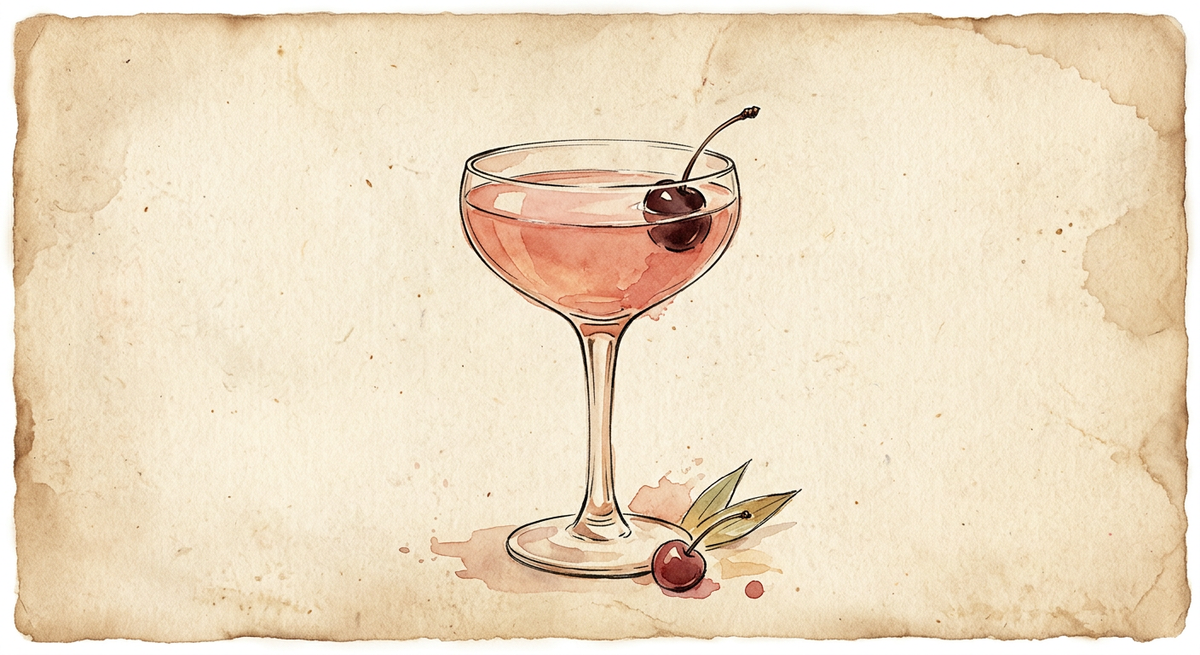
A Mary Pickford is 45ml of white rum, 45ml of fresh pineapple juice, 7.5ml of maraschino liqueur and 5ml of grenadine, shaken hard for 10 to 12 seconds and double strained into a chilled coupe, with a cherry; the measures are the IBA’s. About 2.0 UK units. It is named for Mary Pickford, the silent film star, and Basil Woon’s When It’s Cocktail Time in Cuba (1928), which we read in the Internet Archive scan, says Fred Kaufman invented it during her visit to Havana. The Oxford Companion says newspaper accounts confirm she vacationed there in December 1922, when Kaufman, at the Hotel Sevilla-Biltmore, most likely created it. Half the drink is pineapple, so the juice decides it. Fresh juice shakes up with a fine pale foam and a sharper edge; carton juice gives a flat, sweet drink. The maraschino and grenadine are small measures with clear jobs: depth and colour.
Daiquiri
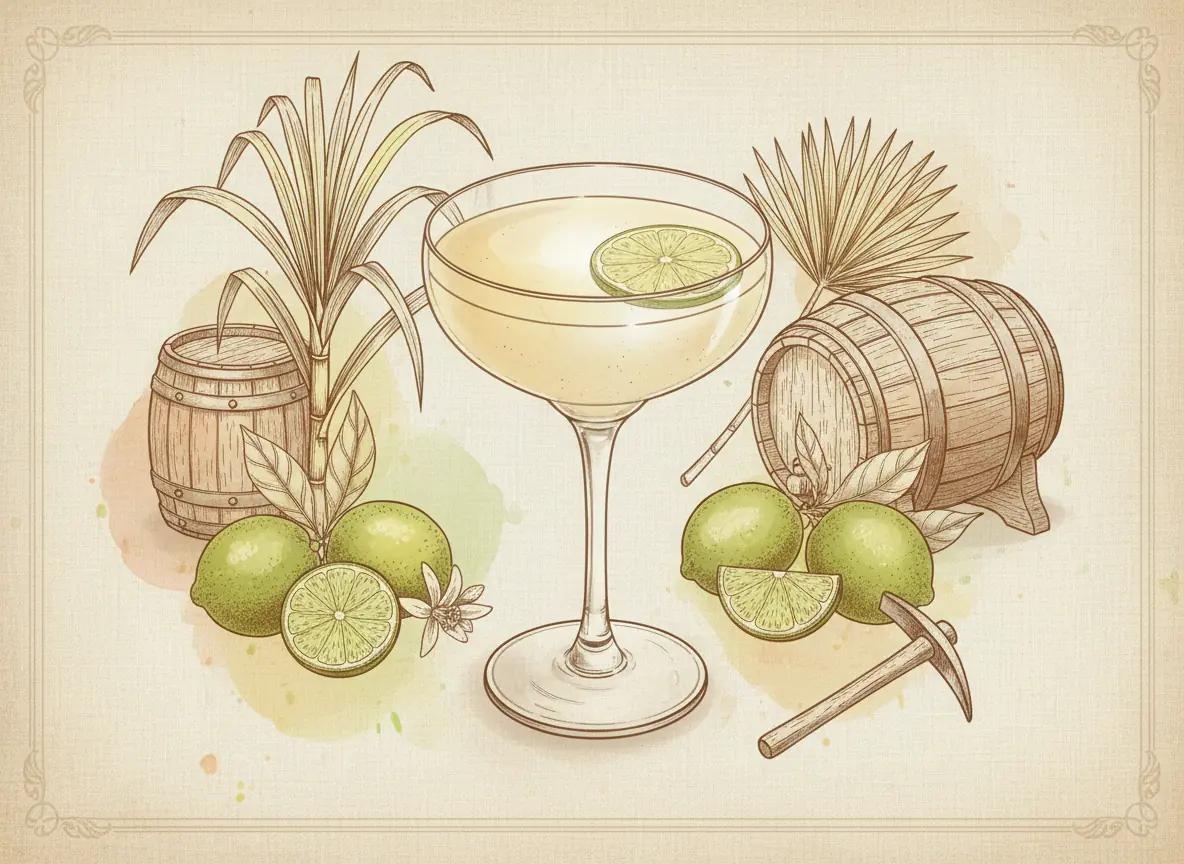
A Daiquiri is 60ml white rum, 20ml fresh lime juice and two bar spoons of caster sugar. Stir the sugar into the rum and lime in the shaker until it dissolves, then add ice, shake hard for 10 to 12 seconds and double strain into a chilled coupe. About 2.4 UK units. Those are the IBA’s measures, and its method dissolves the sugar first too. The name belongs to Daiquirí, an iron-mining district and beach near Santiago de Cuba. Difford’s Guide credits Jennings Stockton Cox, an American engineer who led one of the first mining parties into Cuba’s iron-ore country after the Spanish-American War of 1898; the Oxford Companion has him making or supervising the first Daiquiri in 1896, and a Santiago bartender naming it in 1908. Difford’s says Constantino Ribalaigua Vert of Havana’s El Floridita made the frozen version famous. With three ingredients and no liqueur or bitters, the Daiquiri hides nothing. A flat rum, tired lime or undissolved sugar shows in the first sip.
Where this one sits
Recipe by Jerry Can Spirits · Updated 19 October 2026