Brandy Cocktails
24 recipes
This Field Manual holds 24 recipes built on brandy: 12 cognac and 12 other brandy. Brandy is distilled from fruit, usually grapes, and aged in oak. It is the base of the oldest drinks here.
Cognac is brandy from one region under strict rules, and its weight suits a sidecar or a sazerac where the spirit has to carry sugar and citrus without thinning. Brandy without the appellation covers everything from Spanish solera to apple brandy, and the range is wide enough that the bottle matters more than the category. Age is the reliable guide: the longer it sat in oak, the better it holds a stirred drink and the less it wants shaking.
Base Spirit
Difficulty Level
Brandy Alexander
The Brandy Alexander is equal parts cognac, dark crème de cacao and cream, shaken hard and served up under a heavy grating of nutmeg. It is the definitive dessert cocktail of the twentieth century and it has never seriously been challenged for the title. It is a variation that overtook its parent. The original Alexander is a gin drink with white crème de cacao, and it is genuinely good. Somebody swapped cognac in after the First World War and took the cacao dark at the same time, and the result was so much better suited to the end of a meal that within a few decades the child had taken the family name. Ask for an Alexander in most bars now and you will be handed this. Two darkenings, then: brandy's oak where juniper was, chocolate depth where cocoa butter sat. The equal thirds and the violence of the shake never moved.
Brandy Crusta
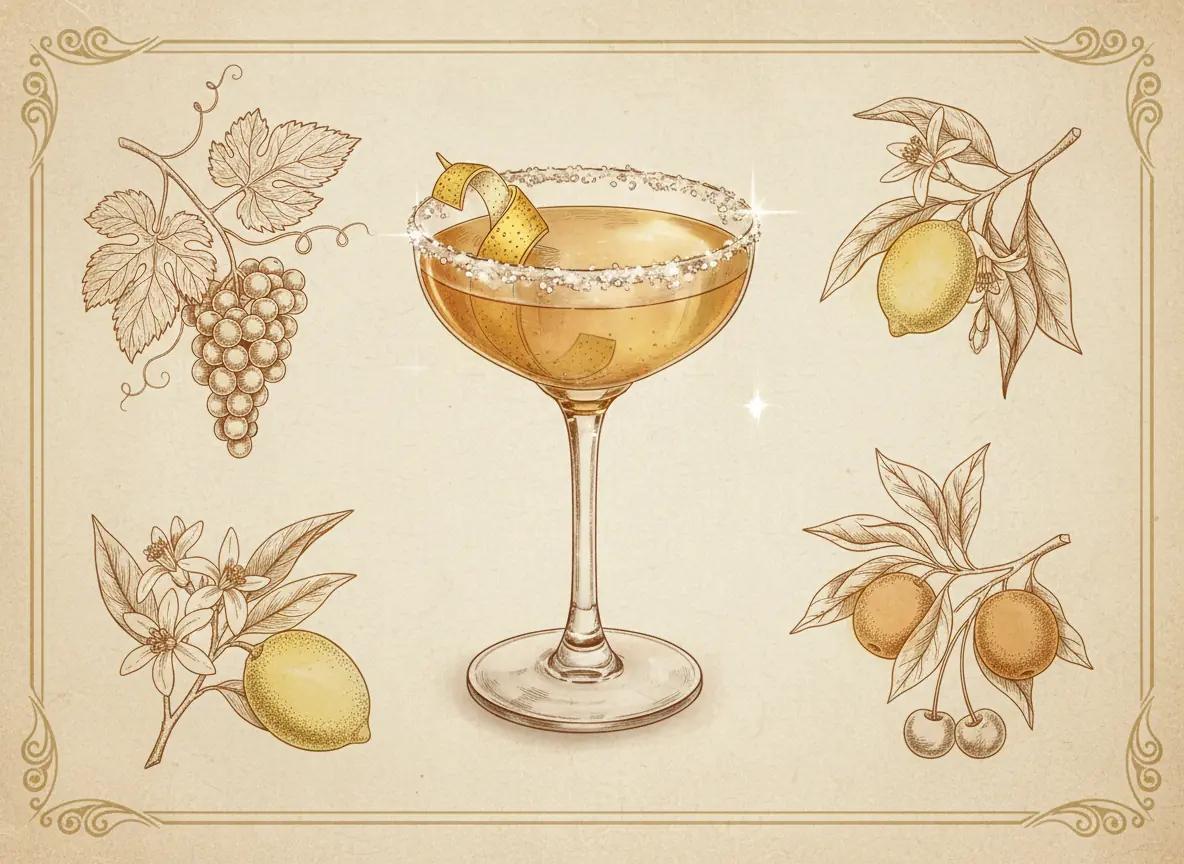
The Brandy Crusta was created by Joseph Santini at his New Orleans bar around 1850 and is widely regarded as one of the first genuinely refined cocktails in American history. It introduced two techniques that defined generations of bartending after it: the sugared rim and the long spiral lemon peel worn inside the glass like a lining. Both are functional, not decorative. The sugar tempers the citrus on the first sip. The peel releases oil into every measure of the drink as it sits. It is a direct ancestor of the Sidecar. The structure is almost identical: cognac, citrus, a sweetening liqueur modifier. The Crusta adds maraschino and bitters to the frame, which gives it considerably more complexity than the drink it inspired. Where the Sidecar is clean and direct, the Brandy Crusta is layered, aromatic, and slightly more demanding of attention. Santini's original called for a wine glass rather than a coupe, the standard modern substitution. The drink fits either. What it does not forgive is a loose spiral, a thin sugar rim, or lemon juice that was not squeezed to order.
Brandy Milk Punch
The Brandy Milk Punch is New Orleans keeping the eighteenth century's breakfast habit: brandy shaken cold through sweetened vanilla milk and crested with nutmeg. Milk punch travelled the colonial world as a drink of hospitality and, in most places, quietly died. New Orleans never stopped pouring it, and the grand hotels still serve it at brunch beside the Ramos Gin Fizz as the morning's other dairy answer. The build is lighter than the name suggests. Whole milk rather than cream is the whole argument: it carries the brandy and the vanilla without turning the glass into dessert, which is what makes a second one reasonable before noon. Fifteen millilitres of simple syrup stands in for the powdered sugar of the older specs, and the vanilla arrives in drops rather than pours. What comes out is liquid comfort with a spirit floor under it: the eggnog's lighter, year-round sibling, and the drink that settles a brunch argument the way an Irish Coffee settles a winter one.
Brandy Sling (Cold)
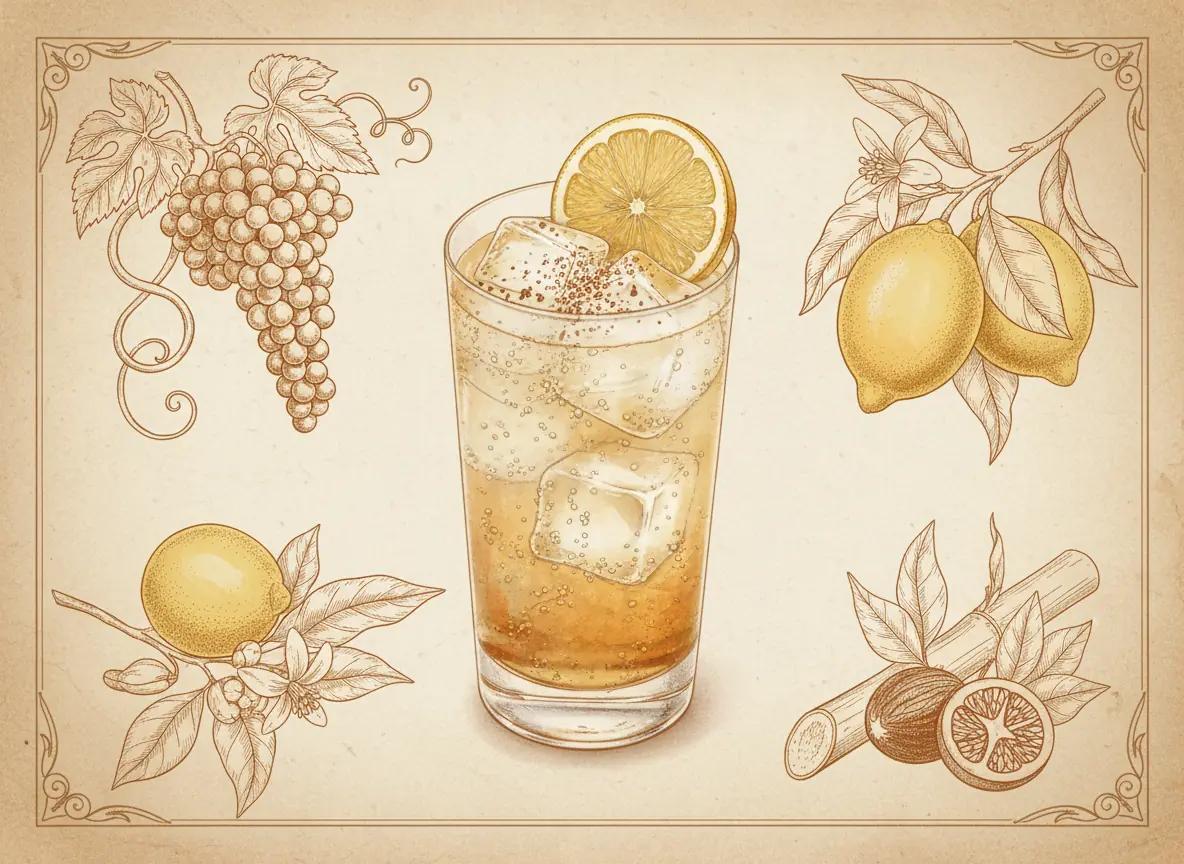
The cold brandy sling became possible when ice became widely available in American cities in the mid-nineteenth century. Before that, the sling was served hot. The arrival of reliable ice changed the format permanently and produced two distinct but closely related drinks that share everything except temperature and the way they are built. Where the hot version is warming and contemplative, the cold version is refreshing and light. Brandy over ice with fresh lemon, sugar syrup, soda water, and nutmeg grated on top. The same five essential components, rearranged for a different season and a different mood. The brandy brings warmth and depth that gin does not. It is a richer base spirit with vanilla, dried fruit, and oak character from barrel ageing that sits differently against lemon and soda than London Dry botanicals do. The cold brandy sling is the gin sling's more serious older sibling, and the warm-weather half of a format that has survived three centuries.
Brandy Sling (Hot)
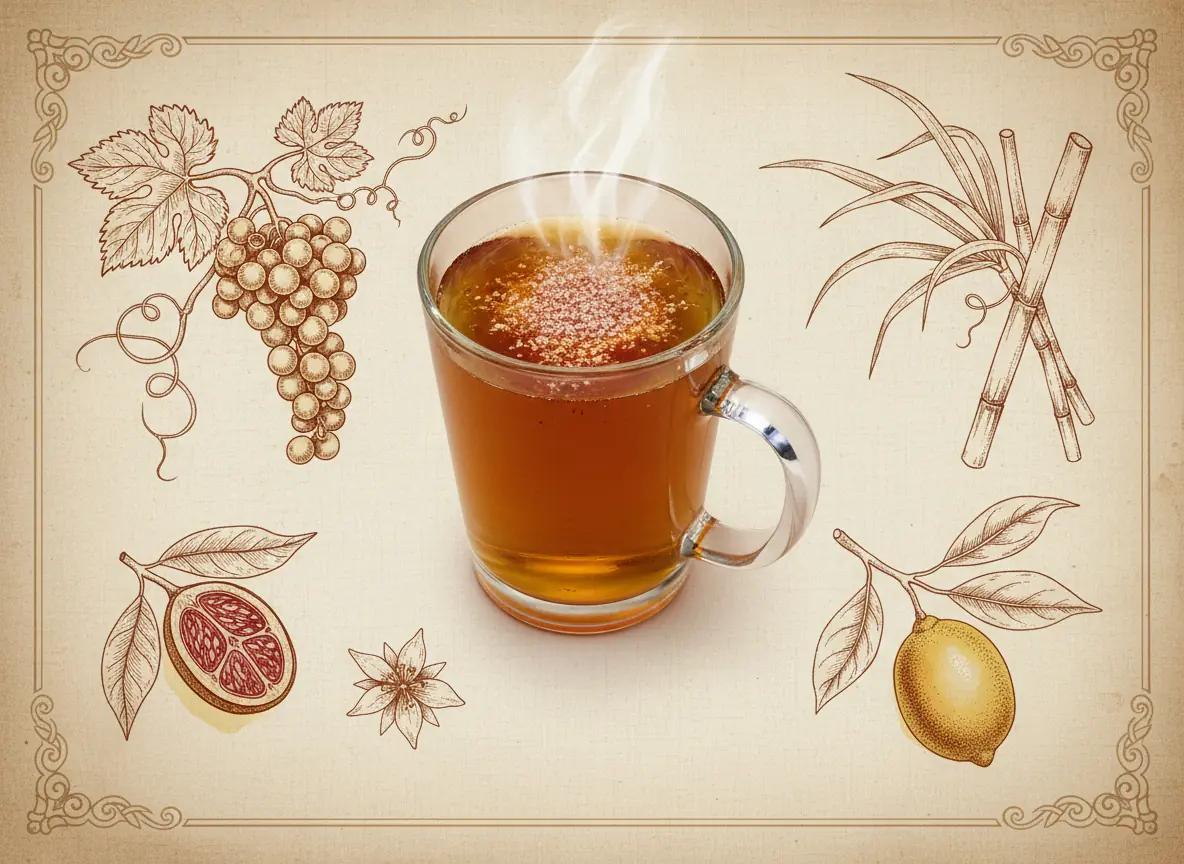
Before ice was widely available, the sling was a hot drink. Spirit, sugar, hot water, lemon, and nutmeg grated on top. That is the original format and it has not been improved upon for cold evenings, difficult days, or anyone who needs something warming and honest in their hands. The brandy sling predates the gin sling in documentation and in practice. Brandy was the spirit of choice in eighteenth century Britain and America before gin took its place in popular culture. Jerry Thomas included both hot and cold sling variations in his 1862 Bartenders Guide, and his definition remained consistent across both: the nutmeg on top is what makes it a sling rather than a toddy. A hot brandy toddy and a hot brandy sling are the same drink with one detail separating them. Do not skip the nutmeg. Simple, warming, and considerably more considered than it looks: four ingredients, one of which is hot water, and none of which can be got wrong without showing.
Champs-Élysées
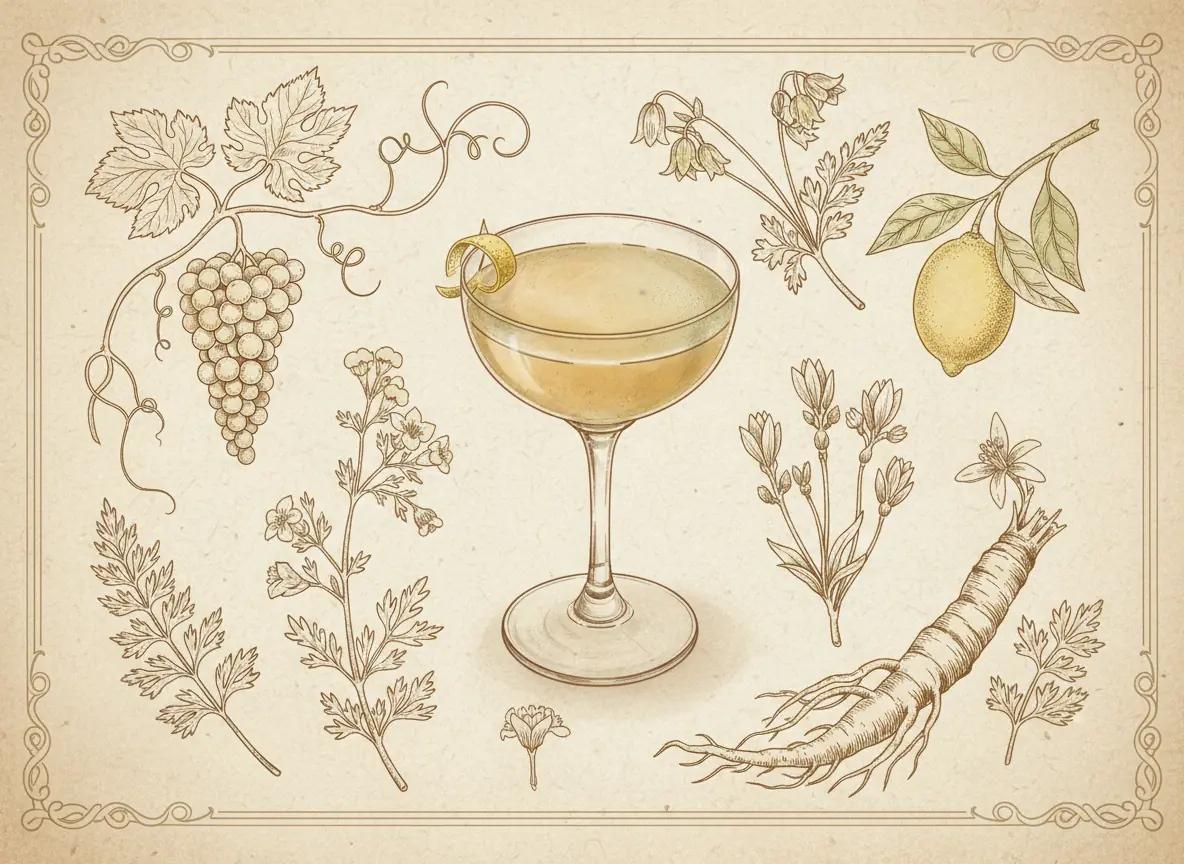
The Champs-Élysées first appeared in print in the 1927 cocktail book Here’s How, attributed to the anonymous “Barflies and Cocktails” collection published in Paris. The name signals its provenance clearly. This is a Parisian drink, built from French ingredients, that wears its origins without apology. At its core it is a Sidecar with green Chartreuse in place of Cointreau. That single substitution changes everything. Where the Sidecar is clean, citrus-forward, and accessible, the Champs-Élysées is herbal, complex, and considerably more demanding. Green Chartreuse is not a passive ingredient: it brings 130 botanicals, 55% ABV, and an intensity that reshapes everything it touches. The result is a drink that is simultaneously bright and deep, tart and herbal, elegant and challenging. It is one of the finest things that brandy, citrus, and Chartreuse have ever produced together, and it remains quietly underappreciated outside serious cocktail circles. That is unlikely to be the experience of anyone who tries it.
Corpse Reviver No.1
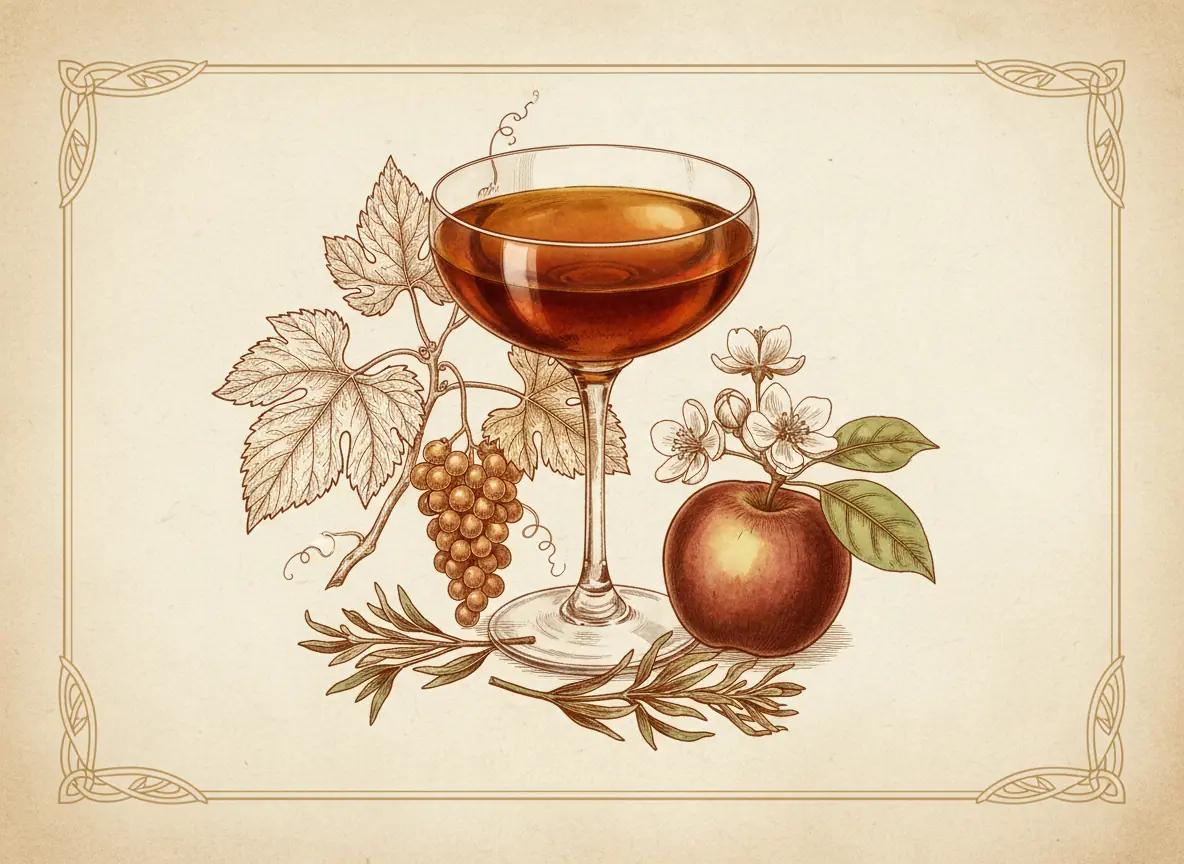
The Corpse Reviver No. 1 appeared in Harry Craddock's Savoy Cocktail Book in 1930, presented alongside its more famous sibling as part of a loosely connected family of restorative drinks designed, at least in name, to address the consequences of the night before. Where the No. 2 went on to become one of the most ordered classic cocktails in contemporary bartending, the No. 1 retreated into relative obscurity. That obscurity is undeserved. Three ingredients: cognac, Calvados, and sweet vermouth in equal parts. The combination of two aged fruit spirits alongside vermouth produces a drink that is richer, warmer, and considerably more complex than its short ingredient list suggests. The cognac provides the backbone. The Calvados brings apple, dried fruit, and a faint earthiness that shifts the drink away from anything a straight cognac build could achieve. The vermouth binds and softens both. It is a stirred drink in the Manhattan family, built for slow consumption rather than quick service. Those who order it expecting something bright and citrus-driven because of the name will be surprised. Those who approach it as a serious, spirit-forward after-dinner drink will find it entirely at home in that role.
Eggnog
Eggnog is the milk punch that armoured up for winter: whole eggs whisked through milk, cream and sugar over a brandy-and-rum floor, the medieval posset’s descendant that colonial America adopted and December has never released. The carton version is a different and lesser species. The build works yolk and white in concert. Yolks give the custard richness, whisked with the sugar first as a custard would be; whites are optionally whipped and folded for the cloud, or simply shaken through for the simpler reading. The two-spirit floor is the colonial standard, with brandy’s fruit and rum’s molasses sharing the warmth between them, and nutmeg grated over the top as it is over the whole dairy family. Made by the glass it is a revelation to anyone whose only reference is a carton. Aged by the bottle, spending weeks maturing in the fridge before it is opened, it is the holiday’s deepest and least known secret.
French Connection
The French Connection is the 1970s in a rocks glass: cognac and amaretto over ice, named for the 1971 film that owned the decade’s idea of cool, and built for the era’s low-effort, high-lapel glamour. Nobody claims a precise inventor. The drink simply appeared wherever the two bottles stood together, which by the mid-seventies was very nearly everywhere. It is the gentlest possible introduction to cognac. The amaretto’s almond sweetness rounds the brandy’s edges without hiding its fruit, and the whole thing assembles in the glass in under a minute. The French half supplies structure and the Italian half charm, which is broadly the film’s plot as well. The craft revival largely ignored it, which is its own kind of recommendation. The French Connection needs no rescue, no bitters and no garnish. All it asks for is two decent bottles and one proper piece of ice, which is a shorter list than almost anything else worth drinking.
Harvard
The Harvard belongs to the 1890s fashion for naming Manhattan variations after universities: the drink appears in George Kappeler’s 1895 Modern American Drinks alongside its classmates the Yale and the Princeton, and it has outlasted both by being the best of the year group. It is a Manhattan that swapped its rye for cognac and lightened its step accordingly. The structure sits between two classics: sweet vermouth and bitters as a Manhattan demands, cognac where the whiskey stood, and a short splash of soda in the classic spec that opens the drink like a window. The grape base makes it rounder and softer-spoken than its whiskey parent, closer in temperament to fortified wine than to bourbon. It is the drink to hand a Manhattan loyalist who claims not to like brandy: same bones, same bitters, and a finish that argues cognac’s case better than any tasting note. The nearby Champs-Élysées and Sidecar complete cognac’s classic trio; the Harvard is the stirred, civilised corner of it.
Horse's Neck
The Horse's Neck began as a soft drink. Through the 1890s it was ginger ale over ice with a long spiral of lemon peel draped over the rim, and the peel — hanging down the side of the glass like a horse's neck — is where the name comes from. The brandy arrived later, some time around the turn of the century, and the version with it became known as a Horse's Neck with a Kick. What survives is one of the simplest long drinks in the canon: forty millilitres of cognac, a hundred and twenty of ginger ale, an optional dash of Angostura and that spiral. It is a highball in the strictest sense, built in the glass, stirred once and served. The garnish is not decoration. Cut properly it releases oil across the surface of the drink for as long as it sits there, and a Horse's Neck without it is simply brandy and ginger ale.

Jack Rose
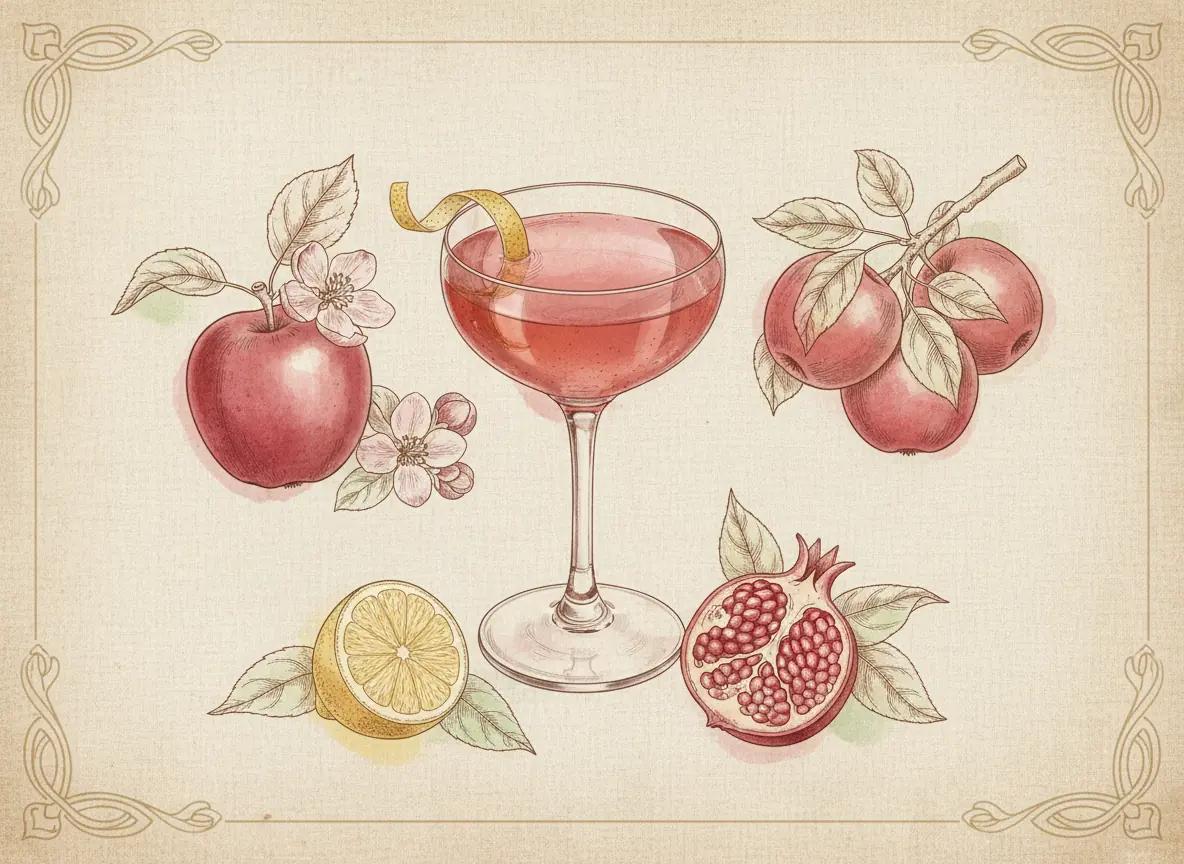
The Jack Rose is one of the great pre-Prohibition American classics, documented in bar guides from the early twentieth century. Its base is applejack, the American apple brandy produced primarily in New Jersey and most closely associated with Laird’s, producing since 1780 and the oldest licensed distillery in the United States. The name comes either from the Jacqueminot rose, a deep red variety whose colour the grenadine approximates in the glass, or from Bald Jack Rose, a notorious New York gangster of the same era. Both origin stories are plausible. Neither is definitively confirmed. Three ingredients: applejack, fresh lemon juice, and grenadine. The structure is a sour at its simplest, but the grenadine changes its character the way honey syrup changes the Bee’s Knees, bringing pomegranate depth, a faint tartness, and a colour no neutral sweetener can replicate. At this volume it is a primary modifier, and quality matters accordingly. Applejack is distinct from Calvados in the way bourbon is distinct from Scotch: the production methods, ageing requirements, and geography that define Calvados as a French appellation product give it a different character. It is a legitimate substitute that produces a different drink.
Japanese Cocktail
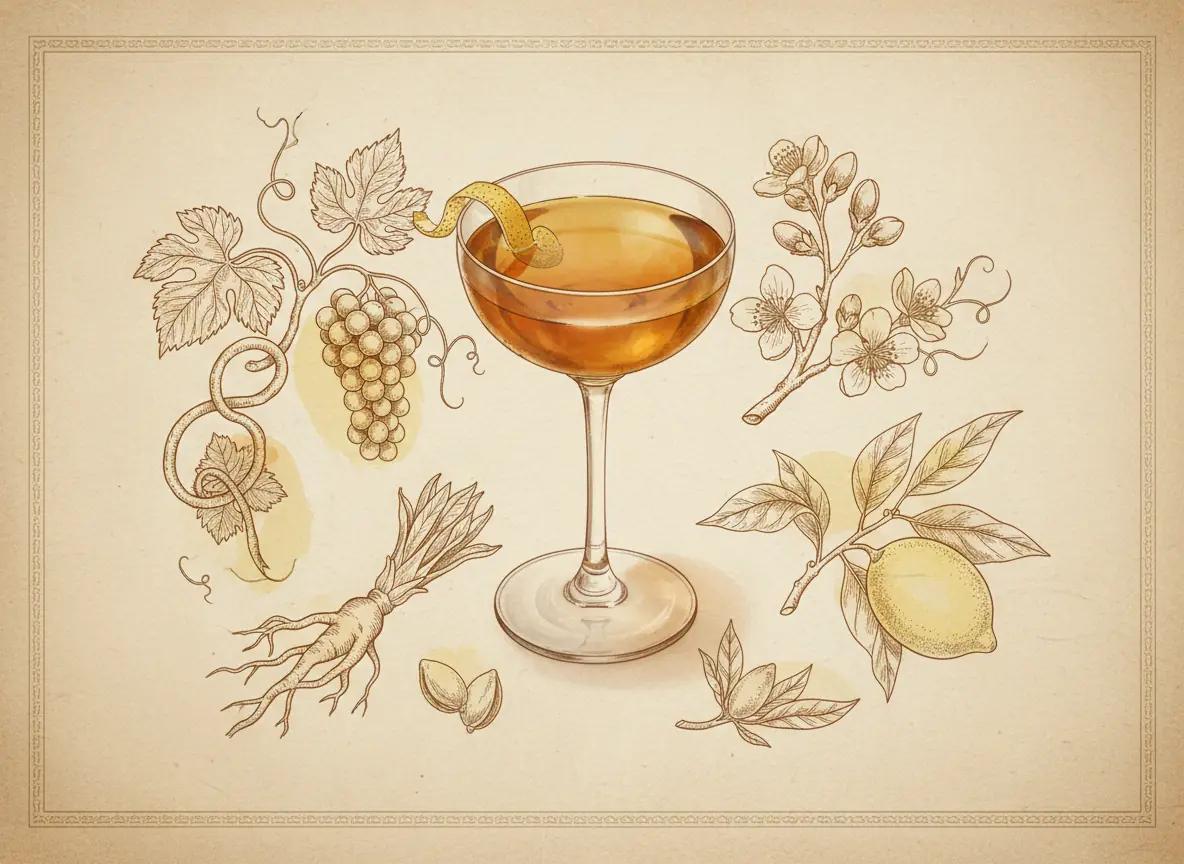
The Japanese Cocktail has nothing to do with Japan. Jerry Thomas created it in 1862 at his New York bar, naming it in honour of the Kanrin Maru mission, the first Japanese delegation to visit the United States. The name is a tribute rather than a flavour direction: there are no Japanese ingredients and no eastern technique anywhere in it. At its core it is three ingredients, and the apparent simplicity is deceptive. Orgeat is a notoriously variable thing, ranging from thin almond cordial to a genuinely complex, nut-forward syrup with real body and a mild bitterness from the almond skin. What goes into this glass determines everything, because there is nowhere at all to hide. This is a cognac drink at its most direct. No citrus to round the edges, no soda to extend the pour: spirit, sweetness and spice, stirred cold and served immediately. It is also one of very few nineteenth-century recipes to survive without a single modern adjustment, which says something about how well Thomas judged the proportions.
Metropole
The Metropole is a brandy martini: cognac and dry vermouth in equal measure, with two dashes of Peychaud's and one of orange bitters. It was the house drink of the Hotel Metropole off Times Square, which was pre-Prohibition Broadway's address for sporting men, chorus girls and gamblers. The hotel is best remembered for something that happened outside it. In July 1912 the gambler Herman Rosenthal was shot dead on the pavement having just left the bar, and the scandal that followed reached into the New York police department and helped close an era. The drink outlived the building by a century. What makes it interesting now is the bitters. Peychaud's is normally the Sazerac's bottle and very little else, and here it is doing something quite different: anise and cherry brightening a dry brandy drink, with orange bitters split against it. New Orleans seasoning a New York cocktail, which is not a combination anyone would predict.
Mulled Wine
Mulled wine predates the cocktail by the better part of two millennia. The Romans warmed wine with honey and spice in the pages of Apicius, medieval kitchens ran it through a spice bag and called it hippocras, and every century since has kept a version on the stove. This build is the British reading: a bottle of red warmed with brandy, fresh orange, honey and whole spices. The method is the recipe. Heat strips wine of its edges and lifts the spice into the room, but a boil takes the alcohol with it and turns cinnamon and clove tannic. The pan should steam gently for a quarter of an hour, the honey dissolving into the wine, the brandy keeping the spine the heat would otherwise soften. It serves six to eight from one pan, which is rather the point. Glögg in Sweden, Glühwein on the German market square, wassail in the English orchard: the same instinct, dressed for different winters.
Pisco Punch
The Pisco Punch is San Francisco's lost masterpiece: the house drink of the Bank Exchange saloon through the Gold Rush decades, perfected by Duncan Nicol, who served it to Mark Twain's city and drew Kipling's praise, then took the full recipe to his grave in 1926 with Prohibition having closed the bar around him. What survives is the frame: pisco, pineapple, citrus and gum. The modern reconstruction is honest about being one. Pisco over pineapple macerated in gomme's silk, lemon brightening, and the gum arabic texture that is the recipe's one agreed secret. Scholars argue about the rest, and the drink argues for itself. It pours as history's smoothest punch, deceptively gentle in exactly the way that built its legend in the first place. Kipling called it the highest and noblest product of the age, and the age broadly agreed with him until the Volstead Act outvoted them both. Nothing else in the American canon was lost quite so completely while staying quite so famous.
Pisco Sour
The Pisco Sour is a national institution with an American accent. Victor Vaughen Morris, a bartender from Utah who followed the railway money south, opened Morris' Bar in Lima and built the drink there around 1916: the Peruvian grape spirit given the full egg-white sour treatment. Peru now marks it with a national day on the first Saturday of February, and means it. The build is the silk sour at its most elegant. Pisco's muscat blossom carries lime through the dry shake, and three drops of Angostura go onto the finished foam as a signature that no variation touches. The bitters are aromatic garnish placed on the surface, dragged into patterns or left as a constellation, and they are never stirred through. Chile pours its own version on its own spirit and presses its own claim, usually eggless and sharper. The dispute is genuine, old and unresolvable, and the drink is comfortably bigger than the border.
Porto Flip
The Porto Flip is a whole egg yolk shaken into port and brandy, and it belongs to a family of drinks that has almost entirely disappeared. A flip in the eighteenth century meant a heated mixture of spirit, sugar and egg, often stirred with a red-hot iron; by the nineteenth it had settled into the cold, shaken, egg-enriched drink the name means today. Forty-five millilitres of tawny port to fifteen of brandy and ten of egg yolk makes a short, rich, faintly nutty drink with a texture closer to a dessert wine than to a cocktail. It is not a long evening's drinking. It is one glass, after dinner, in place of something sweet. The nutmeg is not optional in any meaningful sense. Grated fresh over the surface it supplies the aromatic lift that stops the whole thing reading as heavy.
Sangria
Sangria is red wine lengthened with fruit, brandy and a little sugar, rested until the flavours marry, and served from a pitcher over ice. The name comes from sangre, blood, for the colour of it. It is not really a recipe. It is a set of slots, wine and spirit and citrus and sugar and fruit and time, and every house in Spain and Portugal fills them differently. Catalonia makes it with cava. The south drinks tinto de verano, which is wine and lemon soda and barely qualifies. Peaches turn up wherever the orchards do. The measures here are common ground rather than doctrine, and they claim only the proportions. The one thing that is not negotiable is the rest. An hour in the fridge is the minimum and overnight is better, because maceration is what turns wine with fruit in it into sangria. Poured young it tastes exactly like what it is, which is a bottle of red with some oranges floating in it.
Sidecar
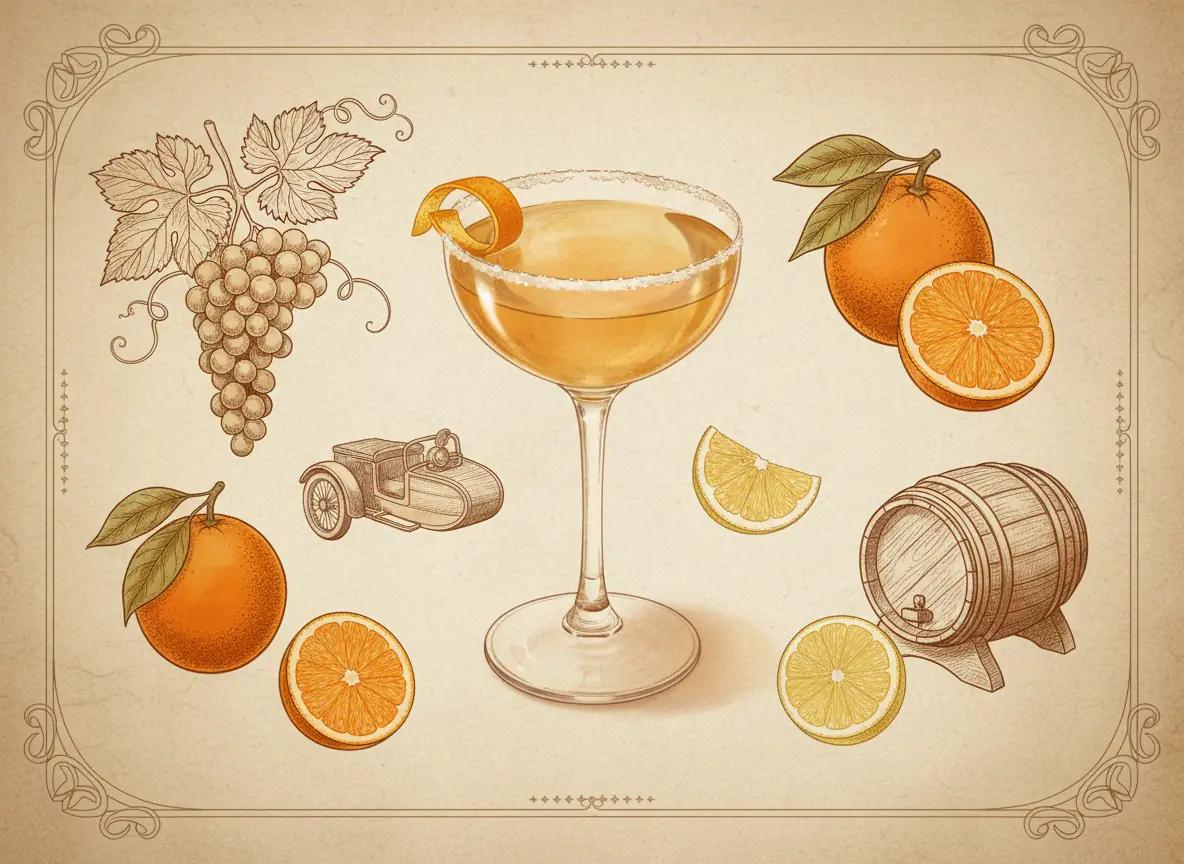
The Sidecar is one of the great drinks of the years after the First World War, and its paternity has never been settled. It appears in 1922 in both Harry MacElhone’s ABC of Mixing Cocktails and Robert Vermeire’s Cocktails: How to Mix Them, with each author crediting someone else: MacElhone named Pat MacGarry at Buck’s Club in London, while Vermeire named MacElhone himself at Harry’s New York Bar in Paris. The dispute is unlikely ever to be resolved. The structure is a sour built on cognac, with Cointreau as the sweetening modifier and fresh lemon as the acid. The cognac brings dried fruit and oak warmth, the Cointreau brings clean orange and the sweetness that answers the lemon, and the lemon keeps the whole thing from turning heavy. It is also among the most ratio-sensitive drinks in the classical canon, which is the argument against the sugar rim some versions carry: the balance here is calibrated without one.
Stinger
The Stinger is cognac wearing menthol aftershave: brandy and white crème de menthe, stirred or famously shaken, and for the first half of the twentieth century the definitive nightcap of American high society. It rose through the Edwardian clubs, survived Prohibition suspiciously well, mint being excellent camouflage, and became the drink of choice for the dinner-jacket decades, ordered by everyone from admirals to Cary Grant’s scriptwriters. It is a two-ingredient drink with one decision: the ratio. The classic pour ran as sweet as equal parts; the modern reading given here runs drier at three to one, cognac in charge and the mint reduced to a cold silver thread. White crème de menthe is not negotiable, since the green version turns the glass to mouthwash by way of the eyes. Fashion mocked it, then missed it, then quietly brought it back: a properly dry Stinger after dinner remains one of the great digestifs, the mint doing genuine after-dinner work and the cognac doing the rest. It asks ninety seconds and repays them in silk.
Ve.N.To
Ve.N.To is a grappa sour, which is a sentence most people have never had cause to read. It is built on white grappa with lemon, a chamomile honey mix and chamomile cordial, and it exists to make a case: that Italy's most misunderstood spirit belongs in a cocktail glass rather than only at the end of a meal. Forty-five millilitres of grappa against twenty-two and a half of lemon is a standard sour ratio, and the chamomile is where the drink becomes itself. It appears twice — once as the water in the honey mix, once as a cordial — which means the florality is the structure rather than a garnish note. The name is an acronym of Venezia, Nordest and Todaro, and the drink comes out of the movement to rehabilitate grappa as a modern ingredient rather than a rustic digestivo.
Wassail
Wassail is older than almost anything else in the canon by several centuries, and its name is the toast itself: the Old English wæs hæil, be in good health. The appointed reply was drinc hæl, and between the two phrases sat a communal bowl of ale or cider, hot with spice, passed hand to hand through the medieval midwinter. It came in two traditions. Households carried the bowl from door to door through the Twelfth Night season, drinking the year’s health into their neighbours, while the apple counties took it to the trees themselves, pouring cider at the roots and laying toast in the branches to sing the next harvest home. This is the cider-house reading of the bowl: cloudy apple juice and dry cider heated gently with the spice drawer and a clove-studded orange, sweetened in stages, stiffened off the heat with brandy or calvados for anyone who wants stiffening. It serves eight to ten, which is not a serving suggestion but the drink’s nature.
Widow’s Kiss
The Widow's Kiss is autumn in a coupe and one of the oldest sophisticated drinks in the American canon. George Kappeler printed it in Modern American Drinks in 1895: calvados wrapped in the two great French monastery liqueurs, yellow Chartreuse and Bénédictine, with Angostura holding the seams. It has never needed updating. The engineering is a study in herbal layering. The calvados brings orchard fruit and a spirit spine; the Bénédictine answers with honeyed spice; the yellow Chartreuse, softer and more saffron-lit than its green sibling, threads the two together; and the bitters keep the sweetness from settling into syrup. Every component predates the recipe, which is why the drink tastes coherent rather than assembled. It is rich by design, a dessert-hour drink in the truest sense, and it rewards a small pour and some patience. It opens as it warms, the way an old Sauternes does, which is fitting for the only cocktail regularly compared to one.