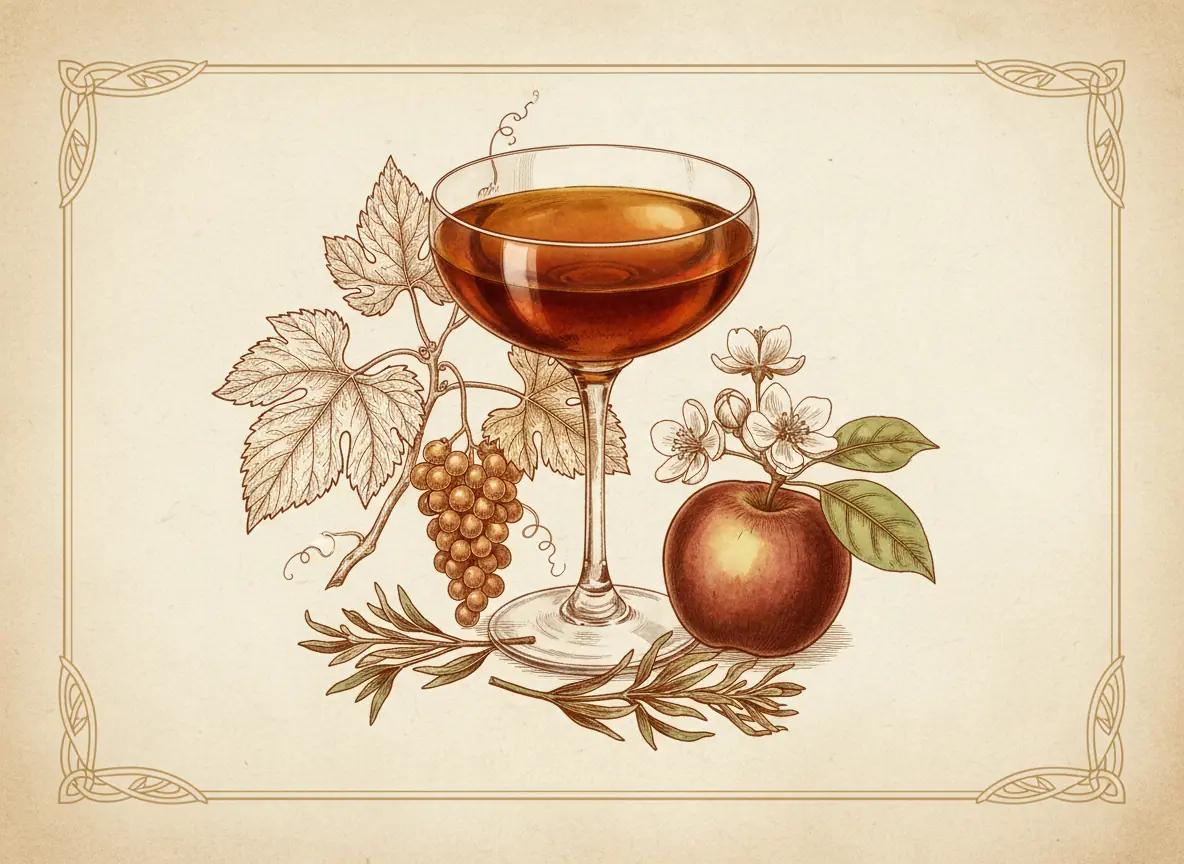
Corpse Reviver No. 1
Our Corpse Reviver No. 1 is 30ml each of cognac, Calvados and sweet vermouth, stirred over ice for 20 to 30 seconds and strained into a chilled coupe, with no garnish. About 2.9 UK units. It is a short, stirred drink of two fruit brandies and vermouth, and nothing like the gin and lemon No. 2. The phrase came before the drink. The Oxford Companion says a Corpse Reviver appears to have been a real drink at an American-style bar in Piccadilly in the late 1850s, and the Gentleman’s Table Guide of 1871, in the Internet Archive scan, gives a recipe of half a wineglass each of brandy and maraschino with two dashes of Boker’s bitters. Harry Craddock printed a No. 1 and a No. 2 in the Savoy Cocktail Book in 1930, and the Companion says it was he who tethered the name to actual recipes. Difford’s Guide, quoting the Savoy, gives half brandy and a quarter each of apple brandy or Calvados and Italian vermouth, which is two parts brandy to one each of the others. Ours pours equal parts, which brings the apple forward and makes the vermouth a full partner.
Glassware: Coupe Glass
Garnish: Lemon twist expressed and discarded (optional)
Ingredients
30ml
A VS or VSOP at 40% ABV with some dried fruit. It is the backbone, and a harsh brandy shows through the vermouth.
30ml
Apple brandy from Normandy, made under appellation rules, at 40 to 42% ABV. It brings apple, dried fruit and oak that a generic apple brandy rarely matches.
30ml
A Torino-style vermouth at our working 16% ABV, which we keep refrigerated once opened. At equal parts, a tired bottle shows at once.
Instructions
Chill a coupe.
Add the cognac, Calvados and sweet vermouth to a mixing glass.
Fill with ice and stir for 20 to 30 seconds.
Strain into the chilled coupe.
Serve without garnish, or express a lemon peel over the top and discard it.
Our version
Difford’s Guide gives the Savoy Cocktail Book’s No. 1 as half brandy and a quarter each of apple brandy or Calvados and Italian vermouth; ours pours 30ml of each, stirred, so the apple and the vermouth sit level with the brandy.
Source: our own specification. Last checked 10 October 2026.
Expert Tip
The vermouth is a third of the glass, so it decides the drink. We keep it refrigerated once opened and replace it within about four weeks; a stale bottle makes the whole drink taste flat and medicinal. Pour a true Calvados, not a generic apple brandy. Where it makes up a third of the drink, the difference in apple and oak is plain. Stir for 20 to 30 seconds. There is no citrus to sharpen it, so dilution is what joins three strong ingredients, and an under-stirred one tastes hot.
Behind the Corpse Reviver No. 1
Flavour Profile
The Origin
Corpse reviver was a name for a morning drink before it was a recipe. The Oxford Companion says one appears to have been served at an American-style bar in Piccadilly in the late 1850s, and that it later became a generic term for a morning drink. The Gentleman’s Table Guide of 1871 gives a recipe of half a wineglass each of brandy and maraschino with two dashes of Boker’s bitters.
Harry Craddock printed a No. 1 and a No. 2 in The Savoy Cocktail Book in 1930; the No. 1 carries his note “To be taken before 11 a.m., or whenever steam and energy are needed”. The No. 2, with gin, Cointreau, Lillet Blanc and lemon, is the one the Companion prints. The No. 1 is the quieter one. The No. 1 is the quieter one.
The Structure
Two fruit brandies and a sweet vermouth, stirred and served up, put the No. 1 in the Manhattan family. Cognac brings dried fruit and the strength. Calvados brings apple and a little earth. The vermouth brings body, wine and sweetness, and joins the two brandies.
The Harvard is the same idea on cognac alone, and the Jack Rose takes apple brandy the other way, shaken with lemon and grenadine.
The Calvados Question
Calvados is apple brandy from Normandy, made under appellation rules on how it is produced and aged, and some carries pear as well as apple. At a third of the glass its character is plain, so a thin, sweet apple brandy shows straight away.
Equal Parts or Two to One
Two ways to pour a Corpse Reviver No. 1: the Savoy’s two to one, as Difford’s Guide gives it, and ours in equal parts; the units are our calculation
Cognac
- Cognac-led, two to one
- 45ml
- Ours, equal parts
- 30ml
Calvados
- Cognac-led, two to one
- 22.5ml
- Ours, equal parts
- 30ml
Sweet vermouth
- Cognac-led, two to one
- 22.5ml
- Ours, equal parts
- 30ml
Character
- Cognac-led, two to one
- Drier, brandy in front
- Ours, equal parts
- Apple and vermouth forward
UK units
- Cognac-led, two to one
- About 3.1
- Ours, equal parts
- About 2.9
| Element | Cognac-led, two to one | Ours, equal parts |
|---|---|---|
| Cognac | 45ml | 30ml |
| Calvados | 22.5ml | 30ml |
| Sweet vermouth | 22.5ml | 30ml |
| Character | Drier, brandy in front | Apple and vermouth forward |
| UK units | About 3.1 | About 2.9 |
How to Serve It
Stirred, strained and served cold in a chilled coupe, with no garnish. A lemon peel expressed over the top and discarded adds a lift on the nose without changing the drink. It suits after dinner, in place of a brandy.
Make it at home
The Spirit
CognacCognac is a grape spirit distilled twice from white wine in copper pot stills in the Cognac area of western France and, under INAO’s specification, aged at least two years in oak and sold at no less than 40% ABV. The letters on the label are minimum ages, by the BNIC’s account: VS at least two years, VSOP four, XO ten. A VS or VSOP is what our cocktails assume.
Master the Techniques
More to explore
Frequently Asked Questions
What is a Corpse Reviver No. 1?
How does it differ from the Corpse Reviver No. 2?
Why is it called a Corpse Reviver?
Are equal parts correct?
Can I use apple brandy instead of Calvados?
Should it be shaken or stirred?
How strong is a Corpse Reviver No. 1?
Sources.
Correct as of 19 October 2026.
- The Oxford Companion to Spirits and Cocktails (Dinah Sanders), “Corpse Reviver” (secondary source: a drink at an American-style bar in Piccadilly in the late 1850s; later a generic term for a morning drink; Craddock’s 1930 recipes).
- Harry Craddock (1930), Internet Archive, “The Savoy Cocktail Book” (primary source: Corpse Reviver (No. 1): brandy, apple brandy or Calvados, Italian vermouth; Shake well and strain into cocktail glass. To be taken before 11 a.m., or whenever steam and energy are needed. (No. 2): lemon juice, Kina Lillet, Cointreau, dry gin, 1 dash absinthe; Four of these taken in swift succession will unrevive the corpse again).
- E. Ricket and C. Thomas (1871), Internet Archive, “The Gentleman’s Table Guide” (primary source: No. 92, Corpse Reviver, half a wineglass of brandy, half a wineglass of Maraschino, two dashes of Boker’s bitters).
- Difford’s Guide, “Corpse Reviver No.1 (Savoy Recipe)” (secondary source quoting the Savoy Cocktail Book (1930): a quarter Italian vermouth, a quarter apple brandy or Calvados, half brandy; to be taken before 11 a.m., or whenever steam and energy are needed).
You Might Also Like
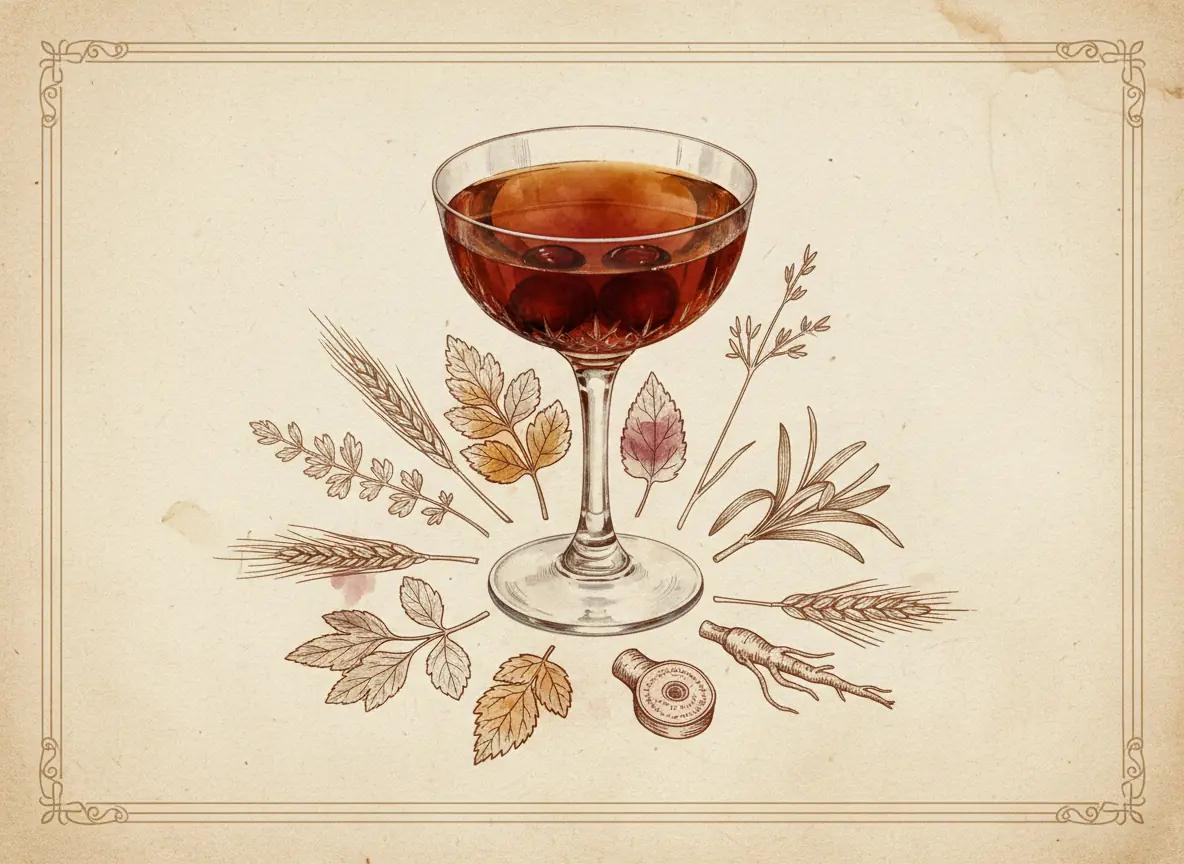
La Louisiane
La Louisiane is 30ml each of rye whiskey, sweet vermouth and Bénédictine, with two dashes of absinthe and three of Peychaud’s bitters, stirred for 20 to 30 seconds and strained into a chilled Nick & Nora, with a maraschino cherry on a pick. About 3.1 UK units. Stanley Clisby Arthur printed it in 1937, in Famous New Orleans Drinks and How to Mix ’Em, as the special cocktail served at Restaurant de la Louisiane, “one of the famous French restaurants of New Orleans”, in Difford’s Guide’s reproduction of the book. His recipe, as Difford’s Guide reproduces it, pours a third of a jigger of each of the three, with three or four dashes each of absinthe substitute and Peychaud’s; ours keeps the thirds and trims the absinthe to two dashes. It sits on the Manhattan’s frame of rye and sweet vermouth, with Bénédictine poured at the same measure as both. In our view that makes it richer and more herbal than its parent, and the anise of the absinthe and the Peychaud’s places it in New Orleans.
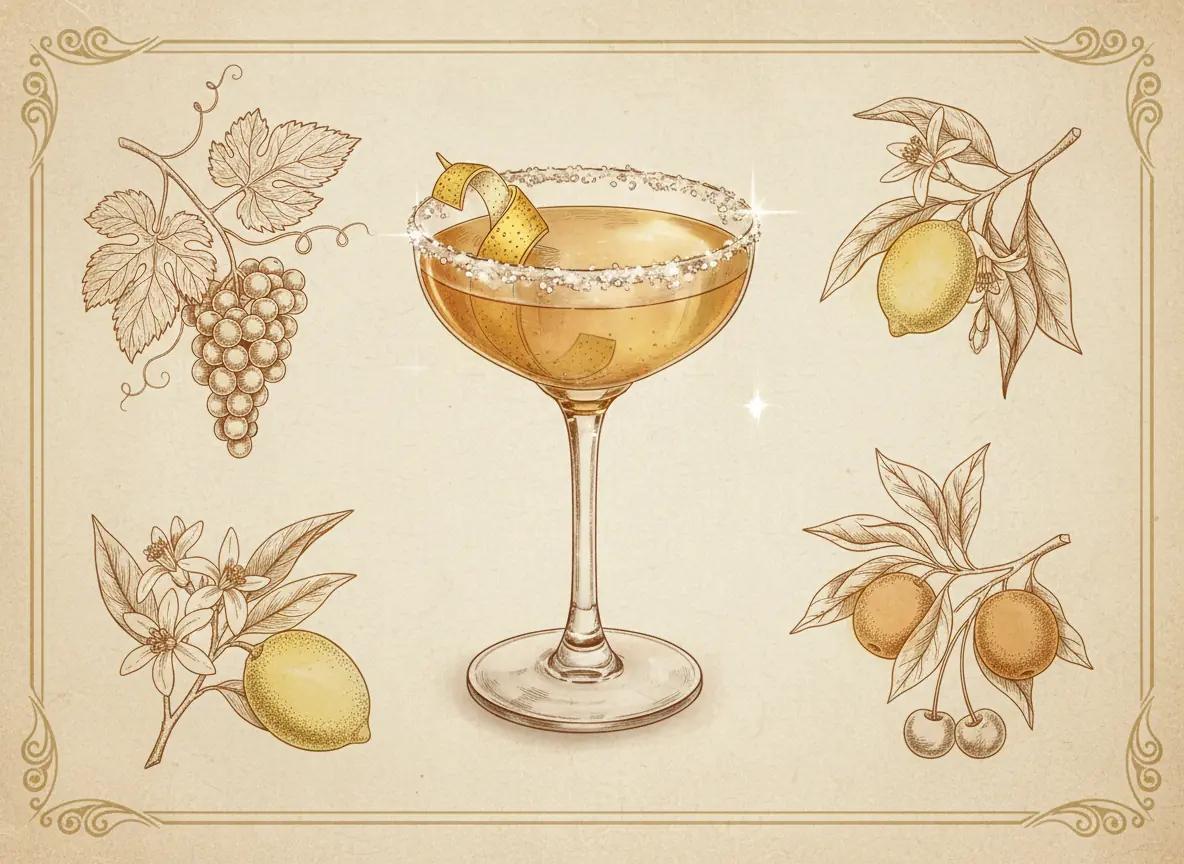
Brandy Crusta
A Brandy Crusta is 52.5ml of cognac, 7.5ml of maraschino, a bar spoon each of orange curaçao and sugar syrup, 15ml of fresh lemon juice and two dashes of Angostura, shaken hard and strained into a chilled coupe with a sugared rim and a long spiral of lemon peel curled inside. About 2.6 UK units. The measures are the IBA’s. Jerry Thomas printed it in his bar guide of 1862 and wrote that the crusta was said to have been invented by “Santina, a celebrated Spanish caterer”. Difford’s Guide identifies him as Joseph Santini, an Italian from Trieste in New Orleans, and dates the drink to the 1850s, made either at the City Exchange or at his own bar, the Jewel of the South, which he opened in 1855. The crust of sugar on the rim gives the drink its name. With the peel lining the glass, the first sip meets sugar and lemon oil before the cognac.
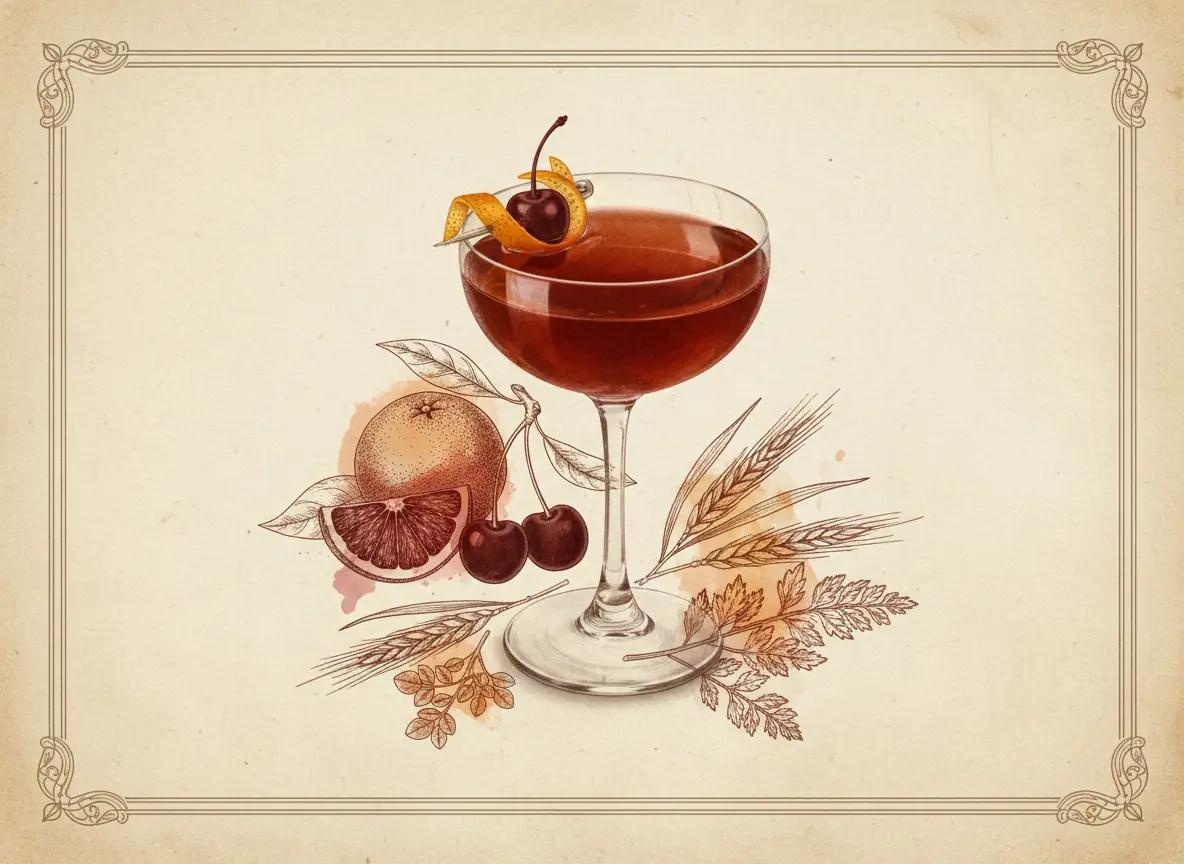
Blood & Sand
A Blood & Sand is equal parts Scotch whisky, sweet vermouth, Cherry Heering and fresh orange juice, 25ml of each, shaken hard and double strained into a chilled coupe. An expressed orange peel goes on top. No syrup goes in: the cherry liqueur and the vermouth do all the sweetening, and the glass holds about 2.0 UK units. It shares its name with Blood and Sand, the film that cast Rudolph Valentino as a bullfighter, first screened in 1922, and the Oxford Companion to Spirits and Cocktails says it first appears in Harry Craddock’s Savoy Cocktail Book of 1930. Nobody can be shown to have mixed it first. Scotch and orange juice sound like an odd pair. The vermouth and cherry join them, bridging malt and citrus with wine and dark fruit, so that no single ingredient leads.
Where this one sits
Recipe by Jerry Can Spirits · Updated 19 October 2026