Mulled Wine
Mulled wine for six to eight is 750ml of red wine, 150ml of brandy, 100ml of fresh orange juice and 75ml of honey, warmed in a large pan with two cinnamon sticks, six cloves, two star anise and a few wide strips of citrus peel. It is held at a bare steam for fifteen to twenty minutes and never boiled. About 2.0 to 2.6 UK units a cup. Gentle heat lifts the spice into the room and takes the edge off the wine. A boil drives off alcohol and pulls bitter, stewed flavours from the clove and cinnamon, so the surface should shiver and never bubble. The brandy keeps the drink from tasting thin once the heat has softened the wine. Spiced, sweetened wine is very old. The Roman cookery collection that carries the name of Apicius opens with a spiced wine, the conditum paradoxum, and the Oxford Companion says mulled-style drinks go back to early medieval times under names such as hippocras. This is a modern British pan: brandy, honey and fresh orange.
Glassware: Punch Cup
Garnish: A strip of citrus peel in each cup
Ingredients
750ml
A medium-bodied, unoaked red with soft tannins, at our working 13% ABV. Heavy oak fights the spice and a thin, sharp red turns sour when warm, so an everyday bottle is right.
150ml
Any decent brandy at our working 40% ABV. It holds the drink up once the heat has softened the wine; 150ml to a bottle works out at about 20ml a cup.
100ml
Squeezed the same day. Heat flattens flavour, and fresh juice starts with brightness to spare where carton juice tastes cooked.
75ml
Dissolves as the pan warms. Maple syrup works at the same measure and gives a darker result, which suits a young brandy.
A few wide strips
Wide strips of orange or lemon, pared without the white pith, which turns bitter in the heat. They give the aroma that juice alone cannot.
Instructions
Put the wine, brandy, orange juice, honey, spices and citrus peel in a large pan.
Warm over the lowest heat until the surface steams. Never let it boil.
Hold it at a bare steam for fifteen to twenty minutes, stirring once or twice as the honey dissolves.
Ladle into heatproof cups with a strip of peel in each, and keep the pan on the lowest heat through the evening.
Expert Tip
Never let the pan boil. Ethanol boils at about 78°C, lower than water, and in our experience a rolling boil sends alcohol off with the steam and stews the spice as well. Use the lowest heat and wait for the surface to shiver without bubbling. Keep the spices whole. Ground spice clouds the pan and turns gritty in the cup; whole sticks, cloves and star anise give up their flavour slowly over the twenty minutes. Make it a day ahead if you can. Strain out the spices, cool it, keep it in the fridge and warm it gently again on the night: the rest deepens the spice.
Behind the Mulled Wine
Flavour Profile
The Origin
The Roman cookery collection known by the name of Apicius opens with conditum paradoxum, a spiced wine: in Vehling’s English translation, honey cooked down with wine, then crushed pepper, mastic, laurel or nard leaves, saffron and roasted date stones, with light wine to finish. The Oxford Companion says similar mulled drinks date back to the first century, though the word “mulling” is thought to come from the sixteenth century and from grinding spices.
Medieval cooks kept the habit under a new name. The Oxford Companion says drinks of this kind go back to early medieval times under names such as hippocras, which refers to the large sieve, the “sleeve of Hippocrates”, used to strain out the spices. In our view the spice covered rough wine and showed that the host could afford it.
How It Became Christmas
The Oxford Companion says mulled drinks are served at the winter solstices and at winter holidays such as Christmas. Smoking bishop is a Victorian example.
Dickens has the reformed Scrooge promise to discuss Bob Cratchit’s affairs over a Christmas bowl of smoking bishop, as A Christmas Carol has it; NPR prints the family recipe from Dickens’s great-grandson Cedric: Seville oranges baked until pale brown, pricked with cloves and left for a day in red wine and sugar, then the strained liquid heated with port, without boiling.
The European Family
Most wine-drinking countries with a cold winter keep a version, and they are worth knowing as relations.
The Oxford Companion says glögg is a Swedish hot mulled wine akin to Austrian Glühwein and French vin chaud, made with red wine, fruit juice or unflavoured spirit, almost always sweetened, and that makers often add raisins and almonds. England’s Wassail is the orchard’s version, a hot bowl of cider and apple juice for Twelfth Night.
The Heat
Mulled means warmed and spiced, not boiled. The NIST Chemistry WebBook gives the normal boiling point of ethanol as 351.5 K, about 78°C, and in our experience a pan at a rolling boil loses alcohol fast, while a long boil stews the cinnamon and clove into something bitter.
Give it the lowest flame and fifteen to twenty minutes at a bare steam while the honey dissolves. If the surface shivers without bubbling, the heat is right.
What a Cup Carries
Mulled wine for one pan, and per cup; our recipe and our calculation
Red wine
- The pan
- 750ml
- Per cup, eight
- About 95ml
- Per cup, six
- 125ml
Brandy
- The pan
- 150ml
- Per cup, eight
- About 20ml
- Per cup, six
- 25ml
Fresh orange juice
- The pan
- 100ml
- Per cup, eight
- About 12ml
- Per cup, six
- About 17ml
Honey
- The pan
- 75ml
- Per cup, eight
- About 9ml
- Per cup, six
- About 12ml
UK units
- The pan
- About 15.8
- Per cup, eight
- About 2.0
- Per cup, six
- About 2.6
| Ingredient | The pan | Per cup, eight | Per cup, six |
|---|---|---|---|
| Red wine | 750ml | About 95ml | 125ml |
| Brandy | 150ml | About 20ml | 25ml |
| Fresh orange juice | 100ml | About 12ml | About 17ml |
| Honey | 75ml | About 9ml | About 12ml |
| UK units | About 15.8 | About 2.0 | About 2.6 |
How to Serve It
In heatproof cups or handled glasses, a strip of peel in each, ladled from a pan kept on the lowest heat. Strain out the cloves first if guests will not want to find one in the cup.
Make it at home
The Spirit
BrandyBrandy is wine, distilled and then aged in oak, and under the retained Regulation (EC) 110/2008 the word on its own means grape brandy of at least 36% ABV, matured for six months or more. Our recipes assume 40%. It is the warm, dried-fruit base of milk punch, eggnog and mulled wine, where a sound young bottle serves better than an expensive old one.
More to explore
Frequently Asked Questions
What wine should I use for mulled wine?
Why must mulled wine never boil?
Can I make mulled wine ahead?
Whole spices or ground?
How strong is mulled wine?
How do I keep mulled wine warm for a party?
Can I make it without brandy?
Sources.
Correct as of 19 October 2026.
- The Oxford Companion to Spirits and Cocktails (Derek Brown), “mulled drinks” (secondary source: hot alcoholic drinks with sweetener and mulling spices, served in fall and winter and at holidays such as Christmas; Glühwein, Glögg, Vin Chaud, Wassail; Apicius’s conditum paradoxum in the first century; hippocras and its sieve, the sleeve of Hippocrates; mulling from the sixteenth century).
- Project Gutenberg, “Cookery and Dining in Imperial Rome (Apicius, translated by Joseph Dommers Vehling)” (primary source: Book I opens with the conditum paradoxum: honey and wine heated, then pepper, mastic, laurel or nard leaves, saffron and roasted date stones, with light wine added).
- NPR (Neda Ulaby), 25 December 2002, “Down a Mug of “Smoking Bishop”” (named-reporter public-radio piece: Cedric Dickens’s family recipe, six Seville oranges baked until pale brown, cloves, sugar, a bottle of red wine, a bottle of port, heated without boiling).
- NIST Chemistry WebBook, “Ethanol” (primary source: normal boiling point 351.5 ± 0.2 K).
- The Oxford Companion to Spirits and Cocktails (Matthew Rowley), “glögg” (secondary source: Swedish hot mulled wine akin to Glühwein and vin chaud; brännvin, juice and red wine; raisins and almonds; Yuletide).
- Charles Dickens (1843), Project Gutenberg, “A Christmas Carol” (primary source: Scrooge to Bob Cratchit: “we will discuss your affairs this very afternoon, over a Christmas bowl of smoking bishop, Bob!”).
You Might Also Like
Sangria
Sangria, by the glass, is 120ml of young red wine, 25ml of brandy, 30ml of fresh orange juice, 15ml of fresh lemon juice and 15ml of simple syrup, rested in the fridge with sliced orange and apple, then poured over ice in a wine glass. About 2.6 UK units a glass. A 750ml bottle makes about six. We suggest resting it for at least an hour, overnight if you can, and not past a day. The fruit gives up sugar and oil to the wine and takes up wine and brandy in return; after a day it starts to break down and the citrus dulls. The name is the Spanish word for bloodletting, in its medical sense, by Cambridge’s Spanish-English dictionary. In our experience recipes vary, with cava in some and peaches in others, and these measures claim only the proportions. Ours has no soda or lemonade: it is wine, brandy, citrus and time.
Hot Toddy
A Hot Toddy is 60ml Scotch, 15ml honey syrup, 15ml fresh lemon juice and 120ml water just off the boil. Stir the honey syrup, lemon and water in a warmed mug, add the whisky last, and finish with a clove-studded lemon wheel and a cinnamon stick. About 2.4 UK units. The Oxford Companion says the toddy’s origin is murky and does not appear to be linked to the South Asian palm wine of the same name, that it first appears in print in England in 1741, and that Scotland made the drink an institution, particularly the hot version. In our view, made with Scotch it is the version most tied to Scotland. Restraint is the method. Water just off the boil keeps the whisky’s aroma in the mug, and honey syrup mixes where neat honey sinks.
Hot Buttered Rum
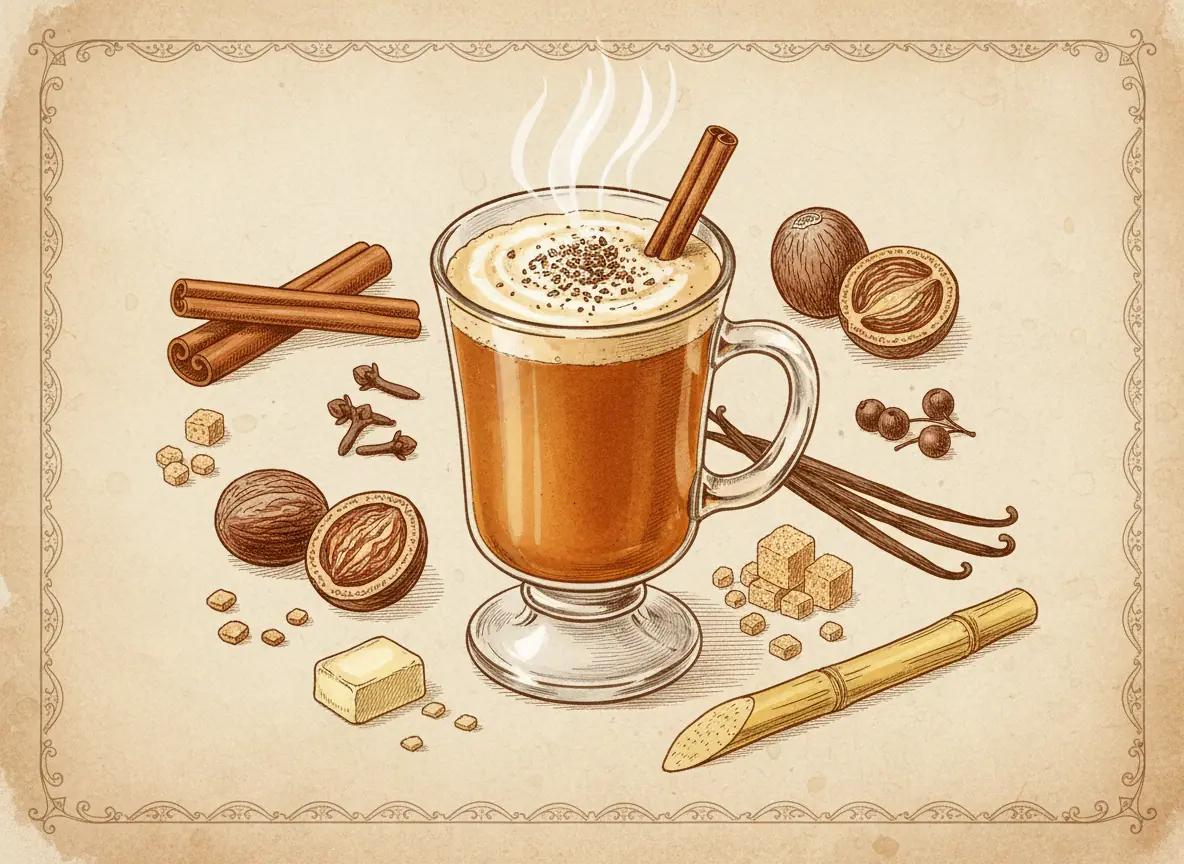
A Hot Buttered Rum is 60ml of dark rum poured over about 50g of spiced butter batter in a warmed mug, topped with 150ml of water just off the boil and stirred until the butter melts through, then finished with grated nutmeg and a cinnamon stick. About 2.4 UK units. The batter is butter, dark brown sugar, cinnamon, allspice, a pinch of clove and vanilla, so the drink contains milk. The Oxford Companion calls hot buttered rum a colonial-era drink once favoured for being medicinal; we have found no early recipe from then. Jerry Thomas’s 1862 bar guide prints a hot spiced rum of sugar, Jamaica rum, allspice and cloves, butter and hot water, and the Companion says a batter of butter, sugar and spices cures the slick that loose butter leaves. The batter is the method. Butter dropped into a mug alone floats in a slick; beaten first with sugar and spice, it melts evenly into the rum and water.
Where this one sits
Recipe by Jerry Can Spirits · Updated 19 October 2026