Wassail
Wassail is a hot bowl for eight to ten: a litre of cloudy apple juice and 500ml of dry cider, warmed with two cinnamon sticks, a teaspoon of ground ginger and an orange studded with six cloves, held below a simmer for 20 minutes, never boiled, and sweetened with brown sugar to taste. Add 100ml of brandy or calvados off the heat if you want it stronger. With a 5% cider and the brandy, a cup carries about 0.7 to 0.8 UK units. The name was a greeting before it was a drink. Dictionary.com gives it as Middle English was-hail, from was, be, and hail, in good health, replacing the Old English wæs hāl. In Geoffrey of Monmouth’s British History, in the translation on Project Gutenberg, King Vortigern is told to answer the toast “wacht heil” with “Drinc heil”. Ours is the cider version, soft and lightly spiced and gentle enough for a second cup. Made with apple juice alone, it has no alcohol at all.
Glassware: Punch Bowl
Garnish:
Ingredients
1 litre
The base, and most of the sweetness. Cloudy rather than clear, for the body that carries the spice. Use it alone, with no cider or brandy, for an alcohol-free bowl.
500ml
A dry cider at about 5% ABV; ciders run up to 8.5%, so check the label, and the units rise with it. It brings acidity and the orchard thread of the old custom, and all of the alcohol unless you add brandy. Most ciders contain sulphites; the label will say.
To taste
Added a spoonful at a time, because ciders and juices differ too much for a fixed measure. Stop while the bowl still tastes of apple.
6
Pressed into the orange rather than loose in the pan. Cloves take over a bowl quickly, and studded ones are easy to find and lift out.
1 tsp
Dry warmth under the fruit. A single teaspoon disperses through the bowl without leaving a gritty sediment.
1, studded with the cloves
Studded with the six cloves. It scents the bowl as it warms and stays in the pan when you serve.
100ml (optional)
At 40% ABV, added off the heat so it stays in the bowl. Calvados keeps the drink on apples; brandy is warmer and rounder.
Instructions
Stud the orange with the cloves.
Put the apple juice, cider, cinnamon sticks, ground ginger and studded orange in a large pan.
Warm gently and hold below a simmer for 20 minutes so the spices open. Do not let it boil.
Sweeten with brown sugar in stages, tasting as it warms.
Take the pan off the heat and add the brandy or calvados, if using.
Ladle into heatproof cups, or serve from a warmed punch bowl.
Our version
Wassail has no fixed recipe: old bowls were hot ale, cider or mead with spice, sugar and apples. Ours is cloudy apple juice and dry cider with whole spice, ground ginger and a clove-studded orange, and brandy or calvados is optional.
Source: our own specification. Last checked 9 October 2026.
Expert Tip
Never let it boil. Held below a simmer, the spices open slowly into the cider. Boiling strips the aromatics, costs the cider some of its alcohol and leaves the cloves tasting harsh. Keep the spices whole. Cinnamon sticks and cloves pressed into the orange can be lifted out; loose ground spice clouds the bowl. The teaspoon of ginger is the only ground spice it takes. Sweeten in stages. Ciders and apple juices differ a great deal in sugar, so add the brown sugar a spoonful at a time as the bowl warms, and taste between each.
Behind the Wassail
Flavour Profile
The Toast Came First
Wassail was a greeting long before it named a drink. Dictionary.com gives Middle English was-hail, from was, be, and hail, in good health, replacing the Old English wæs hāl. In Geoffrey of Monmouth’s British History, in the translation on Project Gutenberg, Hengist’s daughter offers King Vortigern a cup of wine with the words “wacht heil”, he is told to answer “Drinc heil”, and from then on in Britain whoever drank to another said “Wacht heil” and the one pledged answered “Drinc heil”.
William Terrington’s Cooling Cups and Dainty Drinks of 1869 says wassail songs and the wassail bowl were among the most noted of the Christmas festivities. It gives a wassail bowl of hot ale with nutmeg, ginger, cinnamon, sherry, toast and roasted apples, and lamb’s wool, roasted apples mashed into old ale with ginger and nutmeg. The Oxford Companion says that in England wassail is made with cider, one of the mulled drinks that generally use wine or cider as the base.
The Orchard Rite
The English Folk Dance and Song Society describes a second kind of wassailing, the wassailing of apple trees on Old Twelfth Night in the West Country and Herefordshire. People surround the trees, cider is poured over the roots, cider-soaked toast goes in the branches for the robins, a wassail song is sung, and shotguns are fired into the branches. The Carhampton wassail in Somerset is held on 17 January.
The shotguns are fired to drive away the evil spirits that would spoil the apple crop, the Society says, and areas with cider-making industries have encouraged, even started, such events in recent times.
Door to Door
The bowl also went from house to house. The Society says it is generally carried round just before Christmas and sometimes in the New Year, and that in Bodmin, Cornwall, on Old Christmas Day, men in full evening dress visit local houses singing songs, drinking and collecting for charity. Terrington says the wassail songs were sung generally by strolling minstrels, from whom he traces our waits and carol singers.
The Modern Bowl
Apple juice and dry cider keep the bowl on the orchard side of the tradition. The juice gives sweetness and body; the cider brings acidity and a little alcohol.
Brown sugar goes in by taste, because ciders vary. Brandy or calvados, if you use it, goes in off the heat so it stays in the drink.
Three Hot Drinks for Winter
Wassail beside Mulled Wine and the Hot Toddy
Wassail (ours)
- Base
- 1 litre cloudy apple juice, 500ml dry cider
- Spirit
- 100ml brandy or calvados, optional
- Serves
- Eight to ten
- UK units
- About 0.7 to 0.8 a cup with brandy; under 0.5 without
Mulled Wine
- Base
- 750ml red wine, 100ml orange juice
- Spirit
- 150ml brandy
- Serves
- Six to eight
- UK units
- About 2.0 to 2.6 a cup
Hot Toddy
- Base
- 120ml hot water, lemon and honey
- Spirit
- 60ml Scotch
- Serves
- One
- UK units
- About 2.4
| Drink | Base | Spirit | Serves | UK units |
|---|---|---|---|---|
| Wassail (ours) | 1 litre cloudy apple juice, 500ml dry cider | 100ml brandy or calvados, optional | Eight to ten | About 0.7 to 0.8 a cup with brandy; under 0.5 without |
| Mulled Wine | 750ml red wine, 100ml orange juice | 150ml brandy | Six to eight | About 2.0 to 2.6 a cup |
| Hot Toddy | 120ml hot water, lemon and honey | 60ml Scotch | One | About 2.4 |
How to Serve It
From the pan or a warmed punch bowl into heatproof cups, with the studded orange left in the pot. It holds on the lowest heat for the evening and scales by plain multiplication.
Offer the toast with the first ladle: wassail, and the reply, drinkhail.
For red wine in place of cider, make Mulled Wine; for a hot drink made by the glass, a Hot Toddy.
Make it at home
The Spirit
BrandyBrandy is wine, distilled and then aged in oak, and under the retained Regulation (EC) 110/2008 the word on its own means grape brandy of at least 36% ABV, matured for six months or more. Our recipes assume 40%. It is the warm, dried-fruit base of milk punch, eggnog and mulled wine, where a sound young bottle serves better than an expensive old one.
More to explore
Frequently Asked Questions
What does wassail mean?
Is wassail alcoholic?
What is wassailing the orchard?
Why must it not boil?
When is wassail drunk?
Can I make wassail ahead?
What is lambswool?
How strong is wassail?
Sources.
Correct as of 19 October 2026.
- Project Gutenberg, ed. J. A. Giles, “Old English Chronicles (Geoffrey of Monmouth’s British History)” (primary source: Geoffrey of Monmouth, who lived in the early twelfth century; Vortigern and Hengist’s daughter, “Lauerd king wacht heil”, answer “Drinc heil”, the custom thereafter in Britain).
- Dictionary.com, “wassail” (dictionary entry: Middle English was-hail, 1175 to 1225, from was and hail (Old Norse heill), replacing Old English wæs hāl).
- English Folk Dance and Song Society, “Wassailing Apple Trees” (society’s guide to British folk customs: Old Twelfth Night, cider on the roots, toast for the robins, shotguns; Carhampton on 17 January; the wassail bowl before Christmas; Bodmin on Old Christmas Day).
- William Terrington (1869), Internet Archive, “Cooling Cups and Dainty Drinks” (primary source: Vortigern and Rowena; wassail songs and the wassail bowl; recipes for a wassail bowl and lamb’s wool).
- The Oxford Companion to Spirits and Cocktails (Derek Brown), “mulled drinks” (secondary source: in England, wassail is made with cider; mulled drinks generally use wine or cider as the base).
- legislation.gov.uk, “Calendar (New Style) Act 1750” (the year to begin on 1 January; 2 September 1752 followed by 14 September, omitting eleven days).
You Might Also Like
Hot Toddy
A Hot Toddy is 60ml Scotch, 15ml honey syrup, 15ml fresh lemon juice and 120ml water just off the boil. Stir the honey syrup, lemon and water in a warmed mug, add the whisky last, and finish with a clove-studded lemon wheel and a cinnamon stick. About 2.4 UK units. The Oxford Companion says the toddy’s origin is murky and does not appear to be linked to the South Asian palm wine of the same name, that it first appears in print in England in 1741, and that Scotland made the drink an institution, particularly the hot version. In our view, made with Scotch it is the version most tied to Scotland. Restraint is the method. Water just off the boil keeps the whisky’s aroma in the mug, and honey syrup mixes where neat honey sinks.
Hot Buttered Rum
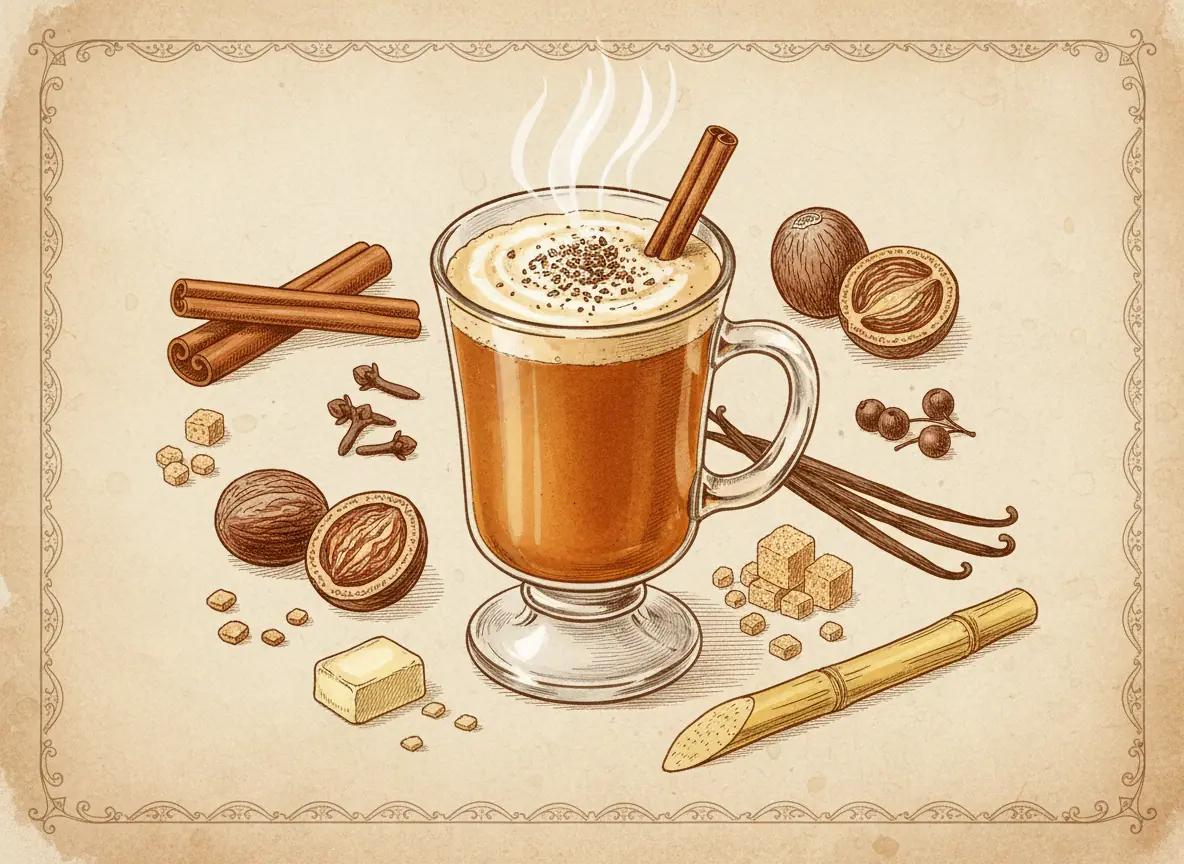
A Hot Buttered Rum is 60ml of dark rum poured over about 50g of spiced butter batter in a warmed mug, topped with 150ml of water just off the boil and stirred until the butter melts through, then finished with grated nutmeg and a cinnamon stick. About 2.4 UK units. The batter is butter, dark brown sugar, cinnamon, allspice, a pinch of clove and vanilla, so the drink contains milk. The Oxford Companion calls hot buttered rum a colonial-era drink once favoured for being medicinal; we have found no early recipe from then. Jerry Thomas’s 1862 bar guide prints a hot spiced rum of sugar, Jamaica rum, allspice and cloves, butter and hot water, and the Companion says a batter of butter, sugar and spices cures the slick that loose butter leaves. The batter is the method. Butter dropped into a mug alone floats in a slick; beaten first with sugar and spice, it melts evenly into the rum and water.
Mulled Wine
Mulled wine for six to eight is 750ml of red wine, 150ml of brandy, 100ml of fresh orange juice and 75ml of honey, warmed in a large pan with two cinnamon sticks, six cloves, two star anise and a few wide strips of citrus peel. It is held at a bare steam for fifteen to twenty minutes and never boiled. About 2.0 to 2.6 UK units a cup. Gentle heat lifts the spice into the room and takes the edge off the wine. A boil drives off alcohol and pulls bitter, stewed flavours from the clove and cinnamon, so the surface should shiver and never bubble. The brandy keeps the drink from tasting thin once the heat has softened the wine. Spiced, sweetened wine is very old. The Roman cookery collection that carries the name of Apicius opens with a spiced wine, the conditum paradoxum, and the Oxford Companion says mulled-style drinks go back to early medieval times under names such as hippocras. This is a modern British pan: brandy, honey and fresh orange.
Where this one sits
Recipe by Jerry Can Spirits · Updated 19 October 2026