Brandy Milk Punch
A Brandy Milk Punch is 50ml brandy, 90ml cold whole milk, 15ml simple syrup and two drops of vanilla extract, shaken hard for 10 to 12 seconds and strained over fresh ice in a double rocks glass, with nutmeg grated over the top. About 2.0 UK units. It contains milk. Milk punch is old. By the Oxford Companion’s account it was first recorded in 1688, the earliest written recipe is from a 1711 cookbook, and in 1763 Benjamin Franklin wrote down a method that added brandy and lemon to hot milk so it curdled and could be strained clear. The quick, cloudy version here is the one the American South kept: it is common in New Orleans and traditional at Christmas across the Deep South. Whole milk is the choice that matters. It carries the brandy and the vanilla and stays light, where cream would turn the glass into dessert. The nutmeg reaches the nose first, so grate it fresh.
Glassware: Rocks Glass
Garnish: Freshly grated nutmeg
Ingredients
50ml
A cognac or another sound grape brandy at 40% ABV. Its dried fruit sits well with the vanilla and nutmeg. Bourbon gives a rounder, sweeter punch.
90ml
Whole milk, cold from the fridge. Its fat carries the vanilla and holds the froth; cream makes the drink heavy and skimmed makes it thin. This is the allergen in the glass.
15ml
Sugar and water, 1:1 by weight. Older recipes used powdered sugar; a syrup mixes into cold milk without leaving grains.
2 drops
Two drops of pure extract. It seasons the milk; more turns it into a milkshake.
Instructions
Add the brandy, cold milk, simple syrup and vanilla to a shaker.
Fill with cubed ice and shake hard for 10 to 12 seconds.
Strain into a double rocks glass over fresh ice.
Grate nutmeg over the surface.
Expert Tip
Use the milk straight from the fridge. Cold milk froths better in the shake and holds the chill without much melt, and the glass never tastes watery. Do not cut the shake short. Milk takes on air under a hard shake and comes out soft and light; under-shaken, it pours flat. Grate the nutmeg fresh, and be generous. Ready-ground nutmeg fades quickly once opened, and on a drink this gentle the aroma carries much of the flavour.
Behind the Brandy Milk Punch
Flavour Profile
Where It Comes From
Milk punch has a long record. The Oxford Companion says it was first recorded in William Sacheverell’s 1688 travelogue of the Scottish isle of Iona, that the earliest written recipe is from a 1711 cookbook by Mary Rockett, and that the clarified kind was very popular in England by the middle of the eighteenth century. In 1763 Benjamin Franklin set down a method that added brandy and lemon to hot milk, so the milk curdled and could be strained off, leaving a clear punch that kept, the Companion says.
Queen Victoria issued a royal warrant to the company of Nathaniel Whisson as “purveyors of milk punch to Her Majesty”, the Companion says. In the American South the quick, cloudy kind lasted. It is common in New Orleans and traditional at Christmas across the Deep South, shaken fresh rather than bottled.
Milk, Not Cream
Whole milk is the decision the drink rests on. It carries the brandy without covering it, and the vanilla sits in its fat.
Cream makes a richer, heavier drink that tastes of dessert and hides the spirit. Skimmed milk has too little fat to hold the vanilla or the froth, and the punch tastes thin.
Against Eggnog
Eggnog and milk punch share most of their ingredients. Eggnog adds whole egg and cream, so it is thicker and richer; milk punch keeps to milk and stays light.
Brandy Milk Punch and its relatives
Brandy Milk Punch
- Spirit
- 50ml brandy
- Dairy
- 90ml whole milk
- Egg
- None
- Served
- Shaken, over ice
- UK units
- 2.0
Eggnog
- Spirit
- 30ml brandy, 15ml dark rum
- Dairy
- 60ml milk, 30ml cream
- Egg
- Whole egg
- Served
- Shaken, in a punch cup
- UK units
- 1.8
Clarified milk punch
- Spirit
- Varies
- Dairy
- Milk, curdled and strained out
- Egg
- None
- Served
- Clear, bottled and kept
- UK units
- Varies
| Drink | Spirit | Dairy | Egg | Served | UK units |
|---|---|---|---|---|---|
| Brandy Milk Punch | 50ml brandy | 90ml whole milk | None | Shaken, over ice | 2.0 |
| Eggnog | 30ml brandy, 15ml dark rum | 60ml milk, 30ml cream | Whole egg | Shaken, in a punch cup | 1.8 |
| Clarified milk punch | Varies | Milk, curdled and strained out | None | Clear, bottled and kept | Varies |
Clarified milk punch is another drink again. The milk is there to be curdled and removed, so what reaches the glass is clear and keeps well.
Brandy or Bourbon
Brandy is the older choice. A cognac’s dried fruit and soft oak sit naturally against vanilla and nutmeg.
Bourbon makes a rounder, sweeter drink with more weight. Either works at the same 50ml.
How to Serve It
Cold and frothy, over fresh ice in a double rocks glass, with nutmeg grated over the top. Strained up into a small chilled glass, it looks smarter and warms faster.
It contains milk, so check with a guest before you pour one.
Make it at home
The Spirit
BrandyBrandy is wine, distilled and then aged in oak, and under the retained Regulation (EC) 110/2008 the word on its own means grape brandy of at least 36% ABV, matured for six months or more. Our recipes assume 40%. It is the warm, dried-fruit base of milk punch, eggnog and mulled wine, where a sound young bottle serves better than an expensive old one.
Master the Techniques
More to explore
Frequently Asked Questions
What is in a Brandy Milk Punch?
How strong is a Brandy Milk Punch?
Does a Brandy Milk Punch contain allergens?
Milk or cream?
Brandy or bourbon?
Is it the same as clarified milk punch?
Can I make it ahead?
Sources.
Correct as of 19 October 2026.
- The Oxford Companion to Spirits and Cocktails (Jack Robertiello), “Milk Punch” (secondary source: first recorded in Sacheverell’s 1688 travelogue of Iona; earliest written recipe, Mary Rockett’s 1711 cookbook; Franklin’s 1763 brandy and lemon method; the royal warrant to Nathaniel Whisson; Jerry Thomas 1862; New Orleans).
You Might Also Like
Eggnog
This Eggnog is made by the glass: 30ml of brandy, 15ml of dark rum, one egg separated, 60ml of whole milk, 30ml of cream and 20ml of sugar syrup. The yolk is whisked with the syrup until pale, then everything is dry shaken for 10 to 15 seconds, shaken hard with ice for 10 to 12 and strained into a chilled double rocks glass, with nutmeg grated over. About 1.8 UK units. It is uncooked. The egg is raw, and the drink contains milk and cream. The NHS says hen eggs with the British Lion stamp can be eaten raw, including in pregnancy; drink it as soon as it is made. The Oxford Companion calls eggnog an American invention of the mid-Atlantic region in the late colonial era, with the first printed references in New Jersey and Pennsylvania newspapers in 1788. It is often said to descend from the posset, which the Companion describes as a medieval drink of curdled milk or cream and wine or ale, warmed and often thickened with eggs; we have found no primary record of that line.
Ramos Gin Fizz
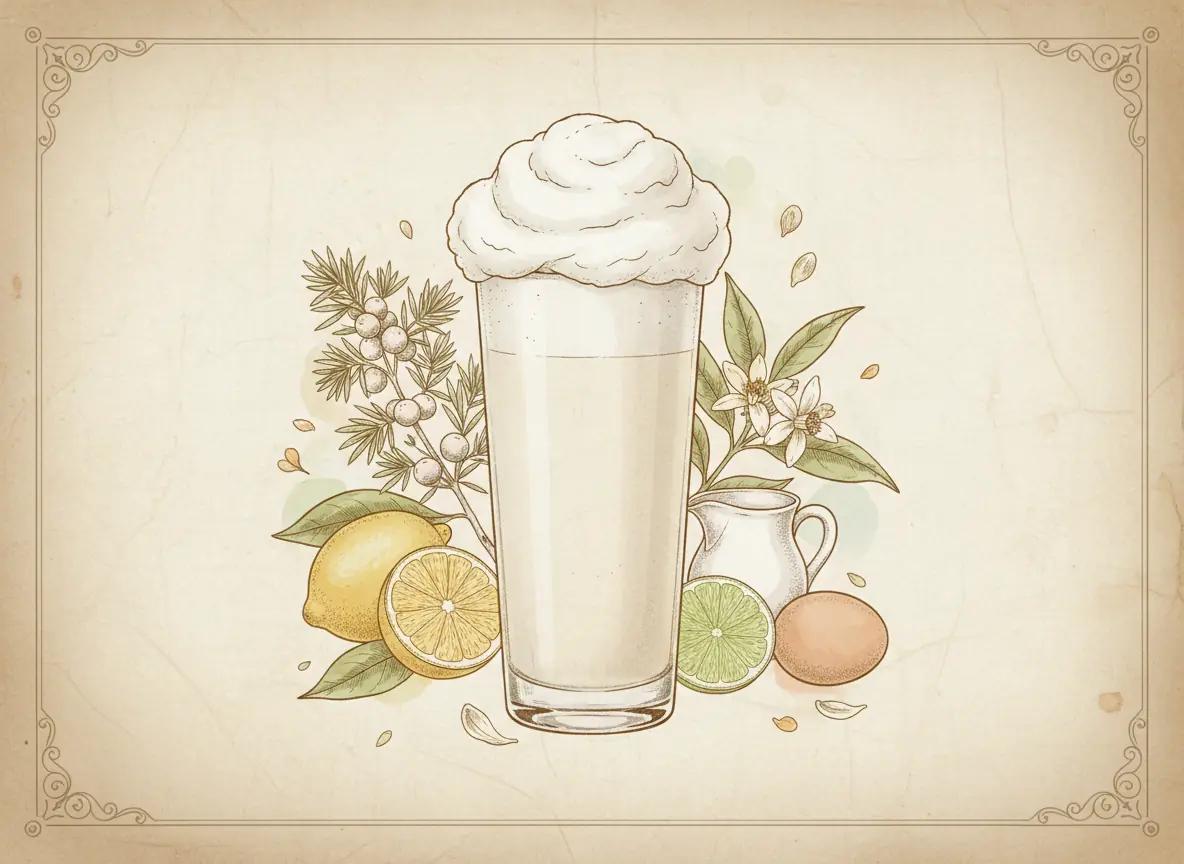
A Ramos Gin Fizz is 45ml of London Dry gin, 15ml each of fresh lemon and lime juice, 30ml of sugar syrup, 30ml of egg white, 60ml of double cream, three dashes of orange flower water and two drops of vanilla extract, shaken long and hard, strained into a chilled highball with no ice and lifted with 60ml of soda water. About 1.8 UK units. It contains raw egg and dairy. Difford’s Guide, a secondary source, says Henry C. Ramos created it in 1888 at the Imperial Cabinet Saloon in New Orleans; the IBA gives the same year but a different bar. The Oxford Companion says the drink’s precise origins are unknown, that the earliest definite notice in print is from 1895, and that the likeliest period is 1892 to 1894. Difford’s quotes Stanley Clisby Arthur on 35 shaker boys at Ramos’s later bar, the Stag, during the 1915 Mardi Gras. The measures are the IBA’s. The shake is the work: cream and egg white need time to whip into a foam dense enough for the soda to push up out of the glass.
Irish Coffee
An Irish Coffee is 50ml of Irish whiskey and a teaspoon of demerara sugar stirred into 120ml of hot filter coffee in a warmed glass, with 50ml of cream whipped to the texture of cold pouring custard and floated on top over the back of a warm spoon. Nothing goes on the cream, ever. About 2.0 UK units. The Foynes Flying Boat Museum dates it to the winter of 1943 at the Foynes flying-boat terminal, when the chef Joe Sheridan put Irish whiskey into the coffee of passengers whose flight had turned back; the Oxford Companion dates it to late 1944 or early 1945. KQED tells the Buena Vista Cafe’s story that its owner and the travel writer Stanton Delaplane set about copying the drink in San Francisco on 10 November 1952; the Companion gives 1953. It is drunk through the cream: hot, sweet coffee and whiskey under a cold layer, so every sip arrives warm and cool at once. The cream is dairy, so make it for milk drinkers only.
Where this one sits
Recipe by Jerry Can Spirits · Updated 19 October 2026