Irish Coffee
An Irish Coffee is 50ml of Irish whiskey and a teaspoon of demerara sugar stirred into 120ml of hot filter coffee in a warmed glass, with 50ml of cream whipped to the texture of cold pouring custard and floated on top over the back of a warm spoon. Nothing goes on the cream, ever. About 2.0 UK units. The Foynes Flying Boat Museum dates it to the winter of 1943 at the Foynes flying-boat terminal, when the chef Joe Sheridan put Irish whiskey into the coffee of passengers whose flight had turned back; the Oxford Companion dates it to late 1944 or early 1945. KQED tells the Buena Vista Cafe’s story that its owner and the travel writer Stanton Delaplane set about copying the drink in San Francisco on 10 November 1952; the Companion gives 1953. It is drunk through the cream: hot, sweet coffee and whiskey under a cold layer, so every sip arrives warm and cool at once. The cream is dairy, so make it for milk drinkers only.
Glassware: Irish Coffee Mug
Garnish: Cream is the garnish: nothing on top, ever
Ingredients
50ml
A smooth blended Irish whiskey at 40% ABV. Hot, sweet coffee and cold cream flatten fine detail, so keep a more expensive bottle for sipping on the side.
120ml
Good filter coffee, hot and freshly made, strong enough to stand up to the whiskey. Its 120ml sets the length and holds the heat; espresso makes a shorter, different drink.
1 tsp
A level teaspoon, dissolved fully before the whiskey goes in. It makes the coffee dense enough to carry the cream. The IBA allows any sugar; demerara adds a light caramel note.
50ml
Fresh, cold double or whipping cream, whipped only to pouring-custard thickness and floated over a warm spoon. Aerosol cream collapses. Dairy, of course.
Instructions
Warm an Irish coffee mug with hot water, then tip the water out.
Add a teaspoon of demerara sugar and 120ml of hot filter coffee, and stir until the sugar dissolves.
Add the whiskey and stir once.
Whip the cream only until it thickens to the texture of cold pouring custard: it should still just pour.
Float the cream over the back of a warm spoon held at the coffee’s surface, filling the last centimetre of the glass.
Serve immediately, without a spoon and with nothing on top: the coffee is drunk through the cream.
Source: the IBA (Official IBA specification; demerara for the IBA’s sugar and the cream lightly whipped; method ours). Last checked 9 October 2026.
Expert Tip
The sugar is structural. A teaspoon of demerara dissolved into the coffee makes it dense enough to carry the cream. Leave it out and the float fails however well the cream is whipped, which is the usual way this drink goes wrong. Whip the cream only to the texture of cold pouring custard. It should still just pour off a spoon. Aerosol cream collapses into the coffee, and stiffly whipped cream sits on top like a pudding. Pour it over the back of a warm spoon held at the surface. A cold spoon thickens the cream on contact and a fast pour punches through it, and either way the layer is lost before it forms.
Behind the Irish Coffee
Flavour Profile
Where It Comes From
The Foynes Flying Boat Museum tells it this way: in 1943 Brendan O’Regan opened a restaurant and coffee shop in the Foynes terminal building and recruited the chef Joe Sheridan to run the kitchen. By the museum’s account, late one night in the winter of 1943 a flight bound for New York turned back in bad weather, and Sheridan put Irish whiskey into the passengers’ coffee. The Oxford Companion gives late 1944 or early 1945, for a group of dignitaries touring the flying-boat station and the new airport being built across the Shannon, and calls the competing story of the Dolphin Hotel in Dublin unsupported.
KQED tells the Buena Vista’s story: on 10 November 1952 the cafe’s owner, Jack Koeppler, and the travel writer Stanton Delaplane, who had drunk the coffee at Foynes, set about copying it, and Sheridan later came to San Francisco, though it is unclear whether he worked at the cafe. The Oxford Companion dates Delaplane’s introduction of the drink to Koeppler to 1953.
The Cream
The float is a matter of density. Sugar makes the coffee heavier, lightly whipped cream is lighter, and the warm spoon spreads the cream across the surface instead of letting it plunge. Get all three right and the cream sits as a cold layer a centimetre deep.
Whiskey and Coffee
Coffee is the larger part of the glass, so it matters more than the whiskey. Use good filter coffee, hot and fresh. A smooth blend does the whiskey’s job, adding warmth and grain sweetness without fighting the roast.
The IBA and Ours
Irish Coffee: the IBA’s version beside ours
Irish whiskey
- IBA
- 50ml
- Ours
- 50ml, a smooth blend
Coffee
- IBA
- 120ml hot coffee
- Ours
- 120ml hot filter coffee
Sugar
- IBA
- At least a teaspoon, or sugar syrup
- Ours
- A teaspoon of demerara
Cream
- IBA
- 50ml fresh cream, chilled, poured over a spoon
- Ours
- 50ml, whipped to pouring custard, floated over a warm spoon
Glass
- IBA
- Preheated Irish coffee glass
- Ours
- Warmed Irish coffee mug
Garnish
- IBA
- None
- Ours
- None, ever
| Element | IBA | Ours |
|---|---|---|
| Irish whiskey | 50ml | 50ml, a smooth blend |
| Coffee | 120ml hot coffee | 120ml hot filter coffee |
| Sugar | At least a teaspoon, or sugar syrup | A teaspoon of demerara |
| Cream | 50ml fresh cream, chilled, poured over a spoon | 50ml, whipped to pouring custard, floated over a warm spoon |
| Glass | Preheated Irish coffee glass | Warmed Irish coffee mug |
| Garnish | None | None, ever |
How to Serve It
In a warmed, heat-resistant glass on a short stem with a handle, filled to within a centimetre of the rim before the cream goes on. Serve it without a spoon or a straw and do not stir it: the drink is taken through the cream, hot and cold together.
For a hot whisky drink without coffee, make a Hot Toddy.
Make it at home
The Spirit
Whiskey (Irish)Irish whiskey is whiskey distilled on the island of Ireland and aged there in wood for three years or longer, and bottled at no less than 40% ABV. The Irish Whiskey technical file names four types, pot still, malt, grain and blended, and the soft blends are what our nine Irish recipes mostly use. The Irish Whiskey technical file calls triple distillation the traditional practice, not a rule, and specifies unpeated malt only for pot still whiskey.
More to explore
Frequently Asked Questions
Why will my cream not float?
Which whiskey should I use for Irish Coffee?
Can I use espresso instead of filter coffee?
Who invented the Irish Coffee?
How strong is an Irish Coffee?
Should anything go on top of the cream?
Can I make an Irish Coffee without whiskey?
Sources.
Correct as of 19 October 2026.
- Foynes Flying Boat & Maritime Museum, “The Origin of Irish Coffee” (the museum’s own account: Brendan O’Regan opened the Foynes terminal restaurant in 1943 and recruited the chef Joe Sheridan; a flight turned back in the winter of 1943; Sheridan put Irish whiskey in the coffee; the Brazilian coffee joke).
- The Oxford Companion to Spirits and Cocktails (Robert Simonson and David Wondrich), “Irish Coffee” (secondary source: created in late 1944 or early 1945 at the Foynes flying boat station by Joe Sheridan; the competing Dolphin Hotel story unsupported; Delaplane brought it to Jack Koeppler of the Buena Vista in 1953).
- IBA, “Irish Coffee” (official specification: 50ml Irish whiskey, 120ml hot coffee, 50ml chilled cream, at least a teaspoon of sugar, preheated glass, no garnish).
- KQED (Kelly O’Mara), “The true history of Irish coffee and its San Francisco origins” (named-author public broadcaster: the Buena Vista’s account, 10 November 1952; the Foynes museum’s 1943 story; Eric Felten on the Dolphin Hotel; Sheridan came to San Francisco, though it is unclear whether he worked at the Buena Vista).
You Might Also Like
Hot Toddy
A Hot Toddy is 60ml Scotch, 15ml honey syrup, 15ml fresh lemon juice and 120ml water just off the boil. Stir the honey syrup, lemon and water in a warmed mug, add the whisky last, and finish with a clove-studded lemon wheel and a cinnamon stick. About 2.4 UK units. The Oxford Companion says the toddy’s origin is murky and does not appear to be linked to the South Asian palm wine of the same name, that it first appears in print in England in 1741, and that Scotland made the drink an institution, particularly the hot version. In our view, made with Scotch it is the version most tied to Scotland. Restraint is the method. Water just off the boil keeps the whisky’s aroma in the mug, and honey syrup mixes where neat honey sinks.
Espresso Martini
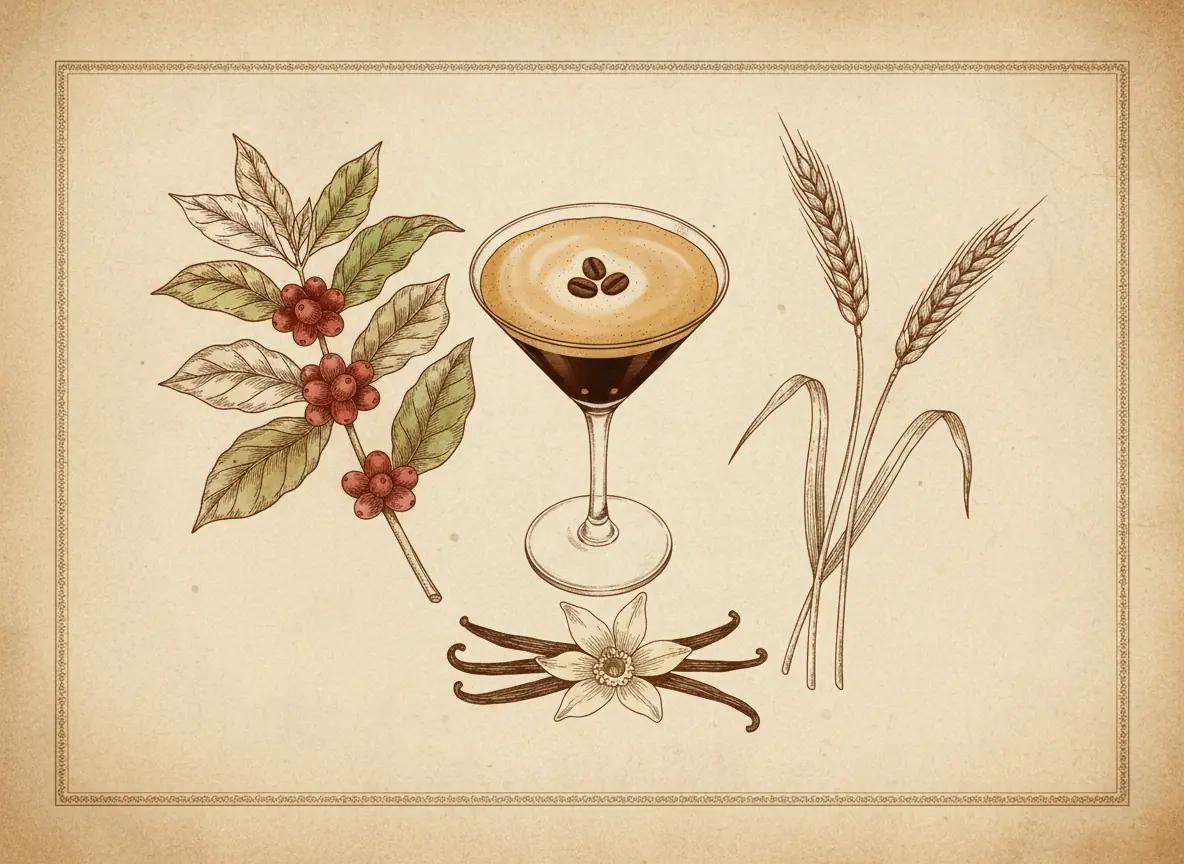
An Espresso Martini is 50ml of vodka, 30ml of Kahlúa, 10ml of sugar syrup and one freshly pulled espresso of about 30ml, shaken hard for 10 to 12 seconds and double strained into a chilled martini glass, with three coffee beans laid on the foam. About 2.5 UK units, and the caffeine of a single shot. The Oxford Companion says Dick Bradsell created it at the Soho Brasserie in London in 1983, for a famous model who asked for a drink to wake her up and then mess her up; he never said who she was. The measures are the IBA’s. Vodka gives strength and cold without flavour, so the coffee leads. The foam comes from the crema of a shot pulled moments before the shake, which is why the espresso goes in last.
Hot Buttered Rum
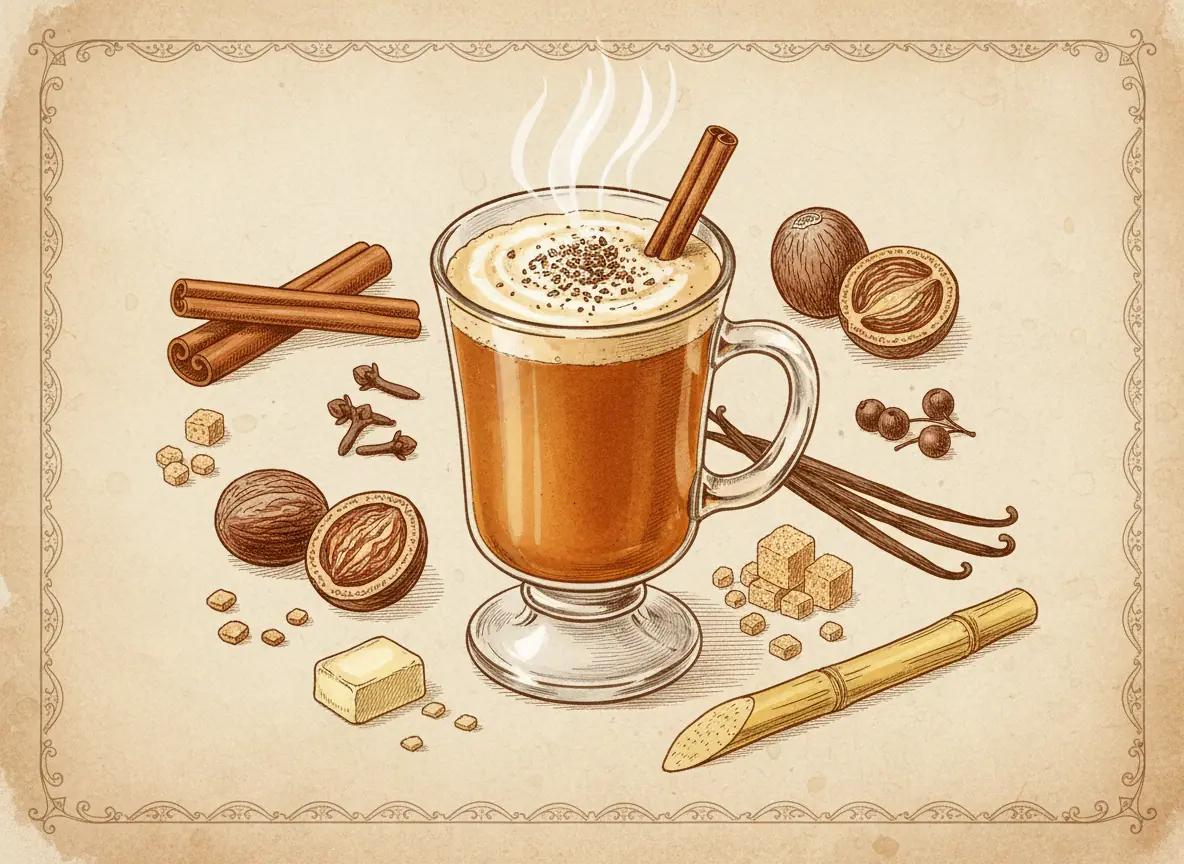
A Hot Buttered Rum is 60ml of dark rum poured over about 50g of spiced butter batter in a warmed mug, topped with 150ml of water just off the boil and stirred until the butter melts through, then finished with grated nutmeg and a cinnamon stick. About 2.4 UK units. The batter is butter, dark brown sugar, cinnamon, allspice, a pinch of clove and vanilla, so the drink contains milk. The Oxford Companion calls hot buttered rum a colonial-era drink once favoured for being medicinal; we have found no early recipe from then. Jerry Thomas’s 1862 bar guide prints a hot spiced rum of sugar, Jamaica rum, allspice and cloves, butter and hot water, and the Companion says a batter of butter, sugar and spices cures the slick that loose butter leaves. The batter is the method. Butter dropped into a mug alone floats in a slick; beaten first with sugar and spice, it melts evenly into the rum and water.
Where this one sits
Recipe by Jerry Can Spirits · Updated 19 October 2026