Eggnog
This Eggnog is made by the glass: 30ml of brandy, 15ml of dark rum, one egg separated, 60ml of whole milk, 30ml of cream and 20ml of sugar syrup. The yolk is whisked with the syrup until pale, then everything is dry shaken for 10 to 15 seconds, shaken hard with ice for 10 to 12 and strained into a chilled double rocks glass, with nutmeg grated over. About 1.8 UK units. It is uncooked. The egg is raw, and the drink contains milk and cream. The NHS says hen eggs with the British Lion stamp can be eaten raw, including in pregnancy; drink it as soon as it is made. The Oxford Companion calls eggnog an American invention of the mid-Atlantic region in the late colonial era, with the first printed references in New Jersey and Pennsylvania newspapers in 1788. It is often said to descend from the posset, which the Companion describes as a medieval drink of curdled milk or cream and wine or ale, warmed and often thickened with eggs; we have found no primary record of that line.
Glassware: Rocks Glass
Garnish: Nutmeg grated generously
Ingredients
1
Raw. Whisked with the syrup until pale before anything else goes in; that is where the custard body comes from. The NHS says hen eggs with the British Lion stamp can be eaten raw, including in pregnancy, while other hen eggs should be eaten well cooked; pasteurised carton egg is the alternative. Contains egg, so not for anyone allergic.
1 (about 30ml)
Raw, from the same egg, shaken through for a light foam. The NHS says hen eggs with the British Lion stamp can be eaten raw, including in pregnancy, while other hen eggs should be eaten well cooked; pasteurised carton egg is the alternative. Contains egg: made without any, for someone who cannot eat it, the drink becomes a milk punch.
Instructions
Whisk the egg yolk with the sugar syrup until pale and thick.
Add the yolk mixture, brandy, rum, milk, cream and egg white to a shaker.
Dry shake without ice for 10 to 15 seconds.
Add cubed ice and shake hard for 10 to 12 seconds.
Strain into a chilled double rocks glass of about 30cl.
Grate nutmeg over the top and drink straight away.
Our version
A single glass in the long-standing brandy-and-rum style: 30ml of brandy, 15ml of dark rum, one raw egg, 60ml of milk, 30ml of cream and 20ml of syrup, shaken cold and drunk at once.
Source: our own specification. Last checked 10 October 2026.
Expert Tip
Whisk the yolk with the syrup first, until it turns pale and thick. That gives the drink its custard body. Pour in the milk and spirits first and the yolk never thickens, however hard you shake. Make it to order and drink it cold. This is a raw-egg, fresh-dairy recipe sized for one glass. Aged eggnog is a separate tradition, made in bulk with far more spirit and kept cold for weeks; do not bottle this one. Grate the nutmeg fresh, over the top, at the last moment. Nutmeg ground in a jar has lost most of its scent, and the nutmeg is most of what you smell.
Behind the Eggnog
Flavour Profile
From Posset to Egg-Nogg
The Oxford Companion describes the posset as a medieval, quasi-medicinal drink of curdled milk or cream and wine, fortified wine or ale, warmed, sweetened and frequently thickened with eggs, egg yolks, bread, oats, barley or pounded almonds. Eggnog is often said to descend from it; we have found no primary record of the line between them.
The Oxford Companion gives the first printed references to a drink called Eggnog as New Jersey and Pennsylvania newspapers of 1788, and says that by the early nineteenth century it had become closely associated with Christmas, especially in Virginia and other southern states. Dictionary.com dates the word to 1765 to 1775.
Yolk and White
The yolk gives the custard body, emulsifying with the dairy and the sugar into the thickness the drink is known for. Whisking it with the syrup first is the step that matters.
The white, shaken through without ice before the second shake, gives a light foam on top that keeps the drink from feeling heavy. Some recipes whip it separately and fold it in; shaking is quicker and does nearly as well.
Two Spirits
Thirty millilitres of brandy and 15 of dark rum keep the brandy in front and the rum underneath. Brandy brings grape fruit and a soft warmth; rum brings a darker sweetness.
Bourbon is the usual American alternative and brings vanilla that suits the cream. Whatever you choose, keep the total near 45ml; more and the alcohol pushes through the dairy.
Raw, Cold and Fresh
Nothing here is cooked. The NHS says hen eggs with the red British Lion stamp can be eaten raw, including in pregnancy, so use those, keep the milk and cream cold, and drink the eggnog as soon as it is shaken.
Aged eggnog, bottled weeks before Christmas, is a different recipe, made in bulk with much more spirit. Do not bottle this one. For a hot drink in the same family, make a Tom and Jerry instead of heating eggnog, which scrambles the egg.
Eggnog and Its Relatives
Eggnog, the Tom and Jerry and Brandy Milk Punch
Eggnog
- Egg
- One, raw
- Dairy
- 60ml milk, 30ml cream
- Spirit
- 30ml brandy, 15ml dark rum
- Served
- Cold
Tom and Jerry
- Egg
- One, beaten into a batter
- Dairy
- Hot milk
- Spirit
- 30ml cognac, 30ml dark rum
- Served
- Hot
Brandy Milk Punch
- Egg
- None
- Dairy
- 90ml milk
- Spirit
- 50ml brandy
- Served
- Cold
| Drink | Egg | Dairy | Spirit | Served |
|---|---|---|---|---|
| Eggnog | One, raw | 60ml milk, 30ml cream | 30ml brandy, 15ml dark rum | Cold |
| Tom and Jerry | One, beaten into a batter | Hot milk | 30ml cognac, 30ml dark rum | Hot |
| Brandy Milk Punch | None | 90ml milk | 50ml brandy | Cold |
How to Serve It
Cold, in a chilled double rocks glass of about 30cl, with nutmeg grated over at the last moment. For a party, separate the eggs and whisk the yolks with syrup ahead, keep everything in the fridge, and shake each drink to order.
For a hot version, make a Tom and Jerry; without egg, a Brandy Milk Punch; for the Puerto Rican coconut drink, a Coquito.
Make it at home
The Spirit
BrandyBrandy is wine, distilled and then aged in oak, and under the retained Regulation (EC) 110/2008 the word on its own means grape brandy of at least 36% ABV, matured for six months or more. Our recipes assume 40%. It is the warm, dried-fruit base of milk punch, eggnog and mulled wine, where a sound young bottle serves better than an expensive old one.
More to explore
Frequently Asked Questions
Is this eggnog cooked or raw?
What is in eggnog?
What allergens are in eggnog?
Brandy, rum or both?
Can I age this eggnog?
Why whisk the yolk with the sugar first?
Where does the name eggnog come from?
How strong is eggnog?
Sources.
Correct as of 19 October 2026.
- The Oxford Companion to Spirits and Cocktails (Robert F. Moss), “Eggnog” (secondary source: an American invention of the mid-Atlantic region in the late colonial era; first printed references in New Jersey and Pennsylvania newspapers in 1788; closely associated with Christmas by the early nineteenth century).
- NHS, “Foods to avoid in pregnancy” (official page: hen eggs with the British Lion stamp (or from the Laid in Britain scheme) can be eaten raw, partially cooked or well cooked, including in pregnancy; other hen eggs only well cooked).
- The Oxford Companion to Spirits and Cocktails (William Tipper), “A posset” (secondary source: a medieval, quasi-medicinal drink of curdled milk or cream and wine or ale, frequently thickened with eggs).
- Dictionary.com, “eggnog” (an Americanism dating back to 1765 to 1775; egg + nog).
- Dictionary.com, “nog” (a strong ale formerly brewed in Norfolk, England; first recorded in 1685–95, origin uncertain).
You Might Also Like
Brandy Milk Punch
A Brandy Milk Punch is 50ml brandy, 90ml cold whole milk, 15ml simple syrup and two drops of vanilla extract, shaken hard for 10 to 12 seconds and strained over fresh ice in a double rocks glass, with nutmeg grated over the top. About 2.0 UK units. It contains milk. Milk punch is old. By the Oxford Companion’s account it was first recorded in 1688, the earliest written recipe is from a 1711 cookbook, and in 1763 Benjamin Franklin wrote down a method that added brandy and lemon to hot milk so it curdled and could be strained clear. The quick, cloudy version here is the one the American South kept: it is common in New Orleans and traditional at Christmas across the Deep South. Whole milk is the choice that matters. It carries the brandy and the vanilla and stays light, where cream would turn the glass into dessert. The nutmeg reaches the nose first, so grate it fresh.
Coquito
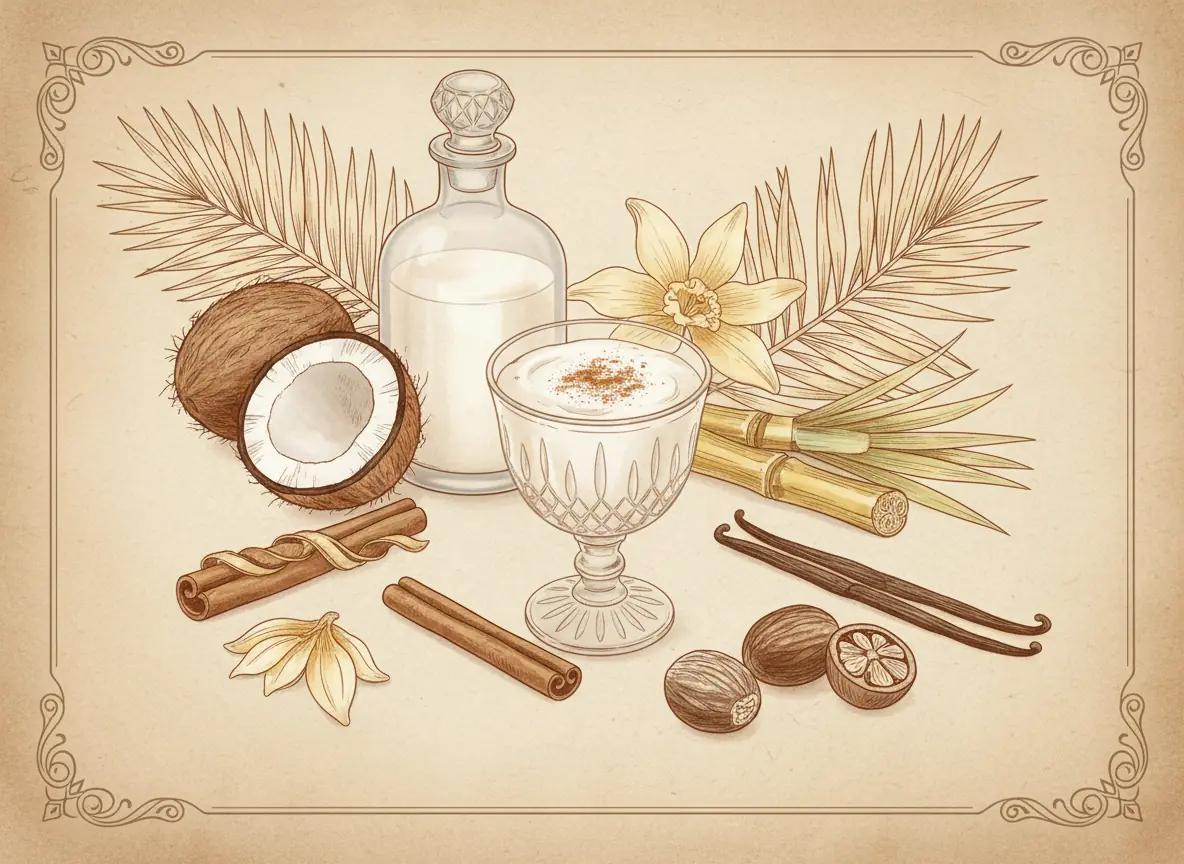
Coquito is Puerto Rico’s Christmas coconut punch: 400ml of coconut milk, 425g of cream of coconut, 400g of sweetened condensed milk, 355ml of evaporated milk and 240ml of white rum, blended with vanilla, cinnamon and nutmeg and chilled overnight. It serves eight over ice, about 30ml of rum and 1.2 UK units a glass. It contains milk; ours has no egg. PureWow, quoting the chef Hector Prieto of the Caribe Hilton in San Juan, translates the name as little coconut and says the origin of the drink is still unknown. Some versions are prepared with eggs like an eggnog, while this one is blended cold. Some families drink it as early as Thanksgiving and as late as Día de los Reyes, the Epiphany on 6 January, with Christmas at the centre. Make it the day before. A fresh batch tastes of its parts; a night in the fridge lets the spice settle into the coconut and milk fat, and the rum stops standing apart. Use white rum: the coconut and spice lead, and an aged or spiced bottle pulls the drink somewhere else.
Hot Buttered Rum
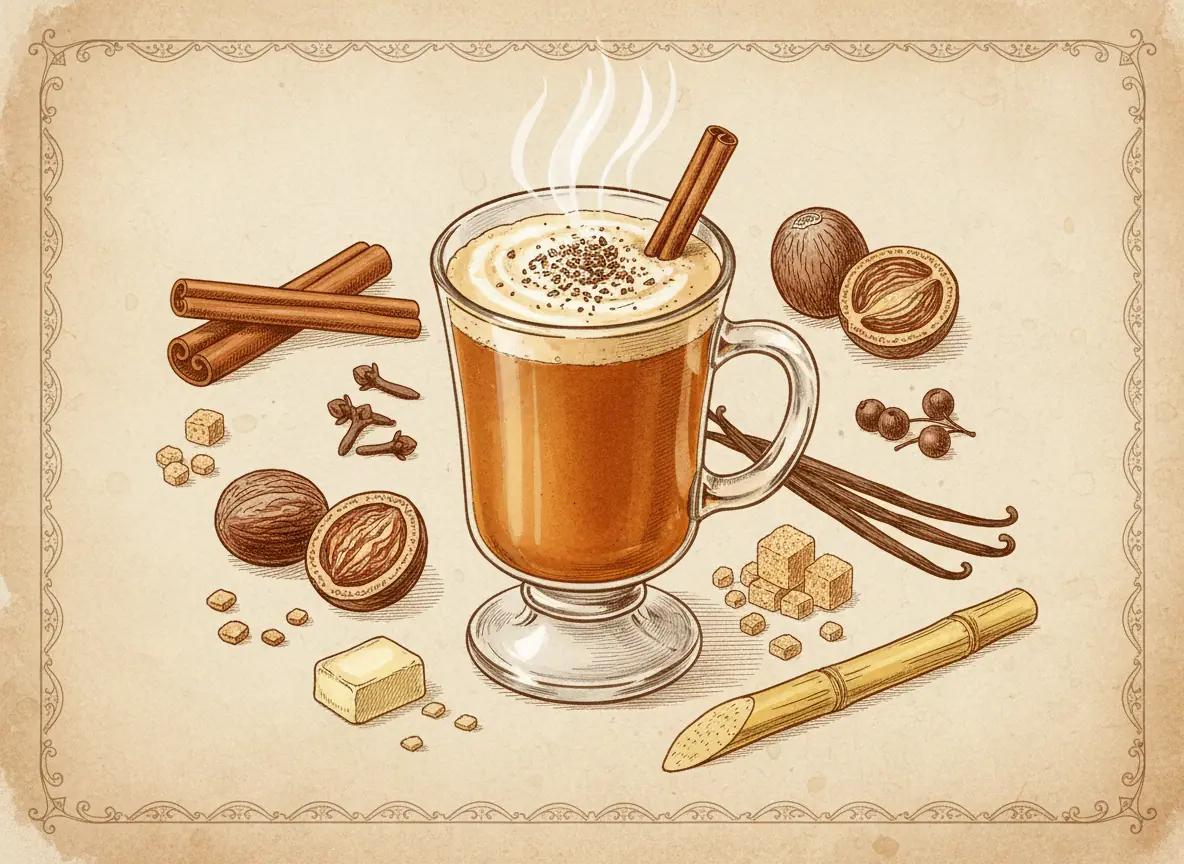
A Hot Buttered Rum is 60ml of dark rum poured over about 50g of spiced butter batter in a warmed mug, topped with 150ml of water just off the boil and stirred until the butter melts through, then finished with grated nutmeg and a cinnamon stick. About 2.4 UK units. The batter is butter, dark brown sugar, cinnamon, allspice, a pinch of clove and vanilla, so the drink contains milk. The Oxford Companion calls hot buttered rum a colonial-era drink once favoured for being medicinal; we have found no early recipe from then. Jerry Thomas’s 1862 bar guide prints a hot spiced rum of sugar, Jamaica rum, allspice and cloves, butter and hot water, and the Companion says a batter of butter, sugar and spices cures the slick that loose butter leaves. The batter is the method. Butter dropped into a mug alone floats in a slick; beaten first with sugar and spice, it melts evenly into the rum and water.
Where this one sits
Recipe by Jerry Can Spirits · Updated 19 October 2026