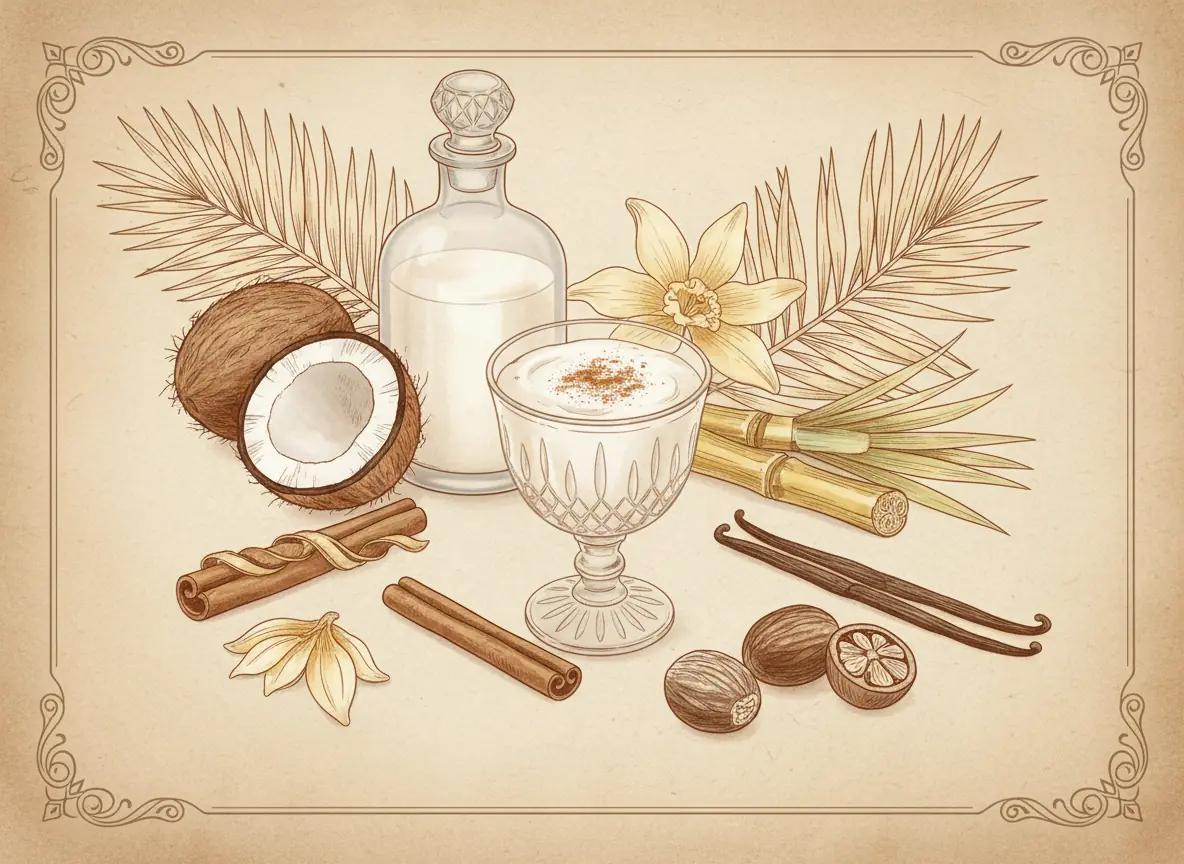
Coquito
Coquito is Puerto Rico’s Christmas coconut punch: 400ml of coconut milk, 425g of cream of coconut, 400g of sweetened condensed milk, 355ml of evaporated milk and 240ml of white rum, blended with vanilla, cinnamon and nutmeg and chilled overnight. It serves eight over ice, about 30ml of rum and 1.2 UK units a glass. It contains milk; ours has no egg. PureWow, quoting the chef Hector Prieto of the Caribe Hilton in San Juan, translates the name as little coconut and says the origin of the drink is still unknown. Some versions are prepared with eggs like an eggnog, while this one is blended cold. Some families drink it as early as Thanksgiving and as late as Día de los Reyes, the Epiphany on 6 January, with Christmas at the centre. Make it the day before. A fresh batch tastes of its parts; a night in the fridge lets the spice settle into the coconut and milk fat, and the rum stops standing apart. Use white rum: the coconut and spice lead, and an aged or spiced bottle pulls the drink somewhere else.
Glassware: Punch Cup
Garnish: Freshly grated nutmeg and Cinnamon stick
Ingredients
400ml
One standard tin, unsweetened. Thinner than cream of coconut, it carries the coconut flavour without more sugar and keeps the batch from tasting of sweetness alone.
425g
One tin of sweetened cream of coconut; Coco López is the usual brand. It sets the sweetness and the body, and unsweetened coconut cream will not do the same job.
400g
One tin. Sugar and a cooked, caramel note in one ingredient, and the reason the batch needs no other sweetener. Contains milk.
355ml
One tin, unsweetened milk with about half its water removed. It gives body without the weight of double cream. Contains milk.
240ml
A white rum at around 40% ABV with some cane character, or a lightly aged one. Spread across eight glasses a neutral rum disappears, and a heavily oaked one fights the coconut.
1 tsp
Pure extract, not flavouring. It rounds the cinnamon and sits naturally beside the condensed milk.
½ tsp
Blended in, so the spice is there from the start. The sticks added for the rest give a slower, rounder note on top.
¼ tsp
Grated from a whole nut, into the blend and again over each glass. Ready-ground nutmeg loses its aroma quickly.
2
Left in the bottle overnight and lifted out before serving. One more per glass goes in as the garnish.
Instructions
Put the coconut milk, cream of coconut, condensed milk, evaporated milk, white rum, vanilla, ground cinnamon and nutmeg in a blender.
Blend on high for 60 seconds until smooth.
Pour into a large bottle or sealed jug and add the cinnamon sticks.
Refrigerate overnight, or for four hours at the least.
Lift out the cinnamon sticks and shake the bottle before each pour.
Pour over cubed ice in punch cups, grate a little nutmeg over each and add a cinnamon stick.
Our version
Coquito has no fixed specification; families keep their own. Ours is blended cold with no egg: four tins of coconut and milk, 240ml of white rum, vanilla, cinnamon and nutmeg, rested overnight.
Source: our own specification. Last checked 9 October 2026.
Expert Tip
Give it the night. Four hours in the fridge is the least it needs and a full night is better: the spice moves into the coconut and milk fat, and the rum stops tasting like a separate layer. Do not swap the tins. Cream of coconut is sweetened and thick, and unsweetened coconut cream leaves the batch thin and flat. Condensed and evaporated milk do different jobs, one sugar and one body. Shake the bottle before every pour. Coconut fat settles and firms in the cold, and an unshaken bottle pours thin at the top and thick at the bottom.
Behind the Coquito
Flavour Profile
The Origin
PureWow quotes Hector Prieto, executive sous chef at the Caribe Hilton in San Juan, saying the origin of coquito is still unknown, and tells the theory that Spanish colonists brought their version of eggnog, posset, to the island, where it was infused with local rum. Similar drinks are found across Latin America, such as rompope in Mexico.
PureWow says some families drink it as early as Thanksgiving and as late as Día de los Reyes, the Epiphany on 6 January. Some families prepare it with eggs. Ours is blended cold, has no egg, and is poured over ice to take the edge off the richness.
The Four Tins
Cream of coconut gives sweetness and a thick, smooth body. Coconut milk is thinner and unsweetened, carrying coconut flavour without more sugar.
Condensed milk adds sugar and a cooked, caramel note. Evaporated milk, with about half its water removed, adds body without the weight of cream. Each does a separate job, so swapping one for another shows in the glass.
Spice and the Overnight Rest
Ground cinnamon and nutmeg are blended in so the flavour is there from the start. The cinnamon sticks go into the bottle for the night and come out before serving, adding a slower, rounder note.
Cold and time do the rest. The spice dissolves into the fat of the coconut and the milk, and by morning the batch tastes of one drink rather than four tins and a bottle.
The Batch and the Glass
Coquito for eight, and per glass
Coconut milk
- The batch
- 400ml
- Per glass, eight
- 50ml
Cream of coconut
- The batch
- 425g
- Per glass, eight
- About 53g
Sweetened condensed milk
- The batch
- 400g
- Per glass, eight
- 50g
Evaporated milk
- The batch
- 355ml
- Per glass, eight
- About 44ml
White rum
- The batch
- 240ml
- Per glass, eight
- 30ml
UK units
- The batch
- 9.6
- Per glass, eight
- About 1.2
| Ingredient | The batch | Per glass, eight |
|---|---|---|
| Coconut milk | 400ml | 50ml |
| Cream of coconut | 425g | About 53g |
| Sweetened condensed milk | 400g | 50g |
| Evaporated milk | 355ml | About 44ml |
| White rum | 240ml | 30ml |
| UK units | 9.6 | About 1.2 |
Which Rum
Spread over eight glasses, 240ml of rum is about 30ml each. At that share a neutral rum leaves the batch tasting of sweet coconut with a warmth behind it.
A white rum with some cane character stays audible without fighting the coconut, and a lightly aged one adds a little depth. A dark, heavily oaked or spiced bottle pulls the batch in two directions.
For a hot rum drink for the same season, try Hot Buttered Rum; for coconut and pineapple over ice, the Painkiller.
How to Serve It
Poured cold over ice in punch cups, with nutmeg grated over each and a cinnamon stick in the glass. Shake the bottle first, every time.
Make it the day before the first guests arrive. We keep it sealed and cold and drink it over the next few days.
Make it at home
The Spirit
White RumWhite rum is clear rum, usually bottled at 40% ABV, either unaged or rested in oak and then charcoal-filtered back to clear. It is the light, dry rum of the Daiquiri, the Mojito and the Cuba Libre, and the rum most of our recipes mean when they want rum that sits under lime rather than over it.
More to explore
Frequently Asked Questions
What is Coquito?
How is Coquito different from eggnog?
Why make it the day before?
Which rum should I use for Coquito?
Does Coquito contain dairy or egg?
How long does Coquito keep?
Can I use coconut cream instead of cream of coconut?
How strong is Coquito?
Sources.
Checked between 18 October and 19 October 2026.
- PureWow (Taryn Pire, 14 December 2021), “What Is Coquito? We Asked a Puerto Rican Chef for His Authentic Holiday Recipe” (named-author food site quoting a named chef, Hector Prieto of the Caribe Hilton: “little coconut”; similar to eggnog but usually egg-free; origin unknown; some families drink it from Thanksgiving to Día de los Reyes; rompope in Mexico).
- legislation.gov.uk, “Regulation (EU) No 1169/2011, Annex II (as retained in UK law)” (the fourteen allergens; the nuts item does not include coconut).
You Might Also Like
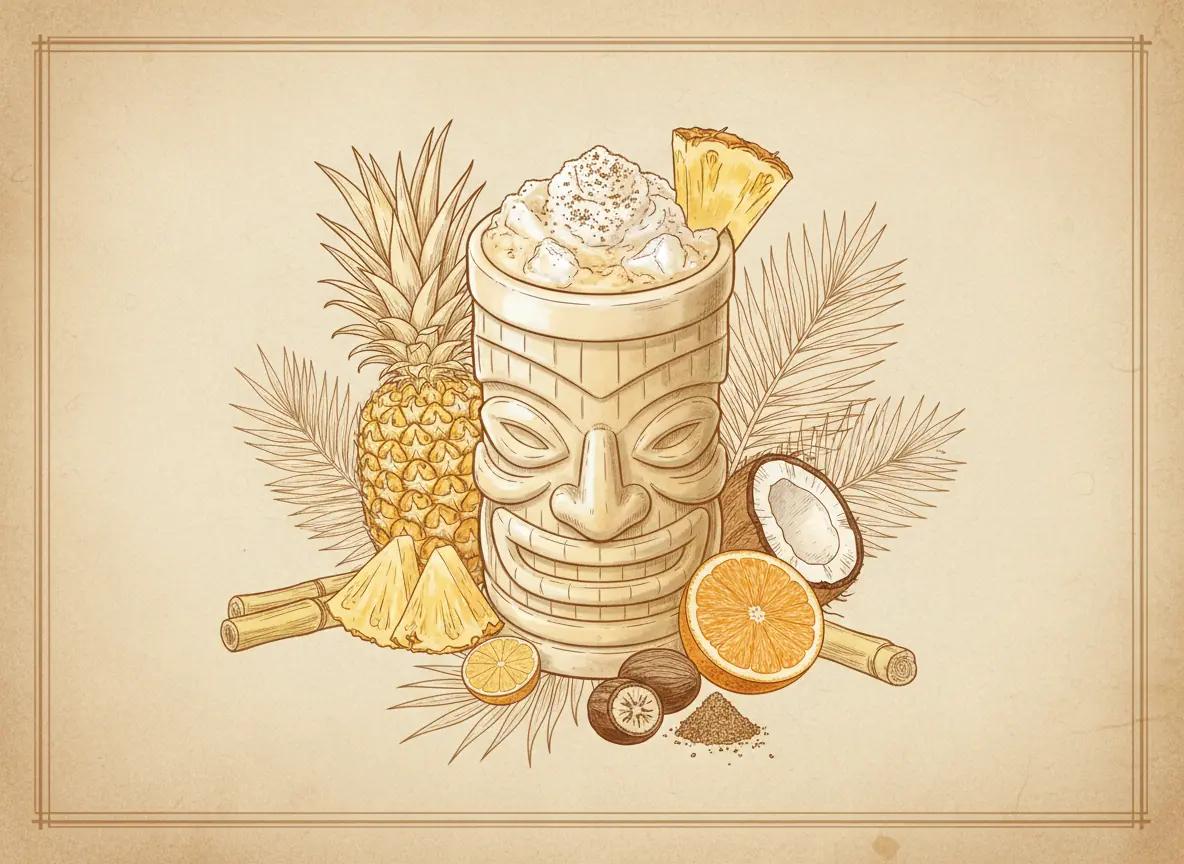
Painkiller
A Painkiller is 60ml of Pusser’s Rum, 120ml of pineapple juice, 30ml of fresh orange juice and 30ml of cream of coconut, given a hard 10 to 12 second shake and strained onto cubed ice in a tiki mug or a big glass, with fresh nutmeg grated on top. About 2.4 UK units. Cream of coconut is coconut and sugar, usually with no dairy, but check the label. The name belongs to Pusser’s. Pusser’s prints the name with the registered symbol on its own Painkiller page, and the Oxford Companion says the company owns the trademark for the Pusser’s Painkiller cocktail. The recipe here is its own: four parts pineapple, one of cream of coconut and one of orange, with Pusser’s to suit. Difford’s Guide says it trademarked the name in the United States and the UK in 2003 and in 2010 forced a New York bar called Painkiller to rename itself PKNY. Pusser’s traces the drink to Daphne Henderson’s Soggy Dollar Bar on Jost Van Dyke, in the British Virgin Islands.
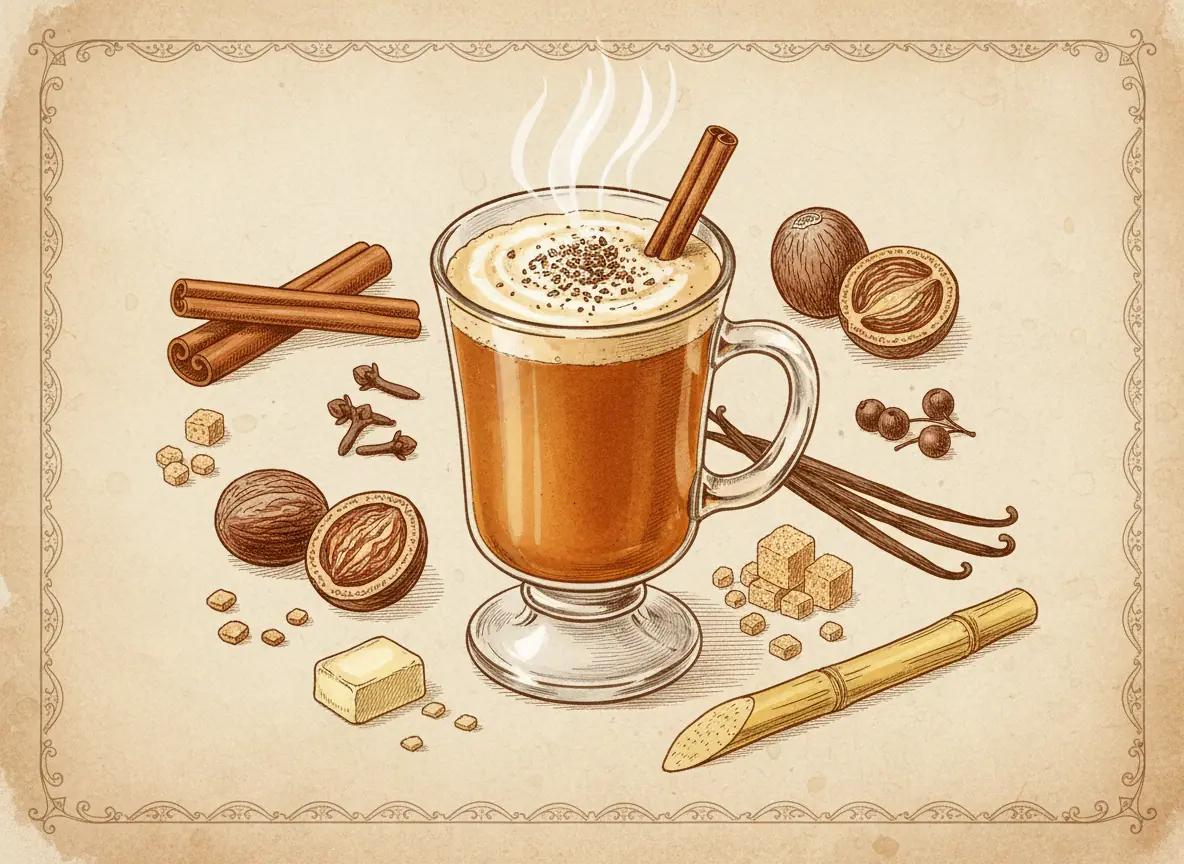
Hot Buttered Rum
A Hot Buttered Rum is 60ml of dark rum poured over about 50g of spiced butter batter in a warmed mug, topped with 150ml of water just off the boil and stirred until the butter melts through, then finished with grated nutmeg and a cinnamon stick. About 2.4 UK units. The batter is butter, dark brown sugar, cinnamon, allspice, a pinch of clove and vanilla, so the drink contains milk. The Oxford Companion calls hot buttered rum a colonial-era drink once favoured for being medicinal; we have found no early recipe from then. Jerry Thomas’s 1862 bar guide prints a hot spiced rum of sugar, Jamaica rum, allspice and cloves, butter and hot water, and the Companion says a batter of butter, sugar and spices cures the slick that loose butter leaves. The batter is the method. Butter dropped into a mug alone floats in a slick; beaten first with sugar and spice, it melts evenly into the rum and water.
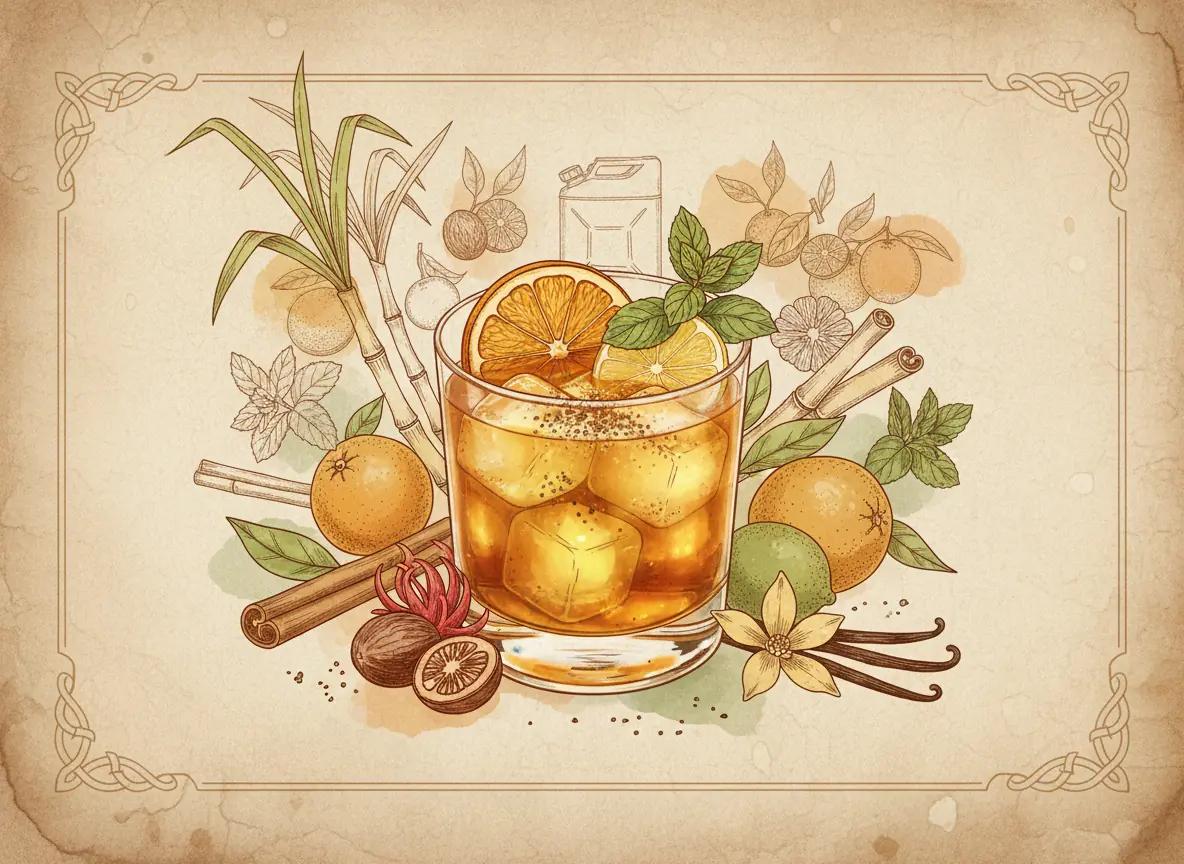
The Expedition Punch
The Expedition Punch is 60ml of Expedition Spiced Rum, 20ml of fresh lemon juice, 40ml of sugar syrup and 80ml of water or cooled weak black tea, stirred gently over large cubed ice in a double rocks glass and finished with orange and lemon wheels, a mint sprig and freshly grated nutmeg. About 2.4 UK units in 200ml of drink. It follows the old punch formula of five parts: spirit, citrus, sugar, water and spice. Punch is older than the cocktail; the Oxford Companion dates the first mention of punch by name to a 1632 letter in the papers of the English East India Company. Here the rum carries much of the spice already, and the nutmeg on top completes the fifth part. The choice that changes the drink is water or tea. Water keeps it clean and lets the rum lead. Weak black tea, brewed at half strength and cooled, adds tannin and a drier edge beneath the sugar. Either way it scales from one cup to a bowl for ten without adjustment.
Where this one sits
Recipe by Jerry Can Spirits · Updated 19 October 2026