Sangaree
A Sangaree is 90ml of red wine with 15ml of Spanish brandy, 15ml of dry curaçao, 30ml of fresh orange juice, 10ml of fresh lemon juice, 5ml of rich syrup and 2.5ml of cinnamon syrup, stirred with ice, strained over fresh ice in a goblet and topped with 22.5ml of soda water, with strawberry, orange and lemon slices and mint. About 2.4 UK units by our strengths. Difford’s Guide prints 2.9. Difford’s lists it as a single-serve form of Spanish sangria that was popular in nineteenth-century America. It is a glass for one, not a pitcher. It tastes of red fruit and orange, with a light fizz and a trace of cinnamon.
Glassware: Wine Glass
Garnish: Strawberry slices a few, on top, Orange wheel a thin slice, Lemon wheel a thin slice and Mint sprigs a small bouquet
Ingredients
90ml
A Rioja Crianza is the wine in Difford’s recipe. Taken at 13% ABV, so a stronger bottle adds to the units.
Instructions
Chill a goblet or large wine glass and fill it with fresh ice.
Squeeze the orange and lemon the day you serve it.
Add the brandy, dry curaçao, red wine, orange juice, lemon juice, rich syrup and cinnamon syrup to a mixing glass with ice.
Stir for 20 to 30 seconds.
Strain into the ice-filled glass.
Top with the soda water.
Garnish with strawberry slices, an orange wheel, a lemon wheel and a bouquet of mint.
Source: Difford's Guide (recipe 1741, measures, method and garnish as printed (15ml Spanish brandy, 15ml dry curaçao, 90ml Rioja Crianza red wine, 30ml orange juice, 10ml lemon juice, 5ml 2:1 cane sugar syrup, 2.5ml cinnamon syrup, 22.5ml soda water; first six stirred with ice, strained into an ice-filled goblet, topped with soda; strawberry slices, orange and lemon wheels and a mint bouquet). Difford’s method says to stir the first six ingredients and does not place the cinnamon syrup, listed seventh; we stir it in with the others. Difford’s history: a version of Spanish sangria popular in nineteenth-century America, single-serve where sangria is usually made in batches). Last checked 1 November 2026.
Expert Tip
Difford’s lists the cinnamon syrup seventh and its method names the first six ingredients to stir. We stir it in with the rest so it blends. Pour the soda gently down a bar spoon. It is only 22.5ml, and a hard pour knocks the fizz out of it. Set the mint where you will smell it first, close to the rim.
Behind the Sangaree
Flavour Profile
Sangria made one glass at a time
Difford’s Guide describes this as a version of Spanish sangria that was popular in nineteenth-century America. The difference it gives is one of serving: sangria is usually made in batches, and the Sangaree is made for a single drinker. We state no creator, no place and no date beyond that.
That sets it apart from the two sangrias already in the field manual. Our Sangria is a pitcher, rested in the fridge with fruit for an hour or more and served over ice. Our Spiced Sangria is a different drink altogether, built on dark rum and Aperol with no wine. The Sangaree is stirred to order and topped with soda.
Seven parts and a soda
The wine does most of the work: 90ml of red wine, where Difford’s asks for a Rioja Crianza. Brandy and dry curaçao add 15ml each. Difford’s names Spanish brandy, which we count at 40% ABV like any other.
Fresh orange juice and lemon juice bring the fruit, and a measured 5ml of rich syrup with 2.5ml of cinnamon syrup sweeten it. The 22.5ml of soda water lengthens it at the end. In our view the cinnamon is the part to watch: at half a teaspoon it should be noticed only when it is missing.
The Sangaree beside two other sangria drinks
Sangaree
- Base
- 90ml red wine, 15ml brandy, 15ml dry curaçao
- Fruit
- 30ml orange juice, 10ml lemon juice
- Serve
- Stirred, over ice, topped with soda
Sangria
- Base
- 120ml red wine, 25ml brandy
- Fruit
- 30ml orange juice, 15ml lemon juice
- Serve
- Rested in a jug, over ice
Spiced Sangria
- Base
- 60ml dark rum, 30ml Aperol
- Fruit
- Orange wedge
- Serve
- Built, topped with ginger ale
| Drink | Base | Fruit | Serve |
|---|---|---|---|
| Sangaree | 90ml red wine, 15ml brandy, 15ml dry curaçao | 30ml orange juice, 10ml lemon juice | Stirred, over ice, topped with soda |
| Sangria | 120ml red wine, 25ml brandy | 30ml orange juice, 15ml lemon juice | Rested in a jug, over ice |
| Spiced Sangria | 60ml dark rum, 30ml Aperol | Orange wedge | Built, topped with ginger ale |
For the pitcher form, see the Sangria. For something brandy-led with no wine, try the Sidecar.
Make it at home
The Spirit
BrandyBrandy is wine, distilled and then aged in oak, and under the retained Regulation (EC) 110/2008 the word on its own means grape brandy of at least 36% ABV, matured for six months or more. Our recipes assume 40%. It is the warm, dried-fruit base of milk punch, eggnog and mulled wine, where a sound young bottle serves better than an expensive old one.
More to explore
Frequently Asked Questions
What is a Sangaree?
Is a Sangaree the same as sangria?
Does Spiced Sangria count as a Sangaree?
How strong is a Sangaree?
What wine should I use?
Does it need Spanish brandy?
Which glass suits a Sangaree?
Can I batch it?
Sources.
Correct as of 1 November 2026.
- Difford’s Guide, “Sangaree (Sangria)” (recipe 1741: brandy, dry curaçao, red wine, juices, two syrups, soda, goblet, fruit and mint garnish; 2.9 units; history as a single-serve form of sangria popular in nineteenth-century America).
- NHS, “Calculating alcohol units” (the 14-units-a-week guidance and the units calculation).
You Might Also Like
Sangria
Sangria, by the glass, is 120ml of young red wine, 25ml of brandy, 30ml of fresh orange juice, 15ml of fresh lemon juice and 15ml of simple syrup, rested in the fridge with sliced orange and apple, then poured over ice in a wine glass. About 2.6 UK units a glass. A 750ml bottle makes about six. We suggest resting it for at least an hour, overnight if you can, and not past a day. The fruit gives up sugar and oil to the wine and takes up wine and brandy in return; after a day it starts to break down and the citrus dulls. The name is the Spanish word for bloodletting, in its medical sense, by Cambridge’s Spanish-English dictionary. In our experience recipes vary, with cava in some and peaches in others, and these measures claim only the proportions. Ours has no soda or lemonade: it is wine, brandy, citrus and time.
Spiced Sangria
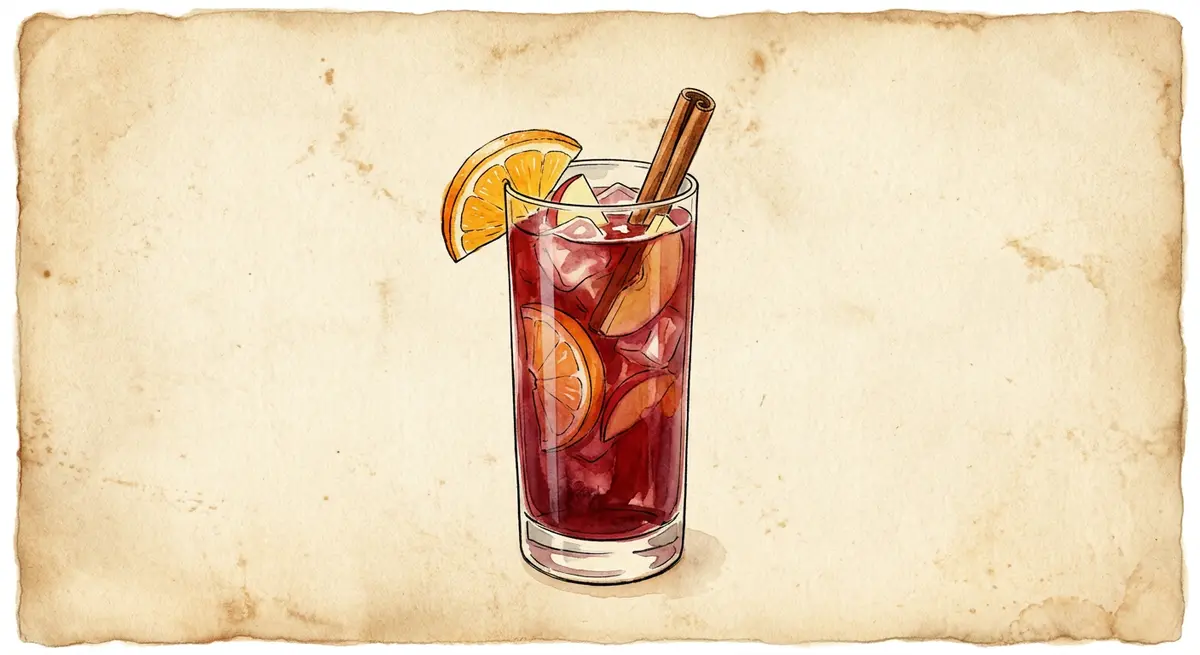
Spiced Sangria is 60ml of dark rum and 30ml of Aperol built over plenty of ice in a highball, topped with 150ml of Fever-Tree Refreshingly Light Spiced Orange Ginger Ale, with a cinnamon stick and a squeezed orange wedge. About 2.7 UK units. There is no wine in it. It is Fever-Tree’s serve, and the measures are theirs. Each part takes over a job the wine does in a jug of sangria. The rum gives body and depth, the Aperol gives bitterness and a little grip, and the ginger ale brings orange, spice and length. Their recipe asks only for rum. We pour a dark one, because its caramel and oak fill the space red wine leaves. The ginger is what keeps the glass from tasting like a rum punch: its heat dries the finish against the Aperol’s sugar and sits easily with the cinnamon.
Sidecar
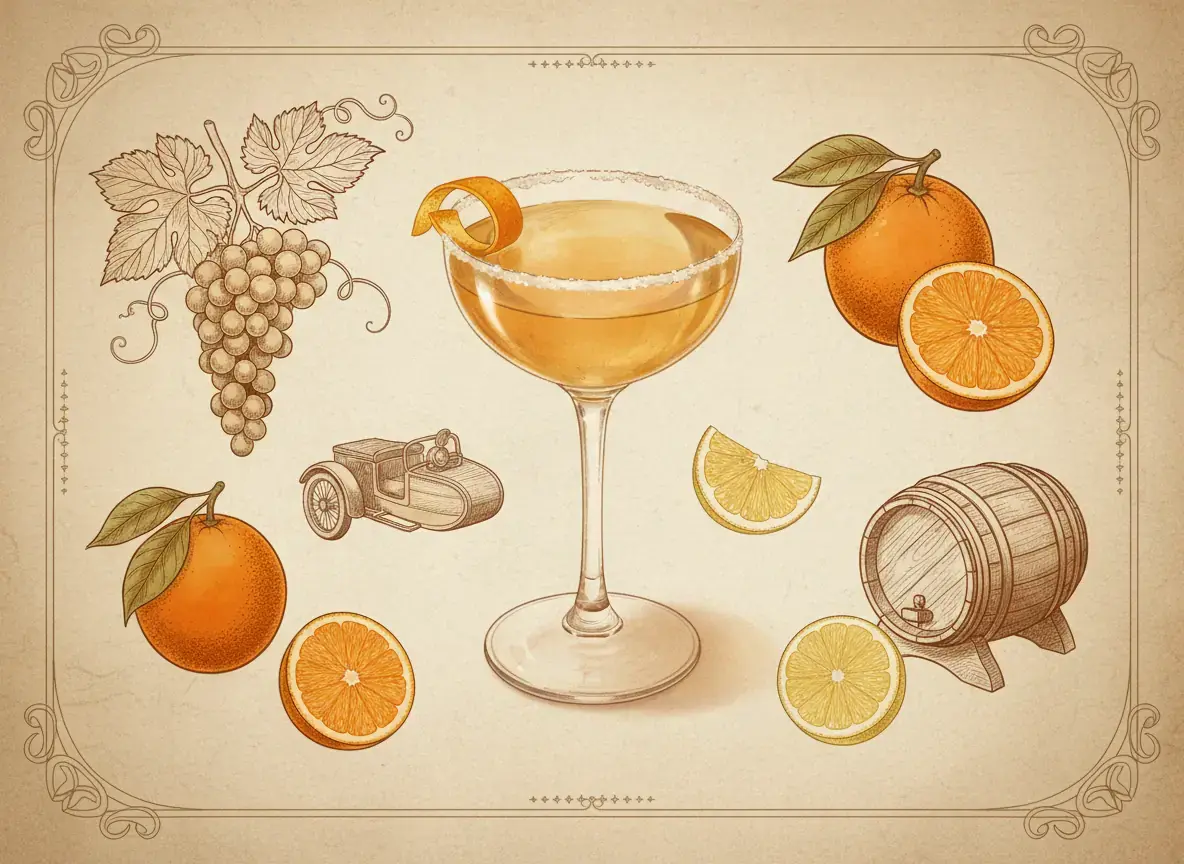
A Sidecar is a cognac sour: 50ml cognac, 20ml Cointreau or another triple sec and 20ml fresh lemon juice, shaken hard and double strained into a chilled coupe under an expressed strip of lemon peel. The IBA gives these measures, which put the cognac at two and a half parts to one each of orange and lemon. The Oxford Companion dates the first printed recipes to 1922, in Robert Vermeire’s Cocktails: How to Mix Them in May and Harry MacElhone’s Harry’s ABC of Mixing Cocktails at the end of the year, both at equal parts by Difford’s Guide. Both named Pat MacGarry of Buck’s Club in London; Difford’s says later editions of MacElhone’s book appear to take the credit for himself. The sugared rim came later: the earliest mention we have read is a 1932 American book, and the Oxford Companion says the drink has often been served with one since the 1930s. Ours has no rim. Each Sidecar carries about 2.8 UK units.
Mulled Wine
Mulled wine for six to eight is 750ml of red wine, 150ml of brandy, 100ml of fresh orange juice and 75ml of honey, warmed in a large pan with two cinnamon sticks, six cloves, two star anise and a few wide strips of citrus peel. It is held at a bare steam for fifteen to twenty minutes and never boiled. About 2.0 to 2.6 UK units a cup. Gentle heat lifts the spice into the room and takes the edge off the wine. A boil drives off alcohol and pulls bitter, stewed flavours from the clove and cinnamon, so the surface should shiver and never bubble. The brandy keeps the drink from tasting thin once the heat has softened the wine. Spiced, sweetened wine is very old. The Roman cookery collection that carries the name of Apicius opens with a spiced wine, the conditum paradoxum, and the Oxford Companion says mulled-style drinks go back to early medieval times under names such as hippocras. This is a modern British pan: brandy, honey and fresh orange.
Where this one sits
Recipe by Jerry Can Spirits · Updated 1 November 2026