Champs-Élysées
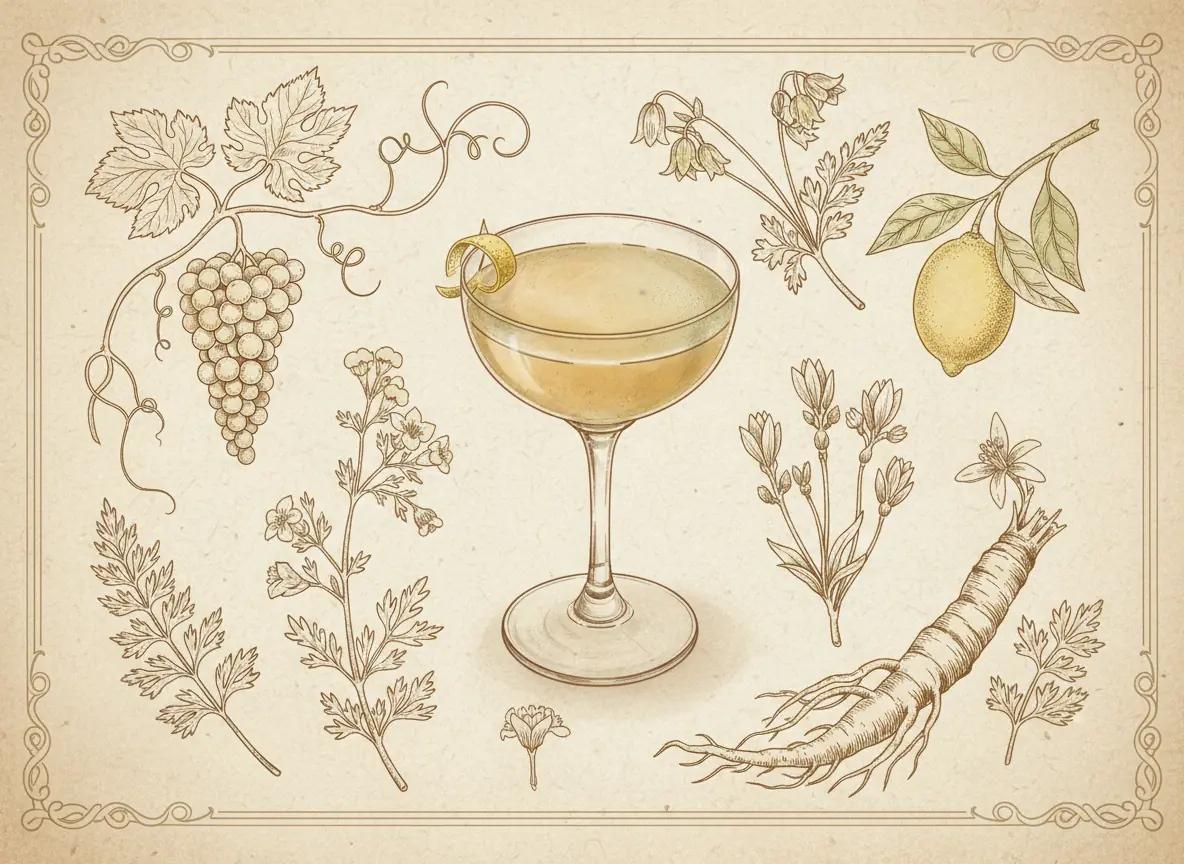
A Champs-Élysées is 45ml of cognac, 15ml of green Chartreuse, 20ml of fresh lemon juice, 10ml of sugar syrup and a dash of Angostura, shaken hard with ice for 10 to 12 seconds and double strained into a chilled coupe, finished with an expressed lemon twist. About 2.6 UK units. Difford’s Guide gives the earliest known recipe as the one in Drinks, Long and Short by Nina Toye and A. H. Adair, published in 1925: three parts brandy, one of Chartreuse and one and a half of sweetened lemon juice, with a dash of Angostura. Our measures keep the three to one of brandy to Chartreuse and split the sweetened lemon into fresh juice and syrup. It reads as a Sidecar with green Chartreuse in place of the orange liqueur. Chartreuse is 55% ABV on its own page and, in our view, intensely herbal, so even a small measure changes the whole drink: the cognac and lemon are still there, under a layer of mountain herbs.
Glassware: Coupe Glass
Garnish: Lemon twist expressed over the glass and rested on the rim
Ingredients
45ml
VS or VSOP, at our working figure of 40% ABV, with enough fruit and body to stand up to the Chartreuse. Armagnac or a good French brandy also works.
15ml
Green, at 55% ABV on Chartreuse’s own page. Yellow Chartreuse, at 43% and described on Chartreuse’s own page as sweet with a soft structure, makes a softer drink.
10ml
Sugar and water, 1:1 by weight. Treat the measure as a starting point and adjust by taste.
1 dash
One dash. It links the cognac’s fruit to the Chartreuse’s herbs; if you can pick it out, you have used too much.
Instructions
Squeeze the lemon juice the same day.
Chill a coupe.
Add the cognac, green Chartreuse, lemon juice, sugar syrup and Angostura to a shaker.
Fill with cubed ice and shake hard for 10 to 12 seconds.
Double strain into the chilled coupe.
Express a lemon twist over the surface and rest it on the rim.
Our version
The earliest recipe, Toye and Adair’s of 1925 as Difford’s Guide prints it, is three parts brandy, one of Chartreuse and one and a half of sweetened lemon juice. Ours keeps the three to one at 45ml and 15ml, and splits the sweetened lemon into 20ml of juice and 10ml of syrup.
Source: our own specification. Last checked 9 October 2026.
Expert Tip
Measure the Chartreuse. At 55% ABV on Chartreuse’s own page and with that much herbal weight, a few millilitres over the 15ml takes the drink from cognac with herbs to Chartreuse with lemon. Taste before you strain and adjust the syrup, never the Chartreuse. The liqueur brings its own sugar and some cognacs are rounder than others, so treat 10ml of syrup as a starting point. Pick a young cognac, VS or VSOP. An older one’s finer points vanish under the Chartreuse, and the extra money buys nothing in this glass.
Behind the Champs-Élysées
Flavour Profile
The Origin
Difford’s Guide gives the earliest known recipe as the one in Drinks, Long and Short, a 1925 book by Nina Toye and A. H. Adair. Difford’s prints it as three glasses of brandy, one of Chartreuse and one and a half of sweetened lemon juice, with a dash of Angostura, shaken. Punch notes that every recipe in the book yields six servings, so it is a recipe for a party rather than a single glass.
The Savoy Cocktail Book printed it again in 1930, as Punch notes. The name is the avenue in Paris, and the bottles are French: cognac from the south-west, Chartreuse from the Chartreux Fathers in the Isère. Neither Punch nor Difford’s Guide says who first mixed it, or where.
A Sidecar With Chartreuse
Start with the Sidecar: cognac, orange liqueur and lemon. Replace the orange liqueur with green Chartreuse and the drink changes character. Cointreau is sweet and fruity and stays in the background. Chartreuse is 55% ABV on its own page and, in our view, intensely herbal, and even at 15ml it leads.
Green Chartreuse
Chartreuse’s own page says the Chartreux Fathers make green Chartreuse from 130 plants, bark, roots, spices and flowers, and gives it at 55% ABV. At 15ml against 45ml of cognac it is one part to three, enough to define the drink without burying the brandy. Push it further and the drink tastes of Chartreuse and little else.
The Cognac and the Bitters
Cognac is brandy from the Cognac region of south-west France, aged in French oak; the Oxford Companion gives at least two years in wood for VS and four for VSOP. Either works here. Their fruit and vanilla sit beside the herbs and the lemon, where an XO’s age is mostly lost.
The single dash of Angostura bridges the cognac’s fruit and the Chartreuse’s herbs. You should feel it rather than taste it; if it stands out, you used too much.
Against the 1925 Recipe and the Sidecar
The Champs-Élysées: ours beside Toye and Adair’s 1925 proportions as Difford’s Guide prints them, and the Sidecar to the IBA’s measures; UK units ours
Champs-Élysées (ours)
- Brandy
- 45ml cognac
- Liqueur
- 15ml green Chartreuse
- Citrus and sugar
- 20ml lemon, 10ml syrup
- Bitters
- A dash of Angostura
- UK units
- About 2.6
Champs-Élysées (Toye and Adair, 1925)
- Brandy
- Three parts brandy
- Liqueur
- One part Chartreuse
- Citrus and sugar
- One and a half parts sweetened lemon juice
- Bitters
- A dash of Angostura
- UK units
- Proportions only
Sidecar
- Brandy
- 50ml cognac
- Liqueur
- 20ml triple sec
- Citrus and sugar
- 20ml lemon
- Bitters
- None
- UK units
- About 2.8
| Drink | Brandy | Liqueur | Citrus and sugar | Bitters | UK units |
|---|---|---|---|---|---|
| Champs-Élysées (ours) | 45ml cognac | 15ml green Chartreuse | 20ml lemon, 10ml syrup | A dash of Angostura | About 2.6 |
| Champs-Élysées (Toye and Adair, 1925) | Three parts brandy | One part Chartreuse | One and a half parts sweetened lemon juice | A dash of Angostura | Proportions only |
| Sidecar | 50ml cognac | 20ml triple sec | 20ml lemon | None | About 2.8 |
The Sidecar is the orange version; the Last Word is another sour that leans on green Chartreuse.
How to Serve It
Double strained into a chilled coupe with no ice, a lemon twist expressed over the surface and rested on the rim. The peel oil reaches you before the Chartreuse does and brightens the first sip.
It suits the end of a meal, or an aperitif for someone who already likes Chartreuse.
Make it at home
The Spirit
CognacCognac is a grape spirit distilled twice from white wine in copper pot stills in the Cognac area of western France and, under INAO’s specification, aged at least two years in oak and sold at no less than 40% ABV. The letters on the label are minimum ages, by the BNIC’s account: VS at least two years, VSOP four, XO ten. A VS or VSOP is what our cocktails assume.
Master the Techniques
More to explore
Frequently Asked Questions
What is a Champs-Élysées cocktail?
Where does the Champs-Élysées come from?
Is it just a Sidecar with Chartreuse?
Can I use yellow Chartreuse?
How strong is a Champs-Élysées?
What cognac should I use?
Sources.
Checked between 18 October and 19 October 2026.
- Difford’s Guide, “Champs Elysées” (secondary source: a riff on the Sidecar named for the Parisian avenue; the first known recipe in Nina Toye and Arthur H. Adair’s 1925 Drinks-Long and Short: three glasses of brandy, one of Chartreuse, one and a half of sweetened lemon juice, a dash of Angostura).
- Punch, “The Champs-Élysées” (secondary source: in Drinks Long and Short (1925), every recipe yields six servings; neither the 1925 recipe nor the Savoy Cocktail Book’s specifies green Chartreuse).
- Chartreuse, “Green Chartreuse” (maker’s page: 55% vol.; 130 plants, bark, roots, spices and flowers; made by the Chartreux Fathers, Entre-Deux-Guiers (Isère)).
- Chartreuse, “Yellow Chartreuse” (maker’s page: 43% vol.; sweetness, spicy scents, a soft structure).
- The Oxford Companion to Spirits and Cocktails (Nicholas Faith), “cognac” (secondary source: under the AOC rules VS must have been lodged in wood for a minimum of two years, VSOP for four, XO for six (ten from 2018)).
You Might Also Like
Sidecar
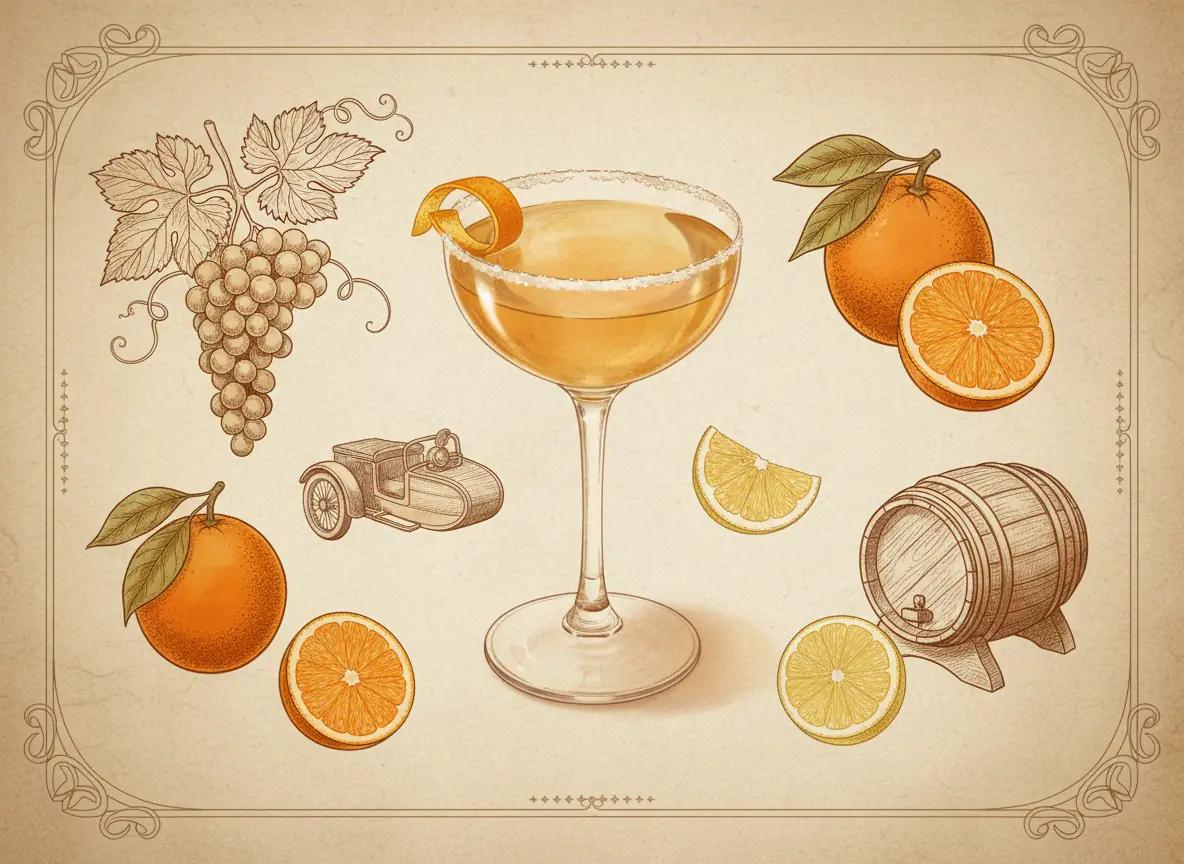
A Sidecar is a cognac sour: 50ml cognac, 20ml Cointreau or another triple sec and 20ml fresh lemon juice, shaken hard and double strained into a chilled coupe under an expressed strip of lemon peel. The IBA gives these measures, which put the cognac at two and a half parts to one each of orange and lemon. The Oxford Companion dates the first printed recipes to 1922, in Robert Vermeire’s Cocktails: How to Mix Them in May and Harry MacElhone’s Harry’s ABC of Mixing Cocktails at the end of the year, both at equal parts by Difford’s Guide. Both named Pat MacGarry of Buck’s Club in London; Difford’s says later editions of MacElhone’s book appear to take the credit for himself. The sugared rim came later: the earliest mention we have read is a 1932 American book, and the Oxford Companion says the drink has often been served with one since the 1930s. Ours has no rim. Each Sidecar carries about 2.8 UK units.
Bijou
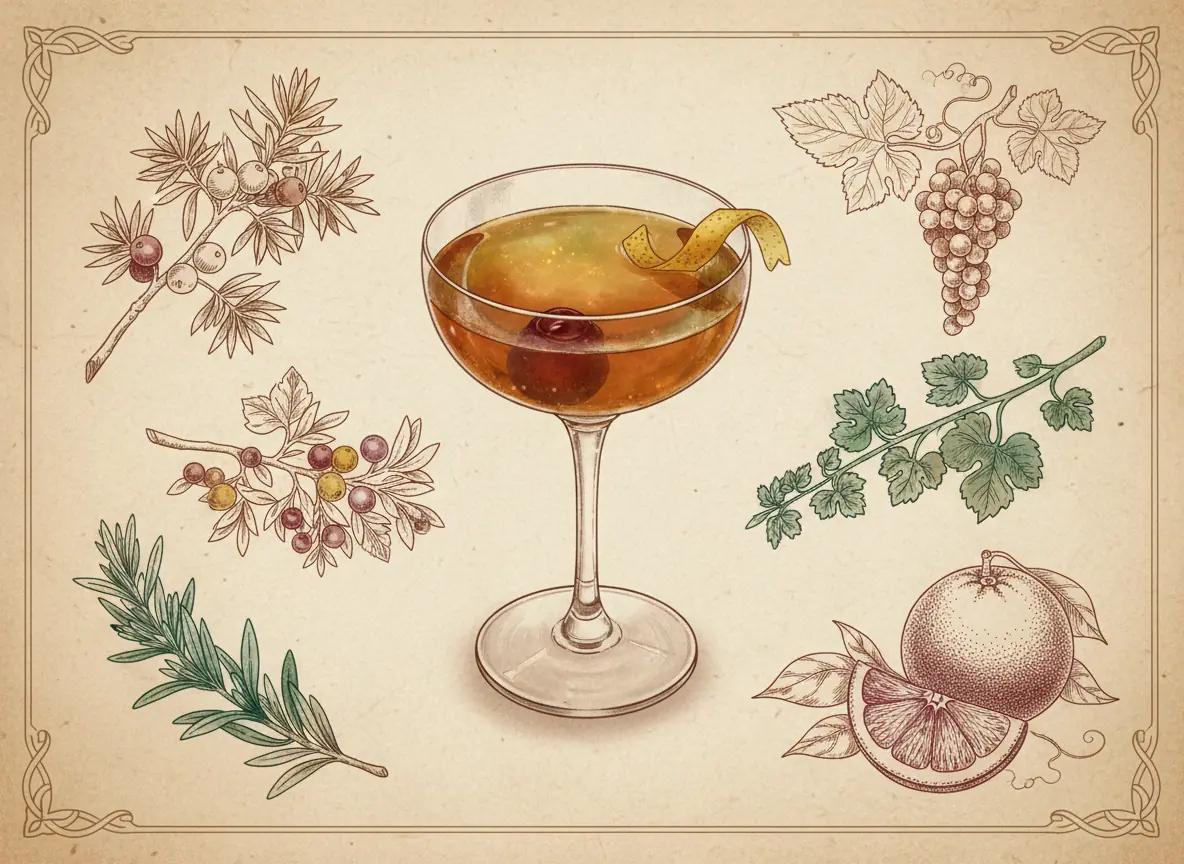
A Bijou is 40ml of London Dry gin, 20ml of green Chartreuse, 20ml of sweet vermouth and two dashes of orange bitters, stirred over cubed ice for 30 seconds and strained into a chilled Nick and Nora glass, with a lemon twist expressed over it and a cherry. About 3.0 UK units. The Oxford Companion says the drink appears to be Harry Johnson’s adaptation of a cocktail first recorded in St. Louis and Cincinnati in the spring of 1895, and that his version appeared in the 1900 edition of his Bartenders’ Manual. Bijou is French for jewel, and Difford’s Guide gives the explanation that each bottle stands for a stone by its colour: gin for diamond, vermouth for ruby, Chartreuse for emerald. At 55% ABV on Chartreuse’s own page, green Chartreuse is the force to manage. Many recipes pour the three in equal measures; ours doubles the gin so its juniper holds against the Chartreuse, with the vermouth giving body and the bitters tying the herbs together.
Alaska
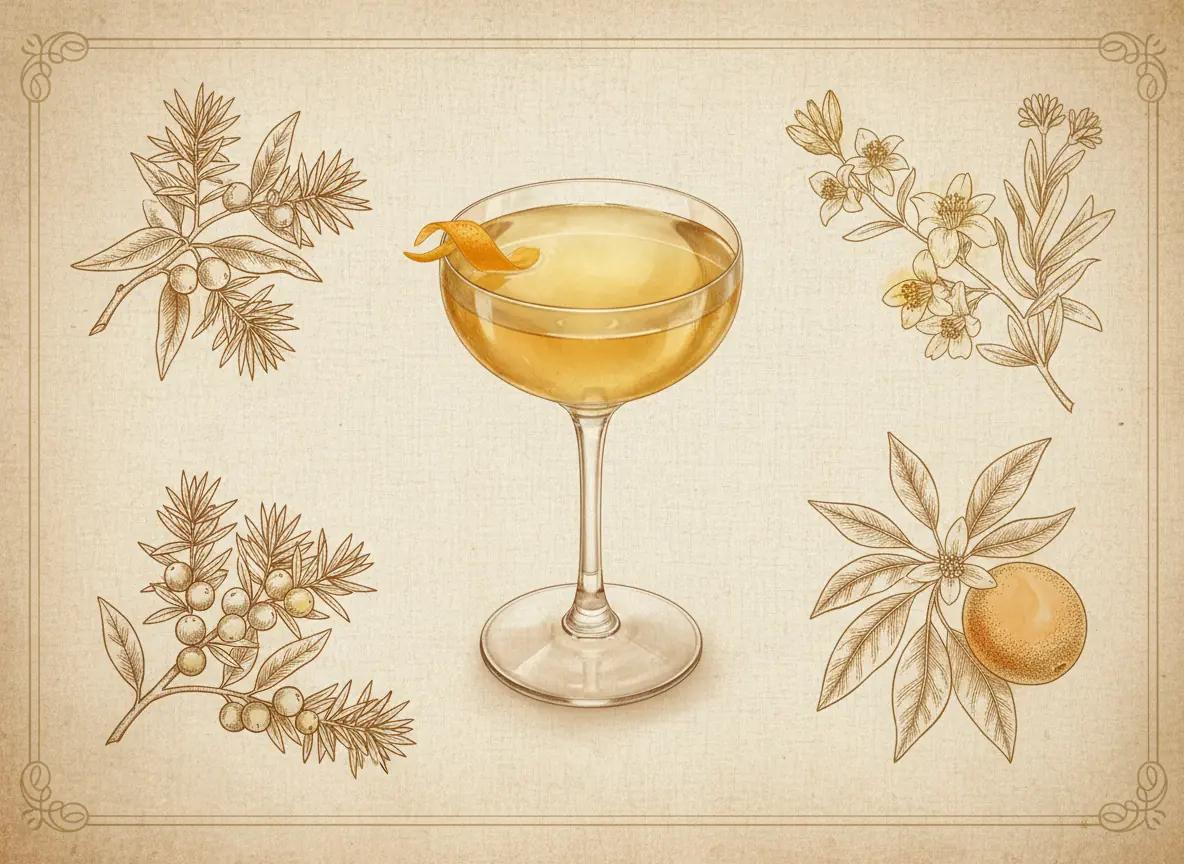
An Alaska is 50ml of London Dry gin and 25ml of yellow Chartreuse with two dashes of orange bitters, stirred over ice for 30 seconds and strained into a chilled Nick & Nora, with a lemon twist. About 3.1 UK units, all of it spirit. It was in print by 1914, Punch says, when Jacques Straub’s Drinks listed it as Old Tom gin with a smaller measure of yellow Chartreuse and a dash of orange bitters, shaken. The gin-led ratio has held; the Old Tom and the shaking have not. The name is unexplained; Difford’s Guide offers only a conjecture about the Alaska gold rush and the drink’s golden colour. Yellow Chartreuse is the drink. Sweet and spicy at 43% ABV on Chartreuse’s own page, softer than green, it sweetens the gin and seasons it at once. A full 30-second stir is what turns two strong bottles into one smooth drink.
Where this one sits
Recipe by Jerry Can Spirits · Updated 19 October 2026