Kingston Negroni
A Kingston Negroni is 30ml of Jamaican rum, 30ml of Campari and 30ml of sweet vermouth, stirred with ice and strained over a large cube in a rocks glass, with a long orange peel. About 2.4 UK units, counting the rum at 40% ABV, the Campari at 25% and the vermouth at 16%. With an overproof rum, Difford’s Guide counts 2.9. Joaquín Simó built it at Death & Co in New York in late 2009, the day an importer showed him a bottle of Smith & Cross. Punch prints his recipe and the story. It is a Negroni with the gin taken out. The rum brings fruit, spice and a deliberate funk, and the vermouth is chosen to stand up to it.
Glassware: Rocks Glass
Garnish: Long orange peel trimmed, expressed over the drink and laid in the glass
Ingredients
30ml
Punch prints Smith & Cross, an overproof Jamaican rum. Difford’s asks for an overproof pot still rum with a high ester count. Our units use 40% ABV, so a stronger bottle takes the drink above 2.4 units.
30ml
Punch prints Carpano Antica, a rich vermouth. Simó chose it for this drink despite finding it a bully elsewhere.
Instructions
Put a rocks glass in the freezer and trim a long strip of orange peel.
Add the Jamaican rum, Campari and sweet vermouth to a mixing glass.
Stir with ice until the mixing glass has frosted, 20 to 30 seconds.
Strain over ice in the rocks glass, preferably one large cube.
Express the orange peel over the drink and lay it in the glass.
Source: its creator's published specification (Joaquín Simó, published at Punch (punchdrink.com/recipes/kingston-negroni/); measures, method and garnish as printed there (1oz Jamaican rum such as Smith & Cross, 1oz Campari, 1oz sweet vermouth such as Carpano Antica, stirred, rocks glass over a large cube, long orange peel); Difford’s recipe 3475 prints 30ml of each, an overproof pot still rum, a Strucchi rosso and bitter, and an orange wheel). Last checked 1 November 2026.
Expert Tip
Pour the rum first and smell it. A bottle with real funk is the point of the recipe, and a bland one makes a Negroni with a rum-shaped hole in it. Use the biggest cube you have. Three equal parts of strong ingredients dilute slowly over large ice, so the last sip is still a Negroni. If the bitterness is too much, the answer is the vermouth. A richer, sweeter bottle softens Campari more than extra stirring does.
Behind the Kingston Negroni
Flavour Profile
A Negroni built in five minutes
Punch records that spirits importer Eric Seed brought a bottle of Smith & Cross to Death & Co in the late autumn of 2009, and that Joaquín Simó built a rum Negroni on the spot. Simó says the thought came from smelling the rum: funky, estery and full of allspice, and he wondered how to work it into a stirred aperitivo.
The drink reached the Death & Co menu in spring 2010, according to the same Punch article, and the recipe spread from there. Difford’s Guide dates it differently, to 2013 at Pouring Ribbons, another bar of Simó’s. We follow Punch, which has Simó’s own account and the Death & Co staff who were present.
Why the rum and the vermouth are paired
Simó told Punch he does not usually use a rich vermouth in a Negroni, because he finds it overbearing. With this rum he made the exception. The rum is loud enough to stand up to the vermouth’s chocolate and bitter orange, and it tempers the Campari’s bitterness.
Sweet vermouth does the sweetening, and Campari the bitterness. Punch prints Carpano Antica as the vermouth, and Difford’s prints a Strucchi rosso. See vermouth explained for what separates the rich style from a lighter one.
The rum decides the drink
Punch specifies Jamaican rum, such as Smith & Cross, and calls that bottle an overproof Jamaican rum. Difford’s describes the style as an overproof, aged, pot still rum with a high ester count, four to six years old. Punch uses the word hogo for the hard-to-define funk of such a rum. Jamaican rum in this style is fruity, estery and heavy with spice.
If you choose a different bottle, choose for that character. A high-ester Jamaican rum keeps the drink recognisable. A light or sweet rum makes a gentler, rounder Negroni, which is a fine drink and a different one. Our complete guide to rum covers the styles.
Where it sits among Negronis
The Kingston Negroni beside three relatives
Kingston Negroni
- Base
- 30ml Jamaican rum
- Bitter
- 30ml Campari
- Vermouth
- 30ml sweet vermouth
- Method
- Stirred, over a large cube
Negroni
- Base
- 30ml gin
- Bitter
- 30ml Campari
- Vermouth
- 30ml sweet vermouth
- Method
- Stirred
Boulevardier
- Base
- Bourbon or rye
- Bitter
- Campari
- Vermouth
- Sweet vermouth
- Method
- Stirred
White Negroni
- Base
- Gin
- Bitter
- Suze
- Vermouth
- Lillet Blanc
- Method
- Stirred
| Drink | Base | Bitter | Vermouth | Method |
|---|---|---|---|---|
| Kingston Negroni | 30ml Jamaican rum | 30ml Campari | 30ml sweet vermouth | Stirred, over a large cube |
| Negroni | 30ml gin | 30ml Campari | 30ml sweet vermouth | Stirred |
| Boulevardier | Bourbon or rye | Campari | Sweet vermouth | Stirred |
| White Negroni | Gin | Suze | Lillet Blanc | Stirred |
The Negroni and the Boulevardier change the base spirit and leave the equal parts alone. The Kingston Negroni does the same with a rum that is far from neutral.
Make it at home
The Spirit
Jamaican RumJamaican rum is molasses rum from Jamaica, much of it from pot stills after long fermentations, which leave it full of the fruity, faintly solvent esters the trade calls funk. Our recipes count it at 40% ABV, and Wray & Nephew’s own site lists its white overproof at 63%. It is the rum you can still smell through a Zombie's other ingredients, and the aroma in our Don’s Special Daiquiri.
More to explore
Frequently Asked Questions
Who created the Kingston Negroni?
What rum goes in a Kingston Negroni?
How strong is a Kingston Negroni?
About 2.4 UK units, from 30ml each of rum at 40% ABV, Campari at 25% and sweet vermouth at 16%. Difford’s Guide counts 2.9 units with an overproof rum. The Chief Medical Officers advise no more than 14 units a week.
Can I use another vermouth?
Is it served up or on the rocks?
Can I make a Kingston Negroni in a batch?
How is it different from a standard Negroni?
Sources.
Correct as of 1 November 2026.
- Punch, “Kingston Negroni” (recipe and Simó’s account: 1oz Jamaican rum such as Smith & Cross, 1oz Campari, 1oz sweet vermouth such as Carpano Antica, stirred, rocks glass over a large cube, long orange peel).
- Punch, “How the Kingston Negroni became a modern classic” (history: Eric Seed brought Smith & Cross to Death & Co in late fall 2009; Simó built the drink on the spot; on the menu in spring 2010; Carpano Antica chosen to stand up to the rum).
- Difford’s Guide, “Kingston Negroni” (recipe 3475: 30ml each of overproof aged pot still rum (high-ester, 4 to 6 years), rosso vermouth and Campari-style bitter, stirred, orange wheel; 2.9 units; dates the drink to 2013 at Pouring Ribbons, which differs from Punch).
- NHS, “Calculating alcohol units” (the 14-units-a-week guidance and the units calculation).
You Might Also Like
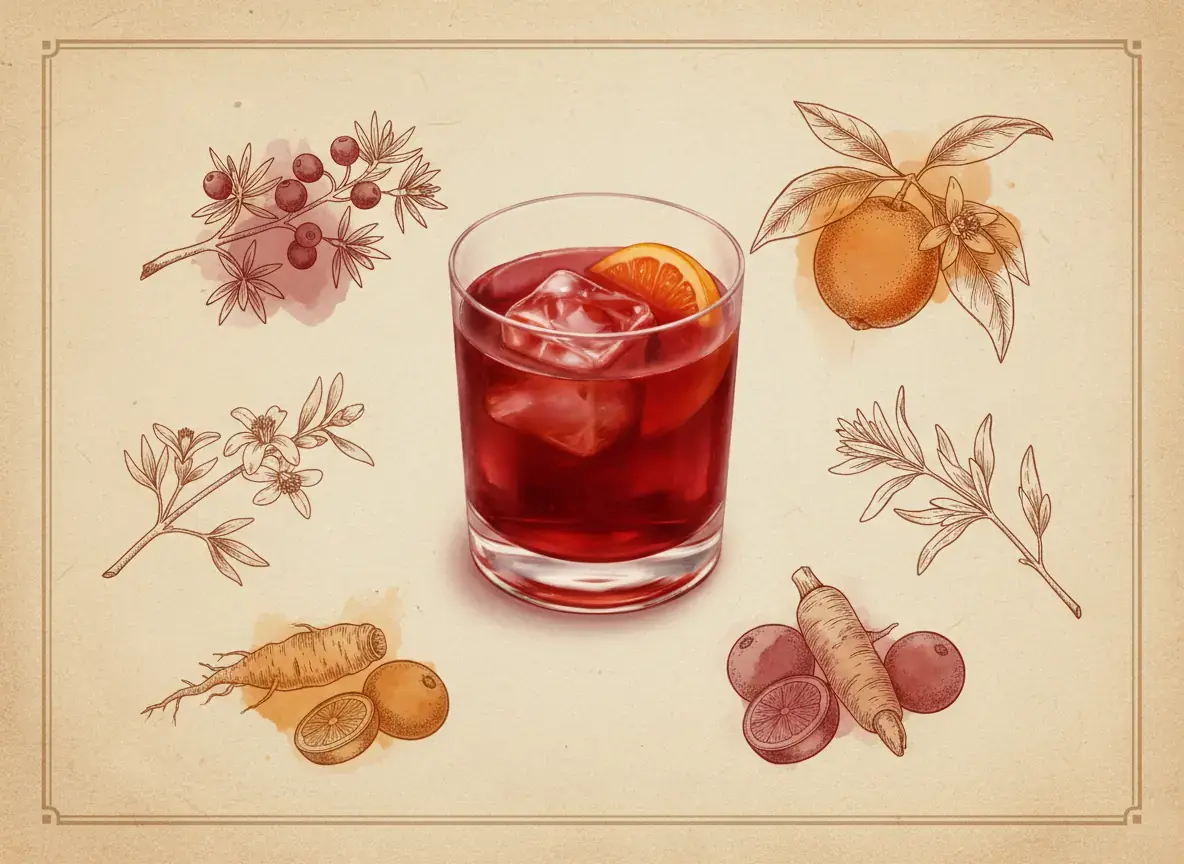
Negroni
A Negroni is 30ml each of gin, Campari and sweet vermouth, stirred with ice for 20 to 30 seconds and strained over fresh ice in a rocks glass, with an orange peel expressed over the top. About 2.4 UK units. The measures are the IBA’s; the IBA builds the drink in the glass and garnishes it with half an orange slice. Difford’s Guide gives the most widely reported account: Florence in 1919, at the Casoni Bar, where the bartender Fosco Scarselli is said to have replaced the soda in Count Camillo Negroni’s Americano with gin. The Oxford Companion has the drink named in a surviving letter of October 1920 and then absent under that name until 1947. A French book of 1929 by Alimbau and Milhorat, in the Internet Archive’s scan, gives equal parts of the three as the Campari Mixte. Each third has a job. Gin gives strength and juniper, the red bitter gives bitterness and orange, and the vermouth gives body and sugar. With no juice or soda in the glass, a tired vermouth shows at once.
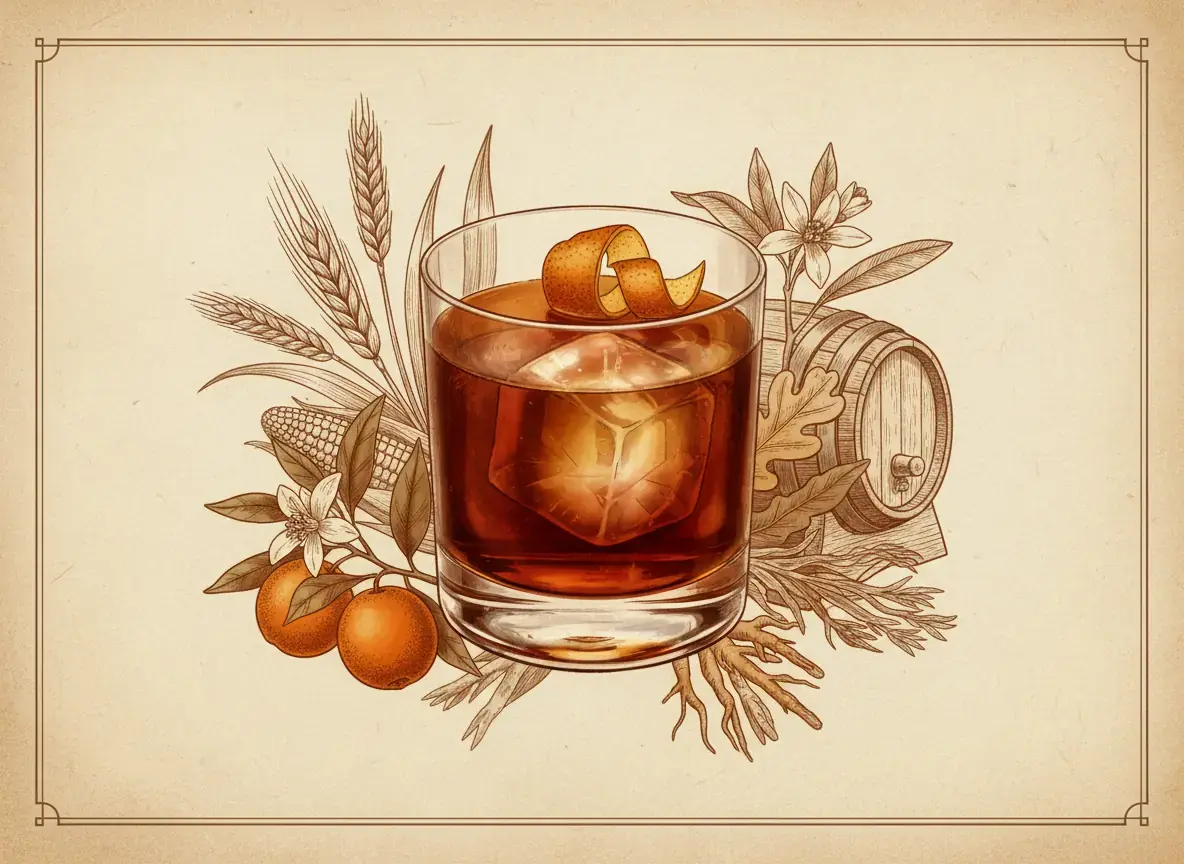
Boulevardier
A Boulevardier is 45ml bourbon, 30ml Campari and 30ml sweet vermouth, stirred over ice for 20 to 30 seconds and strained over fresh ice in a rocks glass, with orange peel. It is the bourbon Negroni: the same Campari and vermouth with bourbon in place of gin, and that one change makes it warmer and rounder. About 3.0 UK units. It first appeared in print in Barflies and Cocktails, Harry MacElhone’s book, published in Paris in 1927, in a chapter by the columnist Arthur Moss, as the cocktail of Erskine Gwynne, an American in Paris who, Difford’s Guide says, helped found a monthly magazine called Boulevardier. Barflies and Cocktails gives the 1927 recipe as equal parts Campari, Italian vermouth and bourbon. The measures here are the IBA’s, with the bourbon ahead of the other two. Equal parts works well with a lighter vermouth. Against a rich one such as Carpano Antica Formula, the extra 15ml of bourbon keeps the drink from turning heavy.
White Negroni
A White Negroni is 45ml of London Dry gin, 30ml of Lillet Blanc and 20ml of Suze, stirred over one large cube in a rocks glass for 20 to 30 seconds, with a lemon twist expressed over the top and dropped in. About 2.7 UK units. Punch reports that Wayne Collins, a London bartender, made the first ones on a hot summer night in 2001 near Bordeaux, where he and Nick Blacknell, then director of Plymouth Gin, were in town for Vinexpo. Rummaging in a local liquor store for the ingredients, they bought French bottles instead, Punch says: Suze for the bitter, Lillet Blanc for the wine. Collins chose the name, he told Punch, because it would be easy to communicate to the trade. The shape survives and every flavour moves. Suze is bitter from gentian root, earthy where Campari is orange peel, and Lillet is lighter and more honeyed than sweet vermouth. Suze is also the louder of the two bitters, which is why ours trims it to 20ml rather than pouring three equal measures.
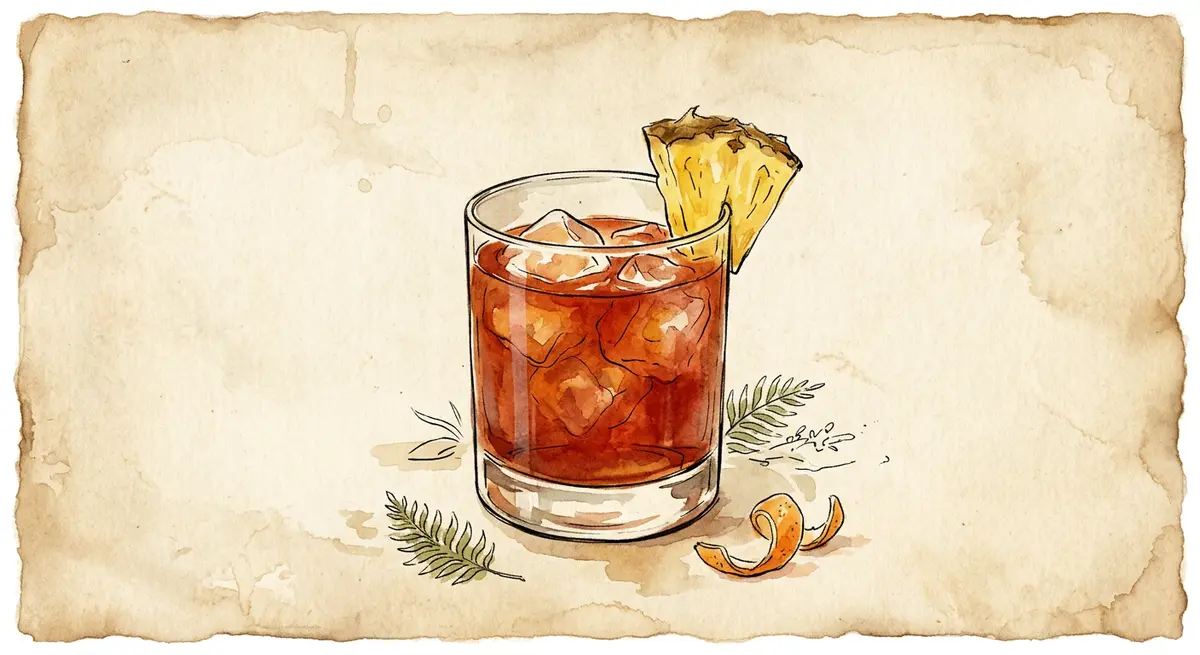
Jungle Bird
A Jungle Bird is 45ml of blackstrap rum, 22.5ml of Campari, 45ml of fresh pineapple juice, 15ml of fresh lime juice and 15ml of demerara syrup, shaken hard for 10 to 12 seconds and strained over fresh ice in a double rocks glass, with a pineapple wedge. About 2.4 UK units. These are the IBA’s measures. It is credited to Jeffrey Ong, beverage manager at the Aviary Bar of the Kuala Lumpur Hilton, where it was poured as a welcome drink for guests; Difford’s Guide dates it to the hotel’s opening on 6 July 1973. The recipe reached print in John J. Poister’s New American Bartender’s Guide in 1989. Campari is what sets it apart. Pineapple has the body and sugar to carry the bitterness, and a heavy rum underneath holds both.
Where this one sits
Recipe by Jerry Can Spirits · Updated 2 November 2026