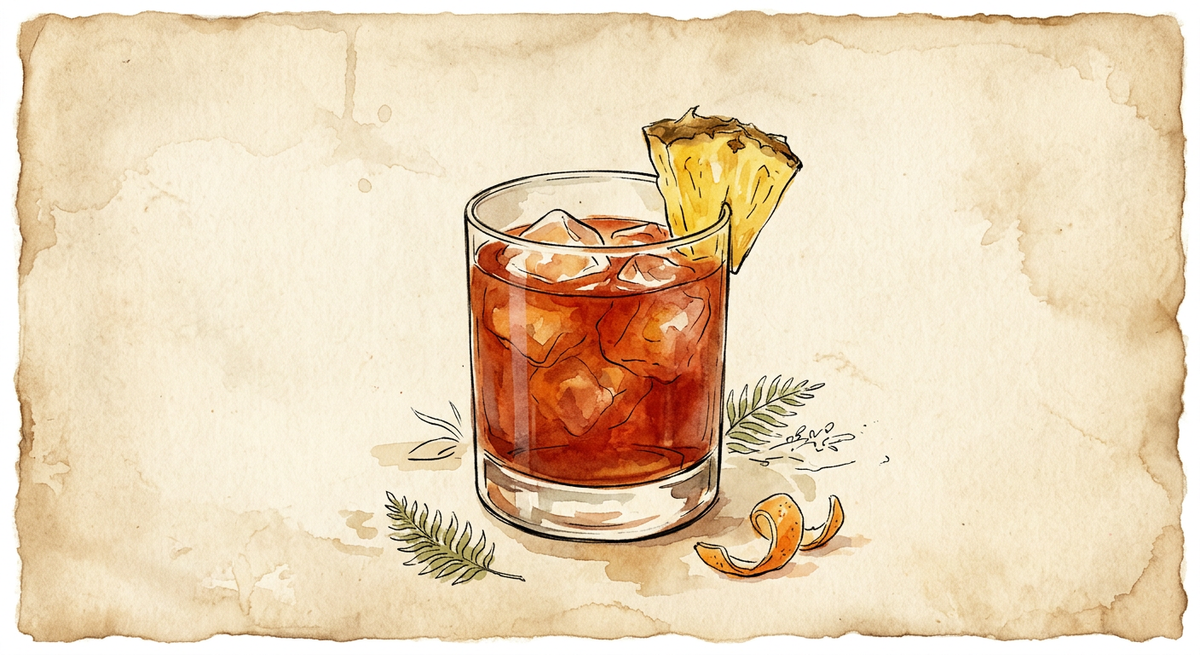
Jungle Bird
A Jungle Bird is 45ml of blackstrap rum, 22.5ml of Campari, 45ml of fresh pineapple juice, 15ml of fresh lime juice and 15ml of demerara syrup, shaken hard for 10 to 12 seconds and strained over fresh ice in a double rocks glass, with a pineapple wedge. About 2.4 UK units. These are the IBA’s measures. It is credited to Jeffrey Ong, beverage manager at the Aviary Bar of the Kuala Lumpur Hilton, where it was poured as a welcome drink for guests; Difford’s Guide dates it to the hotel’s opening on 6 July 1973. The recipe reached print in John J. Poister’s New American Bartender’s Guide in 1989. Campari is what sets it apart. Pineapple has the body and sugar to carry the bitterness, and a heavy rum underneath holds both.
Variations
Glassware: Rocks Glass
Garnish: Pineapple wedge
Ingredients
45ml
A heavy, dark rum with a burnt-sugar edge, here at 40% ABV. It is the IBA’s call and stands up to the Campari. A dark Jamaican rum is the older choice.
22.5ml
At 25% ABV, it brings bitter orange and the drink’s red. Aperol is too soft to take its place.
45ml
Fresh if possible. It gives body, sweetness and the foam, and it is what lets the Campari’s bitterness sit comfortably.
15ml
Squeezed the same day. A short measure, because the pineapple brings acid of its own.
15ml
Demerara sugar and water, one to one by weight, as the IBA specification has it: the one exception to our house 2:1. Brown sugar ties the rum to the Campari; a white syrup leaves them apart.
Instructions
Juice the pineapple and squeeze the lime the same day.
Add the blackstrap rum, Campari, pineapple juice, lime juice and demerara syrup to a shaker.
Fill with cubed ice and shake hard for 10 to 12 seconds.
Strain over fresh cubed ice in a double rocks glass.
Garnish with a pineapple wedge.
Source: the IBA (Official IBA specification; method ours). Last checked 10 October 2026.
Expert Tip
Juice the pineapple yourself if you can. Fresh juice shaken hard throws a fine, pale foam over the drink and tastes brighter. Cartoned juice foams less and tastes flatter, though it still makes a fair drink. Use a heavy rum. Blackstrap’s dark, slightly bitter sugar meets the Campari on equal terms, and a dark Jamaican rum brings overripe fruit instead. A light rum leaves the bitterness with nothing to push against. Make the syrup with demerara sugar, one part to one of water by weight, as the IBA specification has it; it is the one drink where we set aside our house 2:1. Its brown-sugar depth links rum and Campari, where a white syrup leaves them sitting apart.
Behind the Jungle Bird
Flavour Profile
Kuala Lumpur in the 1970s
Difford’s Guide credits Jeffrey Ong, beverage manager of the Kuala Lumpur Hilton, with the Jungle Bird as the welcome drink for the hotel’s opening on 6 July 1973, and says the hotel’s bar was called the Aviary. Difford’s says the drink was first served in a ceramic bird vessel, sipped from an opening in the tail.
It reached print in John J. Poister’s New American Bartender’s Guide in 1989, with dark rum and four ounces of pineapple juice. Jeff Berry found it there and printed it in Intoxica in 2002, calling for dark Jamaican rum.
In 2010 Giuseppe González switched to blackstrap rum and cut the pineapple from four ounces to an ounce and a half, by Punch’s account. That is the build that spread, and the one the IBA lists.
Why Bitterness Works Here
Tiki drinks run on rum, fruit, sugar and spice, and their usual fault is sweetness: pleasant at the first sip, cloying by the last.
Campari answers that, and pineapple makes the pairing possible. Most juices turn thin and sour against Campari. Pineapple has the body and sugar to meet it, so the two read as one flavour and the drink finishes dry.
Blackstrap or Jamaican
Blackstrap rum is heavy and dark, with a burnt-sugar bitterness that meets the Campari on equal terms. A dark Jamaican rum brings overripe banana and tropical fruit instead, which makes the drink fruitier and less brooding. Both work. A light rum does not: the bitterness has nothing to lean on.
How the rum changes a Jungle Bird, at 45ml; units take the rum at 40% ABV, our working figure, and Campari at the 25% on LWC’s UK listing
Blackstrap rum
- Character
- Heavy, burnt sugar, slightly bitter
- What it does to the drink
- Darker and drier; matches the Campari
- UK units in the drink
- About 2.4 at 40% ABV
Dark Jamaican rum
- Character
- Funky, overripe fruit
- What it does to the drink
- Fruitier and more tropical
- UK units in the drink
- About 2.4 at 40% ABV; more if bottled stronger
Light white rum
- Character
- Clean and light
- What it does to the drink
- The Campari takes over
- UK units in the drink
- About 2.4 at 40% ABV
| Rum | Character | What it does to the drink | UK units in the drink |
|---|---|---|---|
| Blackstrap rum | Heavy, burnt sugar, slightly bitter | Darker and drier; matches the Campari | About 2.4 at 40% ABV |
| Dark Jamaican rum | Funky, overripe fruit | Fruitier and more tropical | About 2.4 at 40% ABV; more if bottled stronger |
| Light white rum | Clean and light | The Campari takes over | About 2.4 at 40% ABV |
The Pineapple
Fresh pineapple juice, shaken hard, throws a fine pale foam over the drink and tastes brighter than cartoned juice. Strain the pulp out after juicing so the texture stays smooth. A carton of pure juice still makes a sound drink; it is flatter and foams less.
How to Serve It
Over fresh ice in a double rocks glass with one pineapple wedge, before dinner rather than after. The bitterness sharpens the appetite the way a Negroni does.
For Campari with gin and sweet vermouth, make a Negroni; for rum, lime, curaçao and orgeat, a Mai Tai; for rum, pineapple and coconut, a Painkiller.
Make it at home
The Spirit
Blackstrap RumBlackstrap rum is a near-black, heavy rum, generally 40% ABV and bitter-sweet with treacle, liquorice and burnt sugar. The name borrows from blackstrap molasses, which the Oxford Companion, a secondary source, describes as dark, rich, bitter and thick after several boilings, but Regulation (EC) 110/2008 gives the style no definition. Our Corn n’ Oil floats it over falernum, and our Jungle Bird stands it against Campari.
More to explore
Frequently Asked Questions
What is in a Jungle Bird?
Who created the Jungle Bird?
Why is there Campari in a tiki drink?
What rum should I use for a Jungle Bird?
How has the Jungle Bird changed?
Can I use carton pineapple juice?
How strong is a Jungle Bird?
Sources.
Checked between 18 October and 19 October 2026.
- Difford’s Guide, “Jungle Bird” (secondary source: created as the welcome drink for the Kuala Lumpur Hilton’s opening on 6 July 1973 by Jeffrey Ong; Poister’s 1989 New American Bartender’s Guide; the Aviary bar; the ceramic bird vessel; Berry’s Intoxica of 2003).
- LWC, “Campari 70cl” (UK trade listing: 25%).
- Punch (Chloe Frechette, 23 August 2024), “In Search of the Ultimate Jungle Bird” (named-author trade press: the original calls for dark Jamaican rum; González’s version of 2010 with blackstrap and 1.5 oz pineapple instead of 4 oz).
- ApeTime (Stefano Fossati, 2 April 2024), “La nuova lista dei cocktail Iba, ecco il libro ufficiale” (named-author trade magazine, in Italian: the Jungle Bird among the new entries of the 2024 official list).
You Might Also Like
Zombie
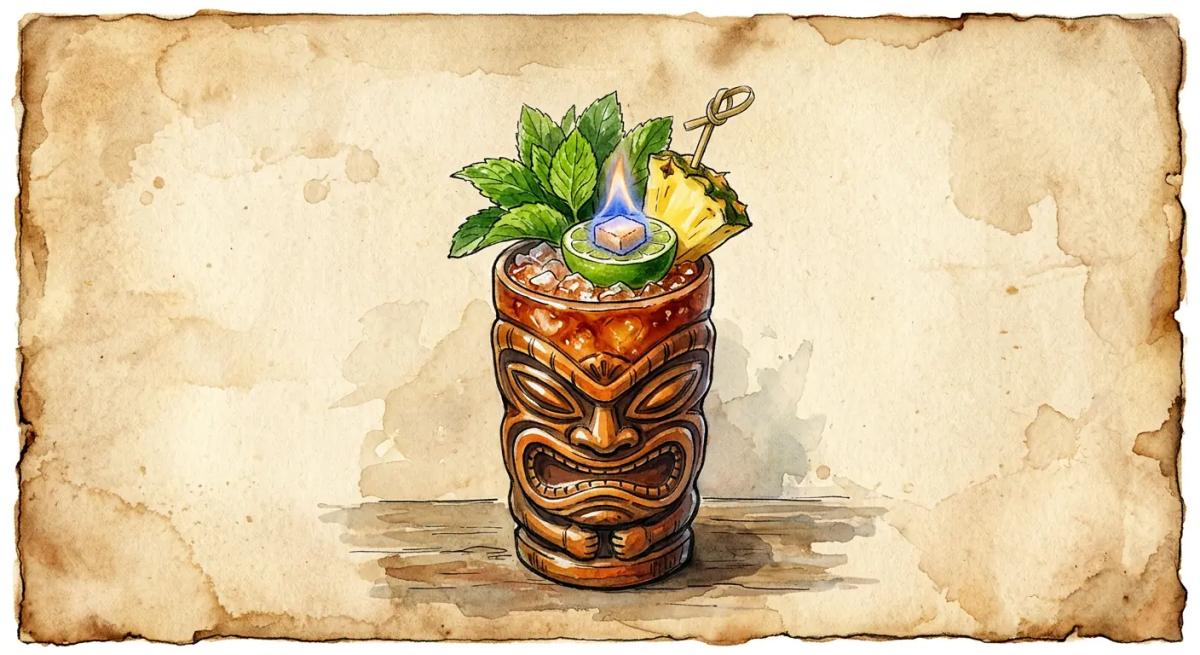
A Zombie is 45ml Jamaican dark rum, 45ml gold Puerto Rican rum and 30ml Demerara rum with 20ml fresh lime juice, 15ml falernum, 15ml Donn’s Mix, a teaspoon of grenadine, a dash of Angostura and six drops of Pernod, flash blended with cracked ice and poured into a zombie glass with mint. Those are the IBA’s measures. About 5.0 UK units in one glass. The Oxford Companion says Donn Beach created it in 1934 at Don the Beachcomber’s in Hollywood, and refused to serve more than two to a customer. Difford’s Guide says his recipes were notated in a secret code of numbered bottles and elusive mixes, and the Companion says Jeff Berry found the original formula in 2006 in the notebook of a former Beachcomber’s headwaiter, Richard Santiago. Donn’s Mix, two parts grapefruit juice to one of cinnamon syrup, is what separates it from a strong rum punch.
Painkiller
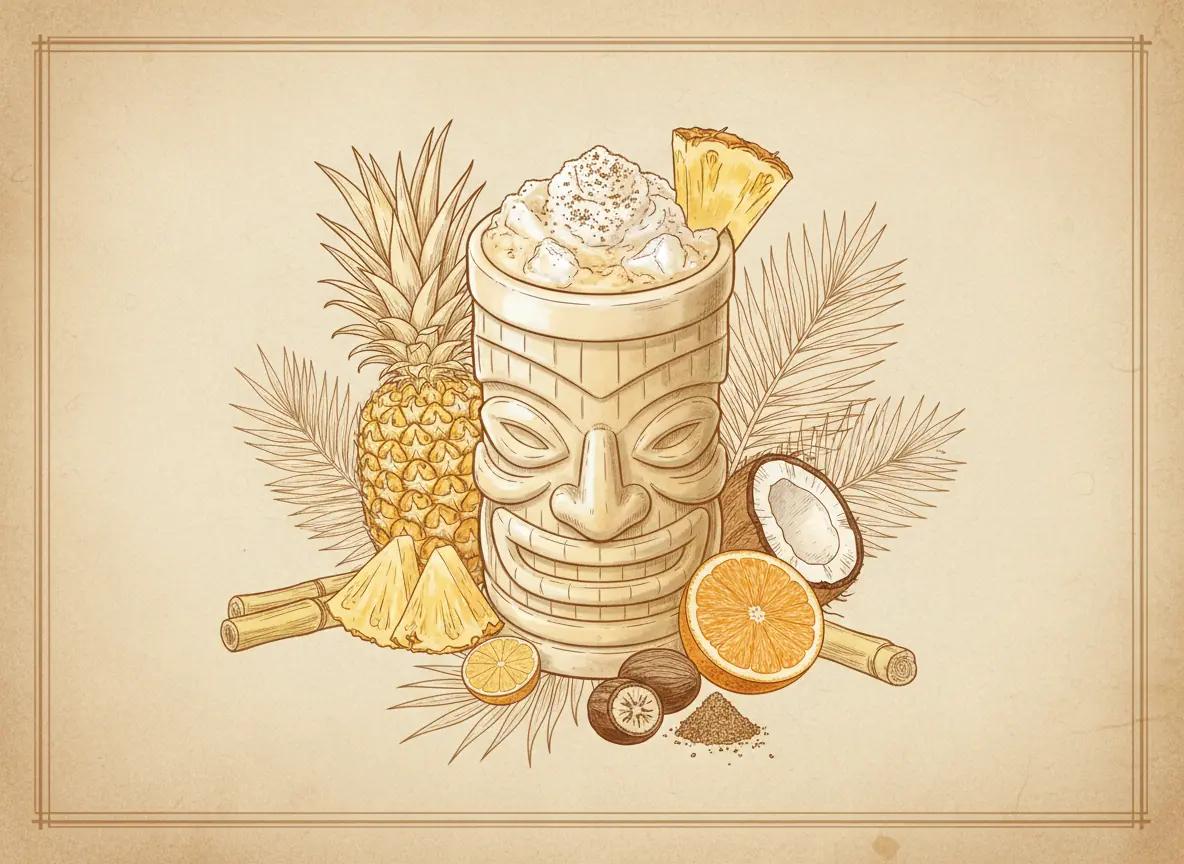
A Painkiller is 60ml of Pusser’s Rum, 120ml of pineapple juice, 30ml of fresh orange juice and 30ml of cream of coconut, given a hard 10 to 12 second shake and strained onto cubed ice in a tiki mug or a big glass, with fresh nutmeg grated on top. About 2.4 UK units. Cream of coconut is coconut and sugar, usually with no dairy, but check the label. The name belongs to Pusser’s. Pusser’s prints the name with the registered symbol on its own Painkiller page, and the Oxford Companion says the company owns the trademark for the Pusser’s Painkiller cocktail. The recipe here is its own: four parts pineapple, one of cream of coconut and one of orange, with Pusser’s to suit. Difford’s Guide says it trademarked the name in the United States and the UK in 2003 and in 2010 forced a New York bar called Painkiller to rename itself PKNY. Pusser’s traces the drink to Daphne Henderson’s Soggy Dollar Bar on Jost Van Dyke, in the British Virgin Islands.
Negroni
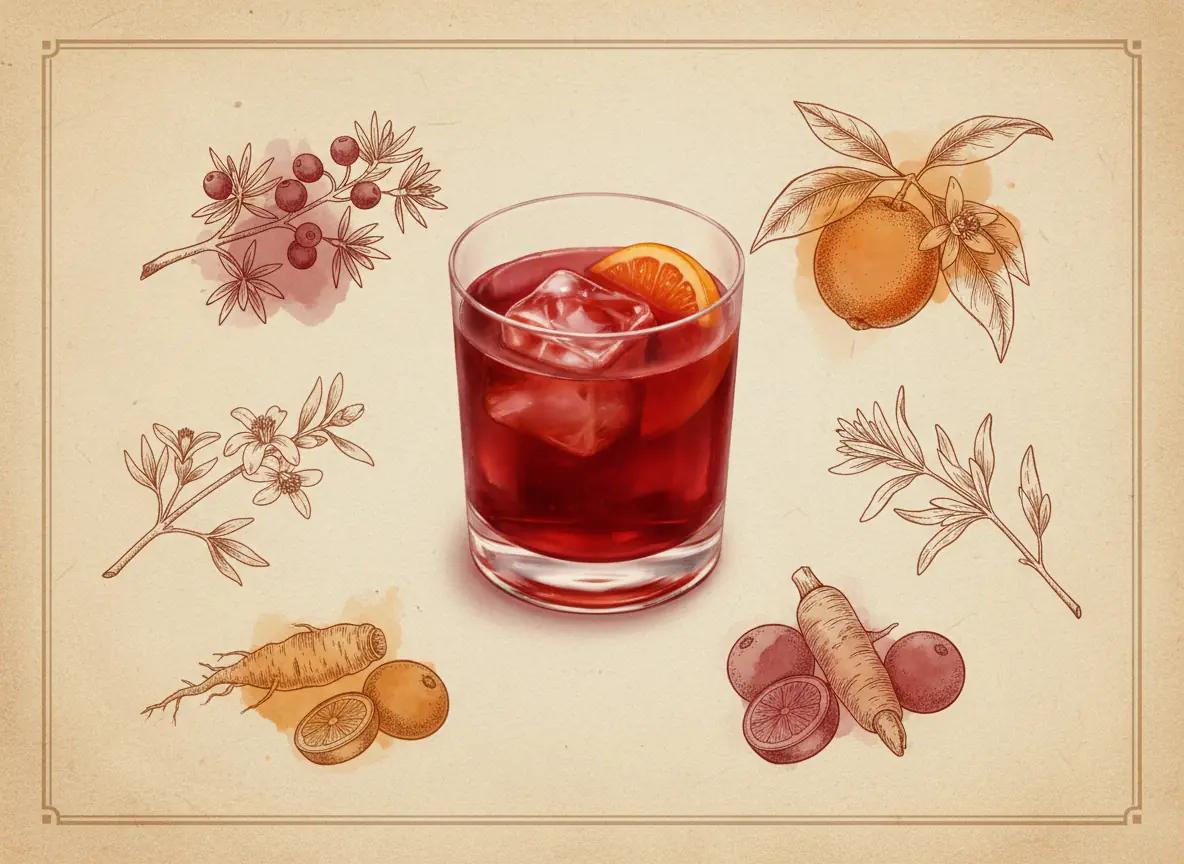
A Negroni is 30ml each of gin, Campari and sweet vermouth, stirred with ice for 20 to 30 seconds and strained over fresh ice in a rocks glass, with an orange peel expressed over the top. About 2.4 UK units. The measures are the IBA’s; the IBA builds the drink in the glass and garnishes it with half an orange slice. Difford’s Guide gives the most widely reported account: Florence in 1919, at the Casoni Bar, where the bartender Fosco Scarselli is said to have replaced the soda in Count Camillo Negroni’s Americano with gin. The Oxford Companion has the drink named in a surviving letter of October 1920 and then absent under that name until 1947. A French book of 1929 by Alimbau and Milhorat, in the Internet Archive’s scan, gives equal parts of the three as the Campari Mixte. Each third has a job. Gin gives strength and juniper, the red bitter gives bitterness and orange, and the vermouth gives body and sugar. With no juice or soda in the glass, a tired vermouth shows at once.
Mai Tai
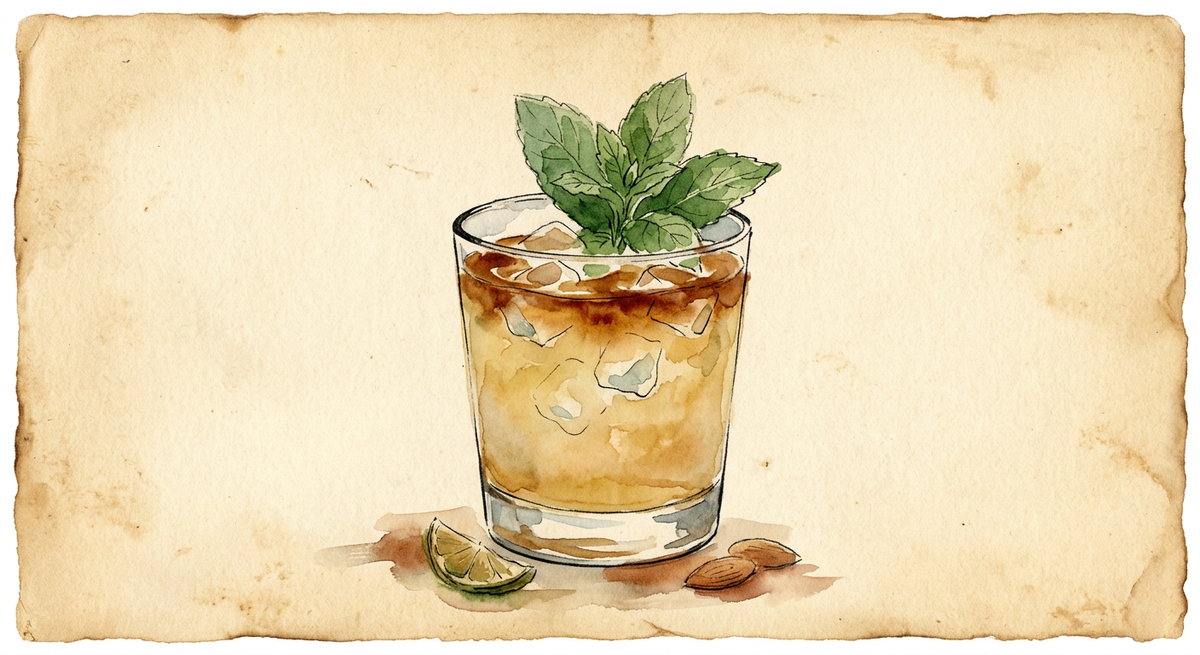
A Mai Tai is aged rum, lime, orange curaçao and orgeat: 30ml amber Jamaican rum, 30ml Martinique molasses rum, 30ml fresh lime juice, 15ml orange curaçao, 15ml orgeat and 7.5ml sugar syrup, shaken hard and strained over crushed ice in a double rocks glass, with a spent lime shell and a sprig of mint. This is the IBA specification. There is no pineapple or orange juice in it. Victor “Trader Vic” Bergeron said he created it in 1944 and gave the first two to friends from Tahiti, one of whom said “Mai tai roa ae”, which gave it the name, as Famous Hotels quotes him. The Oxford Companion places his restaurant in Oakland and adds that Donn Beach’s widow, Phoebe, wrote in 2002 that he made a Mai Tai in 1933, though the Companion finds good reason to doubt that Vic copied it. Orgeat is almond syrup, so the drink contains nuts. A glass holds about 3.0 UK units.
Where this one sits
Recipe by Jerry Can Spirits · Updated 19 October 2026