Right Hand
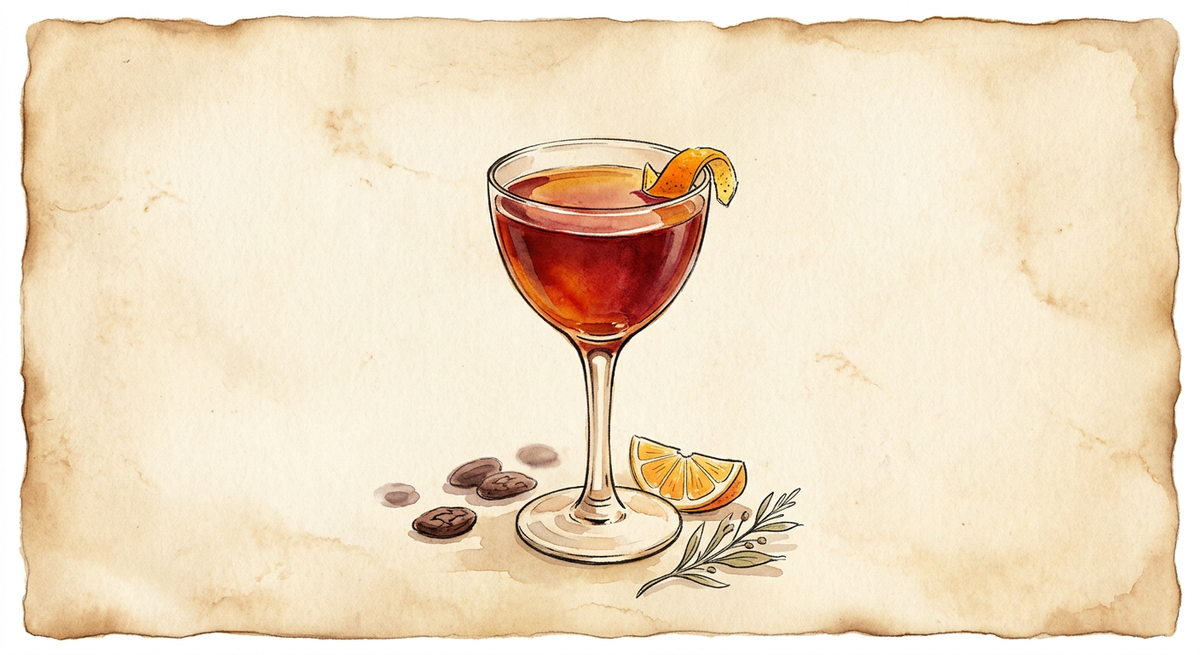
A Right Hand is 45ml of aged rum, 22.5ml of Campari, 22.5ml of sweet vermouth and three dashes of chocolate bitters, stirred over ice for 20 to 30 seconds and strained into a chilled Nick & Nora, with an orange twist. About 2.7 UK units. VinePair dates the Right Hand to 2007, and Difford’s Guide to 2007 or 2008: Michael McIlroy created it at Milk & Honey in New York, a rum drink on the Negroni’s frame. Sam Ross, from the same bar, answered it with the Left Hand on bourbon, and the two have been poured as a pair since. VinePair traces both to the arrival that year of a mole-style chocolate bitters from Bittermens. Campari is a hard partner for rum. A light rum disappears under it. An aged rum with oak and dried fruit holds its ground, the vermouth softens the join, and the cacao in the bitters links the dark sugar to the bitter orange.
Glassware: Nick & Nora Glass
Garnish: Orange twist
Ingredients
45ml
An aged rum at 40% ABV with oak and dried fruit: Jamaican or Barbadian for balance, Guyanese for weight. Overproof brings heat rather than flavour and tips the Campari out of line.
22.5ml
At 25% ABV, the bitter orange at the centre of the drink. Aperol is too light and too sweet to stand in for it.
22.5ml
A rich Italian style at about 16% ABV. It rounds the bitterness and joins rum to Campari. Opened within the month and kept cold.
3 dashes
Cacao and spice that link the rum’s dark sugar to the bitter orange. McIlroy’s recipe is usually printed with two dashes of mole bitters; three, as in our Left Hand, make the cacao clearer.
Instructions
Chill a Nick & Nora glass.
Add the rum, Campari, sweet vermouth and chocolate bitters to a mixing glass.
Fill with cubed ice and stir for 20 to 30 seconds.
Strain into the chilled glass.
Express an orange twist over the surface and drop it in.
Our version
Difford’s Guide prints Michael McIlroy’s Milk & Honey recipe as 45ml of aged rum, 22.5ml of sweet vermouth, 22.5ml of a Campari-style red bitter and two dashes of mole bitters; Punch prints one and three-quarter ounces of aged rum (about 52ml), three-quarters of an ounce each of Campari and sweet vermouth and two dashes of chocolate bitters. Ours takes three dashes, to match our Left Hand.
Source: our own specification.
Expert Tip
Choose the rum for weight. Jamaican or Barbadian aged rums carry enough oak and fruit to stand beside Campari, and a Guyanese demerara rum makes a heavier, darker drink. A clean, lightly aged rum leaves a thin Negroni with nothing in the middle. Stir for 20 to 30 seconds against cold, dry cubes. There is no juice or soda, so the stir supplies all the water, and the cacao only shows once the drink has some dilution. We keep the vermouth in the fridge and finish it within a month. At 22.5ml it is a quarter of the drink, and an oxidised bottle makes the finish flat and winey.
Behind the Right Hand
Flavour Profile
A Milk & Honey Pair
Michael McIlroy made the Right Hand in 2007, by VinePair’s account, at Milk & Honey, which the Oxford Companion describes as Sasha Petraske’s bar, opened on New Year’s Eve 1999 on Eldridge Street on the Lower East Side. He took the Negroni’s three parts, put aged rum where the gin goes, gave the spirit the larger measure and added cacao bitters.
Sam Ross, at the same bar, answered it with the Left Hand on bourbon. A mole-style chocolate bitters from Bittermens came onto the market that year, and VinePair calls it the true catalyst for both drinks. VinePair says Ross and McIlroy later opened Attaboy in the same space in 2012.
Rum Against Campari
Campari overwhelms most light spirits. A rum needs age, oak and some dark sugar to stand beside it, which is why a lightly aged bottle makes a thin drink here.
The Jungle Bird showed it first: the IBA lists blackstrap rum, Campari, pineapple juice, lime juice and demerara syrup shaken over ice. The Right Hand takes the same pairing into a mixing glass. Sweet vermouth does the joining that pineapple does in the Jungle Bird, and the stir keeps the texture dense.
What the Cacao Does
Chocolate bitters put cacao and spice into the drink in a few drops. Cacao belongs to the same family of flavours as aged rum’s dark sugar and as Campari’s roasted, bitter edge, so it sits between them rather than on top.
Without the bitters the rum and Campari sit side by side. With them the drink tastes of one thing. They need the full stir, because cold, undiluted spirit holds the cacao back.
The Right Hand and Its Relatives
The Right Hand beside our Left Hand, Boulevardier and Negroni
Base
- Right Hand
- 45ml aged rum
- Left Hand
- 45ml bourbon
- Boulevardier
- 45ml bourbon
- Negroni
- 30ml gin
Campari
- Right Hand
- 22.5ml
- Left Hand
- 22.5ml
- Boulevardier
- 30ml
- Negroni
- 30ml
Sweet vermouth
- Right Hand
- 22.5ml
- Left Hand
- 22.5ml
- Boulevardier
- 30ml
- Negroni
- 30ml
Bitters
- Right Hand
- Three dashes chocolate
- Left Hand
- Three dashes chocolate
- Boulevardier
- None
- Negroni
- None
UK units
- Right Hand
- About 2.7
- Left Hand
- About 2.7
- Boulevardier
- About 3.0
- Negroni
- About 2.4
| Element | Right Hand | Left Hand | Boulevardier | Negroni |
|---|---|---|---|---|
| Base | 45ml aged rum | 45ml bourbon | 45ml bourbon | 30ml gin |
| Campari | 22.5ml | 22.5ml | 30ml | 30ml |
| Sweet vermouth | 22.5ml | 22.5ml | 30ml | 30ml |
| Bitters | Three dashes chocolate | Three dashes chocolate | None | None |
| UK units | About 2.7 | About 2.7 | About 3.0 | About 2.4 |
How to Serve It
Up, in a chilled Nick & Nora, with an orange twist expressed over the top and dropped in. It is darker and sweeter than a Negroni, which makes it a better fit after dinner than before.
For the bourbon half of the pair, a Left Hand; for rum and Campari shaken with pineapple, a Jungle Bird.
Make it at home
The Spirit
Aged RumAged rum is rum that has spent years in oak casks, usually ex-bourbon barrels, and taken on vanilla, caramel and dried fruit; our recipes count it at 40% ABV. In our recipes it is the rum for drinks where you should taste the spirit: the Old Cuban, the Mai Tai, the Rum Sour and the punch bowl.
Master the Techniques
More to explore
Frequently Asked Questions
What is in a Right Hand?
Who created the Right Hand?
How does it differ from the Left Hand?
Which rum should I use?
Why does rum work with Campari?
Can I leave out the chocolate bitters?
How strong is a Right Hand?
Sources.
Checked between 18 October and 19 October 2026.
- VinePair, “How To Make A Right Hand” (secondary source: Ross and McIlroy, 2007; Bittermens Xocolatl Mole bitters the catalyst; Attaboy in the same space; McIlroy’s original used Cruzan Single Barrel).
- Difford’s Guide, “Right Hand” (secondary source: adapted from a recipe created 2007-8 by Michael McIlroy at Milk & Honey; 45 ml rum, 22.5 ml each of vermouth and red bitter, two dashes mole bitters).
- Punch, “The Right Hand” (secondary source: McIlroy’s recipe 1¾ oz aged rum, ¾ oz each of vermouth and Campari, two dashes chocolate bitters; Ross created the Left Hand as a complement).
- The Oxford Companion to Spirits and Cocktails (Jim Meehan), “Milk & Honey” (secondary source: opened by Sasha Petraske on Eldridge Street, Lower East Side, New York, on New Year’s Eve 1999; moved uptown in 2013; the old space reopened as Attaboy under Sam Ross and Michael McIlroy).
- IBA, “Jungle Bird” (IBA New Era: 45 ml blackstrap rum, 22.5 ml Campari, 45 ml pineapple juice, 15 ml lime juice, 15 ml demerara syrup; shaken).
- LWC, “Campari 70cl” (UK wholesaler listing: Alcohol By Volume 25%).
You Might Also Like
Left Hand
A Left Hand is 45ml of bourbon, 22.5ml of Campari, 22.5ml of sweet vermouth and three dashes of chocolate bitters, stirred over ice for 20 to 30 seconds and strained into a chilled Nick and Nora glass, finished with an orange twist. About 2.7 UK units. It is a Boulevardier with cacao in it and less of the bitter and the vermouth. It is Sam Ross’s drink, from the New York bar Milk & Honey: VinePair dates it to 2007, as the pair to Michael McIlroy’s Right Hand, and Difford’s Guide to 2006. His version used Bittermens Xocolatl Mole bitters, then new on the market, and a cherry. The chocolate sits between the bourbon’s vanilla and the Campari’s bitter orange, so the two taste joined. Pulling the Campari and vermouth back to 22.5ml each leaves the bitters room to be tasted.
Jungle Bird
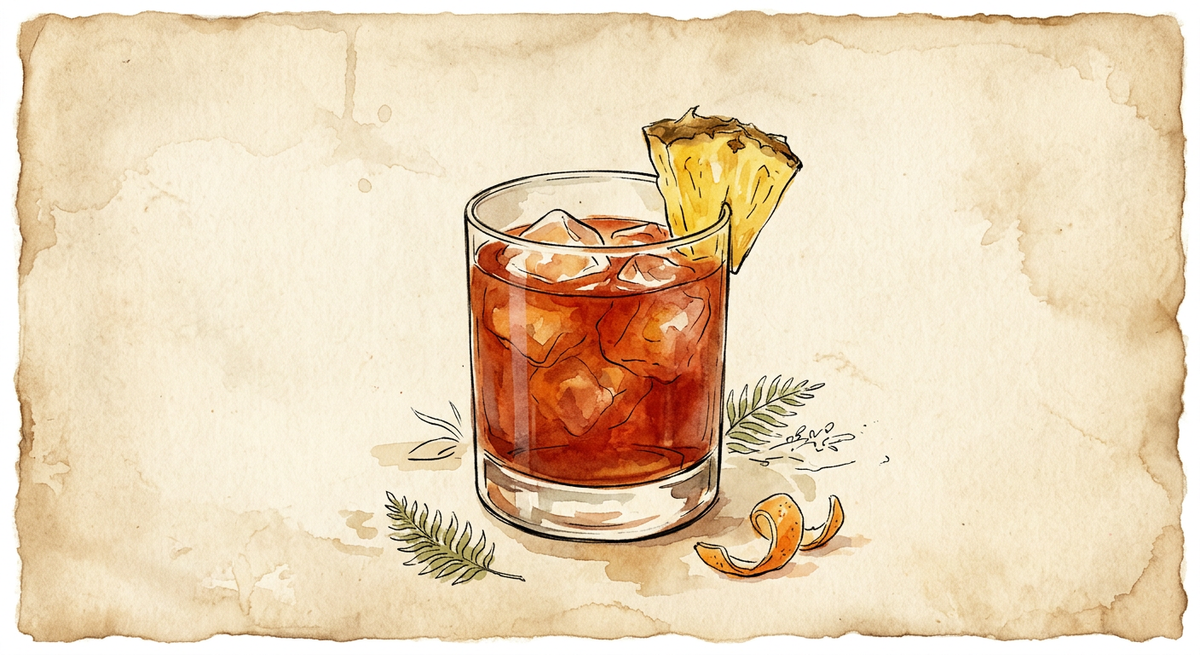
A Jungle Bird is 45ml of blackstrap rum, 22.5ml of Campari, 45ml of fresh pineapple juice, 15ml of fresh lime juice and 15ml of demerara syrup, shaken hard for 10 to 12 seconds and strained over fresh ice in a double rocks glass, with a pineapple wedge. About 2.4 UK units. These are the IBA’s measures. It is credited to Jeffrey Ong, beverage manager at the Aviary Bar of the Kuala Lumpur Hilton, where it was poured as a welcome drink for guests; Difford’s Guide dates it to the hotel’s opening on 6 July 1973. The recipe reached print in John J. Poister’s New American Bartender’s Guide in 1989. Campari is what sets it apart. Pineapple has the body and sugar to carry the bitterness, and a heavy rum underneath holds both.
Boulevardier
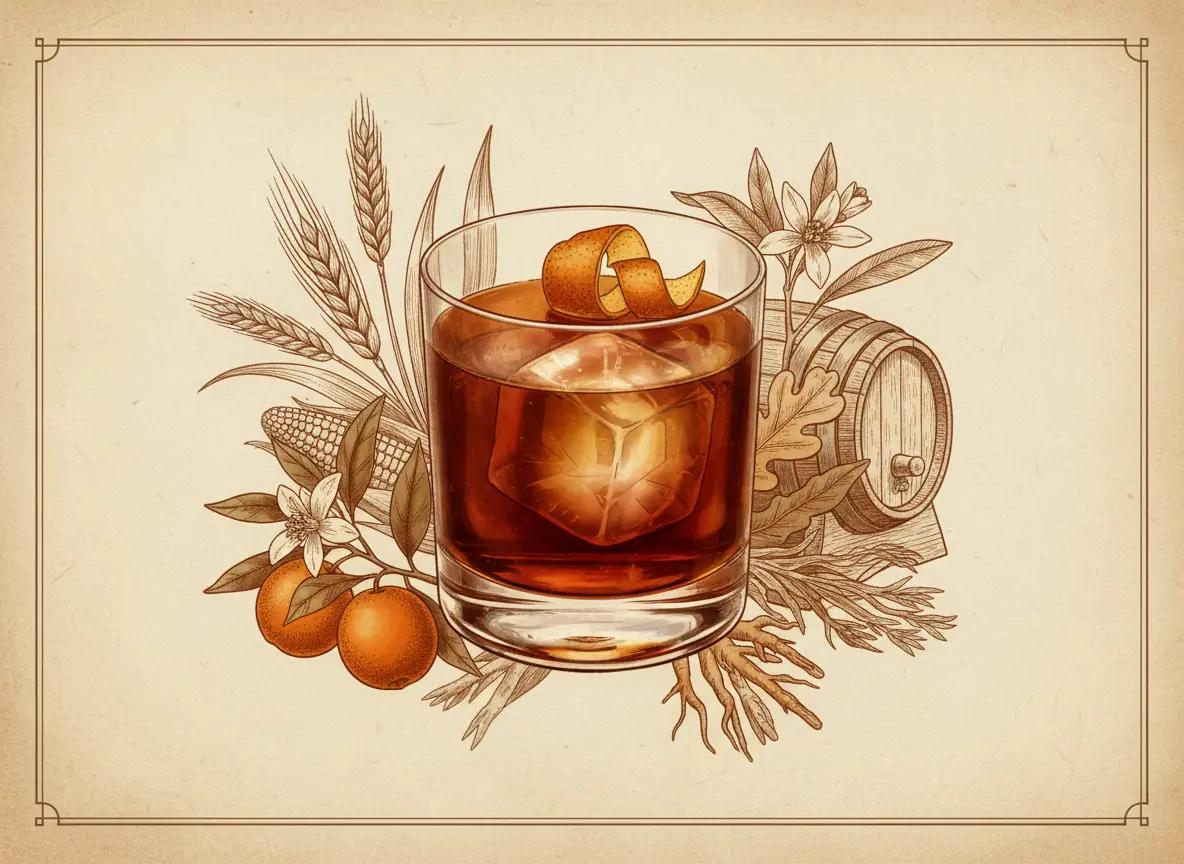
A Boulevardier is 45ml bourbon, 30ml Campari and 30ml sweet vermouth, stirred over ice for 20 to 30 seconds and strained over fresh ice in a rocks glass, with orange peel. It is the bourbon Negroni: the same Campari and vermouth with bourbon in place of gin, and that one change makes it warmer and rounder. About 3.0 UK units. It first appeared in print in Barflies and Cocktails, Harry MacElhone’s book, published in Paris in 1927, in a chapter by the columnist Arthur Moss, as the cocktail of Erskine Gwynne, an American in Paris who, Difford’s Guide says, helped found a monthly magazine called Boulevardier. Barflies and Cocktails gives the 1927 recipe as equal parts Campari, Italian vermouth and bourbon. The measures here are the IBA’s, with the bourbon ahead of the other two. Equal parts works well with a lighter vermouth. Against a rich one such as Carpano Antica Formula, the extra 15ml of bourbon keeps the drink from turning heavy.
Where this one sits
Recipe by Jerry Can Spirits · Updated 19 October 2026