Naked and Famous
A Naked and Famous is 22.5ml each of mezcal, yellow Chartreuse, Aperol and fresh lime juice, shaken hard for 10 to 12 seconds and double strained into a chilled coupe, with no garnish. About 2.1 UK units. These are the IBA’s measures. Difford’s Guide says it was adapted from a recipe Joaquín Simó created in 2011 and is best known for its early appearance at Death & Co in New York. It takes the shape of the Last Word, four equal parts with fresh citrus, and shares Aperol with the Paper Plane. VinePair says Phil Ward’s Division Bell, which predates it, had already put mezcal with Aperol. Each part has one job. Mezcal brings smoke, yellow Chartreuse sweetness and spice, Aperol a soft bitter orange and lime the acid. Use yellow Chartreuse, not green: Chartreuse’s own pages give 43% ABV against 55%, so yellow is gentler, and the balance depends on it.
Glassware: Coupe Glass
Garnish: None traditionally
Ingredients
22.5ml
An espadín at about 40% ABV with moderate smoke. A heavily smoked bottle drowns the other three.
22.5ml
At 43% ABV on Chartreuse’s own page, sweet with spicy scents and a soft structure. Green, at 55%, is sharper and stronger and does not substitute.
22.5ml
At 11% ABV on Aperol’s own FAQ, a soft bitter orange that links the smoke to the sweetness. Campari at this measure would take over.
22.5ml
Squeezed the same day. The only acid, holding three sweet and bitter ingredients in line.
Instructions
Squeeze the lime juice the same day and chill a coupe.
Add the mezcal, yellow Chartreuse, Aperol and lime juice to a shaker.
Fill with cubed ice and shake hard for 10 to 12 seconds.
Double strain into the chilled coupe.
Serve without garnish.
Source: the IBA (Official IBA specification; served in a coupe, method ours). Last checked 10 October 2026.
Expert Tip
Measure every part. With four equal pours and no bitters or garnish to correct it, a heavy hand on any one shows at once: too much Chartreuse and it turns herbal and sweet, too much Aperol and it goes soft. Choose a moderate mezcal. An espadín with gentle smoke keeps its quarter in proportion. A fiercely smoky bottle covers the other three. Shake hard and double strain. The drink is served up with nothing on top, and ice chips in the glass spoil a texture that should be clean.
Behind the Naked and Famous
Flavour Profile
Death & Co
Difford’s Guide says Joaquín Simó created the recipe the Naked and Famous was adapted from in 2011, and that it is best known for its early appearance at Death & Co in New York. It sits in a line of equal-parts drinks: the Last Word, which the Oxford Companion says first appears in print on a Detroit Athletic Club menu in 1916, and the Paper Plane, which Sam Ross created in 2008.
Mezcal and Aperol had already met in Phil Ward’s Division Bell, created at Mayahuel in 2009. Simó’s drink uses the same pairing, adds yellow Chartreuse, and returns to strict equal parts.
Four Equal Parts
Four ingredients at the same volume, no bitters and no garnish: the balance has to come from the choice of ingredients alone. Mezcal brings smoke, yellow Chartreuse honeyed herbs, Aperol soft bitter orange, and lime the acid that binds them.
Because no part leads, a change of a few millilitres in any one moves the whole drink. That is why it rewards a jigger more than most.
Yellow Chartreuse, Not Green
Yellow Chartreuse is bottled at 43% ABV, and its maker calls it sweet, with spicy scents and a soft structure. Green is 55% and, in our view, sharper. In an equal-parts drink that difference decides the result.
Yellow’s sweetness balances the Aperol’s bitterness and cushions the smoke. Green brings neither, so the drink loses its middle and becomes smoke against herbs.
Three Equal-Parts Drinks
The Last Word, the Paper Plane and the Naked and Famous compared: measures from the IBA, strengths from Chartreuse’s, Aperol’s and Nonino’s own pages, gin, mezcal and bourbon at our working 40%, units ours
Last Word
- Spirit
- Gin
- Herbal liqueur
- Green Chartreuse
- Third part
- Maraschino
- Citrus
- Lime
- Each pour
- 22.5ml
- UK units
- About 2.9
Paper Plane
- Spirit
- Bourbon
- Herbal liqueur
- Amaro Nonino
- Third part
- Aperol
- Citrus
- Lemon
- Each pour
- 30ml
- UK units
- About 2.6
Naked and Famous
- Spirit
- Mezcal
- Herbal liqueur
- Yellow Chartreuse
- Third part
- Aperol
- Citrus
- Lime
- Each pour
- 22.5ml
- UK units
- About 2.1
| Drink | Spirit | Herbal liqueur | Third part | Citrus | Each pour | UK units |
|---|---|---|---|---|---|---|
| Last Word | Gin | Green Chartreuse | Maraschino | Lime | 22.5ml | About 2.9 |
| Paper Plane | Bourbon | Amaro Nonino | Aperol | Lemon | 30ml | About 2.6 |
| Naked and Famous | Mezcal | Yellow Chartreuse | Aperol | Lime | 22.5ml | About 2.1 |
Mezcal in Proportion
An espadín with moderate smoke keeps the mezcal to its quarter of the drink. A heavily smoked bottle covers the other three, and the drink becomes smoke with lime.
How to Serve It
Cold, up and without garnish, in a chilled coupe. The colour is a muted orange, and the smoke arrives before the first sip. Nothing goes on top; any correction belongs in the measuring.
For the gin original of the format, make a Last Word; for bourbon and lemon, a Paper Plane; for mezcal, Aperol and maraschino, a Division Bell.
Make it at home
The Spirit
MezcalMezcal is distilled in Mexico from cooked agave hearts, always 100% agave under Mexico’s standard, NOM-070, at 35 to 55% ABV, and counted at 40% in our recipes. Artisanal mezcal, cooked in pit or masonry ovens, is where the smoke usually comes from. Espadín is the common agave, poured from a split base under tequila in an Oaxacan Old Fashioned to a full 60ml in a Mezcal Margarita.
More to explore
Frequently Asked Questions
What is in a Naked and Famous?
Who created the Naked and Famous?
Yellow or green Chartreuse?
Which mezcal should I use?
What does a Naked and Famous taste like?
How is it different from a Division Bell?
How strong is a Naked and Famous?
Sources.
Checked between 18 October and 19 October 2026.
- Difford’s Guide, “Naked & Famous” (secondary source: adapted from a recipe created in 2011 by Joaquín Simó, best known for its early appearance at Death & Co.).
- IBA, “Naked and Famous” (official specification: 22.5ml each of mezcal, yellow Chartreuse, Aperol and fresh lime juice).
- The Oxford Companion to Spirits and Cocktails (St. John Frizell), “The Last Word” (secondary source: first in print in the Detroit Athletic Club News, 1916; its formula inspired the Final Ward and the Naked and Famous by Joaquín Simó).
- Punch, “How the Paper Plane Became a Modern Classic” (secondary source: Paper Plane on The Violet Hour menu in summer 2008).
- VinePair, “The Story Behind The Division Bell” (secondary source: Division Bell created by Phil Ward in 2009 at Mayahuel, a few years before Simó’s Naked and Famous).
- Chartreuse, “Yellow Chartreuse” (maker’s page: 43% vol.; sweetness, spicy scents, a soft structure; scents of turmeric, citrus and anise).
- Chartreuse, “Green Chartreuse” (maker’s page: 55% vol.).
- Aperol, “Aperol FAQ” (maker’s page: Aperol has an alcohol content of 11%).
- Nonino, “Amaro Nonino Quintessentia” (maker’s page: 35% alcohol content).
You Might Also Like
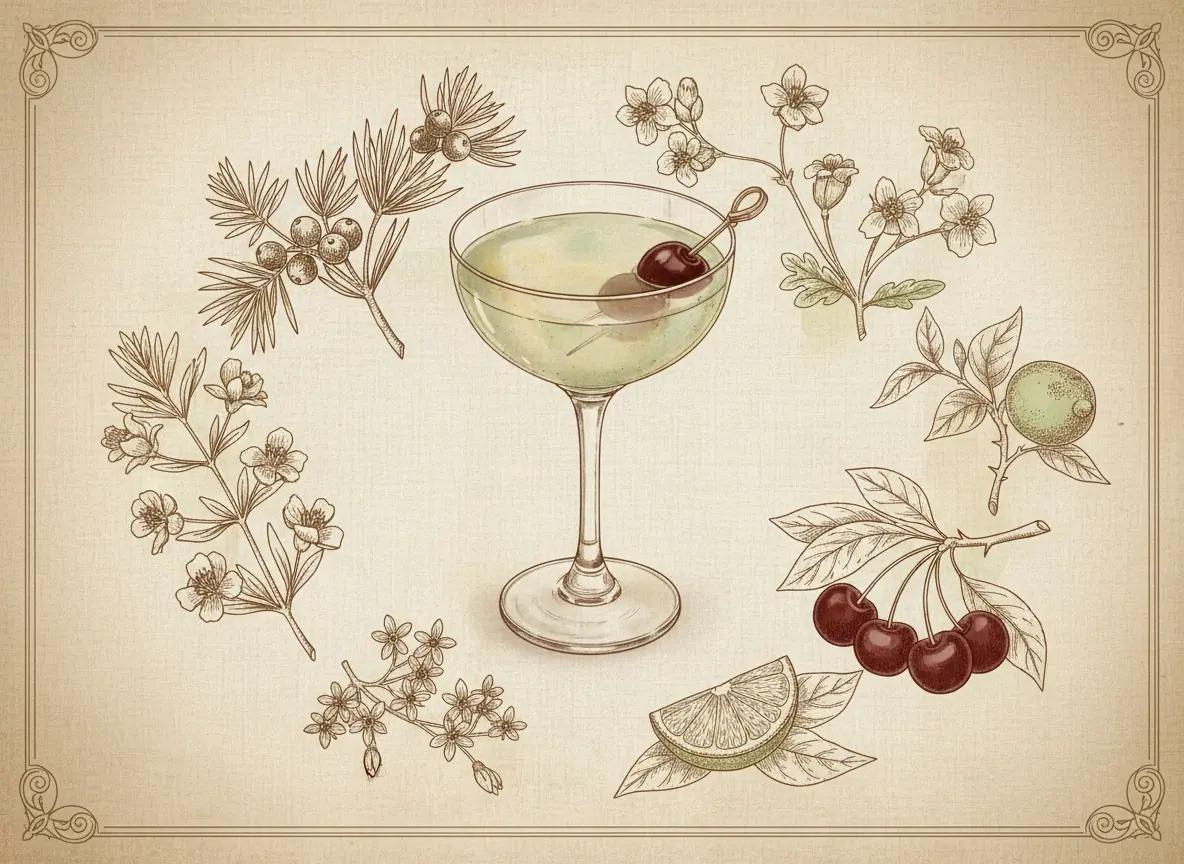
Last Word
A Last Word is 22.5ml each of gin, green Chartreuse, maraschino liqueur and fresh lime juice, shaken hard for 10 to 12 seconds and double strained into a chilled Nick & Nora or coupe. About 2.9 UK units. The measures are the IBA’s; the cherry or lime twist is ours. The Oxford Companion says the drink first appears in print in the Detroit Athletic Club News in 1916, on a menu at 35 cents, a high price then. Ted Saucier’s Bottoms Up of 1951 prints the recipe, quoting a club source who says Frank Fogarty, a vaudeville monologist, introduced it there about thirty years earlier. In 2003 Murray Stenson put it on the menu at the Zig Zag Café in Seattle, from where it spread, the Companion says. Four strong flavours at equal volume, and none takes over. Chartreuse brings herbs and heat, maraschino cherry and a bitter almond edge, lime the acid, and gin holds them together.
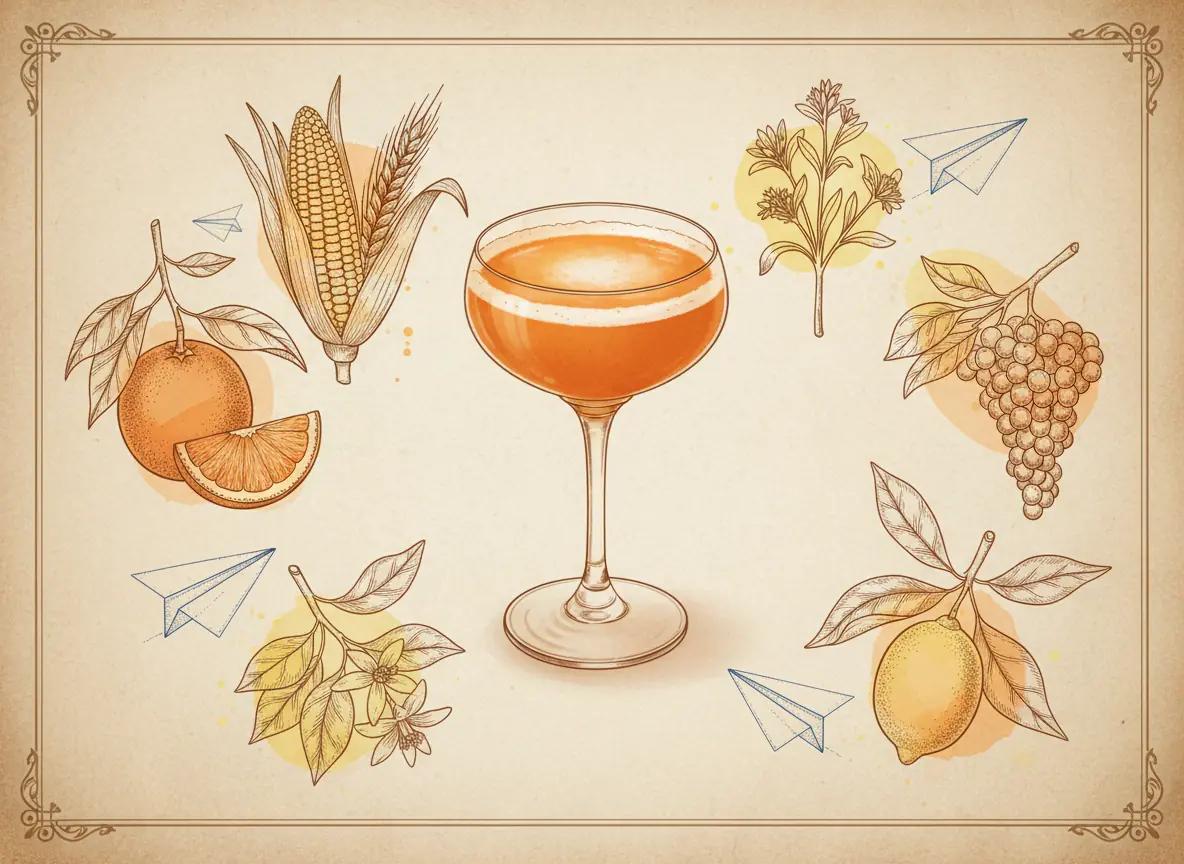
Paper Plane
A Paper Plane is 30ml each of bourbon, Aperol, Amaro Nonino and fresh lemon juice, shaken hard and double strained into a chilled coupe. Four equal parts, which is the IBA specification: bitter orange, herbs and lemon over bourbon, at about 2.6 UK units. Punch, a secondary source, says Toby Maloney, who helped open The Violet Hour in Chicago, asked Sam Ross to create a drink for the bar, and that it was on the menu there in the summer of 2008. Ross named it after the M.I.A. song Paper Planes. The first version used Campari; Punch quotes Ross finding it slightly too bitter and short of sweetness, and he moved to Aperol. Equal parts leaves nowhere to hide. Squeeze the lemon the same day and use Nonino, not a cheaper amaro, because each ingredient is a quarter of the drink.
Division Bell
A Division Bell is 30ml of mezcal, 22.5ml of Aperol, 15ml of maraschino liqueur and 22.5ml of fresh lime juice, shaken hard for 10 to 12 seconds and double strained into a chilled coupe, with a grapefruit twist expressed over the top and thrown away. About 1.9 UK units. VinePair says Phil Ward created it in 2009 at Mayahuel, his East Village bar in New York, and Difford’s Guide dates it the same. It is a Last Word with two swaps: mezcal for the gin and Aperol for the green Chartreuse. VinePair says Ward allegedly took the name from Pink Floyd’s 1994 album The Division Bell, which he played on repeat while the bar was being built. Aperol brings bitter orange and softens the smoke, the maraschino adds cherry and bitter almond, and the lime holds the three together. With Aperol at 11% ABV on its own FAQ in place of Chartreuse, it is lighter than the Last Word.
Where this one sits
Recipe by Jerry Can Spirits · Updated 19 October 2026