Margarita
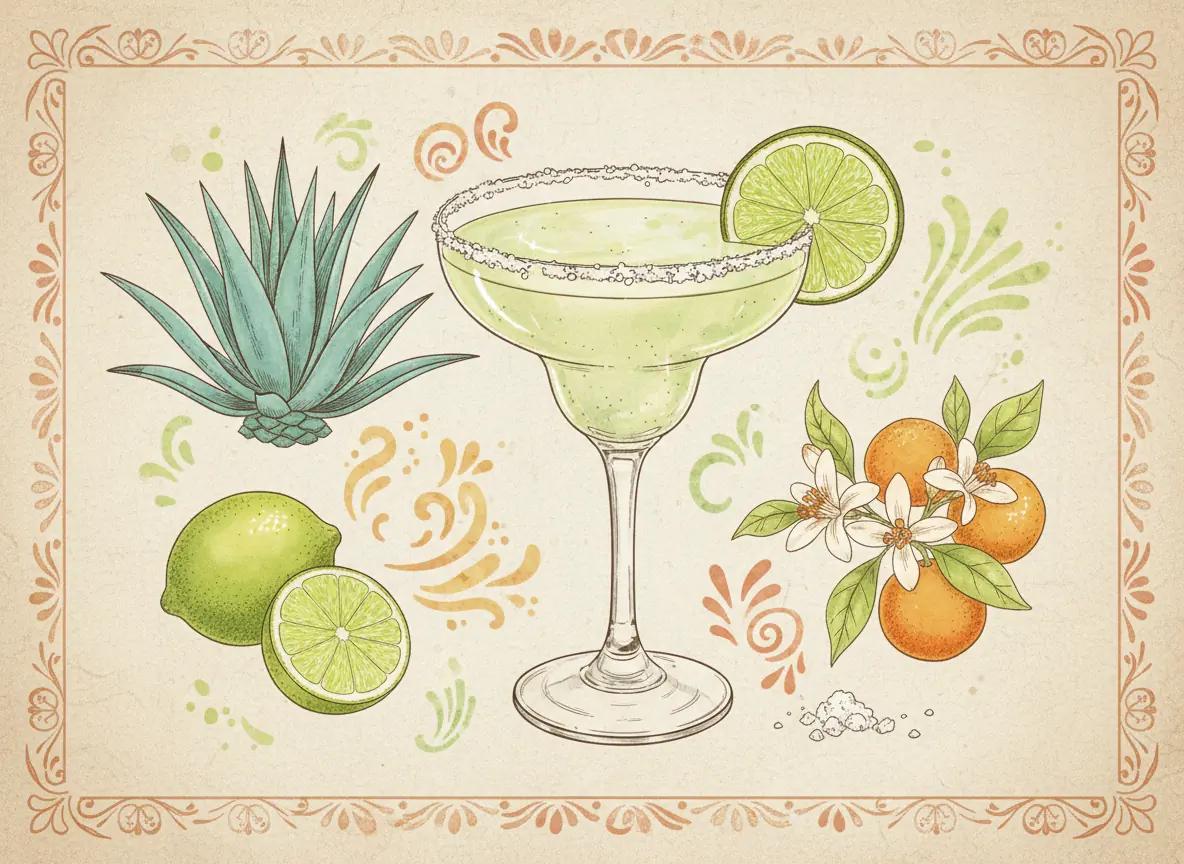
A Margarita is 50ml of 100% agave blanco tequila, 20ml of triple sec and 15ml of fresh lime juice, shaken hard for 10 to 12 seconds and double strained into a chilled coupe with half the rim salted, with a lime wheel. About 2.8 UK units. Strained over fresh ice in a rocks glass, it is the same drink, longer and cooler. These are the IBA’s measures. The lime is the smallest pour, so the agave leads and the orange liqueur rounds it: the drink tastes of tequila first and sour second. The Oxford Companion to Spirits and Cocktails, in an entry by David Wondrich, calls the origins of the Margarita one of cocktail history’s most notorious swamps, with at least half a dozen plausible claimants, among them Carlos Herrera at Rancho La Gloria in 1947, Margarita Sames in Acapulco in 1948 and the bartender Santos Cruz in Galveston in the same year. It finds the drink under the name Margarita in print in September 1953, in a California newspaper column, followed soon after by Esquire.
Variations
Glassware: Coupe Glass
Garnish: Lime wheel and Half salt rim
Ingredients
50ml
100% agave, as the IBA specifies, at 40% ABV. A mixto, made partly from other sugars, tastes hot and thin against fresh lime.
15ml
Squeezed the same day. There is only 15ml of it, so a dull or bottled juice has nothing to hide behind.
20ml
At 40% ABV and 20ml, it carries the drink’s sugar and a second citrus. Cointreau is the benchmark; a dry curaçao gives a drier, richer version.
Instructions
Squeeze the lime juice the same day.
Chill a coupe, run a spent lime half round the outside of half the rim and roll that half in flaky salt.
Add the tequila, triple sec and lime juice to a shaker.
Fill with cubed ice and shake hard for 10 to 12 seconds.
Double strain into the chilled coupe, or strain over fresh ice in a half-salted rocks glass.
Rest a lime wheel on the rim.
Source: the IBA (Official IBA specification; method ours (double strained, lime wheel, rocks option)). Last checked 10 October 2026.
Expert Tip
Measure the lime. At 15ml it is the smallest of the three pours and the one most often doubled by eye. Add more and the agave drops behind the sourness: a fair sour, but no longer this drink. Salt the outer edge of half the rim. Run a spent lime half round it and roll it in flaky salt, so none falls into the drink. Each sip can then be taken with salt or without. Taste the triple sec on its own before you commit to a bottle. At 20ml it is nearly half the tequila’s measure, and a cheap one tastes of orange sweets. Cointreau is the usual benchmark.
Behind the Margarita
Flavour Profile
A Disputed Origin
Several people have been named as the inventor. The Oxford Companion counts at least half a dozen plausible claimants, none without problems, and lists them with the year each claim first surfaced: Danny Negrete at a spa in Tehuacan in 1936 (claimed from 1973), John Durlesser at the Tail o’ the Cock in Los Angeles in 1937 (1955), Pancho Morales at Tommy’s Place in Ciudad Juarez in 1942 (1974), Carlos “Danny” Herrera at Rancho La Gloria, Rosarito Beach, in 1947 (1987), Santos Cruz at the Studio Lounge in Galveston in 1948 (1963) and Margarita Sames at her house in Acapulco in 1948 (1978).
The Companion advises sticking to the documented timeline. William J. Tarling’s 1937 Café Royal cocktail book printed tequila, lime juice and Cointreau as the Picador, and a Tequila Sour in Charlie Connolly’s 1939 Cotton Club booklet adds the salt-rimmed glass and the lime wedge. Margarita is Spanish for daisy, and the Companion calls the drink’s relation to the Tequila Daisy an open question: its entry on the Tequila Daisy says that drink was mentioned in print widely from 1930 and that Henry Madden of the Turf Bar in Tijuana told a reporter in 1936 that he invented it.
The Companion has the recipe appearing under today’s name in September 1953, when a California newspaper columnist described the Margarita as he met it in Ensenada, salt rim and all. Esquire followed rapidly, with a detailed recipe and the tagline “She’s from Mexico, Señores, and her name is the Margarita Cocktail”.
Agave in Front
Blanco tequila tastes of the plant: green, peppery and a little earthy. The Margarita is built to keep that in front. Lime sharpens it, the orange liqueur rounds it, and neither should cover it.
Why the Lime Is the Smallest Pour
Fifteen millilitres of lime against fifty of tequila is a short measure for a sour. The reason is the triple sec. Its 20ml brings sugar and a second citrus, so the lime is sharpening a drink that already has orange in it rather than supplying all the acid.
Raise the lime and the agave slips behind it. Cut the triple sec and the drink turns hot. The measures are tight in both directions, which is why a jigger matters more here than in a longer drink.
Three Margaritas Side by Side
The Margarita, Tommy’s Margarita and Strawberry Margarita compared
Margarita
- Tequila
- 50ml blanco
- Lime
- 15ml
- Sweetener
- 20ml triple sec
- Method
- Shaken; up or on the rocks
- UK units
- About 2.8
Tommy’s Margarita
- Tequila
- 60ml blanco
- Lime
- 30ml
- Sweetener
- 30ml agave syrup, cut one to one
- Method
- Shaken, over ice
- UK units
- About 2.4
Strawberry Margarita
- Tequila
- 50ml blanco
- Lime
- 20ml
- Sweetener
- 10ml triple sec, 10ml syrup, five strawberries
- Method
- Blended
- UK units
- About 2.4
| Drink | Tequila | Lime | Sweetener | Method | UK units |
|---|---|---|---|---|---|
| Margarita | 50ml blanco | 15ml | 20ml triple sec | Shaken; up or on the rocks | About 2.8 |
| Tommy’s Margarita | 60ml blanco | 30ml | 30ml agave syrup, cut one to one | Shaken, over ice | About 2.4 |
| Strawberry Margarita | 50ml blanco | 20ml | 10ml triple sec, 10ml syrup, five strawberries | Blended | About 2.4 |
The Salt Rim
Salt suppresses bitterness, so on the rim it softens the lime and lifts the agave. Half a rim keeps the choice with the drinker: one sip from the salted side and one from the bare side show what it does.
Use flaky sea salt rather than table salt, and run the spent lime round the outside of the rim only, so no salt falls into the drink.
How to Serve It
Up, in a chilled coupe with half the rim salted and a lime wheel, as the IBA serves it, or over fresh ice in a rocks glass for something longer. Shake each one to order; in our experience a Margarita left standing goes flat and warm.
For agave syrup in place of the triple sec, make a Tommy’s Margarita; for smoke, a Mezcal Margarita; for fruit and the blender, a Strawberry Margarita.
Make it at home
The Spirit
TequilaTequila is a Mexican spirit distilled from the blue agave plant, made, the Oxford Companion says, only in Jalisco and municipalities of four other states; our recipes use 40% ABV. A label reading 100% agave means every sugar came from the plant, where plain tequila needs only 51%. Most of our 26 tequila recipes ask for 100% agave blanco.
Master the Techniques
More to explore
Frequently Asked Questions
What is in a Margarita?
Who invented the Margarita?
Why only 15ml of lime?
Blanco or reposado?
Why salt only half the rim?
Up or on the rocks?
How do I make Margaritas for a group?
How strong is a Margarita?
Sources.
Correct as of 19 October 2026.
- The Oxford Companion to Spirits and Cocktails (David Wondrich), “The Margarita” (secondary source: at least half a dozen claimants (Negrete 1936, Durlesser 1937, Morales 1942, Herrera 1947, Cruz 1948, Sames 1948); Tarling’s 1937 Picador; Connolly’s 1939 Tequila Sour; the name in print in September 1953 and in Esquire; Cuervo’s 1956 campaign; Martinez’s frozen machine in 1971).
- The Oxford Companion to Spirits and Cocktails (David Wondrich), “The Tequila Daisy” (secondary source: mentioned in print from 1930; Henry Madden, Turf Bar, Tijuana, told a reporter in 1936 he invented it).
- The Oxford Companion to Spirits and Cocktails (Richard Boccato), “frozen drinks, blender drinks” (secondary source: gives 1973 for Mariano Martinez’s frozen Margarita machine).
You Might Also Like
Paloma
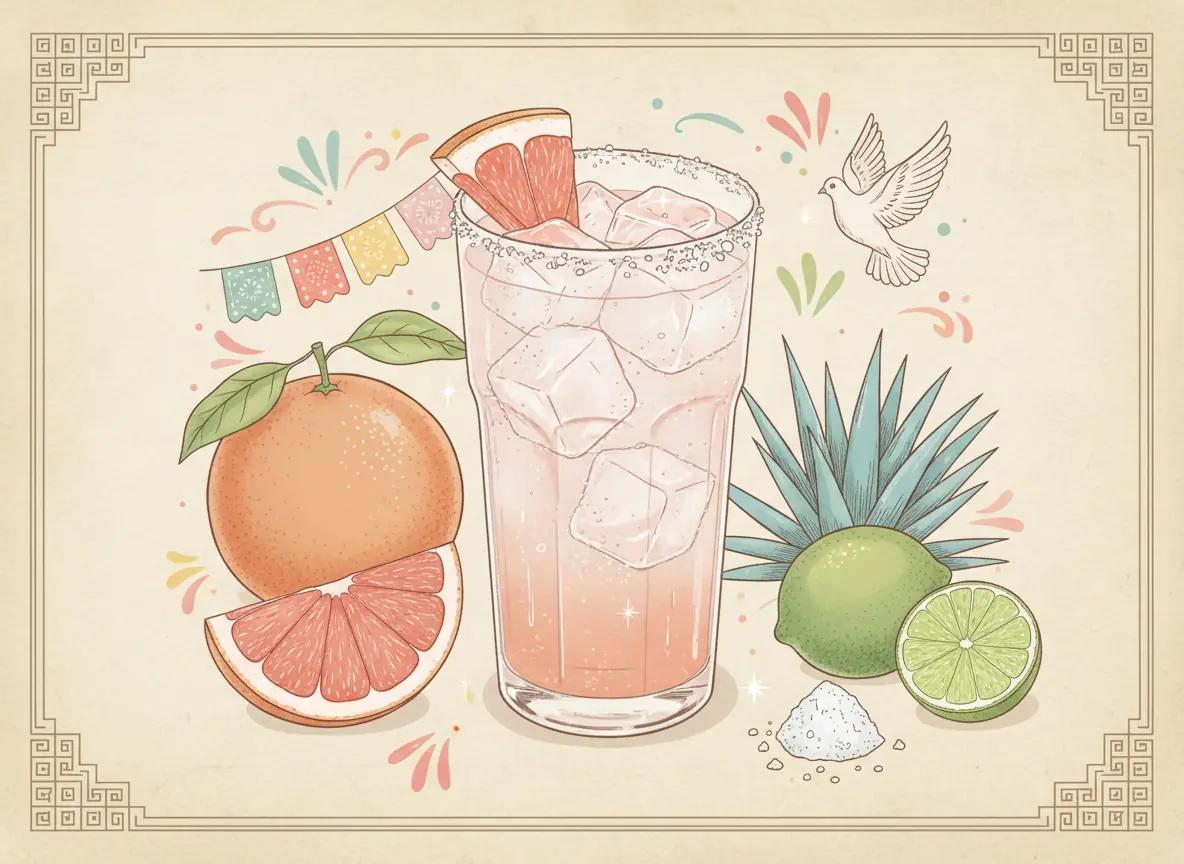
A Paloma is 50ml of blanco tequila, 5ml of fresh lime juice and a pinch of salt over ice in a highball, topped with 100ml of pink grapefruit soda and stirred gently once. Those are the IBA’s measures. We salt half the rim and add a grapefruit slice and a lime wheel. About 2.0 UK units. Paloma is Spanish for dove. The Oxford Companion traces the tequila and grapefruit soda combination to 1950, when a brochure for Squirt suggested mixing it with tequila, with Squirt launched in Mexico in 1955, and says it is unknown who adapted the combination to Mexican tastes. The soda does most of the work. It brings the grapefruit, the sugar and the fizz in one pour, so the recipe needs no syrup and only a little lime. The pinch of salt in the drink softens the grapefruit’s bitter edge and lets the agave through.
Daiquiri
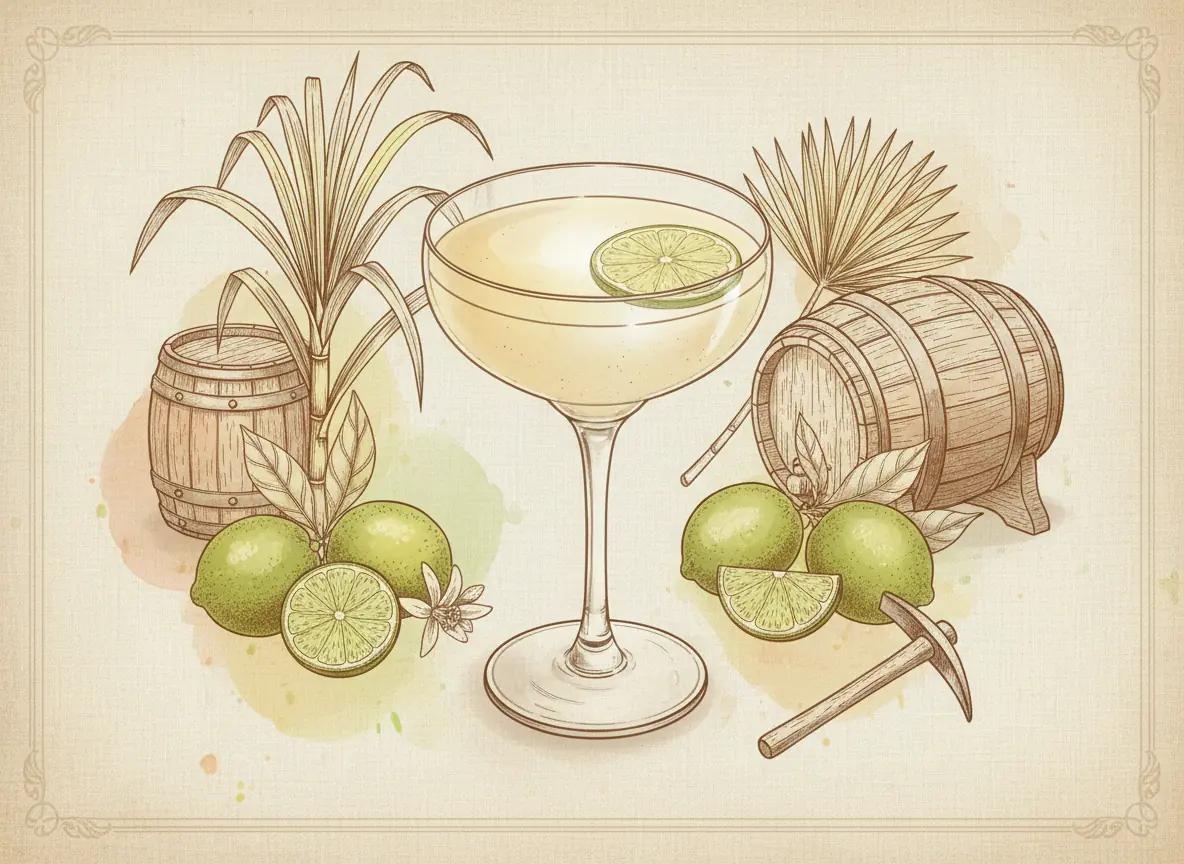
A Daiquiri is 60ml white rum, 20ml fresh lime juice and two bar spoons of caster sugar. Stir the sugar into the rum and lime in the shaker until it dissolves, then add ice, shake hard for 10 to 12 seconds and double strain into a chilled coupe. About 2.4 UK units. Those are the IBA’s measures, and its method dissolves the sugar first too. The name belongs to Daiquirí, an iron-mining district and beach near Santiago de Cuba. Difford’s Guide credits Jennings Stockton Cox, an American engineer who led one of the first mining parties into Cuba’s iron-ore country after the Spanish-American War of 1898; the Oxford Companion has him making or supervising the first Daiquiri in 1896, and a Santiago bartender naming it in 1908. Difford’s says Constantino Ribalaigua Vert of Havana’s El Floridita made the frozen version famous. With three ingredients and no liqueur or bitters, the Daiquiri hides nothing. A flat rum, tired lime or undissolved sugar shows in the first sip.
Sidecar
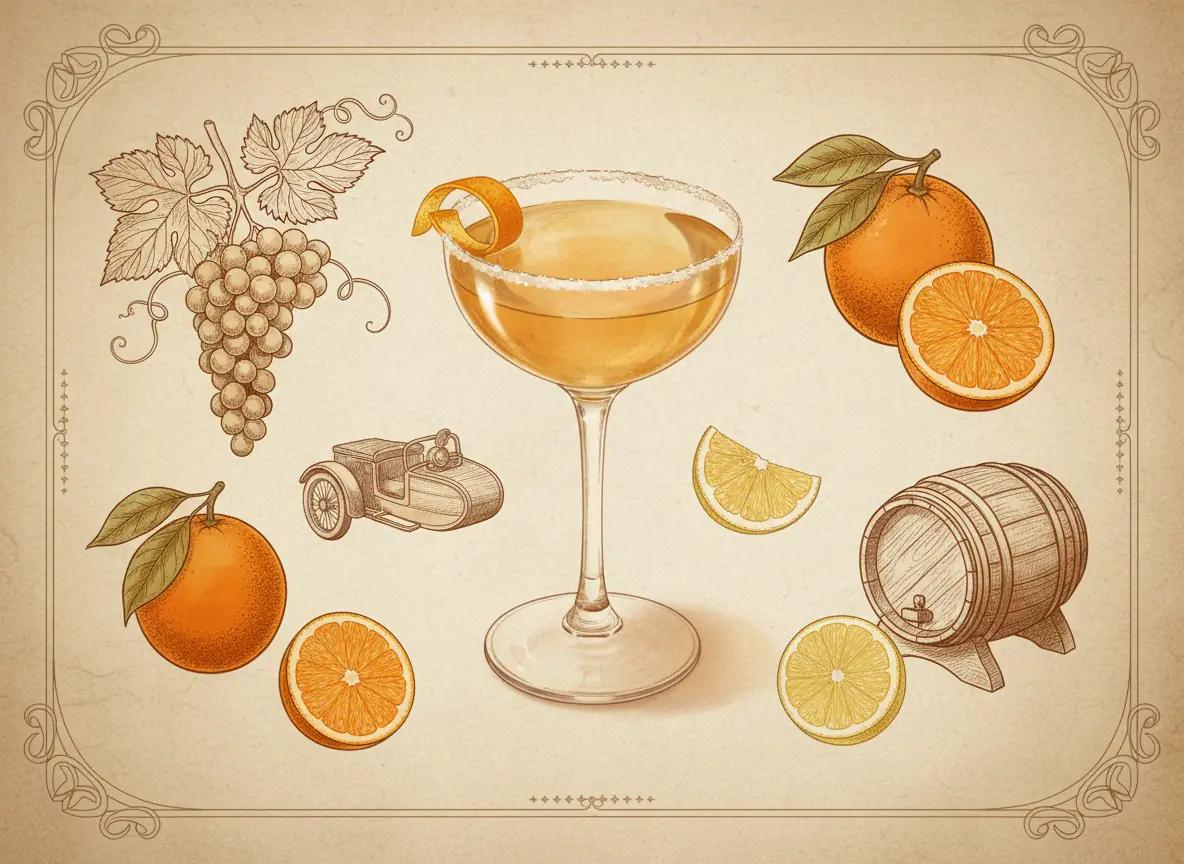
A Sidecar is a cognac sour: 50ml cognac, 20ml Cointreau or another triple sec and 20ml fresh lemon juice, shaken hard and double strained into a chilled coupe under an expressed strip of lemon peel. The IBA gives these measures, which put the cognac at two and a half parts to one each of orange and lemon. The Oxford Companion dates the first printed recipes to 1922, in Robert Vermeire’s Cocktails: How to Mix Them in May and Harry MacElhone’s Harry’s ABC of Mixing Cocktails at the end of the year, both at equal parts by Difford’s Guide. Both named Pat MacGarry of Buck’s Club in London; Difford’s says later editions of MacElhone’s book appear to take the credit for himself. The sugared rim came later: the earliest mention we have read is a 1932 American book, and the Oxford Companion says the drink has often been served with one since the 1930s. Ours has no rim. Each Sidecar carries about 2.8 UK units.
Where this one sits
Recipe by Jerry Can Spirits · Updated 19 October 2026