Añejo Old Fashioned
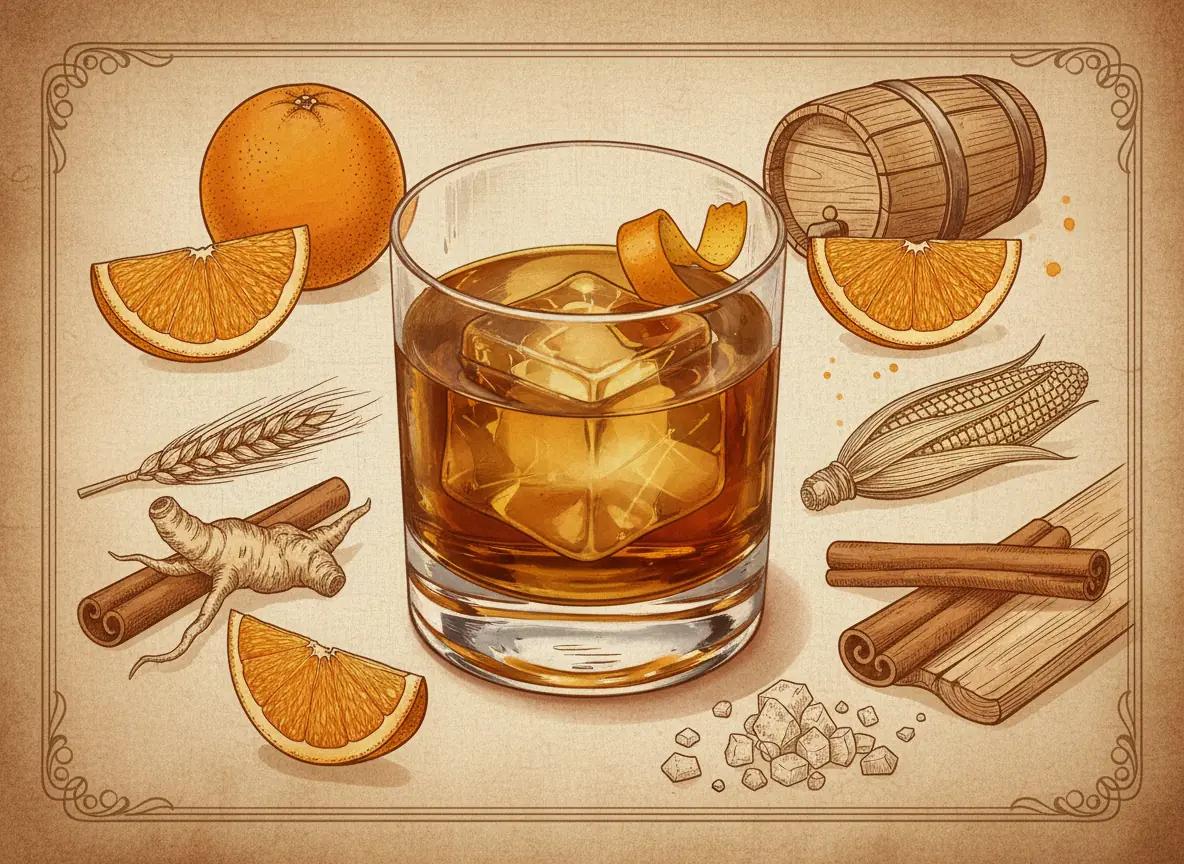
An Añejo Old Fashioned is 60ml of añejo tequila, 7.5ml of agave syrup and two dashes of mole bitters, poured over one large cube in a rocks glass and stirred there for 15 to 20 seconds, then finished with an expressed orange twist. About 2.5 UK units. It is the Old Fashioned with aged tequila in place of whiskey. Under the Tequila Regulatory Council’s rules, as Australian Bartender reports them, añejo must spend at least a year in oak barrels, and that time gives it the vanilla and body the frame needs to carry sugar and bitters. The agave stays clear underneath. The other two parts follow the spirit. Agave syrup comes from the same plant as the tequila, and mole bitters bring cacao, cinnamon and warm spice, which suit the barrel notes better than the clove of an aromatic bitters. No creator is recorded. Its nearest relative, the Oaxacan Old Fashioned, splits the spirit between reposado and mezcal.
Glassware: Rocks Glass
Garnish: Orange twist
Ingredients
60ml
At least one year in oak, by Australian Bartender’s account of the rule, at our working figure of 40% ABV, made from 100% agave. Blanco is too sharp for the sugar, reposado too light, and extra añejo too oaky.
7.5ml
Light agave syrup. It is sweeter than simple syrup, so the measure is small, and its faint vegetal note keeps the drink tasting of agave rather than sweetened oak.
2 dashes
Two dashes. Mole bitters carry cacao, cinnamon and warm spice, which echo the barrel. Angostura works too and brings clove and cinnamon instead.
Instructions
Put one large ice cube in a rocks glass.
Add the añejo tequila, agave syrup and mole bitters.
Stir for 15 to 20 seconds.
Express an orange twist over the surface and drop it in.
Our version
Our own añejo version of the Old Fashioned: 60ml añejo, 7.5ml agave syrup and two dashes of mole bitters, built and stirred over one large cube in the way of our Oaxacan Old Fashioned. The drink has no recorded creator.
Source: our own specification. Last checked 10 October 2026.
Expert Tip
Build it in the glass. One large cube, the tequila, syrup and bitters over it, then a stir of 15 to 20 seconds. The single cube melts slowly, so the drink keeps opening as you sip rather than turning watery. Use añejo, not reposado or extra añejo. Reposado is lighter and the sugar covers it; for reposado, the Oaxacan Old Fashioned is the better drink. Extra añejo, aged three years or more, is so oaky it starts to taste like brandy. Measure the agave syrup. It is sweeter than sugar syrup, so 7.5ml does the work of about 10ml. Pour more and the bitters vanish.
Behind the Añejo Old Fashioned
Flavour Profile
No Recorded Creator
We found no creator named for the Añejo Old Fashioned. Putting aged tequila where whiskey usually goes is a natural move for any bartender with a good añejo, and versions appear on many bar lists with no first one on record.
Its close relative with a recorded creator is the Oaxacan Old Fashioned, which Punch credits to Phil Ward at Death & Co in 2007 and which splits the spirit between reposado tequila and mezcal. The Añejo Old Fashioned takes the opposite route: one spirit, aged long enough to carry the drink alone.
What a Year in Oak Does
An Old Fashioned is spirit, sugar, bitters and ice. It only works when the spirit has enough body to stay in front once it is sweetened and diluted, which is why whiskey and aged rum are its usual bases.
Australian Bartender reports that the Tequila Regulatory Council requires añejo to spend at least a year in oak barrels of no more than 600 litres. That time rounds blanco’s pepper, adds vanilla and a light caramel note, and gives the spirit weight. Reposado, rested for less than a year, is lighter. Extra añejo, three years or more, leans toward the barrel and away from the plant.
Agave and Mole
The sweetener comes from the same plant as the spirit, the same logic that puts demerara in a rum Old Fashioned. Measure for measure, agave syrup sweetens more than sugar syrup, so 7.5ml is enough.
Mole bitters take their name from the Mexican sauce and carry cacao, cinnamon and warm spice. They meet the vanilla and spice of the barrel, where the clove of an aromatic bitters sits on top. Two dashes is enough; more makes the drink muddy.
Three Old Fashioneds
Our Añejo Old Fashioned beside our Oaxacan Old Fashioned and Old Fashioned
Spirit
- Añejo Old Fashioned
- 60ml añejo tequila
- Oaxacan Old Fashioned
- 45ml reposado, 15ml mezcal
- Old Fashioned
- 45ml bourbon
Sweetener
- Añejo Old Fashioned
- 7.5ml agave syrup
- Oaxacan Old Fashioned
- 5ml agave syrup
- Old Fashioned
- One sugar cube
Bitters
- Añejo Old Fashioned
- Two dashes mole
- Oaxacan Old Fashioned
- Two dashes Angostura
- Old Fashioned
- Two dashes Angostura
Method
- Añejo Old Fashioned
- Built over one large cube, stirred 15 to 20 seconds
- Oaxacan Old Fashioned
- Built over one large cube, stirred 15 to 20 seconds
- Old Fashioned
- Sugar muddled, stirred over ice 20 to 30 seconds
Garnish
- Añejo Old Fashioned
- Orange twist
- Oaxacan Old Fashioned
- Flamed orange twist
- Old Fashioned
- Orange peel
UK units
- Añejo Old Fashioned
- About 2.5
- Oaxacan Old Fashioned
- About 2.5
- Old Fashioned
- About 1.9
| Element | Añejo Old Fashioned | Oaxacan Old Fashioned | Old Fashioned |
|---|---|---|---|
| Spirit | 60ml añejo tequila | 45ml reposado, 15ml mezcal | 45ml bourbon |
| Sweetener | 7.5ml agave syrup | 5ml agave syrup | One sugar cube |
| Bitters | Two dashes mole | Two dashes Angostura | Two dashes Angostura |
| Method | Built over one large cube, stirred 15 to 20 seconds | Built over one large cube, stirred 15 to 20 seconds | Sugar muddled, stirred over ice 20 to 30 seconds |
| Garnish | Orange twist | Flamed orange twist | Orange peel |
| UK units | About 2.5 | About 2.5 | About 1.9 |
How to Serve It
Slowly, after dinner, in the glass it was built in. One large cube keeps the drink cold for its whole length; cubed ice would leave the last third thin.
Express the orange twist over the surface before dropping it in. The añejo carries vanilla and a little dried fruit from the barrel, and the orange oil brightens both without adding anything new.
For tequila and mezcal together, make an Oaxacan Old Fashioned; for the bourbon original, an Old Fashioned.
Make it at home
The Spirit
TequilaTequila is a Mexican spirit distilled from the blue agave plant, made, the Oxford Companion says, only in Jalisco and municipalities of four other states; our recipes use 40% ABV. A label reading 100% agave means every sugar came from the plant, where plain tequila needs only 51%. Most of our 26 tequila recipes ask for 100% agave blanco.
More to explore
Frequently Asked Questions
What is in an Añejo Old Fashioned?
Why añejo rather than blanco or reposado?
Why is it built over one cube and not stirred in a mixing glass?
Can I use Angostura instead of mole bitters?
How is it different from an Oaxacan Old Fashioned?
Who created the Añejo Old Fashioned?
How strong is an Añejo Old Fashioned?
Sources.
Correct as of 18 October 2026.
- Australian Bartender, “Aged tequila: a look at the rules for añejo and extra añejo tequila” (secondary source: reposado at least two months; añejo at least one year in oak barrels no bigger than 600 litres; extra añejo at least three years).
- Punch, “The Oaxaca Old-Fashioned Became a Modern Classic” (secondary source: Death & Co, 2007; bartender Phil Ward; owner David Kaplan; 1½ oz reposado, ½ oz mezcal).
- Difford’s Guide, “Oaxaca Old Fashioned” (secondary source: created in 2007 by Philip Ward at Death & Co; 45 ml reposado, mezcal, agave syrup).
You Might Also Like
Oaxacan Old Fashioned
An Oaxacan Old Fashioned is 45ml of reposado tequila, 15ml of mezcal, 5ml of agave syrup and two dashes of Angostura bitters, built in a rocks glass over one large ice cube and stirred for 15 to 20 seconds, with a flamed orange twist. About 2.5 UK units. Punch dates it to 2007, at Death & Co. in Manhattan, with the bartender Phil Ward and the owner David Kaplan. It keeps the shape of the Old Fashioned, spirit, sugar, bitters and orange, and moves each part it can to agave. Splitting the spirit is the whole idea. Reposado brings body and a little oak for the sugar and bitters to sit on; 15ml of mezcal lays smoke over the top without taking over. Ward’s recipe, as Punch prints it, is built and stirred in the glass, and that is how we give it.
Old Fashioned
The IBA’s Old Fashioned is 45ml of bourbon or rye whiskey, one sugar cube, a few dashes of Angostura bitters and a few dashes of water; we use bourbon and two dashes. The sugar and bitters are muddled in a rocks glass until the cube dissolves, then ice goes in, the bourbon goes over it and the drink is stirred for 15 to 20 seconds. Orange peel is expressed over the top. About 1.9 UK units. Only the sugar and bitters are muddled: no orange flesh, no cherry. The recipe predates the name. The Oxford Companion says that when a newspaper in Hudson, New York, defined the cocktail in 1806, it described “spirits of any kind, sugar, water, and bitters”. The name came later in the century: the Companion has people ordering Old-Fashioneds in Chicago in 1880, as bartenders added liqueurs to the format and drinkers who wanted it plain asked for one made the old-fashioned way.
Rosita
A Rosita is 45ml of reposado tequila, 22.5ml of Campari, 15ml each of sweet and dry vermouth and a dash of Angostura, stirred for 20 to 30 seconds and strained over one large cube in a rocks glass, with an orange twist expressed and dropped in. About 2.9 UK units. Imbibe and VinePair place its first appearance in print in the 1974 edition of the Mr. Boston Official Bartender’s Guide, creator unknown. Gary Regan reworked it for The Bartender’s Bible in 1991, raising the tequila and adding the bitters, and VinePair says bartenders took that version up. It is a tequila Negroni with the vermouth split between sweet and dry, which makes it leaner than the colour suggests. Ours pours half as much Campari again as Regan’s 15ml, so the bitter orange holds its line against the reposado.
Where this one sits
Recipe by Jerry Can Spirits · Updated 18 October 2026