Oaxacan Old Fashioned
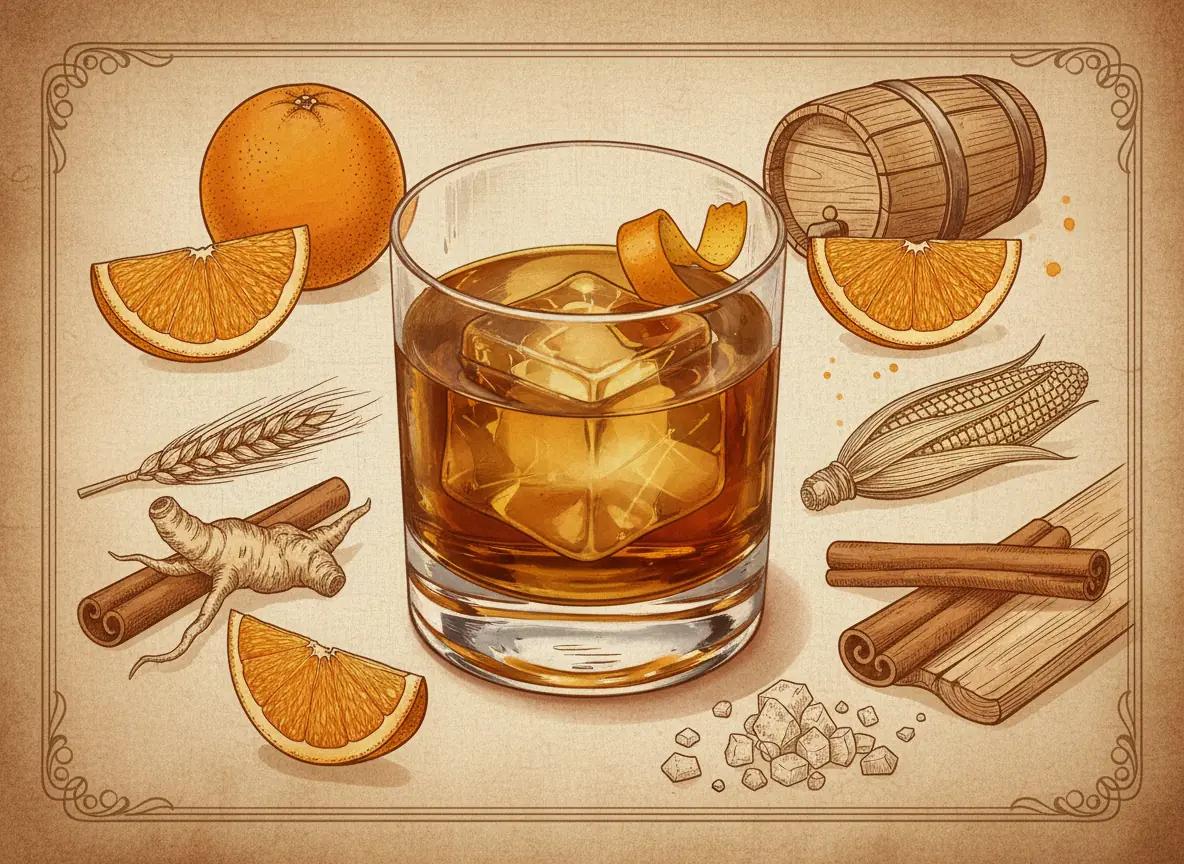
An Oaxacan Old Fashioned is 45ml of reposado tequila, 15ml of mezcal, 5ml of agave syrup and two dashes of Angostura bitters, built in a rocks glass over one large ice cube and stirred for 15 to 20 seconds, with a flamed orange twist. About 2.5 UK units. Punch dates it to 2007, at Death & Co. in Manhattan, with the bartender Phil Ward and the owner David Kaplan. It keeps the shape of the Old Fashioned, spirit, sugar, bitters and orange, and moves each part it can to agave. Splitting the spirit is the whole idea. Reposado brings body and a little oak for the sugar and bitters to sit on; 15ml of mezcal lays smoke over the top without taking over. Ward’s recipe, as Punch prints it, is built and stirred in the glass, and that is how we give it.
Glassware: Rocks Glass
Garnish: Orange twist
Ingredients
45ml
A 100% agave reposado at 40% ABV. Its months in oak round off the pepper and give the sugar and bitters body. Ward’s recipe, as Punch prints it, names El Tesoro.
15ml
An unaged mezcal at our working figure of 40% ABV. At 15ml the smoke sits over the tequila instead of replacing it. Ward’s recipe, as Punch prints it, names Del Maguey San Luis del Rio.
5ml
One barspoon, about 5ml. Agave syrup is sweeter than sugar syrup by volume, and the reposado brings roundness of its own, so more buries the mezcal.
2 dashes
Two dashes, at the 44.7% ABV on DrinkSupermarket’s listing, as in the Old Fashioned. They are the only bitter element in the glass.
Instructions
Put one large ice cube in a rocks glass.
Add the tequila, mezcal, agave syrup and bitters.
Stir for 15 to 20 seconds.
Flame a strip of orange peel over the drink and drop it in.
Source: its creator's published specification (Phil Ward, Death & Co, 2007; measures as Punch prints them from Robert Simonson’s A Proper Drink (2016), ounces taken as 30ml and the barspoon of agave nectar as 5ml of agave syrup; stir time ours). Last checked 19 October 2026.
Expert Tip
Stir it in the glass, over the one large cube, for 15 to 20 seconds. A big cube chills without flooding the drink, and it keeps diluting slowly as you sip, so stop sooner than you would for a strained drink. Treat the mezcal as the adjustable part. For more smoke, raise the mezcal and lower the tequila by the same amount, keeping the total at 60ml so the sugar and bitters still balance. Flame the twist close and quickly. A short flame between the peel and the drink catches the oils as they spray and lands them caramelised. Warm the peel too long and it smells burnt instead of orange.
Behind the Oaxacan Old Fashioned
Flavour Profile
Death & Co, 2007
Punch places the drink at Death & Co. in Manhattan in 2007, with the bartender Phil Ward and the owner David Kaplan, and calls it a simple tequila and mezcal twist on the classic cocktail. It keeps the Old Fashioned, spirit, sugar, bitters and an orange twist, and changes the spirit and the sugar to agave.
Punch calls it the drink that opened the American mixology world’s eyes to the potential of using tequila and mezcal in cocktails. In our view it sold smoke in a shape people already ordered: anyone who drinks Old Fashioneds knows what to expect from the glass.
Tequila for Body, Mezcal for Smoke
Reposado does the work bourbon does in the parent drink. It gives body, a little vanilla from the oak, and something for the agave syrup and bitters to hang on.
Mezcal is the seasoning. The Oxford Companion gives the name as from the Nahuatl words for agave and oven-roasted, and Punch speaks of agave’s smoky, sweet and savory notes; at 15ml, in our view, it sits over the tequila like a peated whisky floated on a blend. Raise it and the drink darkens; it stays balanced until roughly half and half.
Why Reposado
Blanco tequila is the usual choice in agave cocktails, and it is the wrong one here. An Old Fashioned needs body, and blanco’s bright pepper gives the sugar and bitters little to hold.
The Oxford Companion says reposado tequila is aged in oak vats or barrels from two months to one year, and its entry on añejo says that by law tequila and mezcal must be aged in wooden containers for a minimum of one year to be called añejo. In our view reposado rounds the pepper and adds weight. Añejo, aged longer, pushes the spirit toward brandy, and the mezcal’s smoke ends up arguing with the oak.
Built Over One Cube
Ward’s recipe is built in the glass: everything goes over one large cube and is stirred there. With no mixing glass and no strainer, the stir is shorter, 15 to 20 seconds, and the drink keeps diluting slowly as it sits.
The flamed twist matters more here than on most drinks. Burnt orange oil and mezcal smoke share a register, and the two read as one flavour where a plain twist sits on top as a separate bright note.
Ward’s Recipe and Ours
Phil Ward’s Oaxaca Old-Fashioned as Punch prints it, and ours; the units are our calculation at our working figure of 40% for tequila and mezcal
Reposado tequila
- Ward (Punch)
- 1½oz El Tesoro
- Ours
- 45ml
Mezcal
- Ward (Punch)
- ½oz Del Maguey San Luis del Rio
- Ours
- 15ml
Sweetener
- Ward (Punch)
- 1 barspoon agave nectar
- Ours
- 5ml agave syrup
Angostura bitters
- Ward (Punch)
- 2 dashes
- Ours
- 2 dashes
Method
- Ward (Punch)
- Built over one large cube, stirred
- Ours
- Built over one large cube, stirred 15 to 20 seconds
Garnish
- Ward (Punch)
- Flamed orange twist
- Ours
- Flamed orange twist
UK units
- Ward (Punch)
- Not stated
- Ours
- About 2.5
| Element | Ward (Punch) | Ours |
|---|---|---|
| Reposado tequila | 1½oz El Tesoro | 45ml |
| Mezcal | ½oz Del Maguey San Luis del Rio | 15ml |
| Sweetener | 1 barspoon agave nectar | 5ml agave syrup |
| Angostura bitters | 2 dashes | 2 dashes |
| Method | Built over one large cube, stirred | Built over one large cube, stirred 15 to 20 seconds |
| Garnish | Flamed orange twist | Flamed orange twist |
| UK units | Not stated | About 2.5 |
How to Serve It
Slowly, after dinner, over the cube it was built on. Set it beside a bourbon Old Fashioned once and the only difference you taste is the spirit.
For the bourbon original, make an Old Fashioned; for mezcal with Campari, a Mezcal Negroni; for mezcal shaken with Chartreuse and Aperol, a Naked and Famous.
Make it at home
The Spirit
TequilaTequila is a Mexican spirit distilled from the blue agave plant, made, the Oxford Companion says, only in Jalisco and municipalities of four other states; our recipes use 40% ABV. A label reading 100% agave means every sugar came from the plant, where plain tequila needs only 51%. Most of our 26 tequila recipes ask for 100% agave blanco.
More to explore
Frequently Asked Questions
What is in an Oaxacan Old Fashioned?
Who created the Oaxacan Old Fashioned?
What ratio of tequila to mezcal?
Why reposado rather than blanco?
Is it Oaxaca or Oaxacan Old Fashioned?
Do I have to flame the twist?
How strong is an Oaxacan Old Fashioned?
Sources.
Correct as of 19 October 2026.
- Punch, “Oaxaca Old-Fashioned” (secondary source, recipe from Robert Simonson’s A Proper Drink (2016): Phil Ward, Death & Co.; 1½ oz El Tesoro reposado, ½ oz Del Maguey San Luis del Rio mezcal, 2 dashes Angostura, 1 barspoon agave nectar, one large cube, stir, flamed orange twist; “the drink that opened the American mixology world’s eyes”).
- Punch, “How the Oaxaca Old-Fashioned Became a Modern Classic” (secondary source: the bar was Death & Co. in Manhattan in 2007; the owner David Kaplan; the bartender Phil Ward; “a simple tequila and mezcal twist on the classic cocktail”).
- The Oxford Companion to Spirits and Cocktails (Steve Olson), “mezcal” (secondary source: from the Nahuatl words for agave and oven-roasted; Oaxaca produces upwards of 90 percent of the regulated mezcal in Mexico; the mezcal denominacion de origen of 1995).
- The Oxford Companion to Spirits and Cocktails (Kara Newman), “reposado” (secondary source: tequila aged in oak vats or barrels from two months to one year; blanco under two months; añejo over one year).
- DrinkSupermarket, “Angostura Aromatic Bitters 200ml” (retailer listing: Strength (ABV)% 44.7).
- The Oxford Companion to Spirits and Cocktails (Jason Horn), “añejo” (secondary source: by law tequila and mezcal must be aged in wooden containers for at least a year to be called añejo).
You Might Also Like
Old Fashioned
The IBA’s Old Fashioned is 45ml of bourbon or rye whiskey, one sugar cube, a few dashes of Angostura bitters and a few dashes of water; we use bourbon and two dashes. The sugar and bitters are muddled in a rocks glass until the cube dissolves, then ice goes in, the bourbon goes over it and the drink is stirred for 15 to 20 seconds. Orange peel is expressed over the top. About 1.9 UK units. Only the sugar and bitters are muddled: no orange flesh, no cherry. The recipe predates the name. The Oxford Companion says that when a newspaper in Hudson, New York, defined the cocktail in 1806, it described “spirits of any kind, sugar, water, and bitters”. The name came later in the century: the Companion has people ordering Old-Fashioneds in Chicago in 1880, as bartenders added liqueurs to the format and drinkers who wanted it plain asked for one made the old-fashioned way.
Mezcal Negroni
A Mezcal Negroni is 30ml each of mezcal, Campari and sweet vermouth, stirred with ice for 20 to 30 seconds and strained over fresh ice in a rocks glass, with an orange peel expressed over the top. About 2.4 UK units. The measures and the method are the Negroni’s; only the spirit changes. It is a substitution rather than an invention: Punch asked bartenders who might have made it first, and none claimed it. The Negroni’s equal-parts frame has always taken swaps, and mezcal is one of the more successful. Gin sits inside Campari’s bitterness. Mezcal pushes back, with roasted agave and smoke in a register Campari does not occupy, so the two hold each other in check and the vermouth binds them. The result is darker and drier on the finish than the gin original. A joven espadín with moderate smoke is the bottle to pour.
Naked and Famous
A Naked and Famous is 22.5ml each of mezcal, yellow Chartreuse, Aperol and fresh lime juice, shaken hard for 10 to 12 seconds and double strained into a chilled coupe, with no garnish. About 2.1 UK units. These are the IBA’s measures. Difford’s Guide says it was adapted from a recipe Joaquín Simó created in 2011 and is best known for its early appearance at Death & Co in New York. It takes the shape of the Last Word, four equal parts with fresh citrus, and shares Aperol with the Paper Plane. VinePair says Phil Ward’s Division Bell, which predates it, had already put mezcal with Aperol. Each part has one job. Mezcal brings smoke, yellow Chartreuse sweetness and spice, Aperol a soft bitter orange and lime the acid. Use yellow Chartreuse, not green: Chartreuse’s own pages give 43% ABV against 55%, so yellow is gentler, and the balance depends on it.
Where this one sits
Recipe by Jerry Can Spirits · Updated 19 October 2026