
Old Fashioneds

26 recipes, page 1 of 2

This Field Manual holds 26 recipes in the old fashioned family. The build is spirit, sugar, bitters and ice, stirred in the glass. It is the oldest surviving cocktail specification and the definition of the word before the word meant anything else.

What changes is the spirit and the sugar. Bourbon and sugar makes the version most people picture; rye and demerara makes a drier one with more spine. Swap the whiskey for rum or tequila and the build holds. The bitters are not decoration, they are the seasoning that stops the sugar reading as sweet, which is why leaving them out gives you whiskey and water.

Base Spirit

Difficulty Level

Almond Old Fashioned

The Almond Old Fashioned is a bourbon Old Fashioned with amaretto in place of the sugar, and the swap does more than sweeten. Amaretto is built on apricot kernels rather than nuts, and kernel carries a genuine bitterness behind the marzipan, so the drink arrives drier than the word almond suggests. That bitterness is what qualifies it for the job. Sugar sweetens and says nothing; amaretto sweetens and seasons at the same time, which is why the bitters can stay at two dashes and still be heard. Bourbon's vanilla and oak meet the marzipan halfway. The measure is the whole discipline. A Godfather pours amaretto as a near-equal partner to the spirit and drinks like a dessert; fifteen millilitres against sixty of bourbon keeps it in the sweetener's role, where it belongs. No one owns the drink. It appeared wherever both bottles already stood, which is most back bars, once the revival taught drinkers to treat the Old Fashioned's sweetener as a variable rather than a fixed ingredient.

American Trilogy

The American Trilogy is an Old Fashioned with two spirits in it, and the split is doing more than adding flavour. Applejack was America's first spirit, distilled from orchards before anyone was making whiskey at scale. Rye was the grain that followed it. The sugar between them came up the same trade routes as everything else. Three ingredients, three eras, which is where the name comes from. Richard Boccato and Michael McIlroy built it at Little Branch in New York around 2008. The method is the 1806 formula performed properly: a brown sugar cube muddled in the glass with orange bitters and a little water, then the spirits over one large cube and a long stir. What it tastes like is an Old Fashioned with its edges rounded off by fruit. The applejack does not make the drink taste of apple so much as make the rye taste less severe, which is a subtler result than the concept leads you to expect.

Añejo Old Fashioned

The Añejo Old Fashioned is an Old Fashioned with aged tequila in place of whiskey, and it works for one specific reason: añejo has spent at least a year in oak, so it arrives carrying the vanilla and barrel weight the frame assumes. Blanco would not do this. Its pepper and raw agave read sharp against sugar rather than settling into it. A year in barrel rounds that pepper down toward bourbon's register without burying the agave underneath, which is the balance the whole drink depends on. Two details separate it from a whiskey Old Fashioned. The sweetener is agave syrup, so the sweetness comes from the same plant as the spirit. And the bitters are mole rather than Angostura, bringing cacao and dried chilli where Angostura brings clove and cinnamon. Angostura works here. Mole belongs. It is a slow drink over one large cube, and the most persuasive argument there is for putting aged tequila where whiskey usually sits.

Black Russian

The Black Russian was mixed in 1949 at the Hotel Metropole in Brussels by barman Gustave Tops, for Perle Mesta, the American ambassador to Luxembourg and Washington's most famous party hostess. Vodka and coffee liqueur over ice, named for the vodka and the colour, with the Cold War providing the atmosphere free of charge. It is the simplest serious drink in the vodka canon: two ingredients, one glass, and a ratio doing all the work. Fifty against twenty keeps the coffee liqueur as a dark seasoning rather than a dessert; the vodka's cleanness is structural, giving the roast and sugar a neutral frame that whiskey or rum would crowd. Its fame was eventually eclipsed by its creamier child, but the parent remains the better nightcap: shorter, darker and more adult, an espresso martini stripped to the studs and better for it at the right hour. Two ingredients, one glass, and nothing at all to hide behind.

Canchánchara

The Canchánchara is Cuba's oldest drink and the daiquiri's direct ancestor: cane spirit, honey and lime, taken by the mambises who fought Spain through the independence wars of the 1860s. The ration was aguardiente. The honey and citrus made it drinkable, and were understood at the time as medicine as much as morale. Trinidad de Cuba keeps both the tradition and the crockery. The drink is built in the round clay cup that gives it its name: honey stirred against lime in the base until it dissolves, raw cane spirit poured over, a splash of water and, by modern mercy, ice. Nothing is shaken and nothing is strained. What it demonstrates is the island's master formula in its first draft. Refine the spirit, chill it and strain it and you have a daiquiri. Keep the honey and shake it and you have a Honeysuckle. Drink this one to understand where both came from, because the history is genuinely the flavour.

Corn n’ Oil

The Corn n’ Oil is Barbados’s house cocktail, older than most of the classics and simpler than nearly all of them: falernum under, blackstrap rum over, bitters and a squeeze of lime. The name describes the look, near-black rum hanging over the pale falernum like oil on water, and nobody has improved on the image since. It works because the two Bajan ingredients were made for each other. Falernum brings lime, clove and almond sweetness; blackstrap answers with burnt molasses and liquorice depth. The unstirred build means the first sips are nearly neat rum and the last are nearly falernum, the drink sweetening as the glass empties. As a gateway into serious rum drinking it has no equal: four ingredients, no technique beyond a slow pour, and a finished drink with more character than most eight-ingredient efforts. Keep falernum and blackstrap in the house and it is never more than three minutes away.

Fancy Free

The Fancy Free is an Old Fashioned that uses maraschino liqueur instead of sugar. Rye, 15ml of maraschino, and two kinds of bitters. That is the entire drink. The swap does more than sweeten. Maraschino is made from whole marasca cherries, stones included, and the stones give it a dry almond note that has very little to do with the cherry flavour people expect. So the drink lands drier than the ingredient list suggests, with an aromatic, faintly nutty edge that plain sugar could not supply. The two bitters are not a flourish. Angostura sits at the back with its clove and cinnamon, orange bitters sit at the front with their peel, and dropping either one collapses the drink from stereo to mono. It appears in the mid-century American collections, usually cited to Albert Stevens Crockett's Old Waldorf-Astoria books. The name is the temperament: an Old Fashioned with its tie loosened.

French Connection

The French Connection is the 1970s in a rocks glass: cognac and amaretto over ice, named for the 1971 film that owned the decade’s idea of cool, and built for the era’s low-effort, high-lapel glamour. Nobody claims a precise inventor. The drink simply appeared wherever the two bottles stood together, which by the mid-seventies was very nearly everywhere. It is the gentlest possible introduction to cognac. The amaretto’s almond sweetness rounds the brandy’s edges without hiding its fruit, and the whole thing assembles in the glass in under a minute. The French half supplies structure and the Italian half charm, which is broadly the film’s plot as well. The craft revival largely ignored it, which is its own kind of recommendation. The French Connection needs no rescue, no bitters and no garnish. All it asks for is two decent bottles and one proper piece of ice, which is a shorter list than almost anything else worth drinking.

Gin Cocktail

The Gin Cocktail is what the word cocktail meant before it meant anything else. The definition printed in 1806 was specific: spirit, sugar, water and bitters, and nothing else qualified. This is that formula with gin in the spirit slot, and Jerry Thomas printed it in 1862 among the first recipes anyone had bothered to write down. The build is small, stirred and dry. Sixty millilitres of gin, a barspoon of syrup, two dashes of Angostura and a lemon twist. Thomas also gives a fancy version with a barspoon of curaçao in it, which perfumes the drink without meaningfully sweetening it, and that is the version worth making. It is effectively an Old Fashioned, and it predates the name. The whiskey branch of the same formula became the Old Fashioned and, with absinthe, the Sazerac. The gin version simply stayed as it was and fell out of fashion, which is a shame, because it is very good and takes ninety seconds.

Godfather

The Godfather is Scotch and amaretto over ice at two to one, and there is nothing else in it. It came out of the 1970s two-bottle wave along with the French Connection, which is the same formula with cognac, and the Godmother, which is the same formula with vodka. Three drinks, one liqueur, three different base spirits. The swap is what makes it interesting. Cognac's fruit meets amaretto's almond softly and the two settle together; Scotch's cereal dryness and its optional smoke give the almond something to argue with, and the drink lands drier and more angular than its French sibling, which is the more interesting of the two. The name came from the decade's biggest film with the era's usual paperwork, which is to say none. Marlon Brando's alleged fondness for it is the drink's one contested legend, and it has never been verified, which suits the subject rather well.

Hunter

The Hunter is rye and cherry brandy at two to one, stirred over ice, and there is nothing else in it. It comes from the turn-of-the-century books, where it sat among a run of sporting names, and no bartender is credited with it. The arithmetic is the Rusty Nail's: a spirit and its sweetened liqueur shadow at a fixed ratio, no citrus, no bitters, no dilution beyond the stir. What changes is the register. Where Drambuie brings honey and heather to Scotch, cherry brandy brings dark stone fruit and a kernel note to rye, and rye's pepper is what stops it settling into cordial. Its practical virtue is portability. Nothing in it spoils, which is what a hip flask actually requires, and the name has always understood that. It is the drink to decant for a cold afternoon outdoors, which almost nothing else in the canon can honestly claim of itself.

Improved Whiskey Cocktail

This drink is why the Old Fashioned is called the Old Fashioned. The original cocktail of the early 1800s was spirit, sugar, water and bitters and nothing else. As the century went on, bartenders started improving it with the imported luxuries arriving on the back bar: a little maraschino, a dash of absinthe, a better grade of sugar, a lemon twist. Jerry Thomas codified the result in his 1876 edition and called it Improved. Not everyone wanted it. Drinkers who preferred the plain version began asking for their whiskey cocktail made the old-fashioned way, and by the 1880s that counter-order had hardened into a name on menus. The Old Fashioned is the only classic cocktail named by a complaint, and every one poured since is technically a vote against this drink. Taste them side by side and the argument replays. The maraschino adds a dry cherry and almond glow, the absinthe threads a herbal shadow through the rye, and what you end up with sits somewhere between an Old Fashioned and a Sazerac. Improvement was a fair description.

Maple Old Fashioned

The Maple Old Fashioned is autumn performing the Old Fashioned’s single swap: real maple where the sugar sat, bourbon and bitters left constant. It is the folk-modern reading that spread from New England’s bars to everywhere the leaves turn, and no author claims it. October pours it. The maple is the whole argument. Dark-grade syrup carries a toasted forest depth through bourbon’s vanilla, so a sweetness that remembers being a tree meets a spirit that remembers being a barrel. The pairing reads as seasonal because it genuinely is: the same woods, a few centuries apart. It completes the Old Fashioned’s sweetener compass, which now points in four directions: demerara for the standard reading, honey by the Gold Rush’s logic, maple for the fall, and the liqueur wing for everything else. One frame, every accent, and the same lesson taught four times over about what a sweetener actually contributes to a drink.

Monte Carlo

The Monte Carlo is a Manhattan with Bénédictine where the vermouth should be. Rye, 15ml of the abbey liqueur, two dashes of Angostura, stirred. Nothing else. Bénédictine is doing two jobs that vermouth normally splits between itself and a sugar cube. It sweetens, and it brings a dense honeyed herbal character built on saffron, angelica and a long list of botanicals nobody outside the abbey has the full account of. That is a great deal of flavour for 15ml, which is why the measure is small and the rye is a full 60ml. The drink is preserved in David Embury's The Fine Art of Mixing Drinks from 1948, which is where most modern versions trace back to. The name suggests a casino and the drink delivers a fireside. It is warm, direct and slightly old-fashioned in temperament, and it is one of the easiest ways to understand what Bénédictine actually does.

Oaxacan Old Fashioned

The Oaxacan Old Fashioned is the drink that put mezcal on the cocktail map: Phil Ward built it at New York’s Death & Co in 2007, splitting the Old Fashioned’s base between reposado tequila and smoky mezcal, sweetening with agave and finishing with the flamed orange twist. It became the template drink of the agave revolution and the most influential Old Fashioned variation of its generation. The split base is the design: tequila carries the body and oak, mezcal arrives as smoke and wildness over the top, and neither alone makes the drink. Agave syrup keeps the sweetening in the family, the bitters bridge to the Old Fashioned’s bones, and the flamed twist’s caramelised orange oils meet the mezcal’s smoke like two campfires agreeing. For drinkers, it remains the perfect introduction to mezcal: enough smoke to understand the category, enough structure to feel at home, and the Old Fashioned’s familiar silhouette holding the door open.
Old Fashioned

Old Fashioned

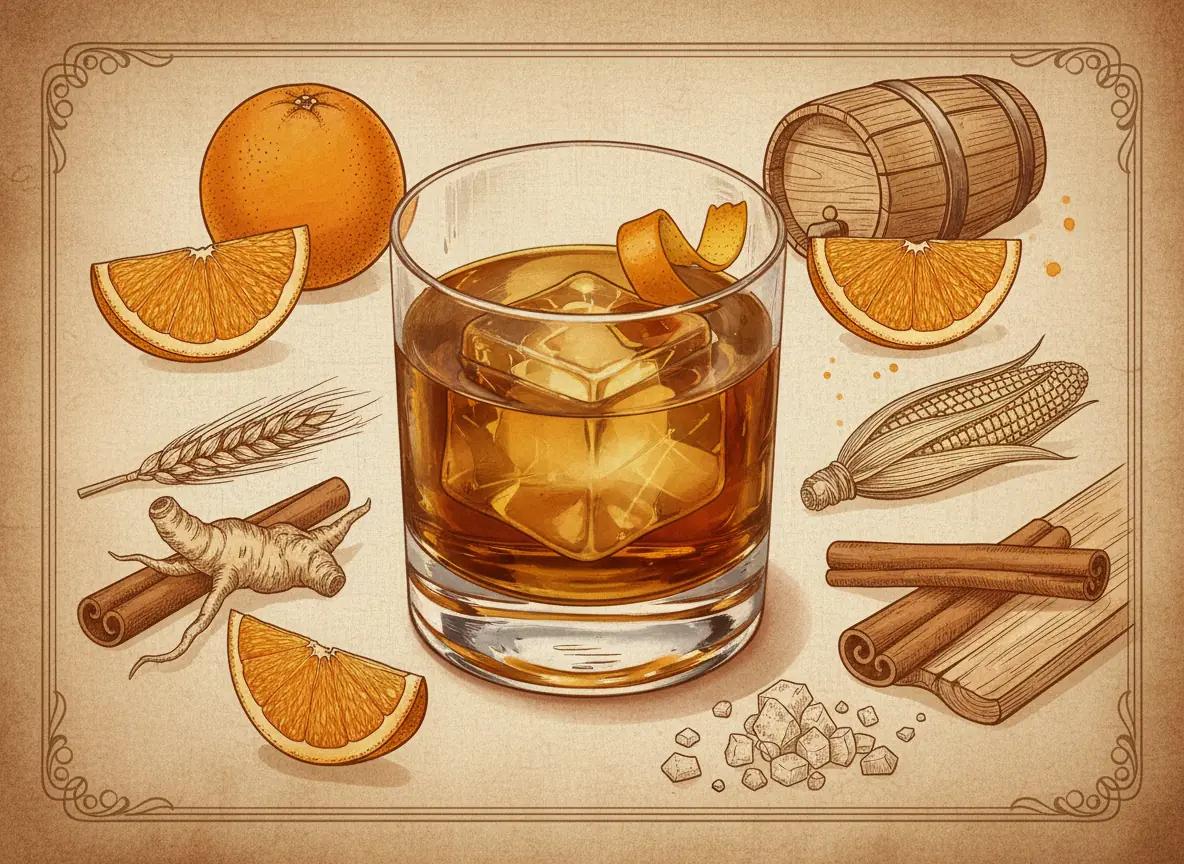
The Old Fashioned is the oldest documented cocktail in the American canon and the drink from which the word cocktail derives its original meaning. Its first print definition, in 1806, as a stimulating liquor composed of spirits, sugar, water, and bitters, describes the Old Fashioned before the name existed. The name came in the 1880s, when bartenders began adding fruit and soda to the format and drinkers who preferred the original asked for their cocktail the old-fashioned way. Three ingredients in their purest form: whiskey, sugar, and bitters; the expressed orange peel and the ice are conditions of the serve rather than additions. The simplicity is the entire point. Built properly, with a quality bourbon or rye, it is one of the most satisfying drinks in the canon; built badly, one of the most disappointing. Rye versus bourbon is the most common argument and the least interesting one. Both are correct. Rye produces a drier, spicier result where the bitters are more prominent; bourbon a rounder, sweeter one where the vanilla and caramel of the grain lead. What is a matter of correctness: sugar fully dissolved, bitters measured rather than dashed freely, and the drink stirred rather than shaken.

Port Old Fashioned

The Port Old Fashioned splits the base: bourbon leading, tawny port second, and the port doing work that sugar and vermouth would do elsewhere. It is a whiskey drink with a wine underneath it. Tawny is the specific requirement, and it is not a preference. Tawny port spends years in cask with air reaching it, which turns it nutty and dried-fruited, closer to an old sherry than to grape juice. That oxidative character sits alongside bourbon's oak instead of fighting it. Ruby port is bottled young and sealed, stays bright and jammy, and in this frame tastes like fruit squash beside the whiskey. Because the port arrives sweet, the syrup shrinks to a whisper. Five millilitres is correcting rather than sweetening, and two different bitters bridge the gap between the whiskey's grain and the wine's fruit. No single specification owns this drink. Bourbon-led splits, low-proof all-port versions and maple-sweetened readings all circulate. These are our proportions and only our proportions.

Revolver

The Revolver is a modern classic with an unusually precise birth certificate: Jon Santer, behind the bar at Bruno’s in San Francisco in the early 2000s, building a drink around a pun on the bourbon he was pouring. Bulleit, a revolver, and a spec of bourbon, coffee liqueur and orange bitters, stirred cold and finished with a flamed orange twist. It is the stirred answer to the Espresso Martini. The same marriage of coffee and spirit, translated out of shaken vodka theatre into something slower and darker: the coffee liqueur turns the bourbon’s toffee after-hours, and the orange bitters keep the finish from sliding into dessert. The flame is not decoration. Expressing the orange coin through a lit match toasts the oils in mid-air, and they land caramelised and faintly smoky on a surface that is already coffee and oak. Unflamed it is a good drink. Flamed it is the Revolver, and the difference shows up in the first sip.

Rusty Nail

The Rusty Nail is two Scotches talking to each other: whisky neat, and whisky that went to finishing school as Drambuie, honey and herbs smoothing the same spirit into a liqueur. Versions of the pairing drifted around under various names from the 1930s, but the drink found its identity in mid-century New York, where the 21 Club poured it for the Rat Pack era and the name finally stuck somewhere around 1963. It is the definitive two-bottle cocktail: no citrus, no bitters, no technique beyond ice and a stir, which made it the house drink of an era that liked its glamour unfussy. The whole recipe is a ratio, and the ratio is a conversation. Heavy on the Drambuie it is a honeyed after-dinner drink; dried out toward four-to-one it becomes a Scotch drinker’s Scotch drink with a Highland accent. Fashion abandoned it along with the rest of the liqueur-led canon, and the cocktail revival quietly took it back: a drink this simple lives and dies on the quality of its two bottles, and the bottles got better. Made with a Scotch you would drink neat, it remains what it always was: the easiest serious drink in the cabinet.
Sazerac

Sazerac

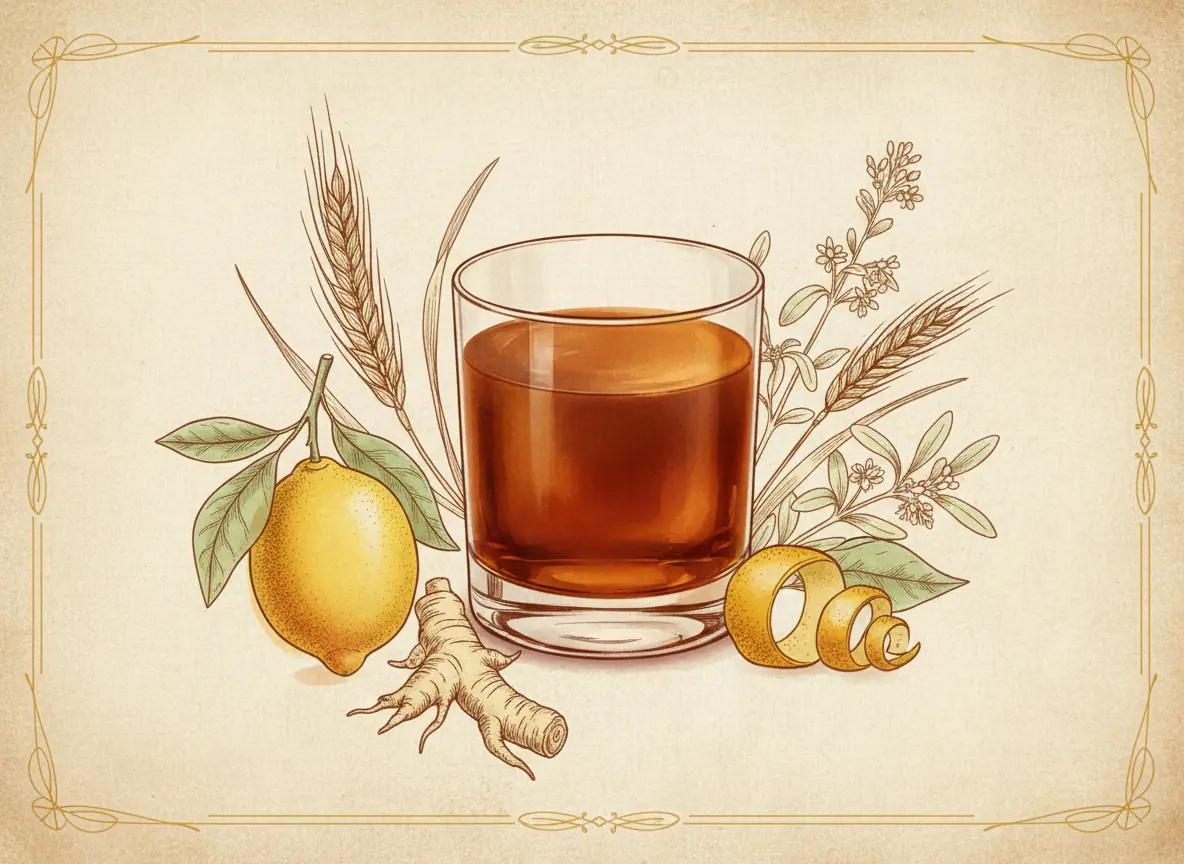
The Sazerac is one of the oldest documented cocktails in American history, originating in New Orleans in the mid-nineteenth century and taking its name from the Sazerac de Forge et Fils cognac that formed its original base. The switch from cognac to rye came gradually, accelerated by the phylloxera epidemic that devastated French vineyards in the 1870s and made cognac scarce across the American market. By the time cognac returned, rye had become the standard and has remained so ever since. It is a three-ingredient drink dressed with an absinthe rinse and a lemon peel expressed and discarded. The absinthe coats the glass, the lemon oils land on the surface, and neither remains in the drink in any measurable volume, yet both are present in every sip in a way that adding them directly cannot replicate. That indirection is the technique. New Orleans has argued about the correct build for as long as the drink has existed. The version here uses rye, Peychaud's with a single dash of Angostura, and a sugar cube.

Stinger

The Stinger is cognac wearing menthol aftershave: brandy and white crème de menthe, stirred or famously shaken, and for the first half of the twentieth century the definitive nightcap of American high society. It rose through the Edwardian clubs, survived Prohibition suspiciously well, mint being excellent camouflage, and became the drink of choice for the dinner-jacket decades, ordered by everyone from admirals to Cary Grant’s scriptwriters. It is a two-ingredient drink with one decision: the ratio. The classic pour ran as sweet as equal parts; the modern reading given here runs drier at three to one, cognac in charge and the mint reduced to a cold silver thread. White crème de menthe is not negotiable, since the green version turns the glass to mouthwash by way of the eyes. Fashion mocked it, then missed it, then quietly brought it back: a properly dry Stinger after dinner remains one of the great digestifs, the mint doing genuine after-dinner work and the cognac doing the rest. It asks ninety seconds and repays them in silk.

Ti’ Punch

Ti’ Punch, petit punch in Creole, is Martinique’s national drink and the purest expression of rhum agricole that exists: rhum, cane syrup and a coin of lime, built in a small glass, traditionally without ice. There is nowhere for anything to hide, which is precisely the point. The island custom is “chacun prépare sa mort”: each prepares their own death. The bottle, the syrup and the limes arrive at the table and every drinker builds their own, to their own strength and sweetness. It is less a recipe than a ritual, and it explains the drink’s proportions better than any spec can: they are yours to decide. What the drink teaches is agricole itself. The grassy, green-cane voice of the spirit meets a syrup pressed from the same plant, and the lime coin adds perfume rather than sourness. Serve it before dinner, keep it small, and understand why Martinique never felt the need to complicate it.

Toronto

The Toronto is the drink that taught fernet manners. It appears in the bar manuals of 1922 as the Fernet Cocktail, whisky sweetened and seasoned with Milan’s most feared amaro, and acquired its city and its name via Robert Vermeire’s note that it was a favourite of the Canadians of Toronto. Canadian whisky being historically rye-led, the drink settled into its modern form. Structurally it is an Old Fashioned with the fear turned up: the sugar and bitters of the template, with Fernet Branca supplying the aromatic register a twist and a dash normally would. The fernet’s menthol and bitter roots run straight through the rye’s spice, the demerara rounds the collision, and the result is darker and more bracing than any standard Old Fashioned. It has become the standard second step in a fernet education, after the neat shot and before the deep end: enough Branca to taste the point of it, and enough structure around it to stay civilised.

Welsh Gold

The Welsh Gold is a house Old Fashioned written for St David’s Day: Penderyn Madeira Finish on a large cube with Welsh honey syrup, two dashes of Angostura and expressed orange. The frame is the oldest one in the book, and the ingredients are the point. Penderyn’s signature expression carries honey sweetness and dried fruit from its Madeira wine casks, and the syrup meets it rather than fighting it, honey answering honey with the bitters holding the seam between them. The measure of the drink is its restraint. Fifteen millilitres of syrup is all the sweetening it takes, because the cask has already done half the work. Add more and the whisky drowns; hold the line and it stays spirit-forward, which is where an Old Fashioned belongs. It suits the first of March, poured slowly while the cawl simmers, but it is not a costume drink: made properly it stands up in any month, and the honey belongs to the whisky rather than to the occasion.