Monte Carlo
A Monte Carlo is 60ml of rye whiskey, 15ml of Bénédictine and two dashes of Angostura bitters, stirred over ice for 20 to 30 seconds and strained over one large cube in a rocks glass, or up into a chilled coupe, under a lemon twist. About 3.1 UK units. Think of it as a Manhattan that swaps the vermouth for Bénédictine. The liqueur sweetens and brings honey, saffron and herbs at once, so a small measure does the work of the vermouth and the sugar together. It turns up in David Embury’s The Fine Art of Mixing Drinks, 1948, as two parts rye for each part of Bénédictine, with a dash or two of Angostura, shaken. He found it a bit sweet and suggested lemon juice and more rye. Ours takes half of that advice: four parts rye to one, stirred, and no lemon.
Glassware: Rocks Glass
Garnish: Lemon twist
Ingredients
60ml
At 40% ABV or stronger. Rye’s pepper pushes back against the honey in the liqueur, where a bourbon’s sweetness adds to it. Bottled at 50%, it makes a firmer drink of about 3.7 units.
15ml
At 40% ABV on its maker’s product page, from Fécamp in Normandy: honey, angelica root, saffron and warm spice, by its maker’s account. It replaces both the vermouth and the sugar of a Manhattan, which is why 15ml is enough.
2 dashes
Two dashes, at 44.7% ABV. Clove and cinnamon give the liqueur something to hold on to; without them the rye and the Bénédictine taste like two drinks in one glass. Embury used one or two.
Instructions
Add the rye, Bénédictine and Angostura to a mixing glass.
Fill with cubed ice and stir for 20 to 30 seconds.
Strain over one large cube in a rocks glass, or into a chilled coupe to serve it up.
Express a lemon twist over the surface and drop it in.
Our version
David Embury’s 1948 recipe is two parts rye to one of Bénédictine with one or two dashes of Angostura, shaken. Ours is four to one, 60ml to 15ml, with two dashes, stirred, which leans the drink towards the rye as Embury himself suggested.
Source: our own specification. Last checked 10 October 2026.
Expert Tip
Rye, not bourbon. Bénédictine is thick and honeyed, and a bourbon’s vanilla and corn sweetness piles on top of it until the drink turns syrupy. Rye’s pepper holds it up. If bourbon is what you have, cut the Bénédictine to 10ml. Measure the Bénédictine. At 20ml the herbs take over and the whiskey sinks into the background; at 10ml the glass is rye with a vague sweetness. The gap between the two is about a bar spoon. Choose the glass before you stir. Over a large cube the drink is slower and rounder, and the honey comes forward as the ice melts. Up in a chilled coupe it is colder and sharper, and the herbs arrive first.
Behind the Monte Carlo
Flavour Profile
Where It Comes From
Difford’s Guide cites David Embury’s The Fine Art of Mixing Drinks, published in 1948, as the earliest printing. Embury was a lawyer rather than a bartender, and his recipe is two parts rye to one of Bénédictine with one or two dashes of Angostura, shaken with cracked ice.
He added that the drink was a bit on the sweet side and could be improved with lemon juice and more rye. Difford’s Guide finds nothing earlier than Embury’s book of 1948. The name suggests the casino; nothing ties the drink to Monaco.
Bénédictine Instead of Vermouth
Our Manhattan takes 50ml of rye and 20ml of sweet vermouth, with a dash of Angostura. Replace the vermouth with Bénédictine and most of the drink changes.
Sweet vermouth is a wine at about 16% ABV, our working figure, lightly bitter, and it sits behind the whiskey. Bénédictine is a liqueur at 40% on its maker’s product page, much sweeter, and its herbs sit in front. So the measure drops to 15ml and the rye rises to 60ml.
The wine note that dries the back of a Manhattan goes. Honey, saffron and warmth take its place.
Four to One, Not Two
Made with 60ml of rye, Embury’s ratio means 30ml of Bénédictine, and the drink tastes of the liqueur first and the whiskey second. That is the sweetness he complained about.
At four to one the rye leads, the Bénédictine seasons and the bitters tie them together. It is also a strong glass, at about 3.1 units, and it is meant to be taken slowly.
Its Relatives
The Monte Carlo beside other whiskey and Bénédictine drinks; Embury’s row follows Difford’s Guide, and the units are our calculation at our working figures of 40% for the whiskeys and brandy and 16% for vermouth, with Bénédictine at 40% on its maker’s product page
Monte Carlo (ours)
- Whiskey
- 60ml rye
- Bénédictine
- 15ml
- Also in the glass
- Two dashes Angostura
- UK units
- About 3.1
Monte Carlo (Embury, 1948)
- Whiskey
- Two parts rye
- Bénédictine
- One part
- Also in the glass
- One or two dashes Angostura
- UK units
- Not stated
Manhattan
- Whiskey
- 50ml rye
- Bénédictine
- None
- Also in the glass
- 20ml sweet vermouth, a dash of Angostura
- UK units
- About 2.3
Bobby Burns
- Whiskey
- 45ml Scotch
- Bénédictine
- 7.5ml
- Also in the glass
- 45ml sweet vermouth
- UK units
- About 2.8
Vieux Carré
- Whiskey
- 30ml rye, 30ml cognac
- Bénédictine
- 5ml
- Also in the glass
- 30ml sweet vermouth, two dashes Peychaud’s
- UK units
- About 3.1
| Drink | Whiskey | Bénédictine | Also in the glass | UK units |
|---|---|---|---|---|
| Monte Carlo (ours) | 60ml rye | 15ml | Two dashes Angostura | About 3.1 |
| Monte Carlo (Embury, 1948) | Two parts rye | One part | One or two dashes Angostura | Not stated |
| Manhattan | 50ml rye | None | 20ml sweet vermouth, a dash of Angostura | About 2.3 |
| Bobby Burns | 45ml Scotch | 7.5ml | 45ml sweet vermouth | About 2.8 |
| Vieux Carré | 30ml rye, 30ml cognac | 5ml | 30ml sweet vermouth, two dashes Peychaud’s | About 3.1 |
The Bobby Burns puts a little Bénédictine beside sweet vermouth, and the Vieux Carré uses even less, among rye, cognac and vermouth. The Monte Carlo is the plainest of them: whiskey, Bénédictine and bitters, with nothing else to hide behind.
How to Serve It
After dinner, over one large cube in a rocks glass, or up in a small chilled coupe. Twist the lemon over the top, then let it fall into the glass.
Lemon rather than orange. Orange adds sweetness to a drink that has enough already; lemon oil cuts across the honey.
For Scotch with sweet vermouth and a little Bénédictine, make a Bobby Burns; for the vermouth original, a Manhattan.
Make it at home
The Spirit
Whiskey (Rye)Rye whiskey, under the US standard 27 CFR 5.143, takes at least 51% of its grain from rye and its colour from new charred oak, and goes into bottle at a 40% ABV minimum; our recipes take 40% as the figure. Rye makes a drier, spicier, more peppery spirit than corn, which is why stirred classics such as the Manhattan, Vieux Carré and Brooklyn are written for it. It appears in 23 of our recipes.
Master the Techniques
More to explore
Frequently Asked Questions
What is a Monte Carlo cocktail?
Who created the Monte Carlo?
What does Bénédictine taste like?
Can I use bourbon instead of rye?
Should it be served up or over ice?
How is ours different from Embury’s?
How strong is a Monte Carlo?
Sources.
Correct as of 18 October 2026.
- Difford’s Guide, “Monte Carlo” (secondary source: first in print in Embury’s 1948 The Fine Art of Mixing Drinks, 1 part Bénédictine, 2 parts rye, 1 or 2 dashes Angostura, shaken; Embury’s suggested lemon juice and more rye).
- Bénédictine, “Bénédictine D.O.M” (producer’s product page: 40% alc/vol; Fécamp; a secret recipe of 27 herbs and spices).
- Bénédictine, “Alchemy” (producer’s page: angelica root and saffron; honey and saffron play a key role).
You Might Also Like
Bobby Burns
A Bobby Burns is 45ml of Scotch, 45ml of sweet vermouth and 7.5ml of Bénédictine, stirred with ice for 20 to 30 seconds and strained into a chilled coupe, with a lemon twist expressed and dropped in. About 2.8 UK units. In our view it is a Rob Roy with Bénédictine in place of the bitters, which makes it rounder and more honeyed; Difford’s Guide calls it a Scotch-based riff on the Manhattan with a splash of liqueur, usually Bénédictine. Difford’s Guide gives the earliest known Bobby Burns Cocktail as one in the National Police Gazette of September 1899, made with Scotch, gum, orange bitters and ginger cordial. The Savoy Cocktail Book of 1930 prints the Scotch, Italian vermouth and Bénédictine version and calls it one of the very best whisky cocktails. The name may honour the poet, though Difford’s Guide notes it was perhaps not originally named after him. Albert Stevens Crockett’s Old Waldorf Bar Days of 1931 prints a Robert Burns Cocktail, a different recipe, and says it was more likely christened for a cigar salesman who drank in the bar. Difford’s Guide says the Bobby Burns is drunk on Burns Night, 25 January.
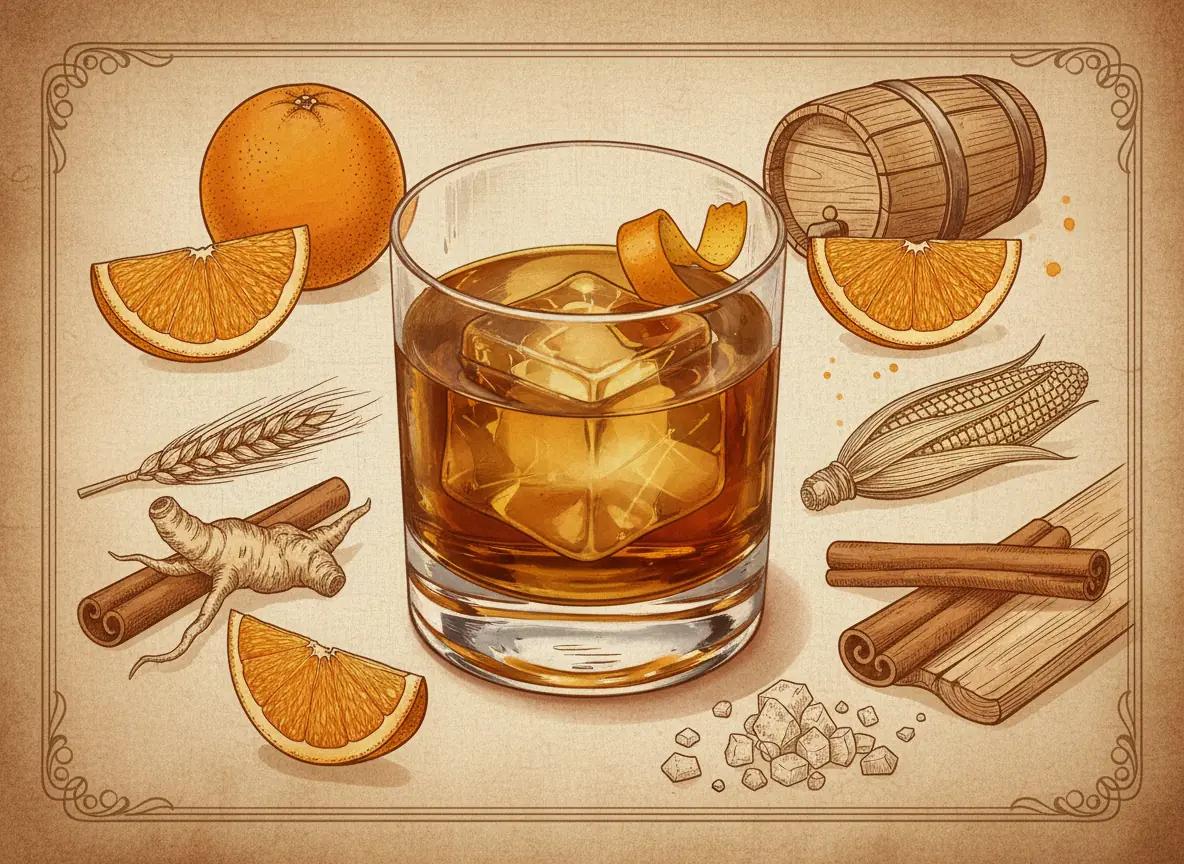
Old Fashioned
The IBA’s Old Fashioned is 45ml of bourbon or rye whiskey, one sugar cube, a few dashes of Angostura bitters and a few dashes of water; we use bourbon and two dashes. The sugar and bitters are muddled in a rocks glass until the cube dissolves, then ice goes in, the bourbon goes over it and the drink is stirred for 15 to 20 seconds. Orange peel is expressed over the top. About 1.9 UK units. Only the sugar and bitters are muddled: no orange flesh, no cherry. The recipe predates the name. The Oxford Companion says that when a newspaper in Hudson, New York, defined the cocktail in 1806, it described “spirits of any kind, sugar, water, and bitters”. The name came later in the century: the Companion has people ordering Old-Fashioneds in Chicago in 1880, as bartenders added liqueurs to the format and drinkers who wanted it plain asked for one made the old-fashioned way.
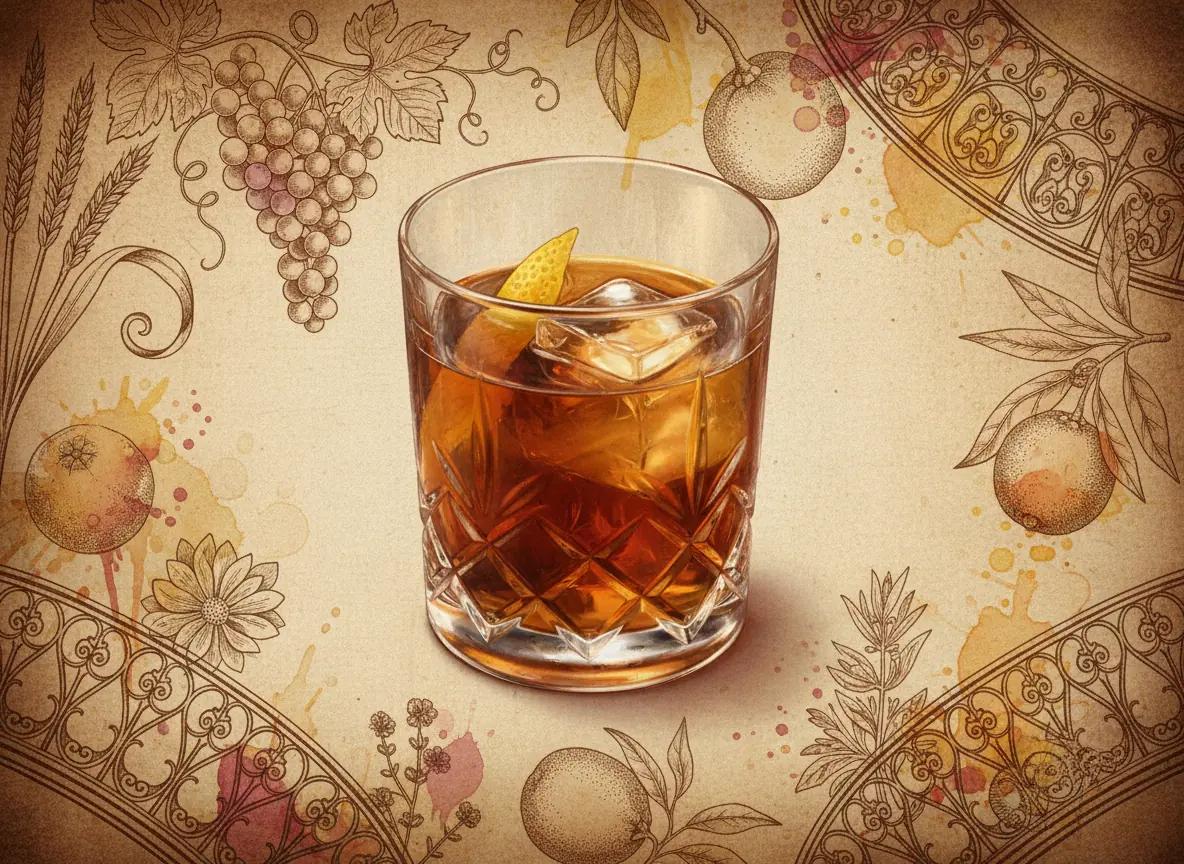
Vieux Carré
A Vieux Carré is 30ml each of rye whiskey, cognac and sweet vermouth, with 5ml of Bénédictine and two dashes of Peychaud’s bitters, stirred over ice for 20 to 30 seconds and strained over a large cube in a rocks glass, with lemon peel expressed over the top. About 3.1 UK units. Those are the IBA’s ingredients. The IBA serves it up, in a cocktail glass, finished with orange zest and a cherry; we keep the lemon peel of the recipe Stanley Clisby Arthur printed in Famous New Orleans Drinks and How to Mix ’Em, which Difford’s Guide dates to 1938, and serve it over ice. Difford’s Guide reproduces Arthur’s entry, in which Walter Bergeron, head bartender of the Hotel Monteleone cocktail lounge in New Orleans, says he originated the drink in honour of the Vieux Carré. Difford’s Guide dates it to 1938. Vieux carré means old square: the French Quarter, where the hotel stands.
Where this one sits
Recipe by Jerry Can Spirits · Updated 18 October 2026