Canchánchara
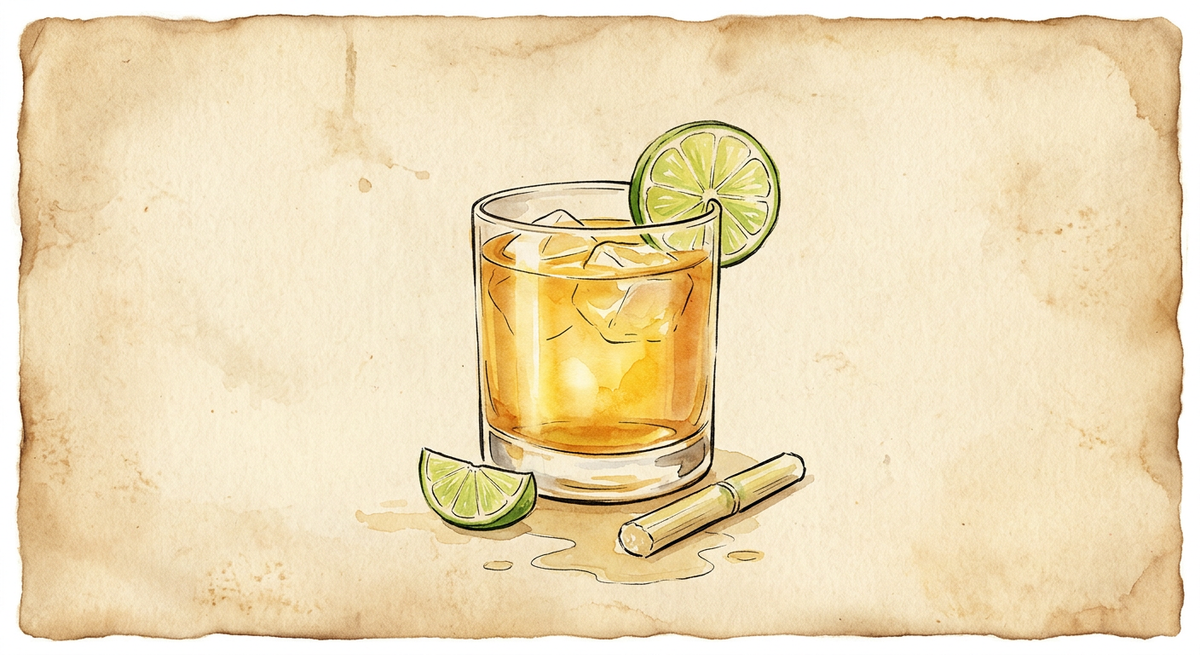
A Canchánchara is 60ml Cuban aguardiente, 15ml raw honey, 15ml fresh lime juice and 50ml water. Mix the honey, lime and water in the glass until the honey dissolves and coat the base and sides with it, add cracked ice, pour in the aguardiente and stir hard from the bottom up. About 2.4 UK units, taking the spirit at 40% ABV. Those are the IBA’s measures and method. Punch places its creation in the Valle de los Ingenios near Trinidad, in central Cuba, and attributes it to the mambises, guerrilla fighters in the Ten Years’ War (1868 to 1878) and the War of Independence (1895 to 1898). Punch quotes the bartender Julio Cabrera saying they drank it before battle and as a morning toddy against cold, hunger and fatigue. The formula is the Daiquiri’s in its roughest form: cane spirit, sweetness and lime. Honey and water make it softer and longer, and the young spirit keeps a green, grassy edge that a white rum lacks.
Glassware: Rocks Glass
Garnish: Lime wheel in the cup
Ingredients
60ml
Young Cuban cane spirit, as the IBA names it, and hard to buy outside the island. A young Cuban-style white rum is the closest base; a rhum agricole blanc or a cachaça makes a grassier drink. Strengths vary; the units here assume 40% ABV.
15ml
Raw honey, as the IBA specifies, dissolved with the lime and water before any ice. A two-to-one honey syrup is quicker and tastes much the same once mixed.
15ml
Squeezed the same day. It sharpens the honey and helps it loosen in the first mix.
50ml
Mixed with the honey and lime at the start. It loosens the honey so it will blend, and it lengthens the drink before the ice adds more.
Instructions
Pour the honey, lime juice and water into a clay cup or rocks glass and stir until the honey dissolves.
Swirl the mixture so it coats the base and sides of the glass.
Fill with cracked ice.
Pour in the aguardiente.
Stir hard from the bottom upwards.
Garnish with a lime wheel.
Source: the IBA (Official IBA specification (New Era), served with a lime wheel where the IBA gives a lime wedge; method as the IBA). Last checked 9 October 2026.
Expert Tip
Dissolve the honey before anything cold goes in. Stir the raw honey with the lime and water in the glass until it runs freely; the water is what lets it loosen. Honey poured into cold spirit sinks and stays there, and the drink ends sour at the top and sweet at the bottom. Spread that mixture over the base and sides of the glass, as the IBA directs, then add cracked ice and the aguardiente, and stir hard from the bottom up so the honey lifts into the spirit. Cuban aguardiente is hard to find outside Cuba. The nearest substitute keeps the green cane note: a rhum agricole blanc or a cachaça. A clean, light white rum makes a pleasant drink that misses the point.
Behind the Canchánchara
Flavour Profile
The Mambises
Punch says the mambises were guerrilla fighters in the Ten Years’ War (1868 to 1878) and the War of Independence (1895 to 1898), and attributes the Canchánchara to them. It places the drink in the Valle de los Ingenios, a UNESCO World Heritage site near Trinidad in central Cuba.
Punch quotes Julio Cabrera saying they drank it before battle and as a morning toddy to ward off cold, hunger and fatigue. It is a tradition rather than a record, and a 2019 forum post on Spirits and Cocktails disputes it, saying that the independence-war diaries its writer has read never mention alcohol, that Fernando Campoamor’s 1981 book on Cuban rum defines the Canchánchara as a boozeless hot drink, and that the earliest version of the oldest-Cuban-cocktail story the writer could trace is from 1984; we have not seen those texts.
Trinidad still serves the drink in clay cups.
The Clay Cup
Punch describes the jícara as a squat vessel made from the dried fruit of the calabash tree, now typically clay. Accounts of the name differ: some tie it to the cup, others to a flask the fighters carried.
A rocks glass does the job well. The clay cup adds the setting, not the flavour, though it is worth owning one if the drink becomes a habit.
Before the Daiquiri
Cane spirit, sweetness and lime is the pattern behind much Cuban drinking.
Replace the honey with sugar, use a refined white rum, leave out the water, shake and strain, and you arrive at the Daiquiri. Keep the honey and shake it instead, and you are close to the Honeysuckle. The Canchánchara shows the pattern before anyone had smoothed it.
Canchánchara and Daiquiri compared
Spirit
- Canchánchara (IBA)
- 60ml Cuban aguardiente
- Daiquiri (IBA)
- 60ml white Cuban rum
Sweetener
- Canchánchara (IBA)
- 15ml raw honey
- Daiquiri (IBA)
- Two bar spoons caster sugar
Citrus
- Canchánchara (IBA)
- 15ml lime
- Daiquiri (IBA)
- 20ml lime
Water
- Canchánchara (IBA)
- 50ml, plus cracked ice
- Daiquiri (IBA)
- From the shake only
Method
- Canchánchara (IBA)
- Built and stirred in the glass
- Daiquiri (IBA)
- Shaken, served up
UK units
- Canchánchara (IBA)
- About 2.4
- Daiquiri (IBA)
- About 2.4
| Element | Canchánchara (IBA) | Daiquiri (IBA) |
|---|---|---|
| Spirit | 60ml Cuban aguardiente | 60ml white Cuban rum |
| Sweetener | 15ml raw honey | Two bar spoons caster sugar |
| Citrus | 15ml lime | 20ml lime |
| Water | 50ml, plus cracked ice | From the shake only |
| Method | Built and stirred in the glass | Shaken, served up |
| UK units | About 2.4 | About 2.4 |
Building It Right
There is no shaker. The IBA builds it in the glass: honey, lime and water mixed first and spread over the inside, then cracked ice, then the aguardiente, and a hard stir from the bottom up to finish.
The order does the work. With the honey already dissolved in water and lime, the spirit mixes in easily, and the hard stir lifts it from the base of the glass.
How to Serve It
In a clay cup if you have one, or a rocks glass, with a lime wheel. The IBA garnishes it with a wedge; either suits it.
Pour it beside a Daiquiri to taste the two ends of the same idea: the rough field drink and the refined Havana one.
Make it at home
The Spirit
Cuban AguardienteCuban aguardiente is the strong young spirit distilled from fermented molasses that Cuban rum-makers age and blend into rum; bottled on its own it is a raw, unrefined cane spirit, here taken at 40% ABV. The IBA names it in the Canchánchara, and it is rarely sold in the UK, so a young white rum usually stands in.
More to explore
Frequently Asked Questions
What is a Canchánchara?
How strong is a Canchánchara?
Raw honey or honey syrup?
What spirit should I use?
Why does the order matter?
Why is it called a Canchánchara?
How does it relate to the Daiquiri?
Sources.
Correct as of 19 October 2026.
- Punch, “The Original Cuban Cocktail, the Canchánchara” (secondary source: made in the Valle de los Ingenios near Trinidad; invention attributed to the mambises, guerrilla fighters in the Ten Years’ War (1868 to 1878) and the War of Independence (1895 to 1898); Julio Cabrera: named after the leather-covered flask, drunk before battle and as a morning toddy against cold, hunger and fatigue; served in jícaras, now typically clay).
- Spirits and Cocktails community, “Canchánchara: Cuba’s Ur Cocktail (forum thread)” (forum post, 2019: diaries of independence-war fighters never mention alcohol; Campoamor, 1981, defines it as a boozeless hot drink; earliest version of the oldest-Cuban-cocktail story traced to 1984. Not a primary source; the texts it cites were not seen).
- IBA, “Canchánchara” (official specification (New Era): 60 ml aguardiente, 15 ml fresh lime juice, 15 ml raw honey, 50 ml water; honey, water and lime spread on the bottom and sides of the glass, cracked ice, the rum, stirred from bottom to top; lime wedge).
- The Oxford Companion to Spirits and Cocktails (Wayne Curtis), “The Daiquiri” (secondary source: Jennings Stockton Cox Jr. made, or supervised the making of, the first Daiquiri in 1896; the name “Ron à la Daiquiri” in 1908).
You Might Also Like
Daiquiri
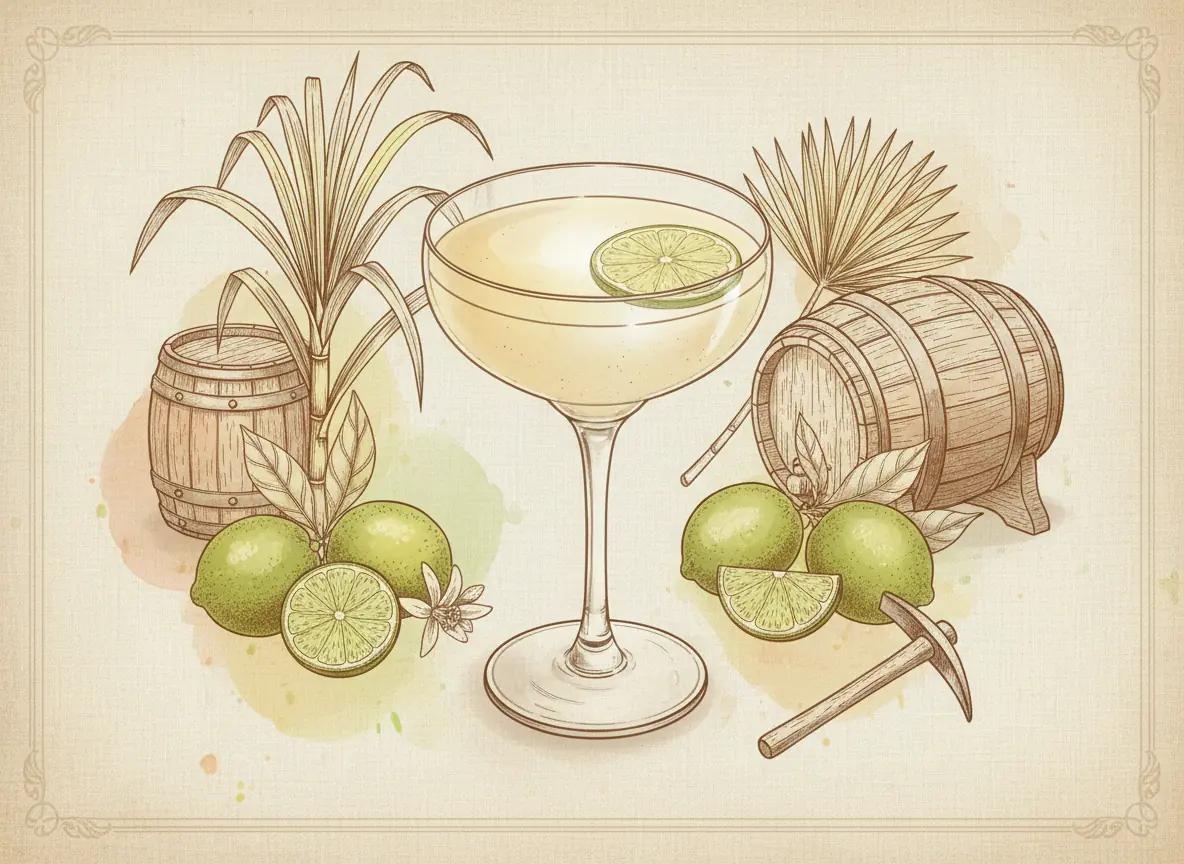
A Daiquiri is 60ml white rum, 20ml fresh lime juice and two bar spoons of caster sugar. Stir the sugar into the rum and lime in the shaker until it dissolves, then add ice, shake hard for 10 to 12 seconds and double strain into a chilled coupe. About 2.4 UK units. Those are the IBA’s measures, and its method dissolves the sugar first too. The name belongs to Daiquirí, an iron-mining district and beach near Santiago de Cuba. Difford’s Guide credits Jennings Stockton Cox, an American engineer who led one of the first mining parties into Cuba’s iron-ore country after the Spanish-American War of 1898; the Oxford Companion has him making or supervising the first Daiquiri in 1896, and a Santiago bartender naming it in 1908. Difford’s says Constantino Ribalaigua Vert of Havana’s El Floridita made the frozen version famous. With three ingredients and no liqueur or bitters, the Daiquiri hides nothing. A flat rum, tired lime or undissolved sugar shows in the first sip.
Honeysuckle
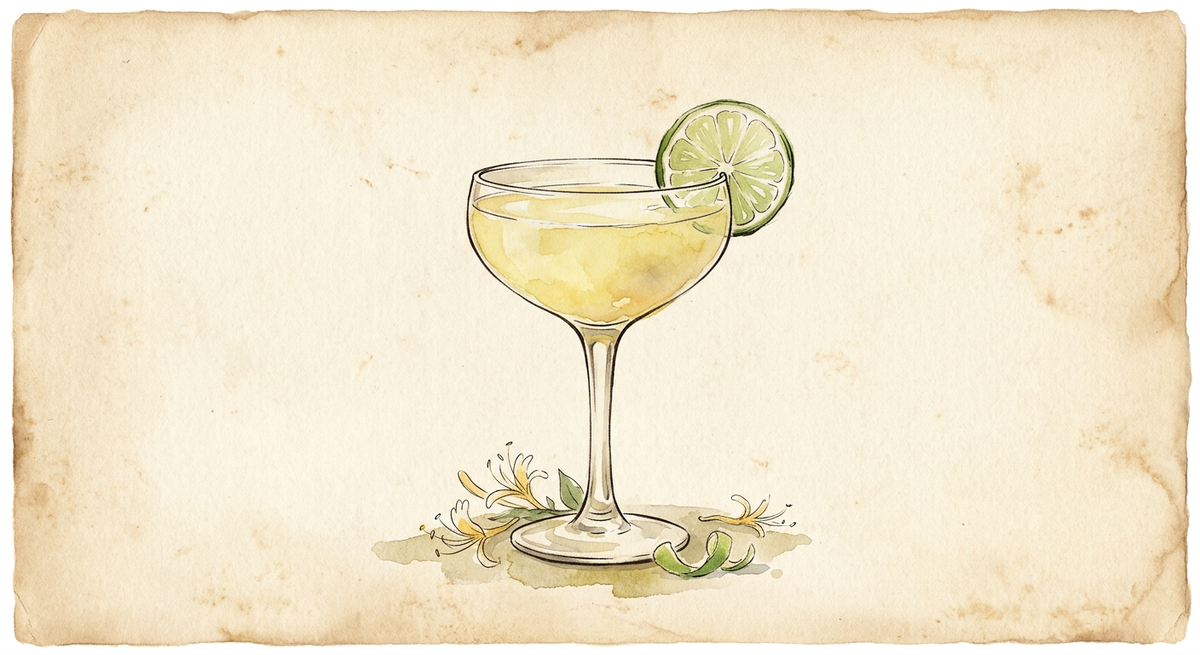
A Honeysuckle is 60ml of white rum, 22.5ml of fresh lime juice and 22.5ml of honey syrup (two parts honey, one part warm water), shaken hard for 10 to 12 seconds and double strained into a chilled coupe, with a lime wheel. About 2.4 UK units. It is a daiquiri sweetened with honey instead of sugar. Honey has a floral smell and a waxy weight that sugar lacks, so the drink comes out rounder and more golden than a Daiquiri, and the honey rather than the lime is what you notice first. The name is older than our recipe. It is usually traced to David Embury’s The Fine Art of Mixing Drinks of 1948, where the Honeysuckle is a Bee’s Knees made with rum, and so with lemon. We use lime, which keeps it in the daiquiri family.
Mojito
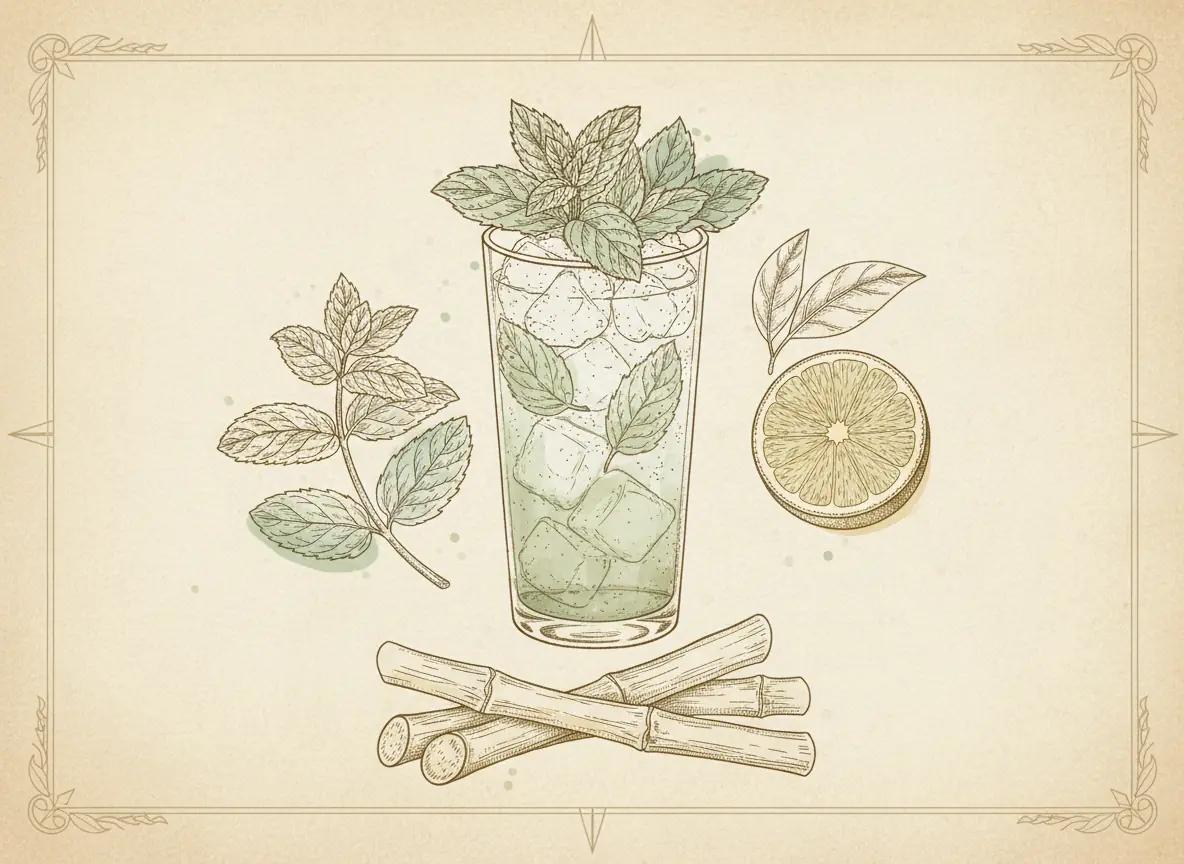
A Mojito is 45ml of white rum, 20ml of fresh lime juice, two teaspoons of white cane sugar and six sprigs of mint, built in a highball. The mint is pressed gently with the sugar, the glass is filled with cubed ice, the rum and lime go in, and 75 to 100ml of chilled soda water tops it. About 1.8 UK units. Those are the IBA’s measures. The IBA only says to top up with soda, so the 75 to 100ml is ours. Press the mint once or twice and stop. Torn leaves make the drink bitter and grassy, and that, more often than the rum, is why a Mojito disappoints. The sugar grains help: they bruise the surface of the leaf as you press, and the lime then carries the oil through the glass.
Where this one sits
Recipe by Jerry Can Spirits · Updated 19 October 2026