Gin Cocktail
A Gin Cocktail is 60ml of gin, 5ml of sugar syrup, 5ml of orange curaçao and two dashes of Angostura, stirred with ice for 20 to 30 seconds and strained over one large cube in a rocks glass, with a lemon twist. About 2.7 UK units. It is a cocktail in the oldest sense of the word: spirits, sugar, water and bitters, the traditional ingredients, with the first definition of a cocktail as an alcoholic beverage dated by the Oxford Companion to The Balance and Columbian Repository, Hudson, New York, of 13 May 1806. Jerry Thomas gave a Gin Cocktail in his guide of 1862, in the Internet Archive’s scan, with gum syrup, bitters he names Bogart’s, a dash or two of curaçao and a piece of lemon peel, shaken with fine ice and strained. Ours keeps his ingredients and stirs them, because nothing in the glass needs air. The curaçao adds orange without much sugar, and the twist does the work juice would do in a sour.
Glassware: Rocks Glass
Garnish: Lemon twist expressed and dropped in
Ingredients
60ml
At 40% ABV. Thomas named only gin: genever gives a malty, heavier drink, Old Tom a softer and slightly sweet one, and London Dry the sharpest. Pick one and set the syrup to it.
5ml
A barspoon. Thomas used gum syrup, which adds a little body; plain sugar syrup does the job. Halve it with Old Tom, which is sweetened in the bottle.
5ml
A barspoon of dry orange curaçao, taken at our working figure of 40% ABV. Thomas called for one or two dashes. It brings bitter orange more than sweetness.
2 dashes
Two dashes, at the 44.7% ABV on DrinkSupermarket’s listing. In the Internet Archive’s scan, Thomas’s 1862 recipe names Bogart’s bitters; Angostura is the usual modern stand-in. The bitters are what made it a cocktail rather than a sling.
Instructions
Add the gin, sugar syrup, curaçao and Angostura to a mixing glass.
Fill with cubed ice and stir for 20 to 30 seconds.
Strain over one large cube in a rocks glass.
Express a lemon twist over the surface and drop it in.
Our version
Jerry Thomas’s 1862 ingredients in modern measures and stirred: 60ml of gin, 5ml of sugar syrup, 5ml of orange curaçao and two dashes of Angostura, where, in the Internet Archive’s scan, he shook a wine-glass of gin with three or four dashes of gum syrup, two of bitters and one or two of curaçao.
Source: our own specification.
Expert Tip
Set the sugar by the gin. Thomas’s recipe says only gin. Genever and Old Tom are the styles most often suggested for it now, and London Dry gives the sharpest drink. With Old Tom, which is sweetened, halve the syrup. Give it every one of the 20 to 30 seconds in the mixing glass. A short drink with no juice takes all its water from the ice, and under-stirred it tastes hot. Express the lemon twist hard over the surface. With no juice in the glass, the oil from the peel is the only citrus.
Behind the Gin Cocktail
Flavour Profile
The 1806 Definition
The Oxford Companion, in an entry by David Wondrich, has the first unambiguous appearance in print of the name and formula together in Hudson, New York, in 1806, where The Balance and Columbian Repository of 13 May defined a Cock-Tail as “a stimulating liquor, composed of spirits of any kind, sugar, water, and bitters”. Its entry on the Old-Fashioned calls that the first known definition of a cocktail and says Gin Cocktail was one of the utilitarian names the plain formula carried.
In our view that ruled out punches, juleps and slings. Gin, sugar and water made a sling; add bitters and it was a gin cocktail. The word now covers almost any mixed drink, but it started as this formula.
Jerry Thomas’s Version
Jerry Thomas’s guide of 1862, in the Internet Archive’s scan, lists the Gin Cocktail as no. 111. His recipe takes three or four dashes of gum syrup, two of Bogart’s bitters, a wine-glass of gin, one or two dashes of curaçao and a small piece of lemon peel, shaken with fine ice and strained into a glass.
The Oxford Companion says that in the 1850s and 1860s the cocktail began to evolve as bartenders added splashes of liqueurs such as curaçao and maraschino, which in our view is why curaçao is there at all. A barspoon fills out the middle of a spare drink with bitter orange rather than sugar.
Which Gin
Thomas gives no style. Genever, malty and heavy, makes the drink taste nearer to whiskey in weight. Old Tom, lightly sweetened, makes the roundest version and needs less syrup. London Dry is the sharpest and cleanest, and most people will prefer it.
One Formula, Several Drinks
The Gin Cocktail beside our Old Fashioned, Improved Whiskey Cocktail and Martinez; the units are our calculation at our working strengths of 40% for spirits and curaçao, 16% for sweet vermouth and maraschino at Luxardo’s 32%
Gin Cocktail
- Spirit
- 60ml gin
- Sweetening
- 5ml sugar syrup, 5ml curaçao
- Bitters and extras
- Two dashes Angostura
- UK units
- About 2.7
Old Fashioned
- Spirit
- 45ml bourbon or rye
- Sweetening
- One sugar cube
- Bitters and extras
- Two dashes Angostura
- UK units
- About 1.9
Improved Whiskey Cocktail
- Spirit
- 60ml rye
- Sweetening
- 10ml demerara syrup, 5ml maraschino
- Bitters and extras
- Two dashes Angostura, 2.5ml absinthe
- UK units
- About 2.8
Martinez
- Spirit
- 45ml London Dry gin
- Sweetening
- 45ml sweet vermouth, 5ml maraschino
- Bitters and extras
- Two dashes orange bitters
- UK units
- About 2.7
| Drink | Spirit | Sweetening | Bitters and extras | UK units |
|---|---|---|---|---|
| Gin Cocktail | 60ml gin | 5ml sugar syrup, 5ml curaçao | Two dashes Angostura | About 2.7 |
| Old Fashioned | 45ml bourbon or rye | One sugar cube | Two dashes Angostura | About 1.9 |
| Improved Whiskey Cocktail | 60ml rye | 10ml demerara syrup, 5ml maraschino | Two dashes Angostura, 2.5ml absinthe | About 2.8 |
| Martinez | 45ml London Dry gin | 45ml sweet vermouth, 5ml maraschino | Two dashes orange bitters | About 2.7 |
How to Serve It
Stirred and strained over one large cube in a rocks glass, with a lemon twist expressed over the surface. Drink it before dinner, while it is cold.
With whiskey and a sugar cube, an Old Fashioned; with sweet vermouth and maraschino, a Martinez.
Make it at home
The Spirit
GinGin is a spirit flavoured with juniper berries. Under the retained Regulation (EC) 110/2008, juniper must lead the taste, the floor is 37.5% ABV, and the route the flavour takes sets the grade: plain gin, distilled gin or London gin. Our recipes count it at 40%, and it carries the Martini, the Negroni and the Gin and Tonic.
Master the Techniques
More to explore
Frequently Asked Questions
What is in a Gin Cocktail?
What did Jerry Thomas’s recipe say?
What makes it a cocktail?
How is it related to the Old Fashioned?
Which gin should I use?
Should it be shaken or stirred?
How strong is a Gin Cocktail?
Sources.
Correct as of 19 October 2026.
- Internet Archive, “The Bar-Tender’s Guide (Jerry Thomas, 1862)” (scanned reproduction of the 1862 book: “111. Gin Cocktail. (Use small bar glass.) 3 or 4 dashes of gum syrup. 2 do. bitters (Bogart’s). 1 wine-glass of gin. 1 or 2 dashes of Curaçoa. 1 small piece lemon peel; fill one-third full of fine ice; shake well, and strain in a glass.”).
- The Oxford Companion to Spirits and Cocktails (David Wondrich), “Cock-Tail” (secondary source: the first unambiguous appearance in print of the formula and name together, in Hudson, New York, in 1806, defined as a stimulating liquor composed of spirits of any kind, sugar, water and bitters (The Balance and Columbian Repository, 13 May 1806)).
- The Oxford Companion to Spirits and Cocktails (Robert Hess and David Wondrich), “The Old-Fashioned Cocktail” (secondary source: the first known definition of a cocktail dates to 1806; utilitarian names such as Gin Cocktail; liqueur splashes added in the 1850s and 1860s; Old-Fashioneds ordered in Chicago in 1880).
- Luxardo, “Maraschino Originale” (producer’s product page: 32% Alc. by Vol.).
- DrinkSupermarket, “Angostura Aromatic Bitters 200ml” (retailer listing: Strength (ABV)% 44.7).
You Might Also Like
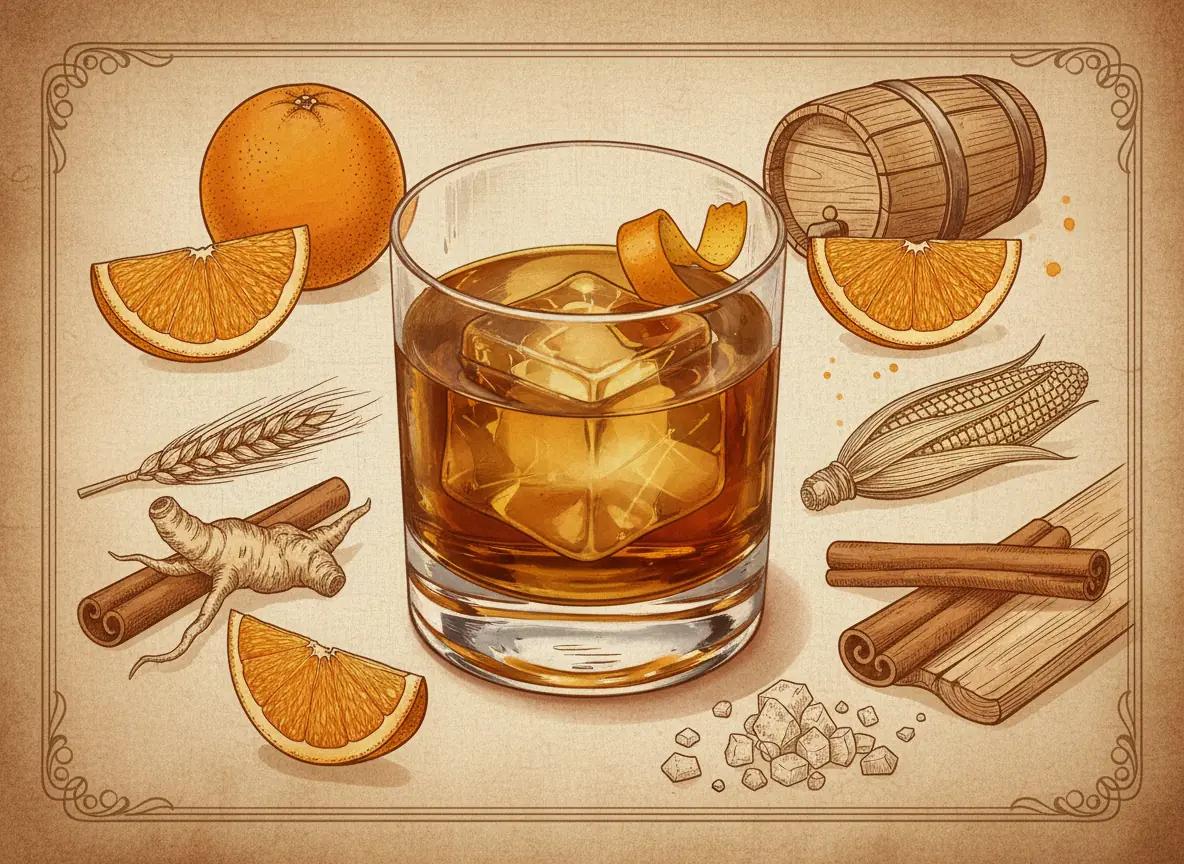
Old Fashioned
The IBA’s Old Fashioned is 45ml of bourbon or rye whiskey, one sugar cube, a few dashes of Angostura bitters and a few dashes of water; we use bourbon and two dashes. The sugar and bitters are muddled in a rocks glass until the cube dissolves, then ice goes in, the bourbon goes over it and the drink is stirred for 15 to 20 seconds. Orange peel is expressed over the top. About 1.9 UK units. Only the sugar and bitters are muddled: no orange flesh, no cherry. The recipe predates the name. The Oxford Companion says that when a newspaper in Hudson, New York, defined the cocktail in 1806, it described “spirits of any kind, sugar, water, and bitters”. The name came later in the century: the Companion has people ordering Old-Fashioneds in Chicago in 1880, as bartenders added liqueurs to the format and drinkers who wanted it plain asked for one made the old-fashioned way.
Improved Whiskey Cocktail
An Improved Whiskey Cocktail is 60ml of rye whiskey with 5ml of maraschino liqueur, 2.5ml of absinthe, 10ml of demerara syrup and two dashes of Angostura bitters, stirred over ice for 20 to 30 seconds and strained over one large cube in a rocks glass, with lemon peel expressed and dropped in. About 2.8 UK units. Difford’s Guide, reproducing it, says Jerry Thomas printed an Improved Whiskey Cocktail in his 1876 bar guide: the plain whiskey cocktail of spirit, sugar and bitters, with dashes of maraschino and absinthe added. The Oxford Companion says that once vermouth drinks arrived in the 1870s some drinkers kept to the tried-and-true formula and called for an “old-fashioned” cocktail. The additions are small on purpose. Each should sit behind the rye, never in front of it.
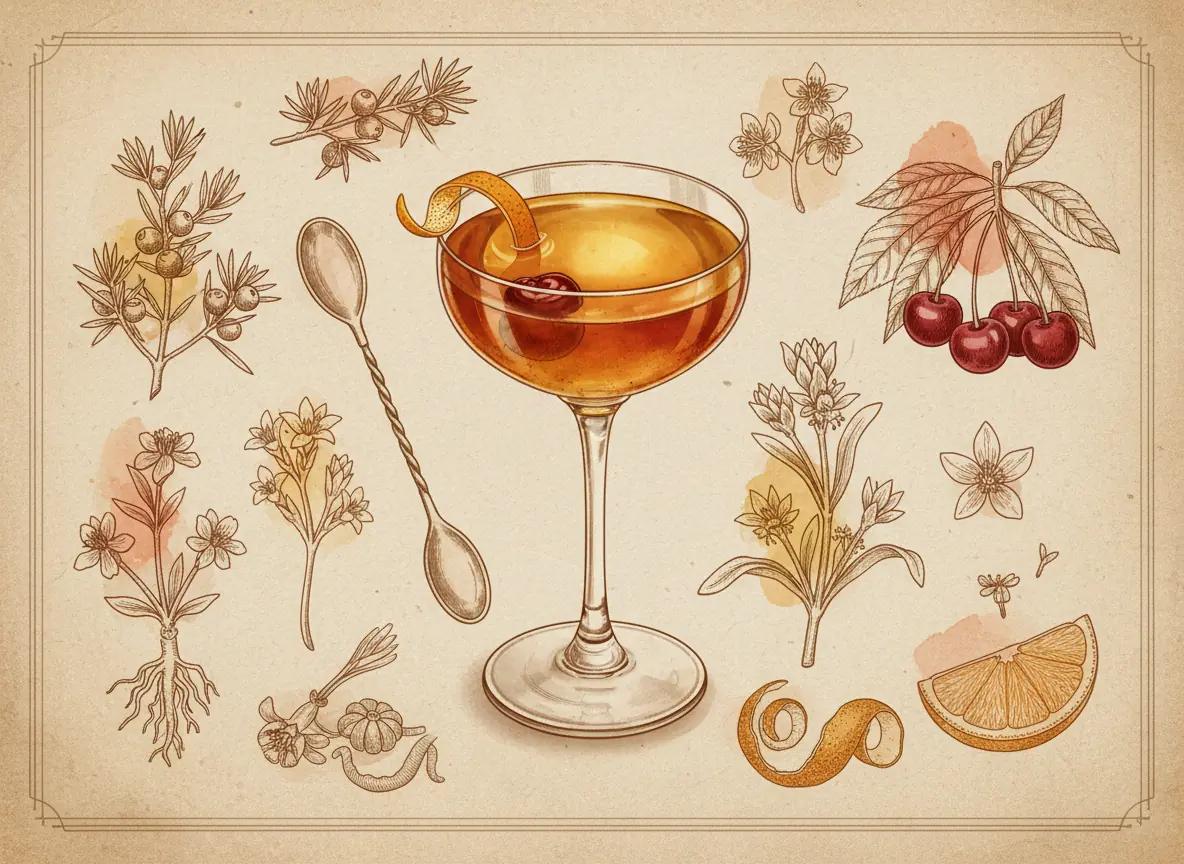
Martinez
A Martinez is 45ml London Dry gin and 45ml sweet vermouth with a bar spoon (5ml) of maraschino and two dashes of orange bitters, stirred with ice for 20 to 30 seconds and poured into a cold coupe under a twist of lemon peel. About 2.7 UK units. The measures follow the IBA. It is usually named as the Martini’s forerunner, and Punch says historians squabble over where it came from. O. H. Byron’s guide of 1884, in the Internet Archive’s scan, lists a Martinez as “Same as Manhattan, only you substitute gin for whisky”; Jerry Thomas’s Bar-Tender’s Guide of 1887, in the Internet Archive’s scan, gives a full recipe on Old Tom gin, with more vermouth than gin, maraschino and Boker’s bitters. Equal parts on London Dry makes a drier, sharper drink than those early versions. Old Tom gin, a shorter vermouth measure and Angostura make the softer, sweeter variation.
Where this one sits
Recipe by Jerry Can Spirits · Updated 19 October 2026