Improved Whiskey Cocktail
An Improved Whiskey Cocktail is 60ml of rye whiskey with 5ml of maraschino liqueur, 2.5ml of absinthe, 10ml of demerara syrup and two dashes of Angostura bitters, stirred over ice for 20 to 30 seconds and strained over one large cube in a rocks glass, with lemon peel expressed and dropped in. About 2.8 UK units. Difford’s Guide, reproducing it, says Jerry Thomas printed an Improved Whiskey Cocktail in his 1876 bar guide: the plain whiskey cocktail of spirit, sugar and bitters, with dashes of maraschino and absinthe added. The Oxford Companion says that once vermouth drinks arrived in the 1870s some drinkers kept to the tried-and-true formula and called for an “old-fashioned” cocktail. The additions are small on purpose. Each should sit behind the rye, never in front of it.
Glassware: Rocks Glass
Garnish: Lemon twist expressed and dropped in
Ingredients
60ml
Rye at 40% ABV or a little more. Its dry pepper stops the sweet, perfumed modifiers piling up. Thomas’s 1887 edition, in the Internet Archive’s scan, allows bourbon or rye, and in our view bourbon makes a rounder drink.
5ml
Luxardo’s own page gives its Maraschino Originale at 32% ABV. It adds a cherry-stone and bitter almond note that reads as depth rather than fruit.
2.5ml
Half a teaspoon, stirred through rather than used as a rinse. A full bar spoon buries everything else in anise.
10ml
Demerara sugar dissolved in half its weight of water. Its toffee weight carries the two modifiers, where plain syrup leaves the drink thinner. Thomas used gum syrup.
2 dashes
Two dashes. Thomas’s improved cocktails name Boker’s (or Angostura) bitters, in Difford’s Guide’s reproduction; Angostura gives the drink its clove and bitter edge.
Instructions
Add the rye, maraschino, absinthe, demerara syrup and Angostura to a mixing glass.
Fill with cubed ice and stir for 20 to 30 seconds.
Strain over one large cube in a rocks glass.
Express a strip of lemon peel over the surface and drop it in.
Source: Jerry Thomas's Bar-Tender's Guide (Adapted from the 1876 Bar-Tender’s Guide: rye, Angostura for Boker’s bitters, demerara syrup for gum syrup, measures in ml, stirred and served over a large cube where Thomas shakes and strains; method ours). Last checked 9 October 2026.
Expert Tip
Measure the absinthe. 2.5ml is half a teaspoon, stirred through the drink rather than used as a rinse. A full bar spoon and the whiskey disappears behind anise. Keep all three additions small. 5ml of maraschino, half a teaspoon of absinthe and 10ml of syrup should each sit behind the rye; if you can name one on the first sip, it is too much. Choose demerara syrup over plain. Its toffee note gives the drink enough body to carry two strong modifiers, and white sugar leaves it thin.
Behind the Improved Whiskey Cocktail
Flavour Profile
Where It Comes From
The Oxford Companion dates the first known definition of a cocktail to 1806, as “spirits of any kind, sugar, water, and bitters”. Make exactly that with whiskey and you have the Old Fashioned.
The Oxford Companion says that in the 1850s and 1860s bartenders began adding splashes of standard liqueurs, curaçao and maraschino among them, to the cocktail. Difford’s Guide says Jerry Thomas’s 1876 bar guide includes improved versions of the Brandy, Gin and Whiskey Cocktail, distinguished by European ingredients, particularly maraschino liqueur and absinthe.
The Name It Gave Away
Drinkers who wanted none of the additions had to ask. The Oxford Companion says some kept to the tried-and-true formula and called for an “old-fashioned” cocktail, the most popular being the Old-Fashioned Whisky Cocktail, soon shortened to Old-Fashioned.
Pour the two together and, in our view, the gap between them is plain from the first mouthful.
What Each Improvement Does
None is a large measure, and each one changes the drink.
Maraschino at 5ml adds a cherry-stone and almond note that reads as depth rather than fruit. At 5ml it adds flavour and only a little sugar.
Absinthe at half a teaspoon runs a herbal, faintly medicinal line through the rye. Stirred in, it joins the drink instead of sitting on the nose.
Demerara syrup gives the drink enough body to carry the other two. With plain syrup the modifiers start to float on top.
Ours Against Thomas
The Improved Whiskey Cocktail in 1876, as Difford’s Guide reproduces Thomas, and as we make it
Whiskey
- Thomas, 1876
- A small wine-glass of whiskey (bourbon or rye in the 1887 edition)
- Ours
- 60ml rye
Sugar
- Thomas, 1876
- Three dashes of gum syrup
- Ours
- 10ml demerara syrup
Maraschino
- Thomas, 1876
- Two dashes
- Ours
- 5ml
Absinthe
- Thomas, 1876
- One dash
- Ours
- 2.5ml
Bitters
- Thomas, 1876
- Two dashes of Boker’s
- Ours
- Two dashes of Angostura
Method
- Thomas, 1876
- Shaken with shaved ice
- Ours
- Stirred 20 to 30 seconds
Served
- Thomas, 1876
- Strained into a cocktail glass
- Ours
- Over one large cube
Lemon
- Thomas, 1876
- A piece of peel
- Ours
- Peel expressed and dropped in
| Element | Thomas, 1876 | Ours |
|---|---|---|
| Whiskey | A small wine-glass of whiskey (bourbon or rye in the 1887 edition) | 60ml rye |
| Sugar | Three dashes of gum syrup | 10ml demerara syrup |
| Maraschino | Two dashes | 5ml |
| Absinthe | One dash | 2.5ml |
| Bitters | Two dashes of Boker’s | Two dashes of Angostura |
| Method | Shaken with shaved ice | Stirred 20 to 30 seconds |
| Served | Strained into a cocktail glass | Over one large cube |
| Lemon | A piece of peel | Peel expressed and dropped in |
The ingredients line up. The service changes: stirred and on ice, the drink opens slowly as the cube melts.
Against the Sazerac
The two share most of their parts: rye, sugar, bitters and absinthe. The differences are technique.
A Sazerac rinses the glass with absinthe, so the anise is mostly on the nose. It uses Peychaud’s bitters, has no maraschino and is served without ice.
This one stirs the absinthe through, keeps the Angostura, adds the cherry note and goes over a large cube.
How to Serve It
Stirred for 20 to 30 seconds, strained over one large cube in a rocks glass, lemon peel expressed over the top and dropped in. Serve it beside a plain Old Fashioned if you can.
Make it at home
The Spirit
Whiskey (Rye)Rye whiskey, under the US standard 27 CFR 5.143, takes at least 51% of its grain from rye and its colour from new charred oak, and goes into bottle at a 40% ABV minimum; our recipes take 40% as the figure. Rye makes a drier, spicier, more peppery spirit than corn, which is why stirred classics such as the Manhattan, Vieux Carré and Brooklyn are written for it. It appears in 23 of our recipes.
Master the Techniques
More to explore
Frequently Asked Questions
Why is it called Improved?
Is this how the Old Fashioned got its name?
What was Jerry Thomas’s recipe?
How does it compare to a Sazerac?
Do I have to use absinthe?
How strong is an Improved Whiskey Cocktail?
Sources.
Correct as of 19 October 2026.
- Difford’s Guide, “Improved Whiskey Cocktail” (secondary source, reproducing Jerry Thomas, The Bar-tender’s Guide (1876): “242. Improved Whiskey Cocktail. Prepared in the same manner as the Improved Brandy Cocktail, by substituting whiskey for the brandy” (2 dashes Boker’s (or Angostura) bitters, 3 gum syrup, 2 Maraschino, 1 Absinthe, lemon rind, 1 small wineglass of brandy; shaved ice, shake, fancy cocktail glass)).
- The Oxford Companion to Spirits and Cocktails (Robert Hess and David Wondrich), “The Old-Fashioned Cocktail” (secondary source: the first known definition of a cocktail (1806): spirits, sugar, water and bitters; splashes of curaçao and maraschino from the 1850s and 1860s; the “old-fashioned” call once vermouth drinks arrived).
- Internet Archive, “The Bar-Tender’s Guide (Jerry Thomas, 1887)” (scanned reproduction of the 1887 edition: Improved Whiskey Cocktail, by substituting Bourbon or rye whiskey for the brandy in the Improved Brandy Cocktail).
- Luxardo, “Maraschino Originale” (producer’s product page: 32% Alc. by Vol.).
You Might Also Like
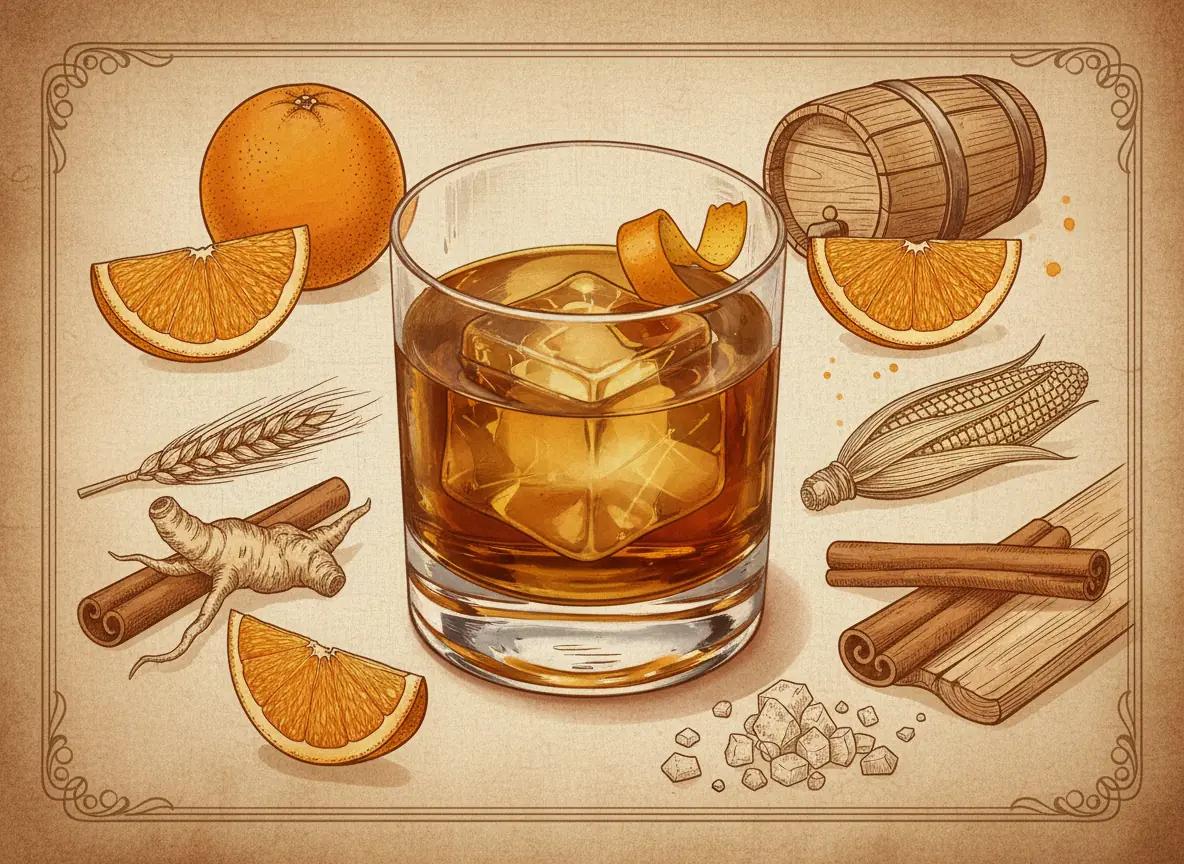
Old Fashioned
The IBA’s Old Fashioned is 45ml of bourbon or rye whiskey, one sugar cube, a few dashes of Angostura bitters and a few dashes of water; we use bourbon and two dashes. The sugar and bitters are muddled in a rocks glass until the cube dissolves, then ice goes in, the bourbon goes over it and the drink is stirred for 15 to 20 seconds. Orange peel is expressed over the top. About 1.9 UK units. Only the sugar and bitters are muddled: no orange flesh, no cherry. The recipe predates the name. The Oxford Companion says that when a newspaper in Hudson, New York, defined the cocktail in 1806, it described “spirits of any kind, sugar, water, and bitters”. The name came later in the century: the Companion has people ordering Old-Fashioneds in Chicago in 1880, as bartenders added liqueurs to the format and drinkers who wanted it plain asked for one made the old-fashioned way.
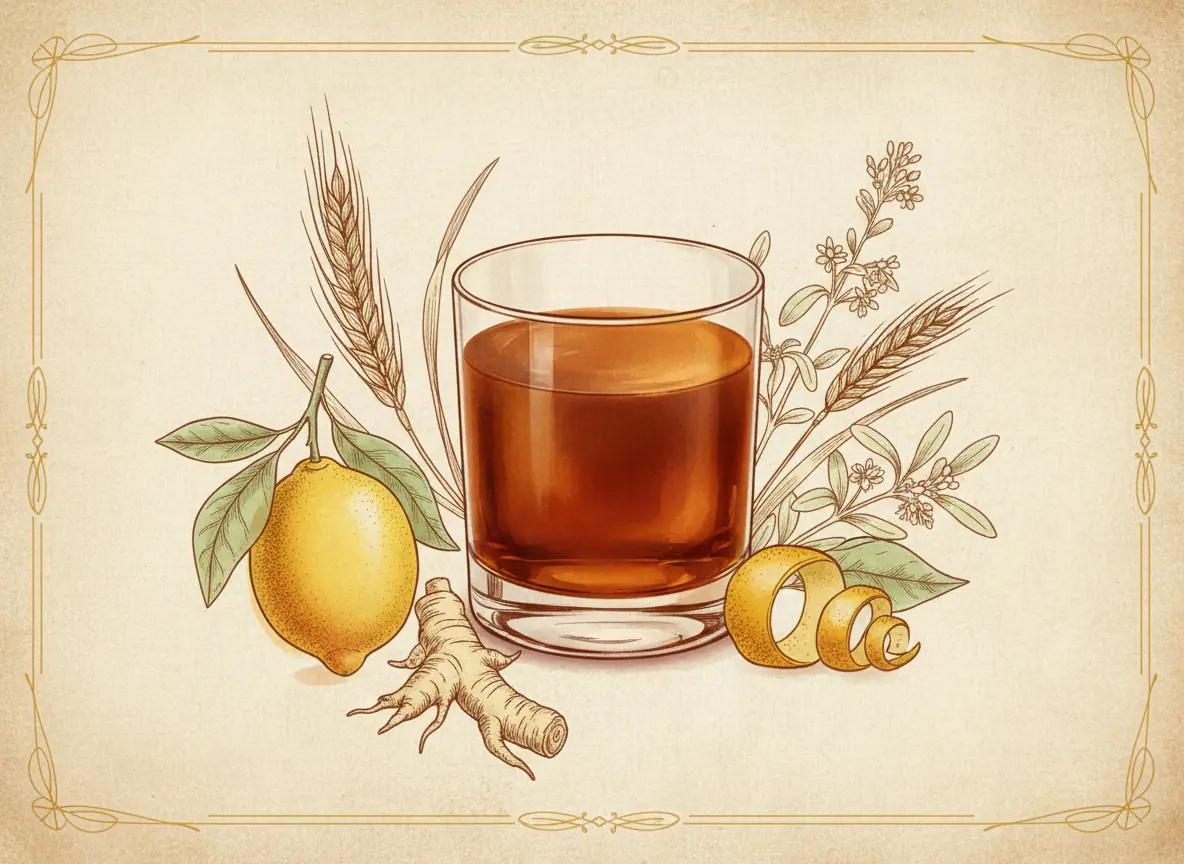
Sazerac
The IBA’s Sazerac is 50ml of cognac stirred with a sugar cube and two dashes of Peychaud’s bitters, then strained, with no ice, into a chilled rocks glass rinsed with absinthe, and finished with lemon zest. About 2.1 UK units. New Orleans more often makes it with rye whiskey. The Sazerac Company’s own history places Aaron Bird at the Sazerac House beside the Merchants Exchange from 1852 and dates the switch to rye to 1885. The Oxford Companion says the Sazerac cocktail was first mentioned in print only in 1899, and that the company’s account, which follows the historian Stanley Clisby Arthur, is undercut by numerous errors. The absinthe never goes into the mixing glass. It coats the glass and is poured away, leaving anise on the nose of every sip.
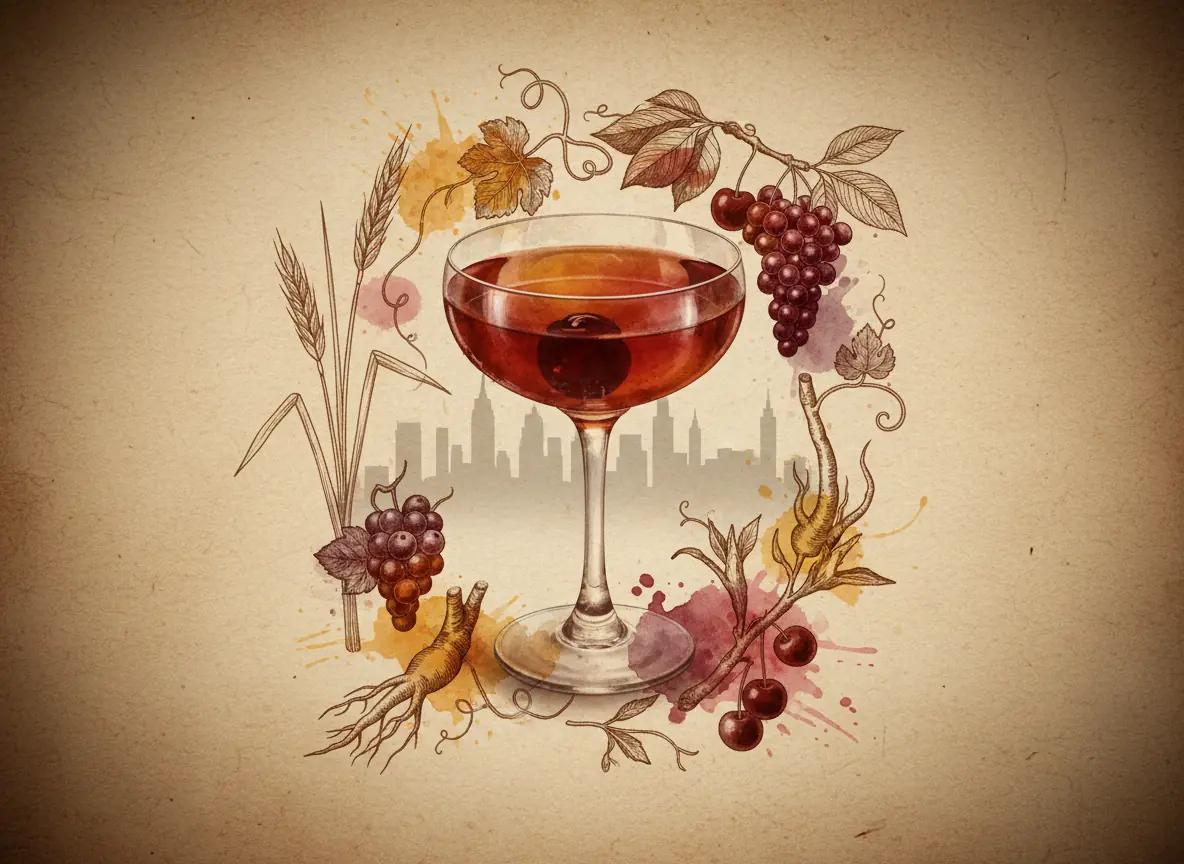
Manhattan
The IBA specifies 50ml of rye whiskey, 20ml of sweet vermouth and a dash of Angostura bitters, strained into a chilled glass with a cocktail cherry; we stir it over ice for 20 to 30 seconds and serve it in a coupe. That is five parts whiskey to two of vermouth. About 2.3 UK units. The Oxford Companion says the most commonly told story puts it at New York’s Manhattan Club on 29 December 1874, at a testimonial dinner for Samuel J. Tilden, later retold with Jennie Jerome, Lady Randolph Churchill, as host or inspiration, and calls that story simply not true: she had given birth to Winston Churchill in Oxfordshire less than a month earlier. The Companion names O. H. Byron’s Modern Bartenders’ Guide among the bar books that printed the drink in 1884, and we read Byron’s and Charlie Paul’s books of that year in the Internet Archive scans. With so little in the glass, the vermouth decides it. Twenty millilitres is over a quarter of the drink, and a bottle opened months ago tastes flat and sour against the rye. We keep it in the fridge and replace it within about four weeks.
Where this one sits
Recipe by Jerry Can Spirits · Updated 19 October 2026