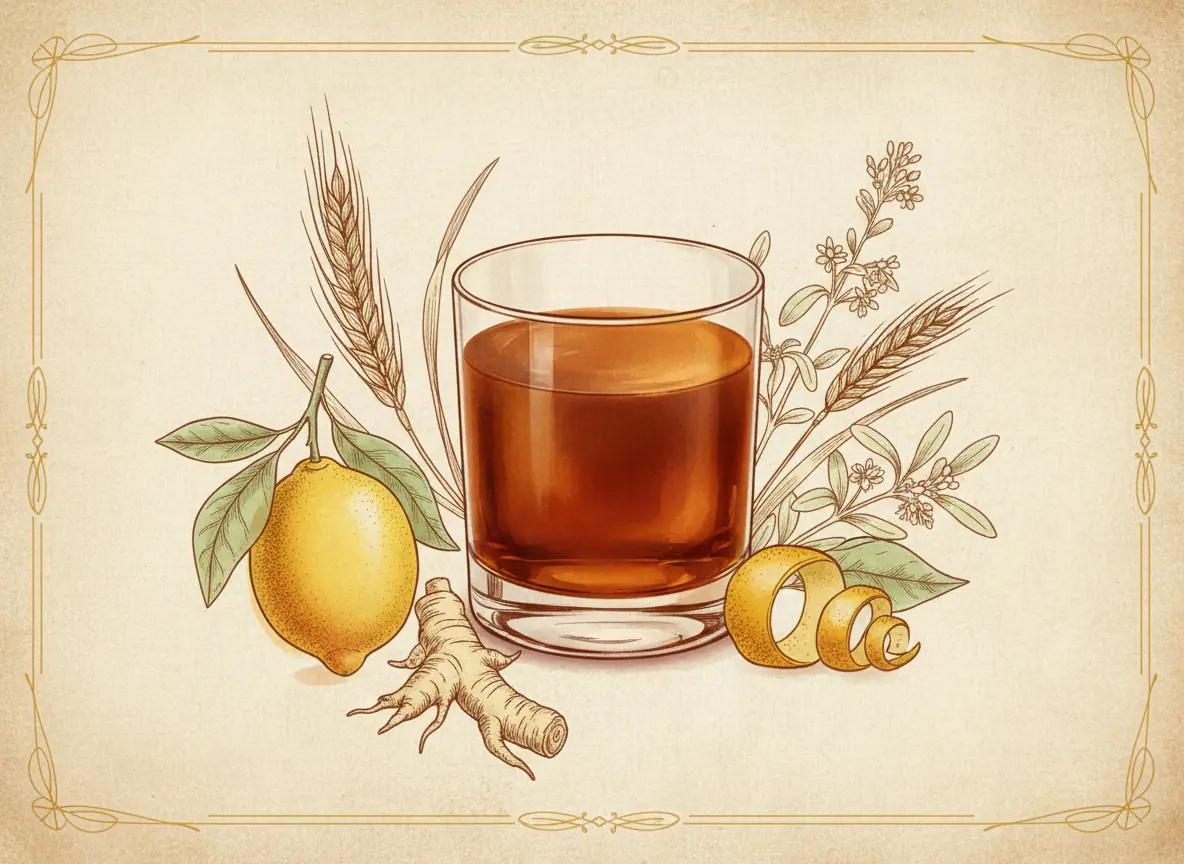
Sazerac
The IBA’s Sazerac is 50ml of cognac stirred with a sugar cube and two dashes of Peychaud’s bitters, then strained, with no ice, into a chilled rocks glass rinsed with absinthe, and finished with lemon zest. About 2.1 UK units. New Orleans more often makes it with rye whiskey. The Sazerac Company’s own history places Aaron Bird at the Sazerac House beside the Merchants Exchange from 1852 and dates the switch to rye to 1885. The Oxford Companion says the Sazerac cocktail was first mentioned in print only in 1899, and that the company’s account, which follows the historian Stanley Clisby Arthur, is undercut by numerous errors. The absinthe never goes into the mixing glass. It coats the glass and is poured away, leaving anise on the nose of every sip.
Variations
Glassware: Rocks Glass
Garnish: Lemon peel expressed and discarded
Ingredients
50ml
A VS or VSOP at 40% ABV, as the IBA specifies and as the drink’s name recalls. Cognac gives a rounder, fruitier Sazerac than rye does.
2 dashes
At 35% ABV by Difford’s Guide’s figure. The Oxford Companion describes anise, nutmeg and clove notes with a slightly sweet, floral taste, and in our view it is lighter than Angostura. Two dashes is the IBA’s measure, and they turn the drink a pinkish red.
1 cube
One white sugar cube, soaked with the bitters and crushed until it dissolves, about a teaspoon of sugar. A bar spoon of sugar syrup does the same job faster.
10ml
For the rinse only, at our working 55 to 68% ABV: swirled round the chilled glass and poured away. The Oxford Companion says that after Repeal, with absinthe illegal, local substitutes such as Herbsaint and Green Opal took its place in New Orleans.
Instructions
Chill a rocks glass in the freezer, or fill it with crushed ice and water.
In a mixing glass, soak the sugar cube with the Peychaud’s bitters and crush it until it dissolves.
Add the cognac, fill with cubed ice and stir for 20 to 30 seconds.
Empty the rocks glass, pour in the absinthe, turn the glass to coat the inside and discard the excess.
Strain the drink into the rinsed glass, with no ice.
Express a strip of lemon peel over the surface and discard it.
Source: the IBA (IBA specification; stirred 20 to 30 seconds and the lemon peel discarded). Last checked 10 October 2026.
Expert Tip
Get the cube fully dissolved first. Soak it with the bitters and crush it in the mixing glass until no grains are left. Undissolved sugar sits at the bottom, and the last sip comes out sweeter than the first. Coat the glass, then pour the absinthe away. Tip 10ml into the chilled glass and turn it until the inside is wet to the rim, then discard the rest. What clings to the glass gives the anise. Nothing goes in the finished glass: no ice and no peel. Express the lemon over the surface and discard it. Without ice the drink warms slowly in the hand, and the anise and fruit open as it does.
Behind the Sazerac
Flavour Profile
The Origin
The Oxford Companion says the Sazerac House was a New Orleans saloon named for Sazerac de Forge et Fils, an imported cognac, that in the late 1850s John B. Schiller took over the old Merchants Exchange and converted it into the Sazerac Coffee House, and that in 1871 his clerk Thomas B. Handy took over the business. The Sazerac Company’s own history tells it differently: Sewell Taylor’s lease at the Merchants Exchange was not renewed in 1849 and he set up as a liquor merchant promoting that cognac, while the Sazerac House, a coffee house next to the Merchants Exchange with Aaron Bird as proprietor, is first mentioned in the press in 1852, with Taylor probably its backer or owner.
The bitters came from Antoine Amédée Peychaud, a New Orleans apothecary born in Saint-Domingue, who by the Oxford Companion’s account opened his pharmacy at 123 Royal Street in 1834. The Sazerac Company’s history records his first advertisement for his bitters in 1857, which says they had been introduced at the Sazerac House. A popular story credits him with the drink itself, served in an egg cup, a coquetier, that supposedly gave cocktails their name. The Oxford Companion says the name Cock-Tail was defined in a Hudson, New York, newspaper in 1806, long before Peychaud opened his pharmacy in 1834, which ends that story.
The Sazerac Company dates Handy’s purchase of the Sazerac House to 1869 and the switch to rye to 1885, blaming the phylloxera blight in French vineyards; the IBA says only that rye replaced cognac after the American Civil War, when cognac became hard to obtain. The Oxford Companion is more cautious: it says the Sazerac cocktail was first mentioned in print in 1899, that the newspapers mention no cocktail specialty at the Sazerac House until 1895, and that the bar’s Whisky Cocktail, with absinthe dashed into the glass, became the Sazerac cocktail under the bartender Billy Wilkinson. A recipe appears in William Boothby’s The World’s Drinks and How to Mix Them in 1908. Boothby’s recipe is headed “a la Armand Regnier, New Orleans” and calls for Sazerac brandy and three drops of bitters, which the scan’s text layer reads as “Seiner”, not Peychaud’s.
The Absinthe Rinse
The rinse is a coat, not a few drops. Pour about 10ml into the chilled glass, tilt and turn it until the inside is wet to the rim, and discard what is left before the drink goes in.
What clings to the glass is a fraction of a millilitre, too little to count in the units and enough to put anise and herbs on the nose of every sip. The Oxford Companion says absinthe was banned in the United States in 1912.
Peychaud’s Bitters
The Oxford Companion describes Peychaud’s as a bright-red bitters with anise, nutmeg and clove notes and a slightly sweet, floral taste, and it gives the drink its colour. The same entry names the Vieux Carré and the Cocktail à la Louisiane among the classics that need it.
The IBA uses Peychaud’s alone. Many rye Sazeracs add one dash of Angostura for a firmer spice note, and our rye version does. Both builds are common.
Three Ways to Build It
The Sazerac as the IBA specifies it, our rye version and our Improved Whiskey Cocktail; the units are our calculation
Sazerac (IBA)
- Spirit
- 50ml cognac
- Bitters
- Two dashes Peychaud’s
- Sweetener
- One sugar cube
- Absinthe
- 10ml rinse, discarded
- UK units
- About 2.1
Rye Sazerac
- Spirit
- 60ml rye whiskey
- Bitters
- Three dashes Peychaud’s, one Angostura
- Sweetener
- One sugar cube
- Absinthe
- 5ml rinse, discarded
- UK units
- About 2.5
Improved Whiskey Cocktail
- Spirit
- 60ml rye whiskey
- Bitters
- Two dashes Angostura
- Sweetener
- 10ml demerara syrup, 5ml maraschino
- Absinthe
- 2.5ml stirred in
- UK units
- About 2.8
| Drink | Spirit | Bitters | Sweetener | Absinthe | UK units |
|---|---|---|---|---|---|
| Sazerac (IBA) | 50ml cognac | Two dashes Peychaud’s | One sugar cube | 10ml rinse, discarded | About 2.1 |
| Rye Sazerac | 60ml rye whiskey | Three dashes Peychaud’s, one Angostura | One sugar cube | 5ml rinse, discarded | About 2.5 |
| Improved Whiskey Cocktail | 60ml rye whiskey | Two dashes Angostura | 10ml demerara syrup, 5ml maraschino | 2.5ml stirred in | About 2.8 |
How to Serve It
Short, cold and with no ice, in a rocks glass chilled before you start, with lemon oil on the surface and no peel in the glass. It is a slow drink, and it changes as it warms.
For rye, sweet vermouth and Bénédictine with Peychaud’s, make La Louisiane; for absinthe and maraschino stirred into rye over ice, an Improved Whiskey Cocktail.
Make it at home
The Spirit
Whiskey (Rye)Rye whiskey, under the US standard 27 CFR 5.143, takes at least 51% of its grain from rye and its colour from new charred oak, and goes into bottle at a 40% ABV minimum; our recipes take 40% as the figure. Rye makes a drier, spicier, more peppery spirit than corn, which is why stirred classics such as the Manhattan, Vieux Carré and Brooklyn are written for it. It appears in 23 of our recipes.
More to explore
Frequently Asked Questions
What is in a Sazerac?
Cognac or rye?
Why did rye replace cognac?
What does the absinthe rinse do?
Is the Sazerac the oldest American cocktail?
Can I add Angostura?
Is the Sazerac the official cocktail of New Orleans?
How strong is a Sazerac?
Sources.
Correct as of 19 October 2026.
- The Sazerac Company, “Our story” (primary source: Peychaud opens his apothecary at 123 Royal Street in 1834; 1849 Taylor’s Merchants Exchange lease not renewed; 1852 Sazerac House and Aaron Bird first mentioned in the press; 1857 Peychaud’s first advertisement for his bitters, introduced at the Sazerac House; 1869 Handy buys the Sazerac House; 1885 rye replaces brandy after the phylloxera outbreak).
- The Oxford Companion to Spirits and Cocktails (David Wondrich), “Sazerac cocktail” (secondary source: first mentioned in print in 1899; the Sazerac Company’s account follows Stanley Clisby Arthur and is undercut by errors; Vincent Miret and Billy Wilkinson; absinthe dashed into the glass; the Roosevelt Hotel’s Sazerac Bar of 1949; Herbsaint and Green Opal substitutes; declared the official cocktail of New Orleans in 2008).
- IBA, “Sazerac” (official specification: 50 ml cognac, 10 ml absinthe, 1 sugar cube, 2 dashes Peychaud’s Bitters; rinse a chilled old-fashioned glass with the absinthe, stir the rest over ice, strain; garnish lemon zest; the original recipe changed after the American Civil War when rye replaced cognac as it became hard to obtain).
- The Oxford Companion to Spirits & Cocktails, “Peychaud’s Bitters” (secondary source: created in New Orleans by Antoine Amédée Peychaud (1803 to 1883), born in Saint-Domingue; pharmacy opened 1834 at 123 Royal Street; anise, nutmeg and clove notes, slightly sweet, floral taste; essential to the Sazerac, Vieux Carré and Cocktail à la Louisiane; Sazerac Co. owner since 1970).
- Difford’s Guide, “Peychaud’s Aromatic Cocktail Bitters” (secondary source: alc./vol 35%, proof 70; tasting notes cherry with liquorice, aniseed, celery and orange zest).
- William T. Boothby (1908), Internet Archive, “The World’s Drinks and How to Mix Them” (primary source: Sazerac Cocktail, “a la Armand Regnier, New Orleans”: gum syrup, three drops of bitters (text layer reads Seiner), a jigger of Sazerac brandy, stirred, strained into a glass rinsed with a dash of absinthe, lemon peel squeezed over).
- The Oxford Companion to Spirits and Cocktails (Robert F. Moss), “Sazerac House” (secondary source: named after Sazerac de Forge et Fils cognac; the Sazerac Coffee House under John B. Schiller in the late 1850s; Thomas B. Handy took over in 1871).
- The Oxford Companion to Spirits and Cocktails (David Wondrich), “Cock-Tail” (secondary source: the name and formula first appear together in print in Hudson, New York, in 1806, defined as spirits, sugar, water and bitters).
- The Oxford Companion to Spirits and Cocktails (Gwydion Stone), “absinthe” (secondary source: banned in the United States in 1912; typically bottled at 55 to 72 percent ABV).
- Louisiana Revised Statutes (Louisiana Legislature), “§1420.2. New Orleans cocktail” (primary source: R.S. 33:1420.2, Acts 2008, No. 928, effective 15 July 2008: the official cocktail of the city of New Orleans shall be the Sazerac).
You Might Also Like
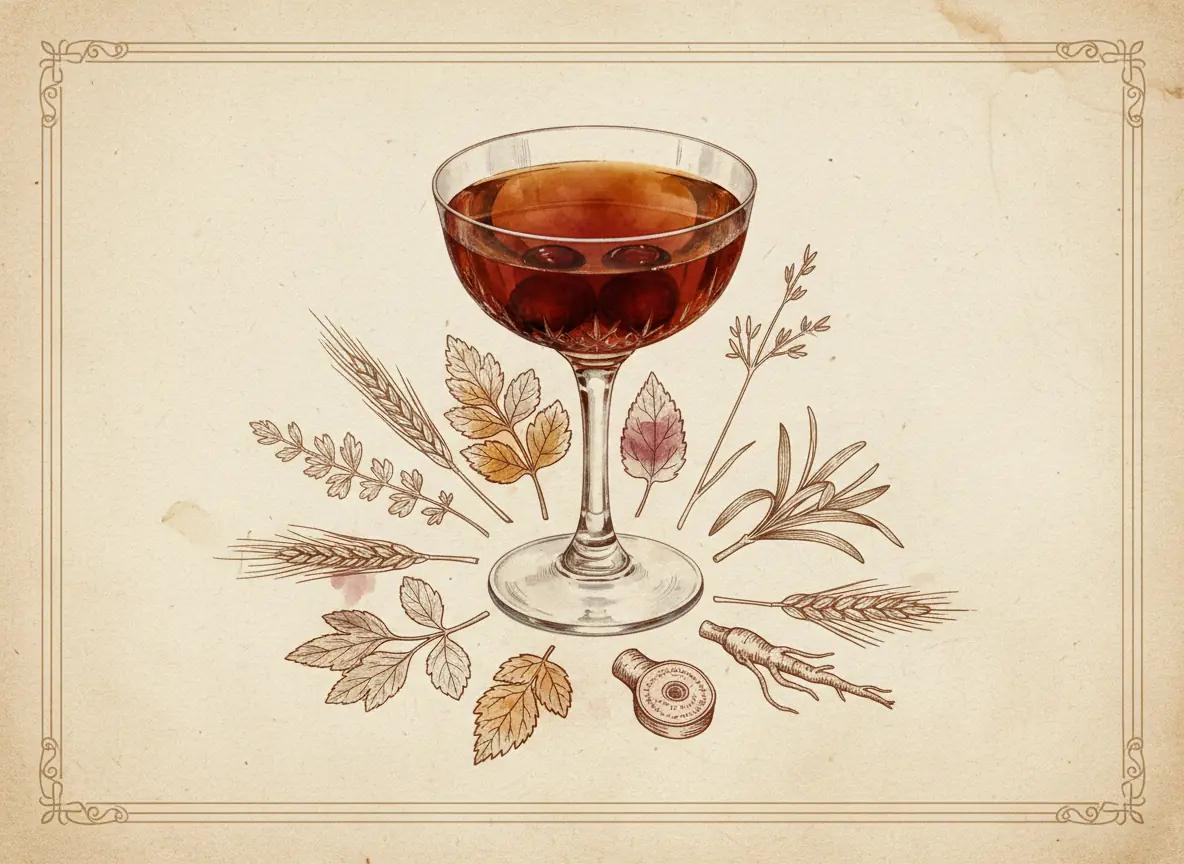
La Louisiane
La Louisiane is 30ml each of rye whiskey, sweet vermouth and Bénédictine, with two dashes of absinthe and three of Peychaud’s bitters, stirred for 20 to 30 seconds and strained into a chilled Nick & Nora, with a maraschino cherry on a pick. About 3.1 UK units. Stanley Clisby Arthur printed it in 1937, in Famous New Orleans Drinks and How to Mix ’Em, as the special cocktail served at Restaurant de la Louisiane, “one of the famous French restaurants of New Orleans”, in Difford’s Guide’s reproduction of the book. His recipe, as Difford’s Guide reproduces it, pours a third of a jigger of each of the three, with three or four dashes each of absinthe substitute and Peychaud’s; ours keeps the thirds and trims the absinthe to two dashes. It sits on the Manhattan’s frame of rye and sweet vermouth, with Bénédictine poured at the same measure as both. In our view that makes it richer and more herbal than its parent, and the anise of the absinthe and the Peychaud’s places it in New Orleans.
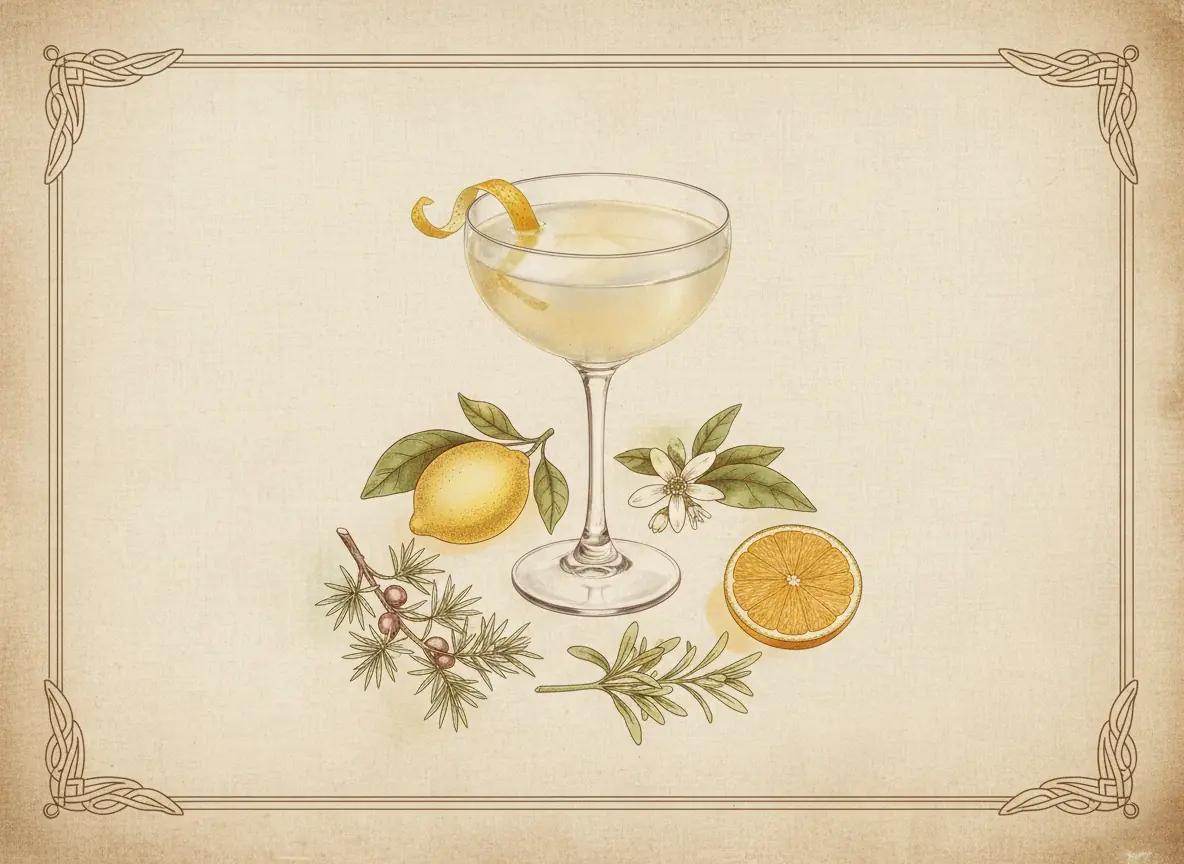
Corpse Reviver No. 2
A Corpse Reviver No. 2 is 30ml each of London Dry gin, Cointreau, Lillet Blanc and fresh lemon juice, shaken hard for 10 to 12 seconds and double strained into a chilled coupe rinsed with absinthe, with lemon peel expressed over the top. About 2.9 UK units. The four measures are the IBA’s. The IBA puts a dash of absinthe in the shaker; we rinse the glass with it, which leaves the scent with less of the anise. Lillet Blanc stands in for the Kina Lillet of older recipes; accounts differ on whether that was a more bitter wine. Harry Craddock printed it in the Savoy Cocktail Book in 1930, beside a No. 1. Under the No. 2 he added a warning: four taken in swift succession would unrevive the corpse again.
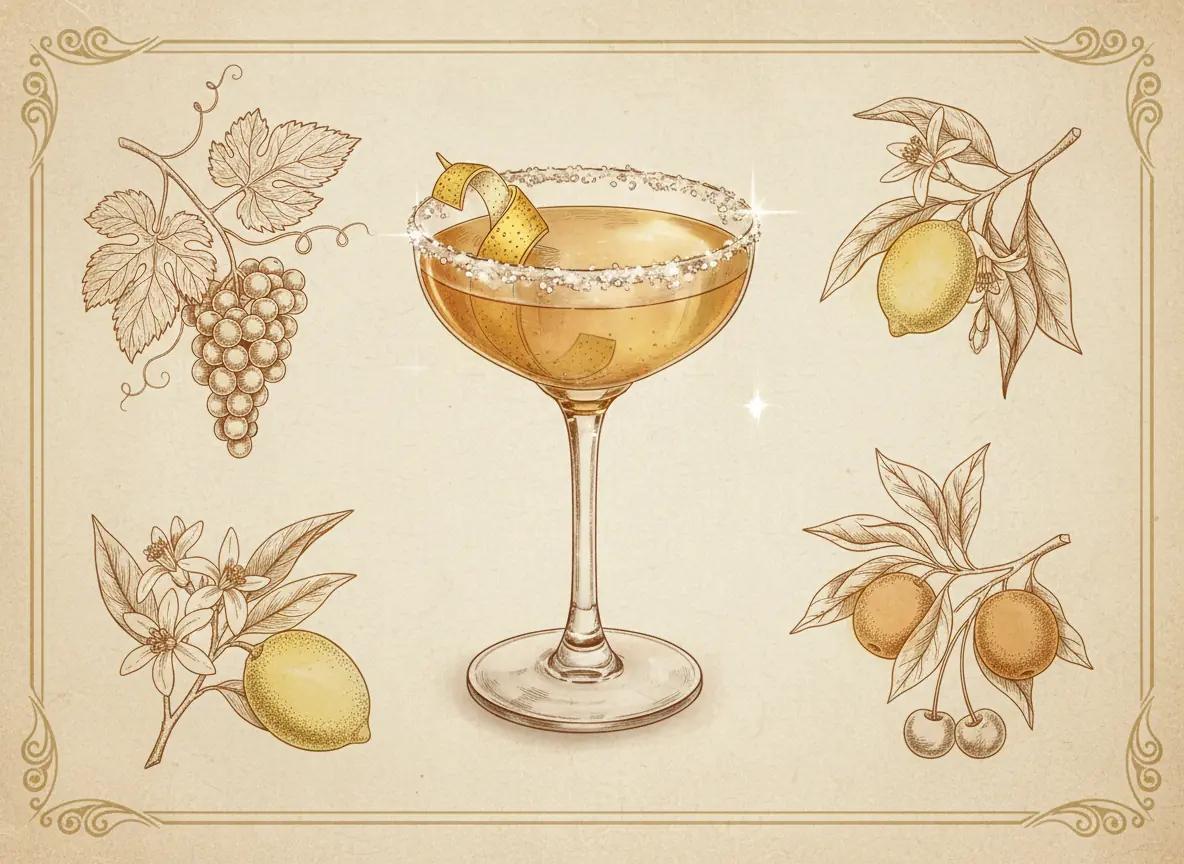
Brandy Crusta
A Brandy Crusta is 52.5ml of cognac, 7.5ml of maraschino, a bar spoon each of orange curaçao and sugar syrup, 15ml of fresh lemon juice and two dashes of Angostura, shaken hard and strained into a chilled coupe with a sugared rim and a long spiral of lemon peel curled inside. About 2.6 UK units. The measures are the IBA’s. Jerry Thomas printed it in his bar guide of 1862 and wrote that the crusta was said to have been invented by “Santina, a celebrated Spanish caterer”. Difford’s Guide identifies him as Joseph Santini, an Italian from Trieste in New Orleans, and dates the drink to the 1850s, made either at the City Exchange or at his own bar, the Jewel of the South, which he opened in 1855. The crust of sugar on the rim gives the drink its name. With the peel lining the glass, the first sip meets sugar and lemon oil before the cognac.
Where this one sits
Recipe by Jerry Can Spirits · Updated 19 October 2026